Tag: vegan food

  • Vegan food platform VEats launches in Sydney

    Vegan food platform VEats launches in Sydney

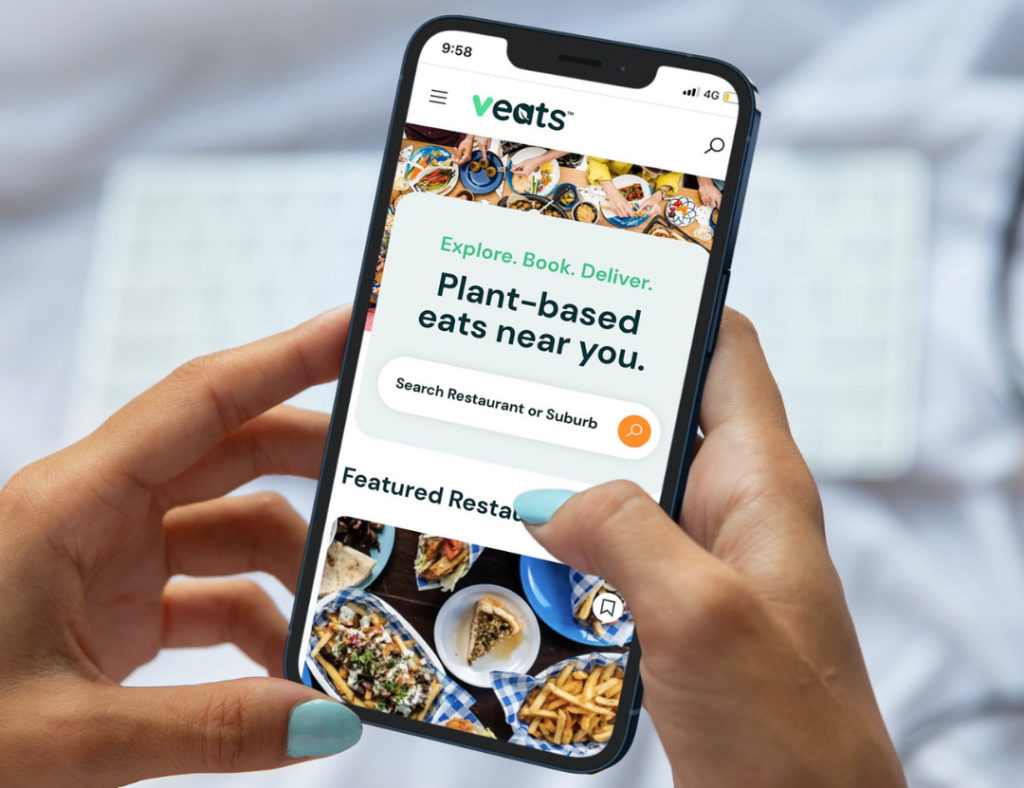
    Founded by Australian duo Lara Young and Susan McCarthy, VEats is a new plant-based platform focussed on helping consumers looking for convenient plant-based options in the country. They describe the digital solution as a “first-of-its-kind” for the market, enabling users to explore all businesses with animal-free food options within a designated city. Whilst a user finds a restaurant they want to go to on the site, tables can be booked at restaurants, food can be ordered for delivery and takeaways can be queued.

    The Australian-based VEats platform is currently being piloted, with a Sydney-first rollout. Coordinating the launch to happen as part of Veganuary, the founding team is thinking on an international scale. U.K. expansion is in the planning stage, with Brighton and London as first targets. Bamford Capital is on board as an equity partner and business advisor for domestic and global ambitions.

    Young and McCarthy have more than three decades of combined business and marketing expertise. The two have worked together before, they created a joint digital marketing agency. VEats is being launched alongside as something of a passion project, particularly for Young.

    “Having grown up as a meat-eater all my life, it never crossed my mind that there was another way of living,” she explained in a press statement. “At the age of 36 I was overweight, overworked, managing being a wife, a mother of three, running two businesses, and everything else life had to throw at me. Food was always there to comfort me.

    “Being a massive foodie, I had to learn about a whole new way of eating. The journey wasn’t easy and I spent hours and days researching restaurants, checking menus, calling ahead to get them to accommodate me, and trying to veganise food through other delivery platforms. I knew that if it was hard for me, it would be hard for anyone trying to make the transition to plant-based eating. That’s when I had the idea for VEats.”

    Young and McCarthy say they have 600 businesses listed on the VEats platform already, spanning the breadth of Sydney. Included are fully plant-based companies, as well as any offering three or more animal-free food options. The two are confident that as Veganuary comes to a close, more than 50 directory inclusions will offer table booking and delivery options. Sydney was selected for the pilot launch due to its plethora of vegan hubs. Newtown has become synonymous with plant-based eating, with its ‘vegan mile’ reportedly growing by the week.

    Confirmed restaurant partners include KoshariKorner, Gigi Pizzeria and recently-opened Flave. Meal delivery service Just Add Vegan has linked up as well. In a coup for the founders, Australia’s leading online ordering platform Order Up! has come on board. It will give directory-listed businesses cost-effective access to ordering and pick-up functionalities. “We are proud to be partnering with the team at VEats to help make plant-based eating easy and accessible in your everyday life,” Clive Thorpe, CCO of Order Up! said in a statement.

    Australia is making strides to become a leading producer of animal-free products. Wide Open Agriculture is a perfect example of a domestic company seeking to disrupt the status quo. In this case, the dairy industry, which is the country’s fourth largest sector. Having bagged $20 million at the end of last year to ramp up production of plant milk, it represents a significant consumer mindset shift.

    Fellow Australian brand ProForm Foods received in the region of $5 million last year, from Harvest Road. With new facilities completed, expansion of a Sydney location is planned, alongside global distribution.

    It’s not all positive news, however. Australia’s meat industry has taken umbrage at the rise in popularity of animal-free foods. It claims that consumers are confused by packaging and are accidentally buying and eating plant-based meats. Supported by a survey paid for by various meat, seafood and poultry companies.
  • VeganBurg Indonesia to plan Asean expansion

    VeganBurg Indonesia to plan Asean expansion

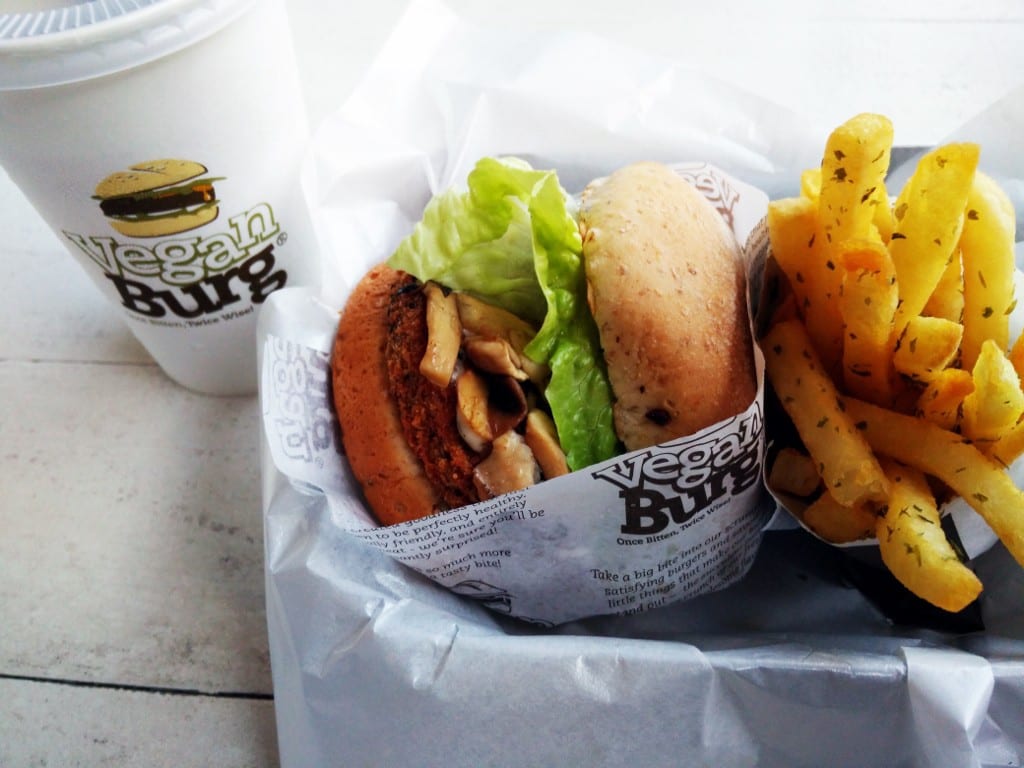
    Two VeganBurg Indonesia stores planned for Jakarta and Bali mark the first steps in a Southeast Asian rollout for the brand after its Singapore success.

    The plant-based burger restaurant chain says it plans to open stores in other Southeast Asian markets under a franchise model.

    The chain, the world’s first of its kind, currently operates four stores in Singapore beyond its single-outlet San Francisco base. It chose Jakarta and Bali, because VeganBurg CEO Alex Tan considers the concept a “natural fit” due to Southeast Asia’s “love for sustainability and the desire for a more plant-based dining experience”.

    “We made the concept work in Asia – specifically in Singapore – then we put it to the test in San Francisco and the result was exponential!”

    VeganBurg Indonesia will exhibit at Jakarta’s Franchise and License Expo Indonesia this week, represented by World Franchise Associates (WFA).

    WFA COO Troy Franklin said: “With their 100 per cent plant-based burgers served in an inviting and comfortable fast casual restaurant format, VeganBurg offers a unique and genuine high-quality product for a new generation of health conscious and socially minded consumers and a great opportunity for Indonesian investors looking for the next big thing in international franchising.”

    VeganBurg also plans to expand in North America and globally.

  • Is Asia changing its way of thinking about food?

    Is Asia changing its way of thinking about food?

    More people are eating today than yesterday. The majority of these people live in Asia, a continent which has an intense cultural connection to food. Securing a better way to feed Asia’s growing population is what motivates JUST CEO Josh Tetrick to challenge the status quo of the food industry.

    Tetrick, 37, sees Asia as the tip of the spear to fix the world’s broken food system.

    “We need to answer the question of how can we produce enough food for a planet which will see 70 percent growth in food demand between now and 2050,” says Tetrick, whose company has attracted high-profile investors such as Hong Kong business magnate Li Ka-shing.

    One of the fastest growing segments of the $8 trillion global food and agricultural market is the multi-billion dollar egg industry. China produced over 30 percent of the 1 trillion eggs that were laid last year which has raised numerous environmental concerns on the continent. To disrupt this, Tetrick introduced Just Scramble at the flagship location of Green Common, a plant-based dining and shopping store that has chains across Hong Kong. Just Scramble is made from mung bean which is one of Asia’s most familiar beans. It looks and tastes just like an egg, it is high in protein, has zero cholesterol and sold over 800 orders of “Just Scramble Teriyaki” and “All Day Just Scramble” in the first six days.

    Just Scramble requires less water and emits fewer carbon emissions than conventional eggs, but Tetrick knows that this does not drive consumers. “I think far less than 1 percent of the 7.4 billion people on earth are driven by the environmental benefit of plant-based food. People just want to feed their family with something they have confidence in. They want food that tastes amazing and makes them feel amazing,” says Tetrick.

    Green Common founder David Yeung is redefining the whole experience of selling plant-based products. “The product has to be good, innovative and fit the brand. If so, we can make foreign brands become an overnight success,” says Yeung “We know what people crave in Hong Kong, that makes us so valuable to translate these products for the Asian palette.” Green Common is already seeing great sales from the American made Beyond Burger, the world’s first plant-based burger that looks, cooks, and tastes like a fresh beef burger. Providing an option for consumers to tweak their habits is what both CEOs believe will lead to wholesale change.

    Yeung is confident Hong Kong can serve as a gateway into mainland China and the rest of Asia. Yeung believes China is desperate for a healthy brand people can trust, and is using the Starbucks strategy to expand. “For 5,000 years China never drank coffee. Now, after Starbucks sold it as a lifestyle, there are over 2,500 Starbucks in mainland China. That is not supposed to happen, but Starbucks became people’s second living room,” Yeung said.

    Yeung’s goal is not to open a thousand Green Commons in Hong Kong but rather grow business to business in order to make impactful change throughout Asia. By introducing plant-based options through restaurants and catering companies, an entire office building, school, or hospital can drastically reduce meat consumption. By doing this, a fair market is being created where people from all demographics have access to sustainable foods.

    Josh Tetrick also envisions a world where everyone is enjoying “just” food, but he knows they cannot do it alone either. “I want to inspire other companies to do this,” Tetrick continued “For the institutions and the companies, who are thinking about what’s next? Take a look at food, because we need help and Asia needs help. But we can’t wait, we have to do it now.”

    Much of the energy surrounding the plant-based movement in Hong Kong started in 2011 when Sonalie Figueiras began the personal blog Green Queen which quickly turned into a trusted media source for healthy eating.

    From this loyal following, Figueiras co-founded Ekowarehouse, the world’s first online global trade platform for sourcing certified organic products and is now available in over 140 countries. “We want to become the Alibaba of organic food, and connect the organic world,” said Figuerias. “Here in the East, the sustainable conversation does not work. Personal health and safe eating for children is the conversation we need to have moving forward.”