Retail News CRM

Tag: vegan

  • Nestle Halts Production Of Vegan Kitkat Amid Rising Costs And Declining Sales

    Nestle Halts Production Of Vegan Kitkat Amid Rising Costs And Declining Sales

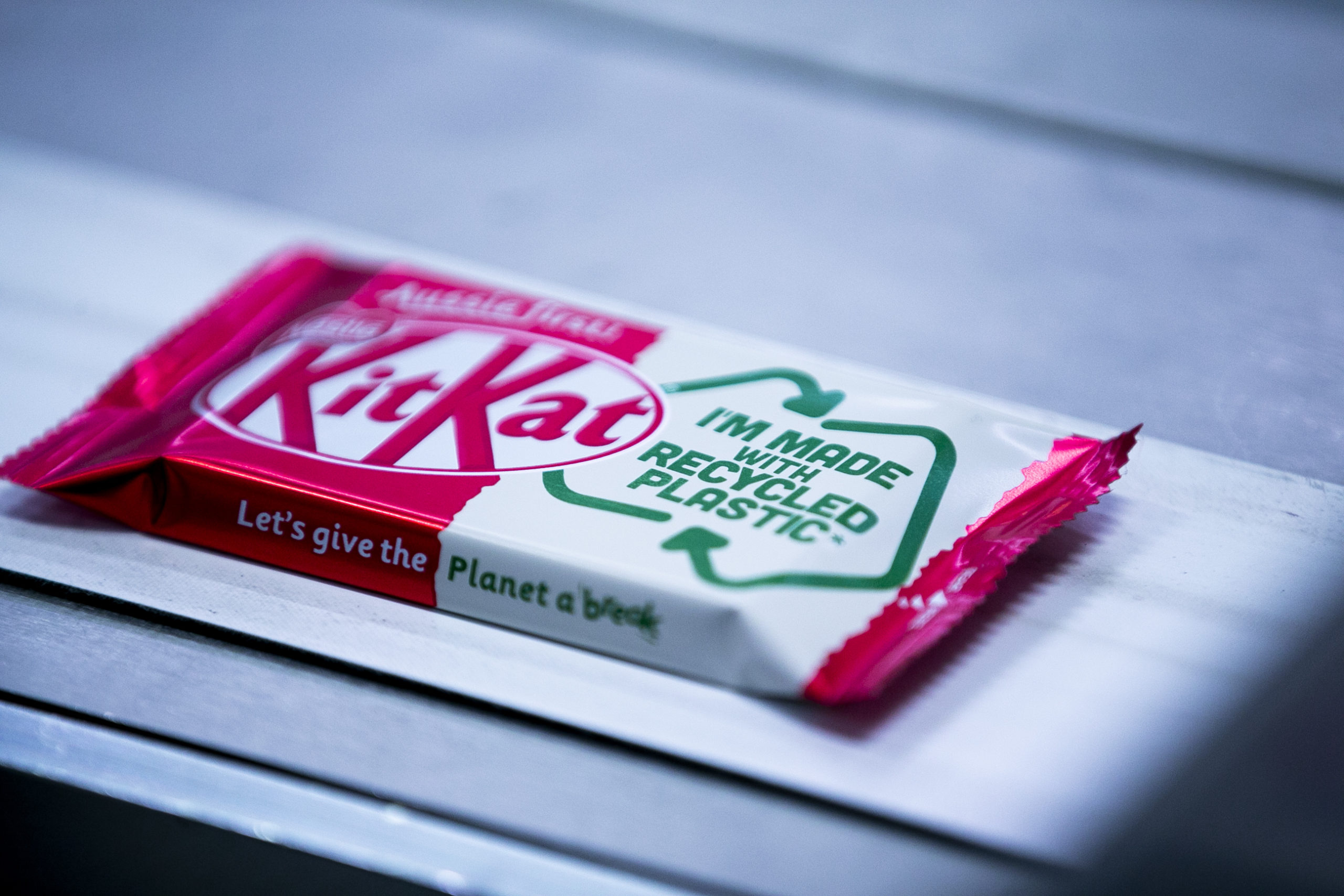
    Nestle, the multinational food and beverage company, has announced its decision to cease production of its vegan KitKat range after a four-year span. This decision is attributed to the escalating production expenses and declining sales figures.

    Background and Production Details

    The vegan KitKat, identified as KitKat V, was conceived at Nestle’s confectionery research and development center located in the UK. The product was initially launched in 2021 to serve as a plant-based substitute for the globally popular classic chocolate bar. However, the company disclosed that the manufacturing of this product necessitated the dedication of exclusive facilities, which escalated the operational costs considerably.

    As of now, the company has halted all production lines for the global Vegan KitKat version. A representative from Nestle shared this news, further highlighting that the remaining stock of this product will continue to be available in Tesco and Sainsbury’s stores until the current stock is exhausted.

    Global Trends for Plant-Based Products

    Nestle’s decision aligns with the observed deceleration in the demand for plant-based products worldwide. Market analysts have noticed a shift in consumer interest from processed alternatives to fresh produce. This change is propelled by consumers questioning the health benefits of plant-based options, which were previously regarded as healthier alternatives.

    The future of the vegan KitKat brand remains clouded in uncertainty. Nestle has not yet disclosed whether it might reconsider the revival of this brand should there be a resurgence in demand.

    Questions & Answers

    What led to Nestle discontinuing its vegan KitKat range?
    High production costs and diminishing sales were the primary factors that led Nestle to discontinue its vegan KitKat range.

    What was the vegan KitKat range?
    The vegan KitKat, labeled as KitKat V, was a plant-based alternative to the traditional chocolate bar. It was developed at Nestle’s research and development center in the UK.

    Is there a possibility for the revival of the vegan KitKat range?
    Currently, Nestle has not indicated any plans for the revival of the vegan KitKat range. However, the potential for reconsideration exists if there is a substantial increase in demand.
  • Slendier unveils Instant Soybean Noodles range

    Slendier unveils Instant Soybean Noodles range

    Health-food company Slendier has launched Instant Noodles made from soybean and “authentic” seasoning.

    Available online and in Woolworths (RRP $5.25), the low-carb, low-calorie, vegan meal alternative is promoted as the “most nutritionally rich” instant noodles on the market. The product is claimed to be free from oils, chemicals and artificial flavours.

    Slendier Managing Director Erica Hughes says the new range has a host of health benefits compared with other instant noodles and is perfect as a guilt-free snack or meal on the run.

    “There’s no denying regular instant noodle products are a quick and easy solution for many Aussies, but they’re often packed with sodium and have little nutritional value,” she says.

    “At Slendier, we identified a gap in the market to offer people the same convenience, without the nasties.

    “Not only are Slendier’s instant noodles great tasting, but the range has twice as much protein, half as much fat and a third less calories when compared to other instant noodles on the supermarket shelves.”

    Slendier’s noodles are available in the flavours of Masala, Tom Yum and (soon-to-be-released) Vegetable Ramen.

    The flavour, according to Slendier, comes from “real” vegetables that have been washed, dried and ground into a fine powder – one that’s low in salt and entirely plant-based.

    “Paired with Slendier’s innovative nonfried soybean noodles,” says the brand, “it requires no cooking and can be ready in just four minutes.”

    BACKED BY A NUTRITIONIST

    Nutritionist Jacqueline Alwill says the product hits the mark for a filling yet healthy food solution.

    “As a nutritionist, I’m always on the lookout for simple, nourishing, convenient alternatives for meals and snacks and Slendier Instant Noodles definitely tick the box,” she says.

    “They’re high in protein, yet lower in calories, carbs and fats than a traditional instant noodle.

    “Using soybean noodles, Slendier Instant Noodles deliver close to 30g protein and 12g fibre per serve, two important macronutrients to support our body’s growth and repair, gut health and of course to help keep appetite at bay.

    “They’re delicious and ready within four minutes – a perfect snack or meal option for anyone wanting to maximise time and of course great nutrition in their day.”

  • Vegan food platform VEats launches in Sydney

    Vegan food platform VEats launches in Sydney

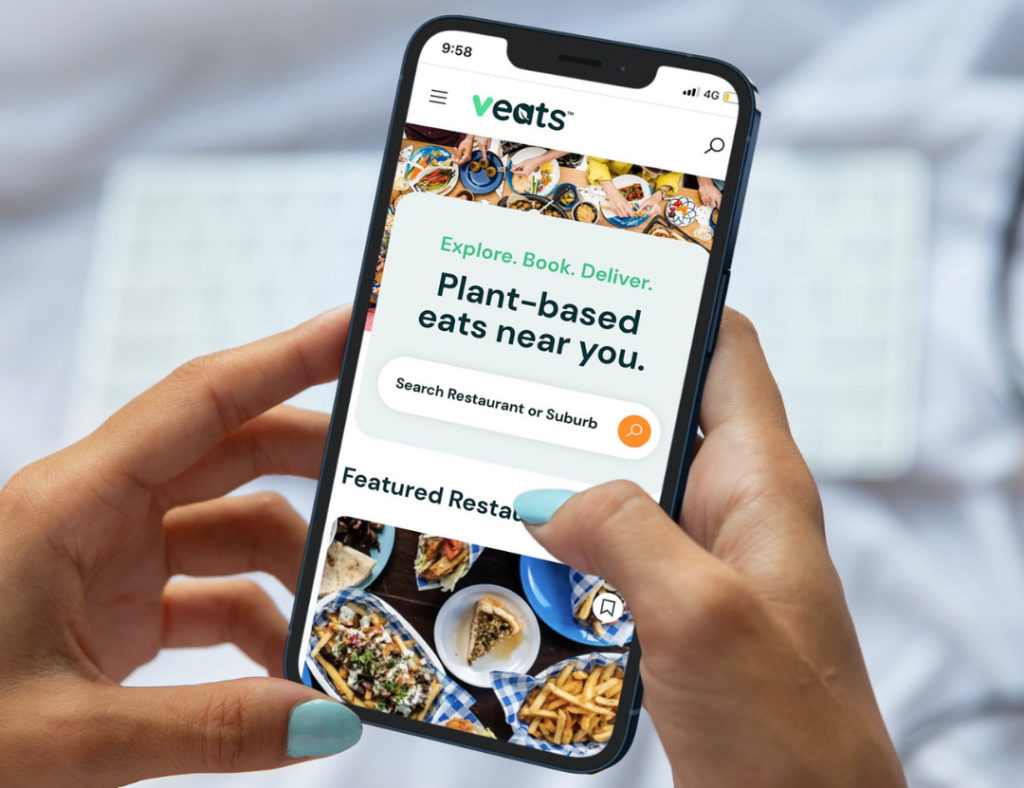
    Founded by Australian duo Lara Young and Susan McCarthy, VEats is a new plant-based platform focussed on helping consumers looking for convenient plant-based options in the country. They describe the digital solution as a “first-of-its-kind” for the market, enabling users to explore all businesses with animal-free food options within a designated city. Whilst a user finds a restaurant they want to go to on the site, tables can be booked at restaurants, food can be ordered for delivery and takeaways can be queued.

    The Australian-based VEats platform is currently being piloted, with a Sydney-first rollout. Coordinating the launch to happen as part of Veganuary, the founding team is thinking on an international scale. U.K. expansion is in the planning stage, with Brighton and London as first targets. Bamford Capital is on board as an equity partner and business advisor for domestic and global ambitions.

    Young and McCarthy have more than three decades of combined business and marketing expertise. The two have worked together before, they created a joint digital marketing agency. VEats is being launched alongside as something of a passion project, particularly for Young.

    “Having grown up as a meat-eater all my life, it never crossed my mind that there was another way of living,” she explained in a press statement. “At the age of 36 I was overweight, overworked, managing being a wife, a mother of three, running two businesses, and everything else life had to throw at me. Food was always there to comfort me.

    “Being a massive foodie, I had to learn about a whole new way of eating. The journey wasn’t easy and I spent hours and days researching restaurants, checking menus, calling ahead to get them to accommodate me, and trying to veganise food through other delivery platforms. I knew that if it was hard for me, it would be hard for anyone trying to make the transition to plant-based eating. That’s when I had the idea for VEats.”

    Young and McCarthy say they have 600 businesses listed on the VEats platform already, spanning the breadth of Sydney. Included are fully plant-based companies, as well as any offering three or more animal-free food options. The two are confident that as Veganuary comes to a close, more than 50 directory inclusions will offer table booking and delivery options. Sydney was selected for the pilot launch due to its plethora of vegan hubs. Newtown has become synonymous with plant-based eating, with its ‘vegan mile’ reportedly growing by the week.

    Confirmed restaurant partners include KoshariKorner, Gigi Pizzeria and recently-opened Flave. Meal delivery service Just Add Vegan has linked up as well. In a coup for the founders, Australia’s leading online ordering platform Order Up! has come on board. It will give directory-listed businesses cost-effective access to ordering and pick-up functionalities. “We are proud to be partnering with the team at VEats to help make plant-based eating easy and accessible in your everyday life,” Clive Thorpe, CCO of Order Up! said in a statement.

    Australia is making strides to become a leading producer of animal-free products. Wide Open Agriculture is a perfect example of a domestic company seeking to disrupt the status quo. In this case, the dairy industry, which is the country’s fourth largest sector. Having bagged $20 million at the end of last year to ramp up production of plant milk, it represents a significant consumer mindset shift.

    Fellow Australian brand ProForm Foods received in the region of $5 million last year, from Harvest Road. With new facilities completed, expansion of a Sydney location is planned, alongside global distribution.

    It’s not all positive news, however. Australia’s meat industry has taken umbrage at the rise in popularity of animal-free foods. It claims that consumers are confused by packaging and are accidentally buying and eating plant-based meats. Supported by a survey paid for by various meat, seafood and poultry companies.

  • V2Food launches Taste-a-tarian campaign with 1000 free burgers

    V2Food launches Taste-a-tarian campaign with 1000 free burgers

    Hero has released its first major work for plant-based meat company V2Food since winning the creative and strategy back in April this year, which is also the brand’s first campaign.

    The ‘Taste-a-tarian’ campaign presents V2Food as the option that satisfies every dietary requirement, as well as launches V2Food’s new brand platform ‘We agree to V2’.

    The just over a minute spot shows a family sitting down for dinner, with each member having a specific diet that needs to be catered for. At the end of the spot, it is revealed that V2Food will satisfy everyone as everyone is a “Taste-a-tarian”.

    There is also a 30-second cut of the video.

    V2Food’s chief growth officer Andrew May said: “As Australians, we cherish meal-times and social occasions and it’s our goal at v2 to deliver great tasting food that satisfies every palate. Our ‘Taste-a-tarian’ campaign shows that v2’s range of plant-based protein products deliver that same meaty taste and makes meals easy, no matter your dietary preference. We can’t think of a better campaign launch to kick off our partnership with HERO, who delivered a fully integrated campaign across strategy, creative, media planning and media implementation.”

    Hero’s managing director, digital Adam Beaupeurt added: “We’re thrilled to launch our first major campaign with V2food. By recognizing that there is a need for a version 2 of the food system, v2food plays a pivotal role in changing the way we all think about meat consumption and food sustainably. This is another brilliant example of media and creative integration delivered by Hero’s Borderless Creativity process – paramount to ensuring the brand entertains and connects with the 50% of Aussies who are looking at reducing their meat intake.”

    The campaign premiered during Ten’s Celebrity Masterchef finale last night.

    The campaign, as well as TV, is on out-of-home, retail proximity, BVOD, social, digital, and electric car charging station Jost.

  • The Body Shop is going full vegan

    The Body Shop is going full vegan

    British cosmetics retailer The Body Shop recently announced that it will solely manufacture and sell vegan products by the year 2023. The beauty company has championed its vegetarian and cruelty-free range of products for years, but finally, the brand decided to go 100 percent vegan. It revealed that its company line will be certified by The Vegan Society, ensuring that its entire formulation portfolio will be completely vegan.

    The Body Shop already offers a large number of vegan products. Even though nearly half of the company’s products are fully vegan, some contain honey, shellac, lanolin, and beeswax, all derived from animals and insects. The company has said before that it plans to move away from animal-derived products, promising to phase out the products that use ingredients such as honey and beeswax. Earlier in 2021, the company’s renowned “White Musk came out with a redesigned vegan recipe, bottled in a recycled container.

    “Our delicious to go 100 vegan is the natural next step for The Body Shop,” The Body Shop’s global brand director Lionel Thoreau told Global Cosmetics News. “Vegan beauty is a critical next step in our sustainability and environmental endeavors. This, along with our global refill and in-store recycling programs makes The Body Shop a destination for ethically-minded customers.”

    Beyond its shift to veganism, the company plans to enhance its recyclable materials and facilities. The chain announced that it wants to establish refill stations for its products later this year. The company wants to begin with 500 stores and then continue with 300 more in 2022. The recycling plan will allow customers to reuse the bottles that they buy from the bottle shop, minimizing the company’s waste footprint. The Body Shop claims that its full range of products will be fully recyclable by 2025, while currently 68 percent of its products come packaged in recyclable containers.

    Founded by Dame Anita Roddick in 1976, The Body Shop launched itself into the beauty and cosmetics industry as one of the few brands that highlighted vegan and cruelty-free products. At the time, the cosmetics industry rarely paid attention to sustainability and animal testing, making consumers unaware of the dangers of the products. The Body Shop, however, jumped into the industry to challenge the market’s status quo. Now decades later, several big cosmetics companies have shifted their policies regarding animal testing. The company’s move to go completely vegan will potentially impact the market further as more companies begin to realize a growing consumer concern regarding sustainability and ethical practices.

  • Vegan food orders surge in Hong Kong in Covid-19’s virus

    Vegan food orders surge in Hong Kong in Covid-19’s virus

    Vegan food orders have experienced significant growth in Hong Kong as people are switching to what they perceive to be more healthy and sustainable food options.

    Hong Kong food-delivery service Deliveroo says vegan food orders surged 104 percent last year and order volume is up by a further 20 percent since January. The growth has reflected the increasing popularity of the vegetarian trend in Hong Kong which has led Deliveroo to partner with more restaurants offering sustainable menus.

    While the increase in vegan food orders is significant, Deliveroo also says its overall order volume grew 100 percent last year versus 2018 and has doubled during the first quarter of this year compared with the December 2019 quarter, so it is difficult to assess whether vegan food is taking sales away from meat-based meals.

    However, according to the company, the proportion of restaurants serving plant-based food has been growing in almost every district across the city to meet customers’ high demand. The number of Deliveroo’s partners offering vegan options has tripled in the past year, and more than doubled in the Central district.

    “There has never been a better time for healthy eating in Hong Kong, whether you’re a full-time vegan or a part-time plant-based food fan,” said Brian Lo, GM at Deliveroo Hong Kong. “The growth of vegan restaurant options and vegan order volume is truly staggering.”

    One of Deliveroo’s partners, the restaurant Treehouse, has reported 1226-per-cent growth in sales from October through March, with online orders increasing 125 percent and the number of new customers increasing by 113 percent.

    “We have expanded through Deliveroo and Editions in Wan Chai and Quarry Bay, and by doing so we have been able to create two more new virtual brands,” said Christian Mongendre, founder of Treehouse. “The first being, Origin by Treehouse, which has a Middle Eastern focus, and the newly-launched and very exciting vegetarian high-quality burgers brand, Burgers by Treehouse.”

    Besides facing the upcoming challenges of Covid-19 situation, Hong Kong people are now more aware of the benefits of a healthy living habit and healthy conscious dining will soon be a permanent choice for many families in the city.

  • Vegan fashion trend booming in Korea

    Vegan fashion trend booming in Korea

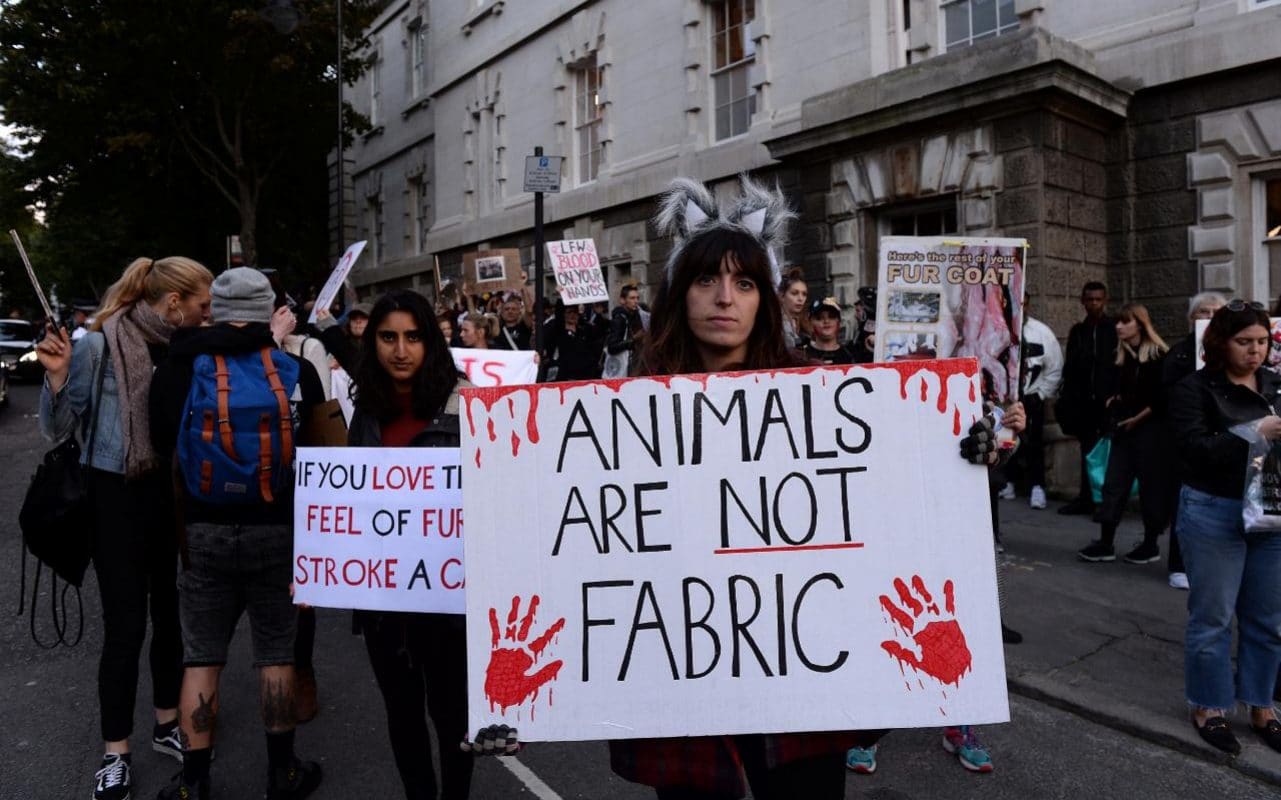
    Stroking down the plush set of colorful fibers, it is hard to tell they could be anything but fur. Hanging in the corner of an ethical fashion store in Dongdaemun, the fur-free fur coats and silk-free silk robes are soft and luxurious, but without the cost of brutality against animals. Striving to spare harm inflicted on animals for the sake of style, vegan fashion has been spreading in South Korea in recent years.

    The word “fake” does not fully describe the trend, as the garments are not purposed as second choice low-quality replacements. They are considered more of a fashionably ethical statement now, rejecting the use of animal materials or cruelty in obtaining them.

    Strictly speaking, vegan fashion is different from eco-friendly fashion, although the phrases are often used interchangeably. Something vegan may not necessarily follow best practices for the environment, or vice versa, but the two often go hand in hand.

    The international movement toward fashion going vegan began its rapid spread as many prominent luxury brands announced themselves “fur-free.” In October last year, Gucci went fur-free, followed by British fashion company Burberry in September this year. Other pricey labels, including Versace, Giorgio Armani, Tom Ford and Ralph Lauren have also declared moves to ban fur.

    Britain’s Stella McCartney — the second-generation animal rights activist daughter of Linda and the Beetles’ Paul McCartney — is believed to gotten the ball rolling in 2001, and currently stands as one of the leading eco-friendly fashion brands in the world. Now, slapping on the word “vegan” is a marketing strategy seemingly guaranteeing good sales.

    The vegan and similar fashion trends are more prevalent in the winter, as outdoor labels increasingly introduce items that either exclude animal materials or try to stick to ethical standards in using animal matters.

    A number of global outdoor companies, including The North Face, Adidas and Reebok, have launched “Responsible Down Standard” certified down coats this winter. RDS is a global standard developed in 2014 to ensure that down and feathers come from animals that have not been subjected to unnecessary harm. Local outdoor brand Black Yak also received RDS certification for all of its down coats released this year.

    Some brands have taken it a step further and developed artificial materials as replacements. The North Face introduced its own thermal filling, “V-Motion,” in 2016, and ‘”T-Ball” this year, whereas LG Fashion’s A.T.Corner presented as its 2018 winter centerpiece a mustang jacket with eco-fur lining inside.

    According to Galleria Department store, which held an eco-friendly fashion week at the end of last month, environmentally friendly garments, including animal-free ones, have increased by 20 percent compared to last year on the women’s fashion floor.

    GS Shopping, a TV shopping firm, exceeded its initial sales goals for RDS certified items, including Reebok’s heavy goose down long coat, which sold out in less than half an hour on the channel.

  • Chinese vegan market booming

    Chinese vegan market booming

    The Chinese vegan market is expected to grow 17.2 per cent between 2015 and 2020 – the fastest growth rate in the world.

    Global market research company Euromonitor International’s new Ethical Labels database reports a growing movement toward sustainability, social responsibility and transparency on labels worldwide.

    According to the new research, halal and vegan labels are set to grow by a compound annual growth rate of more than 5 per cent annually during the period, translating into 708 million extra sales worth US$13 billion.

    Despite leading growth for the vegan sector, China lags behind the US and Japan when it comes to ethical labels.

    “Vegan product labelling is one of the key categories to watch in the future, as an increasing number of companies are expanding their consumer appeal by staying away from animal ingredients whenever possible,” says Euromonitor International head of health and wellness Ewa Hudson.

    “The rising demand and trend for vegetarian and vegan proteins indicates where the market is moving.”

    Meanwhile, the global market for ethically labelled packaged foods, soft drinks and hot drinks (excluding private label) accounted for $793.8 billion last year and is set to reach $872.7 billion by 2020.

    Worth $45.3 billion currently and set to reach $58.3 billion in 2020 are halal products, driven by ethnic and religious diversity.

    Other findings of the research: the US is the largest kosher market, 18 times the size of Israel; and the UK is the runaway leader in animal welfare labels with $ 30.1 billion last year.