Tag: vending machine

  • Coca-cola Unveils Ai-powered Vending Machine For Enhanced, Personalized Consumer Experience

    Coca-cola Unveils Ai-powered Vending Machine For Enhanced, Personalized Consumer Experience

    Coca-Cola has debuted its most recent innovation in the form of a Coke&Go cooler vending machine. This cutting-edge machine is powered by artificial intelligence (AI) and computer vision, creating an upgraded, efficient, and personalized vending experience for consumers.

    Enhanced Consumer Experience

    The Coke&Go cooler vending machine allows consumers to gain access via their smartphones. This can be done by either scanning a QR code or by inputting credit card information, providing a seamless and technologically advanced method of interaction. What sets this vending machine apart is its ability to identify products using a product recognition technology. This means that customers can confirm and complete their purchases through the payment options that they have linked with the system.

    Terry Burbidge, GM of vending at Coca-Cola Europacific Partners New Zealand, underlined that this move aims to align their products more closely with the modern lifestyle of their consumers. He stated, “It’s about making refreshment more intuitive, more accessible, and more aligned with how Kiwis live today.”

    Smart Inventory Tracking

    The latest version of this vending machine also comes equipped with smart inventory tracking. This feature ensures that the cooler vending machines are restocked with the correct beverages at the right time. In doing so, not only does it enhance efficiency, but it also significantly reduces the likelihood of items being out of stock.

    The soft drink behemoth has plans to expand the presence of this innovative vending machine following a successful trial at the Sydney Airport during the previous year. Over the course of the next two years, hundreds of these advanced cooler vending machines will be installed across Australia and New Zealand.

    Questions & Answers

    What is the Coke&Go cooler vending machine?
    The Coke&Go cooler vending machine is a new type of vending machine by Coca-Cola that uses artificial intelligence and computer vision to provide an efficient and personalized experience.

    How do consumers interact with the Coke&Go cooler vending machine?
    Consumers can interact with the machine using their smartphones, either by scanning a QR code or entering their credit card information.

    What are the benefits of the vending machine’s smart inventory tracking feature?
    The smart inventory tracking ensures that the vending machines are consistently stocked with the right beverages, which improves efficiency and reduces the chance of items being out of stock.
  • Refilled’s vending machines encourage users to bring their own bottles

    Refilled’s vending machines encourage users to bring their own bottles

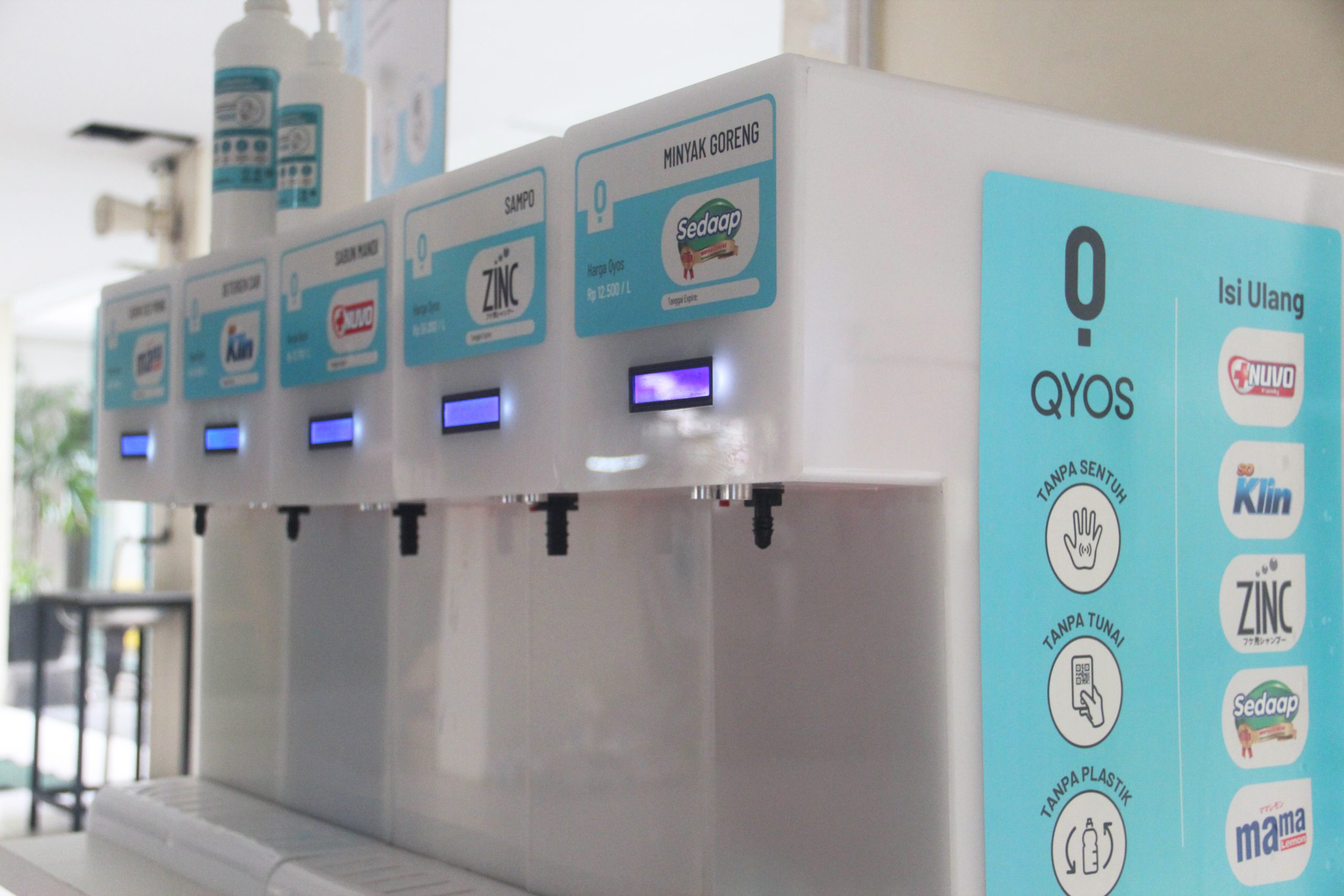
    A new climate tech start-up has introduced a unique vending machine technology that promotes the idea of BYO (bring-your-own) bottles to buy their drinks rather than marketing drinks in bottles that add more to landfills.

    Refilled aims to eliminate the colossal single-use plastic bottle waste caused by the vending industry by replacing them with its new BYO bottle system. The company hopes to capitalize on the dominant trend of reusable bottles, a market now worth $14bn, by giving people more flavor variety and nutritional options than just plain water on tap.

    It also tracks the number of bottles saved in real-time as its reusable bottles are equipped with QR codes that can be scanned at the Refiller and used to pay for drinks, with no card, phone or cash required.

    Already, Refilled has secured orders from the University of Technology Sydney and The University of Sydney Union (USU) who are looking to deploy their machines within their premises and provide students with more sustainable flavored drink alternatives at a price more affordable than a standard bottle of water.

    Research indicates that more than 891 billion single-use plastic bottles are produced worldwide every year but only less than 20 percent are recycled. Vending machines have been singled out as a major source of plastic pollution.

    Refilled stated that it is on track to build and install 100 of its vending machines (called ‘Refillers’) by 2024, eliminating upwards of one million single-use plastic bottles from becoming waste yearly. A single Refilled vending machine can stock 10x more beverages than a typical vending machine, dramatically reducing waste and delivery emissions caused by frequent deliveries and restocking traditional beverages.

    To date, Refilled has raised $600k through angel investors and Melt Ventures an impact VC Fund. Refilled is seeking an additional $3m in its next funding round.

    “Refilled is transforming the ordinary, everyday act of drinking water into climate action,” Refilled founder and CEO, Ryan Nelson, said. “Most people have good intentions and want to do good for the planet, but not everyone can afford to buy an electric vehicle or install solar panels.

    “Armed with just a reusable bottle and a couple of bucks, our Refillers offer an affordable, achievable way to eliminate plastic pollution,” Nelson added. “If we can replace even a fraction of drinks vending machines, which are an outrageous source of plastic waste, we will stop millions of plastic bottles going to landfill.”

    University of Sydney Union President, Naz Sharifi, said that the union remains committed to a sustainable future for its members, permeating everything they provide.

    “From our events, retail and products to our student programs and facilities, ss part of our ongoing efforts to expand our sustainable practices and to reduce the usage of single-use plastic bottles, we are thrilled to be partnering with Refilled, who share our social, environmental, and ecological aspirations,” Sharifi said. “This will allow our members access to filling stations in key locations around campus.”

    Anna Chavez GM Commercial Operations , ActivateUTS / University of Technology Sydney, is also proud to partner with UTS Alumni and founder Ryan Nelson, homing Refilled’ s prototype in ActivateUTS Student engagement ‘Hideout’ space, empowering students to eliminate thousands of single-use plastic bottles in its first year alone.

    “Students loved the newly launched machine, at our recent Orientation Day, offering an easy-to-use interface, paired with a cost effective and convenient product,” Chavez said. “We believe the right commercial decisions can meet the needs of the business, consumer and drive a positive change towards a more sustainable world, and Refilled is a great example of this.”

  • Chinese fruit-vending machines driven by AI

    Chinese fruit-vending machines driven by AI

    AI-run fruit-vending machines are offering Chinese consumers a new way of buying fruit and vegetables.

    The machines, developed two years ago by Beijing Kuo’an Science and Technology, are providing an alternative channel for residents of China’s tier-one and tier-two cities, who traditionally rely on relatively distant large-scale supermarkets and community stores for fruit purchases.

    “Every unit of AI fruit vending machines has 24 smaller sections with different types of fruit or vegetables,” said Beijing Kuo’an Science and Technology chairman Guan Luanjun. “Every section has a built-in set of scales. When customers select their fruit, they can use WeChat or AliPay to scan the QR-code on the Chinese fruit-vending machines to open the relevant section. The section automatically slides out to present the customer with its content. The customer can select and take their fruit or vegetables, and then the section automatically calculates the weight that was removed. The customer can then pay for their fruit or vegetables with WeChat or Alipay.”

    The vending machines feature cameras on both sides, allowing them to monitor customers who operate them, minimising abuse of the service. In addition, WeChat and Alipay provide payment methods that both vendor and customer trust.

    “The main advantage of Convenient E-Fresh machines over traditional, large-scale supermarkets and community stores is the low cost,” said Guan, who adds that the model allows vendors to source fruit at low cost from wholesale markets. “In addition, our automated vending machines only occupy a small area, which means that we save on rent and labour cost in comparison with large-scale supermarkets and community stores that occupy large terrains and employ large numbers of people.”

    The firm currently operates 50 AI Chinese fruit-vending machines in Suzhou, and intends to expand operations across the entire Yangzi River Delta area within two years.

    “We hope to improve consumer knowledge and consumer recognition of the Convenient E-Fresh brand,” adds Guan. “And we plan to scale our operations within two years with AI vending machine units in 500–1000 districts. Furthermore, we are in negotiations with a number of domestic and overseas suppliers to make sure consumers have a broad choice of beautiful and delicious fruits for low prices. We sincerely hope that our efforts help to improve the entire supply chain.”

  • Smart vending machine sells a lot in China, Japan

    Smart vending machine sells a lot in China, Japan

    The deployment of smart vending technologies will surge in the Asia-Pacific as high-tech unmanned retail continues to attract major investment.

    The demand for technology-driven frictionless retail experiences, combined with cheap production costs and limited data privacy barriers, is driving rapid adoption in China, Japan, and South Korea, leaving the rest of the world behind, according to a report by ABI Research.

    By 2023, the Asia-Pacific will be home to more than 1 million automated retail units and 4.5 million smart vending machines, the market-foresight advisory firm concludes.

    “The initial growth rate of automated retail units in the Asia-Pacific market, driven primarily by China, has already been astonishing and will continue to grow exponentially over the next five years,” said Nick Finill, senior analyst at ABI Research.

    “This will create a vast regional disparity in adoption figures, largely a result of technological and societal factors. Ultimately it signals a strong future for smart retail in East Asia,” he said.

    But the unprecedented growth of automated retail units in Asia is just half of the smart vending story. Intelligent vending machine trends also indicate how the wider smart vending market is gravitating eastwards. While North America is currently home to 76 per cent of total smart vending machines, by 2023 China will become the primary market for intelligent vending machines.

    Smart vending is emerging as an additional retail channel offering unique benefits versus traditional brick and mortar retail and e-commerce. Intelligent vending machines and automated retail units, equipped with advanced customer and operational analytical capabilities, offer immediate convenience to the customer while enabling additional revenue streams to be exploited by operators and partners.

    “Successfully entering new markets, attracting new customer segments, monetising data, and cutting operating costs can all be achieved simultaneously in addition to profiting from direct product sales,” said Finill.

    “Smart vending is therefore not just a powerful retail channel for the customer, but also potentially a valuable marketing tool for retailers and brands.”

    The combination of mobility and smart vending is also suggesting that further innovation is around the corner for the unattended retail market. Several proofs of concept have emerged which enable autonomous vehicles to act as mobile vending machines, opening up new opportunities for customer-focused operators to better adapt to consumer needs.

    The traditional smart vending market is being transformed by established market leaders such as Intel, Swyft, Nayax, and Sierra Wireless; in addition to emerging players such as Invenda, DeepMagic, and DeepBlue Technology.

    The findings are from ABI Research’s report Smart Vending Trends and Market Opportunities.

  • Uber cars to become mobile convenience stores

    Uber cars to become mobile convenience stores

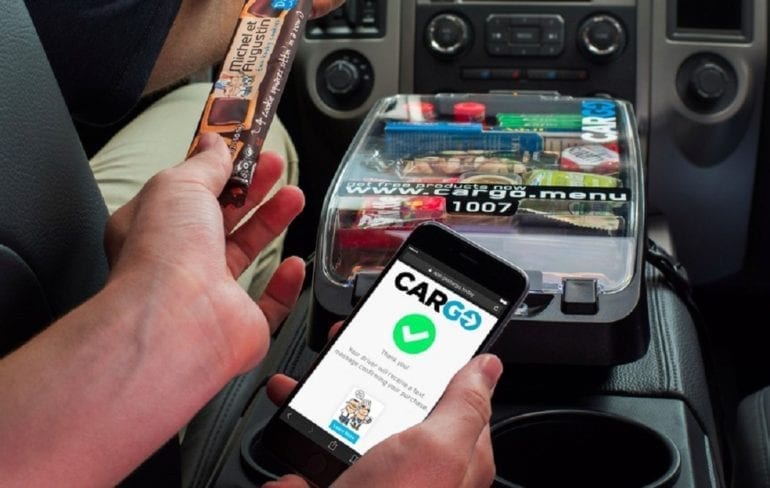
    Cargo, a startup intimately tied to Uber, just closed a $5.5 million seed round for its venture that lets drivers sell products to their riders.

    While PSFK has covered Cargo before, the funding represents a significant step forward for the idea and came with more details on how the whole system will work after applied tests of the concept.

    The startup sends drivers a high-tech tray and a monthly supply of goods for free. For every item sold, drivers get a $1 base commission plus 25% of the sale.

    According to Cargo, Uber drivers can earn a $100 more with its service, and some of its top drivers earn up to $300 every month.

    The startup does not exactly work like a store. Many of its products are given by brands like Kellogg’s as freebies to riders. Brands get consumer data from Cargo while Cargo charges brands for access to its distribution network.

    reAccording the startup, the actual sales alone are not even the big source of revenue yet. The startup plans to send out its hardware to 20,000 cars and open in one new city each month for the next six months.