Tag: ventures

  • Guoquans Global Debut: Chinese Home-Dining Giant Ventures into Hong Kong Market

    Guoquans Global Debut: Chinese Home-Dining Giant Ventures into Hong Kong Market

    The Chinese home-dining retailer, Guoquan, is planning to extend its business to Hong Kong. This move signifies the company’s first initiative outside Mainland China, aligning with their international expansion plans.

    The retailer anticipates the launch of its inaugural store in Wan Chai, Hong Kong, later this year. During this launch, local consumers will be introduced to the Guoquan’s “community central kitchen” concept.

    Expansion and Innovation

    This planned expansion to Hong Kong is concurrent with Guoquan’s continued growth within Mainland China. As of the first quarter of 2026, Guoquan boasts a network of 11,758 stores across the nation, including more than 3100 outlets in township level markets.

    From the latter half of 2025, Guoquan has been enhancing its store network by transforming smaller outlets into larger “community central kitchen” formats. The floor area of these renovated stores typically ranges from 80 to 100 square meters. These larger stores offer a wider array of products, a departure from the company’s traditional hotpot and barbecue ingredients.

    Guoquan’s product range has evolved to include breakfast items, ready-to-eat meals, light fare, alcoholic beverages, and other options tailored for various consumption times of the day. With 24-hour unmanned stores, customers can access these products and services at any time.

    Guoquan’s Journey

    Established in 2017, Guoquan has flourished into one of the leading home-dining brands in China. The company was publicly listed on the Hong Kong Stock Exchange in November 2023.

    Guoquan is renowned for specializing in household meal ingredients. Its product offerings range from hotpot and barbecue items to self-heating meals and prepared Chinese dishes.

    Questions & Answers

    What is Guoquan’s “community central kitchen” concept?
    The “community central kitchen” model is an innovative retail concept where stores are expanded from their traditional format to offer a wider range of products. This not only includes Guoquan’s traditional hotpot and barbecue ingredients, but has evolved to include breakfast items, ready-to-eat meals, light fare, alcoholic beverages, and more.

    When was Guoquan founded and when did it list on the stock exchange?
    Guoquan was founded in 2017 and listed on the Hong Kong Stock Exchange in November 2023.

    What is Guoquan’s current store count in Mainland China?
    As of the first quarter of 2026, Guoquan operates 11,758 stores nationwide in Mainland China, including over 3,100 outlets in township-level markets.

  • Alipay Ventures Further into AI Commerce: Introduces Worlds First AI Wallet and Token Pay

    Alipay Ventures Further into AI Commerce: Introduces Worlds First AI Wallet and Token Pay

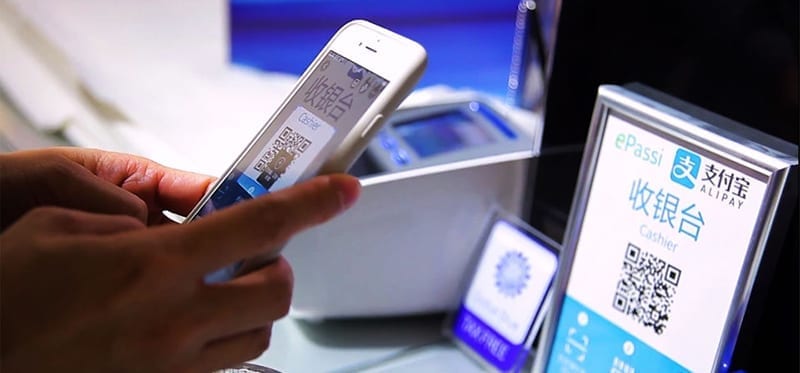
    Chinese fintech titan, Alipay, is ramping up its endeavors in AI-driven commerce with the introduction of an innovative AI payment infrastructure devised to bolster the burgeoning “agentic economy”.

    As per a press release issued on Monday, Alipay unveiled the world’s inaugural “AI Wallet” along with a novel service dubbed “Token Pay”, both targeted at AI firms and developers. This announcement was made at the Alipay AI Payment Ecosystem Conference held in Hangzhou.

    AI Agents in the Commercial World

    The crux of this initiative is Alipay’s AI payment ecosystem, where users can execute transactions via AI agents using voice commands and automated processes.

    Cyril Han, CEO of Ant Group, said, “Even though the quintessence of commerce remains intact in the AI era, AI agents are revolutionizing every aspect.” Han added that based on 22 years of technological prowess and commercial knowledge, Alipay is creating the next wave of AI payment services to boost the growth of the agentic commerce ecosystem.

    The firm disclosed that its AI-native payment products have already surpassed 100 million users since their February 2026 launch. As per Alipay, the system has processed approximately 300 million transactions so far, making it the first commercially scaled AI-native global payment infrastructure.

    Introduction of the “AI Wallet”

    The AI Wallet, a crucial part of this expansion, has been recently introduced and is now accessible via the Alipay app.

    The product is engineered to provide users more supervision and command over transactions executed by AI agents. This includes the ability to monitor tasks prior to and during payment and to analyze spending behavior after the transaction.

    In an effort to augment trust in autonomous AI transactions, Alipay also launched China’s maiden “Agentic Commerce Trust Protocol”, aimed to establish a standardized framework between AI systems and service platforms.

    Simultaneously, the firm introduced an intelligent security system designed to safeguard AI-driven transactions.

    “Token Pay” Designed for AI Companies

    Along with the AI Wallet, Alipay launched “Token Pay”, which the firm describes as the first integrated payment solution specifically tailored for AI model firms.

    The platform enables AI enterprises to handle subscription payments, token top-ups, and associated transactions on a global scale via a single infrastructure.

    Weiqi Hu, Vice President of MiniMax, said, “Payments are instrumental in facilitating massive growth in the AI sector. Together with Alipay, we aim to strengthen collaboration across multiple domains to accelerate the growth of AI commerce.”

    Payments Integration within AI

    Industry experts anticipate payments to become an inherent feature within AI applications rather than a separate step in digital commerce.

    “AI is redefining every facet of commerce,” said Lin Zhu, General Manager of Alipay’s AI payment business at Ant Group. Zhu added that payments are transitioning from a final step to a capability embedded from the outset. According to Zhu, only with trusted transactions, seamless payments, and secure controls, can agentic commerce genuinely proliferate.

    Extensive Expansion Across Industries

    Alipay’s AI payment infrastructure is already being widely used across a plethora of sectors and devices in China, such as AI-powered services embedded in retail apps including Luckin Coffee, smart glasses by Rokid, Alibaba’s Qwen AI ecosystem, OpenClaw-style AI agents, smart vehicle cockpits, AI development platforms like Coze and Qoder, and “One Person Companies”.

    Alipay announced additional investment in developer support programs, including token incentives and waiving payment-processing fees for individual AI developers.

    Through the latest rollout, Alipay is striving to establish itself not merely as a payment provider, but increasingly as the financial infrastructure supporting the next generation of AI-driven digital commerce.

    Questions & Answers

    What is the AI Wallet introduced by Alipay?
    The AI Wallet is a product designed to give users more control over transactions carried out by AI agents. Users can monitor tasks before and during payment execution and analyze spending behavior afterward.

    What is the purpose of Alipay’s “Token Pay”?
    Token Pay is an integrated payment solution created specifically for AI model companies. It allows AI firms to manage subscription payments, token top-ups, and related transactions globally through a single infrastructure.

    What is Alipay’s strategy with the introduction of the new AI payment infrastructure?
    Alipay’s strategy is to position itself not only as a payment provider, but increasingly as the financial infrastructure underpinning the next generation of AI-driven digital commerce.

  • Forrester Predicts Imminent Bust for Majority of APAC Stablecoin Ventures in 2026

    Forrester Predicts Imminent Bust for Majority of APAC Stablecoin Ventures in 2026

    In the coming year, the majority of stablecoin launches in Asia are predicted to fail, according to recent projections from research and advisory firm Forrester. In their 2026 Payments Predictions report, they estimate that 80% of local stablecoin launches in Asia Pacific will not succeed. The report cites several reasons for this projected failure, including a lack of practical uses, high compliance costs, and competition from Central Bank Digital Currencies (CBDCs) and tokenized deposits.

    The Future of Stablecoins in Asia

    Forrester’s predictions suggest that stablecoins pegged to the US dollar will continue to dominate the global supply. This is anticipated to occur as regional banks and regulatory authorities prioritize the development of scalable alternatives such as mBridge, ISO 20022, and CBDCs.

    However, stablecoins as a whole are not expected to find scalable use cases within the retail payments sector during 2026. This is due to several factors, including a poor user experience, complex infrastructure requirements, trust issues, and competition from existing digital payment options. The firm proposes that there may be more practical applications for stablecoins in the realms of B2B cross-border payments and the crypto-native economy.

    Predictions on AI Agents

    In addition to their projections on stablecoins, Forrester has also predicted trends for artificial intelligence (AI) agents. They anticipate that “true agentic payment” – transactions executed autonomously by AI – will make its debut in the B2C space in 2026. However, this technology is expected to remain experimental due to technical challenges and issues around consumer trust. Widespread implementation is predicted to start in 2027.

    In the B2B sector, AI agents are forecasted to execute one-third of all payments, as the technology can effectively address complexities in associated processes like invoicing and accounts payable.

    Senior Analyst at Forrester, Meng Liu, remarked, “Agentic and stablecoin payments are set to reshape global payment ecosystems by 2026, introducing diverse standards, protocols, business models, and blockchains that will drive significant fragmentation.”

    Questions & Answers

    Why are most stablecoin launches in Asia projected to fail in 2026?
    Forrester cites reasons such as lack of utility, high compliance costs, and competition from Central Bank Digital Currencies and tokenized deposits.

    What is the future outlook for stablecoins in retail payments?
    Forrester predicts that stablecoins will not find scalable use cases for retail payments in 2026 due to a range of challenges including poor user experience and trust issues.

    What are the predictions around AI agents in the B2B sector?
    In the B2B sector, AI agents are expected to handle one-third of all payments by resolving complexities in adjoining processes like invoicing and accounts payable.

  • Apple Ventures into Health AI: Unveiling a Chatbot-Powered Health+ Subscription Service

    Apple Ventures into Health AI: Unveiling a Chatbot-Powered Health+ Subscription Service

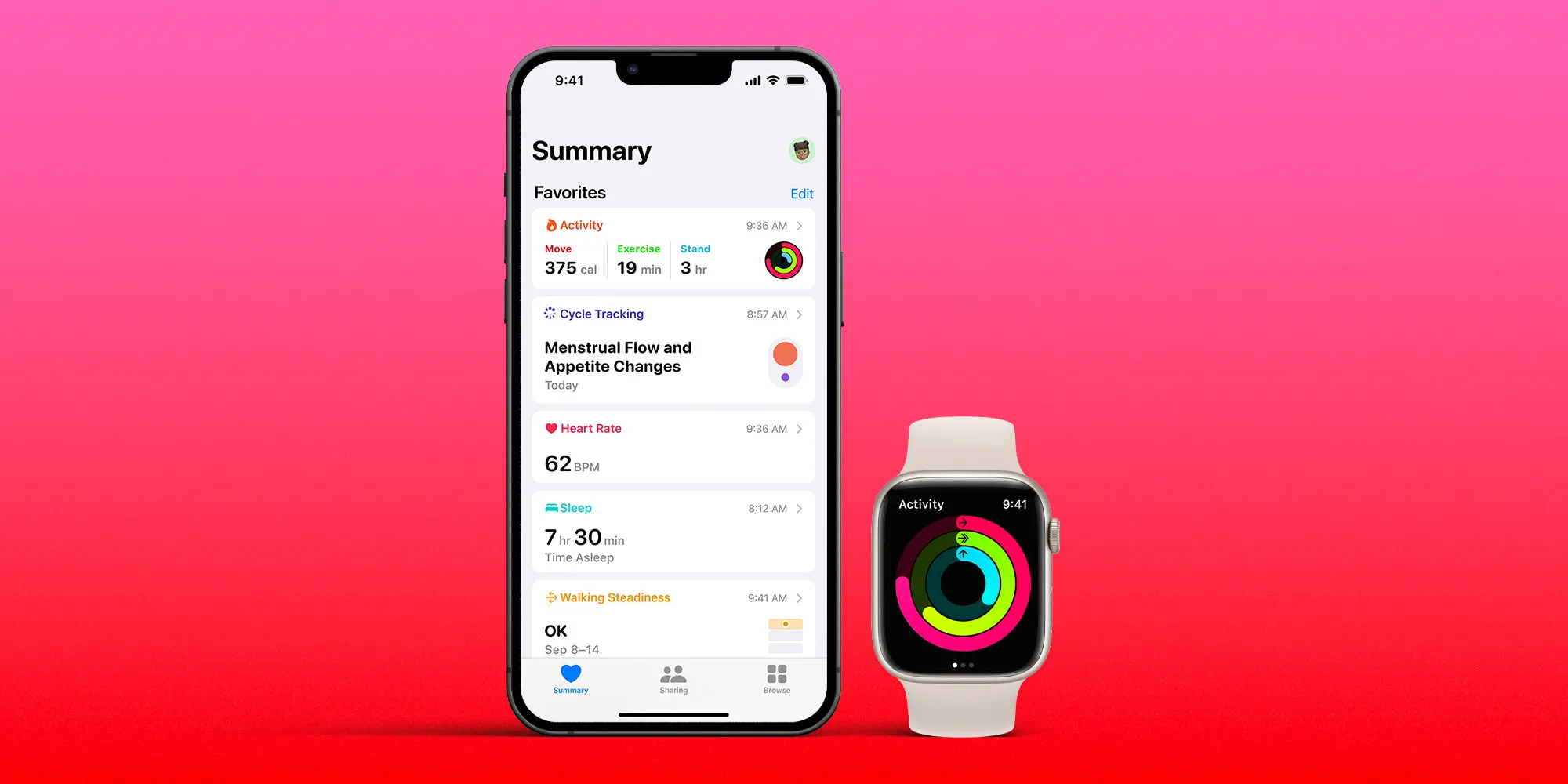
    Despite previous assurances of releasing an improved Siri, Apple has yet to introduce any significant artificial intelligence (AI) features. However, the company is still ambitious about its AI agenda for 2026, with a significant update planned for the Health app.

    AI-Powered Health+ Service in the Works

    The tech giant is rumored to be developing an enhanced version of its Health app, complete with a new Health+ subscription service. The proposed service is expected to incorporate an AI component designed to assist users in managing their health.

    The introduction of this service could position Apple at the forefront of the emerging AI health chatbot market. Features are expected to include nutrition tracking and AI-facilitated health coaching. These enhancements could potentially offer users personalized health advice, expert video content relating to different health issues, and guidance on living a healthier lifestyle.

    A Delay in AI Development

    Apple is reportedly set to introduce the long-awaited new version of Siri with iOS 26.4 in April. Additionally, the company is said to be working on a comprehensive revamp of the voice assistant, slated for release with iOS 27. This update also promises an AI-powered web search tool.

    A year after unveiling the “Made for Apple Intelligence” iPhone 16 series, Apple continues to trail its rivals. Samsung’s Galaxy S25 series boasts various Galaxy AI features, while Google’s Pixel 10 devices have Gemini on board. In comparison, Apple’s iPhone 17 series lacks any comparable features. Even the forthcoming OnePlus 15, equipped with the Android 16-based OxygenOS 16, incorporates advanced AI capabilities courtesy of Gemini.

    Apple’s strategy to enhance its standing in the smartphone AI market reportedly involves the development of a custom-made Gemini AI model, a move which could result in Apple paying Google $1 billion annually.

    Is Another Subscription Necessary?

    While there is some hope that Apple could deliver a beneficial health chatbot, the prospect of yet another subscription service may not be well-received. Although Apple will likely incorporate Health+ into Apple One and raise its price, the emerging trend of subscription fatigue indicates that any new service must offer substantial value to attract potential subscribers. Unfortunately, as it stands, the proposed Health+ service may not be sufficiently appealing.

    Questions & Answers

    – **What is Apple’s proposed enhancement to the Health app?**
    Apple is reportedly developing a Health+ subscription service with AI integration, designed to assist users in managing their health.

    – **How might this new Health+ service impact Apple’s standing in the AI market?**
    The introduction of this AI health chatbot could potentially position Apple as a leader in this emerging market.

    – **Why might Apple’s proposed subscription service face challenges?**
    Given the increasing prevalence of subscription fatigue among consumers, the value offered by any new subscription service must outweigh its cost to gain traction. As it stands, the proposed Health+ service may not be sufficiently compelling.

  • NAVER Unveils NAVER Ventures in Silicon Valley to Elevate Global Startup Investments

    NAVER Unveils NAVER Ventures in Silicon Valley to Elevate Global Startup Investments

    South Korea’s NAVER Corp. is making waves in the tech world with the launch of NAVER Ventures, its new global investment arm based in Silicon Valley. This initiative aims to support early-stage startups in North America and turbocharge the company’s global innovation strategy.

    Expanding Horizons with Innovation

    This venture builds on NAVER’s prior experience through its successful D2 Startup Factory (D2SF), which has already nurtured numerous tech startups, enabling them to scale their operations internationally. The formation of NAVER Ventures comes hot on the heels of the company’s 2023 acquisition of Poshmark, a U.S.-based social commerce platform, reinforcing its ambition to stretch its reach beyond Asia.

    Investing in the Future

    Focusing on strategic investments in artificial intelligence, digital content, and next-generation technologies, NAVER Ventures has already made headlines with its debut investment in TwelveLabs, a video AI startup celebrated for its cutting-edge machine learning capabilities in video understanding and search. This move is part of NAVER’s broader strategy to sharpen its competitive edge in the AI arena.

    Face-to-Face with Innovation

    NAVER’s founder and chairman, Lee Hae-jin, CEO Choi Soo-yeon, and President of Investments Kim Namsun recently ventured to Silicon Valley for crucial meetings with investors, engineers, and entrepreneurs. On June 5, the company hosted an engaging networking event titled “Venturing NAVER’s Next Chapter” to unveil its vision for global collaboration and innovative growth.

    A Bright Future Ahead

    Under Kim Namsun’s leadership, NAVER Ventures is set to finalize its setup by the end of June. The new unit will not only provide valuable capital but also strategic guidance to high-potential startups striving to enhance their global footprint. As a titan of the internet, NAVER boasts impressive sales of KRW 10.74 trillion (USD 7.5 billion) in 2024 and ranks among Korea’s top 15 companies by market capitalization. With a global portfolio that includes LINE, Webtoon, SNOW, and ZEPETO, NAVER’s operations extend across North America, Japan, and Europe. It seems this company isn’t just surfing the wave of innovation—it’s riding it to new heights!

    Questions & Answers

    What is NAVER Ventures? NAVER Ventures is a global investment arm based in Silicon Valley, designed to support early-stage startups and accelerate NAVER’s global innovation strategy.

    What areas are NAVER Ventures focusing on for investments? The new investment arm will primarily focus on artificial intelligence, digital content, and next-generation technologies.

    Who is overseeing NAVER Ventures? Kim Namsun, the President of Investments, will oversee NAVER Ventures as it aims to empower startups aiming for global expansion.

  • Docomo Ventures invests in Singapore’s Kpisoft

    Docomo Ventures invests in Singapore’s Kpisoft

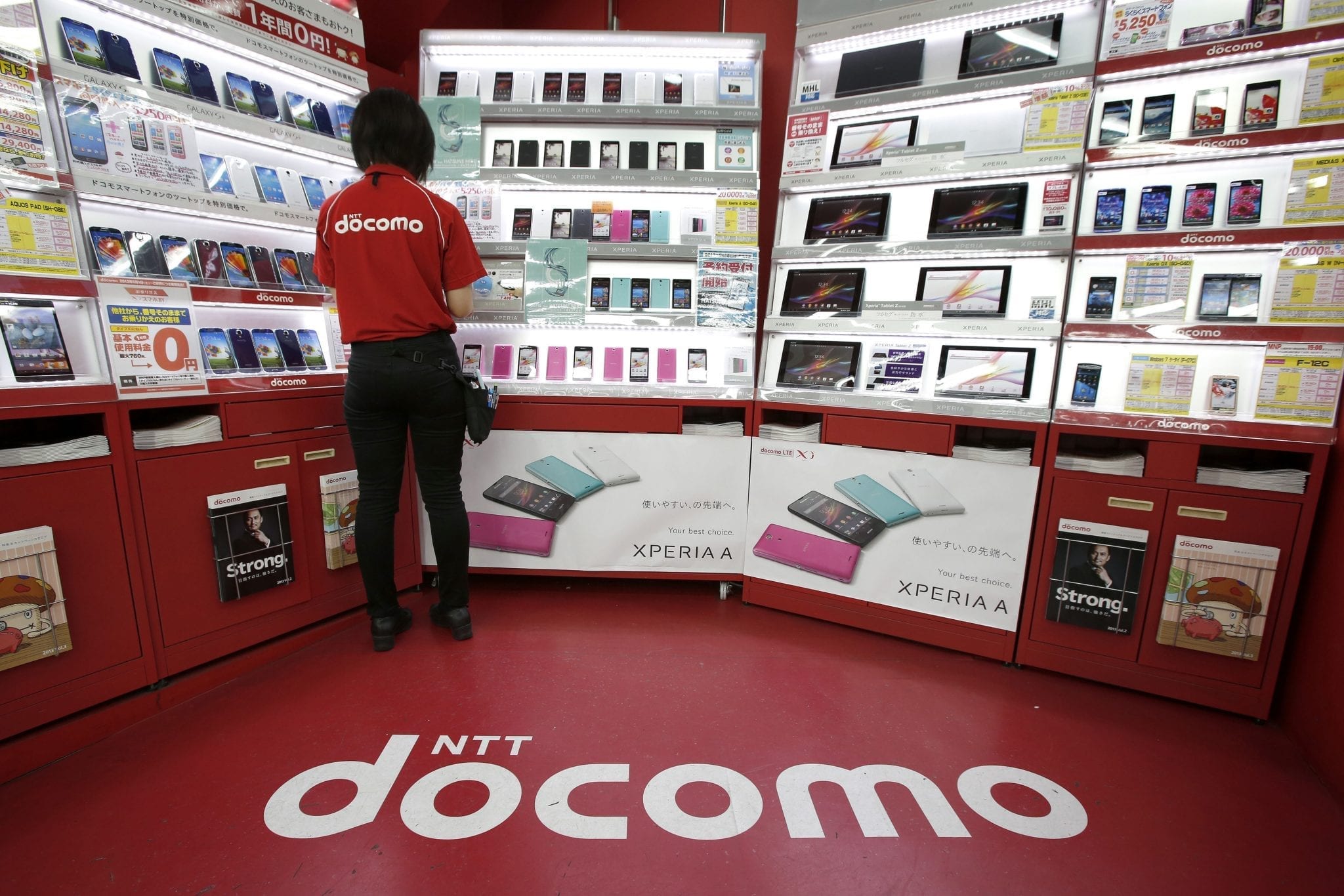
    NTT Docomo Ventures, a wholly owned subsidiary of NTT Group, has made an investment in Singapore-headquartered cloud-based enterprise management solutions provider Kpisoft.

    NTT Docomo Ventures has acquired shares of Kpisoft through its third-party allotment, the company said. Financial details of the transaction were not disclosed.

    According to Docomo Ventures, the solution provided by Kpisoft is designed to analyze data that exists in EPM, BI, human resources management and other relevant systems within an enterprise on a single platform.  The solution has a function that can automatically distribute the analytical findings directly to individual employees in an action proposal form by using machine learning and natural language processing.

    This enables enterprises to make use of analytical findings on enterprise performance and directly and automatically support the actions of individual employees, the company noted.

    Docomo Ventures further said it has made the investment because it “highly expects” the services and knowhow Kpisoft provides will bring added values to EPM or BI the NTT Group offers.

    Reliance Jio Digital Services acquires Haptik

    Meanwhile India’s Reliance Industries, through its subsidiary Reliance Jio Digital Services, has acquired artificial intelligence firm Haptik for Rs 700 crore ($100 million).

    Reliance Jio will hold about 87% of the business with the rest being held by Haptik founders and employees through stock option grants, according to a company release.

    As part of the transaction, Haptik’s existing major shareholder Times Internet will exit the company.

    Akash Ambani, director at Reliance Jio Digital Services said the acquisition underlines the company’s commitment to further boost the digital ecosystem and provide Indian users conversational AI enabled devices with multi-lingual capabilities.

    “We believe voice interactivity will be the primary mode of interaction for Digital India,” Ambani said in a statement.

    “We are delighted to announce this partnership, and look forward to working with the experienced team of Haptik in realizing this vision for offering greater connectivity and rich communication experiences to the billion+ Indian consumers.”

    Founded in 2013, Haptik is chat based virtual concierge mobile application. It client base includes Samsung, Coca-Cola, Future Retail, KFC, Tata Group, Oyo Rooms and Mahindra Group.

    The Haptik team will continue to drive growth of the business, including the enterprise platform as well as digital consumer assistants.

    “This transaction enables Reliance Jio to leverage Haptik’s capabilities across various devices and touch points in the consumer’s journey. The investment focus is on enhancement and expansion of the platform, with an addressable market opportunity of over 1 billion users in India,” the company said in a statement.

  • Qnect rebrands to Get and raises $2.5m

    Qnect rebrands to Get and raises $2.5m

    Singapore-based campus social marketplace Get has closed a US$2.5 million funding round led by Vertex Ventures, the VC arm of Singapore sovereign wealth fund Temasek. Existing angel investor Click Ventures also joined in. Get will use the funds to further develop its product, build teams in the city-state, Hong Kong, and Australia, as well as expand to other markets. Launched in 2017, the app facilitates payments for stuff like merchandise, memberships, and events by university clubs and societies. More than 400 organizations with 220,000 members use Get across its three markets.

    The app has undergone a rebranding exercise – it was previously known as Qnect. The name change brings the startup “closer to its mission of helping students get their hands on the things they want,” says 23-year-old co-founder and CEO Daniel Liang.

    “Often, the things they want are heavily inspired and dictated by the actions of their peers, which is why the social aspect underpinning this platform is so important,” he adds.

    Vertex Ventures’ managing partner Joo Hock Chua believes Get’s social element is the missing gap in the online marketplace space.

    He says: “The younger [consumers] are inherently social, and Get is one of the few services that leverage this insight as the basis for a payments platform. This generation wants to buy what their friends are buying, and being able to provide that level of transparency on a scalable digital platform is incredibly powerful.”

  • Indonesia’s eFishery raises undisclosed pre-Series A funding

    Indonesia’s eFishery raises undisclosed pre-Series A funding

    INDONESIA’S eFishery, a smart fish feeder manufacturer, said it has secured pre-Series A funding from Dutch aquaculture investment fund Aqua-spark and Indonesian venture capital (VC) firm Ideosource.

    eFishery did not disclose the investment amount, but said the funds would be used to scale its distribution network nationwide, and also to ramp up manpower.

    “eFishery is a perfect example of a company that is solving real problems in a lucrative market,” said Andrias Ekoyuono, vice president of business development at Ideosource.

    According to the Food and Agriculture Organisation, more than 96% of fish farming activities worldwide is concentrated in Asia. In Indonesia alone, the overall market size for aquaculture is US$5.4 billion.

    As an Internet of Things (IoT) startup for fish and shrimp farming, the Indonesian firm said it is tackling one of the largest challenges in commercial aquaculture: Feeding operations.

    Fish feeding traditionally makes up between 50% and 80% of fish farming overhead costs, eFishery said in a statement.

    Overfeeding negatively impacts the environment in many ways, as a great deal of fish food ultimately goes to waste. It also harms the health of a farmer’s stock. Underfeeding means fish may not survive.

    The result of unmeasured and inexact fish feeding methods on a commercial scale inevitably means economic losses for farmers, the company said.

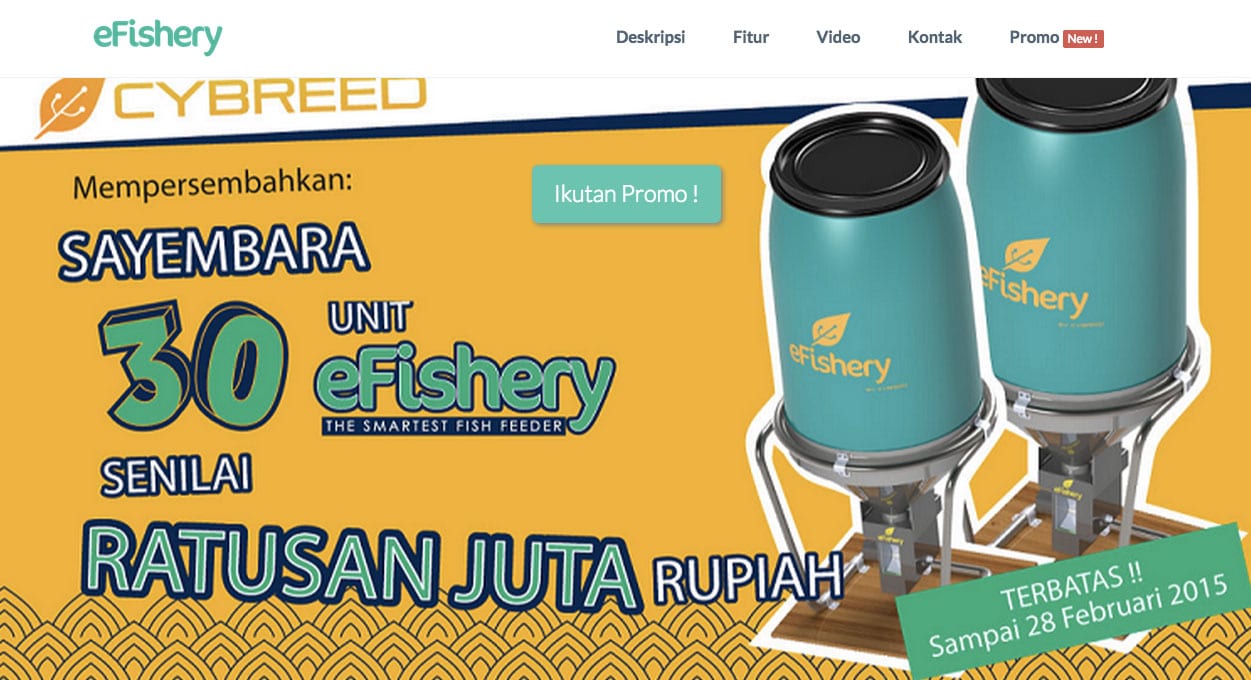
    eFishery offers a transformative, affordable, tech-based solution to solve the problem, in the form of an automatic smart feeder that uses sensors to measure fish appetite and appropriate feed amounts.

    Designed for both small and large-scale farmers, the system can sense appetites, automatically distribute feed, and give real-time reports of consumption on the farmer’s smartphone, the company claimed.

    “The problem we are solving is the inefficiency of feeding in the fish farming business,” said eFishery cofounder and chief executive officer Gibran Chuzaefah Amsi El Farizy.

    “I saw the problem when I was a fish farmer myself. Fish feeding is done inefficiently by labourers, and farmers don’t have any technology to control the feeding yet.

    “We built this product to make the fish and shrimp farming business more efficient, convenient, and accountable,” he added.

    eFishery said it makes makes money from selling smart feeders to farmers and distributors. It also charges a monthly subscription fee for the software used to monitor and analyse fish feeding activities in real-time via tablet or smartphone.

    On average, its smart feeding system reduces the amount of feed used by 21%, the company claimed.

    eFishery said it has sold hundreds of units in the past two years, and currently has over 17,000 fish and shrimp farms in its pipeline, which include orders from Thailand, Singapore, India, China, Brazil, and countries in Africa.

    “We are very excited to solve the global challenge of fish feeding with eFishery,” said Aqua-spark partner Amy Novogratz.

    “Indonesia has about 3.3 million fishponds and 2.7 million fish farms. When brought to scale, it could have a massive impact across a global industry plagued by this challenge.

    “It has the potential to set a new standard for aquaculture and make the industry more transparent, data-driven, and accountable – all factors that will make businesses in this sector more investment-friendly,” she added.

    eFishery said it will use the newly acquired capital for three purposes: To engage distributors, find local partners, and expand its market share aggressively in Indonesia.

    It is also developing a software-side platform, and will create a better dashboard for customers, as well as add more features and fish compatibility for its device.