Tag: Versace

  • Versace in Search of New Leader as CEO Emmanuel Gintzburger Steps Down

    Versace in Search of New Leader as CEO Emmanuel Gintzburger Steps Down

    After nearly four years of guiding the iconic Italian luxury fashion house, Versace’s CEO, Emmanuel Gintzburger, has decided to step down from his role.

    A Leadership Transition at Versace

    Gintzburger took the reins at Versace in September 2022, following his tenure as the CEO of Alexander McQueen, where he served for approximately six years. Gintzburger also boasts an impressive resume with leadership roles at Saint Laurent, Jeanne Lanvin, and Sephora under his belt.

    His time at Versace was marked by significant changes, notably the brand’s acquisition by the Prada Group last year. The Group, another Italian luxury titan, purchased Versace in a significant transaction valued at US$1.375 billion from US-listed Capri Holdings, effectively “bringing the brand back home.”

    Subsequent to this acquisition, Lorenzo Bertelli, the Chief Marketing Officer at Prada Group, was appointed as the executive chair of Versace.

    The Future of Versace

    The Prada Group confirmed that Gintzburger’s resignation became effective on June 23, and assured that an announcement regarding his successor will be made when the time is right.

    Earlier this year, Versace named Pieter Mulier as the new chief creative officer, effective from July 1, replacing Dario Vitale, who had a brief stint with the company, departing in December.

    As Mulier prepares to unveil his debut collection for Versace next February, the company is working diligently to finalize its management team, which includes Bertelli and the forthcoming CEO. This is a critical step as the brand gears up for its next growth phase.

    Questions & Answers

    Who is the outgoing CEO of Versace?
    Emmanuel Gintzburger was the CEO of Versace, leading the company for nearly four years before announcing his resignation.

    Who acquired Versace recently?
    The Prada Group, an Italian luxury company, acquired Versace last year in a deal worth US$1.375 billion.

    Who is the new Chief Creative Officer for Versace?
    Pieter Mulier was named the new Chief Creative Officer for Versace, with his tenure starting from July 1.

  • Pieter Mulier: From Dior and Calvin Klein to Versace’s New Chief Creative Officer

    Pieter Mulier: From Dior and Calvin Klein to Versace’s New Chief Creative Officer

    The Prada Group, a leading player in the world of luxury goods, has appointed Pieter Mulier to the position of Chief Creative Officer for Versace. This new appointment is set to come into effect from July 1 onwards.

    Mulier’s impressive portfolio includes senior roles at renowned fashion brands such as Dior, Raf Simons, Jil Sander, Calvin Klein, and most recently as the creative director at Alaia.

    In his new designation with Versace, he will be answerable to the Executive Chairman, Lorenzo Bertelli.

    According to Bertelli, Mulier was identified as the ideal candidate for the brand during the acquisition process of Versace by Prada Group. He expressed strong confidence in Mulier’s capabilities to fully harness the potential of Versace, and believes that Mulier will effectively engage in meaningful dialogue with the brand’s rich legacy. Bertelli also expressed his excitement about beginning this new journey with Mulier.

    Questions & Answers

    Who has been appointed as the new Chief Creative Officer for Versace?
    Pieter Mulier has been named as the new Chief Creative Officer for Versace.

    Who did Pieter Mulier serve as the creative director for before this new appointment?
    Before his appointment at Versace, Pieter Mulier served as the creative director for Alaia.

    Who will Pieter Mulier report to at Versace?
    In his new role at Versace, Pieter Mulier will be reporting to the Executive Chairman, Lorenzo Bertelli.

  • Versace Bids Farewell to Creative Chief Dario Vitale After Brief Tenure

    Versace Bids Farewell to Creative Chief Dario Vitale After Brief Tenure

    Dario Vitale, the creative director of Italian fashion giant Versace, is set to depart from his role after a brief tenure, the fashion label announced on Thursday.

    Departure Announcement

    Acknowledging Vitale’s contribution, Versace expressed their gratitude for his significant role in shaping the brand’s creative strategy during the transitional phase. The fashion house continued to wish Vitale every success in his future career endeavors.

    Vitale’s departure is scheduled for December 12, as disclosed in the official announcement by Versace. The statement also promised that the name of his successor would be unveiled in the coming times.

    Entry and Exit

    Before joining Versace, Vitale had been an established designer at Miu Miu. He assumed the role of Versace’s chief creative officer in April, stepping into the shoes of Donatella Versace following her impressive tenure of almost three decades.

    The announcement of Vitale’s departure came shortly after the news broke of Versace’s acquisition by Prada. The deal was settled at approximately 1.3 billion euros, resulting in Versace changing hands from Capri Holdings to Prada.

    Questions & Answers

    What role did Dario Vitale play at Versace?
    Dario Vitale was the creative director at Versace. He played a significant role in shaping the brand’s creative strategy during his brief tenure.

    When is Vitale scheduled to leave Versace?
    Vitale is scheduled to depart from Versace on December 12, as disclosed in an official announcement by the company.

    Who will succeed Vitale as the creative director of Versace?
    The successor to Vitale as the creative director of Versace has not been announced yet. Versace has promised to reveal the name in due course.

  • Prada brings Versace home to create Italian luxury contender

    Prada brings Versace home to create Italian luxury contender

    Prada’s deal to buy Versace revives hopes for a ‘made in Italy’ luxury champion after many other family-founded brands ended up in French, Swiss or US hands, and comes as many Italian groups are outperforming the struggling sector.

    The US$1.375 billion deal brings one of fashion’s best-known Italian labels back under Italian control after it was sold to US-listed Capri Holdings, then known as Michael Kors, for $2.15 billion including debt in 2018.

    Despite Italy accounting for 50 per cent to 55 per cent of global personal luxury goods production, according to consultancy Bain’s estimates, the country lacks a group with a scale that matches up to French players such as LVMH and Gucci-owner Kering.

    Milan-based Prada, controlled by designer Miuccia Prada and husband Patrizio Bertelli and listed in Hong Kong with a market capitalisation of about $15 billion, is the largest Italian luxury fashion group by revenue.

    But the group, which also includes the fast-growing Miu Miu label, has been a relative minnow in terms of stock market valuation compared with the likes of Louis Vuitton-owner LVMH.

    The Versace deal comes after Andrea Guerra became Prada’s CEO in 2023 to bridge a change in generation, with Lorenzo Bertelli, the son of the company’s main owners and its chief marketing officer, regarded as the heir apparent.

    “Prada’s ambition to become a leading Italian luxury conglomerate is a significant move in a market that is dominated by French groups. It’s exactly what many Italians have been hoping for”, said Achim Berg, a fashion and luxury industry adviser.

    The combined revenue of the five biggest Italian-owned listed luxury groups – Prada, Moncler, Ermenegildo Zegna, Brunello Cucinelli and Ferragamo is still well below Kering’s roughly $19 billion, even after a big fall in sales at the French group last year.

    Company founder Brunello Cucinelli summed up the difference in approach on the two sides of the Alps in typically colourful fashion.

    “Our esteemed French counterparts are great financiers,” he told the Milano Fashion Global Summit 2024 last October.

    “But we Italians regard our ‘tiny big’ companies as if they were our little children, so we want to look after them and hand them down to a next generation,” he added.

    While LVMH and Kering have swallowed many Italian brands, even the larger Italian groups have until now been comparatively reluctant to make big acquisitions.

    “This acquisition represents Prada’s serious attempt to build a group – and a much more ambitious one compared to their past ventures with Helmut Lang and Jil Sander,” Berg said.

    Prada’s chairman and co-owner Patrizio Bertelli defined the acquisition of those two brands – which were bought at the turn of the century and sold a few years later – as “strategic mistakes”. The group has since focused mainly on organic growth, with the exception of acquisitions of suppliers.

    Both Prada and Versace have their roots in Milan and still have headquarters there, just four kilometres (2.5 miles) apart.

    Milan-based Moncler, the mountain gear brand that was bought and revived by Italian entrepreneur and current main shareholder Remo Ruffini in 2003, has also shown some interest in dealmaking, buying Italian streetwear brand Stone Island in a $1.3-billion deal agreed in late 2020.

    Moncler’s net cash position of $1.5 billion has fuelled analyst talk of more deals, but the group has denied such speculation.

    Jil Sander is now part of Italian entrepreneur Renzo Rosso’s OTB Group, which also includes brands such as Diesel and Maison Margiela. But with annual sales of $1.9 billion, it remains relatively small.

    The big Paris-based groups, meanwhile, have continued to make forays into Italy, underscoring the challenge an enlarged Prada would face to compete with them.

    In the latest deals, Kering bought a 30 per cent stake in Italian maison Valentino in 2023, and LVMH last year helped to take Tod’s private and took a 10 per cent stake in Moncler’s top shareholder.

    In the longer-term, eyes are on companies such as Milan-based Armani and Dolce & Gabbana, among the few in Italy that are still fully family-owned and unlisted.

    Their ultimate fates could be decisive in any effort to create a true Italian powerhouse in global fashion.

  • Versace Macau boutique reopens at Four Seasons

    Versace Macau boutique reopens at Four Seasons

    Versace announced the re-opening of its boutique in Macau. Situated in the upscale Shoppes at Four Seasons, the store is located at the city’s premier luxury destination. Inspired by Medusa’s hypnotic gaze, the boutique has been renovated following a new concept created by renowned architect Gwenael Nicolas.

    An impressive ceiling embellished with concentric golden louvers surrounding a three- dimensional Medusa dominates the space. Visible from every corner of the store, the mythical woman acts as an anchor, a central figure that incorporates the iconic Versace aesthetic into the interior design.

    The imposing ceiling is contrasted with neutral flooring and walls, crafted from luxurious white marble. Envisioned as exclusive, private salons, showcase areas are enriched with plush carpets and cozy blue velvet armchairs. The muted colors of the space highlight the graphic prints and exceptional fabrication of the latest Versace creations. In a further nod to brand heritage, the golden metal display constructions are enriched with Barocco-infused acanthus leaves

    The 369 square meter boutique features a curated selection of women’s and men’s ready-to-wear and accessories.

  • Versace launches on Lotte Premium Mall

    Versace launches on Lotte Premium Mall

    Italian luxury fashion brand Versace opened a store on e-commerce site Lotte Premium Mall in South Korea on Monday.

    Lotte Department Store says the store is a collaboration with the official importer Versace Korea and the online mall.

    Forty lines of Versace products, including ready-to-wear and accessories including wallets, belts, clutches and jewelry is showcased on the fashion mall site.

    Local media reports suggest online customers will be able to exchange purchases in Versace’s brick-and-mortar boutiques, including at Avenuel Main, Avenuel World Tower and Suwon.

    Myeong-gu Kim, head of the online division of Lotte Department Store said that in the future, Lotte Premium Mall plans to strengthen collaboration with international luxury brands to make their online entry into South Korea.

    Versace is a luxury brand created in 1978 by Gianni Versace and his sister Donatella Versace.

  • Versace apologises for the bold suggestion that Hong Kong is a country

    Versace apologises for the bold suggestion that Hong Kong is a country

    Italian luxury label Versace and its artistic director Donatella Versace apologized on Sunday after one of the company’s T-shirts was widely criticized on social media in China for identifying Hong Kong is a country.

    Versace, which was bought by US-based Capri Holdings in September, said on its Weibo account that it had made a mistake and as of July 24 had stopped selling and destroyed the T-shirts.

    The T-shirt, images of which were widely posted on Chinese social media, featured a list of “city-country” pairs, including “New York-USA” and “Beijing-China”. But it also described Hong Kong and Macau as “Hong Kong-Hong Kong and Macau-Macau.”

    The studio of Versace’s China brand ambassador Yang Mi, one of the country’s most well-known actresses, also said on its Weibo account that she was ending her contract with Versace over the issue.

    “China’s territorial integrity and sovereignty are sacred and inviolable at all times,” Jiaxing Media said in the statement.

    The ending of Yang’s relationship with Versace was one of the most viewed topics on Weibo on Sunday, attracting more than 640 million views.

    Milan-based Versace is the latest company to become entangled in political issues involving China, which since last year has increased its policing of how foreign firms describe Hong Kong and Macau, former European colonies that are now part of China but run largely autonomously.

    “Versace reiterates that we love China deeply, and resolutely respect China’s territory and national sovereignty,” the company said in a statement.

    Donatella Versace, sister of the fashion house’s late founder Gianni, issued a similar statement on her official Instagram account.

    “Never have I wanted to disrespect China’s National Sovereignty and this is why I wanted to personally apologize for such inaccuracy and for any distress that it might have caused,” she said.

  • Versace adds gloss to Capri results

    Versace adds gloss to Capri results

    At headline level, the latest Capri results looks to have been a good quarter for the fashion retail owner, with revenues up by a solid 11.9 percent.

    However, the results are far from spectacular. The uplift in revenue is all a function of the inclusion of sales from Versace, which was not part of the group at this point last year. Revenue at the two other brand houses – Michael Kors and Jimmy Choo – both fell significantly.

    Moreover, margins at both divisions declined, contributing to a 70.2 percent dip in operating income. All the metrics are going in the wrong direction and run counter to Capri’s business plan for strengthening profitability as it advances to being an US$8 billion business.

    Michael Kors is the most problematic part of the business and the brand starts the new fiscal year in the same way as it ended the last one – with a decline in overall revenue. The difference from last year is that the pace of decline has accelerated, underpinned by a modest deterioration in comparable sales. As much as Capri blames the poor performance on its efforts to rebalance the brand, the weak numbers have more to do with a lack of underlying enthusiasm from some of the audiences it wants and needs to reach.

    Part of the issue is the baggage that Michael Kors still carries from the days when it expanded to the point of ubiquity: there are still lingering perceptions that the brand is unsophisticated and lacks the refinement of labels like Coach. None of this is aided by the fact that Michael Kors deliberately plays up its edgy nature with some bold and occasionally gaudy designs supported by marketing and promotion that can appear gauche. These things may differentiate the brand from more conservative rivals, but they do little to increase its appeal.

    To be fair, Michael Kors also has products that are elegant and its newer menswear ranges are designed to be fashionable and functional and so come across as more conservative. However, these get lost in the wider image of the company and make the offer look unfocused and schizophrenic. Michael Kors is still a brand that is unsure of its identity and this does not bode well for future growth.

    Jimmy Choo’s heritage is more conservative, and its backstory is one of the elegant products with interesting fashion twists. However, the influence of Michael Kors is starting to rub off and the brand is becoming more focused on the bling with a pinch of ostentatiousness thrown in for good measure – as is exemplified by the new logo and some of the new non-footwear product launches. Attempts to amplify the brand are not necessarily wrong, but the methods being used have the potential to alienate existing customers and drag the brand into territory where it cannot thrive.

    The integration of Versace represents an opportunity for Michael Kors and in terms of styling and brand attitude, the division is a good fit for the ethos of the whole group. The challenge is to bring discipline to a logo that is larger than life, but which often lacks focus and coherence. We are generally supportive of the vision to grow share in menswear and activewear and to expand the store footprint. However, a lot of work on the overall brand vision is still needed to create a compelling offer for the customer.

    Overall, Capri is fulfilling its vision to create a house of luxury brands. Unfortunately, it currently has a collection of brands that need a lot of work in order to reach their potential. We reserve judgement on whether current management can deliver the long-term growth plans they have set out.

  • Versace China opens Beijing flagship Store

    Versace China opens Beijing flagship Store

    Versace China’s new flagship has opened in Beijing as part of a concerted plan by the fashion label’s new owners to expand its footprint globally.

    Launching in Beijing’s China World Mall to bring its store network to 53 outlets, the more than 4300sqft two-level boutique features a marble-based store design overseen by French architect Gwenael Nicolas.

    “The LEED-certified boutique has been created with the highest sustainability standards in mind,” said a statement released by the firm. “Dimmable lights with central control have been installed to ensure efficient use of energy over the course of the day.”

    “There’s no bigger luxury than our future. The new Versace China concept is a commitment toward Versace’s sustainable legacy,” said designer Donatella Versace”

    Capri Holdings, which also owns Michael Kors and Jimmy Choo, bought Versace from Donatella Versace late last year for US$2.2 billion. It is now implementing a plan to double the label’s worldwide sales with at least 112 new stores scheduled by 2022 along with a refurbishment program for the existing network. The new Beijing store is a key step in that plan.

  • Versace to expand Asian store network

    Versace to expand Asian store network

    More stores, broader range, fewer brands as fashion icon tries to double sales. Versace will open its largest store yet in China this week, part of a concerted plan by the fashion label’s new owners to expand its footprint globally.

    Capri Holdings, which also owns Michael Kors and Jimmy Choo, bought Versace from Donatella Versace late last year for US$2.2 billion. It is now implementing a plan to double the label’s worldwide sales with at least 112 new stores scheduled by 2022 along with a refurbishment program for the existing network. The new Beijing store – details of which are scant at present – is a key step in that plan.

    Worldwide, Versace has 188 stores currently and wants to reach 300 within three years. Asia will be a big benefactor from the plan, already accounting for more than half the network. China alone has 40.

    Along with new openings and revamps of existing stores, Versace will boost its product offer, adding more handbags, footwear and leather goods to its high-end clothing range. Accessories currently account for just 35 per cent of Versace’s sales and the company wants to lift that to 60 per cent.

    “It’s very clear: The productivity in our stores is not what it should be,” CEO Jonathan Akeroyd told an investors briefing this week. He plans to double the sales per square foot across the network.

    “We need to rapidly increase productivity and this will really be the real driver to take us to our US$2 billion revenue target.”

    Versace’s marketing strategy will be revised, with less focus on fashion shows in favour of a stronger social media presence.

    The company has quietly dropped its diffusion brands Versace Collection and Versace Versus and new stores will all bear the core Versace brand name alone.

  • New Michael Kors to increase focus on Asia

    New Michael Kors to increase focus on Asia

    With the completion of its acquisition of Versace, global fashion group Michael Kors Holding has successfully transitioned into its new identity as Capri Holdings Limited. The group, which now owns Michael Kors, Jimmy Choo and Versace, hopes to leverage its brands to grow group revenue to US$8 billion, while increasing its exposure to the Asia pacific region from 11 per cent to 19 per cent.

    The group also notes an effort to reduce its exposure to the American market, from 66 per cent to 57 per cent, in the long term.

    “We have now created one of the leading global fashion luxury groups in the world,” Capri chairman John D. Idol said.

    However, considering the past performance of these brands, one cannot be certain whether this merged entity can turn them around says IBISWorld senior industry analyst Kim Do, though “Capri Holdings seem confident in their ability to do so.”

    “While many are concerned about the company diffusing its newly acquired brands, similar to that of its own, this is unlikely as, similar to Jimmy Choo’s agreement with Kors Holdings, Donatella Versace will continue to remain the creative director [of] her namesake brand, leading the brand’s creative vision,” Do said.

    “However, while it is likely that Versace will be pushed into new avenues of revenue (such as a stronger focus on Asian markets) it will likely not include mass-retailers – which is how Michael Kors expanded previously.”

    According to Do, IBISWorld expects Capri to hold off on further acquisitions for the time being, and will most likely focus on growing the three brands it now hold in its portfolio.

    In November 2018, the group saw total group revenue decline 32 per cent to $189.76 million (US$137.6 million), from $279.81 million (US$202.9 million) the year prior, which GlobalData Retail managing director Neil Saunders called “disappointing”.

    “Although overall revenue growth looks robust, it continues to be flattered by the acquisition of Jimmy Choo, which has yet to annualise out,” Saunders said.

    “In short, after slowly climbing the steep hill of recovery, Michael Kors now appears to be rolling back down in reverse.”

    Saunders also said the acquisition of Versace could prove to be a distraction that limits the group’s abilities to fix the core problems within it’s main brand.

    In November 2018, the group saw total group revenue decline 32 per cent to US$137.6 million, from US$202.9 million the year prior, which GlobalData Retail MD Neil Saunders called “disappointing”.

    “Given Michael Kors’ relative lack of success with its own label, we do not see the group being able to [easily] undertake the retooling required to generate superior results.”

  • Versus to merge into Versace Jeans line

    Versus to merge into Versace Jeans line

    It has only been a month since Versace announced it was to be sold to Michael Kors’ parent company Capri Holdings for a reported sum of 2.12 billion dollars. As an early indicator of change, and perhaps cost-saving measures under its new structuring, Versace is to integrate its Versus line into Versace Jeans.

    Versace Chief Executive Jonathan Akeroyd said “During the last few months we have studied how to simplify our business model with a view to focusing on the portfolio of our brands, continuing to ensure innovation and relevance in everything we do. We decided to integrate our two contemporary collections into one, merging Versus and Versace Jeans. This operation will allow us to further develop Versace Jeans’ proposals and, at the same time, not to lose the DNA and the codes that have made this iconic Versus “.

    The collection was notably absent from the catwalk and fashion week after it decamped to London to show its autumn winter 2018 collection.

    The Versace Jeans label is currently under license to Swinger International, also the licensing partner to brands including Genny and Cavalli Class.

    The unexpected move by Versace is indicative of the transformations and shakeups happening in luxury brand’s diffusion ranges.

    Earlier this week Blufin announced the launch of the new Be Blumarine label that will replace Blugirl; Missoni recently reported Margherita Missoni as the new creative director of its M Missoni diffusion line; Marc Jacobs famously shuttered his Marc by Marc Jacobs stores, integrating the label under a single brand umbrella.

    Donatella Versace will reportedly continue to lead the creative vision for the Versace brand.

    At the time of the acquisition it was reported she would become a shareholder of Capri Holdings, along with her brother and daughter.

  • More brands join anti-fur movement

    More brands join anti-fur movement

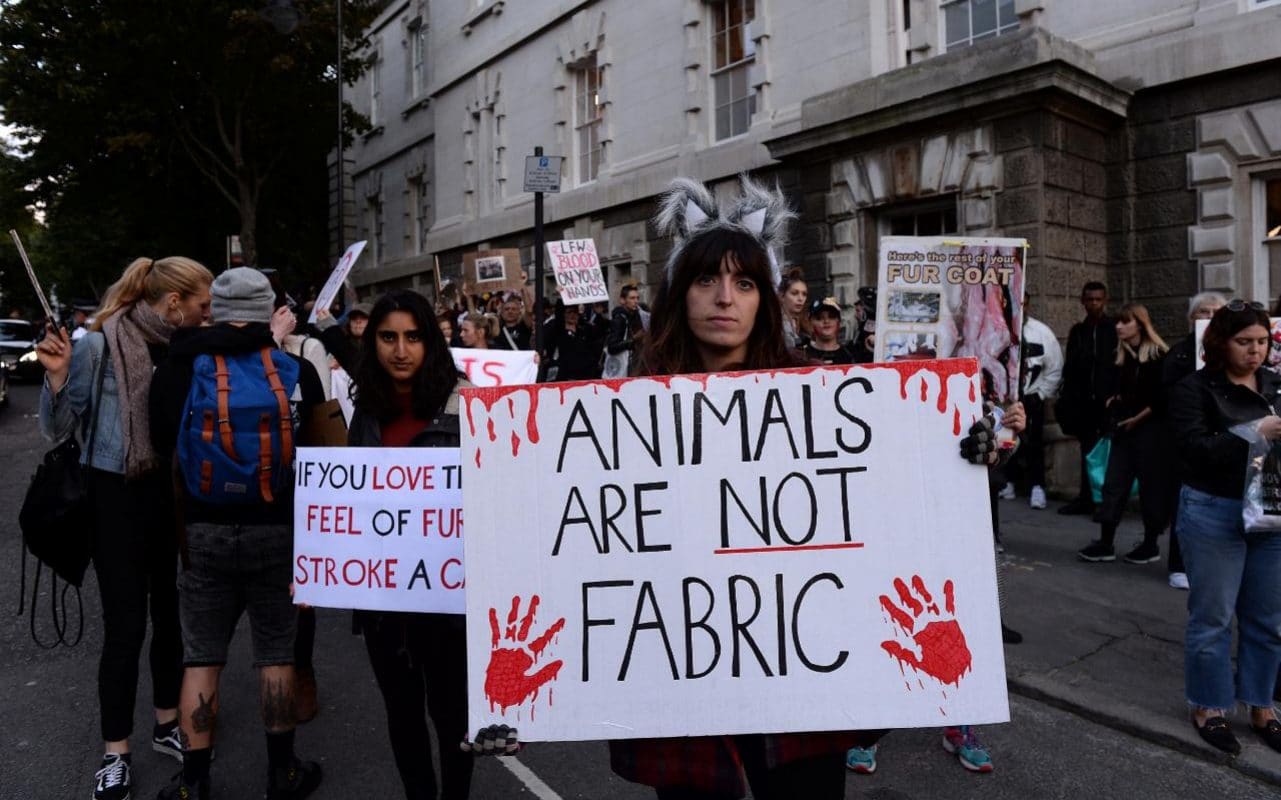
    Among the investors who snapped up shares in luxury e-commerce marketplace Farfetch after its September IPO was one buyer with little interest in operating profits or projected revenue. People for the Ethical Treatment of Animals pounced on shares in the newly public company so it could make its case directly to ban fur sales on the platform. They needn’t have bothered.

    Farfetch quietly committed to going fur free in May, inserting a promise in the terms and conditions section of its website to stop selling items made with fur by the end of next year.

    Farfetch joins a growing list of luxury brands and retailers turning their backs on animal fur.

    Within the past 18 months, Yoox Net-a-Porter, GucciMichael Kors, Versace, Furla, Burberry and DVF have all announced anti-fur policies, while this year’s September London Fashion Week became the first of the major fashion weeks not to show any fur on the catwalk.

    Within the luxury space, the balance has tilted against fur.

    In the 1980s, fur was synonymous with luxury, representing a status symbol for many women.

    The global fur trade is valued at $40 billion, but today fur is central to the image — and revenue — of only a handful of major brands.

    Meanwhile, anti-fur messaging is being amplified by social media and a millennial customer base that is paying closer attention to the values represented by the products they buy.

    For brands like Gucci, the goodwill generated by banning fur outweighs the sacrifice of a few million dollars in sales of fur-trimmed loafers.

    “[It’s about] being more modern in our thinking and our approach to business and how we talk and engage with our consumer and our community of women,” Sandra Campos, chief executive at DVF, said of the decision earlier this month to stop using fur, exotic skins, mohair and angora in upcoming collections.

    “No one really wanted to associate the brand with [fur]. We don’t need real fur to have a status symbol anymore.”

    The anti-fur movement has ebbed and flowed for decades.

    Calvin Klein stopped using fur in 1994, the same year Peta ran a campaign featuring supermodels including Naomi Campbell and Christy Turlington, who claimed they would “rather go naked than wear fur.”

    Ralph LaurenTommy Hilfiger and Selfridges barred fur in the mid-2000s.

    More recently, Hugo Boss joined the no-fur list in 2015, followed by Armani the following year.

    Gucci kicked off the latest wave of brands announcing fur bans in October 2017.

    Winning over luxury’s hottest brand was a coup for animal-rights activists who had been targeting specific companies for almost a decade via a mix of behind-the-scenes talk and public protest.

    In July 2017, more than 20 animal rights activists heckled Michael Kors during a speech, while in September 2017, Burberry’s London Fashion Week show was disrupted by about 250 anti-fur protesters.

    Michael Kors agreed to ban fur in December, Burberry last month.

    The rise of social media has provided the general public with a direct line of communication to companies and a platform for opinions and protest, making it harder for brands to ignore targeted activism.

    It’s also given animal rights organisations a platform for mobilising consumers into action.

    The global fur industry is fighting back, launching its own campaign making the case for fur as a natural, sustainable product that is better for the environment than alternatives, which are often made from plastic.

    One recent campaign featured Fendi and Oscar de la Renta, among other brands.

    “Brands are under huge pressure to respond to social media and avoid any controversy,” says Mark Oaten, chief executive of the IFF.

    “Even in a five year period that has changed … the fear of reputational damage is increased at the moment.”

    Studies show activism is impacting purchasing decisions.

    Prior to announcing its fur-free policy last June, Yoox Net-a-Porter surveyed 24,000 customers: 72 percent said social or environmental considerations drove their purchasing decisions at least some of the time, while 58 percent said having more information about the ethics and sustainability of a product would influence their shopping choices.

    Indeed, the idea of what luxury means to consumers today has evolved.

    “It’s become synonymous with social responsibility and innovation,” said PJ Smith, fashion director at the Humane Society US.

    “Companies that want to position themselves as corporate social responsibility leaders are seeing the marketing potential of going fur free, especially with new luxury consumers.”

    For a brand like Michael Kors or Burberry, going fur free won’t have much impact on the bottom line, while providing a marketing boost.

    For DVF, fur was “a very minimal percentage” of the overall business, said Campos.

    “It wasn’t something we relied on heavily at all,” she said. “It made sense for us to walk away from it in total.”

    Similarly, Gucci’s decision to bet on animal rights activism wasn’t much of a trade-off, as the brand sold only €10 million ($12 million) in fur products last year, less than 0.2 percent of revenue.

    Gucci’s Instagram post announcing the news was among the brand’s top performing posts at the time of the announcement, amassing 179,524 likes.

    Even brands that still use fur are acknowledging shifting attitudes.

    Fendi, which started as a furrier in 1925, rebranded its Couture Week show this past July as haute couture, rather than the haute fourrure description it used in recent seasons.

    And while fur was still present in the label’s Spring 2019 collection, it was less prominent than in past seasons.

    Prada, too, has been decreasing its use of fur.

    Recently the brand has come under pressure as a result of a targeted campaign spearheaded by the Fur Free Alliance, a coalition of 40 animal rights groups.

    According to the company, thousands of e-mails demanding it bans animal fur have been sent to the Prada Group and personal addresses of employees.

    However, the company has not announced plans to stop using fur.

    “We believe it is important to stress that all the advertising campaigns of the Group’s brands, together with the fashion shows and displays in the shop windows, have not been presenting these products for some time, in order to discourage demand from consumers,” the Italian house said in a statement.
  • Michael Kors-Versace deal confirmed

    Michael Kors-Versace deal confirmed

    Michael Kors Holdings LTD confirmed earlier reports that it would buy all outstanding shares from Versace for around $2.1 billion.

    It also announced the group will officially be called Capri Holdings Limited, named after the island of Capri, which the company referred to as an iconic, glamorous destination.

    The renaming of the group was expected, given that keeping its name would perhaps confuse many customers who wouldn’t be able to separate the brand from the holding company, much like Coach Inc. did when the group renamed itself as Tapestry. Donatella Versace will stay on as creative director of the house, and will also be a shareholder in the new group, along with her brother Santo and daughter Allegra. “This demonstrates our belief in the long-term success of Versace and commitment to this new global fashion luxury group,” Donatella said in a statement. Versace CEO Jonathan Akeroyd will also remain with the company.

    John D. Idol, chairman and CEO of Capri Holdings Limited, also put out a statement acknowledging the Italian brand’s history and future prospects. “We are excited to have Versace as part of our family of luxury brands, and we are committed to investing in its growth. With the full resources of our group, we believe that Versace will grow to over US$2.0 billion in revenues,” he said.

    In a move that would give Michael Kors Holdings LTD a stronger foothold in the luxury fashion space, the company, which already owns Jimmy Choo, is reportedly inking a deal to buy Gianni Versace SpA that values the Italian company at $2.35 billion. Both parties are set to announce the deal as early as this week, according to sources.

    For Kors, best known for his affordable luxury handbags and his appearance as a judge on the hit design competition show Project Runway, this buyout is a significant step towards building a larger, more efficient holding business that would rival that of French heavyweight conglomerates LVMH (who owns Louis Vuitton, Fendi and Givenchy) and Kering (Gucci, Balenciaga and Saint Laurent). While there hasn’t been a similar American conglomerate that compares in terms of scale and resources, this could perhaps be the start of a new power-playing entity stateside.

    There have even been guessing games as to what Michael Kors would rename his holding company, should he choose to do so. While Coach owner Tapestry has made moves to adopt a similar model (it has acquired Kate Spade and Stuart Weitzman in recent years), owning a European luxury fashion brand like Versace would give considerable clout and star power to an American fashion portfolio.

  • 2017 has been Donatella Versace’s year

    2017 has been Donatella Versace’s year

    In 1997, Gianni Versace was murdered on the steps of his Miami Beach home. His grief-stricken sister, Donatella, suddenly found herself in charge of the family company.

    Twenty years later, she has chosen to take this anniversary and make it extraordinary, hijacking the style agenda to the extent that fashion journalists have been calling 2017 the year of Versace.

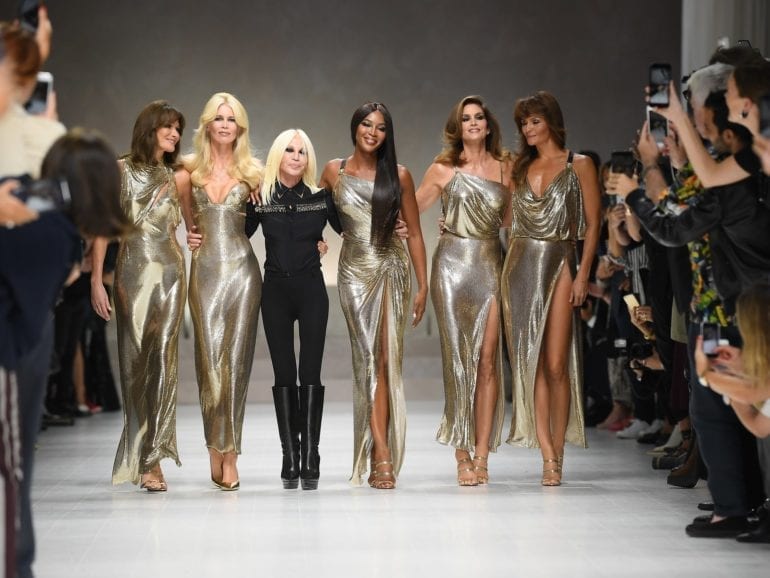
    She has designed a tribute collection inspired by Gianni’s archives, announced a scholarship in her brother’s name at Central Saint Martins and, in September 2017, in a fashion coup for the ages, reunited Gianni’s supermodel crew – Helena Christensen, Cindy Crawford, Naomi Campbell, Carla Bruni and Claudia Schiffer – for a catwalk finale that melted the internet.

    Here, it starts a series of achievements, she received a major accolade at the Fashion awards. She announces the opening of a new Versace store on Sloane Street in London.

    A lot of her year has been spent poring over old images and old creations, opening up the archive – a 10,000 sq ft storage facility in Novara, near Milan – and examining Gianni’s most famous creations for the first time since his death. “Not in a sad way,” she says, “but a very positive way. I saw what a genius my brother was. To me, he was my brother, but to the rest of the world – such a genius.”

    Even the names of the archive collections, produced between 1991 and 1995, speak of another, more glamorous age: Vogue, Warhol, My Friend Elton, Icons, Baroque.

    The pictures she shows me are from that time, too, and present the supermodel era exactly as you would want. Here is Bruni, a future first lady of France, dancing with abandon in thigh-high patent boots. Here is a babyfaced, never-off-duty Crawford, smouldering for the camera as she queues backstage. Here is Christy Turlington, running down a beach, wearing only shimmering sequins.

    Compared with the unsmiling models who have walked the catwalk since, and the airbrushed campaign images and omnipresent filtered Instagram photographs we have grown used to, these pictures feel authentic (however liberally doused in hairspray the models are).

    They bring back great memories, Donatella says. “This was the period that fashion became famous,” she says. “It was the beginning of fashion becoming pop culture, of being associated with music and rock’n’roll. Those two worlds were really in contact with one another. When something starts to happen, that is the most exciting moment. It was a huge change. The 90s was a huge change in fashion”.

    Donatella added : “My brother, of course, was the designer; I was working very closely with him all my life. But I started the relationship with the models that Gianni made ‘super’.” What “super” meant, she says, was showing personality. “Before that, I don’t think many designers let models have personality, nor after. The models should wear the clothes, be very serious, not smile, look in front of you, almost no soul. This was totally opposite: it was about the girls, what the girls were thinking, who they were dating. It wasn’t just about the clothes, but about who was wearing the clothes.”

    Fashion modelling is only just getting exciting again, she says, thanks to technology. “There are two generations of fashion for me: the one before the internet and the one after the internet.” Between the supermodels and now, she says, “was a moment of flatness. Now you could do this picture backstage again – there are people with enough personality there.” She likes the Instamodels, such as Gigi Hadid, who have become powerful thanks to their millions of followers on social media. “I think they are amazing. Very smart girls. Again, finally, we have girls who dare to stand out in the crowd.”

    The 62-year-old’s Fashion awards gong is icon of the year and the hype around her company is enormous, so it is easy to forget the starting point: the horror of her brother’s murder and her first few years running the company, during which she was so shellshocked that she broke down in tears on the catwalk. Does she feel like an icon? “Yes,” she says abruptly, then laughs. “OK, should I be shy? No. This is not because I’m full of myself, but I think, in fashion history, I did a lot. I mean an icon in fashion, not an icon in general, in the world.”

    To conclude with Donatella explained about contemporary trends by focusing on millennials. “Millennials are all many designers talk about backstage, particularly in Milan,” she says.

    In Italian fashion, the charge has long been that so many houses have been run for decades by the same designers or dynasties (Armani, Prada, Versace, Missoni; even relative newcomers Domenico Dolce and Stefano Gabbana are 59 and 55) that the scene has become stale.

    There have been rumours swirling around Versace for the past year or two that Riccardo Tisci, formerly of Givenchy – or Virgil Abloh of Off-White or Kim Jones of Louis Vuitton – might be in line for Donatella’s seat. That may be the case one day, but this year the conversation has shifted dramatically.

    In many ways, Donatella’s approach to millennials and social media feels remarkably modern – and not only because she has 2 million followers on Instagram (in typically understated style, when she joined the app in 2015, a press release was issued; ever savvy, in her first post, she posed with Gigi Hadid).

    This year, she says, has been “a rollercoaster of emotion. Not just that day [of the supermodel reunion show], but preparing for the show, going to the archive and seeing things that I last saw 20 years ago, before Gianni’s death. I never had the courage to go back there, because it was so painful, but I found the strength.”

    She did it, she says, “for the young generation who didn’t know, who weren’t born when Gianni was alive. I want them to know why Gianni was so important and what Gianni was about.” And to tell her side of the story? “To show them how relevant Gianni is today. No story, no filter.”