Retail News CRM

Tag: Victoria Secret

  • Victoria’s Secret Q3 Sales Soar, Marking Successful Turnaround Strategy

    Victoria’s Secret Q3 Sales Soar, Marking Successful Turnaround Strategy

    Victoria’s Secret witnessed an escalating sales growth in its third fiscal quarter, suggesting that the company’s revamp strategies are gaining traction.

    The retail giant reported net sales of US$1.472 billion for the quarter ending November 1, marking a 9 per cent surge compared to a 3 per cent uplift in the second quarter. This follows a 6.5 per cent hike in the same period last year.

    During the quarter, comparable sales also rose by 8 per cent. This growth can be attributed not only to the restoration of the company’s website, which suffered an outage last quarter, but also to the successful implementation of the strategies devised by the management.

    Customer-Focused Business Model

    Victoria’s Secret has managed to transform itself into a customer-centric business in a short span of time, thereby proving to be a game-changer. The company witnessed significant growth internationally, registering a 33 per cent uplift. Furthermore, the North American market also experienced a 5.4 per cent increase in store revenue and a 4.3 per cent rise in digital sales.

    One of the key amendments implemented by the management was the renewed emphasis on innovation. As a specialist, Victoria’s Secret has demonstrated its commitment to manufacturing and delivering superior products. Especially in areas like bras, where the technicalities of fit, form, and function offer immense opportunities, the retailer seems to be making a difference to the customers.

    In the recent past, the company had somewhat lost its edge in this area but under the current leadership, it is being reintegrated into the core of the business through initiatives like FlexFactor.

    Investment in Stores & the Pink Brand

    Another factor driving growth was the investment in store improvements to ensure superior customer service and advice. The new store designs are lighter and more inviting, thereby making Victoria’s Secret a more approachable brand with broader appeal.

    Additionally, the Pink brand under Victoria’s Secret umbrella also made significant strides. It is evolving from a mere addition to Victoria’s Secret into a distinct segment of the business with its unique tone and essence.

    Improved Financial Performance

    In financial terms, the company managed to narrow its operating loss from $47 million last year to $19 million. The net loss also reduced from $56 million to $37 million.

    With an improved performance, the retailer has lifted its outlook for the full fiscal year. It now expects net sales to fall in the range of $6.45 billion to $6.48 billion, compared to the previous guidance of $6.33 billion to $6.41 billion.

    Questions & Answers

    What was the net sales for Victoria’s Secret in the third fiscal quarter?
    The reported net sales for the quarter ending November 1 was US$1.472 billion.

    What changes has the current leadership at Victoria’s Secret implemented?
    The current leadership has renewed the focus on innovation and customer service. It has also made store improvements and evolved the Pink brand to be distinct from the Victoria’s Secret.

    What is the revised sales outlook for the full fiscal year?
    Victoria’s Secret expects the net sales to be in the range of $6.45 billion to $6.48 billion.
  • Victoria’s Secret sells stake in China business to new JV partner

    Victoria’s Secret sells stake in China business to new JV partner

    In a statement, Victoria’s Secret CEO Martin Waters called Regina Miracle “a valued merchandise supplier partner for more than twenty years.”

    The brand is maintaining control of its business in China, but has turned to a local, known player to run it, and that makes sense, according to Jane Hali, chief executive at Jane Hali & Associates.

    “This seems to be a wise solution to distribution in China,” she said by email. “Companies are successful when they are consumer-centric and know their customers wants and needs. Victoria’s Secret was in China but it was unsuccessful under their management.”

    The brand’s results in China have nevertheless represented a bright spot in its global performance, according to UBS analysts led by Jay Sole. Victoria’s Secret’s international growth has been disappointing for the last five to seven years, possibly due to an over-emphasis on its Victoria’s Secret Beauty and Accessories stores in some places and because “the intimate apparel category is proving to be more nuanced than previously thought, in terms of what styles, sizes, price points, and brand messaging consumers want in each market,” according to the UBS research note. The analysts pointed to several ways that Victoria’s Secret has sought to gain traction abroad, including via joint ventures like the one announced Tuesday, along with franchising, wholesale and company-operated stores.

    Waters said the establishment of this joint venture finishes up a multi-year repositioning of the brand’s international operations. “We expect the partnership will positively impact the speed and agility of the business to benefit consumers and provide us with a platform for a strong future in this important market,” he said.

    UBS analysts do see room for growth in China. They crunched WeChat data and found the brand to be “on a solid path,” even improving among Chinese consumers while other U.S. brands weathered backlash there. Furthermore, Victoria’s Secret’s social media initiatives seem to be resonating with Chinese consumers, and the brand could probably add to the 63 stores it was running there as of October, UBS also said this week.

  • Victoria’s Secret joins JD with store

    Victoria’s Secret joins JD with store

    Victoria’s Secret is expanding its online presence in China with the launch of a flagship store on JD, the e-commerce platform.

    A representative from JD’s underwear business said the collaboration of the two companies not only expands JD’s cooperation with international fashion brands, but also provides additional choices for JD’s customers pursuing high-quality products.

    The JD flagship store offers Chinese customers Victoria’s Secret’s full range of classic bras, panties, lingerie and T-shirts. The launch came in time for the Chinese Valentine’s Day when sales are expected to boost as local consumers buy gifts for their loved ones.

    The online flagship follows the opening of the brand’s first China duty store in Hainan Tourism Duty-Free Shopping Complex earlier this month.

    The US lingerie brand closed its high-profile Victoria’s Secret flagship store in Hong Kong last year after two years of operation.

  • Next likely to become Victoria’s Secret UK partner

    Next likely to become Victoria’s Secret UK partner

    British multinational clothing retailer Next has been selected as the intended UK franchise partner for Victoria’s Secret by the brand’s administrators.

    A Next partnership would give Victoria’s Secret UK access to a sophisticated digital and delivery capacity and the chance to partner with Next’s property team to bolster expansion within the territory.

    The deal is currently awaiting confirmation pending the brand’s store landlords agreeing to key lease restructures, taking into account the impact of the coronavirus pandemic on sales. The firm has, however, secured an exclusivity agreement to take the brand that is guaranteed until the end of September. Some of the brand’s 25 stores in the UK could be permanently shuttered.

    Next currently holds apparel brands Abercrombie & Fitch, Boss and Under Armour within its portfolio. According to media reports in the UK, Next pipped department-store chain M&S to become the preferred franchise partner.

    Victoria’s Secret UK collapsed into administration last month. The US parent L Brands has launched a strategic review of the brand’s presence in China, which has already resulted in the closure of the Hong Kong flagship store. In the US, L Brands plans to close about 250 stores to right-size the business.

    Victoria’s Secret made operating losses of US$214 million in the year to 20 February.

  • Victoria’s Secret Hong Kong flagship store abruptly shut down

    Victoria’s Secret Hong Kong flagship store abruptly shut down

    The high-profile Victoria’s Secret Hong Kong flagship store has been closed suddenly. According to multiple reports, employees were all laid off last night (June 24) on the even of Hong Kong’s public holiday.

    Signs were placed on the store’s entrance announcing the closure and telling customers they could continue to shop online. People visiting the store today could see stock being boxed in the store.

    Operated by Victoria’s Secret’s US parent Limited Brands, the store’s future was questioned by Inside Retail on several occasions, most recently last month as part of a strategic review of the company’s Chinese operations.

    The Victoria’s Secret Hong Kong store opened two years ago after another struggling US retailer Forever 21 quit the site. The lingerie brand’s four-story flagship featured a whole level for its Pink brand, and a floor dedicated to high-end products, complete with the city’s most luxurious fitting rooms.

    Sources said that Limited Brands was paying US$903,000 a month for the 50,000sqft space, which is about half the rent Forever 21 reportedly paid previously. In return, they signed a 10-year lease in 2017 which runs until August 2027. It took nearly a year to fit the store out.

    It is not clear what deal – if any – Limited Brands has agreed to in order to exit the space, however, a senior real estate industry source said last month he doubted the then rumors that the store would close because of the length of the lease.

    “They have a long lease and can’t just walk away. I would be surprised if the landlord takes backspace voluntarily.”

    Our source said the site would be difficult space to fill as it is so large and needs significant capital expenditure to convert into multiple retail spaces or refurbish to suit another brand.

    “If the landlord did take it back, it would need to be sub-divided as it was before with multiple tenants.”

    Another source told a Hong Kong publication that Limited Brands would face a $77 million bill for terminating the contract early – equivalent to nearly 90 months rent.

    In May, Limited Brands reported a 37-per-cent slump in first-quarter sales to $1.65 billion, with revenue from Victoria’s Secret down 45.6 percent, in part due to store closures relating to Covid-19.

    Subsequent to that, a company executive told an analysts’ briefing that it was “evaluating strategic alternatives to reduce or eliminate losses in the UK and China”. The Victoria’s Secret UK business subsequently collapsed early this month.

  • Victoria’s Secret UK collapses into admin work

    Victoria’s Secret UK collapses into admin work

    The Victoria’s Secret UK business has been placed in administration – and it is not just a victim of the Covid-19 crisis, says one analyst.

    Echoing concerns expressed in the brand’s US home market, Sofie Willmott, lead retail analyst at GlobalData, said Victoria’s Secret has lost its appeal to its target demographic.

    “Despite being a desirable, yet expensive, underwear brand when it launched in the UK in 2012, Victoria’s Secret has since lost its appeal for many shoppers due to a lack of inclusivity. Its famous catwalk show was canceled last year after much debate but for many of its target customer base, it was too little too late and they had already gone elsewhere.”

    The Victoria’s Secret UK business has 25 stores, now all at risk of closure. A staff of 785 employees have been furloughed during the process.

    “This is yet another blow to the UK high street and a further example of the impact the Covid-19 pandemic is having on the entire retail industry,” said Deloitte joint administrator Rob Harding in a statement.

    “The effect of the lockdowns, combined with broader challenges facing bricks and mortar retailers, has resulted in a funding requirement for this business, resulting in today’s administration.

    “We will now work with the existing management team and broader stakeholders to assess all options available for the future of the business.”

    In the US, L Brands, parent of Victoria’s Secret, plans to close about 250 stores to right-size the business. A large question mark hangs over its flagship stores internationally, including in Asia and a strategic review has been launched into the brand’s presence in China.

    Willmott said the administration is yet another blow to retail landlords as clothing & footwear spend continues to shift online. The company’s UK e-commerce business is unaffected by the process, with the brand to continue selling online only with lower overheads, “piggybacking on its US operations”.

    “With Victoria’s Secret stores primarily in flagship shopping-center locations including Bluewater, Westfield Stratford and Birmingham Bullring, the administration brings more bad news for landlords that are struggling to collect rent payments.”

    The administrators of Victoria’s Secret UK are seeking a buyer, however, given the state of the brand’s perception in the marketplace, its troubled prospects globally and the crisis the broader UK retail industry finds itself in post-Covid-19, it is difficult to perceive a quick white-knight rescue.

  • Victoria’s Secret sale cancelled due to spin off activity

    Victoria’s Secret sale cancelled due to spin off activity

    The ongoing saga of Victoria’s Secret’s survival took another significant turn overnight as parent L Brands confirmed the deal with private-equity company Sycamore Partners was canceled and it now plans to spin the business off.

    The two companies have announced a “mutual termination” of the deal – itself a twist after L Brands last month commenced legal action to force Sycamore to honor the sale.

    Sycamore had agreed to pay US$525 million for a 55 percent stake in L Brands back in February, a deal most analysts at the time considered a bargain. But the subsequent advent of the coronavirus pandemic which saw most of the company’s stores shuttered, decimating sales, has made L Brands less desirable, even at that price.

    Last month, Sycamore declared the purchase agreement was invalid, claiming that by closing stores during the Covid-19 pandemic, laying off staff and withholding rent, L Brands was in breach of the sale agreement under which the retailer was obliged to continue to conduct business ‘as usual’ ahead of settlement. L Brands disagreed.

    In a press statement confirming the mutual termination, Sycamore said neither company would be required to pay the other a termination fee or any other consideration in both canceling the deal and settling the litigation.

    L Brands’ board decided a protracted court battle worth neither the effort nor the expense.

    Furthermore, with L Brands to retain a 45-per-cent stake in the Victoria’s Secret business under the agreement, the two companies would have made uneasy bedfellows after a lengthy court fight with each other.

    L Brands says its new plan is to spin off Victoria’s Secret, but the details on how and when are far from clear. According to a statement overnight, L Brands will focus on building the profitable Bath & Body Works business as a pure-play public company, separating the Victoria’s Secret lingerie, beauty and Pink entity into a standalone company.

    It is hard to see this being done through an IPO given the underwhelming financial performance of the business and its tired retail format, let alone in an economic climate where there is little appetite for new investments.

    “Like all retailers, the company faces an extremely challenging business environment,” said Sarah Nash, who will next week assume chairmanship of the company.

    “We are implementing significant cost reduction actions and performance improvements at Victoria’s Secret while continuing to drive strong growth at Bath & Body Works. We will continue to make decisions and take actions with the best interests of all our stakeholders and the future of our company in mind.”

    Most of the changes which were planned after Sycamore’s investment will still proceed. At next week’s virtual board meeting Leslie Wexner will step down as CEO and chairman, but will remain a member of the board as ‘chairman emeritus’. Andrew Meslow, CEO of Bath & Body Works, will become CEO of L Brands and join the board. In addition, Stuart Burgdoerfer, currently CFO, will immediately assume the role of interim CEO of Victoria’s Secret while continuing to serve as CFO.

    Nash says L Brands will provide further details of its plans for restructuring during a scheduled earnings call on May 21.

    L Brands operates 2920 company-owned specialty stores in the US, Canada, Greater China and the UK as well as selling through more than 700 franchised locations worldwide.

  • Victoria’s Secret deal may be off as L Brands

    Victoria’s Secret deal may be off as L Brands

    Sycamore Partners’ rescue plan for troubled lingerie retailer L Brands is all but off with the two companies headed to court after the private-equity company unilaterally canceled the bid.

    Sycamore agreed to pay US$525 million for a 55 percent stake in L Brands, the parent of Victoria’s Secret, back in February in a deal most analysts at the time considered a bargain. But the subsequent advent of the coronavirus pandemic which saw most of the company’s stores shuttered, decimating sales, has made L Brands even less desirable, even at that price.

    On Wednesday, Sycamore notified L Brands it was terminating the deal, a move the target company described as “invalid”.

    Sycamore is claiming that by closing stores, laying off staff and withholding rent, L Brands was in breach of the sale agreement under which the retailer was obliged to continue to conduct business ‘as usual’ ahead of settlement.

    In a statement, L Brands said it would “vigorously defend the lawsuit and pursue all legal remedies to enforce its contractual rights, including the right of specific performance”.

    L Brands’ share price took a 20-per-cent hit in the wake of Sycamore’s actions.

  • Bargain rate for Victoria’s Secret proves it was ‘asleep in a woke market’

    Bargain rate for Victoria’s Secret proves it was ‘asleep in a woke market’

    That L Brands has opted to sell a majority stake in Victoria’s Secret is a tacit recognition that the brand was on the road to nowhere under its previous leadership.

    This is underlined by the departure of Les Wexner as CEO and chairman of the company.

    The deal with private-equity company Sycamore potentially gives Victoria’s Secret a chance to reassess and rebuild. However, the transaction itself is not a solution – that can only come from a process of reinvention which will take both time and money to enact. This is one of the reasons why the sale of the 55 percent stake netted a relatively slim US$525 million; the truth is that the Victoria’s Secret brand no longer attracts a premium in the way it once did.

    While still a retailer of a significant scale, Victoria’s Secret has become increasingly detached from the consumer zeitgeist. Management has seemingly recognized this to be the case on many occasions but has always lacked the will or the knowledge to make the necessary changes. This has resulted in a steady decline in both customers and sales and the loss of a significant amount of market share.

    Sycamore will be keen to maximize its investment and its closer involvement with the company will bring new thinking and ultimately a new positioning for the brand. We expect this to be more authentic, less sexualized, and more attuned to the way most consumers now think. In product terms, we expect merchandise will still be fashionable and fun, but more emphasis will be placed on comfort, functionality, materials and making consumers feel good about themselves.

    This transformation will not happen overnight; it is not as simple as simply flicking a switch to turn off a proposition that has been misaligned for years. The board will need to be careful in charting a new course that resonates with consumers and addresses new competitive challenges such as the rise of rival brands like Aerie.

    Aside from its significant minority stake in Victoria’s Secret, L Brand is now a company focused on the Bath & Body Works business. In our opinion, Bath & Body Works still has significant potential, especially in terms of expanding into overseas markets and attracting new shoppers to its stores. However, it’s long run of very strong growth does make future gains harder to come by and L Brands will need to pull out all the stops to deliver them.

    The 55-per-cent sale transaction could have been avoided if L Brands had taken decisive action on Victoria’s Secret a long time ago. That it did not has cost the company what was once a key brand and has diminished its sale value. Ultimately, that is the price of being asleep in a market that has become more woke.

  • Private equity tipped to privatise Victoria’s Secret

    Private equity tipped to privatise Victoria’s Secret

    L Brands is reportedly about to announce the sale of its troubled Victoria’s Secret lingerie business to private-equity company Sycamore Partners.

    The move would leave L Brands with just one retail business – the fast-growing Bath & Body Works, which in some US malls is reporting sales growth at 1000 basis points ahead of the shopping centers they are located in.

    Victoria’s Secret sales are down 8 percent year on year in the current fiscal year, while Bath & Body Works sales were up 9 percent in November and December.

    Whispers of a potential sale emerged in early January when it was widely reported that founder Les Wexner was planning to step down and cash up. Now, CNBC has reported that Sycamore Partners is the likely bidder with a deal to be announced as early as this week.

    The lingerie chain is losing market share to American Eagle Outfitters’ Aerie brand, along with Direct-to-consumer brands and one analyst, the Motley Fool described it as “losing relevance”. Last year the company discontinued its high-profile televised fashion show and the company is believed to be reviewing the future of its giant flagships as sales soften. The company’s heavy reliance on promoting sexy attire is missing its mark in a market where consumers are expecting more inclusive and diverse underwear styles.

    The future of L Brands is less certain, despite the success of Bath & Body Works, given that the Victoria’s Secret business currently accounts for the vast majority of its US$13 billion annual turnovers. Bath & Body Works may be sold to a different buyer or remain a standalone business under L Brands.

    In January last year, L Brands sold the La Senza lingerie chain to Californian private-equity company Regent.

  • Victoria’s Secret drops Broadcasted Fashion Shows

    Victoria’s Secret drops Broadcasted Fashion Shows

    A root-and-branch review of the Victoria’s Secret business has spelled the end of its famed televised catwalk shows – and even its giant flagship stores may be under threat.

    The world’s most famous lingerie retailer is trying to arrest falling sales and counter competition from the likes of American Eagle Outfitters’ Aerie and Rihanna’s lingerie company Savage X Fenty.

    Recognizing it needs to reconnect with its core customer base, L Brands founder and chairman Leslie Wexner together with recently hired CEO John Mehas, are “re-birthing the brand” through a strategic review.

    “Fashion is a business of change. We must evolve and change to grow,” Wexner said in an internal memo to staff passed on to CBS News. “For the past few months, we’ve said that we are taking a fresh look at every aspect of our business – from merchandising, marketing and brand positioning, to our real estate portfolio, digital business and cost structure … literally everything. We have made enormous progress in a very short time, and are looking forward to a successful fall and holiday with an elevated, fashion-forward assortment.”

    An early decision is that the Victoria’s Secret Fashion Show will no longer screen on national television in the US.

    “Going forward we don’t believe network television is the right fit,” said Wexner in the memo.

    “In 2019 and beyond, we’re focusing on developing exciting and dynamic content and a new kind of event — delivered to our customers on platforms that she’s glued to … and in ways that will push the boundaries of fashion in the global digital age.”

    The annual show was launched in 1995, debuting on network television in 2001. However last year’s audience on ABC was 3.27 million, the smallest to date and less than half the viewership of two years earlier.

    The Victoria’s Secret business has taken some hits in the court of public opinion during recent years. The format of the show, featuring models in scanty costume lingerie has been labeled out of touch in an era where #MeToo movement is reshaping attitudes. Last year, the company was embroiled in controversy after former chief marketing officer Ed Razek said he would not use transgender or plus-sized models in its campaigns.

    Institutional shareholders are demanding higher returns, many lobbying for a spin-off of the highly profitable Bath & Body Works subsidiary.

    Early responses to Victoria’s Secret’s review appear positive. Analyst Lee Peterson, executive VP at Dublin-based retail consultancy WD Partners, said the lingerie giant appeared to be taking the right steps.

    “Everything [Wexner] said – albeit a little tardy – is the right thing to do,” he said. “It seems to me they had an epiphany and realized it’s a new age. You can’t do anything in retail for 20 years and not change.

    “Don’t forget Victoria’s Secret is still more than 60 percent of the market. It’s a big ship to turn around,” said Peterson.

  • Record number of Chinese models to star Victoria’s Secret show 2017

    Record number of Chinese models to star Victoria’s Secret show 2017

    The Victoria’s Secret Fashion Show this year is still months away. As the date and location are still shrouded in secrecy, 57 beauties have already been confirmed as part of the lineup, with a record number of Chinese faces announced to walk the more-diverse-than-ever runway.

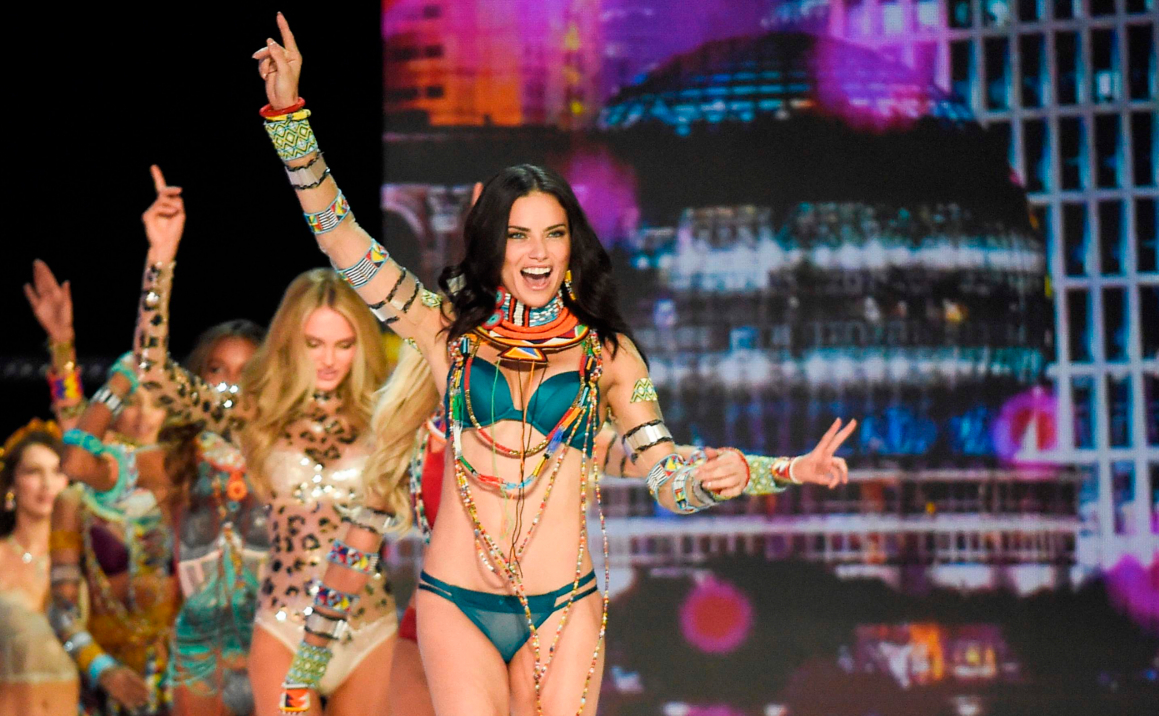
    In addition to some veteran western super models, such as Adriana Lima, Candice Swanepoel, so far a total of six angels from the east, for the first time ever, is expected to shine in one of this industry’s most-watched shows, according to a full list released by Fashionista.

    The gorgeous girls who are making history for the brand are:

    Liu Wen

    This year, Liu will walk in her fifth Victoria’s Secret Fashion Show. When she first walked the VS runway, she was the only Asian model ever to do so.

    Ming Xi (Xi Mengyao)

    Ming Xi has already walked in the past four shows for Victoria’s Secret, regularly modeling during the section of the spectacular that showcases the brand’s little sister line, PINK.

    He Sui

    He Sui is no stranger to the Victoria’s Secret Fashion Show. She has walked in the show six times already, beginning in 2011. When she first stepped on the stage, she was only the second Asian model for the brand, after Liu Wen.

    Ju Xiaowen

    This year will mark Ju’s second walk on Victoria’s Secret runway. Before her cooperation with the brand, she has helped other brands break racial barriers, for example, she was the first-ever Chinese model to be the face of Marc Jacobs.

    Xie Xin

    While this will be her premiere walk on Victoria’s Secret show, she’s fronted numerous ad campaigns and walked some of the top runways.

    Estelle Chen (Chen Yu)

    Chen is a French model of Chinese descent born in Paris. The 17-year-old is the only Asian face among the 15 other newly-minted Victoria’s Secret models. This newcomer started out in 2013 but has already walked for fashion powerhouses Dior, Dolce & Gabbana, Elie Saab and Fendi.

    A more racially inclusive runway

    Victoria’s Secret has long been criticized for not featuring a more racially diverse lineup of models over the course of the fashion show’s 22-year history.

    No Asian model has walked the VS runway until 2009, according to Yahoo Style. However, the lingerie giant in recent years has been ramping up its efforts to be inclusive.

    An expanding market in China

    China’s female lingerie market is lucrative with a retail value of 25 billion US dollars in 2017. However, the market is highly fragmented with no major brands leading the way. Currently, a Guangdong-based mass market lingerie brand Cosmo Lady has just a four percent share of the market, revealed Business of Fashion.

    As a representative from Victoria’s Secret China told Jing Daily, the brand is feeling “very positive about the potential of the China market,” as they expect three stores alone, including the one planned in Beijing, are anticipated to generate 150 million US dollars in annual sales for the 7.78 billion US dollar brand.

    China is expected to equal, if not exceed the US, in sales in the long term, according to this representative.

    Efforts to woo Chinese customers

    Considering the first Victoria’s Secret model of Asian descent didn’t walk in its fashion show until 2009, and the only two and four Chinese models strutting down the catwalk in 2015 and 2016, this time the six Chinese faces could be reflective of the brand’s growing focus in the Chinese market.

    As a matter of fact, the retailer’s presence hasn’t started till 2015. Adding to the 26 concept stores in China, which are shops that sold only beauty products and accessories, the company has opened two flagship fully-stocked retail stores in Shanghai and Chengdu in 2017. As the VS China representative suggested, one more store is expected in Beijing later this year.

    The brand’s additional attempts to woo Chinese consumers are through their dragon-themed outfits throughout its annual fashion show last year.

    Although the show’s so-called Chinese elements fell flat on China’s Internet, with social media users complaining about the “appropriated Chinese culture” and the “ugly bikini outfit”, the full video of the show boasted an estimated 162 million viewership compared to last year’s 127 million on Tencent video.

    From this perspective, the Chinese cultural emblems, for example, the dragon-themed costumes, have already prevailed angel wings.

  • Second quarter sales sag for Victoria’s Secret owner

    Second quarter sales sag for Victoria’s Secret owner

    Second-quarter net sales fell by 8 per cent year on year to US$2.7 billion for Victoria’s Secret owner L Brands.

    The company says there was a negative impact of about six points with the exit from the swimwear and apparel categories, which particularly hit Victoria’s Secret comparable sales (nine points).

    Operating income was $300.9 million, down from $408.2 million for the same quarter last year, while net income slid to $138.9 million from $252.4 million.

    Overall the brand finished the quarter with 3077 stores, down from 3074 with 27 openings and 24 closures. For Victoria’s Secret, store numbers were 1174, down from 1177 with six openings and nine closures.

    As well as Victoria’s Secret, L Brands owns Bath & Body Works, Henri Bendel, La Senza and Pink. The company runs 3077 specialty stores in the US, Canada, the UK and Greater China, with its brands being sold in more than 750 franchised locations internationally as well as online.

  • Victoria’s Secret to open mega store in Macau

    Victoria’s Secret to open mega store in Macau

    Victoria’s Secret will open a new mega store in Macau on April 27, as the US brand eyes further Asia expansion, following its China debut store opening last February.

    Under parent company L Brands, the 15,000-square-foot Macau full assortment store  — which not only sells its branded accessories and cosmetics but lingerie and sportswear — will bow at St Mark’s Square at The Venetian.

    In addition to the latest collections and pieces, the store will showcase five sets of Victoria’s Secret angel wings – all of which have featured on the runway of past Victoria’s Secret shows. The curate will be on display at The Venetian from April 26 to May 31.

    The news comes as the fashion lingerie conglomerate opened its first standalone store in mainland China in February. The four-story, 25,850-square-foot flagship opened in Shanghai, followed by a 12,294-square-foot store debut in Chengdu one week later. A Beijing store is coming later this year.

    Meanwhile, Victoria’s Secret’s Asia expansion is also taking on a flagship store in Hong Kong. The brand is reportedly taking up prime location in Causeway Bay, the former residence of Forever21. It is slated to open in Hong Kong next year.

    Fellow lingerie maker La Perla has already opened a four-storey flagship store in Causeway Bay in late 2015, located on the iconic, and expensive, Russell Street.

    More and more international retailers are renewing leases in the region as tents in Hong Kong continue to drop, especially in Causeway Bay.

    According to a recent report by Everbright Property Investment Consultancy. For the first quarter of 2017, major lease transaction records in Hong Kong’s high-traffic tourist areas — including Central, Causeway Bay, Mong Kok and Tsim Sha Tsui — featured drops in monthly rents of up to 72% in some cases.

    On average, Causeway Bay witnessed the sharpest rent price decline for the period, down 31%, the report said.