Retail News CRM

Tag: Victoria

  • DoorDash Expands Aldi Partnership: Liquor Delivery to NSW and Victoria, Special Buys Nationwide!

    DoorDash Expands Aldi Partnership: Liquor Delivery to NSW and Victoria, Special Buys Nationwide!

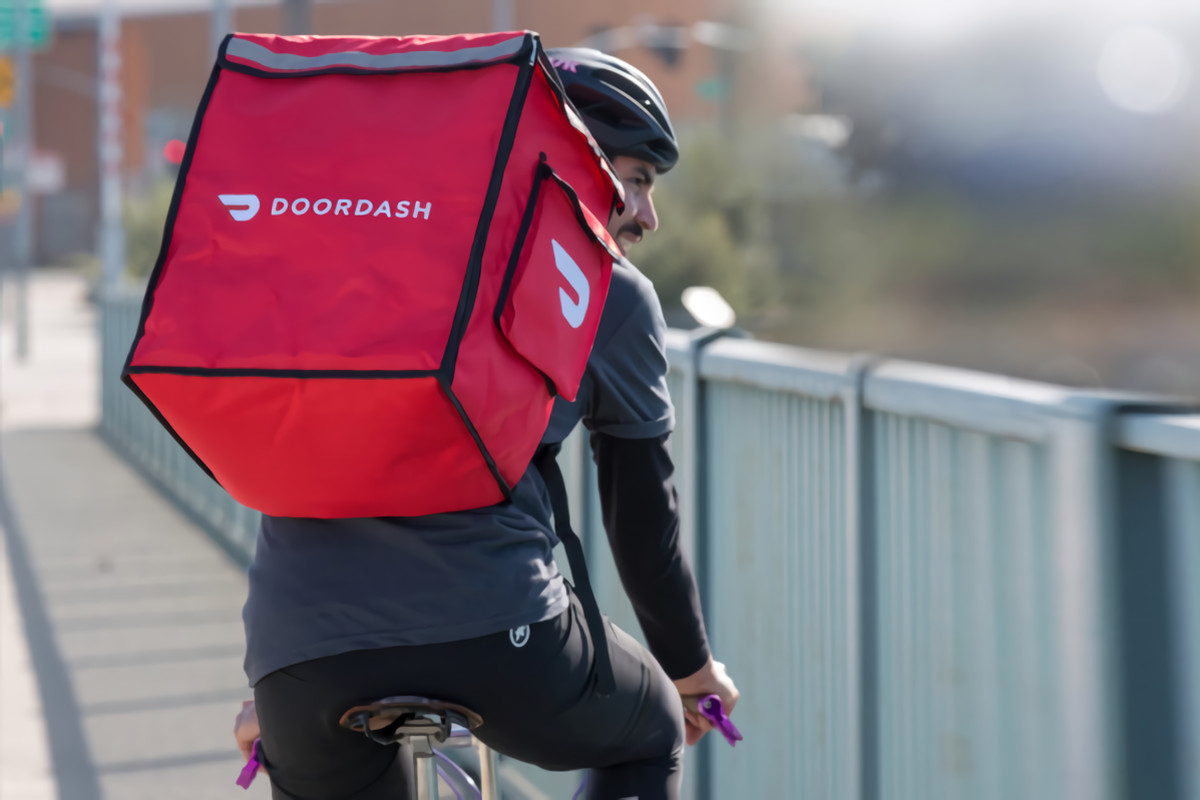
    Starting January 21, Aldi customers in New South Wales and Victoria will have the option to purchase the retailer’s exclusive range of alcoholic beverages via DoorDash. This new service is a part of the ongoing partnership between Aldi and DoorDash, which was established a year ago.

    Expanding Delivery Options

    In addition to alcoholic beverages, Aldi’s popular Special Buys will also be available for nationwide delivery from most store locations through DoorDash. This move is in line with the company’s efforts to make more of its products conveniently accessible to customers.

    Simon Padovani-Ginies, Group Director at Aldi Australia, has emphasized the company’s commitment to making as much of Aldi’s offerings as possible available for delivery. The inclusion of their exclusive liquor range for shoppers in New South Wales and Victoria, as well as the nationwide availability of Special Buys, means that more customers will be able to access Aldi’s high-quality, low-cost products from the convenience of their homes.

    Improving Customer Experience

    This move is not just about expanding product availability – it’s also about elevating the customer experience. With the current pandemic, online shopping has become the norm and businesses that offer home delivery services are increasing in popularity. By offering delivery of their exclusive liquor products and Special Buys, Aldi is catering to the evolving needs of its customers, making shopping more convenient and stress-free.

    Questions & Answers

    When will Aldi customers in New South Wales and Victoria be able to purchase liquor products via DoorDash?
    Starting January 21, Aldi will offer delivery of its exclusive liquor products to customers in New South Wales and Victoria through the DoorDash service.

    What other products will Aldi make available for delivery via DoorDash?
    In addition to its exclusive range of alcoholic beverages, Aldi will also make its popular Special Buys available for nationwide delivery from most store locations.

    What is the aim of this new service?
    The new service aims to make shopping more convenient for Aldi customers. It is also a part of the company’s efforts to cater to the evolving needs of consumers in the current pandemic climate, where online shopping and home delivery services have become increasingly relevant and popular.

  • Victoria makes $3m joint investment in soft plastics recycling

    Victoria makes $3m joint investment in soft plastics recycling

    The Victorian and federal governments will invest more than $14 million in new organic recycling facilities in Victoria. The joint funding, announced on Thursday, will support seven projects across the state to divert up to 15,000 tonnes of food and garden waste from landfill.

    The $14.26m will improve the quality of recycled organic products such as compost, soil conditioners and mulches by removing material contaminating them. Six of the seven organic waste recycling projects will be in regional areas, with up to 134 jobs created during the construction phase.

    “When we recycle food and organic waste, we don’t just take pressure off our landfill, we create a valuable new commodity,” Federal Environment Minister Tanya Plibersek said in Melbourne on Thursday.

    “Taking materials out of landfill, that in itself is good. But even better, we’re re-engineering those materials into precious new resources for our farmers.”

    The governments will also jointly invest $3m for a large recycling facility in Altona in Melbourne’s southwest.

    The facility will recycle 30,000 tonnes of soft plastic into food-grade soft plastic and washed flakes of low-density polyethylene.

  • Metcash to invest $70 million in new Vic DC

    Metcash to invest $70 million in new Vic DC

    Metcash, the Australian wholesaler and distributor for brands like IGA, Mitre 10, Foodland and more,  has today announced a new distribution centre (DC) planned for Truganina, Victoria alongside the release of its FY22 results detailing a rise in revenue and earnings.

    The approximately 115,000sqm DC will replace the company’s existing Laverton, Victoria facility and will cost Metcash around $70 million to set up, with $20 million scheduled to be incurred in FY23.

    Metcash, which signed a long-term lease with the Goodman Group (ASX: GMG) for the construction of the Truganina DC, says the facility will improve the competitiveness of its independent retailers in Victoria through delivery efficiencies and by providing them access to a wider range of products.

    The DC will house products for both MTS’ food and liquor pillars, and will be equipped with automation to suit the company’s retail network.

    “We are delighted to be able to announce this significant long term investment for our independent retailers in Victoria, which is a reflection of our continued focus on championing their success,” Metcash CEO Doug Jones said.

    “Supporting our decision to proceed was the success of our new DC at Gepps Cross in South Australia, which has been operational since December 2020, as well as strong growth in both our Food and Liquor pillars in Victoria and the recent renewal of a long term agreement to supply Foodworks stores.”

    The announcement coincides with the release of Metcash’s FY22 financial results, detailing an 18.6 per cent rise in underlying profit after tax to $299.6 million.

    In addition, earnings rose by 17.7 per cent to $472.3 million, while revenue grew by 5.9 per cent to $15.2 billion.

    On a statutory basis, MTS’ profit after tax was up by 2.7 per cent to $245.5 million which the company says was backed by strong sales and earnings in all divisions sustained by a shift in consumer behaviour.

    The large difference between underlying and statutory profit can be explained by $22 million for Project Horizon which includes refurbishing stores, expanding e-commerce and cutting costs, as well as $27.6 million in acquisition costs, primarily oriented towards the hardware division.

    Jones said he was pleased to present the FY22 results, his first as group CEO.

    “The results are outstanding, another record year, and represent continued progress on the exceptional performance in FY21,” Jones said.

    “The number of external challenges increased in the second half and our supply chain and retail operations, both our own and those of our retail partners, exhibited significant resilience and flexibility. There were more lockdowns due to the Omicron COVID variant, major supply chain challenges, flooding in South Australia, New South Wales and Queensland which resulted in supply route disruptions, and towards the end of the financial year challenges related to Russia’s invasion of Ukraine and lockdowns in China.

    “A strategic investment in inventory, the flexibility of our operations and the outstanding efforts of our people helped our retailers to keep their shelves stocked and continue serving their local communities through these challenges. A testament to our people and independent retailers is that our focus on keeping shelves stocked did not materially hinder the continued successful execution of our MFuture [growth project] initiatives.”

    Jones said the company’s retail networks in food, hardware and liquor performed well, with sales increasing approximately 3 per cent in the IGA retail network, 20.5 per cent across hardware (which includes Mitre 10, Home Hardware and Total Tools), and 8.7 per cent in the liquor network.

    “Importantly, retailers are increasingly reinvesting in their stores, further improving the quality of their network primarily through the various store upgrade programs we support,” Jones said.

    “We also further strengthened relationships with our independent retailers and were pleased to recently announce long term agreements to continue supplying Foodworks stores and Drakes Supermarkets in Queensland.”

    MTS says forward momentum going into FY23 has helped push group sales up 9 per cent in the first seven weeks of its new financial year commencing on 1 May, partly buoyed by the impact of inflation.

    “While elevated inflation has continued into 1H23, there is uncertainty over the level of inflation going forward, as well as how the impact of inflation and other cost of living increases may impact consumer behaviour in the retail networks of our pillars, and Metcash,” Metcash said.

    “We are continuing to work closely with our suppliers and retailers to help shoppers manage the impact of inflation by providing better value options through offering a wider range of products at competitive prices.”
  • HelloFresh to open giant new ‘Tuckerbox’ complex in Victoria

    HelloFresh to open giant new ‘Tuckerbox’ complex in Victoria

    Meal-kit maker HelloFresh is to open a new 25,500sqm production facility at Ravenhall in Victoria next month.

    Described as the largest such facility of its kind in the nation – and nicknamed Tuckerbox – the new production and distribution center will speed deliveries to Victorian destinations and nearby states, as well as reduce delivery distances for the company’s suppliers.

    “The launch of our third and largest Australian chilled production facility marks an impressive milestone for the business and will allow us to better serve our growing customer base,” said HelloFresh Australia CEO, Tom Rutledge.

    “Ultimately our focus is to continuously improve the product offering to our customers and how we can increase the value, convenience, and accessibility of our service. The Tuckerbox, with its size, situation, and sophistication provides a tremendous platform for us to realize these objectives over the years to come.”

    The complex will employ about 350 staff including pick packers, forklift drivers, quality control personnel and management.

    HelloFresh has also worked to reduce carbon emissions through the new facility, by shortening delivery routes and using environmental features including skylights to maximize natural light, a rainwater harvesting system, 600kW solar panels for both electricity and heating water, and the use of motion and daylight sensors to reduce overall energy consumption.

    “As the world’s largest meal-kit provider, we also have a responsibility to set a clear precedent and strive towards more sustainable ways of working in our production facilities, said Rutledge.”

  • Victoria’s Secret Hong Kong flagship store abruptly shut down

    Victoria’s Secret Hong Kong flagship store abruptly shut down

    The high-profile Victoria’s Secret Hong Kong flagship store has been closed suddenly. According to multiple reports, employees were all laid off last night (June 24) on the even of Hong Kong’s public holiday.

    Signs were placed on the store’s entrance announcing the closure and telling customers they could continue to shop online. People visiting the store today could see stock being boxed in the store.

    Operated by Victoria’s Secret’s US parent Limited Brands, the store’s future was questioned by Inside Retail on several occasions, most recently last month as part of a strategic review of the company’s Chinese operations.

    The Victoria’s Secret Hong Kong store opened two years ago after another struggling US retailer Forever 21 quit the site. The lingerie brand’s four-story flagship featured a whole level for its Pink brand, and a floor dedicated to high-end products, complete with the city’s most luxurious fitting rooms.

    Sources said that Limited Brands was paying US$903,000 a month for the 50,000sqft space, which is about half the rent Forever 21 reportedly paid previously. In return, they signed a 10-year lease in 2017 which runs until August 2027. It took nearly a year to fit the store out.

    It is not clear what deal – if any – Limited Brands has agreed to in order to exit the space, however, a senior real estate industry source said last month he doubted the then rumors that the store would close because of the length of the lease.

    “They have a long lease and can’t just walk away. I would be surprised if the landlord takes backspace voluntarily.”

    Our source said the site would be difficult space to fill as it is so large and needs significant capital expenditure to convert into multiple retail spaces or refurbish to suit another brand.

    “If the landlord did take it back, it would need to be sub-divided as it was before with multiple tenants.”

    Another source told a Hong Kong publication that Limited Brands would face a $77 million bill for terminating the contract early – equivalent to nearly 90 months rent.

    In May, Limited Brands reported a 37-per-cent slump in first-quarter sales to $1.65 billion, with revenue from Victoria’s Secret down 45.6 percent, in part due to store closures relating to Covid-19.

    Subsequent to that, a company executive told an analysts’ briefing that it was “evaluating strategic alternatives to reduce or eliminate losses in the UK and China”. The Victoria’s Secret UK business subsequently collapsed early this month.

  • Bargain rate for Victoria’s Secret proves it was ‘asleep in a woke market’

    Bargain rate for Victoria’s Secret proves it was ‘asleep in a woke market’

    That L Brands has opted to sell a majority stake in Victoria’s Secret is a tacit recognition that the brand was on the road to nowhere under its previous leadership.

    This is underlined by the departure of Les Wexner as CEO and chairman of the company.

    The deal with private-equity company Sycamore potentially gives Victoria’s Secret a chance to reassess and rebuild. However, the transaction itself is not a solution – that can only come from a process of reinvention which will take both time and money to enact. This is one of the reasons why the sale of the 55 percent stake netted a relatively slim US$525 million; the truth is that the Victoria’s Secret brand no longer attracts a premium in the way it once did.

    While still a retailer of a significant scale, Victoria’s Secret has become increasingly detached from the consumer zeitgeist. Management has seemingly recognized this to be the case on many occasions but has always lacked the will or the knowledge to make the necessary changes. This has resulted in a steady decline in both customers and sales and the loss of a significant amount of market share.

    Sycamore will be keen to maximize its investment and its closer involvement with the company will bring new thinking and ultimately a new positioning for the brand. We expect this to be more authentic, less sexualized, and more attuned to the way most consumers now think. In product terms, we expect merchandise will still be fashionable and fun, but more emphasis will be placed on comfort, functionality, materials and making consumers feel good about themselves.

    This transformation will not happen overnight; it is not as simple as simply flicking a switch to turn off a proposition that has been misaligned for years. The board will need to be careful in charting a new course that resonates with consumers and addresses new competitive challenges such as the rise of rival brands like Aerie.

    Aside from its significant minority stake in Victoria’s Secret, L Brand is now a company focused on the Bath & Body Works business. In our opinion, Bath & Body Works still has significant potential, especially in terms of expanding into overseas markets and attracting new shoppers to its stores. However, it’s long run of very strong growth does make future gains harder to come by and L Brands will need to pull out all the stops to deliver them.

    The 55-per-cent sale transaction could have been avoided if L Brands had taken decisive action on Victoria’s Secret a long time ago. That it did not has cost the company what was once a key brand and has diminished its sale value. Ultimately, that is the price of being asleep in a market that has become more woke.

  • Victoria’s Secret’s canceled annual fashion show

    Victoria’s Secret’s canceled annual fashion show

    Victoria’s Secret’s annual fashion show, where supermodels once walked down the runway wearing giant “angel” wings and elaborate lingerie sets, will not occur this holiday season.

    Stuart Burgdoerfer, CFO of the brand’s parent company L Brands, said on a call with investors on Thursday that Victoria’s Secret would be communicating with customers through social media and other platforms, but that it wouldn’t be “similar in magnitude to the fashion show”, which had been broadcast on network television in the US since 2001.

    “We think it’s important to evolve the marketing of Victoria’s Secret,” Burgdoerfer said.

    The news ends several months of speculation about the future of the fashion show after Victoria’s Secret said in May that show would not be part of network television this year, leaving open the possibility that it would be live-streamed online instead.

    But the show has been drawing a smaller audience for some time, as the brand’s “sexy” image has fallen out of favor with younger consumers and fashion trends have shifted towards bralettes and other less-padded styles.

    The fashion show was watched by 3.3 million Americans in 2018, compared with 12 million in 2001 when it was the first broadcast.

    The company also suffered a backlash last year when then-CMO Ed Razek told Vogue that the show wouldn’t have transgender models.

    L Brands posted a US$151.2 million operating loss in Q3 2019 on Thursday, which includes a US$284.7 million non-cash impairment charge related to Victoria’s Secret store and other assets, and a US$37.2 million charge to increase reserves related to ongoing guarantees for the La Senza business, which it sold in Q4 2018.

    Excluding these charges, its adjusted Q3 operating income was US$96.3 million and its adjusted net income was US$5.7 million.

    The retailer reported net sales of US$2.7 billion for the 13 weeks ended November 2, 2019, compared to US$2.8 billion for the prior corresponding period. Comparable sales were down 2 per cent in Q3 2019.

    The company is expecting a strong Q4, according to Reuters, and said its full-year adjusted earnings per share would be US$2.40, in line with its full-year guidance of between US$2.30 and US$2.60.

  • Victoria bans single-use Plastic bags

    Victoria bans single-use Plastic bags

    Victoria is bidding adieu to lightweight, single-use plastic shopping bags with a ban to be introduced state-wide in November.

    The state government introduced new legislation to parliament on Wednesday to ban bags at retail outlets including supermarkets, fashion boutiques, fast food outlets, convenience stores and service stations.

    The ban will target lightweight plastic bags with a thickness of 35 microns including those made from degradable, biodegradable and compostable plastic.

    The legislation will ensure all single-use lightweight plastic shopping bags with a thickness of 35 microns or less will be banned, including bags made from degradable, biodegradable and compostable plastic.

    The legislative changes follow community consultation, which revealed “overwhelming” support for the ban.

    “Plastic pollution is a significant environmental problem – the actions we take now will help ensure Victoria has a clean and bright future,” Minister for Environment Lily D’Ambrosio said on Wednesday.

    “The feedback on this one was clear. Victorians want to do more to protect the environment from the damage litter causes and are overwhelmingly supportive of banning single-use plastic shopping bags.”

    The government is working with the National Retailers Association to ensure businesses are prepared for the ban and have access to sustainable packaging alternatives.

    Single-use plastic bags have already been banned by governments in Queensland, Western Australia, South Australia, Tasmania, ACT and NT.

    Coles revealed on Wednesday that it has saved 1.7 billion lightweight single-use plastic bags from landfill since the ban came into place last July.

    Woolworths said it has issued around three billion fewer plastic bags from its stores over the last 12 months, equating to a 4,700 tonne reduction in single-use plastics going into the environment over the course of the year.

  • Design first for Victoria’s Secret catwalk show

    Design first for Victoria’s Secret catwalk show

    Victoria’s Secret has engaged Balmain creative director Olivier Rousteing to create styles for its annual catwalk show, with a capsule collection to launch in stores the following day, November 29.

    While the lingerie brand often calls upon designers to create runway pieces, this is the first first time it has partnered with a fashion house on an in-store collection.

    There is also a parallel in that Rousteing has his “Balmain Army”, models who regularly star in his campaigns, while Victoria’s Secret uses star models for its shows.

    For the Shanghai showcase on November 28, the French designer is tipped to choose friends Sara Sampaio, Joan Smalls, Alessandra Ambrosio and Karlie Kloss to model his first mainline foray into underwear.