Tag: Vietcombank

  • Vietnam commercial banks boost retail banking segment

    Vietnam commercial banks boost retail banking segment

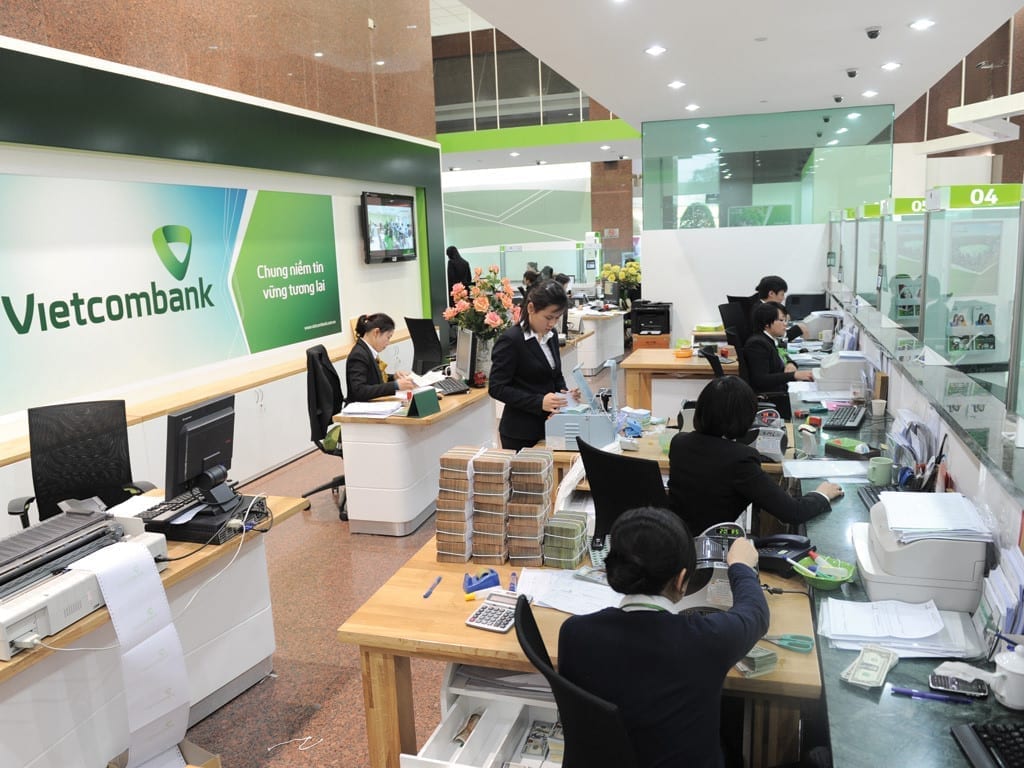
    Commercial banks have adjusted their service fees to individual customers since beginning of the year in order to focus on the retail segment.

    For money transfer services in the same banking system, some commercial banks, such as VIB, VietinBank and Techcombank, do not charge for individual customers when using electronic services.

    These banks charge VNĐ8,800 for the maintenance of their accounts. In addition, the fee for money transfer services among different banks is VNĐ9,900 or higher per transaction, or as a percentage of the transaction amount ranging from 0.1 to 0.3 per cent.

    The Joint Stock Commercial Bank for Foreign Trade of Việt Nam (Vietcombank) has increased its service fees since the beginning of this month.

    The monthly fee of its SMS banking service increased from VNĐ8,800 to VNĐ11,000, including VAT (value-added tax).

    Vietcombank has begun charging VNĐ2,200 per transaction from Vietcombank account holders via its mobile banking app from March 1.

    For internet banking service, Vietcombank’s customers will have to pay VNĐ2,200 for each transaction worth less than VNĐ50 million (US$2,196) and VNĐ5,500 for each transaction worth more than VNĐ50 million.

    The fee for an inter-bank transaction of below VNĐ10 million is VNĐ7,700, and when the amount is more than VNĐ10 million, it charges 0.02 per cent of the total amount per transaction.

    Financial expert Bùi Quang Tín said that the competition among bank service fees was quite fierce as some banks offered free of charge inter-bank money transfer services in order to attract more customers.

    “The recent increase in banking service fees at several commercial banks is understandable as the banks must invest more money to ensure security systems to meet stricter requirements from customers,” he said.

    According to the State Bank of Việt Nam, commercial banks issued 132 million cards as of the end of last year.

    Last year, the number of transactions, including withdrawals and transfers, via ATMs was over 206 million transactions valued at VNĐ563 trillion; while there were 43.5 million POS and EDC transactions with a total value of VNĐ95 trillion.

    As for domestic transactions for non-cash payments, bank cards ranked second in terms of the number of transactions.

    Individual deposit account balances increased by VNĐ42.6 trillion to VNĐ325 trillion in the fourth quarter of last year.

    With a population of more than 93 million and rising consumption, Việt Nam is considered a destination in the retail banking segment.
     

  • Vietcombank sign agreement to provide converting bank service

    Vietcombank sign agreement to provide converting bank service

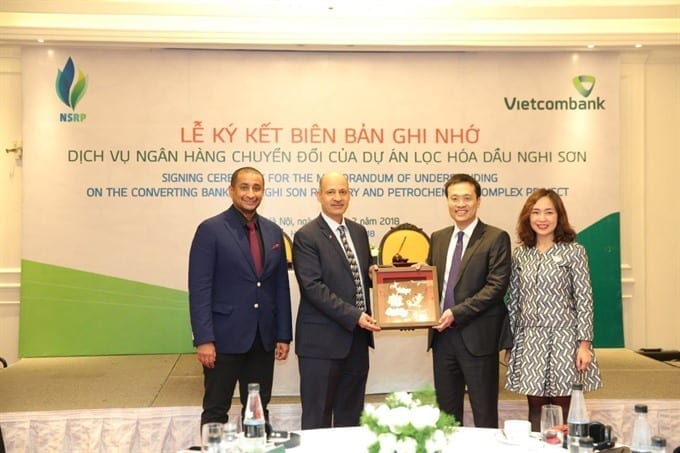
    Joint Stock Commercial Bank for Foreign Trade of Việt Nam (Vietcombank) and Nghi Sơn Petrochemical and Refinery LLC (NSRP) on Thursday signed a Memorandum of Understanding (MoU) on converting bank service.

    Under the MoU, Vietcombank will be the sole bank to provide the service of foreign currency converting bank for the Nghi Sơn Petrochemical and Refinery Project.

    Phạm Quang Dũng, CEO of Vietcombank, said the signing of the MoU would acceleratethe negotiation process towards agreeing on the official contents of agreements on foreign currency conversion.

    Ahmad Aljemaz, vice president of Kuwait Petroleum International Ltd, one of NSRP’s investors, said the provision of the converting bank service by Vietcombank is significant to the operation and success of NSRP.

    Turki Alajmi, acting CEO of NSRP,  expressed confidence in this cooperation with Vietcombank. “The converting bank is one of the elements which plays a vital role in the financial success of the project. NSRP is confident that Vietcombank, as the leading joint stock commercial bank in Việt Nam, with the highest support of the Government, will be able to perform this function successfully and most effectively,” he said.

    Nghi Sơn Petrochemical and Refinery Project is a key petrochemical and refinery project of national importance, which is being implemented in Nghi Sơn Economic Zone in Tĩnh Gia District, Thanh Hóa Province.

    The refinery has a total investment of over US$9 billion, intended capacity of 10 million tonnes a year in maximum operation and scope of producing 200,000 barrels of crude oil a day. Upon operation, it is expected to meet approximately 40 per cent demand of the domestic petroleum market and export millions of tonnes of petrochemical products.


  • Vietcombank to sell 7.6 million Vietnam Airlines’ shares

    Vietcombank to sell 7.6 million Vietnam Airlines’ shares

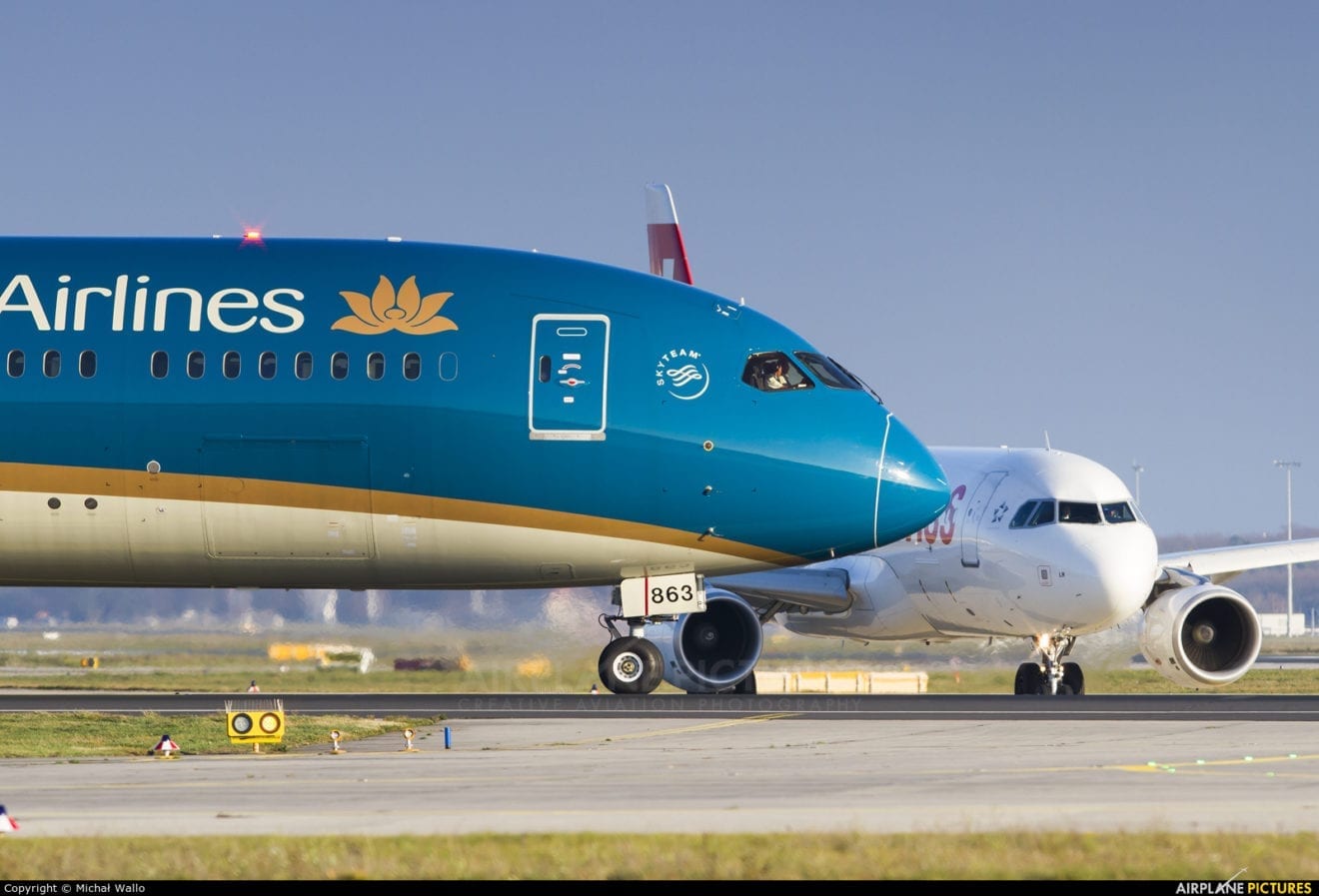
    Joint Stock Commercial Bank for Foreign Trade of Việt Nam (Vietcombank) has registered to sell 7.6 million shares of Vietnam Airlines Corporation, which is listed as HVN on the stock market.

    The transaction is expected to take place from January 24-February 22.

    This is part of more than 22.4 million shares, equivalent to 1.8 per cent of charter capital of Vietnam Airlines that Vietcombank bought in the airline’s initial public offering in late 2014. The bank spent VNĐ544.12 billion (US$23.9 million) to buy the shares, or VNĐ22,300 for each share.

    At the current market price of Vietnam Airlines’ shares at some VNĐ63,700 each, Vietcombank can earn an estimated VNĐ484 billion from the sale of its 7.6 million shares after more than two years of holding. Compared to six months ago, the stock has nearly tripled in terms of market value.

    If successful, Vietcombank’s holdings at Vietnam Airlines will reduce to 1.2 per cent.

    The shares of Vietnam Airlines and VJC shares of budget carrier Vietjet Air are two aviation stocks that have grown fast in the past few months. The growth of share prices comes mainly from positive business results in late 2017 and early 2018 in the aviation industry.

    Last year, Vietnam Airlines Corporation, including Jetstar Pacific and Vietnam Air Services Company (VASCO), recorded a consolidated revenue of VNĐ88.4 trillion (US$3.88 billion) and pre-tax profit of more than VNĐ2.8 trillion, exceeding 72 per cent of its plan and up 8.3 per cent year on year, respectively. This is the highest level of revenue and profitability the firm has made in its history.

    According to stock investors, the increasing demand for air transportation during Tết (Lunar New Year) holiday is another reason for the acceleration in prices of aviation shares in recent times.

    Vietnam Airlines has traded more than 1.2 billion shares on UpCOM, making it a large-scale public company in the leading group of capitalisation value in the stock market. The airline plans to put all of its shares on HCM Stock Exchange (HOSE) in the second quarter of this year.

    Meanwhile, it will continue to issue additional shares to existing shareholders to increase charter capital and reduce State ownership. Accordingly, in the first quarter of this year, Vietnam Airlines plans to increase charter capital by issuing additional 191 million shares at VNĐ10,000 each to existing shareholders.

    Vietnam Airlines has a charter capital of nearly VNĐ12.28 trillion, of which the State holds 1.057 billion shares, equivalent to 86 per cent of charter capital. Of the remaining shareholders, ANA Holdings Inc., Japan’s largest aviation group, holds 107 million shares, representing nearly 8.8 per cent of charter capital.


  • Vietnamese bank appoints foreign executive to head retail operations

    Vietnamese bank appoints foreign executive to head retail operations

    Vietcombank has taken the unusual move of plunging a foreigner into the financial fray.

    Vietcombank has appointed a Canadian executive as its new retail banking director in a country that rarely hires foreign execs in its commercial banking sector.

    Thomas William Tobin holds an MBA in international finance from MacMaster University. According to his LinkedIn profile, he has more than 20 years of experience in the financial services industry, having worked as HSBC’s CEO and country head in Vietnam before leading the Hong Kong, Macao and Northeast Asian branches of the U.S.-based financial services corporation Visa Inc.

    Vietcombank’s chairman Nghiem Xuan Thanh said at a ceremony to announce the appointment that Tobin’s experience and understanding of the Vietnamese and global markets will help Vietcombank become the top retail bank in Vietnam by 2020, Vietnam News Agency reported.

    Vietcombank, the country’s third biggest listed bank by assets, said on Monday that its net profit in the third quarter went up 30.9 percent on-year to VND2.15 trillion ($94.6 million), Reuters reported.

    The bank’s pre-tax profits in the first nine months hit more than VND12.18 trillion ($536 million), up 14.1 percent against the same period last year.

    Its bad debt ratio also fell to 1.13 percent of all loans, according to a source from the bank.

    The National Financial Supervisory Commission has reported credit growth of 11.5 percent in the banking system in the first nine months of this year, while profit rose 39 percent to around VND47 trillion (nearly $2.1 billion).

  • Japanese banks expand investments in Vietnam

    Japanese banks expand investments in Vietnam

    At a recent working session with the Joint Stock Commercial Bank for Foreign Trade of Vietnam (Vietcombank), President and CEO of Mizuho Financial Group Yasuhiro Sato said Vietcombank is one of its most successful investments.

    He hoped the two sides will expand cooperation to other fields such as stocks and finance after five years of fruitful banking collaboration, aiming to develop Vietcombank into a strong financial group.

    Another Japanese financial group, Sumitomo Mitsui, has invested 225 million USD in the Vietnam Export Import Commercial Joint Stock Bank (Eximbank). It has owned 15 percent of Eximbank since 2007.

    While meeting with Deputy Prime Minister Vuong Dinh Hue recently, President and CEO of the Sumitomo Mitsui Banking Corporation Ryuji Nishisaki said the group is interested in Vietnamese credit organisations.

    Apart from restructuring Eximbank, Sumitomo Mitsui is ready to help its subsidiary companies join the derivative and bond stock markets in Vietnam, he noted.

    Besides seasoned investors such as Sumitomo Mitsui, Mizuho, Bank of Tokyo, and Mitsubishi UFJ, many other banks from Japan are seeking Vietnamese partners.

    Most recently, the Bank for Investment and Development of Vietnam (BIDV) sold 49 percent of shares in its Financial Leasing Company to Japanese Sumitomo Mitsui Trust Bank (SMTB)

    It can be said that Japan is the biggest shareholder of the banking system in Vietnam. With the current wave of investments from Japan, capital contribution deals will expand to other fields, experts said.

    Vietnamese banks are also keen to diversify cooperation channels with Japanese partners.

    Last week, the Vietnam Bank for Agriculture and Rural Development (Agribank) signed a cooperation agreement with Yanmar – a leading Japanese group in farming machines.

    Contracts worth 20 billion USD were signed between the two countries’ businesses and localities during Prime Minister Nguyen Xuan Phuc’s ongoing visit to Japan.

    This record figure is expected to create a new wave of investments from Japanese firms into Vietnam in the coming years.

    In fact, domestic banks have eyed Japanese customers for five years, as the country’s investment in Vietnam has increased.

    In February 2017, BIDV signed a cooperation agreement with Fukuoka – the 16th largest bank in Japan to serve Japanese customers.

    VietinBank and Vietcombank also struck deals with dozens of Japanese banks.

    Vietcombank, in particular, inked cooperation agreements with nearly 60 banks from Japan.

  • Vietnam’s bank CEOs receive sky-high salaries

    Vietnam’s bank CEOs receive sky-high salaries

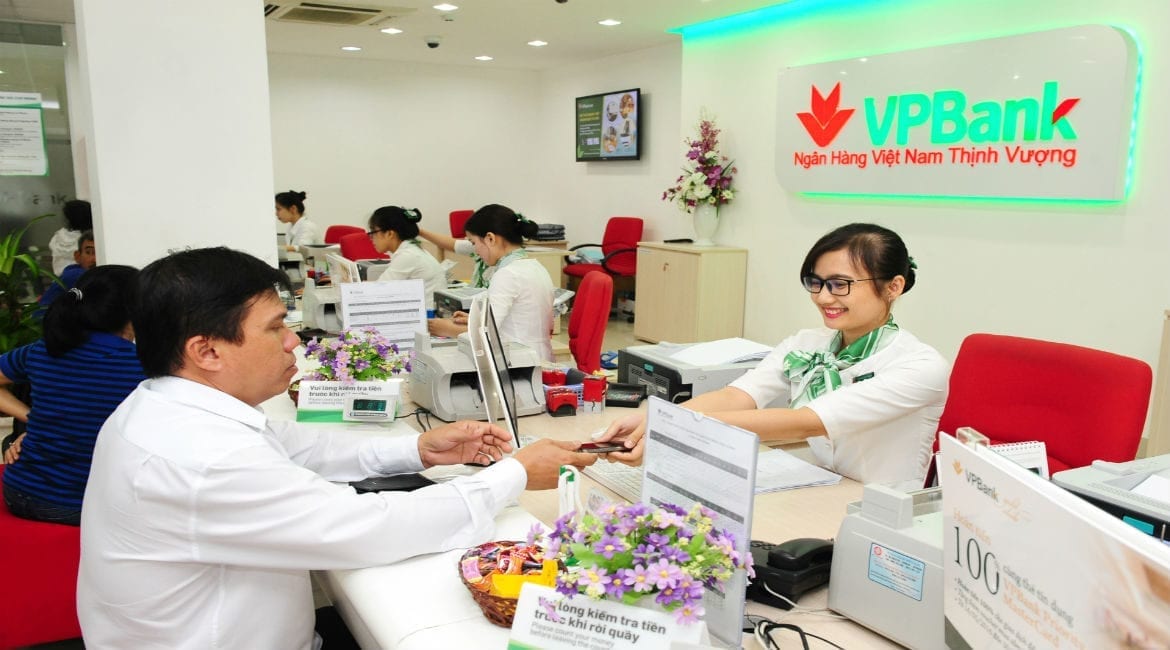
    Meanwhile, the managers at VP Bank receive twice as much as Vietcombank’s managers, about VND3.6 billion if the bank can fulfill the business plan. At ACB, the average level for key personnel is VND530 million a year.

    Vietnamese banks are more generous, accepting to pay billions of dong a year to their key personnel.

    VP Bank is believed to lead the banks in pay to members of the board of directors and supervisory board. Shareholders agreed to pay one percent of pretax profit, or VND32 billion to the members if the bank can make the pretax profit of VND3.2 trillion in 2016.

    There are nine members on the boards, which means that if the business plan can be fulfilled, each of the members can receive VND3.6 billion a year.

    Techcombank also promises attractive awards to the managers. Its shareholders approved the pay of VND29.54 billion in 2016 to the board of directors and supervisory board. With 11 members, each of them expects to receive VND2.6 billion this year.

    With satisfactory business result, Vietcombank’s shareholders approved the pay of VND1.9 billion for every member of the boards in 2015.

    The bank has consulted with shareholders about the pay equivalent to 0.35 percent of post-tax profit to the members of the boards in 2016, while the bank plans the pretax profit of VND7.5 trillion. This means that if the business plan is fulfilled, the pay would be VND2.3 billion.

    Meanwhile, Maritime Bank plans a little bit lower pay for the members of the boards, at VND16 billion. Every of nine members expects to get VND1.7 billion in 2016.

    Orient Bank plans a relatively modest pay to its key personnel with the budget of VND8.2 billion only for the members of the board. However, the figure is still higher by VND1.2 billion than the last year.

    Nam A Bank plans to pay VND18 billion to 18 members of the boards in 2016, the level which some shareholders think is too high icompared with the dividend of 5 percent paid to shareholders in 2015.

    Banking is the business field which offers high pay to staff.

    A report of Navigos Search showed that the two positions which received the highest pay in the first three months of the year were the senior executive of a joint stock bank and a service company. Each of them got over VND200 million a month.

    The following positions were ones in the fields of healthcare, service, trade and bank.

    Meanwhile, the managers of state-owned conglomerates, keep complaining that the pay is unreasonably low which cannot reflect the effective business performance of the enterprises.

  • Banks post higher performance for 2016

    Banks post higher performance for 2016

    Several commercial banks have in the early days of 2017 posted positive business performance for 2016, with profits much higher than the previous year.

    The Bank for Foreign Trade of Vietnam (Vietcombank) was the first bank to report pre-tax profit in 2016, which hit a record high of 8.2 trillion VND (362 million USD). Its profit surged by 23.4 percent against 2015 and also exceeded the bank’s target for the year by 2.7 percent.

    In 2016, Vietcombank mobilised nearly 600 trillion VND from its depositors, up 19.4 percent from the previous year, while lending an estimated 470 trillion VND, up 18.9 percent.

    Vietcombank Chairman Nghiem Xuan Thanh said in 2016 the bank brought its rate of non-performing loans (NPLs) to 1.44 percent, down four basis points compared with the end of 2015.

    The bank’s capital adequacy ratio, which measures its capital to its risk, was 10.29 percent, higher than the minimum of 9 percent set by the State Bank of Vietnam.

    On solid ground in 2016, Vietcombank has targeted a pre-profit figure of 9.2 trillion VND in 2017, 12 percent higher than last year.

    The bank also expects its total assets to rise by 11 percent in 2017, while it has forecast that its credit growth and capital mobilisation will be 18 percent and 15 percent, respectively. The bank aims to keep its NPLs under 1.5 percent.

    The Vietnam Joint Stock Commercial Bank for Industry and Trade (Vietinbank) also reported a high profit of 8.25 trillion VND in 2016, 4 percent higher than the plan set by the bank’s general meeting of shareholders.

    Nguyen Van Thang, Vietinbank Chairman, said that as of December 31, 2016, the bank’s total merged assets were estimated at 947 trillion VND, up 22 percent from the previous year; while total mobilised capital reached 862 trillion VND, up 21 percent.

    Also in 2016, the bank’s total outstanding loans posted 720 trillion VND, a year-on-year rise of 18 percent, fulfilling the set target. Credit structure witnessed positive transfer with credit for prioritised industries growing 22.4 percent, higher than the common credit growth of the whole system.

    By the end of 2016, the bank continued to effectively manage the quality of assets with bad debt ratio of less than 1 percent.

    Le Duc Tho, General Director of Vietinbank, said in 2017, the bank set a target of a 15-17 percent rise in total assets and an 18 percent increase in outstanding credit.

    In addition, it strives to control the quality of debts, manage the bad debt ratio and ensure profit growth to achieve or exceed the year’s plan set by the general meeting of shareholders.

    The Bank for Investment and Development of Vietnam (BIDV) also estimated a pre-tax profit of 7.5 trillion VND in 2016, a rise of 7 percent against the previous year despite its deduction for the risk provision fund being quite high. In the first nine months of 2016, BIDV spared nearly 7 trillion VND for the fund, jumping 80 percent year-on-year.

    Positive results of BIDV in 2016 came from optimistic credit growth. Its total loans reached over 935 trillion VND, in which 758 trillion VND was offered to economic institutions and individuals, up 17.85 percent compared with 2015, while its deposits totalled 939 trillion VND, up 20.45 percent. The bank could control its bad debt ratio to 1.47 percent of total outstanding loans over the past year.

    Meanwhile, many other banks also surpassed their 2016 pre-tax profit targets, such as ACB, VPBank, Techcombank and VIB.