Retail News CRM

Tag: Vietinbank

  • Manulife to become VietinBank’s exclusive insurance partner with Aviva purchase

    Manulife to become VietinBank’s exclusive insurance partner with Aviva purchase

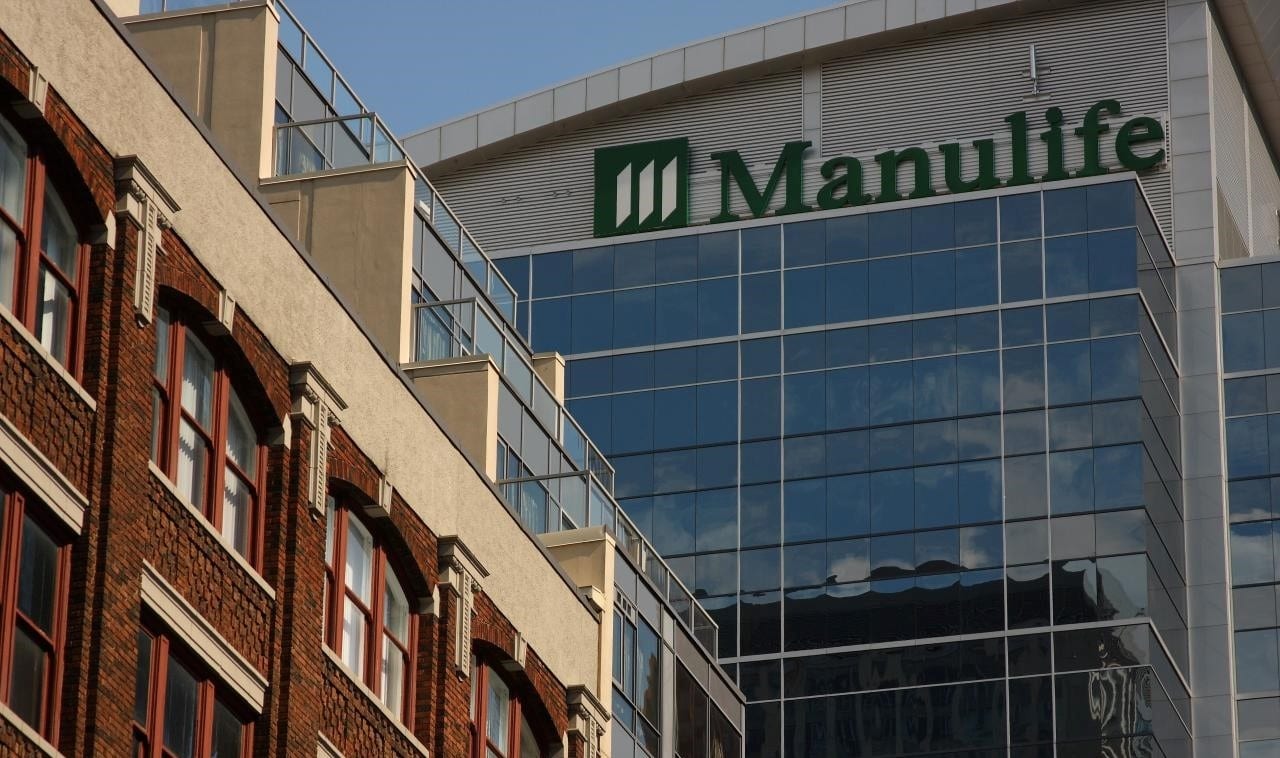
    Canadian insurer Manulife will acquire the Vietnamese business of British company Aviva and its 16-year bancassurance deal with VietinBank.

    It will take over the exclusive partnership with VietinBank when the deal is completed, Manulife and the lender agreed on Monday.

    The state-owned lender chose Manulife as its bancassurance partner because of its long-term commitment to Vietnam, deputy director of VietinBank, Nguyen Duc Thanh, said at the agreement-signing ceremony.

    He said his bank’s board expects the bancassurance business to grow by 30 percent annually and contribute 6-8 percent of the income from services.

    Manulife expects the partnership to increase its market share in the country from 20 percent to 30 percent in the coming years. It is currently the exclusive insurance partner of the country’s largest private lender, Techcombank.

    Aviva did not reveal the value of the sale but said in a statement that it expects the transaction to increase its net asset value and solvency surplus by around GBP100 million ($133.67 million).

    The company is looking to sell its operations in continental Europe and Asia to focus on Britain, Ireland and Canada.

    Vietnam had 18 life insurance companies with combined premium revenues of VND106.6 trillion ($4.6 billion) last year, up 24 percent year-on-year. In terms of new contracts, Manulife led the market for the first time last year with 17.7 percent followed by Bao Viet Holdings with 16.49 percent and Prudential Vietnam with 15.78 percent, according to the Ministry of Finance.

  • VietinBank profits surge 83 pct

    VietinBank profits surge 83 pct

    VietinBank, Vietnam’s third largest bank by asset, has reported an 83 percent increase in pre-tax profits to almost VND11.5 trillion ($495 million) in 2019.

    Its chairman, Le Duc Tho, said at a forum on Tuesday that assets rose 6.5 percent to VND1,240 trillion ($53.29 billion). Its bad debts ratio was under 1.2 percent, down from 1.59 percent in 2018.

    Credit growth during the year was 7.2 percent.

    The bank targets 6-8 percent growth in assets this year, 8-10 percent credit growth and an increase in pre-tax profits of 10 percent. It seeks to keep bad debts under 2 percent.

    Le Minh Hung, Governor of State Bank of Vietnam, said the government has approved capitalizing of VietinBank’s 2017 and 2018 profits.

    The lender has been seeking to increase its charter capital in the last few years, but Tho said profits would only meet a third of the increase it plans and needs government approval to hike its capital through other means.

    Vietinbank, in which the government owns 65 percent, has not increased its capital of VND37.23 trillion ($1.62 billion) since 2014.

  • Vietnam banks among 500 most valuable brands

    Vietnam banks among 500 most valuable brands

    Four Vietnamese lenders, three state-owned and one private, are among the world’s top 500 most valuable brands this year. In an annual ranking by BrandFinance, VietinBank was ranked 242, BIDV, 307, Vietcombank, 325, and VPBank, 361. Last year, VietinBank, BIDV and Vietcombank, three major Vietnamese banks, made it to this elite list, and this year is the first time that a Vietnamese private bank, VPBank, has made it to the Brand Finance Banking 500.

    In this year’s ranking, BIDV is one of top ten banks in the world in terms of brand strength, with growth of 22 percent; while VietinBank is one of top ten banks with biggest Brand Value Change 2018-2019 with a whopping 66 percent increase.

    Chinese bank Industrial and Commercial Bank of China (ICBC) continues to sit on the throne this year, followed by three others Chinese lenders in the top four.

    According to the UK-based Brand Finance, a leading independent brand valuation and strategy consultancy, Chinese banking brands have grown “at an outstanding rate despite fears of an economic slowdown and the rise of protectionism in international trade.”

    It said Chinese banks grew 28 percent on average, achieving $407 billion in total brand value, over $100 billion more than American banks.

    In August last year, Vietnam’s government approved a master plan for banking sector development until 2025 with a vision to 2030.

    The plan envisages at least 2-3 banks in Asia’s top 100 in terms of total assets and targets to have 3-5 banks listed on foreign stock exchanges by 2025.

  • Vietnamese banks report plunge in profits

    Vietnamese banks report plunge in profits

    While profit across the banking sector grew by an estimated 40 percent last year, VietinBank, LienVietPostBank and SaigonBank have reported steep declines. The biggest surprise came from state-owned VietinBank, the country’s second biggest lender by assets, which reported a 25 percent fall in profits before tax to go out of the group of five most profitable banks in the country.

    Le Duc Tho, its chairman, said this was a result of having to restrict operations last quarter to begin restructuring.

    Asset growth, credit growth and capital mobilization grew by 6-10 percent, lower than targeted.

    LienVietPostBank reported a 30 percent decline in profit before tax as a result of losses related to securities investments and low marginal interest rates.

    It achieved losses of nearly VND5 billion ($215,140) from securities investments whereas in 2017 it had made a profit of VND380 billion ($16.35 million).

    SaigonBank’s profit before tax fell by more than 26 percent due to provisioning for bad debts. The bank had to increase provision for bad debts by 22 percent to an amount equivalent to 87 percent of its profit from business operations.

    Its bad debts doubled in the first half of 2018 to nearly VND900 billion ($38.72 million), but by the end of the year it brought the rate down from 6.48 percent during mid-year to 2.2 percent. It involved provisioning of VND287 billion ($12.35 million).

    HSBC Vietnam CEO Pham Hong Hai said from 2019 bad debts could reemerge as a problem for banks after the recent lending spurt and the instability of the global financial markets.

    As a result, banks’ profits would most likely see a downward trend this year, he warned.

    The State Bank of Vietnam targets credit growth of 14 percent this year, the same as last year, and keeping non-performing loans to below 2 percent.

  • Vietcombank’s profit skyrockets, Vietinbank’s falls

    Vietcombank’s profit skyrockets, Vietinbank’s falls

    Two of Vietnam’s largest banks reported contrasting performances in 2018, with Vietcombank’s profits rising by 63.5 percent and Vietinbank’s falling by 27 percent. Vietcombank, the largest listed bank by market capitalization, said profit before tax was VND18.02 trillion ($772.73 million) last year, up 63.5 percent over 2017. Vietcombank earlier this month raised VND6.2 trillion ($265.86 million) from selling a 3 percent stake to foreign investors.

    Singapore sovereign fund GIC bought 2.55 percent while Japan’s Mizuho Bank bought the remaining 0.45 percent to keep its 15 percent stake unchanged. Nghiem Xuan Thanh, Vietcombank’s chairman, said at a recent conference his bank had achieved all its target last year.

    Bad debts last year accounted for 0.97 percent of total loans and the bank hopes to keep it below 1 percent this year too. Vietcombank plans to have its total asset value increased by 12 percent, and its capital mobilization up by 13 percent this year.

    Vietinbank, the fourth largest listed bank by market cap, saw profit before tax slip to VND6.7 trillion ($287.3 million) in 2018 from VND9.2 trillion ($394.5 million) in 2017. Asset growth, credit growth and capital mobilization grew by 6-10 percent, lower than targeted.

    The lender’s proposal to increase charter capital has not been approved. Its chairman Le Duc Tho said increasing capital is “vital” since it has remained unchanged for years. The State Bank of Vietnam owns 65 percent of the bank, while foreign ownership has reached the 30 percent cap.

  • Vietnam’s top banks struggle to increase capital to meet global norms

    Vietnam’s top banks struggle to increase capital to meet global norms

    Three top Vietnamese banks have been struggling to increase their capital to meet international adequacy norms.

    The second Basel Accords, or Basel II, prescribe capital of 8 percent of risk-weighted assets for all financial institutions, including in Vietnam, to cover operational risks.

    The National Financial Supervisory Commission found that Vietnamese banks need to increase their charter capital by 1.8-2 times to meet the Basel capital adequacy ratio (CAR).

    They include three of the four biggest lenders, BIDV, Vietcombank and Vietinbank.

    BIDV, Vietnam’s biggest bank by assets, currently has total assets of VND1,270 trillion ($54.3 billion) but capital of nearly VND34.19 trillion ($1.46 billion), which has remained unchanged since 2015.

    BIDV’s CAR is now only 9 percent according to leading broker VietCapital Securities, which is “close to dangerous” if compared to Basel II standard, the bank’s CEO, Phan Duc Tu, said.

    In the last three years the bank has been making three or four plans each year to increase charter capital, but none of them have been successful.

    In 2016 BIDV and Vietinbank had offered to pay its largest shareholder, the State Bank of Vietnam (SBV), the previous year’s dividends in stocks and not cash to increase its capital.

    But the central bank rejected it saying it needed the cash.

    Last year BIDV had made several plans like initiating an employee stock ownership plan (ESOP), selling shares to existing shareholders, paying dividends in stocks, and private placement of shares to strategic shareholders.

    Again all of them fell through.

    The public bank with the highest state ownership – of over 95 percent – has been looking for strategic investors it can sell stakes to but in vain.

    In 2016 Vietcombank, the third largest bank by assets, signed a deal with Singapore sovereign wealth fund GIC Private Limited to sell a 7.73 percent stake. The deal has yet to be consummated, with the bank’s chairman, Nghiem Xuan Thanh, saying they have been unable to agree on a price.

    Vietcombank’s charter capital has remained since 2016 at VND35.98 trillion ($1.54 billion).

    The SBV recently gave the lender approval to increase its charter capital by 10 percent to VND39.58 trillion ($1.69 billion).

    Vietcombank plans to make a private placement of 10 percent of its stake and has received approval from its shareholders for this.

    Should its plan succeed, Vietcombank will surpass Vietinbank as the bank with the largest charter capital.

    Vietinbank, the country’s second largest lender by assets, has seen state ownership fall to the minimum permitted level of 65 percent, and so can no longer issue more shares.

    Its charter capital has remained at VND37.23 trillion ($1.59 billion) since 2014.

    A masterplan, approved by the Prime Minister early last month, targets to have 3-5 banks listed on foreign stock exchanges.

    The plan, which covers the banking sector’s development until 2025 with a vision to 2030, also set targets to reduce the state capital ownership in three major banks: Vietcombank, BIDV and Vietinbank.

    In 2018-2020, the state will reduce its shares in those banks to at least 65 percent and in 2021-2025, the figure will be 51 percent.

    Vietnam has nine wholly-owned foreign banks, four state-owned banks and 31 joint-stock banks.
  • Vietinbank successfully issues bonds at low interest rate

    Vietinbank successfully issues bonds at low interest rate

    Vietnam Joint Stock Commercial Bank for Industry and Trade (Vietinbank) announced it successfully issued non-convertible five-year bonds worth VNĐ2 trillion (US$88.1 million) at annual interest rate of 5.8 per cent.

    Compared with the interest rates of other bond issued recently, the 5.8 per cent rate is considered the lowest rate. It is even lower than the interest rate of 7 per cent per year applicable for deposits of over three years in Vietinbank.

    Previously, in December 2016, Vietinbank also issued 10-year bonds worth VNĐ2.9 trillion at interest rate of 7.5 per cent in the first five years.

    Vietinbank reported a high profit of VNĐ8.25 trillion in 2016, 4 per cent higher than the target set at the bank’s general meeting of shareholders.

    As of December 31, 2016, the bank’s total merged assets were estimated at VNĐ947 trillion, up 22 per cent from the previous year.

    Also in 2016, the bank’s total outstanding loans were VNĐ720 trillion, a year-on-year rise of 18 per cent, while total mobilised capital reached VNĐ862 trillion, up 21 per cent. By the end of 2016, the bank continued to effectively manage the quality of assets with bad debt ratio of less than 1 per cent.

    The bank in 2017 has set a target of a 15-17 per cent rise in total assets and an 18 per cent increase in outstanding credit.