Tag: Vietnam Airlines

  • Vietnamese Airlines Gear Up for Sky-High Competition in 2026: New Entrants and Fleet Expansions Set to Shake Up Aviation Industry

    Vietnamese Airlines Gear Up for Sky-High Competition in 2026: New Entrants and Fleet Expansions Set to Shake Up Aviation Industry

    The Vietnamese aviation sector is preparing for heightened competition this year, with the emergence of a new airline and the resurgence of one that was previously struggling. Sun PhuQuoc Airways, which commenced operations in November, along with low-cost airline Vietjet Air, have expanded their fleets this year, with Sun PhuQuoc boasting six jets and Vietjet owning over 100 jets, having added more than 20 just last month.

    Emerging Players in the Vietnamese Aviation Market

    Sun PhuQuoc, the new entrant, has been increasing its staff strength since its inception. Meanwhile, Bamboo Airways, which faced some difficulties, was acquired by property developer FLC Group in September and has been expanding its fleet since then. Market analysts from MBS predict that the expansion of Vietnamese airlines’ fleet will exceed passenger growth by 2026. They believe that the entrance of Sun PhuQuoc and the comeback of Bamboo Airways after restructuring will introduce competitive pressure on other industry players.

    In particular, intense competition is expected among the three smaller airlines, Sun PhuQuoc, Bamboo, and Vietravel Airlines. Sun PhuQuoc plans to increase its fleet to 20 aircraft and start international flights as early as this year. Bamboo Airways, with its current fleet of eight planes, plans to add eight to 10 more annually until 2030 and expand its network.

    Currently, the majority of its flights are between Hanoi, Da Nang, Ho Chi Minh City, and some other tourist spots. Vietravel Airlines, backed by T&T Group, has only three aircraft, falling short of its earlier plans to increase the count to 10 by the end of last year.

    Impact on Market Leaders

    MBS anticipates that this escalating competition will not significantly impact Vietjet and Vietnam Airlines, which together account for 90% of the aviation market. These prevailing market leaders are primarily focused on expanding their international networks. Over the past two years, Vietjet has added services to Northeast Asia, India, and Australia. In contrast, Vietnam Airlines launched long-haul flights to Europe.

    However, these two airlines must compete with foreign airlines. Several of these international competitors started operating flights to Vietnam last year, creating competition not only based on pricing but also on service quality. Of note, around 28 aircraft, mainly owned by these two dominant airlines, are currently under maintenance due to engine issues.

    Key Challenges & Opportunities

    Other possible challenges for Vietnamese airlines this year include geopolitical factors affecting fuel prices and international route networks, flight delays due to abnormal weather, and traffic congestion at major airports. Despite these potential obstacles, analysts indicate passenger numbers have increased over the past year and are projected to grow this year. According to aviation authority data, the total number of passengers last year was 83.5 million, including 44.6 million international passengers.

    Sheldon Hee, regional vice president of Asia-Pacific at the International Air Transport Association, stated that Vietnam has been one of the ten fastest-growing aviation markets in the region over the past decade. He also pointed out that Vietnamese airlines still have considerable potential for growth. Currently, the country has direct flights to about 30 countries, while Thailand and Singapore have connections with over 50 countries.

    Questions & Answers

    What is the current aviation market situation in Vietnam?
    The Vietnamese aviation market is set for heightened competition with the introduction of a new airline, Sun PhuQuoc Airways, and the resurgence of Bamboo Airways.

    What are the growth plans of these emerging airlines?
    Sun PhuQuoc plans to increase its fleet to 20 aircraft and start international flights this year. Bamboo Airways aims to add eight to 10 planes annually until 2030.

    Will the growing competition affect the market leaders?
    Analysts predict that the competition is unlikely to significantly impact Vietjet and Vietnam Airlines, which together control 90% of the aviation market. These airlines are primarily focusing on expanding their international networks.
  • Vietnam Airlines Teams Up with Pizza 4P’s: Savour In-Flight Meals like Never Before!

    Vietnam Airlines Teams Up with Pizza 4P’s: Savour In-Flight Meals like Never Before!

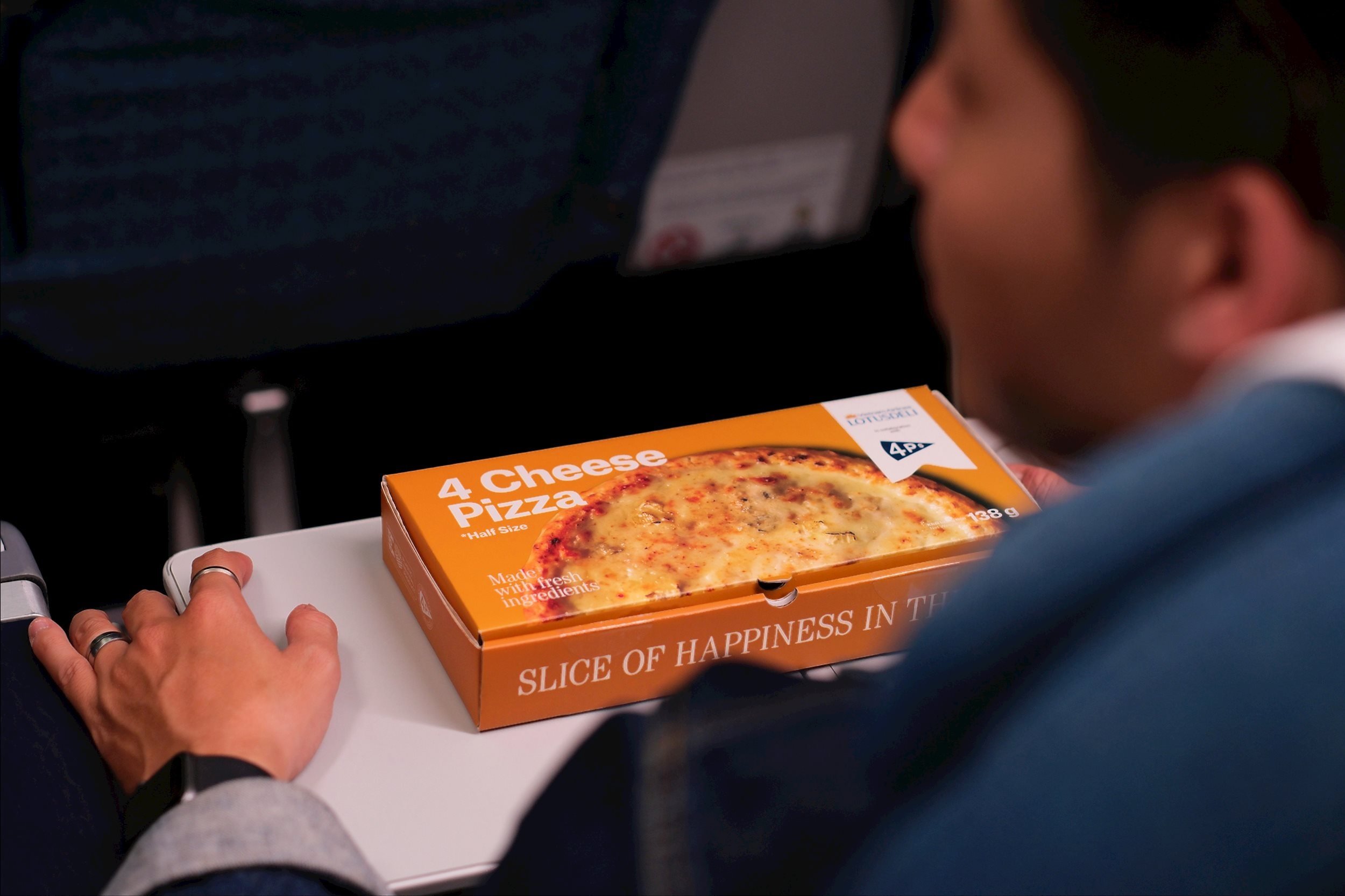
    Vietnam Airlines has recently introduced a new feature, offering meals sourced from the immensely popular Pizza 4P’s restaurant chain. The airline commenced the sale of these meals on Monday, on select domestic flights lasting 60 minutes or more and international flights that are a minimum of 90 minutes departing from Hanoi and HCMC, according to an official statement.

    Menu and Pricing

    Among the meal options available are Margherita and 4 cheeses, priced at VND119,000 dong (US$4.51) for half a standard pizza. However, potential customers are required to place their orders a minimum of 24 hours in advance, either via the airline’s official website or mobile app.

    Other airlines in Vietnam like Vietjet, Bamboo Airways, and Vietravel Airlines have already ventured into the sale of food and souvenirs on board their flights. In 2022, Vietnam Airlines also began selling milk tea on board, with prices set at VND49,000 per cup on domestic routes and VND100,000 on international flights.

    Shift Towards Personalized Offerings

    The initiative is part of Vietnam Airlines’ strategic shift towards offering more personalized, co-branded products that cater to the evolving needs of younger travelers, families, and international passengers.

    Pizza 4P’s, established in 2011 by Japanese duo Yosuke Masuko and Sanae Takasugi, is renowned for its pizza. Despite pizza being the main dish on its menu, the brand positions itself as a restaurant chain instead of a fast-food outlet. It now boasts 40 restaurants, with 35 locations in Vietnam and additional branches in Cambodia, Indonesia, Japan, and India.

    Questions & Answers

    What are the new meal options available on Vietnam Airlines?
    Vietnam Airlines has introduced meals from the popular Pizza 4P’s restaurant chain, including Margherita and 4 cheeses options.

    How can customers purchase these meals on Vietnam Airlines?
    Customers are required to place their orders a minimum of 24 hours in advance, either through the official website or mobile app of Vietnam Airlines.

    What is the goal of Vietnam Airlines in introducing these new meal options?
    Introducing meals from Pizza 4P’s is part of Vietnam Airlines’ strategic shift towards offering more personalized, co-branded products to cater to the evolving needs of younger travelers, families, and international passengers.

  • Vietnam Airlines Set to Sell Stake in Jet Fuel Subsidiary Skypec, Reshaping Industry Landscape

    Vietnam Airlines Set to Sell Stake in Jet Fuel Subsidiary Skypec, Reshaping Industry Landscape

    Vietnam Airlines plans to sell up to 49% of its fully-owned subsidiary, Skypec, a key player in jet fuel distribution.

    The airline is embarking on a public auction of its shares, anticipated to occur between now and 2027, as outlined in a recent statement. This move is part of a strategic initiative first announced two years ago, aimed at restructuring the company to recover from previous financial losses.

    Strategic Moves Amidst Recovery

    Skypec stands out as one of Vietnam Airlines’ most successful subsidiaries, alongside its aircraft engineering counterpart Vaeco. Together with Petrolimex Aviation, Skypec dominates the aviation fuel market in Vietnam, supporting all domestic carriers and nearly a hundred international airlines operating in the country.

    Impressive Operational Footprint

    With a robust storage capacity of 200,000 cubic meters, Skypec services 18 airports across Vietnam, extending its operations to four international airports in South Korea. Last year, the company sold approximately 1.6 million tons of jet fuel, generating revenues of VND35.27 trillion (US$1.33 billion) with an after-tax profit exceeding VND268 billion.

    Turning Financial Fortunes Around

    Vietnam Airlines recently marked a significant turnaround, reversing its negative net worth following a government capital infusion of VND7.77 trillion. The government now holds a 47.09% stake in the airline, reflecting a collaborative effort to stabilize the national carrier. As a result, the airline reported a 10% year-on-year increase in revenues, totalling VND58.68 trillion in the first half of the year, with profits before tax soaring by 19.3% to VND6.68 trillion. Who knew a little fuel could fuel such big changes?

    Questions & Answers

    What is the main focus of Vietnam Airlines’ recent announcement?
    Vietnam Airlines intends to sell up to 49% of its stakes in its jet fuel subsidiary, Skypec, through a public auction between now and 2027 as part of its restructuring plan.

    How does Skypec contribute to domestic aviation?
    Skypec is a significant player in Vietnam’s aviation fuel supply, operating at 18 airports in Vietnam and servicing nearly 100 international airlines, making it crucial to the country’s air travel infrastructure.

    What financial improvements has Vietnam Airlines experienced recently?
    Thanks to a government capital injection, Vietnam Airlines has reversed its negative net worth and reported increased revenues and profits in the first half of the year, reflecting a positive turnaround in its financial health.

  • Vietnam Airlines to Expand Fleet with 30 New Planes in $10B Investment Plan by 2032

    Vietnam Airlines to Expand Fleet with 30 New Planes in $10B Investment Plan by 2032

    Vietnam Airlines has launched an aggressive plan to expand its fleet, aiming to acquire or lease 30 wide-body aircraft—either Airbus A350-900 or Boeing B787-9—by the years 2028 to 2032.

    As part of this strategy, the airline recently issued a preliminary request for information from suppliers, inviting them to provide specifications regarding aircraft types, numbers, delivery schedules, and potential contract values by October 8. With a price tag expected to exceed US$10 billion for all 30 planes—not counting possible bulk discounts—this ambitious expansion underscores Vietnam Airlines’ commitment to growing its operational capabilities.

    Currently, the airline boasts a fleet of 31 wide-body aircraft, including 14 A350-900s and 17 Boeing 787s. Additionally, it operates 65 narrow-body Airbus A321s and A320s alongside six ATR-72s. However, CEO Dang Ngoc Hoa has highlighted a pressing need for at least 52 wide-body and 112 narrow-body planes by 2035 to accommodate growing demand and expand its route network.

    In April, the airline received government approval to add 50 narrow-body aircraft, a move projected to cost about VND92.8 trillion (approximately US$3.5 billion). However, Hoa noted that this addition barely scratches the surface of what is necessary for continued growth. “If manufacturers can’t deliver before 2030, we may have to consider leasing more aircraft for 2027 and 2028,” he remarked, painting a picture of urgency in the face of evolving market dynamics.

    Vietnam Airlines currently operates around 400 flights daily to 21 domestic and 29 international destinations. This year, it has successfully revived or launched 15 international routes in key markets, significantly including Italy, Russia, China, the UAE, Japan, South Korea, and India.

    Like many in the industry, however, the airline has faced challenges stemming from an aircraft shortage, exacerbated by complications with Pratt & Whitney engines on its Airbus A321s. As of mid-2025, about 15 of these A321s remain grounded, with four Airbus A350s also undergoing repairs. As the world begins to emerge from the shadow of the pandemic, one might say the sky has never been clearer for an ambitious airline aiming to soar higher.

    Questions & Answers

    What types of aircraft is Vietnam Airlines looking to acquire?
    Vietnam Airlines is considering either the Airbus A350-900 or the Boeing B787-9 for its planned acquisition of 30 wide-body aircraft.

    What is the estimated cost of expanding the fleet?
    The total cost for acquiring all 30 aircraft is expected to exceed US$10 billion, not including any potential bulk discounts.

    How many flights does Vietnam Airlines operate daily?
    The airline operates approximately 400 flights each day, connecting 21 domestic and 29 international destinations.

  • Vietnam Airlines Soars Back to Positive Equity Thanks to Strategic State Investment

    Vietnam Airlines Soars Back to Positive Equity Thanks to Strategic State Investment

    State-owned Vietnam Airlines has reversed its negative net worth thanks to a VND7.77 trillion (US$295 million) infusion of capital by the government.

    In a significant turnaround for the airline industry, Vietnam Airlines has successfully rehabilitated its financial position, emerging from a state of negative net worth due to a substantial capital injection from the government. The State Capital Investment Corporation (SCIC) announced on Tuesday that it finalized the purchase of additional shares in Vietnam Airlines on September 12, providing the company with a vital boost to secure stable long-term cash flows and enhance its capacity to meet debt obligations.

    As detailed in the airline’s consolidated financial statements, this capital infusion, totaling VND7.77 trillion, has lifted Vietnam Airlines from nearly VND3.1 trillion in negative shareholders’ equity as of June 30. In a market that is often as turbulent as a stormy flight, this funding means the airline not only survives but also has the resources to expand its fleet as travel demand rebounds.

    The shares acquired by SCIC form part of a broader strategy involving the issuance of 900 million new shares to existing shareholders, aiming to raise VND9 trillion to navigate the financial turbulence induced by the Covid-19 pandemic. Shareholders that held 1,000 shares were permitted to apply for 406 new ones, furthering their stake in the airline’s recovery.

    Previously, in September 2021, SCIC had injected VND6.98 trillion to assist Vietnam Airlines in maintaining liquidity during the pandemic’s peak. Now, SCIC boasts a 47.09% ownership stake in the airline, firmly rooting government support within this critical national carrier.

    Vietnam Airlines is showing signs of resilience following a rough patch that began early last year. Recent figures reveal that in the first half of this year, the airline reported a 10% year-on-year increase in revenues, reaching VND58.68 trillion. Impressively, its pre-tax profit surged by 19.3%, climbing to VND6.68 trillion — a refreshing change amidst a turbulent industry.

    Questions & Answers

    How has the government support affected Vietnam Airlines’ financial health?
    The infusion of VND7.77 trillion allowed Vietnam Airlines to move out of negative net worth and significantly improve its cash flow and ability to meet debt obligations, enabling it to plan for future fleet expansions.

    What previous support has Vietnam Airlines received from the government?
    Before this recent capital injection, SCIC provided VND6.98 trillion in September 2021 to help sustain the airline during the height of the Covid-19 pandemic and stabilize its operations.

    What are the latest performance metrics for Vietnam Airlines?
    In the first half of the year, Vietnam Airlines reported a revenue increase of 10% year-on-year, totaling VND58.68 trillion, along with a pre-tax profit increase of 19.3%, reaching VND6.68 trillion, indicating a strong recovery.

  • Vietnamese Airlines Soar Ahead with New Direct International Flight Initiatives

    Vietnamese Airlines Soar Ahead with New Direct International Flight Initiatives

    Ngoc Yen is buzzing with excitement as she returns to Bali after a three-year hiatus, remarking that this time her journey was significantly more affordable and convenient thanks to a direct flight from Ho Chi Minh City. “It’s more manageable now: ticket changes are easy, the flight attendants speak Vietnamese, and the meals hit just right,” she shared, contrasting her previous experiences that often required lengthy layovers in Singapore, racking up unexpected costs along the way.

    Leading the charge in this travel renaissance, Vietnam Airlines has introduced an impressive 13 new international routes since early 2024. Among these, the cities of Ho Chi Minh and Bali, Copenhagen, Bengaluru, Hyderabad, and Milan are now just a short flight apart. This expansion includes its inaugural service to Denmark and the revival of crucial routes such as Hanoi to Moscow and Ho Chi Minh to Osaka.

    Today, Vietnam Airlines operates on 69 international routes—a notable 13% increase from pre-pandemic levels—connecting travelers to 37 destinations across 21 countries. A spokesperson for the airline highlighted its rapid recovery and expansion as “unprecedented.” The international routes have not only boosted airline connectivity but also contributed significantly to its financials, with revenues up by 10.6% year-on-year in the first half of 2025, accounting for 60% of total transport service revenues.

    Meanwhile, budget carrier Vietjet Air is setting its sights on the Indian market with flights to major cities like Mumbai, Ahmedabad, and Hyderabad. The airline recently kicked off new services from Nha Trang in Vietnam to Vladivostok, Khabarovsk, and Blagoveshchensk in Russia, and connected Hanoi with Chengdu in China. Looking ahead, Vietjet plans to add flights to Auckland, New Zealand, in September, part of a broader strategy for sustained growth.

    Bamboo Airways, on the other hand, is focusing its efforts on short-haul routes, allowing it to easily adjust flight frequencies to popular destinations like Bangkok, Taipei, and Seoul. In a unique twist, Vietravel Airlines is broadening its horizons in charter flights, appealing to high-end travelers with luxurious all-inclusive tours to destinations in South Korea, Japan, and Thailand.

    The Civil Aviation Authority of Vietnam has noted a resurgence, revealing that Vietnamese airlines are now operating across more than 150 international routes, surpassing numbers seen before the pandemic. This aggressive expansion is driven by a desire to retain slots at major airports as demand for air travel rebounds. Airlines are also gearing up to increase international flights to attractive Vietnamese tourist destinations such as Da Nang, Nha Trang, and Phu Quoc, signaling a strategic effort to reinforce Vietnam’s position in the global transport ecosystem.

    “We’re not merely chasing numbers; we’re selecting destinations with strong connectivity that serve both passenger and cargo needs,” stated a representative from one carrier, emphasizing the balance between growth and practicality. Routes like Hanoi-Hyderabad are gaining popularity due to competitive pricing, and travel agents in Hanoi report soaring demand for direct flights to India and Bali, particularly among independent and business travelers. As optimism swells, airlines are planning to continue this trend of international expansion, buoyed by the encouraging response to their new services.

    Questions & Answers

    What new international routes has Vietnam Airlines added recently?
    Vietnam Airlines has launched 13 new international routes including those to Bali, Copenhagen, Bengaluru, Hyderabad, and Milan.

    How has Vietjet Air expanded its operations?
    Vietjet Air has targeted the Indian market with flights to major cities like Mumbai and has also initiated new services to Russian cities and plans to connect to Auckland, New Zealand.

    What strategic moves are Vietnamese airlines making post-pandemic?
    Vietnamese airlines are rapidly expanding their international services to secure airport slots and respond to rising travel demand, focusing on destinations that enhance both passenger and cargo connectivity.

  • Vietravel Airlines Takes Flight: First Aircraft Acquisition Fuels Growth Following Tycoon Do Quang Hien’s Investment

    Vietravel Airlines Takes Flight: First Aircraft Acquisition Fuels Growth Following Tycoon Do Quang Hien’s Investment

    In a significant leap forward, Vietravel Airlines welcomed its first Airbus A321, registered as VN-A129, at Noi Bai International Airport on Saturday afternoon. This delivery marks a pivotal moment for the fledgling carrier, which is poised to add two more Airbus A320 aircraft to its fleet next month.

    Originally operated by U.S.-based Spirit Airlines, the newly acquired A321 received its airworthiness certificate on July 10, 2015. Its arrival comes six months after T&T Group, a consortium of businesses, became Vietravel Airlines’ strategic shareholders, further signaling a robust commitment to the airline’s development.

    A Commitment to Growth

    Ho Minh Tan, deputy director-general of the Civil Aviation Authority of Vietnam, highlighted that this investment is a testament to the conglomerate’s commitment to fortifying the airline’s operational capabilities. With the addition of this aircraft, Vietravel Airlines can regain control over its operations, which faced setbacks when its fleet dwindled to just one plane.

    New Horizons Ahead

    The airline is setting its sights on expanding its flight offerings, enhancing connectivity between Hanoi and Ho Chi Minh City with additional routes to popular domestic destinations such as Da Nang, Phu Quoc, and Quy Nhon. They are also eyeing international locations to broaden their operational scope.

    A Declaration of Strength

    Do Vinh Quang, chairman of Vietravel Airlines and part of a notable family legacy in the industry, stressed that the new plane symbolizes not just progress in fleet modernity but also a declaration of the company’s financial robustness and capability. To bolster its strategic ambitions, the airline is in negotiations with major aircraft manufacturers and international airlines, paving the way for comprehensive partnerships in the aviation sector.

    Capital to Fuel Ambitions

    Established in 2020 with a starting capital of VND700 billion (approximately US$26.8 million), Vietravel Airlines took to the skies for the first time in January 2021, marking its place as the sixth airline in Vietnam and the third privately owned carrier. Recently, shareholders approved a plan to escalate the charter capital to VND2.6 trillion in the first half of 2026, aided by financial backing from SHB Bank. This capital infusion is expected to enhance both fleet and operational capabilities, ultimately securing financial stability.

    Looking ahead, Vietravel Airlines is keen to leverage resources from T&T Group and another major stakeholder, Vietravel Corporation, to expand into the air cargo sector. They are also collaborating with T&T Group to develop subsidiary services such as ground handling, warehousing, and technical support—essential components to constructing a well-rounded aviation ecosystem.

    A Vision for the Future

    The airline aspires to become a comprehensive hub that integrates transportation, tourism, and innovative digital experiences. Aiming to emerge as one of the leading airlines in the region by 2035, Vietravel Airlines is not just about flights; it’s about elevating the entire travel experience.

    Questions & Answers

    How significant is the acquisition of the A321 for Vietravel Airlines?
    Acquiring the A321 represents a crucial step for Vietravel Airlines, enhancing its operational capacity and signaling stronger financial health, especially after challenges led to a reduced fleet size.

    What are the airline’s expansion plans following this acquisition?
    Vietravel Airlines plans to increase its domestic flight routes between major cities and explore international destinations while also expanding into the air cargo sector to diversify operations.

    What financial strategies are in place to support Vietravel Airlines’ growth?
    The airline plans to raise its charter capital to VND2.6 trillion with support from SHB Bank, facilitating fleet expansion and ensuring liquidity. They are also set to leverage partnerships for resource and service development.

  • Vietnam Airlines to Refund Passengers Amid Six-Month Closure of Vinh Airport for Major Expansion

    Vietnam Airlines to Refund Passengers Amid Six-Month Closure of Vinh Airport for Major Expansion

    Vietnam Airlines has announced ticket refunds for all flights affected by the closure of Vinh International Airport in Nghe An Province, which is undergoing a six-month expansion.

    Vinh Airport Set for Major Upgrades

    Commencing July 1, Vinh International Airport will shut its doors for a thorough six-month renovation. The state-owned airline confirmed in a statement that it will not only refund tickets for canceled flights but will also permit passengers to change their itineraries free of charge, alleviating some of the travel disruptions.

    Boosting Connectivity Amid Closure

    In a bid to maintain connectivity within northern and central Vietnam, Vietnam Airlines plans to enhance its service to other airports, including Noi Bai in Hanoi and Tho Xuan in Thanh Hoa Province. Travelers are likely to appreciate these adjustments, particularly during the busy holiday season when air travel traditionally surges.

    Vietjet Air’s Response to the Situation

    While Vietjet Air has not yet announced specific refund procedures, travel agents indicate that passengers will have the option to either hold onto their ticket value for up to 365 days—allowing them to fly to or from Vinh once the upgrades are complete—or to reroute to a different airport on their original travel date, adding an extra layer of flexibility.

    What’s on the Horizons for Vinh International Airport?

    The ambitious expansion project, estimated at VND1 trillion (approximately US$38 million), aims to significantly enhance airport facilities, including a revamped terminal, upgraded runways, improved taxiways, and expanded aircraft parking areas. As the saying goes, “good things come to those who wait,” and the anticipated upgrade promises to make air travel through Vinh much more efficient and enjoyable in the near future.

    Questions & Answers

    How long will Vinh International Airport be closed?
    The airport will be closed for six months starting July 1 for expansion and renovations.

    What are Vietnam Airlines’ options for affected passengers?
    Vietnam Airlines is offering ticket refunds and free itinerary changes for passengers whose flights are canceled due to the airport closure.

    How is Vietjet Air handling the situation?
    Vietjet Air has yet to provide specific refund details but is expected to offer passengers the choice to retain ticket value for up to a year or to switch flights to different airports on their original dates.

  • Vietnam Airlines Launches $69M Catering and Maintenance Initiatives at New Airport, Elevating Service Standards

    Vietnam Airlines Launches $69M Catering and Maintenance Initiatives at New Airport, Elevating Service Standards

    Vietnam Airlines has officially commenced work on two significant projects at the rapidly developing Long Thanh International Airport, which is poised to become a major aviation hub in Vietnam. With a combined investment of VND 1.8 trillion (approximately USD 69 million), these initiatives focus on enhancing in-flight catering and aircraft maintenance services.

    Investment in Catering and Maintenance

    The projects will be spearheaded by the airline’s subsidiaries: Vietnam Airlines Caterers and Vietnam Airlines Engineering Company. The catering facility is designed to initially produce 20,000 meals daily, with the ambition to increase that capacity to 40,000. Such a massive food operation could make meal prep at 30,000 feet feel a little less like airplane food—an exciting prospect for hungry travelers!

    On the maintenance front, work is underway on a state-of-the-art facility covering over 45,000 square meters, with a budget of VND 1.1 trillion. This facility will service two wide-body and two narrow-body aircraft simultaneously, boasting a minimum annual maintenance capacity of 250,000 man-hours. It aims to conduct between 120 to 150 maintenance sessions each year, ensuring that the fleet remains in peak condition.

    Additionally, Vietnam Airport Ground Services Company has initiated its own project, focusing on maintaining airport ground equipment, further streamlining operations at Long Thanh.

    A Landmark Development

    Spanning an impressive 5,000 hectares in Dong Nai Province, Long Thanh International Airport boasts an estimated total cost of VND 336.6 trillion. The airport’s first phase is scheduled for completion in 2026 and includes crucial infrastructures such as a runway, a passenger terminal, and supporting facilities designed to accommodate up to 25 million passengers annually. With these developments, Long Thanh aims to elevate Vietnam’s status in the global aviation landscape.

    As construction progresses, the combination of extensive facilities and quality services signals a bright future for air travel in Vietnam. Who knows—maybe your next meal on a flight will be prepared just a stone’s throw away from the runway!

    Questions & Answers

    What is the total investment for the Vietnam Airlines projects at Long Thanh International Airport?
    The projects are estimated to cost VND 1.8 trillion (approximately USD 69 million).

    What capacity will the catering facility have?
    Initially, the facility is set to produce 20,000 meals per day, with potential scalability to 40,000 meals.

    When is the first phase of Long Thanh International Airport expected to be completed?
    The first phase is scheduled for completion in 2026, with a capacity to handle 25 million passengers each year.

  • Vietnam Airlines Set to Launch Inaugural Direct Route to Italy Next Month!

    Vietnam Airlines Set to Launch Inaugural Direct Route to Italy Next Month!

    Vietnam Airlines is set to make waves in the skies with the launch of its inaugural direct flight between Hanoi and Milan, Italy, on July 1. This move is a crucial step in expanding the airline’s European network and marks a historic first for a Vietnamese carrier, which has previously required passengers to transit through Germany or France for Italian destinations.

    New Route to Milan

    The airline will kick off this service with three weekly flights, utilizing its state-of-the-art Boeing 787 aircraft. A spokesperson for Vietnam Airlines revealed that plans are already in motion for a future direct service from Ho Chi Minh City to Milan post-2025, further enhancing connectivity between Vietnam and Italy.

    Why Milan?

    Milan, the bustling metropolis in northern Italy, is renowned as the country’s fashion capital and boasts a rich tapestry of historic architecture. It attracts millions of tourists, particularly from June to August, making it an appealing destination for both leisure and business travel. The allure of Italy is strong for Vietnamese travelers, with the country ranking among the top 10 fastest-growing sources of visitors to Vietnam. In 2024 alone, arrivals from Italy surged by a remarkable 155%, according to the Vietnam National Administration of Tourism.

    A Boost for Tourism

    The launch of this direct route is anticipated to significantly boost tourism flows between the two nations. In a promising development, discussions are underway for a visa waiver targeted at tour groups from Vietnam, which could further facilitate travel.

    Vietnam Airlines currently operates an expansive network with 106 routes, including 36 international destinations, supported by its diverse fleet of Boeing 787s and Airbus aircraft. The airline has ambitious plans for this year, aiming to launch or revive 15 international services.

    Curiously, with Milan’s fashion weeks turning heads globally, will we soon see a Vietnamese flair added to the runway?

    Questions & Answers

    What is the significance of the new flight from Hanoi to Milan?
    This direct flight is a historic first for Vietnam Airlines, enhancing travel options between Vietnam and Italy and positioning the airline as a key player in European travel.

    How many flights per week will Vietnam Airlines operate to Milan?
    Initially, Vietnam Airlines will operate three flights per week between Hanoi and Milan.

    What are the future plans for Vietnam Airlines regarding Italy?
    Vietnam Airlines intends to launch a direct service to Milan from Ho Chi Minh City after 2025, further expanding its European routes.

  • Vietnam Airlines Eyes Ambitious Expansion with Demand for 50 New Aircraft

    Vietnam Airlines Eyes Ambitious Expansion with Demand for 50 New Aircraft

    Vietnam Airlines is soaring to new heights, aiming to bolster its fleet with a minimum of 50 additional aircraft as part of a robust strategy to expand its operations amidst a global jet shortage. During an extraordinary general meeting on Thursday, Chairman Dang Ngoc Hoa revealed that these acquisitions are vital for the airline’s recovery from the pandemic, as it prepares to launch or resume services on 15 international routes this year.

    As part of its ambitious plans, the state-owned carrier recently received government approval for the procurement of 50 narrow-body aircraft and 10 spare engines, with an eye-popping price tag of nearly US$3.7 billion. Currently boasting a fleet of 100 aircraft, Vietnam Airlines anticipates reaching 137 by 2030 and 164 by 2035.

    However, the clock is ticking. With soaring global demand for commercial aircraft, the airline must act swiftly to place orders that ensure delivery before 2030. Failing to do so may push Vietnam Airlines into a tricky situation, where it will have to lease planes starting in 2027—a scenario none would prefer.

    Adding to the urgency are ongoing technical difficulties with Pratt & Whitney engines, which have grounded 15 narrow-body Airbus A321 aircraft while four wide-body Airbus A350 are undergoing maintenance. As a result of this aircraft shortage, the remaining planes are working overtime, averaging 11.5 flight hours each day—a significant jump from the pre-Covid average of 10 hours.

    In a nod to its expansion ambitions, shareholders have also endorsed a move for Vietnam Airlines to issue more shares, raising VND22 trillion (approximately $848 million) in 2025 and 2026.

    With eyes set firmly on the future, the airline not only hopes to strengthen its fleet but also to reclaim its position as a key player in the competitive skies.

    Who knew managing a fleet could be as complex as a game of chess?

    Questions & Answers

    What is the purpose of Vietnam Airlines’ plan to acquire new aircraft?
    The plan to acquire new aircraft aims to support the airline’s ambitious expansion plans and boost its recovery post-Covid by launching or resuming services on 15 international routes this year.

    What approval did Vietnam Airlines recently receive?
    Vietnam Airlines received government approval for the purchase of 50 narrow-body aircraft and 10 spare engines at a cost nearing US$3.7 billion.

    How many aircraft does Vietnam Airlines currently operate?
    The airline currently operates a fleet of 100 aircraft and plans to expand to 137 by 2030 and 164 by 2035.

  • Vietnam Airlines Gains Approval for 50 New Narrow-Body Aircraft Purchases

    Vietnam Airlines Gains Approval for 50 New Narrow-Body Aircraft Purchases

    Vietnam Airlines Secures Approval for Acquisition of 50 Narrow-Body Aircraft

    Government Greenlights Fleet Expansion Plan

    Vietnam Airlines has received in-principle approval from the government to purchase 50 narrow-body aircraft, marking a significant step in its fleet modernization strategy. Notably, this deal will not require a state guarantee, allowing the airline to streamline its acquisition process.

    Addressing Growing Travel Demand

    The government’s approval, conveyed through an official dispatch from Deputy Prime Minister Ho Duc Phoc, aims to meet surging consumer demand for air travel and to replace aging aircraft in the current fleet. Vietnam Airlines plans to acquire 50 new Airbus A320 NEO and Boeing 737 MAX jets, along with 10 spare engines, for an estimated total of approximately $3.7 billion—an investment that is 1.6 times the airline’s current asset value based on its 2024 financial data.

    Modernizing the Fleet

    This acquisition is part of Vietnam Airlines’ broader strategy to phase out older A321 CEO planes. The new aircraft will enhance the efficiency and reliability of the fleet, aligning with increasing passenger expectations and operational standards. Earlier in September 2023, the airline also announced a deal for an additional 50 Boeing 737 MAX aircraft, with deliveries expected between 2027 and 2030.

    Strategic Financial Partnerships

    To support this growth initiative, Vietnam Airlines signed a memorandum of understanding with Citibank earlier this month for $560 million in funding focused on strategic projects, including the aircraft purchase. Furthermore, the airline has partnered with Vietcombank to secure additional financial resources for the acquisition.

    Future-Proofing Operations

    Looking ahead, Vietnam Airlines forecasts the need for a fleet of 52 wide-body and 112 narrow-body aircraft by 2035. Currently, the airline operates approximately 100 aircraft, including over 30 wide-body jets, showcasing its commitment to expanding its capacity to meet the demands of the growing travel market.

    In its 2024 financial report, Vietnam Airlines reported impressive figures, including over VND 113.7 trillion (approximately $4.37 billion) in revenue, transporting 22.7 million passengers and 314,700 tons of cargo, with an average aircraft utilization of 11 hours per day—reflecting a 25% increase from the previous year.

    Conclusion

    Vietnam Airlines’ strategic acquisition of narrow-body aircraft is poised to enhance its operational capabilities and address the evolving travel landscape in Vietnam. As the airline expands its presence and modernizes its fleet, the implications for the retail sector may be significant, driving increased consumer activity and enhancing travel options for millions. This move signifies not only a response to market demands but also a commitment to sustained growth in the competitive aviation industry.

  • Vietnam Airlines gets go-ahead to buy 50 narrow-body aircraft

    Vietnam Airlines gets go-ahead to buy 50 narrow-body aircraft

    Vietnam Airlines has been granted in-principle approval by the government to acquire 50 narrow-body aircraft without requiring a state guarantee.

    The approval, outlined in an official dispatch from the Government Office reflecting the views of Deputy Prime Minister Ho Duc Phoc, is intended to address future travel demand and phase out aging aircraft.

    Vietnam Airlines previously proposed buying 50 Airbus A320 NEO and Boeing 737 MAX jets, along with 10 spare engines, at a total estimated cost of around US$3.7 billion—equivalent to 1.6 times its current total asset value, based on 2024 financial data.

    The new aircraft will gradually phase out older A321 CEO planes as part of the airline’s fleet modernization plan.

    Earlier this month, during Phoc’s visit to the U.S., Vietnam Airlines signed a memorandum of understanding with Citibank for $560 million in funding for strategic projects, including the aircraft purchase. It also signed a separate MOU with Vietcombank to prepare additional capital for the acquisition.

    In September 2023, Vietnam Airlines signed a deal to purchase 50 Boeing 737 MAX aircraft, with deliveries expected between 2027 and 2030.

    Looking ahead, the airline projects it will need a fleet of 52 wide-body and 112 narrow-body aircraft by 2035. At present, Vietnam Airlines operates a fleet of about 100 planes, including more than 30 wide-body jets.

    According to its 2024 financial report, the carrier earned over VND113.7 trillion (US$4.37 billion) in revenue, transporting 22.7 million passengers and 314,700 tons of cargo. Its aircraft utilization averaged 11 hours per day, a 25% increase from 2023.

  • Vietnam Airlines flights impacted by strikes in Germany

    Vietnam Airlines flights impacted by strikes in Germany

    According to an official announcement from the airline, Vietnam Airlines flights have changed their operating schedule due to a strike in Germany from midnight to 11.59 p.m. on March 10 (local time).

    This is the second time the airline has been affected by this reason this year.

    Specifically, flight VN36 from Frankfurt to Hanoi on March 10 will depart at 11:55 a.m. on March 11 (local time), flight VN30 from Frankfurt to Ho Chi Minh City on March 10 will depart at 11:05 a.m. on March 11 (local time), and flight VN34 from Munich to Hanoi on March 10 is planned to depart at 11:05 a.m. on March 11 (local time).

    In addition, due to the chain reaction from adjusting the fleet and general schedule, about 20 domestic and international flights of Vietnam Airlines from March 11 to 12 may be changed from wide-body to narrow-body aircrafts, delayed departure times or canceled.

    The airline representative informed me that the airline would regularly update the operation plan in the following newsletters.

    Affected passengers will be supported by the airline according to regulations.

    They also can check official Vietnam Airlines Facebook Fanpage; contact ticket offices, official agents, and Customer Care Center 1900 1100 (in Vietnam) or +84 24 38320320 (abroad).

  • Vietnam Airlines among world’s top 20 carriers

    Vietnam Airlines among world’s top 20 carriers

    National flag carrier Vietnam Airlines has been honored in the Top 20 World’s Best Airlines for 2025 by AirlineRatings and won the “World’s Best Value Premium Economy” award for the second consecutive year.

    These accolades highlight the airline’s consistent quality and service across its entire network, regardless of flight distance or class. The retention of the “World’s Best Value Premium Economy” title underscores its excellence in this segment.

    Sharon Petersen, CEO of AirlineRatings, praised Vietnam Airlines for its balance of quality and value, stating that since Jan. 14, 2025, it has expanded its premium economy class to domestic routes, offering passengers enhanced privileges.

    Dang Anh Tuan, Deputy General Director of Vietnam Airlines, said: “The awards reflect our relentless efforts to improve service quality and motivates us to continue innovating and delivering world-class experiences. We remain committed to meeting and exceeding the ever-growing expectations of customers.”

    AirlineRatings.com, a global aviation safety and product rating agency, evaluates over 435 airlines based on service, seating, meals, comfort, and passenger feedback.

    Vietnam Airlines joins other top carriers like Korean Air, Qatar Airways, and Singapore Airlines in the prestigious Top 20 list.