Tag: vietnam economy

  • Vietnam Gold Prices Slip as SJC Bars Fall to VND143.3 Million

    Vietnam Gold Prices Slip as SJC Bars Fall to VND143.3 Million

    Saigon Jewelry Company lowered its gold bar price by 0.69 percent to VND143.3 million ($5,533.89) per tael on Wednesday morning in Ho Chi Minh City. Gold rings matched the downward step, falling at an identical rate to VND142.8 million per tael as local buyers pulled back from recent highs.

    One tael equals 37.5 grams or roughly 1.2 troy ounces. The drop breaks a multi-session run of elevated domestic retail trading across Vietnamese counters, where retail premiums over international benchmarks have remained wide throughout October.

    Global bullion rates stayed largely steady while the Vietnamese retail market retreated. Spot gold held at $4,165.25 per ounce during early trading hours, while United States gold futures for December delivery added 0.3 percent to reach $4,188.70 per ounce. Front-month Comex gold contracts for October delivery had earlier settled down 0.31 percent, losing $12.90 to finish at $4,152.90 per troy ounce.

    Domestic Margins Under Pressure

    Physical jewelry retail outlets and licensed bullion desks in Vietnam face shifting spreads between raw bar costs and processed jewelry items. With plain rings settling at VND142.8 million per tael, the narrow difference between bars and rings reflects cautious retail sentiment rather than aggressive speculative buying.

    Consumer demand across Asian retail markets often contracts when bullion tests higher price bands. Retail jewelers that built inventory at higher rates earlier in the year now manage tighter inventory turns as shoppers delay major purchases ahead of festival seasons.

    Local currency swings add friction to retail gold trading desks. Even minor fluctuations in the Vietnamese dong alter the import parity calculation for authorized bullion distributors, forcing daily adjustments across shop counters in Hanoi and Ho Chi Minh City.

    Global Rates and Macro Pressures

    International traders kept metal prices in a narrow corridor as financial markets prepared for fresh United States consumer price index data. Precious metals analysts note that wider macro trends continue to limit sharp directional swings in bullion trade.

    “What we’re looking at here is not a big move, it’s within a range. But the fact that we are able to hold ⁠a range while oil is rallying suggests that gold is trying to find a reason to rally,” said Ilya Spivak, head of global macro at Tastylive.

    Alternative safe-haven assets and yield benchmarks maintain pressure on non-yielding physical commodities. The United States Dollar Index traded near 102.4, while 10-year Treasury yields held near 5.23 percent, keeping holding costs for bullion elevated across international trading books. Silver tracked the broader commodities pullback, dropping 1.6 percent to $59.161 per troy ounce.

    Retail Trends Across Regional Counters

    Shifting pricing dynamics across Southeast Asian physical markets highlight how domestic demand patterns diverge from paper contracts. When domestic spot rates drop by nearly one percent in a single morning, local buyers frequently hold cash rather than accumulating inventory.

    Jewelry chain operators must navigate higher financing costs for store stock while counter traffic remains sensitive to ticket prices. Retail groups that expanded their retail store footprints during previous commodity rallies face higher working capital requirements to keep display cases fully stocked.

    Merchant margins on standard gold rings remain thin compared to high-margin fashion jewelry lines. When retail buyers focus exclusively on investment rings and standardized bars, overall retail operating margins compress across regional retail networks.

    Data Releases Dictate Near Term Levels

    Vietnam gold prices previously gained ground earlier in the week before Tuesday morning trading brought an initial dip. That volatility followed mixed sessions where global bullion swung between minor gains and losses without establishing a clear trend.

    Earlier quarterly trading saw major producers realizing prices between $4,400 and $4,500 an ounce before global rates adjusted into the current $4,150 to $4,200 band. The ongoing consolidation test shows physical retail buyers adjusting to a structurally higher baseline price environment.

    Market participants across Asian trading desks now track the release of United States producer price index data and upcoming retail sales reports for monetary policy signals.

  • Ecuadorian President Seeks Trade and Investment in China, Singapore, and Vietnam

    Ecuadorian President Seeks Trade and Investment in China, Singapore, and Vietnam

    Ecuadorian President Daniel Noboa arrived in Beijing on Sunday for his first state visit to China, aiming to resolve suspensions on 14 Ecuadorian shrimp processors and secure fresh investment in energy and mining. This trip marks a significant economic outreach to Asia for the South American nation.

    President Noboa is scheduled to hold talks with President Xi Jinping, Premier Li Qiang, and China’s top legislator Zhao Leji. His visit to China concludes on August 23, after which his Asian tour will continue to Singapore and Vietnam until August 28.

    This is Noboa’s second visit to China since June last year, when he and President Xi signed a cooperation plan under the Belt and Road Initiative, which Ecuador joined in 2018. This state visit carries full ceremonial protocol and signifies an expectation for concrete outcomes. Beijing frames the visit around the decade-long comprehensive strategic partnership between China and Ecuador, hoping to strengthen political trust and advance their existing relationship.

    Economic Diplomacy Across Asia

    The president’s itinerary underscores a broader strategy to diversify and strengthen economic ties with key Asian economies. For China, securing access to Ecuadorian exports like shrimp and potentially copper, along with investment opportunities, aligns with its economic objectives in Latin America. The Belt and Road Initiative plays a central role in facilitating these partnerships, extending China’s influence and trade networks globally.

    Similarly, Noboa’s subsequent stops in Singapore and Vietnam signal an interest in expanding Ecuador’s trade and investment footprint beyond China. Singapore, a major financial and logistics hub in Southeast Asia, could serve as a gateway for Ecuadorian products into the wider ASEAN market. Vietnam, a growing economy with increasing consumer demand, also presents potential opportunities for bilateral trade and agricultural exports.

    Implications for Asian Markets and Supply Chains

    For retailers and businesses in Asia, Noboa’s visit could lead to more stable and diversified supply chains for goods like shrimp, a popular seafood product across the region. Increased Chinese investment in Ecuadorian mining and energy sectors could also impact global commodity markets, indirectly affecting Asian industrial output and pricing.

    The emphasis on securing foreign investment for energy and mining suggests a push for infrastructure development and resource extraction in Ecuador, which often involves the procurement of machinery, technology, and services from Asian suppliers. This strategic engagement by a Latin American leader with major Asian economies reflects a growing trend among nations worldwide to court investment and trade opportunities in the dynamic Asia-Pacific region. Businesses should watch for any new trade agreements or investment pledges that emerge from these discussions, as they could open new import/export channels and create fresh market dynamics.

  • Vietnam’s per capita GDP up 17.3 pct in 3 years: PM

    Vietnam’s per capita GDP up 17.3 pct in 3 years: PM

    This year’s estimated per capita GDP of $2,540 marks a $440 increase over 2015, PM Nguyen Xuan Phuc informed the National Assembly Monday. In term of purchasing power parity (PPP), the per capita income in 2018 is estimated at $7,640, and expected to rise annually by six percent to reach $8,580 in 2020, the prime minister said.

    “Many international organizations said that Vietnam has good prospects, and is one of the fastest growing economies in the region and in the world,” Phuc noted.

    Vietnam is likely to achieve GDP growth of 6.7 percent in 2018, he said, adding that despite complex fluctuations in the domestic and global economies, caused in particular by the US-China trade war, as well as financial and currency market risks, Vietnam has managed to pull through 2018 with several positive economic signs.

    GDP growth reached 6.98 percent between January and September, and foreign direct investment inflows into Vietnam this year will likely reach a record $18 billion, Phuc said.

    It is expected that inflation will be kept at below 4 percent for the year, the third year in a row that the government has maintained this level, he added.

    Vietnam is aiming to post economic growth of between 6.6-6.8 percent in 2019, the PM said, adding that the target of keeping inflation below 4 percent will also be applied.

    However, he conceded that there was pressure on Vietnam’s inflation rate due to higher crude and electricity prices as well as costlier education and healthcare services.

    To speed up economic development, the Government plans to push ahead with the state-owned enterprise restructuring plan, Phuc said.

    “We want to restructure public investment more effectively and improve the efficiency of capital use. Furthermore, the privatization and divestment of state-owned enterprises will ensure publicity, transparency and maximization of the State’s interests,” the PM said.

    He emphasized the need for strong development of the private sector and the creation of a favourable and competitive environment that maximizes resources and improves all economic sectors.

    The Government will also focus on public investment, speeding up implementation of projects like the North-South expressway and the Long Thanh International Airport in southern Dong Nai Province, the PM said.

  • Vietnam footwear industry to be benefited from trade war

    Vietnam footwear industry to be benefited from trade war

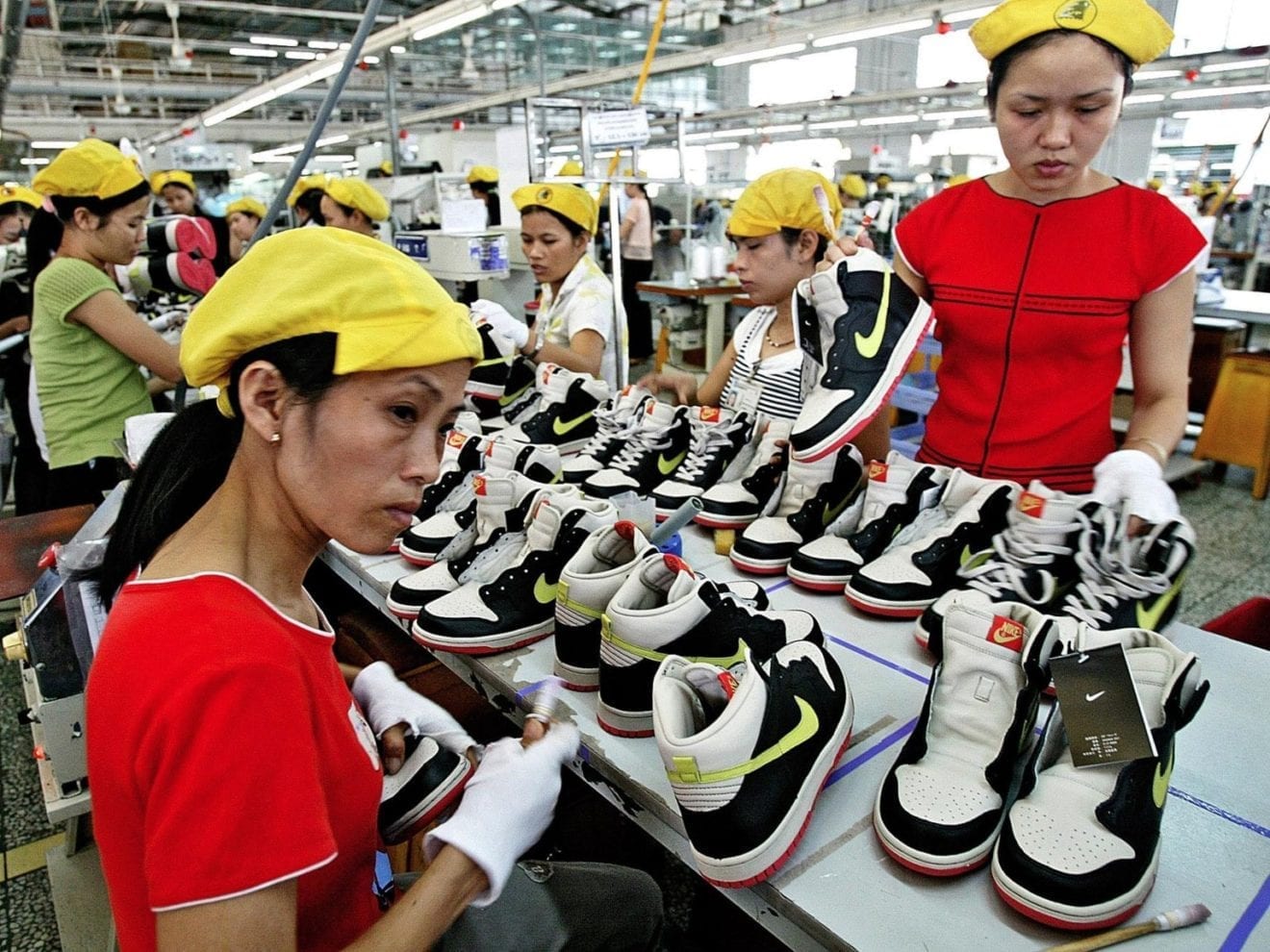
    Vietnamese footwear exporters seem to be benefiting from the ongoing trade war between the U.S. and China. According to customs statistics, Vietnam’s footwear exports in the first nine months of this year were worth $11.74 billion, a 10.2 percent year-on-year increase. Its exports to China in the period have risen by 28.5 percent, to Japan by 14.7 percent, and to the U.S. by 13.5 percent.

    Vietnam is the second biggest exporter of footwear to the U.S. behind China, shipping 404 million pairs of shoes last year.

    The upward trend is likely to continue, too, as rising wages in China increase the cost of goods produced there and the country is thus directing more of its manufacturing resources toward higher-priced goods like electronics, according to the global footwear news outlet Footwearnews.

    Foreign companies are moving to other countries like Vietnam to cut cost.

    Adidas CEO Kasper Rorsted said last May that his company is shifting sourcing of footwear from China to Vietnam.

    Vietnam has in fact overtaken China as its top supplier, with Vietnamese factories producing 44 percent of its shoes by volume last year and Chinese manufacturers supplying 19 percent, according to Adidas.

    This would help shield the company from potential tariffs or supply chain disruptions if President Donald Trump’s trade war with China continues to escalate, a fact its competitors also seem to be taking notice of.

    Vietnam may see export orders surging as footwear importers shun China to avoid high U.S. tariffs and choose the Southeast Asian nation instead, local media quoted Diep Thanh Kiet, vice chairman of the Vietnam Leather, Footwear and Handbag Association (Lefaso), as saying.

    “Vietnam’s leather and footwear export can reach $19.5 billion or slightly higher this year depending on the situation,” he said. Vietnam’s footwear exports were worth $14.65 billion last year.

  • Vietnam’s authority no longer certain about 2020 GDP target

    Vietnam’s authority no longer certain about 2020 GDP target

    Vietnam’s GDP per capita is set to increase this year, but its 2020 target of $3,200-3,500 looks distant. Minister of Planning and Investment Nguyen Chi Dung said at a National Assembly meeting Monday that if Vietnam’s GDP increases by 6.7 percent this year, per capita GDP will reach $2,540, up $155, or 6.1 percent year-on-year, and 1.21 times that of 2015.

    However, the number is still far away from the country’s target of $3,200-3,500 by 2020, he conceded.

    According to World Bank Group statistics, Vietnam’s GDP per capita in 2017 is $2,343. The figure for Singapore is $57,714, Malaysia ($9,945), Thailand ($6,594), the Philippines ($2,989) and Myanmar ($1,298).

    Minister Dung estimated that Vietnam’s GDP would grow by 6.57 percent on average in the 2016-2018 period, meeting the National’s Assembly target of 6.5-6.7 percent growth.

    However, he expressed concerns about the increasing number of businesses that stopped operations in the first nine months of this year.

    While 96,610 new businesses opened, 73,100 closed, up 48 percent year-on-year.

    These figures worried government officials at the meeting. Vu Hong Thanh, Chairman of the National Assembly’s Economic Committee, said that the goal of having one million businesses by 2020 will be “difficult to achieve.”

    Last year Vietnam had over 560,000 active businesses, up 11 percent year-on-year, according to the General Statistics Office.

    But in another meeting last week, Deputy Prime Minster Vuong Dinh Hue said that the goal “is full of challenges, but achievable.”

    Hue said that how strong these businesses are and how much they can contribute to the economy is more important.

    “The government aims to practically improve the business environment by not imposing more conditions,” he said.

    In the first nine months this year, Vietnam’s GDP grew by 6.98 percent, the highest nine-month growth rate since 2011. The economy grew by 6.81 percent last year, the highest rate in a decade.

  • Vietnam footwear exports benefit from US-China trade spat

    Vietnam footwear exports benefit from US-China trade spat

    Vietnamese footwear exporters seem to be benefiting from the ongoing trade war between the U.S. and China. According to customs statistics, Vietnam’s footwear exports in the first nine months of this year were worth $11.74 billion, a 10.2 percent year-on-year increase. Its exports to China in the period have risen by 28.5 percent, to Japan by 14.7 percent, and to the U.S. by 13.5 percent.

    Vietnam is the second biggest exporter of footwear to the U.S. behind China, shipping 404 million pairs of shoes last year.

    The upward trend is likely to continue, too, as rising wages in China increase the cost of goods produced there and the country is thus directing more of its manufacturing resources toward higher-priced goods like electronics, according to the global footwear news outlet Footwearnews.

    Foreign companies are moving to other countries like Vietnam to cut cost.

    Adidas CEO Kasper Rorsted said last May that his company is shifting sourcing of footwear from China to Vietnam.

    Vietnam has in fact overtaken China as its top supplier, with Vietnamese factories producing 44 percent of its shoes by volume last year and Chinese manufacturers supplying 19 percent, according to Adidas.

    This would help shield the company from potential tariffs or supply chain disruptions if President Donald Trump’s trade war with China continues to escalate, a fact its competitors also seem to be taking notice of.

    Vietnam may see export orders surging as footwear importers shun China to avoid high U.S. tariffs and choose the Southeast Asian nation instead, local media quoted Diep Thanh Kiet, vice chairman of the Vietnam Leather, Footwear and Handbag Association (Lefaso), as saying.

    “Vietnam’s leather and footwear export can reach $19.5 billion or slightly higher this year depending on the situation,” he said. Vietnam’s footwear exports were worth $14.65 billion last year.

  • Vietcombank files for private issue of 360 million shares

    Vietcombank files for private issue of 360 million shares

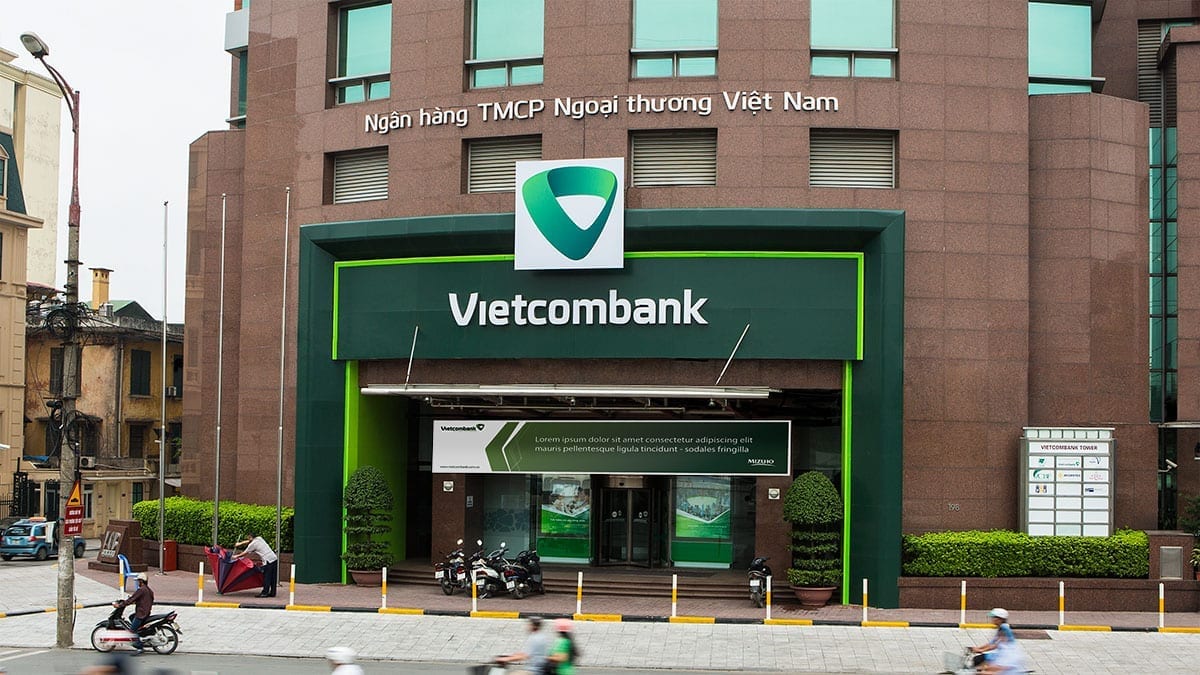
    Vietnam’s State Securities Commission has received an application from Vietcombank for a private placement of shares worth over $156.5 million. The commission (SSC) said the country’s third largest bank by assets proposes to make a private issue of 360 million shares, equivalent to 10 percent of its charter capital.

    The lender plans to sell nearly 54 million shares to its strategic partner, Japan’s Mizuho Bank, to ensure it retains its 15 percent stake post dilution.

    It will sell the remaining 306 million shares, or 7.73 percent of its charter capital, to other undisclosed investors.

    The bank has not disclosed the issue price either. Its shares closed at VND58,000 ($2.5) Friday on the HCMC market.

    The State Bank of Vietnam recently gave Vietcombank approval to increase its charter capital by 10 percent to VND39.58 trillion ($1.69 billion).

    The lender has also received approval from its shareholders to make the private placement.

    Vietcombank and other top lenders, including BIDV and Vietinbank, have been struggling to increase their capital to meet international capital adequacy norms.

    The second Basel Accords, or Basel II, prescribe minimum capital adequacy of 8 percent of risk-weighted assets for all financial institutions to cover operational risks.

    In 2016 Vietcombank signed a deal with Singapore sovereign wealth fund GIC Private Limited to sell a 7.73 percent stake. The deal has yet to be consummated, with the bank’s chairman, Nghiem Xuan Thanh, saying they have been unable to agree on a price.

    As a state-owned bank, Vietcombank’s issue of new shares must not be at a price lower than their current market price or a minimum value set by the government.

    However, the price offered by GIC did not meet this requirement.

    If the private issuance of VND3.6 trillion ($156.5 million) is successful, Vietcombank will have the highest chartered capital in the industry of nearly VND40 trillion ($1.74 billion).

  • Vietnam urged to cut dependence on crude oil

    Vietnam urged to cut dependence on crude oil

    A prime ministerial advisory body has said the state budget is overly dependent on crude oil, an unsustainable income source. The National Financial Supervisory Commission (NFSC) recently said crude oil is not a sustainable income source, both in the short and long term.

    In the short term, crude oil revenue can be affected by global oil prices and mining output; and the state budget has been significantly impacted by such fluctuations over the years, the NFSC noted.

    In the long run, this source of income is also unsustainable as national reserves are limited, it added.

    Earlier, Deputy Prime Minister Vuong Dinh Hue had said at a meeting of the legislative National Assembly that Vietnam needs to stop relying on crude oil and focus on tourism to ensure its economic growth.

    “It is better to welcome one million tourists than trying to find one million tons of crude oil because tourism is more eco-friendly and safe for the economy,” he’d said.

    Vietnam’s September crude oil exports totaled 375,000 tons, down 21.1 percent year-on-year, according to the General Statistics Office. This brought crude oil exports in the first nine months of this year to 2.97 million tons, down 45.2 percent from a year earlier.

    From early this year to September 15, accumulated budget revenue is estimated to be at VND898.3 trillion ($39.06 billion), of which VND43.5 trillion ($1.89 billion) or about 5 percent comes from crude oil, according to the General Statistics Office.

    Vietnam’s domestic crude oil production reached its peak in 2004 with an output of more than 20 million tons, but has declined to an estimated 14.2 million tons in 2017.

    It is forecast that around 11 million tons will be produced in 2018. Crude oil exports have contributed 0.25 percent to the country’s GDP in recent years.

  • Vietnam’s per capita GDP long way away from 2020 target

    Vietnam’s per capita GDP long way away from 2020 target

    Vietnam’s GDP per capita is set to increase this year, but its 2020 target of $3,200-3,500 looks distant. Minister of Planning and Investment Nguyen Chi Dung said at a National Assembly meeting Monday that if Vietnam’s GDP increases by 6.7 percent this year, per capita GDP will reach $2,540, up $155, or 6.1 percent year-on-year, and 1.21 times that of 2015.

    However, the number is still far away from the country’s target of $3,200-3,500 by 2020, he conceded.

    According to World Bank Group statistics, Vietnam’s GDP per capita in 2017 is $2,343. The figure for Singapore is $57,714, Malaysia ($9,945), Thailand ($6,594), the Philippines ($2,989) and Myanmar ($1,298).

    Minister Dung estimated that Vietnam’s GDP would grow by 6.57 percent on average in the 2016-2018 period, meeting the National’s Assembly target of 6.5-6.7 percent growth.

    However, he expressed concerns about the increasing number of businesses that stopped operations in the first nine months of this year.

    While 96,610 new businesses opened, 73,100 closed, up 48 percent year-on-year.

    These figures worried government officials at the meeting. Vu Hong Thanh, Chairman of the National Assembly’s Economic Committee, said that the goal of having one million businesses by 2020 will be “difficult to achieve.”

    Last year Vietnam had over 560,000 active businesses, up 11 percent year-on-year, according to the General Statistics Office.

    But in another meeting last week, Deputy Prime Minster Vuong Dinh Hue said that the goal “is full of challenges, but achievable.”

    Hue said that how strong these businesses are and how much they can contribute to the economy is more important.

    “The government aims to practically improve the business environment by not imposing more conditions,” he said.

    In the first nine months this year, Vietnam’s GDP grew by 6.98 percent, the highest nine-month growth rate since 2011. The economy grew by 6.81 percent last year, the highest rate in a decade.

  • Vietnam becomes less competitive on global index

    Vietnam becomes less competitive on global index

    Vietnam has fallen three places on the competitiveness index from last year, a new World Economic Forum report says. The country was ranked 74th in last year’s global competitiveness index, but fell three places to 77th this year, according to a WEF report released Wednesday.

    The 2018 Global Competitiveness Index 4.0 report said that Vietnam’s overall competitiveness score of 58.1 was lower than the world average of 60.

    The report defines competitiveness as the set of institutions, policies and factors that determine the level of productivity.

    It added that Vietnam scored highest in the factors of health (81 points, ranked 68th), macro-economic stability (75 points, 64th) and market size (71 points, 29th).

    The report ranked Vietnam 102nd among 140 countries in terms of product market and 101st in business dynamism.

    The product market index components include the extent of market dominance, competition in services and trade tariffs.

    Vietnam’s innovation capability was the weakest among twelve factors used in determining the competitiveness index, at just 33 points, ranked 82nd.

    The country’s adoption of information and communication technology (ICT) had the second-lowest score of 43 points, ranked 43.

    The report added that globalization has contributed to reducing global poverty and inequality between countries. It cited Vietnam as an example, saying the U.S.-Vietnam bilateral trade has helped reduce poverty by increasing wage premiums in export sectors.

    The trade pact also reallocated Vietnamese labor from agriculture to manufacturing, stimulating enterprise job growth, it said.

    The report also cited Vietnam as an example of one of the fastest growing economies in the East Asia and Pacific (EAP), which is the fastest-growing region in the world, accounting for one-third of global growth last year.

    Vietnam, along with Cambodia, China, Laos and the Philippines, had a growth of over 6 percent last year, it added.

    The EAP also contributed three countries/territories to the world’s most competitive economies: Singapore (scored 83.5, ranked 2nd), Japan (82.5, 5th) and Hong Kong (82.3, 7th).

    The U.S. topped the ranking with a score of 85.6 thanks to vibrant entrepreneurial culture and high scores in the labor market and the financial system.

  • US-China trade spat will exert exchange rate pressure on Vietnam

    US-China trade spat will exert exchange rate pressure on Vietnam

    If US-China trade tensions drag on, Vietnam will still see good growth but face strong exchange rate pressures exerted by two major currencies. After GDP growth reached 6.98 percent in the first 9 months of 2018, the highest in the past 8 years, it is relatively clear that the Government will reach its 6.7 percent growth target by the end of the year. Only a 6.11 percent growth in the fourth quarter to meet this objective.

    Usually, the fourth quarter will have the highest quarterly GDP of the year, thanks to the rise in exports, production and consumption. Consequently, some experts are optimistic that this quarter’s growth is likely to exceed the third quarter (6.88 percent) to bring GDP in 2018 to 6.9 – 7 percent as predicted by major international financial institutions.

    In its forecast, HSBC Vietnam made a rather safe prediction that GDP growth in 2019 would stand at 6.7 percent, equivalent to the bank’s forecast of growth for this year.

    In line with this, GDP per capita is expected to improve from $2,321 in 2017 to $2,734 next year. However, inflation will rise to 4.2 percent, the bank said.

    “The US economy is seeing strong growth, but the global economy is in decline and stagnating. However, while other countries in the region are showing signs of decline, Vietnam remains an exception,” said Pham Hong Hai, CEO of HSBC Vietnam at the ‘Infrastructure Outlook 2018’ conference last week.

    The International Monetary Fund (IMF) has lowered its forecast for global economic growth in 2018 and 2019 due to the escalating trade war. In a recent development, President Donald Trump has reiterated his threat to impose tariffs on another $267 billion in Chinese goods, which comes on top of the $200 billion in goods he has already targeted earlier this year.

    “Vietnamese companies, with the exception of the rubber industry, are increasing their capacity to export to the U.S. while the capacity of Chinese companies is decreasing,” said Hai on prospects for 2018.

    “Moreover, FDI will remain the main driver of growth as investors are likely to prioritise targeting Vietnam as opposed to other economies in the region.

    “Investors have traditionally preferred China, but now they are paying more attention to Vietnam because of its free trade agreements (FTAs),” he said.

    Although the outlook for 2019 is positive, the U.S.-China trade war still creates an unstable global economic environment. Vietnam has been trapped between the two major currencies, which both have extensive trade ties, economists said.

    At the end of September, the U.S. Federal Open Market Committee (FOMC) raised the refinancing rate by 0.25 percent to 2.25 percent. This is the third interest rate hike this year, and another is scheduled to happen before the end of 2018.

    This has led to an appreciation in the dollar, higher prices on imports into Vietnam, higher input costs and more pressure on exchange and interest rates.

    Meanwhile, the yuan is likely to continue to depreciate if tensions drag out, aimed at limiting the damage done from the effect U.S. tariffs have on the price of Chinese goods. With export turnover to China reaching $35.5 billion, accounting for 17 percent of Vietnam’s export turnover last year, exports in general will likely suffer.

    Vietnam also lies in the top 5 countries in the crosshairs of the U.S.’ protectionist policies given Vietnam’s high trade surplus with the U.S.

    However, experts believe it is highly unlikely for Trump to launch a trade war against the country as Vietnam is willing to be flexible. Recent announcements from Prime Minister Nguyen Xuan Phuc also indicated that Vietnam is very willing to welcome investors as well as consume more goods from the U.S.

    “We are also excited to know how you plan to do business or expand in Vietnam,” the Prime Minister declared in front of 40 leading U.S. firms in New York last September.

    As the fourth quarter has just commenced, there are still many variables yet to be ascertained to make predictions for next year. Even the U.S.-China trade war with its global economic implications, is unpredictable, not to mention other risks not associated with the trade war itself.

    “Vietnam has a great outlook, but the risk lies mainly in public debt. However, public debt has been falling. In addition, CPI at 4 percent or higher is also a risk for 2019,” Hai of HSBC noted.

    In the medium and long term, the future of Vietnam’s economy, according to specialists, remains a big question. HSBC offers two scenarios by 2030. The first is optimistic, predicting growth of over 8 percent while the other sees GDP growth deceleration to a level below 4 percent.

    According to Hai, the final outcome will depend on Vietnam’s ability to solve challenges in such issues as policy, productivity and infrastructure.

    “We are looking forward to Government reforms because we are in the Industry 4.0 era,” he added.