Tag: vietnam retail

  • Vietnam’s PNJ Shuts 30 Stores and Sheds 1,041 Jobs as Losses Mount

    Vietnam’s PNJ Shuts 30 Stores and Sheds 1,041 Jobs as Losses Mount

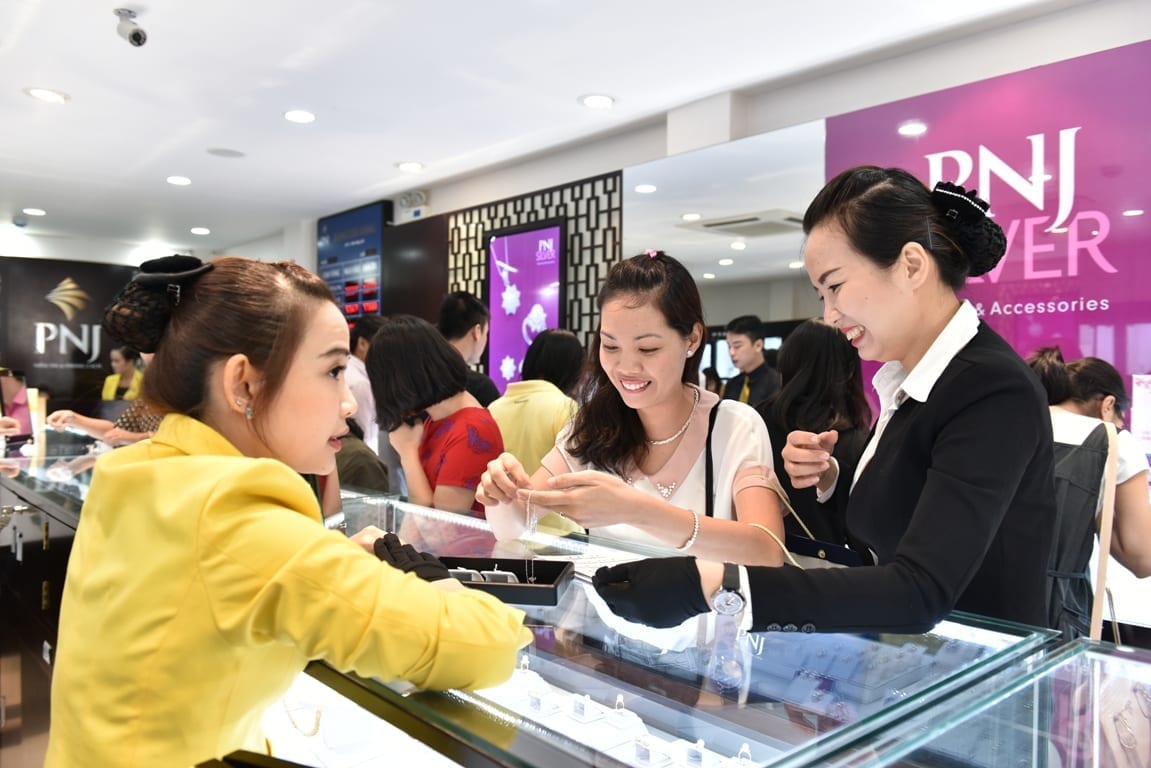
    Phu Nhuan Jewelry incurred a net loss of nearly VND258 billion (US$10 million) during the third quarter of fiscal 2026 as consumer demand softened.

    The financial strain forced the Vietnamese jewellery retailer to scale down operations, trimming its store network to 424 locations by September 30.

    That closure of 30 doors since June accompanied significant staff cuts, with payroll shrinking from 8,164 workers in December to 7,123 employees by the end of the quarter.

    Headcount drops past thousand mark

    PNJ’s payroll contracted alongside the store closures. The company had 7,123 employees on its books at the end of September, compared to 8,164 workers at the close of December, according to its latest financial disclosures. That represents a reduction of 1,041 jobs over nine months.

    Trading conditions across Vietnam’s discretionary retail sector deteriorated through the middle of the year as consumer sentiment flagged. For branded jewellery chains, fixed lease obligations and floor-staff costs turn cash-negative quickly when ticket sizes drop and shopper traffic thins.

    Pruning prime retail footprints

    The swift reversal at PNJ alters leasing dynamics for mall operators and high-street landlords. Retail landlords counted on domestic jewellery powerhouses to anchor regional centres and street corners through earlier retail cycles. With PNJ pruning underperforming locations rather than defending store counts, commercial property owners face lease renegotiations or vacancies in prime retail corridors.

    Competitors face identical consumer belt-tightening across Vietnam. Unbranded gold shops and local chains carry lower real estate overheads, leaving large organised networks exposed whenever discretionary spending retreats. PNJ is prioritising balance-sheet protection and working capital control over market coverage.

    Reversing post-pandemic network scale

    The retrenchment follows years of aggressive retail network expansion across second- and third-tier provincial markets. PNJ had scaled its retail presence beyond 400 branches to consolidate market share away from traditional independent gold stalls, betting on rising middle-income household consumption.

    That momentum reversed sharply during the third quarter. The abrupt shift from network additions to network consolidation indicates that the drop in discretionary spending caught the retailer with surplus floor space and excess store payroll.

    Targets and fourth-quarter demand

    Attention turns to whether fourth-quarter bridal purchases and holiday demand can stem further store closures before the Lunar New Year shopping period. PNJ’s upcoming full-year filing will show whether the network contraction stabilised at 424 branches or extended deeper into secondary cities.
  • Global Cafe and ISHCMC Open Community Cafe by the Terrazzo

    Global Cafe and ISHCMC Open Community Cafe by the Terrazzo

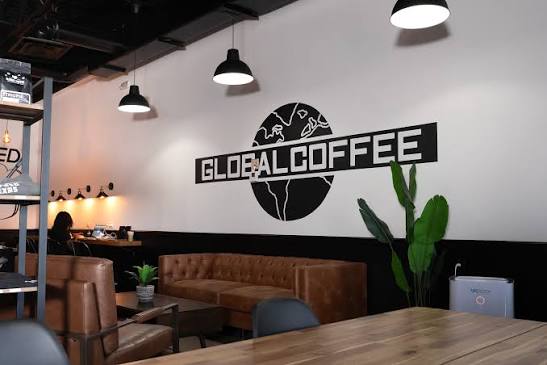
    Global Cafe and International School Ho Chi Minh City have opened 1 campus venue, ISHCMC Community Cafe by The Terrazzo, in Ho Chi Minh City this week.

    The venue serves students, educators, administrative personnel and visiting parents across the academic year.

    On-Campus Foodservice Expansion

    This collaboration brings commercial cafe operations into an educational facility. Global Cafe developed the site under The Terrazzo concept. The space handles daily dining demand alongside community events.

    Dining formats in private international education continue shifting away from traditional canteens toward branded hospitality concepts. Operators design these spaces to keep daily footfall on campus. They also accommodate parent meetings and informal study sessions.

    Institutional Dining Dynamics

    Long-term institutional agreements give food and beverage operators steady foot traffic insulated from street-level retail volatility. For school administrations, partnering with dedicated cafe operators upgrades campus amenities without requiring internal culinary management.

    The model requires tight operational controls around food safety, allergen management and peak-hour throughput. International schools enforce strict vendor compliance standards. That creates high entry barriers for standard independent cafe brands.

    Vietnam Education and Hospitality Overlap

    Ho Chi Minh City remains a primary growth hub for private bilingual and international schools across Southeast Asia. Expansion in this segment drives ancillary demand for institutional catering, specialty coffee counters and tailored retail services.

    Urban Vietnam’s specialty coffee culture heavily influences student and parent expectations on campus. Operators that establish early footprints within premium school networks build brand loyalty among affluent local and expatriate demographics.

    Operational Footprint in Ho Chi Minh City

    The Terrazzo rollout at ISHCMC establishes an operational template for campus food services within the city’s private education sector. Performance across daily service periods and campus functions will determine how operators structure future institutional contracts in the market.

  • Vietnam retail sales down in 2021

    Vietnam retail sales down in 2021

    Data of the General Statistics Office (GSO) of Vietnam showed that the country’s total retail sales of consumer goods and services from January to October reached VND3,720 trillion (US$162.4 billion), down 8.6% compared with the same period last year.

    Food and foodstuffs were the only sector whose retail sales rose, with a year-on-year increase of 4.4%.

    All other sectors suffered a decline in retail sales. Retail sales of vehicles; tools, equipment, home appliances, educational and cultural products; and clothes edged down 6.7%, 11.1% and 11.7% year-on-year, respectively.

    HCMC, which always leads the country in retail sales, saw a year-on-year decline of 26.2% from January to October 2021. Retail sales of other big cities and provinces such as Can Tho, Hanoi and Khanh Hoa fell 4.8%, 4.4% and 18.6% against the same period last year, respectively.

    Some localities enjoyed a slight increase in retail sales, including Danang (up 0.9% year-on-year), Dong Nai (up 3.7%), Binh Duong (up 6.4%) and Haiphong (up 8.7%).

    Accommodation and catering services were the hardest hit sectors. From January to October, accommodation and catering revenues plunged 38.8% year-on-year in HCMC, 35.9% in Nghe An, 25% in Binh Duong, 22.8% in Dong Nai, 19.5% in Hanoi, 17.3% in Danang, 12.7% in Quang Ninh, 11.1% in Can Tho and 6.4% in Haiphong.

    Travel revenues also dropped sharply in January-October, down 67.5% year-on-year in Thua Thien-Hue, 58% in HCMC, 53.4% in Danang, 49.9% in Haiphong, 45.7% in Hanoi, 41.5% in Quang Binh, 34.2% in Ba Ria-Vung Tau and 30.6% in Quang Ninh.

    Travel restrictions aimed at slowing the spread of Covid-19 and lost incomes have negatively affected the retail market.

    According to the General Statistics Office, the retail market always posted double-digit growth from 2016 to 2020.

    The country’s retail sales were US$118 billion in 2016 (up 10.2% year-on-year), US$129.56 billion in 2017 (up 10.9%), US$142.8 billion in 2018 (up 12.4%), and US$161.7 billion in 2019 (up 12.7%).

    In 2020, despite the negative impact of the Covid-19 pandemic, total retail sales of consumer goods and services amounted to US$172 billion, up over US$11 billion from 2019.

    As the Covid-19 pandemic has been brought under control, many services have been allowed to reopen since early last month. The country’s total retail sales of consumer goods and services in October rose 18.1% month-on-month.

    The General Statistics Office expected the resumption of economic activity and increasing demand in the year-end season would help the retail sector recover strongly.

  • Vietnam retail sales rises in seven months straight

    Vietnam retail sales rises in seven months straight

    Vietnam retail sales and services rose 11.1 per cent in the first seven months, according to the General Statistics Office (GSO).

    The revenue reached VND2.49 quadrillion (US$108.3 billion) thanks to a strong increase in purchasing power during prolonged hot weather, the GSO said.

    Sales in July reached the highest level during the past three months, with May and June each seeing 8.3 per cent growth.

    The retail sector gained a year-on-year surge of 11.7 per cent in revenue to VND1.88 quadrillion, accounting for 75 per cent of the total revenue from retail sales and services.

    Products recording strong increases included food (up 12.6 per cent), apparel (up 12.4 per cent), home appliances (up 12.3 per cent), cultural and education services (up 10.3 per cent) and transport (up 10.4 per cent).

    GSO said demand for food rose during the FIFA World Cup in June and July.

    Tourism revenue grew 17.7 per cent, followed by accommodation and restaurant and catering services, up 9.1 per cent.

    The GSO expects Vietnam retail sales to grow by 10.5 per cent over the full year.