Retail News CRM

Tag: vietnamese

  • Unprecedented Gold Rush Grips Vietnam Amid Soaring Global Prices

    Unprecedented Gold Rush Grips Vietnam Amid Soaring Global Prices

    For five straight days, Hoai, a 38-year-old self-employed individual, has been among the throng of hopeful buyers outside a Hanoi gold shop on Tran Nhan Tong Street. The majority of these people, much like Hoai, end up leaving without any gold in their hands.

    The Pursuit of Gold

    Hoai, who has some liquid savings, is attempting to safeguard her wealth through gold investment. The low returns offered by bank deposit rates have led her to this choice. Customers are permitted to buy only a single mace of gold at a time, which equals one-tenth of a tael or 3.75 grams. Despite the small quantity, Hoai is determined to endure the extensive waiting hours or even days to secure gold as an asset.

    In a similar situation is Thu Ha, a 26-year-old office worker in Hanoi. She withdrew half of her savings, totalling VND300 million (US$11,388), to invest in gold. Last month, she succeeded in buying five maces when the price was around VND130 million per tael. Now, she starts queuing as early as 4 a.m. every day in the hopes of purchasing more. However, the shortage of supply has left her with nothing. Some stores have even started issuing appointment slips, promising delivery within 7-10 days.

    Lan, a 43-year-old woman, took a day off from work to queue for her elderly mother. Her mother had been trying to buy gold with her pension without success. Lan decided to step in and help.

    The Gold Rush

    Gold shops across Hanoi and Ho Chi Minh City are currently witnessing unprecedented demand as prices soar to record highs. A tael of gold bar is now trading around VND153 million while gold rings range between VND153–160 million, representing an 80% increase since the start of the year.

    The rush has led to some interesting dynamics. Some people are making money by standing in queues on behalf of others. Most shops run out of stock by noon, with both bars and rings disappearing from the shelves. Customers are advised to return the next morning, but there are no guarantees of availability.

    In Ho Chi Minh City, the Saigon Jewelry Company outlet on Nguyen Thi Minh Khai Street had to stop taking orders for gold rings by midday Friday, limiting sales to just 3 maces per person.

    Global Gold Frenzy

    According to Huynh Trung Khanh, Vice President of the Vietnam Gold Trading Association, the gold-buying frenzy is not exclusive to Vietnam. People in other countries, including South Korea, are also rushing to buy gold as global prices have crossed US$4,300 per ounce.

    The State Bank of Vietnam, however, has warned buyers about the volatility of gold as an investment and advocated for prudence. The bank attributes the sharp domestic price increase to escalating global rates, public anticipation of further hikes, and limited local supply.

    Questions & Answers

    What is causing the gold-buying frenzy in Vietnam?
    The rush to buy gold is being driven by low bank deposit rates, soaring gold prices, and the desire to secure wealth.

    Are other countries experiencing a similar gold-buying frenzy?
    Yes, this is not unique to Vietnam. Countries like South Korea are also witnessing a rush to buy gold due to the increase in global prices.

    What has been the response of the State Bank of Vietnam to this situation?
    The State Bank of Vietnam has urged buyers to act prudently, given the volatility of gold as an investment. It attributes the rise in domestic prices to surging global rates, public anticipation of further increases, and limited local supply.

  • Vietnamese Processed Foods Struggle to Secure Shelf Space in U.S. Supermarkets

    Vietnamese Processed Foods Struggle to Secure Shelf Space in U.S. Supermarkets

    Tina Murphy, CEO of MMTT Professional Services and a seasoned shopper from her years in the U.S., expressed her surprise at the glaring absence of Vietnamese products in American retail. While exploring vast supermarket aisles, it struck her that these essential goods are mostly confined to niche Asian markets.

    “As a Vietnamese person, I find this concerning,” she remarked during a recent forum that spotlighted Vietnam’s export capabilities. Recent data indicates that in the first half of this year, Vietnam’s agricultural and aquatic exports to the U.S. soared impressively, with coffee and fruits boasting staggering year-on-year growth rates of 76.4% and 65.5%, respectively, according to the General Department of Customs. Other sectors, including aquatic products and rice, also reported double-digit increases.

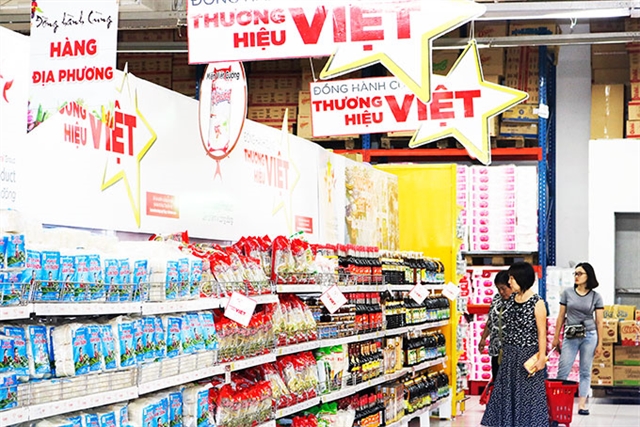
    However, retail analysts caution that the majority of Vietnam’s agricultural exports are still raw materials, with only a tiny fraction transformed into processed, branded products. Chris Nguyen, CEO of Ocean Marketing USA, emphasized that Vietnamese goods in the U.S. often lack a cohesive national brand identity, making it tough to break into established markets compared to competitors from South Korea and Thailand.

    Nguyen pointed to the industry’s structural limitations, citing manufacturers’ constraints in resources and branding investment, which leaves them heavily reliant on importers. “Many countries have dedicated agents or teams on the ground to navigate market nuances, which Vietnamese businesses often do without,” he noted.

    Quality assurance remains another hurdle. Tony Luu, director of GPLUS – FDA, revealed that an alarming average of two shipments of Vietnamese food products are rejected daily. The chief culprit? Insufficient compliance with U.S. Food Safety Modernization Act standards, combined with common packaging errors such as missing allergen information or improperly formatted nutritional facts.

    To tackle access barriers to American supermarkets, Jolie Nguyen, chairwoman of LNS International, urged Vietnamese food exporters to standardize their production and meticulously adhere to international trade regulations. Nguyen stressed the importance of avoiding a short-sighted approach to sales and instead fostering a reputation built on quality.

    “The focus should be on long-term relationships and formal trade,” she advised, suggesting that Vietnamese businesses take advantage of existing export ecosystems for better compliance, market research, and logistics planning.

    But the horizon isn’t limited to the U.S. market. Alejandro Gutierrez, growth director at Guval Foods, shared insights from his experience introducing Vietnamese foods to Mexico. Retail giants like Walmart and Costco, he said, are eager for popular items such as rice paper and instant noodles.

    Some Vietnamese companies are stepping up their game. Ca Men, known for its traditional frozen packaged foods, has embarked on an ambitious export expansion, targeting over 50 supermarkets in Toronto and already supplying products to California, Texas, Australia, and the U.K. in the past.

    In a clever move, Ca Men revamped its packaging from flat packs to eye-catching upright boxes, better suiting the display needs of major supermarkets in the U.S. and beyond. Sunrise Ins has similarly diversified its footprint, sending over 10 shipments of ST25 rice, rice paper, and pho to New Zealand and Mexico every few months.

    As Kim Hyo Gil, the director of AFC & Foodil Global, pointed out, Vietnamese products offer competitive quality and pricing, creating a ripe opportunity for expansion beyond their home market. On August 5, Foodil launched an online wholesale food export platform in Vietnam, partnering with LNS Group and Asian Food Connect to facilitate access to over 30 new markets. A spokesperson noted that while entering a new market typically costs around $120,000 and takes a year, the platform’s AI-driven logistics can potentially streamline this process dramatically.

    As the world grows smaller and consumers become more adventurous, the call for Vietnamese culinary delights is louder than ever. But with challenges still ahead, the future could be a delicious journey for Vietnamese brands on the international stage.

    Questions & Answers

    What challenges do Vietnamese companies face in the U.S. retail market?
    Vietnamese companies struggle with branding and market penetration, as their products are often exported in raw form and lack a cohesive national brand identity. Compliance with U.S. food safety standards and packaging errors also pose significant obstacles.

    How does the export strategy of Vietnamese food companies differ?
    While some companies like Ca Men have actively expanded their markets by adapting packaging and targeting supermarkets, others rely heavily on importers without establishing a local presence or understanding the market dynamics.

    What opportunities exist beyond the U.S. for Vietnamese exports?
    Vietnamese products are gaining traction in markets like Mexico, with major retailers seeking popular items. There’s also potential for expansion into the Middle East, Africa, and South America as demand grows for high-quality, competitively priced agricultural goods.

  • Young Vietnamese risk health with late-night work, entertainment

    Young Vietnamese risk health with late-night work, entertainment

    Young people are increasingly trading their health for late-night work and entertainment and ending up with consequences like sleep disorders, reduced productivity and long-term health risks.

    Nam, a programmer for a multinational technology company, works from 10 p.m. to 4 a.m. due to time zone differences.

    To synchronize his work with colleagues and clients in the U.S., the 27-year-old from Ho Chi Minh City stays up at night.

    His day typically starts at 10 a.m. and his work begins in the evening. He participates in online meetings, writes code, fixes bugs, and deploys projects, often working until 3 a.m.

    Then he winds down by browsing social media, watching movies or listening to music before going to bed at 4 a.m.

    The subversion of his circadian rhythm results in memory loss, difficulty concentrating and lethargy during the day. He has also gained weight, and his skin has darkened and developed acne.

    He says: “It was not until now that I realized the harm of staying up late; I might need to consider changing my job if I don’t want my health to deteriorate further.”

    Mai Anh, 22, admits she is a “TikTok addict.”

    The bright phone screen at night has become a familiar sight for her. From 10 p.m. every day she immerses herself in short videos, from funny clips to trendy dances and life hacks.

    It is often 3 a.m. by the time she turns off her phone.

    She sleeps only three to five hours a night, always waking up tired, sluggish and unable to focus on work. Though she is fully aware of the negative effects of staying up late, the allure of TikTok makes it hard for her to stop.

    “I know it is not good, but just a little scroll each night turns into a habit,” she says.

    In Vietnam, the “night owl” lifestyle is becoming increasingly popular, especially among young people.

    The development of technology, work and study pressures and the appeal of nighttime entertainment are causing many young people to stay up late.

    This is not happening only in large cities but also in rural areas, where young people now have easier access to the internet and online entertainment, according to Dang Nhat Tam, deputy head of the general internal medicine department at HCMC’s Nguyen Tri Phuong Hospital.

    Scientists refer to those who prefer staying up late and sleeping in as “night owls” for obvious reasons.

    Studies show that night owls tend to feel very energetic at night but sluggish in the morning.

    Due to disruption of their natural rhythms, their biological clocks are completely reversed, leading to deterioration of health, a weakened immune system and frequent illnesses.

    One of the main consequences is sleep disorders, which cause memory problems, difficulty concentrating and reduced work efficiency. This prolonged issue also increases the risk of diseases such as cancer, stomach disorders, asthma, chronic obstructive pulmonary disease (COPD), kidney, liver, and musculoskeletal conditions, and immune system-related diseases.

    Associate Professor Dr. Nguyen Anh Tuan, head of the digestive surgery department at the 108 Military Central Hospital, says sleeping late is a major cause of obesity, hormonal imbalances, slowed metabolism, increased appetite and impaired blood sugar balance.

    Staying up late causes the body to use blood sugar inefficiently, leading to fat accumulation and an increased risk of type 2 diabetes.

    Lack of sleep not only causes dark circles under the eyes but also damages the skin due to lack of moisture and reduced pH levels.

    Poor sleep quality limits the production of growth hormones and inhibits collagen production, causing the skin to lose its firmness and become prone to acne and irritation.

    Scientific evidence also shows that circadian rhythm disorders are linked to moodiness, anxiety and depression. While most people feel refreshed and energetic in the morning, “night owls” experience a poor mental state in the morning, which only improves by evening.

    Their sleep-wake cycles are disrupted, with sleep often being too long or too short.

    Sleeping less than seven hours or more than nine hours a day also increases the risk of stroke, particularly brain hemorrhages.

    A proper sleep cycle allows the body organs to rest, recharge and prepare for the next cycle.

    To improve sleep, experts suggest balancing work and rest, maintaining a regular sleep schedule, relaxing with books or music, choosing a comfortable and quiet place to sleep, and adjusting the temperature and lighting.

    It is important to limit phone and electronic device use before bedtime, avoiding screen time at least 30 minutes before sleep, and refraining from work-related stress and keeping a relaxed mind.

    A healthy, balanced diet with nutritious foods, avoiding overeating at night or consuming stimulants that disrupt sleep, can also help.

    Regular physical activity promotes better sleep quality. Regular health checks help detect any underlying issues early.

    If sleep disorders occur, it is essential to consult a doctor or sleep specialist for diagnosis and treatment.

    Self-medication should be avoided, as it can lead to dependence and complications.

    In some cases patients may not need medication, and just adjusting habits and reorganizing life can significantly improve sleep.

    If sleep disorders stem from underlying conditions, treating the root cause is crucial, doctors advised.

  • Vietnamese are working too many hours

    Vietnamese are working too many hours

    Readers have expressed concerns that the working conditions in Vietnam are exhausting the younger generation, calling for more and longer holidays throughout the year to enhance both physical and mental well-being.

    “My husband and I are civil servants. We’re supposed to have two days off on weekends, but in reality, we still have to work, leaving us with almost no days off. My wife works at a land registration office, and every night she has to continue unresolved work from the office. It’s really tiring for us, and we can’t properly take care of our children. We need to modernize and liberate human labor. If additional days off are granted but there’s still too much work, laborers won’t be able to truly rest,” shared reader Vu Hai Nam regarding the working hours in Vietnam.

    Current labor laws stipulate that employees should work no more than 48 hours per week, allowing employers to require workers to put in at least six days per week, eight hours per day. However, according to data from the International Labor Organization (ILO), Vietnam ranks among the countries with the highest working hours globally. In 2023, the total working hours in Vietnam (excluding holidays) reached 2,320 hours—440 hours more than Indonesia, 184 hours more than Cambodia, and 176 hours more than Singapore.

    Commenting on the pressures faced by Vietnamese workers, reader Hung Minh said: “More than a decade ago, when I was single, I used to work 14 hours a day, including Saturdays. I was young and enthusiastic, so I worked a lot and earned a lot. But when I started a family and had children, I had to say goodbye to that work intensity.”

    Reader Mirae added, “People often cite low labor productivity in Vietnam as a reason against reducing working hours. But having worked with companies in Japan, Italy, and Korea, I’ve found that increasing labor productivity relies heavily on automation, not longer working hours. No one wants to work up to 12 hours a day.”

    Reader Vu noted, “Office workers like me actually work beyond office hours. Even when I go to shower, I have to take my phone to respond to potential work messages. Phone alerts have become a source of stress for me, and deadlines are overflowing. Besides, each worker nowadays needs to find time to upgrade their skills to stay competitive. We’re in a period where young people are physically and mentally exhausted. It’s crucial for management agencies to conduct systematic and comprehensive research to improve the working environment.”

    Reader Kid expressed frustration, saying, “I find it hard to understand some people’s argument that Vietnamese must work more to escape poverty. They fail to grasp that income is directly proportional to labor productivity, and productivity is greatly influenced by physical and mental health. The only way to improve these factors is to give workers more rest time. The number of holidays in Vietnam is currently among the lowest in the region and the world, far behind countries like Japan, Korea, and Germany, resulting in one of the highest numbers of working days. I strongly support the idea of more holidays. Ideally, there should be a vacation of about a week every three months, which would stimulate demand and give workers time to recuperate, ultimately boosting labor productivity.”

  • Investment in Vietnamese startups down 56%

    Investment in Vietnamese startups down 56%

    Investment in Vietnamese startups reached $634 million in 2022, down 56% over the previous year due to the impact of global economic fluctuations.

    This investment was directed to startups through 134 deals, according to the Vietnam Innovation and Technology Investment 2023 Report, published Thursday by Do Ventures, a venture fund, and the National Innovation Center (NIC).

    Vietnam ranked third in the number of deals and fourth in investment in Southeast Asia last year, the report said.

    “The investment decreased due to the absence of big deals,” said Le Hoang Uyen Vy, managing director of Do Ventures.

    By sector, financial services attracted the most investment, increasing 248%. Retail was the second, despite its capital decreasing by 57%, followed by health and education.

    Vietnamese funds led the way in capital inflows for the first time, with a total of $287 million, followed by investors from Singapore, North America and South Korea. “Amid difficult circumstances, domestic investors are the ones fueling startups,” Vy said.

    Regarding the 2023 outlook, nearly 100% of surveyed investors said they would at least keep the current level of investment, according to the report. In the medium term, Vietnam’s startup ecosystem is still very attractive.

    At the “Vietnam Innovation Forum” on Thursday, Nguyen Anh Quang, senior investment director of SK – a South Korean fund that has invested $2 billion into Vietnam – is interested in consumer and healthcare projects.

    South Korea’s STIC Investment, which has invested $300 million in Vietnam, is interested in startups in the fields of logistics, e-commerce, and healthcare.

    Tran Duy Dong, Deputy Minister of Planning and Investment, said Vietnam’s startup ecosystem still has some areas it needs to improve, such as having few unicorns, startups valued at $1 billion upwards, venture capital funds, and big deals.


  • New graduates want monthly salary around 500$

    New graduates want monthly salary around 500$

    Almost half of the fresh university graduates expect a monthly salary of VND10-15 million ($435-650), but most employers are only willing to pay VND6-10 million, a survey has found.

    The survey by headhunting agency Adecco Vietnam said over 43 percent want a salary of more than VND10 million, and 31 percent want VND6-10 million, but only 27.5 percent of employers are willing to pay above VND10 million.

    Up to 88.5 percent of new employees regard to salary and remuneration as the top priority closely followed by training and development opportunities (87.7 percent) and then by promotion prospects (73.8 percent).

    Work-life balance and cultural fit are also highly valued (67.2 percent and 55.7 percent).

    Many employers said their main concerns when recruiting new graduates are lack of soft skills, unrealistic expectations and instability.

    Y Pham, chief growth officer at flexible pay startup Nano Technologies, said she has met many new graduates who start their first full-time job with too high expectations due to the lack of clarity about their career path.

    More than 56 percent of employers appreciate the new vision and initiative of fresh graduates, 54 percent appreciate their enthusiasm and 40 percent say new graduates help build a diverse workplace.

    Due to Covid-19, nearly 39 percent of enterprises have reduced recruitment demand, with nearly 19 percent cutting it by more than 50 percent.

    Over 59 percent of new graduates believe there are fewer job opportunities and 37 percent are worried about labor market instability.

    Adecco predicted that 62 percent of fresh graduates would seek new jobs in the next six months when recruitment demand would rise considerably.

  • Nearly half of Vietnamese fear job losses due to automation

    Nearly half of Vietnamese fear job losses due to automation

    Forty-five percent of Vietnamese are worried about losing their jobs to machines in the future, a survey has found.

    Most respondents, 83 percent, think technology would change their jobs in the next 3-5 years, and 90 percent think that would happen in the next 6-10 years, according to the survey by global accounting giant PwC, which polled over 1,100 people in November and December last year.

    This poses a demand for enabling a future-ready workforce, it said.

    Dinh Thi Quynh Van, general director of PwC Vietnam, said: “While an upgrade or investment in technology can be immediate, equipping people with the right skills to meet the needs of the future, helping them thrive in the changing conditions of the digital world require time and constant effort.”

    The evolution of technology also caused for optimism, with 90 percent saying it would improve their job prospects in the future.

    In comparison, a 2019 PwC report said the global rate was 60 percent.

    Grant Dennis, chairman PwC Vietnam, said: “Our survey findings reflect the accelerated presence and influence of technology in the workplace and the pace of change that is to come in Vietnam.”

    Nearly nine out of 10 people said they are provided with opportunities to various extents to improve their digital skills at work, indicating that businesses are doing their part to meet the upskilling needs of their workforce.

    Some 93 percent of respondents said they are already making efforts to reskill and upskill to adapt to technological changes.

  • Indonesia initiates an anti-dumping investigation of Vietnamese steel

    Indonesia initiates an anti-dumping investigation of Vietnamese steel

    Indonesian Anti-Dumping Committee (KADI) has initiated an anti-dumping investigation of relevant colour-coated steel sheet imports from China and Việt Nam.

    This was revealed by the Việt Nam Competition Authority (VCA) under the Ministry of Industry and Trade.

    VCA said the investigation could be implemented for 12 months and extended to 18 months if required.

    The decision was made following the complaint by PT NS BlueScope Indonesia alleging that repeated illegal trade practices have devastated production and employment and are causing irreparable harm to the Indonesian steel industry. The colour-coated steel being investigated have HS codes of 7210.70.10.00, 7212.40.10.00 and 7212.40.20.00.

    Large Indonesian steelmakers are seeking an anti-dumping investigation and the imposition of tariffs on steel imports from both Việt Nam and China.

    KADI said from July 2015 to June 2016, Indonesia imported 224,120 tonnes of colour-coated steel, of which, imports from Việt Nam and China were 196,191 tonnes, accounting for 87.5 per cent of the country’s total steel imports.

    VCA said Vietnamese colour-coated steel has been also under investigation by Thailand following the complaint of the NS BlueScope Company. The product can be levied anti-dumping taxes of 4.51 to 60.26 per cent in Thailand.

  • Why are many Thai buyers in the Vietnam retail market?

    Why are many Thai buyers in the Vietnam retail market?

    Berli Jucker Plc (BJC), has taken over the Japanese chain of 42 FamilyMarts and renamed it as B’mart. The Vietnamese retail market recently witnessed a series of mergers and acquisitions (M&A) in which the buyers were businessmen from Thailand.

    In mid-2014, BJC made a deal on buying Metro Cash & Carry Vietnam at $880 million, the biggest affair in the retail sector in Vietnam so far. The deal wrapped up 1.5 years later, in January 2016.

    In early 2015, Central Group successfully acquired a 49 percent stake of the Nguyen Kim home appliance distribution chain.

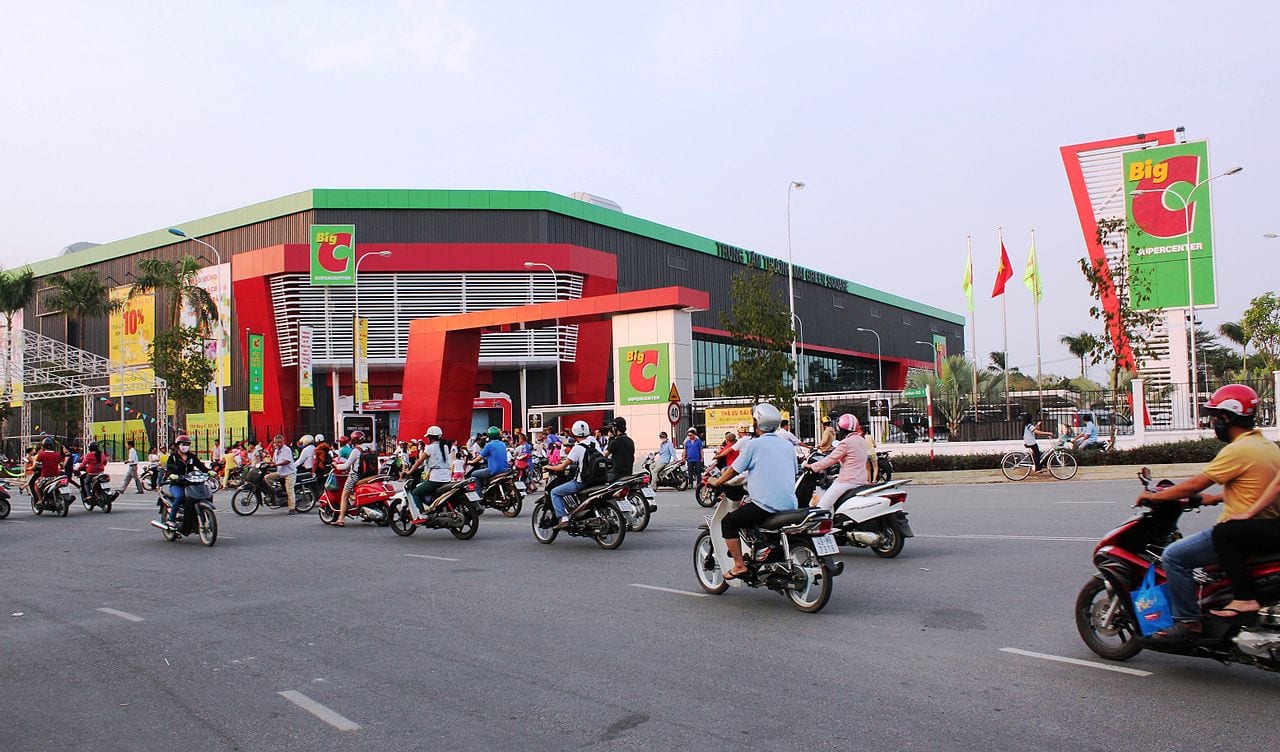
    Right after French Casino Group announced the plan to sell Big C Vietnam, analysts predicted that Big C chain in Vietnam was likely to fall into Thai hands. Later, BJC stated it was vying for Big C Vietnam.

    This is because, according to Phu, the Vietnamese market promises great potential: while other countries in the world focus on developing the home market, Vietnam has been gathering strength on boosting export, while paying less attention to the domestic market.Vu Vinh Phu, chair of the Hanoi Supermarket Association, who was deputy director of the Hanoi Trade Department, noted that only a few foreign retailers came to Vietnam in the past, but things are quite different now. Nearly all big retailers in the world are present in Vietnam, especially Thais.

    This explains why foreign investors have to spend several months only to find retail premises and penetrate the home market. Meanwhile, a domestic retailer told Phu that it took him three years to do this.

    “Business opportunities will be missed after such a long time,” Phu said, adding that domestic and foreign retailers are in an unequal competition.

    An analyst commented that many Thai businessmen eye Vietnam because Thailand is near Vietnam in geographical position. Thai businesspeople understand Vietnamese consumers’ taste and hobbies.

    “Thai businessmen kicked off plans to penetrate the Vietnamese market a long time ago. And they have been doing this in a methodical way and they have been step by step expanding both production and distribution in Vietnam,” he commented.

    At first, Thai businesses usually organize trade fairs in Vietnam to familiarize Vietnamese with Thai products.

    “I believe that 100 percent of families in Hanoi and HCMC use Thai products, from washing liquid to knives,” he said, adding that Thai products are present in every Vietnamese family.

    Phu commented that though Thai is less strong than Japanese and South Korean; therefore, they have been ‘waging guerilla warfare’ when attacking the Vietnamese market.