Tag: virtual

  • Samsung Challenges Apple’s Dominance: Unveils Project Moohan, Its First XR Headset

    Samsung Challenges Apple’s Dominance: Unveils Project Moohan, Its First XR Headset

    Samsung has officially entered the extended reality (XR) market with the announcement of its “Worlds Wide Open” Virtual Galaxy Event. The event, which will live-stream on October 21st at 10 p.m. ET, will reveal “Project Moohan,” the company’s first XR headset.

    A New Entrant in the XR Arena

    Samsung’s “Project Moohan” is the first device to be officially unveiled as a product of the collaboration between Samsung, Google, and Qualcomm in the XR space. The headset is built on the new Android XR platform and marks the dawn of “multi-modal AI.” The design of the product has been kept under wraps until its official reveal at the event. To create excitement among customers, Samsung is offering a $100 reservation credit on its official website.

    Why This is a Significant Development

    The XR space has been primarily dominated by Apple’s expensive Vision Pro, which is priced at $3,499. However, due to its high cost and closed ecosystem, there has been a significant gap in the market for a rival product. The Samsung-Google-Qualcomm alliance is set to fill this gap, leading to a classic Android vs. iOS competition in spatial computing. The open platform of the new product encourages developers to create a variety of apps, potentially leading to faster innovation and increased consumer choice. For those seeking an alternative to Apple’s XR vision, Samsung’s “Project Moohan” could be the ideal solution.

    The Battle for the XR Market is On

    The launch of “Project Moohan” brings a much-needed heavyweight competitor to challenge Apple in the XR space and potentially drive down prices. While Apple’s Vision Pro is a remarkable piece of technology, its high price tag makes it inaccessible for most people. The alliance between the tech giants has the potential to offer a compelling alternative that is more affordable. The hope is that “Project Moohan” will be released at a more consumer-friendly price point. If Samsung can deliver a premium experience without the high cost, it could be the device that finally brings XR into the mainstream, promoting an open ecosystem over Apple’s polished, closed one.

    Questions & Answers

    What is “Project Moohan”?
    “Project Moohan” is Samsung’s first XR headset, unveiled at the “Worlds Wide Open” Virtual Galaxy Event.

    Who is involved in the creation of “Project Moohan”?
    The headset is a product of the collaboration between Samsung, Google, and Qualcomm.

    How does “Project Moohan” compare to Apple’s Vision Pro?
    Unlike the expensive and closed ecosystem of Apple’s Vision Pro, “Project Moohan” operates on an open platform, encouraging faster innovation and increased consumer choice due to its more affordable price point.
  • Starbucks pilots ‘Green Dot’ AI virtual assistant tool

    Starbucks pilots ‘Green Dot’ AI virtual assistant tool

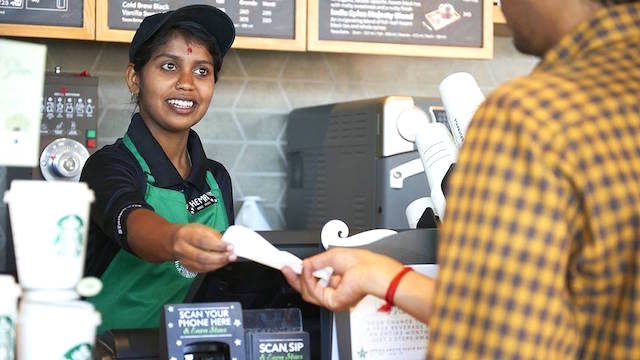
    Starbucks has initiated a testing phase for a novel artificial intelligence (AI)-driven virtual assistant, Green Dot Assist, across 35 outlets in the United States and Canada. This innovative tool is designed to offer immediate, conversational answers to baristas’ queries, thereby eliminating the necessity to consult manuals or conduct online searches for information.

    Green Dot Assist is intended to facilitate easy access to key information, bolster baristas’ confidence and familiarity with products, and ensure smooth workflow. As an example, Starbucks cited how Green Dot Assist could swiftly refresh a barista’s memory about ingredients in a seasonal beverage.

    Starbucks has expressed that this tool aligns with its broader strategy to minimize friction in the workplace and give baristas more time to concentrate on preparing beverages and interacting with customers.

    The AI assistant, powered by Microsoft Azure’s OpenAI platform, is expected to automate technical alerts and staff scheduling adjustments in the near future.

    Following the completion of this trial phase, Starbucks intends to extend the usage of Green Dot Assist to more outlets.

    Questions & Answers

    What is the purpose of Starbucks’ Green Dot Assist?
    Green Dot Assist is an AI-powered virtual assistant designed to facilitate easy access to key information, bolster baristas’ confidence and familiarity with products, and ensure smooth workflow in Starbucks outlets.

    How does Green Dot Assist work?
    Green Dot Assist provides immediate, conversational responses to baristas’ queries, eliminating the need for staff to consult manuals or search for information online.

    What are the future plans for Green Dot Assist?
    Following the completion of its testing phase across select outlets in the US and Canada, Starbucks intends to extend the implementation of Green Dot Assist to more locations. The AI assistant is also expected to automate technical alerts and staff scheduling adjustments in the future.

  • L’Oreal turns to Google as coronavirus spurs virtual make-up shift

    L’Oreal turns to Google as coronavirus spurs virtual make-up shift

    Shoppers searching Google for cosmetics will be able to try them on virtually through a deal with L’Oreal, as the French group looks to make up for lost store sales caused by coronavirus lockdowns by expanding online.

    Maybelline maker L’Oreal, which returned to comparable sales growth in the third quarter when coronavirus restrictions eased, has sped up some of its web initiatives as a result of the pandemic, its digital chief Lubomira Rochet said.

    “There’s been an acceleration in all our partnerships due to COVID-19,” Rochet said in an online presentation on Thursday.

    The Google GOOGL.O partnership relies on technology designed by ModiFace, a Canadian augmented reality specialist acquired by L’Oreal in 2018, and will also extend to the U.S. group’s YouTube video sharing platform, Rochet said.

    People seeking lipsticks or eye shadows by L’Oreal brands, which include Lancome and Urban Decay, who come across their adverts on Google or YouTube can then try them online.

    YouTube is one of the go-to sites for cosmetics users who often seek out make-up tutorials online, or want to learn from others how to curl their hair.

    L’Oreal, which already had a ModiFace partnership with social media site Facebook FB.O, has seen the usage of virtual make-up tools rise fivefold during COVID-19 lockdowns this year, and the conversion rate from an advert to purchase was three times higher with the try-ons, Rochet said.

    Consumers used it to mimic hair dye colors in particular during coronavirus shutdowns, Rochet added.

    Many countries in Europe including France and Belgium have now re-entered lockdown, forcing beauty chains and hair salons to close, and hitting travel retail sales. Online sales of beauty products, especially in China, have made-up for part of the losses and Rochet expects half L’Oreal’s sales are likely to come from the web within the next three to seven years, up from around a quarter now.

  • Diesel unveils a 360-degree selling platform and virtual showroom

    Diesel unveils a 360-degree selling platform and virtual showroom

    Diesel has unveiled Hyperoom, a 360-degree virtual selling platform and exhibition space.

    Conceived by Diesel’s parent company OTB, Hyperoom resembles the Diesel’s physical showroom in Milan. All Diesel’s products will be featured in the virtual store through a customised section of the platform, including the Spring and Summer 2021 Collections.

    At Hyperoom, customers can peruse the products in 360-degree displays or in 2D closeups with product descriptions.

    “One must look for silver linings whenever and wherever possible,” says Massimo Piombini, CEO of Diesel, referring to the challenge of the Covid-19 crisis.

    “This year has sparked an urgency to accelerate what we can offer and accomplish in the digital space. With this tool we have set a new benchmark for the industry, in regard to digital transformation.”

    “At Diesel, we aimed to keep as much of the buying’s physical element as possible”, the company says in a statement. “To digitally recreate the selling process, we have enabled remote buying sessions through enhanced and comprehensive digital assets.”

    Diesel believes the new virtual-store concept will be a solution for many fashion brands as it not only provides a unique online retail experience but also reduces the amount of clothing samples required at physical stores.

  • Standard Chartered Prepares for Virtual Bank Launch

    Standard Chartered Prepares for Virtual Bank Launch

    Standard Chartered has released details of its virtual bank in Hong Kong, set to be launched later this year in partnership with PCCW, Hong Kong Telecom (HKT) and Trip.com.

    The Mox virtual bank will offer customers a suite of retail banking services, as well as travel, entertainment and mobile products from one platform. According to the bank, it is currently in beta testing by staff.

    Mox operates in a whole new way by listening to customers and focusing on heart share. We aim to empower Hong Kong customers to grow and unlock more possibilities by providing a truly digital and personalized banking experience, Mox chief executive Deniz Güven said in a blog post this week.

    Mox’s website currently lists vacancies for a number of roles, including data engineer, head of payment operations, cyber assurance lead, front end developer, UX research lead, operational risk manager, and more.

    Mox said it would be issuing an «all-in-one numberless bank card» together with Mastercard, which has been «re-defined with innovation, security and privacy in mind.»

    The physical card, which is linked to the Mox app, can be used for in-store purchases and ATM withdrawals, but the lack of printed card numbers, expiry date and card verification value (CVV) number reduces the risk of losing personal information.

    Mox was among the first to receive a virtual banking licence, and we feel it is our privilege and responsibility to continually improve banking accessibility and experience in Hong Kong, Güven said in another blog post this week.

  • Singapore May Allow Virtual Banks

    Singapore May Allow Virtual Banks

    Singapore may permit virtual banks to operate in the city-state, following in the footsteps of Hong Kong, said DBS chief executive.

    If virtual banking licenses were handed out in Singapore, it would step up the competitive pressures faced by incumbent lenders. However, those who have upgraded their digital capabilities should not fear this new form of competition, said DBS chief executive Piyush Gupta.

    To my mind, that’s just basically giving a few more banking licenses, said Gupta, who was speaking in an interview with Bloomberg. Virtual banks could typically generate $100 income at 25 to 30 percent of operating costs, according to experts. In comparison, DBS’s cost-to-income ratio stood at 44 percent last year.

    In the interview, Gupta does not see a problem with having virtual banking licenses in Singapore unless these virtual banks are allowed to operate on more lenient terms than incumbents, such as lower capital requirements held.

    The real challenge is if the regulators create an unlevel playing field, and let the new bank licensees come in and do banking on different terms, he said. However, he felt that most regulators don’t seem to be inclined to do that.

  • Australia to regulate virtual currency exchanges like Bitcoin

    Australia to regulate virtual currency exchanges like Bitcoin

    Virtual currencies offer an efficient and anonymous way to store and transfer funds online. Australia is set to regulate virtual currency exchanges such as Bitcoin and strengthen the powers of its financial intelligence agency AUSTRAC as it cracks down on money laundering and terrorism financing.

    The changes came two weeks after AUSTRAC took the country’s biggest bank, the Commonwealth, to court for alleged “serious and systemic non-compliance” of money laundering and terror financing laws.

    It follows similar reforms by Japan to regulate virtual currency, after the country found itself at the epicenter of a multi-million dollar embezzlement scandal following the collapse of the Tokyo-based MtGox Bitcoin exchange.

    “Stopping the movement of money to criminals and terrorists is a vital part of our national security defenses and we expect regulated businesses in Australia to comply with our comprehensive regime,” Justice Minister Michael Keenan said Thursday.

    He added that the digital currency exchange sector was being regulated for the first time, while low-risk industries such as cash-in-transit would be subject to fewer regulations.

    Virtual currency has grown rapidly since the 2009 launch of Bitcoin, and there are now more than 100 crypto-currency options.

    But the sector has suffered from highly publicized scandals like the 2014 collapse of MtGox.

    Backers say virtual currencies offer an efficient and anonymous way to store and transfer funds online.

    But critics argue the lack of a legal framework governing the currency, the opaque way it is traded and its volatility, make it dangerous.

  • Nokia intros open templating system for virtual networks

    Nokia intros open templating system for virtual networks

    Nokia has published the industry’s first complete templating system for VNF lifecycle management, designed to streamline and automate VNF onboarding, integration and lifecycle management processes.

    The company said  today’s methods for managing VNF lifecycles – instantiating, monitoring, repairing, scaling, updating and backing-up – are costly, cumbersome and time-consuming.

    To address this, Nokia said it has developed an open templating system, aligned with the latest industry standards and open-source tools, to streamline these processes.

    The template specifications allow service providers and VNF suppliers to take advantage of the automated lifecycle management capabilities of the Nokia CloudBand Application Manager, enabling them to integrate more VNFs faster while reducing the cost and time required to manage VNFs in the cloud.

    Nokia’s open templating system builds upon the ETSI NFV specifications (IFA011 and IFA014), Topology and Orchestration Specification for Cloud Applications (TOSCA) specifications and OpenStack tools. It provides key functionality to service providers, including VNF definitions for better integration and added support of complex structures, and eliminates the need for customization when providing VNF information to a generic VNF Manager and NFV Orchestrator.

    By supporting both Nokia and third-party VNFs, the system gives service providers a much wider selection of virtualized network services they can offer subscribers.

    Nokia is currently collaborating with fellow members of ETSI and TOSCA to complete development of VNF templating standards to benefit the entire industry.

    Ron Haberman, head of Nokia’s CloudBand product unit, said, ”One of the goals of NFV has been to foster an open ecosystem of VNF suppliers to give service providers maximum choice in the capabilities they integrate, and to offer subscribers the best available services.”

  • VMware, Taiwan’s III join Broadband Forum

    VMware, Taiwan’s III join Broadband Forum

    VMware, Taiwan’s Institute for Information Industry (III) and the USA’s Methode Electronics have become the latest members of the Broadband Forum.

    The latest additions highlight recent developments within the Broadband Forum to address the constantly changing technological landscape and increase the focus of its work.

    The industry body is also working to collaborate more with open source communities and increase the amount of work it does in the software space.

    VMware, III and Methode Electronics will complement this, with all three companies having backgrounds in virtualization, electronics and R&D.

    The new members are already playing an active part in the Forum, with representatives attending the Forum’s most recent Quarterly Meeting, held in Berlin. Moving forward, they will continue to play a full role in activities and Working Groups.

    III believes its membership will enhance the prosperous development of industries and incubate new industries, as well as promote links between local industries and the rest of the world.

    “Actively participating with an international organization like the Broadband Forum is just the beginning for III,” commented Dr Ko-Yang Wang, director general of the III’s Industry Development Augmentation Division (IDAD).

    “Looking into the future, III fully supports the Forum’s new Broadband 20/20 vision and we are fully confident that its realization will be the next big thing for broadband.”

    The developments in Berlin – including the publication of the landmark Network Enhanced Residential Gateway (NERG) Virtualization Technical Report (TR-317), the first finished project in the Forum’s NFV realm – followed on from the Forum’s Special Meeting in Atlanta, where Service Providers gave their views and visions on how the network needs to develop.

    “We’re delighted to welcome VMware, III and Methode Electronics into the Broadband Forum family,” Broadband Forum CEO Robin Mersh said.

    “Our recent meetings have illustrated our ability to keep up with the rapid pace of change within the industry and work together to create a faster and highly relevant Broadband Forum. Welcoming exciting, progressive new members such as these three companies means that we will continue to be the voice of broadband for the industry.”

  • Fujitsu develops technology to boost virtual networks

    Fujitsu develops technology to boost virtual networks

    Fujitsu Laboratories has developed automatic analysis technology to boost communications performance and quality in virtual networks.

    With the spread of virtualization technologies, such as the cloud, software defined networking (SDN), and network functions virtualization (NFV), there is demand for the ability to flexibly set up and operate high performance virtual infrastructure.

    In order to set up and operate virtual infrastructure for operations that require high performance, it is necessary for experts with knowledge of both hardware and software to take time to analyze bottlenecks and set up the virtual infrastructure appropriately. This results in high operating costs with frequent changes to the system structure or usage situation.

    To address this issue, Fujitsu Laboratories has developed a technology that, with a low load, captures communications packets passing through virtual infrastructures. The system uses this information to identify communication bottlenecks and automatically recommend configurations to improve communications speed and to reduce packet loss and other measures to raise virtual network quality.

    These technologies have been confirmed to roughly double communication speeds of virtual networks.

    Fujitsu said that with this technology, high communication performance and quality can be maintained, even in environments where the system structure and usage situation frequently change, such as virtual infrastructure for the cloud or telecommunications carriers.

  • VMware launches cross-cloud architecture

    VMware launches cross-cloud architecture

    VMware launched its Cross-Cloud Architecture at VMworld 2016, along with a partnership with IBM Cloud and plans to extend to Google, Microsoft Azure and Amazon Web Services.

    The architecture is designed to let network operators manage, provide uniform policies for and secure applications running across public, private and hybrid clouds.

    Cross-Cloud Architecture is available in two main parts:

    • The VMware Cloud Foundation is designed to allow network operators to launch private clouds and extend them to the public cloud. It is an integration that VMware says will combine some of its existing compute, storage and networking virtualization offerings, helping organizations run and manage existing on-premises applications on both private and public clouds.
    • Cross Cloud Services, announced as a technology preview, runs applications across multiple public clouds, including IBM, AWS, Microsoft Azure and Google, as well as VMware’s vCloud Air hybrid cloud architecture and the vCloud Air Network of 4,000 service providers.

    The new Cross-Cloud strategy sees the company focusing more on selling products that work with existing leaders, rather than trying to establish itself as an alternative to AWS, Google or Azure. It will also provide an essential orchestration layer that helps network operators coordinate cloud applications

    As more companies run applications on rented infrastructure over the internet rather than their own data centers, providing the link to the different technologies customers use is a growing opportunity for VMware and something that it can also provide to partners like IBM.

    Earlier this year, IBM and VMware set out to tackle one of the industry’s most pressing challenges: extending existing VMware workloads from on-premises environments to the cloud without incurring the cost and risk associated with retooling operations, re-architecting applications and re-designing security policies.

    During a presentation, Guido Appenzeller, chief technology strategy officer of networking and security at VMware and Robert LeBlanc, senior vice president, IBM Cloud said that Cloud Foundation will “automatically provision pre-configured” software-defined data centers on IBM Cloud “in hours versus weeks or months.”

  • Lotte Department Store to Introduce 3D Foot-Measuring Device

    Lotte Department Store to Introduce 3D Foot-Measuring Device

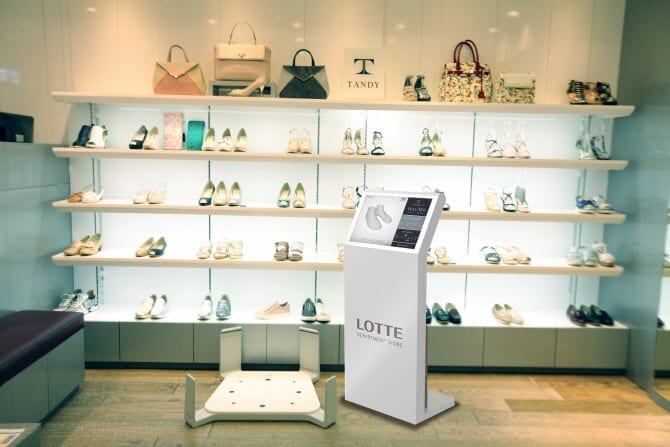
    Korean retail giant Lotte Department Store revealed Thursday that it will implement a new 3D foot-measuring device at its stores starting Friday, to provide quick and accurate measurements for custom shoe orders.

    By placing his or her foot on the device, a customer will able to obtain not only their foot’s length, but its overall shape, including width and height, to gather more accurate sizing information.

    The conventional foot-measuring process can make customers feel uncomfortable, and usually takes two to three minutes. But the new device will shorten the process to two seconds using 3D scanning technology, according to a Lotte official.

    After having their feet measured, customers will select the shoe design of their choice, and a final pair of handmade shoes will be delivered to their doorstep in about two weeks. Upon request, customers can even have their foot size information mailed to them or saved in the store’s computer system, so they can place more orders in the future without having to re-measure their feet.

    The 3D device was developed in collaboration with Swedish start-up Volumental, and will first make its debut at the Tandy shoe store in Lotte’s flagship department store in Myeongdong. The service will expand to other shoe brands in department stores across the country starting July 29.

    Lotte Department Store also plans to launch a 3D virtual fitting service in the latter half of the year. The service uses a special mirror that provides a virtual reflection of the customer wearing clothing by applying a 3D image of the product to the customers’ body.

  • Partnership with Garuda Indonesia Virtual

    Partnership with Garuda Indonesia Virtual

    Today we are happy to announce that we have established partnership with Garuda Indonesia Virtual (GIV).

    GIV is a VA base in Jakarta, Indonesia providing great simulation experience as one of the biggest VAs within South East Asia Region. The partnership allows VA in Asia to connect more closely and promote flight simulation in Asia by providing more possibilities and activities to our pilots.

    We are all looking forward to having GIV to join our future event.