Retail News CRM

Tag: Vision Pro

  • Luxury airline plans to give select passengers a Vision Pro to use as in-flight entertainment

    Luxury airline plans to give select passengers a Vision Pro to use as in-flight entertainment

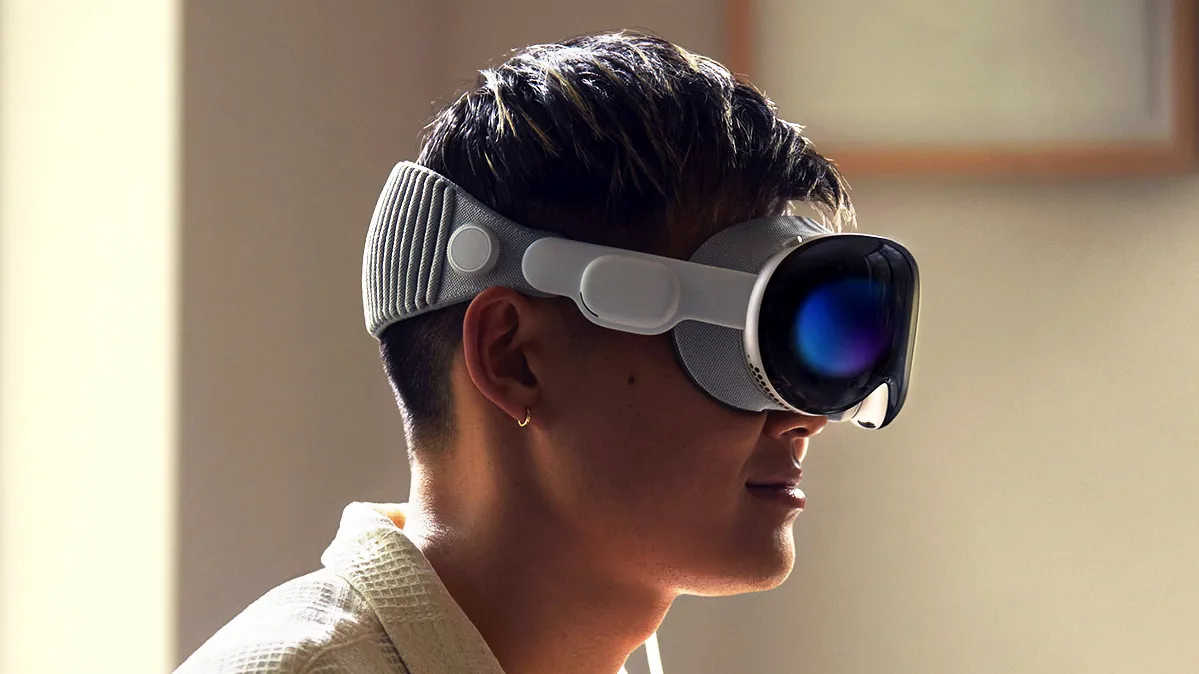
    At least one airline is planning on offering the Apple Vision Pro to some passengers as part of its in-flight entertainment offerings. Beond is a Maldivian airline that flies to five destinations and calls itself the world’s first “premium leisure airline” with business class service that includes gourmet meals, seats that fold down completely allowing passengers to sleep more comfortably during a flight, and soon, in-flight entertainment led by the Apple Vision Pro.

    In a press release dated Thursday, Beond said that it will start  offering the Vision Pro to select customers on its flights to the Maldives. Beond’s fleet has just doubled to two after the airline took possession of its second jet and in the middle of this year, it will start flights from Milan, Dubai, and Bangkok to the Maldives.

    Tero Taskila, Beond’s Chairman and CEO, said, “The Apple Vision Pro will transform the inflight entertainment experience, and we will be first to offer it to select passengers. In addition to our existing and ever-growing library of inflight content such as movies and games, Beond will showcase stunning resort destinations and activities in the Maldives. We are working now with partners in the Maldives to prepare truly amazing footage.”

    The executive continued, “The inflight experience will build anticipation for passengers before they arrive in the Maldives. Offering the Apple Vision Pro is another step in our vision of delivering a premium travel experience to our customers, from the start to finish of their journey. We’re proud to be the first airline to deploy the technology.” The press release didn’t mention how many Vision Pro units would be aboard each flight, nor did it mention how the airline would determine which passenger(s) would get the opportunity to don the headset.

    Now that Beond has become the first airline to announce plans to offer the Vision Pro to passengers, we could see the larger commercial airlines add the Vision Pro to their in-flight entertainment offerings. Considering the number of larger capacity planes that airlines could order the headset for, Apple could get a windfall.

  • No dedicated Netflix, YouTube, or Spotify apps for the Vision Pro

    No dedicated Netflix, YouTube, or Spotify apps for the Vision Pro

    It was back in July when we first told you that Netflix wasn’t planning a dedicated app for the Vision Pro. And while those planning to shell out $3,499 for the Vision Pro might have hoped that Netflix would change its mind, that is not the case, as the spatial computer kicked off pre-orders today in the U.S. Other streamers have announced plans to build an app for the Vision Pro including  Disney+, Amazon Prime Video, and Paramount Plus. The device will be released on February 2nd.

    Netflix also notes that it is not making its iPad app available to Vision Pro users, which means that the only way for Netflix subscribers to stream using the Vision Pro is to use the Safari browser and visit the Netflix website. Unlike those viewing content on one of the aforementioned streamers supporting Vision Pro, movies, television shows, and documentaries viewed on Netflix will not feel so immersive.

    Netflix spokesperson Kumiko Hidaka said, “Our members will be able to enjoy Netflix on the web browser on the Vision Pro, similar to how our members can enjoy Netflix on Macs.” However, certain features that Netflix subscribers can enjoy on mobile platforms, such as viewing content offline, will not be made available to Vision Pro users. Netflix might have decided that it was best to wait and see how popular Vision Pro would become before deciding to spend time and money on a dedicated app for the platform.

    Disney+ is taking a different tact and has decided to go all-in on Vision Pro. Subscribers can view streaming Disney+ content in one of four immersive environments, including one based on Hollywood’s El Capitan Theatre. Others are based on Pixar’s Monsters, Inc., Avengers Tower from Marvel’s Avengers films, and one environment made for Star Wars fans is set in the cockpit of a landspeeder located in the Tatooine desert.

    Disney, constantly rumored to be a possible acquisition for Apple, loves Vision Pro. Bob Iger, Disney CEO, says, “At Disney, we’re constantly searching for new ways to entertain, inform, and inspire by combining exceptional creativity with groundbreaking technology to create truly remarkable experiences. Apple Vision Pro is a revolutionary platform that will bring our fans closer to the characters and stories they love while immersing them more deeply in all Disney offers. We’re proud to be once again partnering with Apple to bring extraordinary new Disney experiences to people worldwide.”

    If Vision Pro becomes a hot commodity, Netflix could decide to develop a dedicated Vision Pro app for future versions of the spatial computer. Other high-profile streamers that are not launching apps for Vision Pro include Google’s YouTube video streamer and audio streamer Spotify.

  • Vision Pro’ will not immediately impact Apple

    Vision Pro’ will not immediately impact Apple

    Last month Apple unveiled its Vision Pro spatial computer and before the video of the new device was streamed to the world, many started to compare the introduction of the mixed reality device to that day in January 2007 when Steve Jobs masterfully hosted the introduction of the iPhone. Like the iPhone, the Vision Pro isn’t creating a new product category but is taking the category to a previously unseen level.
    But when it comes to the impact that Vision Pro will have on the world and Apple, that’s where the comparisons end. At least for now. The latest edition of Power On from Bloomberg’s Mark Gurman takes a look at some of Apple’s hit products and how they affected Apple’s overall revenue. For example, the iPod was launched in 2001 and by 2004, it was accounting for 16% of the company’s top line. By the time the iPhone was announced in 2007, the iPod was bringing in $8 billion a year which worked out to 40% of Apple’s gross.
    As Gurman notes, the iPhone, despite being an AT&T exclusive, still sold 10 million units during its first full year and the device contributed a third of Apple’s revenue by 2009. The iPad immediately contributed 18% of Apple’s gross in 2011, the year following the tablet’s initial launch. And the Apple Watch, which started life available in only 9 countries, is now part of a business segment that includes the AirPods and other products and brings about $40 billion into Apple’s coffers annually.
    And as far as the impact on society, nothing can touch the immediate response to the iPhone. The smartphone quickly became the most indispensable tech tool in the world. But the Vision Pro is a much different animal. While the iPhone was first considered pricey when it was introduced, the Vision Pro starts at a whopping $3,499. And while the Vision Pro offers some cool features, most of the applications it delivers can be found on the iPhone.
    Sure, Vision Pro gives you options to manipulate the environment and/or the datat you’re viewing but you’re paying a heavy price, and not just financially. The battery lasts only a couple of hours and unless you want to carry extra battery packs with you, Apple’s spatial computer is not yet ready, not even close, to replacing the iPhone.
    That’s not to say that the Vision Pro won’t sell. The original plans called for more than a million units to be sold in the first year. But the Financial Times recently reported that Apple isn’t pleased with the low yields Sony has had producing the micro-OLED displays for the product. Other production issues will limit the number of Vision Pro units assembled in the first year to 400,000 which means that the product will be hard to find.
    While Apple is reportedly working on a lower-priced spatial computer that might not have all of the features that the Vision Pro offers, I have to agree with Bloomberg’s Gurman when he says that most consumers will stick with their iPhone until Apple can reduce the Vision Pro to the size of a pair of glasses. Almost everybody who watches the tech world either as a writer or consumer has assumed that the next big thing for Apple after the iPhone would be a pair of glasses that would offer the features and functionality of the iPhone, but worn on the user’s face.
    Again, a product like AR smart glasses has always been assumed to be the endgame for Apple and not much has changed even with the appearance of the Vision Pro. Check out the AR features of the headset and the way the app icons appear and are selected with a look. TF International analyst Ming-Chi Kuo says not to expect Apple to release AR glasses until 2026-2027 at the earliest. That timeline might be too ambitious but Apple has taken the first step with this new device. Just don’t expect the Vision Pro to have the same impact on Apple and society as the iPhone.