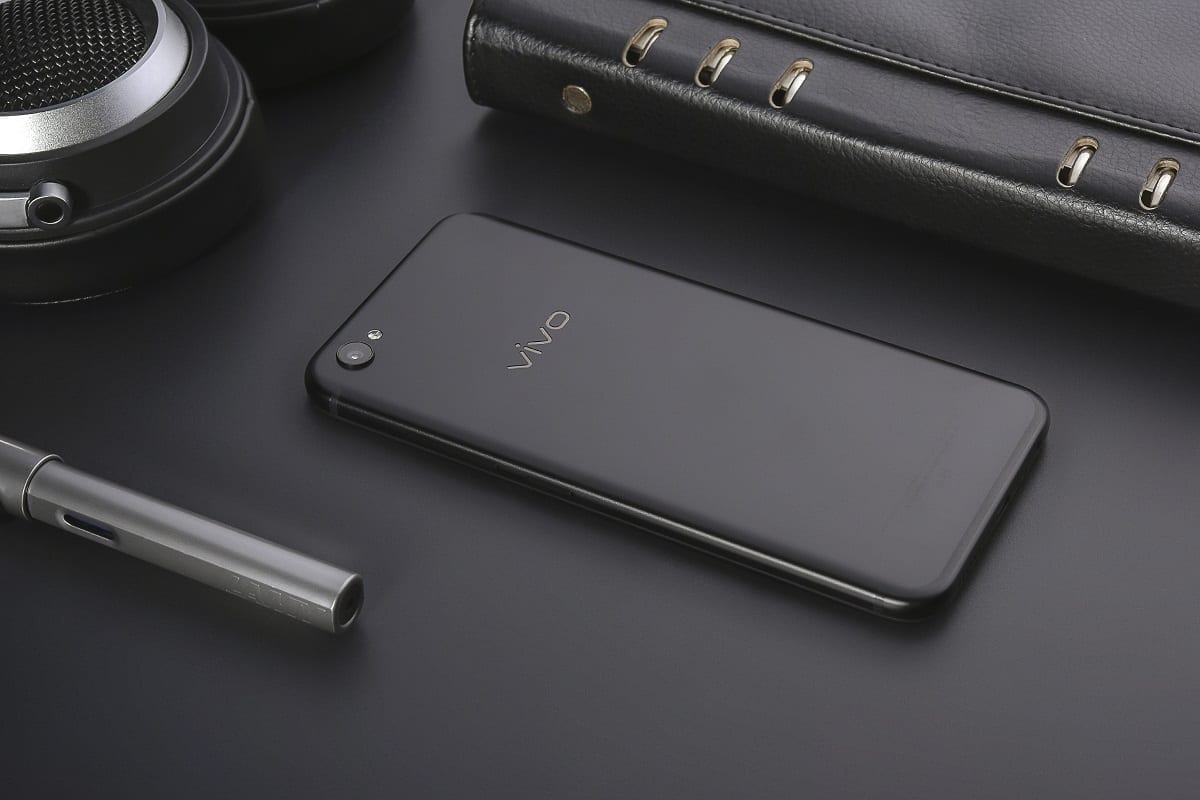
Tag: Vivo

  • Chip Squeeze Drives up Smartphone Prices in India, Boosting Apple and Samsung over Chinese Rivals

    Chip Squeeze Drives up Smartphone Prices in India, Boosting Apple and Samsung over Chinese Rivals

    Rising memory chip costs are significantly impacting India’s smartphone market, leading to a surge in average selling prices and a shift in consumer preferences. The average smartphone selling price in India has reached a record $315, marking a 14.4 percent increase from the previous year, according to recent market data.

    This price inflation is particularly affecting budget-focused Chinese smartphone brands, which have historically dominated the sub-$150 segment. As cheaper chips become scarce and more expensive, these companies are forced to raise their prices, diminishing their traditional value-for-money appeal. Conversely, premium and mid-range players such as Samsung and Apple are gaining market share, partly due to improved financing options that make their higher-priced devices more accessible to consumers.

    Chinese Brands Face Mounting Pressure

    Chinese smartphone makers, including Vivo, Oppo, Xiaomi, and Realme, experienced significant declines in shipments during the June quarter. Vivo’s shipments fell by 13.9 percent, Oppo by 8.5 percent, Xiaomi by 10 percent, and Realme by 14.2 percent year-on-year, according to IDC. Only OnePlus, which caters to a higher-end segment, saw a smaller decline of 2.5 percent.

    Industry experts indicate that the era of sub-$150 smartphones is effectively over in India. New Chinese models with similar features are now expected to cost between $200 and $250, a substantial increase from their previous pricing. This pricing pressure has already led to some budget brands raising smartphone prices by up to 40 percent.

    This development is crucial for RetailNews Asia readers, as India represents one of the world’s largest and fastest-growing consumer markets. The shift towards premiumisation, driven by supply chain economics, presents both challenges and opportunities for retailers and brands operating across Asia-Pacific. As affordability dynamics change, retailers may need to adapt their product assortments and financing solutions to cater to evolving consumer demand.

    Samsung And Apple Expand Their Foothold

    In contrast to the struggles faced by Chinese brands, Samsung and Apple have demonstrated resilience and growth. In the June quarter, Samsung’s shipments rose by 0.4 percent, and Apple’s by 0.7 percent. This enabled Samsung to narrow the gap with the leading player, Vivo, increasing its market share by nearly 200 basis points. Apple also saw its market share rise by 100 basis points in the same period.

    Samsung, with its diverse portfolio spanning from $200 to over $800, is intensely competing with Vivo in the $200-$300 segment. A key advantage for Samsung is its access to in-house memory chip supplies, which mitigates some of the cost pressures affecting competitors. Many Chinese firms rely on external suppliers like MediaTek, SK Hynix, and even Samsung for their chips, making them more vulnerable to price fluctuations.

    The global memory chip shortage, exacerbated by increased demand for AI and data center applications, has driven chip prices up fourfold since September 2025, with further increases anticipated. This trend is expected to continue pushing smartphone prices higher, accelerating the Indian market’s shift towards more premium products as financing options become more prevalent for expensive handsets.

  • Vivo smartphone damaged ID card chip, users complain

    Vivo smartphone damaged ID card chip, users complain

    Some Vivo smartphone users have complained that the device damaged the chip on their ID cards after making near-field communications contact, an allegation the Chinese company is verifying.

    A Vivo-focused social media group with 33,000 members has been getting dozens of posts about users’ ID card being damaged digitally after making NFC contact with their phones. The complaints mostly involve high-end Vivo phones such as the X100 Pro, X100 Ultra and X100S Pro, which are not sold in Vietnam and are bought overseas.

    However, there are also some complaints about the X80 Pro, a model Vivo sells in the country.

    Vu Duy Tan of HCMC said after using a Vivo phone to connect with his ID card, the latter no longer connected with other smartphones.

    He got it replaced but found the same thing happening again.

    Dang Tien Dung of Can Tho City also discovered a similar problem with his Vivo X100 Pro.

    His ID card used to connect normally with an Oppo phone but stopped doing so after he once used the Vivo phone.

    After finding the card could not connect with any other phone, he suspected its chip was damaged.

    A Vivo Vietnam spokesperson said some users have reported the issue to the company. Vivo is now investigating the issue.

    NFC is a technology found in phones, cards and payment machines. Tech analyst Le Cong Minh Khoi said a card chip could be damaged if a smartphone’s NFC signals are too strong.

    A similar thing happens when people put their smartphones next to NFC cards such as hotel door keys for a long time, he added.

  • Nokia signs 5G patent deal with vivo

    Nokia signs 5G patent deal with vivo

    Nokia has signed a lot of 5G patent agreements in the last year. The Finnish company recent convinced Oppo that it’s better to make use of technology that other companies patent by simply paying for it.

    Today, Nokia is signing yet another 5G patent agreement, this time with another Chinese smartphone maker, vivo. Granted, this is a multi-year cross-license agreement that will benefit both companies, it’s vivo that gains on the short run since it can now return to the German market after losing the lawsuit filed by Nokia.

    The announcement mentions that the new deal “resolved all pending patent litigations between the parties, in all jurisdictions.” However, the terms of the agreement remain confidential, so there’s not much we can add to this.

    With this licensing agreement, Nokia “has now almost completed its smartphone license renewal cycle,” the company notes. The Finnish giant signed similar agreements with other big smartphone companies like Samsung, Honor, Huawei, Oppo, and even Apple.

    “This is the sixth major smartphone patent license agreement we have signed in the past thirteen months, and we have now almost completed our smartphone license renewal cycle. Together these licensing agreements demonstrate Nokia’s significant contribution to developing key technologies relied upon by the entire smartphone industry and they will provide long-term stability to our licensing business for years to come,” said Jenni Lukander, President of Nokia Technologies.

    Nokia expects its intellectual property licensing business to generate around €1.4 billion ($1.5 billion) in the mid-term, which isn’t that much considering that the company invested around €150 billion in R&D.

  • Vivo files a patent application for a detachable flying smartphone camera

    Vivo files a patent application for a detachable flying smartphone camera

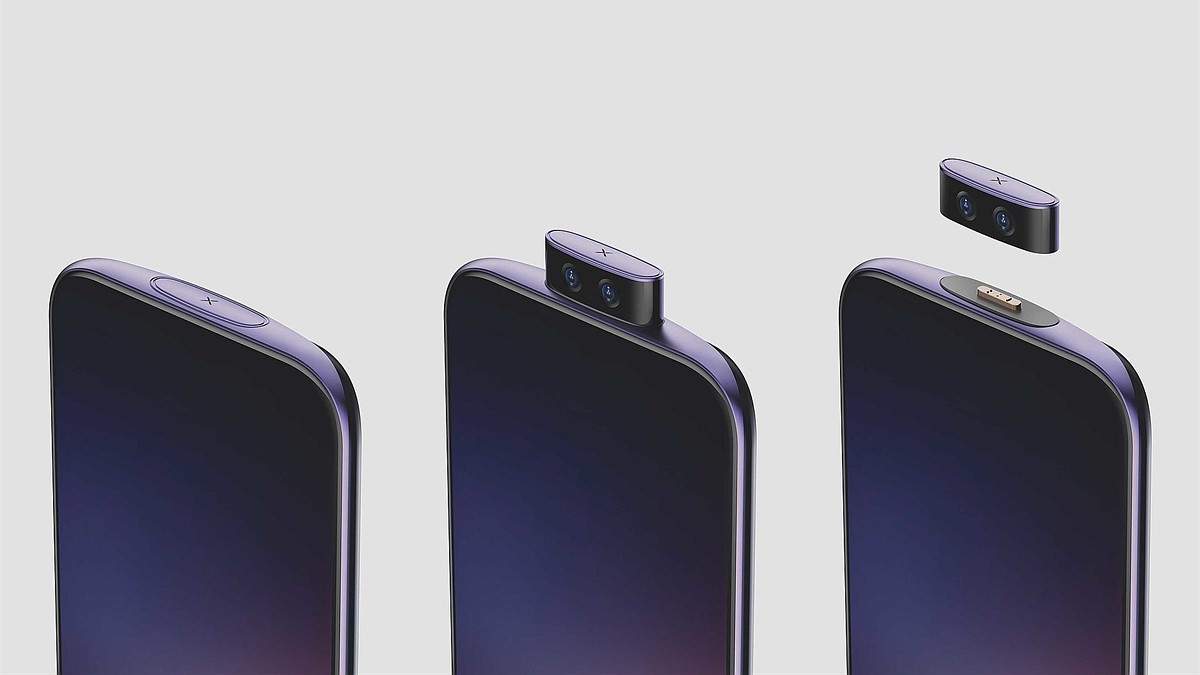
    Vivo has filed a patent for a flying smartphone camera. You read that right, the camera disconnects from the phone and takes to the air to provide the user with unusual photo opportunities to take snapshots and video from. The camera module features four propellers, two dual cameras, three infrared proximity sensors and an extra battery.
    While in flight, the proximity sensors are used to prevent the flying camera module from crashing into other items that have escaped gravity by calculating the distance from a possible hazard to prevent mid-air collisions. Once in the air, the “flight camera” will be able to change positions and we expect to see one camera at the front of the module with another at the top.
    The patent application was filed with the World Intellectual Property Organization (WIPO) and while camera drones are not new, Vivo is the first manufacturer to have a flying camera drone fit into the body of a smartphone. But there is a caveat. To make the camera module fit inside a phone, it has to be made smaller and lighter which means that it can be blown off track because of the wind which can also make images appear shaky.
    The vast majority of smartphone innovations have been coming from Chinese-based smartphone brands. But keep in mind that just because Vivo seeks to patent a flying camera for a smartphone, that doesn’t mean that such a product is coming soon.
  • Vivo India opens Mumbai flagship

    Vivo India opens Mumbai flagship

    Chinese smartphone brand Vivo has opened an experiential flagship store in Thane, Maharashtra as Vivo India eyes 250 new stores this year.

    The 1800sqft outlet is the second of 20 stores planned for the territory, according to the India News Service. Vivo India currently operates an experiential retail store in Bengaluru as well.

    “The offline channel has been an essential part of our go-to-market strategy and we would continue to invest in this channel,” said Vivo India director of brand strategy Nipun Marya.

    “We intend to launch more than 250 exclusive stores in 2020, taking the total number to 600.”

    Showcasing Vivo’s entire range of devices and accessories, the store will also feature an interactive touch-enabled LED screen allowing customers to explore products in more detail, as well as gaming, VR and customer interaction zones.

  • Render shows that Vivo could be taking the next step toward a full-screen design

    Render shows that Vivo could be taking the next step toward a full-screen design

    Ever since phone manufacturers started to find alternatives for the placement of the selfie camera on their phones, the industry has been moving toward the Holy Grail; a 100% screen-to-body ratio. Former Apple design chief Sir Jony Ive admitted a few years ago that he wanted an iPhone that looked like a single sheet of glass. First, he states that earlier this year Samsung canceled a project called Full-Display 2.0. The team working on this project was trying to develop a phone that was all screen without a notch, punch-hole or a cutout.

    This decision, according to Ice Universe, was a “serious mistake” on Samsung’s part. Why? Because manufacturers in China have been working toward the goal of producing a phone sporting a full-display. And it would appear from a render that was included in the tweet, that Vivo is going to take the next step toward releasing a full-screen phone with the Vivo NEX 2. The render shows a phone with curved edges with no side bezels or side buttons.  There is an extremely thin bezel at the top and a small chin at the bottom. Since the original NEX featured a pop-up selfie camera, we can expect more of the same with the sequel. Or perhaps there is an in-display camera.

    Even though Vivo isn’t expected to sell the NEX 2 in the states, it is important to see what some of the innovative Chinese manufacturers are doing. That’s because a phone doesn’t have to be sold in the U.S. to start a new design trend. For example, the 2016 Xiaomi Mi Mix and its edge-to-edge display influenced the designs of some phone manufacturers who do sell their devices in the states.

    With in-display fingerprint scanners already here and in-display selfie cameras on the way, it might not be terribly long before we see a handset with a screen-to-body ratio approaching 100%.

  • Chinese Smartphone Realme Eyes to Expand Southeast Asia

    Chinese Smartphone Realme Eyes to Expand Southeast Asia

    BBK Electronics’ budget smartphone brand Realme is eyeing expansion into Southeast Asia, Africa and Europe. The company’s online distribution strategy has brought it success in the Indian market and makes broader expansion possible, according to Realme global CEO Sky Li Bingzhong. “The company’s asset-light operations and focus on online sales allow it to keep costs low. That way, more young consumers can afford its products, which makes the brand more competitive in the market,” said Li.

    Realme launched in India in May last year with handsets priced at INR8,990 (US$129) – becoming the second top-selling smartphone brand during the Diwali festival season from October to November. The brand has joined a number of Chinese phone manufacturers seeking to build strength in the Indian market as they challenge more established international competitors in more saturated markets.

    BBK also owns the Oppo, Vivo and OnePlus brands, selling mid- to high-end models. Independent Realme runs its own R&D operations, but partners with Oppo in smartphone production. Its expansion moves are indicative of Chinese phone manufacturers’ larger strategy to deploy varying brands that each target specific markets globally.

  • Chinese smartphone maker Vivo is looking to arrive in Singapore soon

    Chinese smartphone maker Vivo is looking to arrive in Singapore soon

    Singaporeans are spoiled for choice when it comes to choosing a new smartphone, and it looks like Chinese smartphone maker Vivo is looking to make an impression in their purchasing decisions.

    In a Facebook post on Monday (Feb 15), Vivo announced that it would enter the Singapore market for the first time with its flagship V7+ and Y65 handsets.

    The plans have been brewing since October last year, when the company announced that it intended to bring its products into more markets as part of an international expansion, as reported.

    “Singapore is a key market for us and we want to establish our presence here,” said CEO of Vivo Singapore Mr Liu Hong Bin.

    He added that the company would bring in additional handset models in the coming months.

    Vivo’s flagship V7+ and Y65 handsets, which will be available in both gold and matte black, will be on sale from Jan 20 at mobile retail stores.

    Meanwhile, Vivo is still in talks with local telcos to bring the devices in through them sometime next month.

    The V7+ device packs a 16-megapixel primary camera on the rear and a 24-megapixel front shooter for selfies (we all need those killer selfies right?). It runs on Android 7.1 and is powered by a 3225mAh battery.

    The Y65 handset runs on the same OS, but has lower hardware specifications, such as a 5-megapixel front-facing camera and a 3000mAh battery.

    The Chinese smartphone maker has made a name for itself, even beating tech giants like Apple and Samsung to the punch with its in-display fingerprint scanning technology.

    Not forgetting to mention that that very innovation led to Vivo clinching the “Best of CES 2018” award from tech news blogs like Digital Trends.

  • Oppo, Vivo offer retailers unkindest cut

    Oppo, Vivo offer retailers unkindest cut

    Chinese smartphone makers Oppo and Vivo, which together have a 17% share of the market in India, have slashed trade margins by over 40%, leading to a backlash by neighbourhood stores and mobile phone retail chains.

    Industry executives said Oppo and Vivo have lost about 10,000 sales outlets each. Both had about 70,000 outlets each in the country before the margin cuts and the number of stores selling their phones may fall further, they said.

    Chains including Sangeetha Mobile, Big C, Lot Mobile, Poorvika, Mobiliti World and Hotspot have stopped selling the two brands or reduced focus on them, three senior industry executives said. These chains have a combined network of over 1,300 outlets.

    Oppo and Vivo, both founded by Chinese billionaire Duan Yongping, cut the margin offered to large chains to 14-15% from 23-25%, the executives said. They reduced it to 5-6% for standalone stores from 15-16%.

    Sangeetha Mobile has stopped selling Oppo and Vivo in Tamil Nadu due to margin issues, managing director Subhash Chandra said. “The two brands have different margins in different states, which is a problem for multi-state retailers,” he said.

    graph

    There is now no sales push for Oppo and Vivo, the CEO of a leading chain said.

    An Oppo India spokesman confirmed the margin changes and the drop in number of outlets. The spokesperson said some stores were no longer able to sell handsets after the goods and services tax was introduced — he did not elaborate. He also said Oppo has changed its strategy to focus on mid- to high-end models and some stores had to be shed when their sales didn’t match expectations.

    These adjustments are being done across markets by different smartphone industry players… All these decisions have been taken keeping in mind health of the company. We believe the company will now be healthier and efficient,” he said.

    A Vivo India spokesperson said its retail network has not shrunk and the company plans to add outlets this year.

    “Last year, we witnessed good response from the market which contributed towards increase in revenue and market share. As per Counterpoint Research, Vivo V7+ commanded 40% share in ?20,000-25,000 segment in November 2017. We plan to further build on the growth momentum this year,” he said.

    The two brands have been forced to reduce margins in India because they are under pressure to become profitable, the CEO of a retailer said. “They are replicating the strategy adopted in China of slowing down the high investment after reaching a certain scale. But India is a different market and their share is already coming down,” he said.

    Both have drastically scaled down their huge marketing investment in India over the past three months in outdoor, television and print advertising, executives said.

    Vivo had a 9% share of India’s smartphone market in the third quarter of 2017 compared with 5% a year earlier, according to Counterpoint Technology Market Research, a Hong Kong-based firm that tracks device shipments. Oppo’s share increased to 8% from 4% during this time, Counterpoint said.

    Oppo currently manufactures phones in India through third-party vendors and is setting up its own unit in Greater Noida near New Delhi. Vivo has an assembling unit in Greater Noida with a capacity of 1-million smartphones per month, according to its website.

    Vivo India posted a loss of ?111.66 crore in 2016-17, according to regulatory filings, while sales grew six-fold to ?6,173 crore. Oppo’s earnings figure was not available, although its sales surged seven-fold to ?7,974 crore.

    Oppo and Vivo were among the fastest-growing smartphone brands in the third quarter of 2017, Counterpoint said.

    The industry executives said Oppo and Vivo’s pace of growth and market share will be under stress this year, which will change the pecking order of Chinese brands in the Indian market with Xiaomi and Lenovo-owned Motorola filling the space.

    It launched its own portal in India, marking its entry into the e-comm business.

  • Vivo smartphones arrive in Hong Kong

    Vivo smartphones arrive in Hong Kong

    Chinese smartphone brand Vivo has entered the Hong Kong market with the launch of its latest model, the X20.

    It will soon also take its products to Taiwan, Singapore and Russia, followed by a push into Africa early next year.

    With sharp growth in the past year, Chinese smartphone brands now hold a record 48 per cent of global share, says technology research company Counterpoint. Vivio’s V7+ is already attracting strong sales in India, Thailand, the Philippines, Myanmar, Malaysia, Indonesia, Pakistan, Cambodia and Bangladesh.

    “Since our first entry into the international markets in 2014, we have been dedicated to understanding the needs of consumers through in-depth research,” says Vivo senior VP Alex Feng.

    US research company Gartner says Vivo ranked fifth in global smartphone sales for the second quarter of this year in terms of volume, with 6.6 per cent  market share.

    Founded in 2009, Vivo is known for its innovative phone cameras and was the first brand to launch a smartphone with a dedicated Hi-Fi chip. It is the official sponsor of the 2018 FIFA World Cup.

  • Oppo, Vivo founder reveals how he toppled Apple in China

    Oppo, Vivo founder reveals how he toppled Apple in China

    Duan Yongping is convinced Tim Cook didn’t have a clue who he was when they first met a couple years ago. The Apple boss probably does now.

    Duan is the reclusive billionaire who founded Oppo and Vivo, the twin smartphone brands that dealt the world’s largest company a stinging defeat in China last year. Once derided as cheap iPhone knockoffs, they leapfrogged the rankings and shoved Apple Inc. out of the top three in 2016 — when iPhone shipments fell in China for the first time.

    They managed to do it because the American smartphone giant didn’t adapt to local competition, the entrepreneur told Bloomberg in what he said was his first interview in 10 years. Oppo and Vivo employed tactics Apple was reluctant to match, such as cheaper devices with high-end features, for fear of jeopardizing its winning formula elsewhere, Duan said.

    “Apple couldn’t beat us in China because even they have flaws,” the 56-year-old electronics mogul said. “They’re maybe too stubborn sometimes. They made a lot of great things, like their operating system, but we surpass them in other areas.”

    That’s not to say Duan doesn’t appreciate the iPhone maker’s global clout. In fact, the billionaire’s obsession with his US rival is legion: he’s long been a big-time investor in Apple and an unabashed fan of its chief executive officer.

    “I’ve met Tim Cook on several occasions. He might not know me but we’ve chatted a little,” Duan said. “I like him a lot.”

    Apple couldn’t confirm Duan’s meeting with Cook when contacted by Bloomberg. But Duan has blogged incessantly about Apple’s products, share price and operations since 2013, when the company was worth half what it is today. He needs “a really big pocket” because he carries four devices, including a heavily-used iPhone. In a 2015 post, he argued Apple’s profit should reach $100 billion within five years. Today, Duan won’t say when he actually bought in but says much of his overseas wealth remains tied up in the iPhone maker. He even lives in Palo Alto, an easy drive from Apple’s new UFO-like headquarters in Cupertino.

    “Apple is an extraordinary company. It is a model for us to learn from,” Duan said. “We don’t have the concept of surpassing anyone, the focus instead is to improve ourselves.”

    Oppo’s gains against Apple may now earn an even broader following for the billionaire dubbed China’s Warren Buffett by local media for his investment acumen. Born in Jiangxi, a birthplace of Mao Zedong’s Communist revolution, Duan began his career at a state-run vacuum tube plant before making his name with homegrown electronics.

    Duan left the factory floor around 1990, when China was just embracing capitalism and opening industries to private investment. He headed to southern China’s Guangdong province, then the cradle of liberal reforms, to run a struggling electronics plant. His first product was the “Subor” gaming console with dual-cartridge slots — a direct shot at Nintendo Co.’s classic Family Computer, known elsewhere as the Nintendo Entertainment System. The 100- to 400-yuan Subor became a hit in the absence of local competitors. Duan even enlisted Kung Fu star Jackie Chan to endorse the device. By 1995, revenue from the Subor exceeded 1 billion yuan.

    Duan left to set up a new business that year as the operation flourished — a pattern he would repeat in later years. He christened his second venture Bubugao, literally “rising higher step-by-step.” BBK, as the company came to be known, created a popular line of VCD and MP3 players but later also made DVD players for global brands. Subsidiary Bubugao Communication Equipment Co. became one of the country’s biggest feature-phone makers around 2000, going head-to-head with Nokia and Motorola.

    It was the first iPhone in 2007 that paved the way for Oppo and Vivo. While they share a common founder in Duan, the sister brands are fierce competitors, trotting out dueling marketing campaigns in markets from India to Southeast Asia. Their salesmanship philosophy plays well in emerging markets, IDC research manager Kiranjeet Kaur said.

    “The companies fully understand how to make the best of their people, a specialty they inherited from Duan,” said Nicole Peng, a senior director at Canalys. Importantly, they understood their millennial audience. “Many of their managers are young and have been working at the company since graduation.”

    Duan’s latest endeavors were, in part, dreamed up in Apple’s backyard. By 2001 at the age of 40, Duan had decided to move to California to focus on investment and philanthropy, later installing his family in a mansion he reportedly bought from Cisco Systems Inc. Chairman John Chambers. But the advent of the smartphone forced the entrepreneur out of retirement.

    By the second half of 2000s, BBK was on the verge of falling apart as sales of its basic devices slowed. The likes of Huawei and Coolpad were making smartphones priced at around 1,000 yuan. That nearly put the company under, Duan recalled.

    “We were in serious discussions about how to close the company peacefully — in a way that the employees can leave unhurt and suppliers don’t lose money,” he said.

    Those intense brainstorming sessions spawned the two businesses that would go on to embody Duan’s greatest success. In 2005, the entrepreneur and his protege Tony Chen decided to create a new company. Dubbed Oppo, it sold music players but ramped up to smartphones in 2011. In 2009, BBK itself created Vivo, headed by another of Duan’s disciples, Shen Wei.

    “Making mobile phones was not my call,” said Duan. “But I reckoned we could do well in this market.”

    At first, neither label garnered much attention. The iPhone was captivating users with its revolutionary apps system and elegant interface, while BlackBerrys lorded over the corporate market. But Oppo and Vivo then developed a marketing-blitz approach that relied on local celebrity endorsement and a vast re-sellers’ store network across China. They crafted an affordable image that appealed to a millennial crowd, then tricked out their devices with high-end specs. On the surface, Oppo and Vivo phones now routinely surpass the iPhone on measures such as charging speeds, memory and battery life.

    It paid off. The duo together shipped more than 147 million smartphones in China in 2016, dwarfing Huawei Technologies Co.’s 76.6 million units, Apple’s 44.9 million and Xiaomi’s 41.5 million, IDC estimates. Oppo and Vivo both doubled their 2015 haul. In the fourth quarter, they were No. 1 and No. 3, respectively — Huawei was second. Their approach worked particularly well in lower-tier cities, where mid-range phones became a mainstream hit, said Tay Xiaohan, an IDC analyst.

    Duan’s smartphone progeny are also gaining some momentum beyond their home turf. In the fourth quarter, Oppo and Vivo were fourth and fifth in the world, respectively. About a quarter of Oppo’s shipments went to markets like India, where it hopes to dig in before Apple establishes a meaningful presence.

    “Smartphones are an unprecedented opportunity. We forecast at least for the next 10 or 20 years, there’s no replacement. But we don’t know,” Duan said.

    Cook said on the weekend that Apple doesn’t have a specific goal for market share.

    “The competition is more fierce in China — not only in this industry, but in many industries,” Cook told the China Development Forum in Beijing. “I think that’s a credit to a number of local companies that put their energies into making good products.”

    Duan has increasingly kept his distance from the Chinese smartphone makers despite remaining a significant shareholder (he won’t say how much). He says he prefers to stay out of the spotlight and enjoy California with his journalist wife and kids. In fact, he attends board meetings but claims to get most of his information on Oppo and Vivo from the internet, to avoid “disturbing them.”

    His rivals have been less considerate. Last October, Xiaomi Corp. co-founder Lei Jun lambasted competitors who build dense store channels in rural areas in pursuit of quick sales. In an interview with China Entrepreneurs Magazine in October, Lei accused such players of using “imbalanced information” to trick buyers into shunning Xiaomi, precipitating its decline from the top spot.

    “Those who said this were insane,” Duan said without naming names. “When someone talks about an information imbalance, deep down they believe consumers are idiots.”

    His most visible passion these days is stock investment, which is why he agreed to pay a then-record $620,100 in 2006 to lunch with Buffett. Quotes from the Sage of Omaha still pepper Duan’s blogposts, right alongside tips on golf and Apple.

    Duan cemented his reputation as a savvy financier in part by digging his friend, Netease Inc. founder William Ding, out of a hole. Ding’s internet company tanked to as low as 13 cents after the dot-com bubble burst, then almost became the first U.S.-listed Chinese company to get tossed off the Nasdaq over an auditing issue. Duan came to his friend’s aid, buying about 5 percent of Netease with just $2 million in 2002, when the stock price averaged 16 cents. Company filings show he still held just over 4 million shares as of March 2009, but Duan said he sold much of that when Netease hit $40.

    His other much-studied holding is premium-liquor company Kweichow Moutai Co. He said he bought in at 180 yuan in late 2012. While it nearly halved in 2014, Moutai today trades above 370 yuan.

    Duan isn’t shy about talking up his trades, not least of which is Apple, which remains near a record high despite a rare sales decline in 2016. But looking back on his decades as first entrepreneur then stock-picker, his proudest moments remain rooted in BBK. Though he claims to keep it at arm’s length, he admits to worrying about succession and whether the company culture will survive another generation of leaders.

    And while BBK’s Vivo and Duan’s own Oppo have done well, there’s no certainty in a fast-moving business. Both are starting to ramp up everything from the features on their phones to marketing campaigns: Oppo notably used Barcelona’s Mobile World Congress to unveil its most advanced camera technology yet, signaling a new maturity.

    One thing’s for sure, Duan doesn’t see himself returning to an active executive, leaving others to deal with the next challenge.

    “I’ve made it clear many years ago, I will never make a comeback,” he said. “If there’s a problem they can’t fix, then neither can I.”
  • Apple China investing in research hubs

    Apple China investing in research hubs

    Apple China plans to set up two more research hubs and boost investment there.

    The announcement comes as CEO Tim Cook takes his latest trip to Apple’s single biggest overseas market. He is expected to be present at the opening of a new Apple store at Jinmao Place in Nanjing this Saturday, March 25.

    Apple HK

    Apple says it plans to build research hubs in the eastern cities of Shanghai and Suzhou, on top of centres already slated for Beijing and the southern city of Shenzhen. It has also pledged to spend at least US$507 million on research institutions.

    All four centres will open thisyear with the aim of enabling co-operation with local partners and attracting talent.

    Meanwhile, Cook has addressed an economic forum in Beijing attended by senior government officials and leaders of corporations such as Royal Dutch Shell and Saudi Arabian Oil.

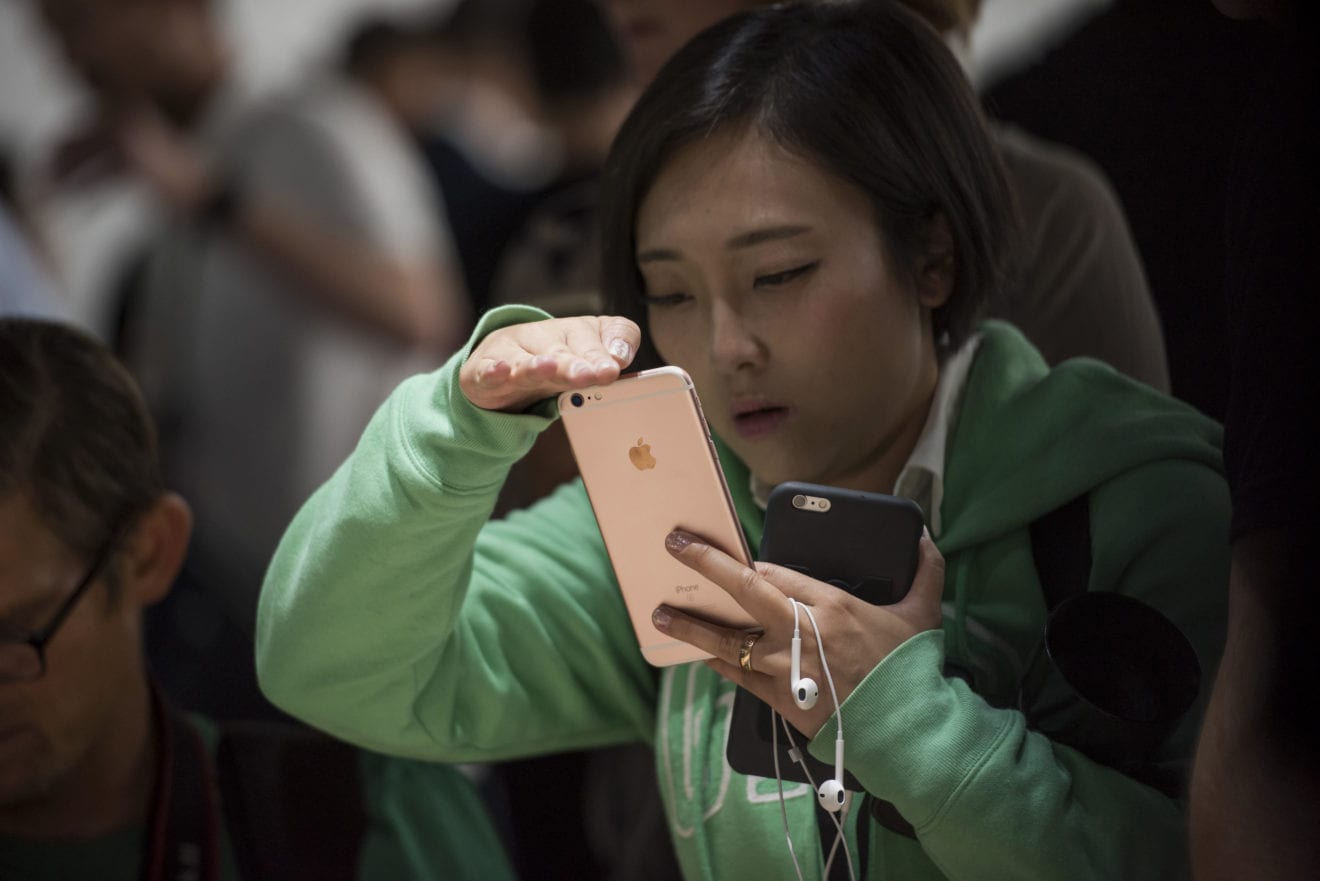
    For the first time, iPhone shipments to China fell last year. This followed years of China driving Apple’s growth, even as smartphone demand elsewhere faltered. Now, local vendors like Huawei Technologies, Oppo and Vivo are eroding its market share.

  • Why Apple China is struggling

    Why Apple China is struggling

    Apple’s sales decline is slowing – but there are several reasons why it is doing so badly in China…

    While the iPhone 7 has not been out long enough to have had a full impact on this quarter’s numbers, it has helped Apple to moderate the pace of revenue decline.

    Even so, global revenues are still down by 9 per cent over last year indicating that Apple is a long way off the steep growth trajectory it once enjoyed. With more investment going into stores, and with those store selling fewer products than they once did, it is not surprising that net income is on the slide. Indeed, Apple will be particularly disappointed with its rare full-year profit decline.

    China is an interesting, and worrying, example of some of these points. Across this quarter Apple saw revenues fall by 30 per cent in Greater China. In part this is down to the fact the market is more mature and ownership of iPhones is higher than it once was. But it is not the whole story: domestic brands like Huawei and Vivo have gained share thanks to the fact that they have, in design and technical terms, caught up with Apple and are now seen more favorably by consumers. In essence, in China and elsewhere, while Apple’s products are still seen favorably, the distance between Apple and its competitors is nowhere near as great as it once was.

    “No longer firing on all cylinders”

    Globally, the change in Apple’s fortunes is partly down to the fact that it is no longer firing on all cylinders. Previously, Apple was able to rely on strong sales of phones, tablets and computers to drive up revenue and profit across all geographies. This is no longer the case. Tablet sales are in decline. Growth from computers, which are long overdue a refresh, is weak. And consumers in some markets are saturated with product which makes growth much more difficult to attain. The latter is exacerbated by the fact that new releases, such as the iPhone 7, have been iterative rather than innovative.

    Unfortunately, Apple’s attempts to add new strings to its fiddle have not counteracted some of the strings that are now playing out of tune. In particular the Apple Watch, while a triumph of engineering, has simply not become a mass market product in the way that the iPhone, iPad, or iPod did. The one bright spot comes from service revenue, which includes streams of sales from Apple Pay, Apple Music and other services, and is up 24 per cent year-on-year. Over the longer term, this is a very lucrative part of Apple’s business and growth story, but it is not yet at the point where it is offsetting revenue declines in other areas.

    Despite this relatively gloomy view, it is important to note that Apple is being judged by its own incredibly high standards. Even with the dips in growth it remains a phenomenally successful business that is far from running out of steam.

    Complexity over simplicity

    That said, there is a complexity creeping into the firm that runs counter to Apple’s underlying philosophy of simplicity. The recent launch of the iPhone 7 in the US is a case in point: the buying process has been dreadful. The cumbersome system of placing orders via the website, where users have had to enter carrier information, has frustrated many customers. Meanwhile the vast array of different models, color options and payment and upgrade methods has contributed to a shortage of the right stock in the right place and has inevitably slowed sales.

    For a brand like Apple these things matter. As the company has always maintained, the experience of purchasing is almost as important as the product itself. While there is no doubt Apple continues to be committed to this mantra – especially with the store upgrades it is now rolling out – it needs to look more carefully at issues of stock availability and to make the purchase process simpler and easier.

    Looking ahead, Apple’s prospects give cause for optimism. In the next fiscal year the company will come up against softer comparatives which will flatter performance. However, the unveiling, later this week, of new computers will help to ease up Mac sales. And as the iPhone 7 becomes more widely available, Apple will receive a nice growth spurt over the holiday quarter.

    Longer term, the company will be helped by the natural replacement cycle of older iPhones as these break, are damaged, or become less attractive to their users. Furthermore, Apple will, at some point, come up with a new phone – or maybe another device – that represents a significant leap forward and puts it on a better growth footing.

    As such, this current period is a hiatus rather than representing a material change in Apple’s long term prospects.


    -Neil Saunders

  • China smartphone demand grows 17pc

    China smartphone demand grows 17pc

    China smartphone demand grew 17 per cent last month, according to technology research company Counterpoint’s monthly Market Pulse.

    It was the best-ever June in terms of sell-through for smartphones, despite the overall market having modest growth for the second quarter ending June 31.

    “The competitive environment in the world’s leading smartphone market has taken an interesting turn as domestic brands have significantly ramped up their positions in the smartphone market,” says research director James Yan.

    Oppo became the top-selling brand in China for the first time ever in June, surpassing Huawei, Apple and Xiaomi with a 23 per cent market share and sales volumes leapfrogging 337 per cent.

    Also owned by the BBK group, Vivo also had a strong performance with the launch of a new model. Together, the sister brands captured a third of the Chinese smartphone market, up from a combined 13 per cent in the same month last year.
    Meanwhile, Apple’s market share slipped to 2014 levels.

    Counterpoint research director Neil Shah says Oppo adopted a simple but effective strategy – going after the offline market, which still contributes more than 70 per cent of total sales in China.

    “Aggressive marketing, promotions and sponsorships, greater offline retail penetration beyond tier-two and tier-three cities, better retail margins, dealer support and, above all, innovative smartphone designs have helped Oppo drive its sales in the past 18 months.”

    The brand had also focussed on design and key features such as camera, battery technology and materials.

  • Oppo, Vivo snap at Apple’s heels in China

    Oppo, Vivo snap at Apple’s heels in China

    Beyond China few may have heard of Oppo or Vivo, but these local handset vendors are rising up the rankings in the world’s largest smartphone market, using local marketing savvy and strong retail networks in lower-tier cities.

    Industry experts say these cities — there are more than 600 of them and some are bigger than many European capitals — are the next smartphone battlefield as China’s major cities are saturated.

    International brands such as Apple and Samsung Electronics have mostly not yet reached this part of the market — which accounts for more than 56% of China’s overall consumption, according to Beijing All China Marketing Research.

    In an economy growing at its slowest pace in a quarter of a century, buyers in these smaller cities – with populations of up to 3 million – tend towards cheaper phones, which is good news for Guangzhou-based Oppo and Vivo, as well as Meizu Technology Co, an affiliate of Alibaba Group Holding Ltd.

    “Oppo and Vivo have already overtaken Samsung and ZTE Corp in China, and are working to chase down the big three of Huawei, Xiaomi and Apple in 2016,” said Strategy Analytics analyst Neil Mawston.

    Selfies, gimmicks
    To be sure, these lower-priced newcomers lack the firepower of the premium brands, and operate on razor-thin margins or at losses. They need mass volume sales to keep going, the industry experts said.

    Oppo sold 10.8 million smartphones, giving it a 9% market share and a top-5 ranking, in the fourth quarter of last year, according to Strategy Analytics — even as the overall China market slipped 4%.

    Oppo’s R7 smartphone, priced at 1,999 yuan ($304), touts itself as a “selfie expert”, with a bigger screen than the iPhone 6s and competitive camera resolution.

    Vivo ranked fourth with 10% market share, below Apple’s 13%.

    The growth among these younger vendors comes as Apple, Xiaomi and others struggle to maintain momentum in a market swamped with smartphones and fading economic growth.

    Analysts say the newcomers run eye-catching marketing gimmicks, including sponsorship with local TV shows, and have extensive retail networks in lower-tier cities.

    “There’s only so much the international firms can do when it comes to localized marketing in China,” said Nicole Peng at Canalys. “For foreign companies like Samsung, their marketing strategies don’t really cater to the Chinese consumer.”

    Sixth-ranked Samsung declined to comment.

    Apple last week forecast a first revenue drop in 13 years and posted the slowest-ever increase in iPhone shipments as the Chinese market showed signs of weakening.

    Challenges ahead
    China has nine of the world’s top-12 smartphone brands, with nearly a quarter of the market share, according to CounterPoint Research, but turning that into volume sales beyond China will be a challenge.

    Overseas, Chinese brands lack strong distribution networks and can run into intellectual property issues. Oppo is already in several Asian and Middle East markets, while Vivo is in Malaysia and India.

    And at home, Chinese device buyers are notoriously fickle, switching between brands in a cut-throat market. Regular price wars have seen ZTE and Lenovo Group frequently swap places in the sales rankings.

    “The lines between ‘high-end’ and ‘low-end’ devices is blurring, which leaves price as the sole differentiator for most mass market buyers,” said Sameer Singh, an analyst who blogs at Tech-Thoughts.net.

    “Brand image tends to be a lagging indicator of customer experience, i.e. as the latter improves, so does word-of-mouth and consequently brand image. I think that’s what we’re seeing with Chinese brands today.”