Tag: Vodafone

  • Vodafone is the latest partner to bail from Facebook’s Libra project

    Vodafone is the latest partner to bail from Facebook’s Libra project

    Facebook’s digital currency initiative Libra continues to fall apart as British telco Vodafone becomes the latest partner to bail from the project.

    In a statement, Vodafone said: “Vodafone Group has decided to withdraw from the Libra Association. We have said from the outset that Vodafone’s desire is to make a genuine contribution to extending financial inclusion.

    “We remain fully committed to that goal and feel that we can make the most contribution by focusing our efforts on M-Pesa. We will continue to monitor the development of the Libra Association and do not rule out the possibility of future cooperation.”

    Digital currencies are beginning to gain traction following the success of Bitcoin. The king of cryptocurrencies is quickly becoming a modern store of value but it’s looking unlikely to be adopted by many average consumers for daily purchases.

    Part of the reason for the lack of day-to-day use of Bitcoin is its slow transaction times and poor scalability. Advancements, particularly off-chain “layer two” solutions like Lightning Network, are helping to fix these problems but at the cost of decentralization and security.

    Behind most digital currencies is a blockchain. The so-called “trilemma” with blockchains is that, in order to achieve scalability, you must sacrifice decentralization or security. Bitcoin is seen as a reliable store of value because it’s secure and its decentralization properties also make it appealing in a world of global uncertainties, censorship, and currency manipulation.

    Your average consumer only cares that a transaction is fast and cheap while also adequately secure, especially when dealing with predominantly smaller transactions like buying a coffee. Currencies like Ripple are criticized by cryptocurrency enthusiasts as being “centralized” but they fulfill the needs of your typical person.

    Facebook’s Libra intends to be a centralized currency along the lines of Ripple. Taking advantage of Facebook’s massive global userbase, Libra could potentially scale very quickly.

    Many partners initially jumped on the Libra project including Visa, PayPal, Mastercard, and eBay. Not long after Facebook released its whitepaper for Libra did it come under intense regulatory scrutiny. All the aforementioned partners decided to leave the project.

    Several central banks are looking to issue their own digital currencies for their advantages like fast international payments and lower fees. And, of course, they’ll persuade most people to adopt centralized alternatives to cryptocurrencies.

    China looks set to be the first major country to issue its own digital currency. The country already uses mobile payments extensively, with the ability to pay for pretty much everything through apps such as WeChat and Alipay. If China goes ahead with a digital yuan, you can bet the US won’t be far behind with a digital dollar.

    On Tuesday, the Bank of England announced it too is exploring central digital currencies alongside the Bank of Canada, Bank of Japan, the European Central Bank, the Sveriges Riksbank, and the Swiss National Bank.

    While digital currencies are pretty much inevitable, Libra is looking more uncertain by the day.
  • Australian telco undertakes crucial restructuring of senior management

    Australian telco undertakes crucial restructuring of senior management

    Vodafone Hutchison Australia (VHA) has carried out a major overhaul of its senior management, with two of its top executives resigning just a few days before the Federal Court’s ruling on its halted merger with TPG Telecom.

    Vodafone stated that both Kevin Millroy and Ben McIntosh, CTO and CCO of the company respectively, were already planning to depart the company this month, citing mutual decisions.

    Millroy will be replaced by Barry Kezik who has been part of the network team for almost a decade, while Ana Bordeianu will take over McIntosh’s responsibilities.

    Vodafone CEO Inaki Berroeta stated, “It’s going to be an exciting year for Vodafone and our customers with the launch of 5G and continuing to drive competition in the market at every opportunity.”

    He added, “Kevin and Ben have been key players in one of the most successful turnarounds in Australian corporate history, and they are handing over to extremely capable leaders, so I wish them both all the best for the future.”

  • Mavenir extends alliance with Vodafone Idea to fortify presence in India

    Mavenir extends alliance with Vodafone Idea to fortify presence in India

    This partnership will focus on three thrust areas. First, building a universal secured Cloud capable of hosting multiple tenants and third-party applications. Second, building a fully automated platform that enables self-provisioning of various workloads. Third and most importantly, setting up a joint innovation lab and a team that will consistently innovate on Chipset, Operating System, and work at the Application level to offer unique APIs and enables new use cases and delightful experience to VIL customers.

    “Vodafone Idea has the largest Edge Cloud deployment in India. Our partnership with Mavenir will enable continued innovation in optimizing data path algorithms for VOLTE. We look forward to setting up a joint lab and an agile team that will enable onboarding third-party applications on our distributed cloud”, said Vishant Vora, CTO, Vodafone Idea Limited whose team is spearheading this initiative.

    The partnership has led to the contextualization of software algorithms, leading to unprecedented efficiencies. VIL and Mavenir partnership has been extended to include collaboration with chipset manufacturers and Operating System providers. The stack being deployed is all open sourced and benefits from consistent innovation led by global open community.

    “Next frontier in our partnership will be to extend the platforms deployed to host new applications serving IOT and CDN use cases. We plan to build platforms that can host varied OS and varied workloads. We aim to automate deployment and assurance and thereby extend self-provisioning capability for VIL customers. We are excited to set up a joint lab and team, consistently innovate and work with VIL and its customers in an agile manner to turn around new solutions fast,” said Pardeep Kohli, President and CEO Mavenir.

    Mavenir has partnered with VIL in IMS-VOLTE deployments. In future, the partnership aims to extend the platform being deployed for IMS-VOLTE applications to host other Captive and third-party workloads. Mavenir will partner with VIL to extend its distributed Network cloud as secured platform to multiple retail, SME users and start-ups.

  • Vodafone NZ unveils agile and programmable network

    Vodafone NZ unveils agile and programmable network

    With an adaptive network, Vodafone can better support a growing enterprise customer base that requires high-capacity connectivity as business applications and workloads increasingly move to public cloud services (SaaS/IaaS) and cloud data centers both locally and internationally.

    Vodafone Technology Director Tony Baird says this deployment builds on a long-standing relationship. “Our long-standing collaboration with Ciena is a relationship we value greatly. The combination of top-echelon technology and impeccable customer service has put us in a winning position. As a result, we’re very comfortable in not only maintaining but growing our customer base, particularly those that require complex and unique network services.”

    Vodafone can also set customer-defined service policies and program its network to suggest the ideal capacity, hardware configuration and spectral placement for any channel, across any network path.

    Additionally, with Ciena’s Liquid Restoration capability, the operator can significantly improve service availability with flexible adjustment of deployed coherent optical capacity and route affected services across any available path in the network.

    “To respond to changes in end-user consumption and explosion in data usage, leading operators like Vodafone New Zealand must both automate and scale their networks,” said Rick Seeto, Vice President and General Manager, Ciena Asia Pacific & Japan. “They need a network that can adapt and respond, in real-time, to their customers’ ever-changing demands while transforming from a necessary capability to a strategic asset – that’s the basis of the adaptive network.”

  • Vodafone network outage affects several countries in Europe & Asia

    Vodafone network outage affects several countries in Europe & Asia

    Issues began at around 14:42 BST according to network monitor Down detector. Customers all over the UK reported issues and so did customers in Spain, Ireland, Italy, Germany, Greece, and Portugal.

    Many customers took to Twitter to express their frustration on the matter.

    Vodafone then acknowledged the outage and tweeted, “We are currently investigating a potential outage to our fixed and mobile services. We thank you for your patience as we work to get this resolved.”

    The company has around 19.5 million UK customers and around 444 million globally.

    Initially, it looked more like an isolated issue with customers in some UK cities thought to have been among those affected; however, Economics Correspondent Paul Cogan at Virgin Media TV noticed that Down Detector showed more maps with even more outages.

    He stated, “Vodafone’s problems don’t seem to be restricted to just Europe. Down Detector outage maps show problems in India, Australia, New Zealand, and Turkey.”

    The global disruption was then confirmed when Vodafone Ghana tweeted, “Vodafone Ghana wishes to apologize for the intermittent network challenges experienced by some of our mobile customers. Resolving it remains our topmost priority. We shall keep you updated. Thanks for your patience.”

    Vodafone then apologized for the inconvenience and said the services were back to normal. “This issue has now been fully resolved and normal service has been restored to customers. We thank you for your patience and sincerely apologize for the inconvenience caused.”

    The network outage comes a month after Vodafone set its launch date for its new 5G network in seven UK cities.

    The company last experienced an outage in October 2018.

  • Vodafone, Spark and 2degrees to provide rural broadband in New Zealand

    Vodafone, Spark and 2degrees to provide rural broadband in New Zealand

    Vodafone, Spark and 2degrees have joined forces in an effort to deliver broadband and mobile services to twenty rural areas across New Zealand.

    “Keeping Kiwis connected is a top priority for Vodafone, and we’re thrilled to be working alongside Spark, 2degrees and the Government to bring connectivity to rural New Zealand, which is the powerhouse of our economy,” said Vodafone New Zealand’s chief executive, Jason Paris.

    He added, “For this sector to remain competitive they need fast broadband and mobile coverage- not just in offices, but on farms, in schools and on the roads. This once in a generation opportunity for all three mobile network operators to provide both competitive ultra-fast broadband and world-class 4G mobile infrastructure will not only deliver the connectivity for rural New Zealand, but also the safety of Kiwis living in those remote areas.”

    There are also plans to introduce this technology for connectivity to at least 500 more sites in rural New Zealand. They will be given access to high-speed wireless broadband as well as high-quality mobile coverage.

    Jolie Hodson, CEO of Spark, stated, “The connectivity is much needed to bridge the digital divide for rural communities and help the rural sector remain competitive. Bringing together the investment from Spark, Vodafone and 2degrees along with the Government’s RBI2 funding has been the key to providing service into more challenging and remote areas of New Zealand.”

    Under the Rural Broadband Initiative 2 and the Mobile Black Spot fund, the government of New Zealand (through Crown Infrastructure Partner) has granted the RCG permission to become the infrastructure provider. The RCG project aims to deliver mobile and broadband coverage to around 38,000 rural households and businesses.

    Paul Mathewson, CCO of Spark, said, “We’re proud as an industry to be able to collaborate and work together where it makes sense – and our RCG partnership with Spark and Vodafone is the perfect example.

    “Connecting Kiwis with their loved ones or the people they do business with is at the heart of what drives us at 2degrees, and we’re thrilled that fast connectivity is going to reach the furthest and most remote corners of New Zealand.”

  • Vodafone named ‘national retailer of the year’

    Vodafone named ‘national retailer of the year’

    Vodafone was crowned ‘national retailer of the year’ at the Australian Retailers’ Association’s annual awards in Melbourne on Thursday.

    The telecommunications company said it had made significant improvements to its business and customer experience since a low point a few years ago by making common sense decisions and backing its people.

    This was a fitting result, given this year’s theme, ‘Retail Morphosis’, which is all about how retailers adapt to change in order to succeed.

    “Although the retail landscape will continue to be disrupted by emerging technology and international competitors, it is truly gratifying to see the industry filled with hardworking retailers who continue to power retail through innovation and adaption,” Russell Zimmerman, executive director of the ARA, said.

    Retailers including Petstock, Bakers Delight, Birdsnest, Coles Group and Biome were recognised for their achievements in innovation, marketing, customer experience and more. The winners in all 12 categories are listed below.

    The awards took place at Myer Mural Hall on Thursday morning, and featured fashion parade capturing the history of Australian retail from the 1920s to the 1990s, with outfits curated by Myer and hair and make-up created by Chiseled Hair.

    Consumer futurist Amanda Stevens delivered a keynote speech on what the latest consumer research insights reveal about the opportunities for growth in the sector, and host Steve Plarre, CEO of Ferguson Plarre Bakehouses, entertained the audience with a rendition of ‘Uptown Funk’.

  • Vodafone M-Pesa applies for license extension

    Vodafone M-Pesa applies for license extension

    Mobile payments company Vodafone M-Pesa has applied for an extension on its prepaid payment instrument license while it explores merging with an associate or third party company.

    Vodafone M-Pesa, which is wholly owned by India’s Vodafone Idea, is seeking an additional extension of its license from the Reserve Bank of India.

    The company will be required to pursue a merger due to regulations preventing one entity from having a payments banking business and prepaid payments business under separate entities.

    Due to the merger between Vodafone India and Idea Cellular, the combined Vodafone Idea currently has a 100% stake in Vodafone M-Pesa as well as a 49% shareholding in the Aditya Birla Idea Payments Bank Limited.

    The company has already negotiated multiple extensions to its prepaid payment instruments, but only on a temporary basis as the company pursues a solution to gain compliance with the regulations.

  • Vodafone to sell New Zealand subsidiary for $2.23b

    Vodafone to sell New Zealand subsidiary for $2.23b

    Vodafone Group has arranged to sell a 100% stake in Vodafone New Zealand to a consortium of investors for NZ$3.4 billion ($2.23 billion).

    The consortium comprising New Zealand infrastructure investment company Infratil and Canadian investment company Brookfield Asset Management have executed a conditional agreement to buy out Vodafone’s New Zealand subsidiary.

    Under the agreement, Infratil and Brookfield will each contribute NZ$1.03 billion towards the purchase price, with the remainder to be funded through debt reduction and equity conversion.

    Vodafone New Zealand is the market’s largest mobile operator and second largest retail fixed broadband provider, with over 1,500 mobile sites and over 10,000km of cabling nationwide. The operator generated revenue of NZ$2 billion for the financial year ending in March.

    Pending approvals from New Zealand’s Overseas Investment Office and Commerce Commission, the merger is expected to close by the end of August.

    Upon completion of the merger, Vodafone Group and the new owners of Vodafone NZ plan to enter a multi-year partnership that will cover arrangements such as preferential roaming deals.

    The partner agreement is also expected to give Vodafone NZ access to Vodafone Group’s global IoT platform and centralized procurement agreements.

    Vodafone NZ CEO Jason Paris described the agreement as to the “best of both worlds” for its customers.

    “We’ve got the backing of two new world-class and long-term investors plus we can continue to tap into Vodafone’s global expertise, including all the services our customers value such as global roaming, global procurement, and the world’s largest IoT platform,” he said.

    “The key things will stay the same – our strategy, our people, our management team, our brand, and our ability to tap into Vodafone’s global products and services. What changes is our owners, who back our ambitious plans for New Zealand and who share our views on the importance of creating sustainable, long-term profitability in order to reinvest in the future.”

  • Telesat completes 5G backhaul demo over LEO satellite

    Telesat completes 5G backhaul demo over LEO satellite

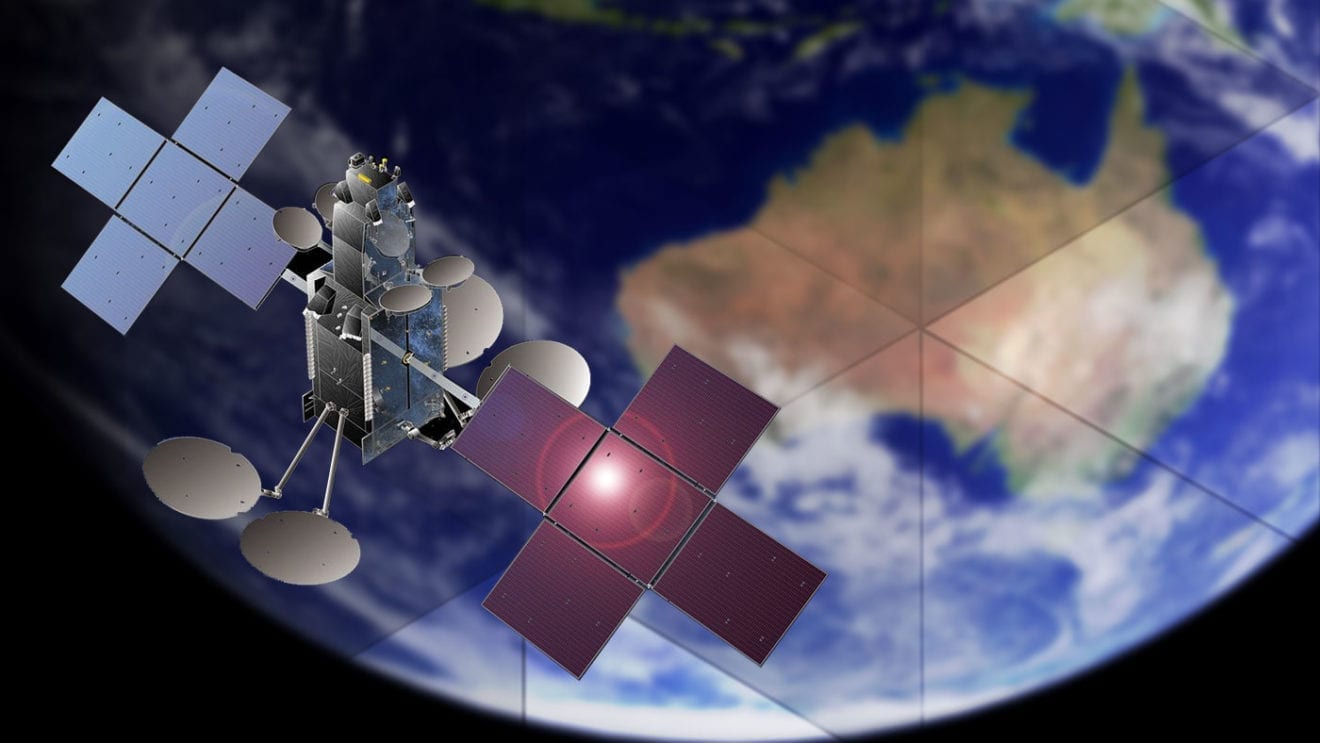
    Satellite operator Telesat, Vodafone Group and the University of Surrey in the UK have successfully completed the world’s first 5G backhaul demonstration using a low earth orbit (LEO) communications satellite.

    The successful trial demonstrates that LEO satellites can provide effective backhaul transport for mobile operators, including for 5G services, the participants said.

    During the live test last month, Telesat’s Phase 1 LEO satellite connected to the University of Surrey’s 5G testbed, with the support of specialist Vodafone engineers.

    The satellite-delivered a round trip latency of between 18-40ms, which is among the lowest latency recorded for a satellite connection.

    The backhaul was used to support video chat, web browsing and simultaneous streaming of up to 8K video, as well as 4K video transferred to the edge of the 5G network.

    “Providing cost-effective, high-performance backhaul services to MNOs seeking to extend their 4G and 5G networks is an important market for Telesat’s LEO program,” Telesat LEO VP Erwin Hudson said.

    “Telesat is collaborating with leading customers like Vodafone, who are experts in their markets, to perform tests and demonstrations on our Phase 1 LEO satellite that help us optimize the design of our LEO system to most effectively meet their future requirements.”

  • Vodafone Idea taps Ericsson for cloud packet core

    Vodafone Idea taps Ericsson for cloud packet core

    India’s Vodafone Idea has contracted Ericsson to deploy a cloud packet core to enhance its existing core network.

    The deployment forms part of the operator’s ongoing network modernization program. It is aimed at enabling speedier introduction of new services and providing full-service continuity over the operator’s network.

    Under the agreement, Vodafone Idea will deploy Ericsson core network applications and network functions including the Ericsson virtual Evolved Packet Gateway (vEPG), Service Aware Policy Controller (vSAPC) and Virtualization Infrastructure (NFVi) solutions.

    The NFVi solution is designed to enable operators to deploy virtual telecom, OSS, BSS, IT and media applications at a low total cost of ownership.

    “Data consumption in India is growing rapidly and users are looking for new, richer experiences every day,” Vodafone Idea CTO Vishant Vara said.

    “At Vodafone Idea, we endeavor to stay ahead of the curve by investing in technologies and solutions to address the evolving demands of millions of our customers in India. We are confident that Ericsson’s vEPC solution will enable us to meet our strategic goals.”

    Ericsson head of digital services for SEA, Oceania and India Alvise Carlton added that the project is one of the vendor’s largest virtual evolved packet core deployments globally to date.

    “This will not only provide VIL the scale and reach to address the growing data traffic levels in India, but the advanced cloud infrastructure will also enable VIL to tap new revenue streams in SMEs and IoT.”

  • Vodafone’s reveal keeps the pressure on Huawei

    Vodafone’s reveal keeps the pressure on Huawei

    In this week’s news is yet another story about Huawei and security as European telecommunications operator and regulators continue to scrutinize the gear in advance of 5G deployments. This one is historical though. Apparently Vodafone found security flaws in Huawei gear its Italian unit bought back in 2011 and 2012.

    In the technical sense, this is hardly a surprise. Vulnerabilities and patches are an ongoing part of pretty much all software development, and in this case the problem came with the telnet protocol. There was a day when telnet was a thing for everyone, but these days it’s more a diagnostic thing. According to Vodafone, the flaw would not have been accessible via the internet and was quickly patched. All vendors have processes to handle exactly this sort of thing, and all have done so many times. So the fact that it happened eight years ago in this case is news today only because it was Huawei.

    But the pressure to block Huawei from 5G deployments continues unabated. The contention is that because China requires all its companies to help its national security apparatus and Huawei (like every major Chinese company) has deep ties to that apparatus. On the one hand, it’s easy to envision spies doing this sort of thing. On the other hand, it’s very hard to imagine such deliberate vulnerabilities remaining undetected for long in a suspicious world.

    The most recent development came a few days ago when KPN decided Huawei gear was fine for radios and antennas, but not when it comes to the gear in its core 5G network. They’ve got a deal in place, but with an exit clause in case regulators or lawmakers act to ban Huawei entirely. That seems to have emerged as the consensus response of European telcos to all this pressure, a way to keep Huawei in the mix while still mollifying critics and covering themselves legally.

  • Jio raising $3.89b for tower unit spinoff:

    Jio raising $3.89b for tower unit spinoff:

    The fiber network unit Reliance Jio Infocomm is reportedly planning to raise around 270 billion rupees ($3.89 billion) in syndicated loans to help expand the newly created infrastructure business.

    Jio Digital Fiber plans to use the proceeds to expand its business and allow it to serve external customers from the telecom, ISP, power and other sectors.

    Reliance Jio is spinning off its fiber business as well as its tower business into standalone subsidiaries in an attempt to monetize the assets. The tower business is being spun out into Reliance Jio Infratel.

    Reliance Jio received approval for the demerger plan from the National Company Law Tribunal last month.

    Meanwhile Reliance Jio has reportedly also crossed the 300 million subscriber mark after just two and a half years in operation, putting it close to second-placed rival Bharti Airtel, which has around 340.3 million customers.

    According to Indian media, it took Airtel 19 years to pass the 300 million subscriber mark. If Reliance Jio continues its trajectory, it will knock former market leader Airtel into third place. The 2018 merger between Vodafone India and Idea Cellular created the current market leader Vodafone Idea, which has over 400 million customers.

  • Vodafone Idea contracts Nokia for LTE expansion

    Vodafone Idea contracts Nokia for LTE expansion

    India’s Vodafone Idea has awarded Nokia a contract to improve the operator’s LTE coverage and capacity.

    Under the contract, Nokia will provide Single RAN Advanced, massive MIMO and small cell technology across multiple Indian telecoms circles to support the operator’s network consolidation and modernization program.

    The small cell deployment will help improve both indoor and outdoor coverage and capacity in the circles. Vodafone Idea will also adopt dynamic spectrum sharing technology to make the most productive use of the converged company’s spectrum.

    “Vodafone Idea is undertaking the world’s biggest telecom network integration in India [following the merger between Vodafone India and Idea Cellular], and creating India’s most advanced, secure and cost-efficient network,” Vodafone Idea CTO Vishant Vora said.

    “Extensive use of UBRs, dynamic spectrum sharing, massive MIMO and HetNets are key to our plan in this integration exercise, and we are very happy to partner with Nokia to deploy these futuristic, next generation technologies to prepare a future-proof network for the digital era.”

    Last month Vodafone Idea also contracted Ericsson to deploy LTE equipment for the network integration program, including radio systems and transport equipment from Ericsson’s 5G-ready Ericsson Radio System portfolio.

  • Vodafone Fiji to spend $97m to expand 4G coverage

    Vodafone Fiji to spend $97m to expand 4G coverage

    Vodafone Fiji is investing $207 million Fijian dollars ($96.9 million) to expand its LTE-Advanced coverage to around 96% of the population, from the current 60%. The operator has announced plans to expand the coverage of its “4G plus” network to almost all of Vanualevu, Tavueni, Rabi and the Laucala Island. The 5G-ready upgrade will also cover expanding capacity to meet demand for high speed mobile broadband coverage in the uva-Nausori-Lami Corridor, and the Western Division areas.

    The phased rollout program will involve expanding the number of base stations from 390 to more than 600, almost all of which will support LTE-Advanced. In addition, 100 existing 3G base station will be converted to 4G+ and pre-5G base stations.

    Announcing the investment, Vodafone Fiji regional CEO Pradeep Lal said data usage on the company’s network has surged from 10 petabytes to 400 petabytes over the past two years.

    “Globally, for network technology providers like us, the demand for data is driven largely by Internet of Things (IoT) and the need for access to data at any time anywhere,” he said.

    “It has therefore become a business imperative for network technology providers like Vodafone to provide ubiquitous access to data 24/7. Every electronic gadget that now gets produced in the world, comes with the option to be connected to the internet either through a SIM card or WIFI.”

    Fiji’s smartphone penetration has meanwhile grown to 78%, ahead of the global average of 75%, while the number of active connections to the Vodafone Fiji network now exceeds 1 million.