
Tag: wall st

  • Wall St rises after Trump stirs China trade hopes again

    Wall St rises after Trump stirs China trade hopes again

    Wall Street’s three major indexes ended higher on Monday but well below the session’s highs after President Donald Trump said he would delay a planned hike in tariffs on Chinese imports. Postponement of the tariff deadline was seen as the clearest sign yet the two countries were closing in on an agreement to end their prolonged trade spat, which has slowed global growth and disrupted markets.

    But gains were capped after weeks of advances for the S&P 500, the Dow Jones Industrial Average and the Nasdaq, partly due to trade optimism and dovish signals from the Federal Reserve.

    “A lot of the good news related to trade is priced in at this point,“ said R.J. Grant, head of trading at Keefe, Bruyette & Woods in New York.

    “There’s only so much we can rally when somebody says we’re making progress … The trade stuff is a little bit of a sideshow. If you get back to looking at economic growth, it’s clearly slowing.”

    The S&P 500 index ended 4.9% below its late September record closing high after narrowing the gap to 4.3% earlier in the session.

    Investors were also looking ahead to an appearance by Fed Chairman Jerome Powell before a US Senate committee on Tuesday.

    “In the short term trade got taken off the table today so next up on the calendar is Powell speaking to Congress. It’s possible investors are starting to clam up a bit because of what they think Powell may say,“ said Michael Cuggino, portfolio manager at Permanent Portfolio Funds in San Francisco.

    The Dow Jones Industrial Average rose 60.14 points, or 0.23%, to 26,091.95, the S&P 500 gained 3.44 points, or 0.12%, to 2,796.11 and the Nasdaq Composite added 26.92 points, or 0.36%, to 7,554.46.

    Investors were also wary of weakening estimates for current quarter earnings, with Wall Street on Monday expecting a 0.9% decline in S&P first-quarter earnings per share compared with expectations for 5.3% growth on Jan. 1, according to IBES data from Refinitiv.

    “It’s hard to get valuations to continue to rise in the face of falling earnings estimates,” said Jeffrey Kleintop, chief global investment strategist at Charles Schwab in Boston.

    Of the S&P’s 11 major sectors, 7 ended the day with gains.

    After advancing as much as 1.4%, the financials index lost ground late in the day to close up 0.4%.

    The S&P technology index rose 0.5%. The Philadelphia semiconductor index climbed 0.8% as chip companies have a big exposure to China.

    The industrials sector rose 0.4%, getting its biggest boost from General Electric Co, which gained 10.8% after announcing a sale of its biopharma business to Danaher Corp for $21.4 billion. Danaher shares rose 8.2%.

    A flurry of M&A activity also helped the risk-on sentiment.

    The Nasdaq Biotechnology Index rose 2%, its biggest boost coming from shares in Spark Therapeutics Inc, which soared 120% after Swiss drugmaker Roche Holding AG agreed to buy it for $4.3 billion.

    The biggest laggards were the S&P’s defensive sectors – consumer staples, utilities and real estate. The consumer discretionary sector also ended down 0.3%, with the biggest drag from Home Depot, down 1.3%, on concerns about a soft housing market ahead of its quarterly results.

    Advancing issues outnumbered declining ones on the NYSE by a 1.14-to-1 ratio; on Nasdaq, a 1.05-to-1 ratio favoured advancers.

    The S&P 500 posted 58 new 52-week highs and 2 new lows; the Nasdaq Composite recorded 128 new highs and 14 new lows.

    Volume on U.S. exchanges was 7.36 billion shares, compared with the 7.32 billion average for the last 20 trading days.
  • Tech leads Wall St higher, Amazon and retail stocks gain

    Tech leads Wall St higher, Amazon and retail stocks gain

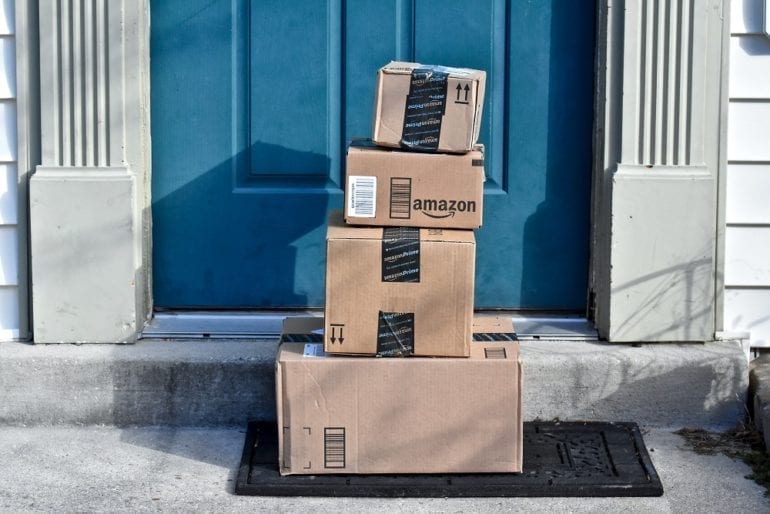
    Technology stocks led the S&P 500 and Nasdaq to record high closes on Black Friday, while Amazon and retail stocks got a boost from signs of a strong start to the holiday shopping season.

    The benchmark S&P 500 and the blue-chip Dow Jones industrials posted weekly gains for the first time in three weeks while the Nasdaq Composite posted its best weekly performance since the week to Sept. 1.

    The stock markets closed early on Black Friday, a day after Thanksgiving, the start of the holiday shopping season that accounts for as much as 40 percent of retailers’ annual sales.

    Turnout at U.S. retailers was relatively subdued on Black Friday, with many shoppers flocking to stores to eye items in person while waiting to do their actual bargain hunting online.

    On Thanksgiving, U.S. shoppers spent more than $2.87 billion online, according to Adobe Analytics. Adobe said Black Friday online sales were up 18.4 percent at $640 million as of 10 a.m. ET and would rise to a record of $5 billion.

    The S&P retail index rose 0.63 percent and had hit a record high, led by Amazon’s 2.61 percent gain.

    The online retail giant touted its sales for Cyber Monday, one of the biggest days for online shopping, and said shoppers using its digital assistant Alexa could score deals as early as Sunday.

    “In the retail environment, Amazon is extremely important – the fact that Amazon continued to soar bodes well for the fourth-quarter holiday shopping season and it bodes well for Wall Street,” said Adam Sarhan, chief executive of 50 Park Investments.

    Brick-and-mortar stores, which have been boosting their online presence, also fared well.

    Macy’s closed up 2.1 percent. The department store operator’s chief executive told CNBC the company was better off this year than last and was seeing very robust online demand.

    Kohl’s, Gap and J.C. Penney were up between 1.6 percent and 1 percent.

    Target ended 2.8 percent lower, with analysts noting that it closed its stores for several hours overnight while rivals stayed open. Wal-Mart inched up 0.2 percent.

    The Dow rose 31.81 points, or 0.14 percent, to 23,557.99, while the S&P gained 5.34 points, or 0.21 percent, to 2,602.42. The Nasdaq added 21.80 points, or 0.32 percent, to 6,889.16.

    The CBOE Volatility index, known as Wall Street’s fear gauge, was down 0.21 points to 9.67. It had hit a record low of 8.56.

    Eight of the 11 major S&P sectors were higher, led by the technology sector’s 0.54 percent rise.

    The energy index and the materials index were boosted by rising commodities prices.

    U.S. oil prices jumped to a more than two-year high as North American markets tightened on the partial closure of a key pipeline linking Canada and the United States.

    About 2.68 billion shares changed hands in U.S. exchanges in the shortened session. The daily average over the last 20 full sessions is 6.48 billion shares. Last year, volume during the session after Thanksgiving was about 3 billion.

    Advancing issues outnumbered declining ones on the NYSE by a 1.61-to-1 ratio; on Nasdaq, a 1.31-to-1 ratio favored advancers.

    The S&P posted 35 new 52-week highs and 1 new low; the Nasdaq recorded 120 new highs and 21 new lows.