Retail News CRM

Tag: wall street

  • UBS Looks to Wall Street for Respect

    UBS Looks to Wall Street for Respect

    Kelleher, a 30-year Morgan Stanley veteran, became chairman earlier this year in what many viewed as a surprise announcement. His selection becomes obvious. He won the post over European candidates including Roche’s  Christoph Franz, former SNB head Philipp Hildebrand, and ex-Unicredit boss Jean-Pierre Mustier.

    UBS is one of the most valuable European banks with a price-to-book ratio of 1, compared to Wall Street firms JPMorgan and Morgan Stanley, each of which trade at 1.3. That puts UBS in company with Goldman Sachs and Wells Fargo. By comparison, Credit Suisse trades at 0.3 along with Societe Generale and Deutsche Bank. Barclay’s and HSBC claim ratios of 0.4 and o.6, respectively. According to the report, Kelleher and Hamers have spoken with major US investment houses such as Capital Group, T Rowe Price, Wellington, and Fidelity during their roadshow, in an attempt to persuade them to increase their holdings in UBS, which did not comment on the talks.

    Because UBS’ business is heavily focused on higher-margin wealth management and less on higher-risk investment banking, the bank’s board believes its market capitalization could be double its book value, one of the sources added.

    If we are a European bank with European investors, we will trade at one times book. The goal is two times.

  • Wall St rises after Trump stirs China trade hopes again

    Wall St rises after Trump stirs China trade hopes again

    Wall Street’s three major indexes ended higher on Monday but well below the session’s highs after President Donald Trump said he would delay a planned hike in tariffs on Chinese imports. Postponement of the tariff deadline was seen as the clearest sign yet the two countries were closing in on an agreement to end their prolonged trade spat, which has slowed global growth and disrupted markets.

    But gains were capped after weeks of advances for the S&P 500, the Dow Jones Industrial Average and the Nasdaq, partly due to trade optimism and dovish signals from the Federal Reserve.

    “A lot of the good news related to trade is priced in at this point,“ said R.J. Grant, head of trading at Keefe, Bruyette & Woods in New York.

    “There’s only so much we can rally when somebody says we’re making progress … The trade stuff is a little bit of a sideshow. If you get back to looking at economic growth, it’s clearly slowing.”

    The S&P 500 index ended 4.9% below its late September record closing high after narrowing the gap to 4.3% earlier in the session.

    Investors were also looking ahead to an appearance by Fed Chairman Jerome Powell before a US Senate committee on Tuesday.

    “In the short term trade got taken off the table today so next up on the calendar is Powell speaking to Congress. It’s possible investors are starting to clam up a bit because of what they think Powell may say,“ said Michael Cuggino, portfolio manager at Permanent Portfolio Funds in San Francisco.

    The Dow Jones Industrial Average rose 60.14 points, or 0.23%, to 26,091.95, the S&P 500 gained 3.44 points, or 0.12%, to 2,796.11 and the Nasdaq Composite added 26.92 points, or 0.36%, to 7,554.46.

    Investors were also wary of weakening estimates for current quarter earnings, with Wall Street on Monday expecting a 0.9% decline in S&P first-quarter earnings per share compared with expectations for 5.3% growth on Jan. 1, according to IBES data from Refinitiv.

    “It’s hard to get valuations to continue to rise in the face of falling earnings estimates,” said Jeffrey Kleintop, chief global investment strategist at Charles Schwab in Boston.

    Of the S&P’s 11 major sectors, 7 ended the day with gains.

    After advancing as much as 1.4%, the financials index lost ground late in the day to close up 0.4%.

    The S&P technology index rose 0.5%. The Philadelphia semiconductor index climbed 0.8% as chip companies have a big exposure to China.

    The industrials sector rose 0.4%, getting its biggest boost from General Electric Co, which gained 10.8% after announcing a sale of its biopharma business to Danaher Corp for $21.4 billion. Danaher shares rose 8.2%.

    A flurry of M&A activity also helped the risk-on sentiment.

    The Nasdaq Biotechnology Index rose 2%, its biggest boost coming from shares in Spark Therapeutics Inc, which soared 120% after Swiss drugmaker Roche Holding AG agreed to buy it for $4.3 billion.

    The biggest laggards were the S&P’s defensive sectors – consumer staples, utilities and real estate. The consumer discretionary sector also ended down 0.3%, with the biggest drag from Home Depot, down 1.3%, on concerns about a soft housing market ahead of its quarterly results.

    Advancing issues outnumbered declining ones on the NYSE by a 1.14-to-1 ratio; on Nasdaq, a 1.05-to-1 ratio favoured advancers.

    The S&P 500 posted 58 new 52-week highs and 2 new lows; the Nasdaq Composite recorded 128 new highs and 14 new lows.

    Volume on U.S. exchanges was 7.36 billion shares, compared with the 7.32 billion average for the last 20 trading days.
  • Asian stocks rise again on US-China trade talks optimism

    Asian stocks rise again on US-China trade talks optimism

    Increasing optimism that China and the United States will be able to hammer out a deal to help ease their trade war provided the impetus for more gains across Asian markets today. After taking a battering in December and suffering a shaky start to 2019, confidence is slowly returning to equity trading floors, though dealers remain on edge. Federal Reserve boss Jerome Powell provided the platform for a rally last week when he said the central bank had no “preset” plan for lifting interest rates and was “listening” to markets, signalling that the pace of hikes could slow this year.

    Fear of higher borrowing rates was a major cause of last year’s stocks losses.

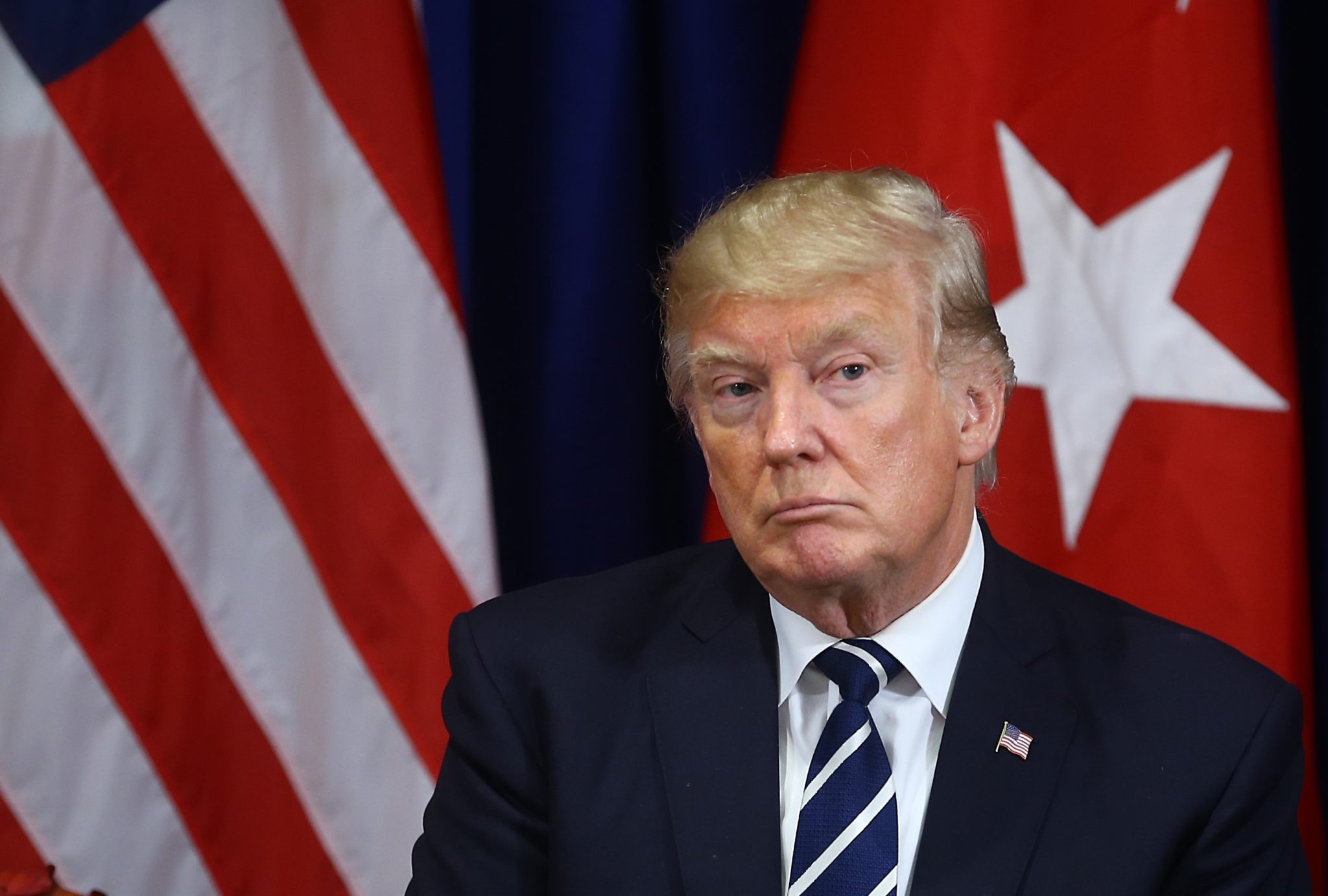
    The mood among dealers held this week as officials from China and the US hunkered down for trade negotiations in Beijing that have extended into a third day. US President Donald Trump on Tuesday described them as going “very well”.

    Bloomberg also reported White House sources as saying Trump is keen to get a deal done in order to boost stock markets, which he regards as a gauge of his success.

    And The Wall Street Journal said the two were moving in the right direction, with China ready to buy more US goods and services, while further talks at cabinet level were being lined up next week.

    The progress in talks “is fuelling investor optimism suggesting there might be a light at the end of the trade war tumultuous tunnel”, said Stephen Innes, head of Asia-Pacific trade at OANDA.

    Hong Kong rose 2.3% – a fourth straight gain that has seen the index put on around 5% – and Shanghai ended up 0.75%, while Tokyo closed 1.15% higher. Sydney jumped 1% with Singapore, while Taipei and Wellington were each more than 1% higher. Manila surged more than 2% and there were also gains in Mumbai and Jakarta.

    Seoul added 2% as North Korean leader Kim Jong Un visited Beijing with speculation swirling that he will meet Trump for a second summit later this year.

    The gains also come after a strong reading on US jobs creation Friday, which soothed worries that the American economy was slowing down.

    “When the dust settles, if it ever does, the fear of recession will prove to be premature,“ Bob Doll, an analyst at Nuveen Asset Management said.

    “We will have growth, yes, slowed from the 2018 pace and we will have… earnings, yes, slowed from the 2018 pace, but acceptable for investors and that will allow equity markets to move higher.”

  • Asian stocks slump after Fed raises interest rates

    Asian stocks slump after Fed raises interest rates

    Tokyo led a rout of Asian shares today, mirroring big losses on Wall Street after the Federal Reserve (Fed) defied unprecedented pressure from US President Donald Trump and raised interest rates, sparking fears the move could choke economic growth.

    The Nikkei plunged to a 15-month low as investors took fright over the pace of monetary tightening, with a slump triggered by the Dow’s fall to its lowest level of 2018 gathering pace.

    The Fed raised rates for the fourth time this year – as expected – but markets reacted badly after chairman Jerome Powell said the bank would not shift course on reducing its balance sheet.

    Investors had hoped for a less aggressive approach amid concern that global growth is slowing, while Powell played down the impact of recent market turmoil on the US economy.

    “They think the Fed has completely misjudged the situation and now it’s just a matter of … trying to find an exit while you can,“ said Kyle Rodda, a market analyst at IG Group in Melbourne.

    “We’re probably entering a stage now where markets have got it (in) their head that we’re preparing for quite sustained downside going into 2019.”

    The Fed now projects only two interest rate increases, down from three previously, as it trimmed its forecast for US growth and inflation.

    Stephen Innes, head of Asia-Pacific trade at OANDA, said the “Fed delivered a dovish hike, but clearly, there wasn’t enough affirmation in the statement that the Fed was close to pausing or ending their interest rate hike cycle sooner than expected”.

    But some analysts urged caution.

    “The market overreacted to the Fed, I think,“ said Shane Oliver, head of invest-ment strategy at AMP Capital Investors in Sydney.

    “It is moving in a dovish direction and is on track for a pause in the first half of next year. Markets are being driven by fear rather than fundamentals.”

    But the spillover from the rate hike continued to rattle investors in Asia today, deepening concern over global growth prospects which are already facing headwinds from Trump’s trade war with Beijing, a slowing Chinese economy, and potential turmoil from Britain quitting the European Union.

    Japanese stocks also declined after the Bank of Japan left ultralow rates unchanged, with the threat of trade protectionism and slowing global growth casting a pall over the export-driven economy. A strong yen also put downward pressure on stocks with the dollar falling below ¥112.

    Nissan dropped more than 2% after a Japanese court rejected prosecutors’ request to extend the detention of former Nissan chairman Carlos Ghosn after his arrest for financial misconduct.

    Shanghai fell more than 0.5%, even after the People’s Bank of China said it would supply lower-cost liquidity for up to three years to banks willing to lend more to small companies, as policy makers aim to shore up the flagging economy.

    Sydney closed more than 1% lower while Hong Kong and Seoul were down 0.9% each.

    The equities slump spread to Europe. Around 1100 GMT, London’s benchmark FTSE 100 index was down 0.5% with losses capped by stronger-than-expected UK retail sales data and as traders looked ahead to the outcome of the Bank of England’s regular monetary policy meeting later today.

    In the eurozone, Frankfurt’s DAX 30 shed 1.0% and the Paris CAC 40 slumped 1.5%.

  • Amazon briefly edges out Apple to top Nasdaq

    Amazon briefly edges out Apple to top Nasdaq

    Amazon briefly became the most valuable company on Wall Street in intraday trade on Monday, days after Microsoft dethroned long-time leader Apple. Amazon rose by 4.7 percent at one point, putting its market capitalization at $865.0 billion. At the same time, Apple traded up 2.1 percent, giving it a market capitalization of $864.8 billion.

    Microsoft, which on Friday closed above Apple’s market capitalization for the first time in eight years, was up 0.9 percent, leaving its stock market value at $859.0 billion, third in the group.

    Amazon’s lead lasted only a few seconds. At the close, Apple was back on top with a 3.49 percent increase in its stock that put its total value at $877 billion. It was followed by Amazon, up 4.86 percent with a market capitalization of $866.6 billion, and then Microsoft, up 1.08 percent and a stock market value of $860.4 billion.

    The tight race between the trio of high-powered technology stocks coincided with a broad stock market rally after the United States and China agreed on a temporary truce in their ongoing trade dispute.

    Apple in August became the first U.S. publicly listed company to reach a $1 trillion market capitalization, but its share price has fallen sharply in recent months as investors worried that demand for iPhones was losing steam.

    Its market capitalization overtook Microsoft’s in 2010 as Microsoft struggled with slow demand for personal computers, due in part to the explosion of smartphones like the iPhone.

    Amazon’s stock has recovered most of the ground it lost after the online retailer in October forecast disappointing sales for the holiday quarter.

  • Bursa slips on Wall Street, oil price slump

    Bursa slips on Wall Street, oil price slump

    Bursa Malaysia was not spared the fallout from this week’s rout on Wall Street and the slump in crude oil prices, with the FBM KLCI sliding 15.34 points to close at 1,695.37 points today. Most sectoral indices on the local bourse ended in the red today, save those for construction, healthcare, utilities and the ACE Market, and the FBM Fledgling Index.

    The selloff on Wall Street has been led by technology stocks, and the New York stock market’s gains for 2018 have been wiped out with the latest plunge on Tuesday.

    The Dow Jones Industrial Average and the S&P 500 ended at their weakest since late October on Tuesday, diving 553 points or 2.2 % and 49 points or 1.8 % respectively. The technology-heavy Nasdaq declined 117 points or 1.7 %, the lowest it has hit in seven months.

    Energy stocks also took a beating after crude oil prices slumped 6.6%.

    Rakuten Trade Sdn Bhd head of research Kenny Yee said that the performance of the local bourse is attributable to developments on Wall Street and the decline in crude oil prices – which will be used as the “relevant excuse” by investors to take profits given the recent climb in stock prices.

    Asked if the selling will persist, he said this will depend on Wall Street’s performance.

    Yee projects the FBM KLCI to trade around the 1,680 level, which he said is a well-supported position.

    He noted that selling could also be induced by the expected dip in third quarter corporate earnings, in which further downgrades on corporate earnings growth are expected.

    “We were deep into the tech bubble and now it is bursting. The bubble is not totally without fundamentals but prices rose too much over a long period of time. For the US, it is only starting and for Malaysia the oil price drop marked our peak. We were just trying to recover before the bursting of this bubble hit us,” explained Inter-Pacific Securities Sdn Bhd head of research Pong Teng Siew.

    “There is no cover currently. All asset classes are being hit. Bonds, stocks, commodities, properties, cryptocurrencies … all are being hit. Even gold is going nowhere,” he said.

    Asked if this will continue, Pong noted that the market does look like continuing its bearish streak in all asset classes as the tide of liquidity is flowing out at the moment.

    Sapura Energy was the most active counter on Bursa Malaysia yesterday, surging 4.17% to 37.5 sen with 87.49 million shares traded.

    Malaysian Pacific Industries was the top loser, falling 4.08% to RM11.74 on volume of 480,600 shares.

  • US stocks rally after strong jobs report; Nasdaq ends at record

    US stocks rally after strong jobs report; Nasdaq ends at record

    Wall Street stocks surged Friday, with the Nasdaq ending at a record following a strong US jobs report and the announcement of a summit between the US and North Korea.

    However, uncertainty surrounding US President Trump’s tariffs plans and fears of a trade war kept a lid on gains in other markets, dealers said.

    The agreement by Trump and North Korean leader Kim to hold talks “boosted risk sentiment … encouraging investors to buy into riskier assets such as shares”, noted Fiona Cincotta, senior market analyst at traders City Index.

    The tech-rich Nasdaq Composite Index jumped 1.8% to 7,560.81, besting the prior record in late January by 55 points.

    The gains were similar for both the Dow and S&P 500, with analysts pointing to Labor Department data that showed employers added 313,000 jobs in February, far above analyst expectations.

    The closely-watched monthly US payrolls report also revealed moderating wage growth compared with the January report, mitigating concerns the Federal Reserve will speed its pace of interest rate hikes.

    The report was “a perfect combination for Wall Street,” said Jack Ablin, chief investment officer of Cresset Wealth Advisors.

    “It gives the Fed some room to not have to be too aggressive,” Ablin said. “That’s good for risk takers. Money will stay cheap.”

    Meanwhile, US officials vowed there would be no let-up on pressure on North Korea ahead of the summit on the nuclear program.

    South Korea, where the main stocks index closed up 1.1% Friday, said the two leaders would hold an unprecedented summit by the end of May, raising hopes they can broker an agreement on Pyongyang’s nuclear program that has fueled tensions on the peninsula.

    Hopes that the two could reach some sort of agreement also led to a plunge in the yen, which is considered a go-to safe currency in times of volatility and uncertainty. The dollar jumped to its highest level in a week against the Japanese unit.

    Lingering trade worries

    Analysts said investors were somewhat placated by Trump’s modified approach to tariffs, which exempted Mexico and Canada making them less severe than initially feared.

    However, some observers warned the issue could still blow up down the road and dealers remain on edge on concerns over a possible trade war, which sparked a global sell-off last week.

    The tariffs decision, coupled with the departure of market-friendly White House aide Gary Cohn, raises worries “that the nationalist and protectionist views within the White House will have a stronger influence on policy going forward,” said Oxford Economics in a note.

    “The steel and aluminium tariffs are symptomatic of this underlying drift. Further, the risks of increased trade tensions with major partners like the European Union, China, Canada and Mexico is real.”

    European bourses were mixed, with London rising 0.3% and Paris winning 0.4% and Frankfurt dipping 0.1%.

  • Bitcoin broke through $11,000 for the first time since January

    Bitcoin broke through $11,000 for the first time since January

    Bitcoin broke through the $11,000 mark over the weekend for the first time since the end of January as its price continues to slowly rise following a violent sell-off at the start of the month.

    The price of the cryptocurrency went as high as $11,279.18 on Sunday, its most elevated level since January 30, according to CoinDesk’s bitcoin price index, which tracks prices from four major cryptocurrency exchanges.

    Bitcoin’s price has been slowly climbing higher after a massive sell-off in early February, which was triggered by fears over tighter regulation, rumors of price manipulation in the market, and a hack on cryptocurrency exchange Coincheck that saw over $500 million stolen.

    Bitcoin is up over 80 percent since it bottomed at $5.947.40 on February 6.

    In South Korea, a key market for bitcoin, there were fears that an outright ban on cryptocurrency trading could come into effect. But as new measures were implemented, they were less strict than investors thought, and many sounded a positive note.

    Earlier this month, chairman of the Commodity Futures Trading Commission (CFTC), Christopher Giancarlo, and the chairman of the Securities and Exchange Commission (SEC), Jay Clayton, gave a testimony in front of the Senate Banking Committee on cryptocurrencies. They struck a positive tone, with Giancarlo saying that regulators should have a “thoughtful and balance response, and not a dismissive one.”

    Bullishness appears to be returning to the cryptocurrency markets, with both ripple and ethereum also off their lows seen earlier this month.

    Tom Lee, the first major Wall Street strategist to cover bitcoin, said recently that bitcoin will likely rise to $25,000 this year. Kay Van-Petersen, an analyst at Saxo Bank who correctly predicted the cryptocurrency’s rally at the start of last year told in a recent interview that bitcoin could go to $100,000.

    Still, there are a number of major organizations and figures warning about the potential for cryptocurrencies to crash. Goldman Sachs said in a note this month that most digital coins are likely to fall to zero. And Ethereum founder Vitalik Buterin also warned Sunday that cryptocurrencies are a “hyper-volatile” asset class and “could drop to near-zero at any time.”

  • Asian markets plunge as Wall Street rout spreads

    Asian markets plunge as Wall Street rout spreads

    Asian stocks plunged Tuesday after a record-breaking loss on Wall Street, extending a global rout as panicked investors fret over rising US borrowing costs and cash in profits after months of market euphoria.

    Tokyo led a collapse throughout the region in early trade, diving more than five percent, while Hong Kong was down almost four percent at one point and Sydney sank three percent.

    Dealers tracked their colleagues in New York, where the Dow suffered its worst points fall in history, wiping out all its 2018 gains, while the S&P 500 also took a beating to sit down for the year.

    The heavy selling comes after months of surges fuelled by optimism over the US economy, corporate earnings and the global outlook.

    While traders have been piling into equities, pushing many global indexes to record or multi-year highs, there has been growing concern on trading floors about elevated US Treasury bond yields — at four-year highs — and the likelihood of fresh Federal Reserve interest rate hikes.

    The so-called Vix “fear” index more than doubled in US trade on Monday.

    Among other Asian markets Singapore was 2.3% off, Seoul dived three percent, Taipei lost 3.7%, Manila plunged 2.7% and Shanghai gave up 2.1%.

  • 1987: Year of market crashes and MRT rollout

    1987: Year of market crashes and MRT rollout

    WHAT do household terms Black Monday and the Mass Rapid Transit (MRT) have in common? They both originated in 1987, a remarkable year that saw the worst – and best – of the Singapore stock market, as well as the historic rollout of the Republic’s first MRT service.

    On Oct 19, stock markets around the world collapsed. Billions of dollars were wiped out following a record selloff on Wall Street. The Dow Jones Industrial Average nosedived 508 points or 22.61 per cent to 1,738.74, its largest one-day percentage decline.

    The Straits Times Index (STI) was not spared, shedding 170 points or 12 per cent to 1,223.28, its biggest one-day tumble in local stock market history. Using the percentage drop in the STI as a crude measure, over S$15 billion – “enough to build three MRT projects” as detailed in the BT report – was obliterated from the market’s capitalisation.

    This was ironic because just a week later, the first section of the MRT – the North South Line between Yio Chu Kang and Toa Payoh – started operations. In ways that were unimaginable before, this brand-new transport mode dramatically transformed the retail landscape in Singapore.

    Banks, pharmacies and shops selling gifts, jewellery and electronics became the first to dominate retail space at MRT stations. They wanted to capture the “tremendous traffic” (as Guardian Pharmacy called it) of thousands of office workers who took the trains for work and shopping downtown.

    Speaking of tremendous, something else happened that year. On July 7, the Singapore bourse breached the 1,300- mark for the first time in the history of the stock market. The STI added 28.87 points to close at 1,316.15, by virtue of blue chips and good-quality stocks such as F&N, OCBC, DBS and Singapore Press Holdings.

    Unfortunately, that stock market euphoria did not live out the remaining months of 1987 as Black Monday struck. That catastrophic market crash in fact inspired the development of trading curbs, or circuit breakers that would allow stock exchanges to temporarily halt trading in instances of exceptionally large price declines.