Tag: war

  • Trade war, climate erode first-half Giordano sales

    Trade war, climate erode first-half Giordano sales

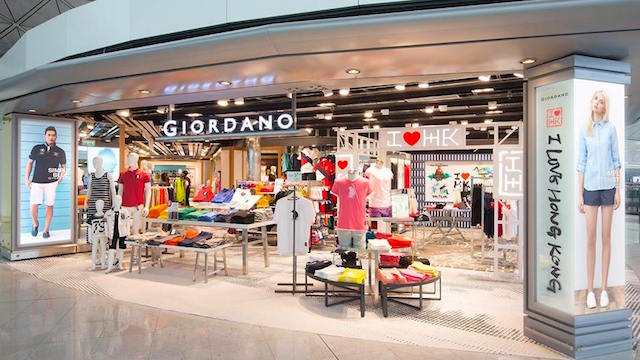
    The China-US trade war and unseasonably warm winter have been blamed for Giordano sales falling 11 percent in the first half of the year.

    Profit for the Hong Kong-headquartered apparel retailer was impacted even more, dropping 36.6 percent to HK$161 million (US$20.5 million) on revenue of $2.542 billion ($324 million).

    By market, sales in Mainland China fell 22 percent, in Hong Kong and Macau by 11.9 percent and in Taiwan by 15.2 percent.

    Giordano sales in the rest of Asia-Pacific – its largest single market accounting for 31.8 percent of revenue – were down a lighter 3.7 percent, with performances by country mixed.

    Indonesia stood out with an overall same-store growth of 2.8 percent for both Giordano and non-Giordano brands, and with operating profit increasing by 6 percent. Thailand continued to achieve stable growth, with operating profit advancing by 9.1 percent, attributable mainly to sales growth and improvement of gross margin by 1.5 percentage points from 63.7% percent to 65.2 percent, the company reported.

    Sales in Singapore and Malaysia declined by 13 percent and 8.4 percent, respectively, due to weak consumer sentiment and slow economic growth.

    In Mainland China, promotional activities were intensified to curtail falling sales and clear slow-moving stock, resulting in a 1.4 percentage-point decrease in gross profit margin.

    Chairman and CEO Peter Lau said a series of marketing programs and smart promotional activities have been launched to “galvanise customer traffic”. On the mainland, Giordano is focusing on developing its franchise business, opening 24 new stores in the first half.

    The Middle East business stabilized and rebounded, with operating profit improving by 36 percent.

    South Korea (a 48.5-per-cent joint venture under an independent management team) reported a slight decrease in sales, while its gross profit was almost flat. Net profit declined due primarily to increased marketing and logistics expenses.

    In terms of the company’s outlook, Lau said the trade war is “taking its toll” on consumer sentiment.

    “In addition, Hong Kong’s weakening retail sector continues to be exacerbated by social unrest. The global economic environment is becoming more uncertain, with signs of economic slowdown in many different parts of the world.

    “Singapore is proving challenging, although management has already taken steps to shake up the local management team and remains confident that the business can be improved. Malaysia and Taiwan failed to meet expectations in the first half, although the local teams have stabilized their businesses and are showing signs of turnaround through effective cost control and improved product mix and localized campaigns.

    “Our Middle East business is showing positive signs of recovery while our Southeast Asian markets, in particular, Indonesia and Thailand, have performed positively and will continue its momentum into the second half of 2019.”

    Lau said the company’s initiative to develop local e-commerce businesses within its existing markets will also continue, in order to offer customers a more comprehensive shopping experience and serve a wider local customer base.

    “This will require resilience and determination in the face of growing competition in this online domain, but we have sowed the seeds and will continue to pursue the opportunities that lie in this realm.

    “That being said, cost pressures remain within the industry as a result of increasing production costs in a number of traditional manufacturing hubs in the region, as well as increasing costs of front-line shop staff in a number of the markets we operate,” concluded Lau.
  • Alibaba not affected by the Trade War

    Alibaba not affected by the Trade War

    Alibaba executive chairman Joe Tsai told analysts the company’s position as “China’s number-one platform for overseas brands” puts it on the right side of the trade war between the US and China.

    While discussing the group’s recent full-year results, which saw Alibaba grow revenue 51 per cent during the year to March 31, 2019, to US$56.2 billion (RMB376.8 billion) and net income 31 per cent to $13.1 billion (RMB80.2 billion), Tsai said he wanted to address the “elephant in the room”.

    “First, the reduction of the US trade deficit. China’s commitment to purchase more American products means China will over the next several years become a net importing country,” Tsai said.

    “We are the platform of choice for global producers of products and brands selling into China because we have the reach and deep insights on over 650 million active Chinese consumers on our platform. The scale and effectiveness of our access to Chinese consumers is simply unrivaled.”

    Alibaba’s active customers grew to 654 million over the year to March 31- an increase of 104 million year on year.

    Tsai said the ongoing trade negotiations also create an opportunity for other markets to do more foreign business within China, satisfying growing demand from the Chinese public as the country’s economy shifts from an “export economy to a domestic consumption economy”.

    “As we look at the evolution of the Chinese economy, Alibaba is on the right side of all of the issues,” Tsai said.

    Alibaba was recently ranked as the world’s most valuable retail brand outside of the US by research firm Kantar earlier this week, which valued the brand at US$131.2 billion, up 48 per cent on last year.

    Partly, this was due to the group’s New Retail strategy, which this year saw Alibaba partner with Starbucks to enable on-demand coffee delivery across 35 cities throughout China.

    “If you want to see the future of retail, look to China,” the report said.

    “In many ways, it is leading the world… Chinese consumers are using mobile in every aspect of their lives.”

  • Credit Cards Fight Back Against E-Wallets Wave

    Credit Cards Fight Back Against E-Wallets Wave

    As e-wallets gain popularity in the region, credit cards are fighting back in a push to stay relevant through rewards, reduced fees, and improved customer experiences on digital and mobile.

    2019 is a key year. This may be the year when mobile payments are expected to overtake credit cards as the preferred ways to pay for e-commerce, according to a UN report. In the face of rising penetration of e-wallets, traditional banks are finding new ways to innovate in the credit card space.

    «Credit cards are getting more creative. Local banks DBS and UOB offer credit cards marketed specifically to women, while others highlight the benefits of using a credit card to help offset your carbon footprint,» said Rohith Murthy, founder of SingSaver, a financial comparison platform.

    While e-wallets may be offering the ease of mobile payments through store partnerships and rewards across Singapore, credit cards are also turning to tech and digital to improve their offerings. For example, some banks are going entirely digital with virtual cards that reduce application approval times from days to minutes and are specifically aimed at e-commerce purchases.

    Others, however, are tying up with tech companies to add perks and touch points. «Apple recently partnered with Goldman Sachs in a digital tie up that removed fees, added transparency, and offered a slew of perks; a trend that will only grow,» added Murthy.

    In Singapore, 7 in 10 Singaporeans own at least one credit card, according to a study by market research company YouGov. Singaporeans had a total outstanding credit card and personal loan debts of about S$70.4 billion, according to the Department of Statistics Singapore (2017).

    Singsaver’s most recent data shows that cashback is still the top credit card reward choice among consumers as consumers continue to favor the flexibility and ease of cashback as a reward when using financial products such as credit cards.

    Nevertheless, miles, as a reward form is getting increasing traction due to many air miles credit cards lowering their annual income eligibility in the last 1-2 years and the promise of air miles for traveling and exploring new destinations.

    With better travel connectivity and affordability, as well as with the surge in travel interest in part due to social media, we think Singaporeans are going to be more knowledgeable about the benefits and attractiveness of miles as a reward,» said Murthy.

  • Cybercriminals use insiders to attack telcos

    Cybercriminals use insiders to attack telcos

    Cybercriminals are using insiders to gain access to telecommunications networks and subscriber data, recruiting disaffected employees through underground channels or blackmailing staff using compromising information gathered from open sources.

    This is among the findings of a Kaspersky Lab intelligence report into security threats facing the telecommunications industry.

    Telecommunications providers are a top target for cyber-attacks. They operate and manage the world’s networks, voice and data transmissions and store vast amounts of sensitive data. This makes them highly attractive to cybercriminals in search of financial gain, as well as nation-state sponsored actors launching targeted attacks, and even competitors.

    To achieve their goals, cybercriminals often use insiders as part of their malicious ‘toolset’ to help them breach the perimeter of a telecommunications company and perpetrate their crimes.

    New research by Kaspersky Lab and B2B International reveals that 28% of all cyber-attacks and 38% of targeted attacks now involve malicious activity by insiders. The intelligence report examines popular ways of involving insiders in telecoms-related criminal schemes and gives examples of the things insiders are used for.

    Compromising employees

    According to the Kaspersky Lab researchers, attackers engage or entrap telecoms employees in the following ways:

    • Using publicly available or previously stolen data sources to find compromising information on employees of the company who they intend to hack. They then blackmail targeted individuals – forcing them to hand over their corporate credentials, provide information on internal systems or distribute spear-phishing attacks on their behalf.
    • Recruiting willing insiders through underground message boards or through the services of “black recruiters”. These insiders are paid for their services and can also be asked to identify co-workers who could be engaged through blackmail.

    The blackmailing approach has grown in popularity following online data breaches such as the Ashley Madison leak, as these provide attackers with material they can use to threaten or embarrass individuals. In fact, data-leak related extortion has now become so widespread that the FBI issued a Public Service Announcement on June 1, warning consumers of the risk and its potential impact.

    The insiders most in demand

    According to the Kaspersky Lab researchers, if an attack on a cellular service provider is planned, criminals will seek out employees who can provide fast track access to subscriber and company data or SIM card duplication/illegal reissuing. If the target is an internet service provider, the attackers will try to identify those who can enable network mapping and man-in-the-middle attacks.

    However, insider threats can take all forms. The Kaspersky Lab researchers noted two non-typical examples, one of which involved a rogue telecoms employee leaking 70 million prison inmate calls, many of which breached client-attorney privilege. In another example, an SMS center support engineer was spotted on a popular DarkNet forum advertising their ability to intercept messages containing OTP (One-Time Passwords) for the two-step authentication required to login to customer accounts at a popular fintech company.

    “The human factor is often the weakest link in corporate IT security,” Kaspersky Lab security expert Denis Gorchakov said.

    “Technology alone is rarely enough to completely protect the organization in world where attackers don’t hesitate to exploit insider vulnerability. Companies can start by looking at themselves the way an attacker would. If vacancies carrying your company name or some of your data start appearing on underground message boards, then somebody somewhere has you in their sights. And the sooner you know about it, the better you can prepare.”

  • Yamaha, Honda, Suspected of Cartel Practice

    Yamaha, Honda, Suspected of Cartel Practice

    PT Yamaha Indonesia Motor Manufacturing (YIMM) and PT Astra Honda Motor (AHM) have been suspected of involved in motorcycle cartel practice. The suspicion was raised after an investigation conducted by the Commission for the Supervision of Business Competition (KPPU). Both companies are suspected of controlling prices of 110 to 125cc Automatic Scooter products.

    KPPU’s investigation team, led by Frans Adiyatma, explained that they have found an electronic mail sent by YIMM President Director Yoichiro Kojima to Yamaha Indonesia marketing team.

    “Kojima instructed the marketing team to adjust their prices in accordance with Honda motorcycle price increase,” Frans said on Tuesday.

    The price fixing was suspected to occur following an agreement made between Kojima and Mr. Inuma, President Director of Astra Honda Motor. An email dedicated to YIMM Vice President Dyonisius Beti mentioned that “President Kojima-san has requested us to follow Honda price increase many times since January 2014, because of his promise with Mr Inuma, president of AHM at a golf course.”

    KPPU Chief Syarkawi Rauf said that the investigation was carried out to protect consumers and to allow consumers to purchase motorcycles at competitive prices.

    In response to the allegation, Yamaha General Manager M. Masykur argued that his company had never been involved in cartel practices. “Yamaha has been doing business in Indonesia for 42 years, the company will certainly comply with Indonesian laws,” Masykur stated.

  • Price war in Singapore over mobile data

    Price war in Singapore over mobile data

    A price war has erupted in Singapore for the first time in four years, as operators seek to stay competitive by lifting their data allowances.

    SingTel recently introduced a new add-on plan giving customers the option of doubling their mobile data allowance for an extra S$5.90 per month.

    Both M1 and StarHub quickly followed suit, with M1 introducing a similar option to SingTel and StarHub offering an extra 3GB of mobile data for a promotional rate of S$3 per month, rising to S$6 from April.

    The offers mean the operators have effectively halved their mobile plan charges in some cases. The biggest discounts are for more high-end plans.

    The cuts follow the ISP seeking to become Singapore’s fourth mobile operator, that it plans to charge as little as S$8 for a mobile plan with 2GB of data, with value added services charged at market rates.

    MyRepublic also plans to offer an unlimited data plan for S$80 per month. The incumbent operators currently do not offer unlimited data options.