Tag: warehousing

  • Ares Closes $4 Billion Japan Logistics Fund Backed by CPPIB

    Ares Closes $4 Billion Japan Logistics Fund Backed by CPPIB

    Ares Management closed its fifth Japan logistics development fund at JPY 612 billion ($4 billion). The raise hit its hard cap, led by Canada Pension Plan Investment Board.

    Known as Japan Logistics Development Partners V, the vehicle is the largest closed-end institutional fund raised by the Los Angeles firm’s real estate arm. It grew nearly 50 percent beyond its JPY 412 billion predecessor from 2021.

    CPPIB committed JPY 150 billion as cornerstone backer, taking a 24.5 percent stake. Other capital came from sovereign wealth funds, insurers and pension systems across North America, Asia-Pacific, Europe and the Middle East.

    Expanding the Marq Logistics Footprint

    This close follows the integration of GLP’s international fund management business, which Ares bought for $3.7 billion through GCP International in March 2025. That deal handed Ares the Japan logistics series along with digital infrastructure assets under Ada Infrastructure.

    Marq Logistics will build and manage facilities under the fund. Ares created the platform to oversee its industrial assets. As of June, Marq operated 120 million square feet of warehouse space across Japan and 655 million square feet globally.

    Pipeline Across Core Metro Hubs

    Institutional capital continues to target Japanese logistics space because corporate supply chains face structural warehouse shortages along major metropolitan transport corridors. CPPIB has backed every JDP vintage since 2011. That track record makes it one of the longest institutional partnerships in Asia-Pacific industrial real estate.

    Total investment capacity for the vehicle reaches JPY 1.7 trillion ($11 billion), focused on Greater Tokyo, Greater Osaka and Nagoya. Ares has committed JPY 450 billion, or about 26 percent of that capacity, to initial projects ahead of site acquisitions in the coming quarters.

  • Mapletree Secures $500 Million for Emerging Asia Logistics Strategy

    Mapletree Secures $500 Million for Emerging Asia Logistics Strategy

    Singapore’s Mapletree Investments secured more than $500 million in first-close equity commitments for an emerging Asia logistics strategy targeting $2.1 billion in developments across Malaysia, Vietnam and India.

    The pool combines $250 million raised through the Mapletree Emerging Growth Asia Logistics Private Trust, known as MEGA, with over $250 million in co-investments and joint ventures for Malaysian warehouse projects. Sovereign wealth funds, a pension manager and a state investment group provided the capital. Mapletree will retain a minimum 20 per cent co-investment stake in the vehicle.

    Seed Assets and Target Returns

    Seven development properties seed the new vehicle: four projects in Malaysia, one in India and two operating warehouses in Vietnam. Mapletree aims to deliver an internal rate of return above the mid-teens as modern warehouse space remains scarce across developing Asian manufacturing hubs.

    Logistics forms Mapletree’s largest operating division, representing 43 per cent of total assets under management at S$32.4 billion ($24.8 billion). The firm managed 22.8 million square metres across 12 markets as of March, while its listed Mapletree Logistics Trust vehicle held 175 properties in nine Asia-Pacific markets with occupancy running at 96.9 per cent.

    Shifting Capital Back to Asian Hubs

    The push into emerging Asian industrial corridors mirrors a broader portfolio rotation away from western commercial property. While Mapletree raised capital for China logistics in 2022 and Japan in 2024, the group recently liquidated underperforming student housing vehicles and shed $1.3 billion in US logistics sheds over a 10-month window to fund higher-yielding regional builds.

    Fund managers across Southeast Asia are reallocating institutional money directly toward factory-adjacent storage as multinational brands diversify manufacturing beyond coastal China. Malaysia and Vietnam continue to absorb the bulk of factory floor expansions from electronics and consumer goods suppliers requiring automated, high-ceiling distribution centers.

    Mapletree is targeting an additional $200 million in commitments for MEGA at a second fund closing scheduled for early next year.

  • Asia-Pacific Retail Automation Market to Reach $5.07 Billion by 2029

    Asia-Pacific Retail Automation Market to Reach $5.07 Billion by 2029

    Retail automation spending across regional Asia-Pacific markets will reach $5.07 billion by 2029, up from $2.65 billion in 2024.

    The expansion represents a compound annual growth rate of 13.8 percent, outperforming the broader global retail automation sector’s projected 9.9 percent rate over the five-year forecast period.

    Rising wages across developing economies are pressing store operators to replace manual routines with self-checkout kiosks, automated inventory tracking, and warehouse robotics. Worldwide automation revenue is projected to climb from $27.63 billion in 2024 to $44.3 billion by 2029, with Asian markets taking up a growing share of enterprise procurement budgets.

    Warehouses and Non-Food Chains Lead Spending

    Warehouse installations form the largest share of automation deployments in the region, pushed by logistics operators sorting heavier e-commerce parcel flows. Non-food retail stores represent the fastest-growing buyer category as fashion, specialty, and electronics chains adopt electronic shelf labels, autonomous mobile robots, and automated storage systems to defend operating margins.

    Technology vendors competing for contracts include Zebra Technologies, IBM, SAP, Microsoft, and Saison Information Systems, alongside automation hardware groups such as Honeywell, ABB, and Siemens. Cheaper cloud systems and IoT sensors have lowered entry costs, enabling mid-tier chains to buy tools once restricted to massive supermarket operators.

    Shift from Pilot Trials to Fleet Deployments

    Regional merchants previously limited automated checkouts and radio-frequency identification tags to flagship concept locations. Higher store operating expenses have pushed those tests into broad network rollouts across hypermarkets, specialty outlets, and distribution centers.

    Technology vendors are focusing on integrated suites that connect front-of-store optical sensors and automated sortation networks directly to enterprise planning software, targeting retail operators upgrading their infrastructure before 2029.

  • Mid-Market Retailers Risk Logistics Stalls as Growth Outpaces Warehouses

    Mid-Market Retailers Risk Logistics Stalls as Growth Outpaces Warehouses

    Fast-growing retailers risk capping their own expansion when warehouse operations and inventory models fail to adapt to higher order volumes, according to supply chain advisory firm Prological Consulting.

    Operational breakdowns typically surface when mid-market businesses reach national scale, creating sudden spikes in freight bills, warehouse labour hours, and fulfilment errors.

    Peter Jones, managing director and founder of Prological Consulting, said businesses frequently rely on informal employee knowledge and manual workarounds during early growth phases. While nimble setups support early trade, those same methods turn into severe constraints once product catalogues and sales channels multiply across regions.

    Warning signs in warehouse operations

    Operational friction usually appears first in financial metrics monitored by chief financial officers and operations heads. Unbudgeted transport charges, rising import costs, and climbing warehouse labour hours signal that existing facilities can no longer handle inventory flow efficiently.

    Fulfilment disruptions follow quickly. Split shipments, inaccurate stock counts, and delayed customer deliveries indicate that facility layouts and tracking methods have reached capacity limits.

    Jones cited a Sydney-headquartered retailer that expanded from a startup into a national store network and online business generating 45 million Australian dollars in annual turnover. The company operated out of an overcrowded warehouse where pallets blocked internal transit paths and inbound import processing slowed due to heavy reliance on a handful of veteran workers.

    The business resolved the bottleneck by shifting into a larger facility within six months. The transition allowed the retailer to surpass its revenue forecasts and restore reliability across its e-commerce fulfilment operation.

    Balancing automation and inventory compromises

    Competing effectively against automated logistics networks requires retailers to integrate machinery and digital tracking into their supply chain plans. Manual operations face higher unit handling costs and slower turnaround times compared to rivals using automated storage and retrieval systems.

    Across the Asia-Pacific region, mid-tier consumer brands encounter similar friction when transitioning from local store footprints to omni-channel distribution. Operators that delay warehouse redesigns often see fulfilment expenses consume operating margins before corrective capital investments are made.

    Retailers must evaluate trade-offs between inventory holding costs, distribution points, and lead times rather than pursuing unattainable logistics perfection. Merchandising teams, store networks, digital storefronts, and third-party logistics partners need coordinated forecasting to prevent misplaced stock across regional hubs.

    Prological expects automated picking systems and predictive replenishment tools to dictate cost competitiveness as regional freight and warehouse labour expenses remain elevated.

  • Sajo Seafood Buys Hines Cold Chain Shed in Greater Seoul for $65M

    Sajo Seafood Buys Hines Cold Chain Shed in Greater Seoul for $65M

    Sajo Seafood agreed to buy a Greater Seoul cold storage warehouse from Hines and Pebblestone Asset Management for KRW 90 billion ($65 million).

    The purchase gives the South Korean tuna processor and deep-sea fishing group full ownership of Hines Logistics Namyang in Hwaseong, Gyeonggi province. Sajo said the acquisition will expand its storage operations and add a direct distribution hub serving the capital region.

    Payment Schedule and Asset Specs

    Regulatory filings show Sajo paid an initial 10 percent deposit of KRW 9 billion. A second installment of KRW 18 billion falls due on 30 September, with the final KRW 63 billion balance scheduled for payment when the property transfers on 26 November.

    At the agreed price, Sajo is paying just under KRW 2 million per square metre of floor space. Completed in 2023, the four-level facility spans 487,258 square feet of gross floor area across ambient and refrigerated zones, featuring full ramp access, 10-metre clear ceiling heights, and floor load capacities up to 2.5 tonnes per square metre. E-commerce giant Coupang Fulfillment Services and Korea Food Services Corporation occupy space as key tenants.

    Shifting Cold Chain Capital

    Houston-based Hines and Seoul-based Pebblestone broke ground on the Namyang site in late 2021 as Hines made its first direct property investment in South Korea. The exit allows both managers to return capital after building out the multi-temperature asset from scratch on a 30,658-square-metre plot.

    Food producers across East Asia continue to buy dedicated logistics hubs rather than rely entirely on third-party cold chain operators, aiming to lock in temperature-controlled capacity near dense urban populations. The Hwaseong site sits within 50 kilometres of 21 million consumers, positioned between Incheon Airport, Incheon Port and Pyeongtaek Port.

    Hines has stepped up capital recycling across Asia, selling a Tokyo office tower to LaSalle Investment Management while acquiring Singapore retail assets. The final ownership transfer for the Hwaseong cold storage facility remains on track for completion on 26 November.

  • Chinese Robot Makers Unveil 150 Humanoids for Warehouse and Factory Work

    Chinese Robot Makers Unveil 150 Humanoids for Warehouse and Factory Work

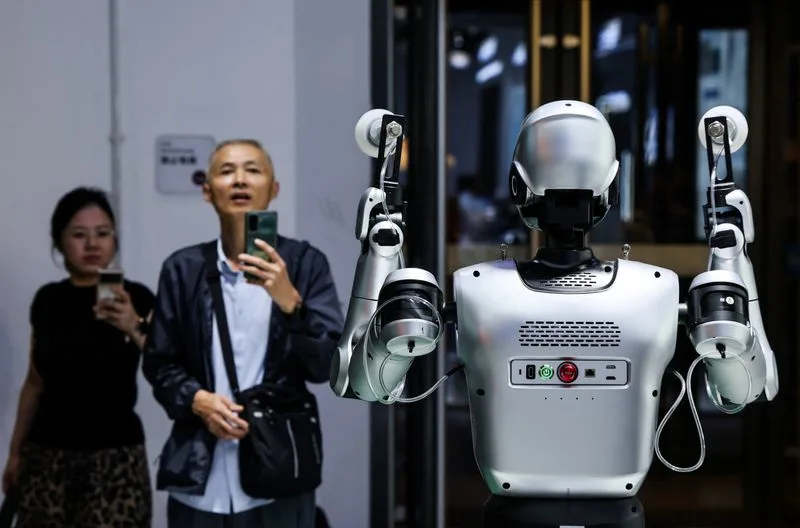
    Chinese robotics developers demonstrated humanoid machines sorting logistics parcels and assembling mobile handsets in Beijing this month, pushing to convert promotional technology into commercial factory installations. More than 300 mostly domestic companies participated in the World Robot Conference, presenting over 2,000 exhibits and launching upwards of 150 products.

    The presentations focused on physical industrial utility rather than scripted stage routines. Machines showed off fine motor tasks that included packing consumer electronics and sorting freight for delivery networks, alongside domestic maintenance functions.

    Deployment targets supply chains

    Warehouse operators and electronics manufacturers across East Asia face tightening labor availability and rising wage floors. Humanoid form factors aim to slot directly into facilities designed for human staff, avoiding the expensive structural retooling required by fixed automation systems.

    Retail supply chains in China handle hundreds of millions of parcels daily. Deploying dexterous bipedal and wheeled units into sorting hubs allows logistics operators to scale throughput during promotional peaks without adding headcount.

    Hardware shifts toward commercial scale

    Investor capital across the region has shifted heavily toward general-purpose robotics ventures. Chinese manufacturers rely on dense domestic component supply chains for actuators, sensors and gearboxes to lower unit production costs below Western competitors.

    Commercial viability now hinges on software reliability and battery runtime during continuous multi-hour warehouse shifts. Factory pilots scheduled across domestic consumer electronics assembly plants through the end of the year will test whether unit economics beat dedicated automated guided vehicles.

  • GreyOrange to showcase Flexible Automation solutions at the India Warehousing Show 2019

    GreyOrange to showcase Flexible Automation solutions at the India Warehousing Show 2019

    GreyOrange, a global  distribution automation software and robotics company will showcase its family of Flexible Automation solutions, including the new mobile and modular sortation system, FlexoTM and the AI-powered goods-to-person system, Butler, at the 9th edition of the India Warehousing Show 2019 from June 20-22 in New Delhi.

    The retail sector in India is expected to grow to US $1.2 trillion by 2021, up from US$795 billion in 2017. Modern supply chains must deliver the advanced productivity, efficiency and sophistication to handle omnichannel distribution models, exponential growth in the variety and volume of products shipped, and increasing volatility and unpredictability in order patterns. GreyOrange Flexible Automation solutions are specifically designed to help businesses master these complexities to optimize fulfilment performance while also controlling costs.

    Vivekanand, Country Manager- India and SAARC, GreyOrange said, “We are proud to associate with the India Warehousing Show, a leading event for the logistics and supply chain industry. We are excited to showcase our advanced solutions, technical expertise and innovation live at this event; and help customers understand the complexities of modern distribution, including those created by omnichannel pressures. With our multi-industry expertise and robust portfolio of products and services, we are leading Flexible Automation across the globe. At IWS, we invite everyone to visit our booth and witness our solutions in action and learn more about how they optimize performance and throughput.”

    Vivekanand will speak at IWS 2019 on 20th June at 12:30pm IST on “Flexible Automation: The Future of Fulfillment.” During the session, he will highlight how Flexible Automation solutions future-proof supply chains to create and extend operating advantages.

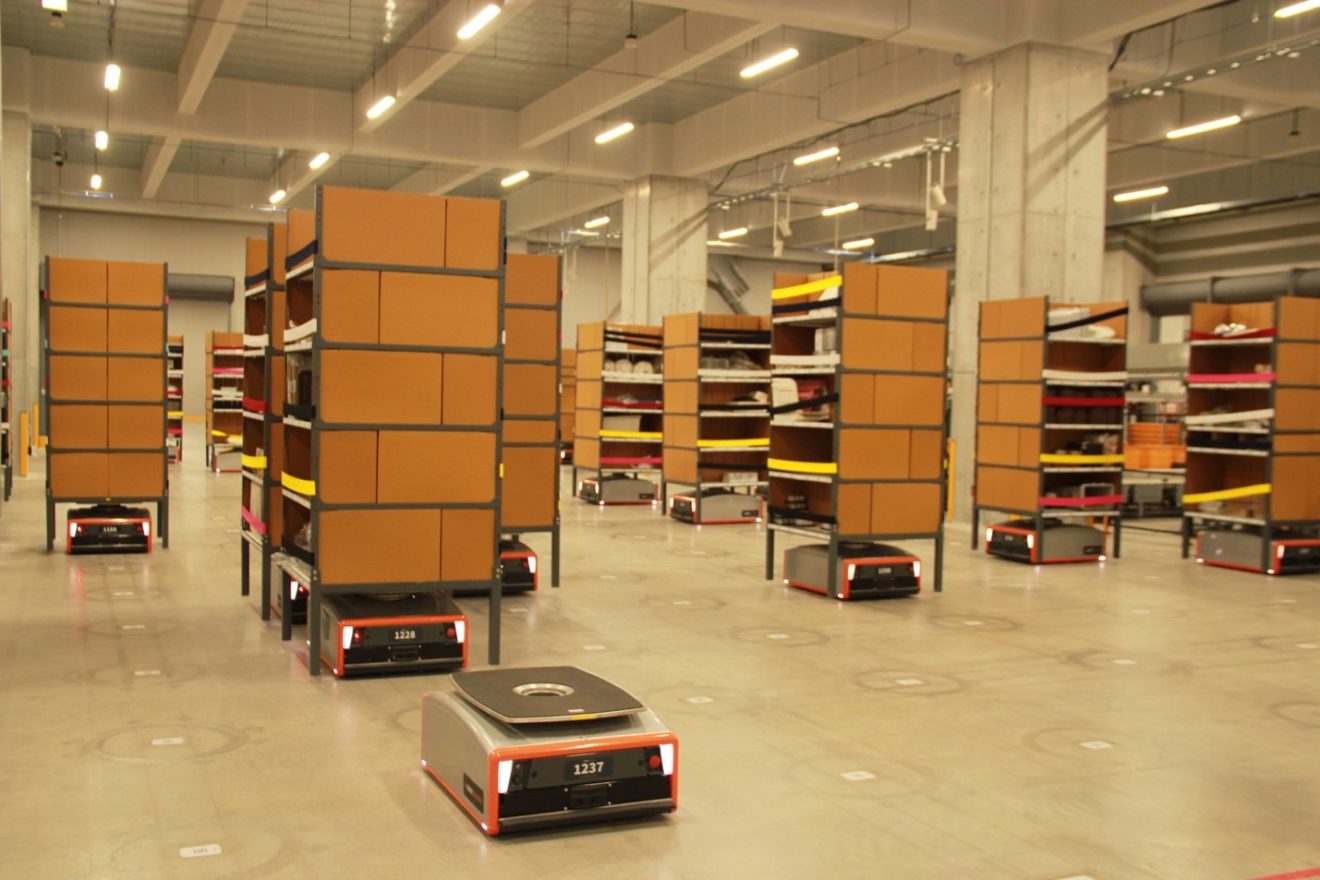
    The GreyOrange booth will showcase live demonstrations of its mobile and  modular sortation system, FlexoTM. Companies can deploy Flexo to enable inbound and outbound destination sortation  in fulfillment, distribution and logistics centers to better utilize space, reduce operating costs and flexibly adapt sortation to handle seasonal order patterns and spikes. This AI-enabled robotics system, which is capable of running 24/7, can be easily scaled making it investment-friendly and usable for a range of applications. GreyOrange also will showcase its globally deployed AI-enabled ButlerTM goods-to-person system, designed to handle high volumes, changing inventory profiles and fluctuating demand.

    Both the Butler and Flexo solutions are powered by GreyOrange’s warehouse execution software GreyMatter, which integrates multiple automation systems and drives higher efficiencies by leveraging Artificial Intelligence and Machine Learning in real-time.

    Visit GreyOrange at the India Warehousing Show 2019, stand C27, Hall 12, Pragati Maidan, from 20th to 22nd June 2019 to meet with Solutions Experts and experience a hands-on demo of GreyOrange high-performance solutions.

  • Nike global warehouses goes carbon neutral

    Nike global warehouses goes carbon neutral

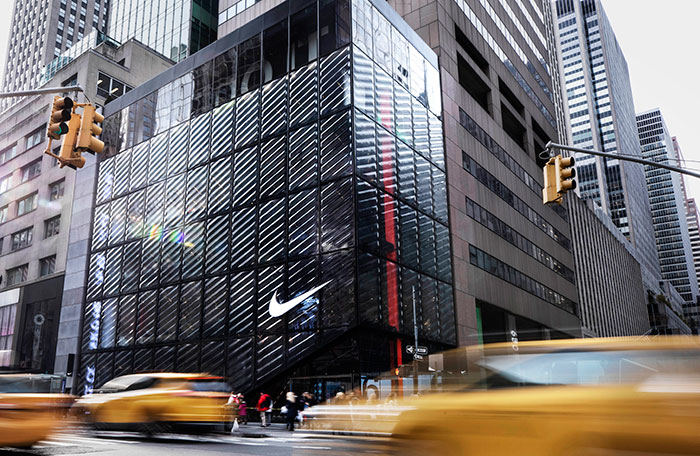
    A Nike warehouse in Melbourne’s Altona North suburb has become the first facility in Australia to receive a ‘whole-of-building’ carbon-neutral certification from the National Carbon Offset Standard.

    The certification is the latest recognition for the site, which has also received a Green Star Performance rating and was named the ‘Best Industrial Project’ at the National Energy Efficiency Awards in 2017.

    The 18,000sqm warehouse, which is owned by the Stockland property group and was custom-built for Nike by Toll, was designed with environmental efficiency in mind.

    Some of the site’s unique features include translucent roof sheeting to maximise daylight so warehouse lighting can be switched off when ambient light is sufficient, roof insulation to assist with temperature control and an optimised conveyor system, which was rewired and reprogrammed to operate in relation to product volumes, eliminating unnecessary movement.

    The retrofitting of 1300 light fixtures with high-efficiency LEDs also helped the site to halve its total electricity consumption, exceeding the greenhouse reductions required by NCOS.

    Toll and Nike offset the remaining greenhouse emissions generated by the building by investing in forest conservation projects in Tasmania as well as in an energy recovery waste water treatment plant in Thailand. These projects protect local biodiversity and native species support jobs in local communities and reduce greenhouse gas emissions, according to a statement from the comp

    Nike’s operations director Marie Varrasso said the success of the facility reflects its commitment to reducing its carbon footprint whilst delivering efficient solutions and savings which can be passed on to its customers directly.

    “Through this collaboration, continuous improvements have been introduced into the supply chain, which ultimately benefits Nike’s footwear, apparel and equipment customers. It’s a unique relationship, with innovation at the heart of everything we do,” she said.

    Stockland’s general manager of logistics and business parks Tony D’Addona said the project has has been a worthwhile education process for the property group’s warehousing and logistics business and helped to improve its management approach to sustainability.