
Tag: washington

  • Ripple Urges SEC to Finalize Crypto Rules After $150 Million Legal Battle

    Ripple Urges SEC to Finalize Crypto Rules After $150 Million Legal Battle

    Ripple urged the US Securities and Exchange Commission to finalize proposed digital asset rules on October 20, following a legal battle in which the firm spent more than $150 million seeking regulatory clarity.

    Chief Legal Officer Stuart Alderoty confirmed the submission backs the agency’s proposed Regulation Crypto Assets framework, arguing that years of case-by-case enforcement have pushed domestic innovation overseas.

    The SEC introduced the framework in August, outlining clear boundaries to help crypto companies understand their obligations without facing protracted court challenges.

    Safe Harbours and Capital Thresholds

    The SEC proposal introduces exemptions designed to let qualifying digital asset issuers raise capital without full public registration. Startups could raise up to $5 million over four years under one provision, while a separate exemption permits up to $75 million within a 12-month window under stricter financial disclosures.

    A critical piece of the draft creates a safe harbour that releases a token from investment contract rules once an issuer satisfies its original network commitments.

    Ripple Chief Legal Officer Stuart Alderoty argued the agency possesses full authority to implement the framework. Under the standard Howey test, regulatory scrutiny should evaluate specific issuer promises rather than treating secondary token sales or decentralization metrics as automatic triggers for securities status.

    Industry Pushback Across Major Networks

    Ripple joined a broader coalition of blockchain foundations that submitted recommendations before the comment window closed. A joint filing by Chainlink, Hedera, Stellar, Aptos, Avalanche and Cardano urged the commission to explicitly define digital commodities within the formal rule text.

    The push reflects widespread industry fatigue with retroactive enforcement. Ripple spent more than $150 million in legal fees battling the SEC, a figure few smaller Web3 startups can survive.

    The SEC is reviewing the comment letters ahead of a full commission vote on the final language for Regulation Crypto Assets.

  • Trump and Xi Summit in Washington Yields Limited Progress on Tariffs

    Trump and Xi Summit in Washington Yields Limited Progress on Tariffs

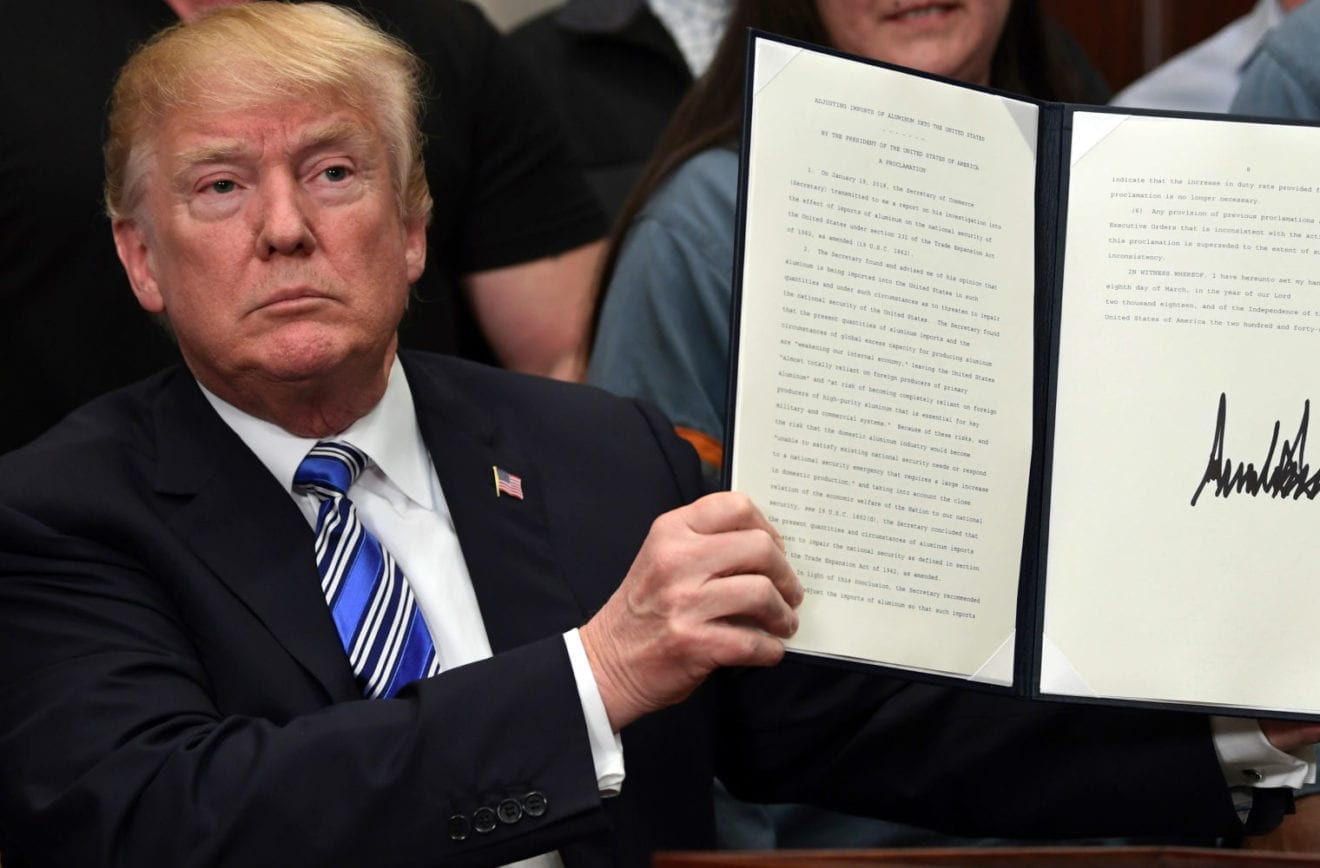
    President Donald Trump and Chinese leader Xi Jinping met in Washington last week for a summit that yielded limited progress on tariffs, leaving bilateral relations in what analysts describe as a managed stalemate.

    The limited outcomes showed how far apart Washington and Beijing remain on core economic issues, reinforcing analyst views that China sees little incentive to grant major political concessions ahead of November’s midterm elections.

    Limited Progress on Technology and Supply Chains

    Asia-Pacific supply chains face operations without clear visibility into 2027. Negotiators deferred binding settlements on critical trade disputes. These include China’s export limits on rare earth materials and US trade restrictions on advanced semiconductor shipments.

    Xi arrived in Washington seeking trade predictability as domestic retail spending softens in mainland China. Chinese factory exports have reached record levels globally. Still, falling residential property prices and persistent youth unemployment continue to depress household demand across tier-one and tier-two cities, where homeownership stands near 80 percent.

    Stalemate Over Tech Controls and Taiwan

    Artificial intelligence discussions ended without operational safeguards or a formal bilateral pact. Xi argued during the meetings that advanced computing systems must stay under direct human control. Meanwhile, the White House maintained its broader export controls on cutting-edge processors.

    Geopolitical friction also limited commercial progress. Xi reiterated that American arms sales to Taiwan cross a fundamental red line for Beijing, following a May warning that mishandling the territory could spark direct conflict. The US administration continues to hold a pending 14 billion dollar arms package for the island, using it during negotiations.

    What Operators and Exporters Face Next

    For consumer electronics makers, apparel brands and contract manufacturers across East Asia, the outcome changes little on the ground. Companies that accelerated factory shifts into Southeast Asia to dodge unilateral duties must continue carrying dual-supply chain overhead.

    Retailers sourcing consumer goods through southern Chinese hubs face an immediate cost risk early next year. The three-month extension merely pushes tariff uncertainty past the November US midterm elections without removing the threat of sudden duty hikes.

    January brings the next formal test for cross-border logistics and bilateral commerce, when the current tariff pause expires and working groups resume formal negotiations over market access and tech controls.

  • US and China Extend Trade Truce to Jan. 10 as Leaders Meet in Washington

    US and China Extend Trade Truce to Jan. 10 as Leaders Meet in Washington

    The United States and China have agreed to extend their bilateral trade truce through January 10, pushing back a deadline previously set for November 10 as heads of state opened their second summit of the year in Washington.

    US Treasury Secretary Scott Bessent confirmed he and Chinese Vice Premier He Lifeng agreed to the two-month extension, providing temporary relief as US President Donald Trump and Chinese President Xi Jinping hold talks amid lingering tensions over tariffs, rare earth materials and artificial intelligence.

    Carving Out Non-Strategic Goods

    Negotiators spent the run-up to the summit narrowing the range of products exposed to sudden tariff spikes. The Manhattan meetings produced an understanding to exempt nonsensitive consumer and industrial lines from future escalations, aiming to insulate everyday trade from broader geopolitical tensions.

    Bessent met with He Lifeng twice in four days to lock in the framework before official state ceremonies began at the White House. The Treasury stated that strategic stability between the two economies requires reciprocity, setting clear guardrails for subsequent negotiations covering specific import codes.

    Shifting Supply Chains and Agricultural Flows

    Prolonged tariff disputes have already redrawn key trade channels across the Pacific. American soybean shipments to China plunged from nearly $18 billion in 2022 to $3 billion in 2025, according to US Department of Agriculture data, reallocating massive bulk purchasing power to South American exporters.

    Brazil captured the bulk of that diverted demand, shipping a record 108.7 million metric tons of soybeans in 2025 with roughly 80 percent bound for Chinese processors. For Asian supply chain managers, the shift shows how quickly commodity and consumer product pipelines reroute when trade barriers persist beyond initial negotiation cycles.

    Manufacturing Strength Against Domestic Headwinds

    China enters the extended truce period holding a record trade surplus exceeding $1 trillion, maintaining its stronghold on global industrial exports despite years of Western tariff pressure. Factory output and technological adoption have accelerated across high-end manufacturing segments, expanding outward shipments to Southeast Asia and Latin America.

    Domestic retail conditions tell a different story. A protracted property downturn continues to constrain household spending across Chinese tier-one and tier-two cities, while youth unemployment stood at 18.9 percent in August. Retail operators in mainland hubs face cautious consumer sentiment, forcing domestic brands to look overseas for margin growth.

    Terms of the January Window

    Previous summit rounds in Beijing established the framework for dialogue, but commercial buyers spent recent months front-loading inventory to avoid scheduled tariff resets. Extending the deadline from November 10 to January 10 gives procurement teams a clear window to clear fourth-quarter holiday stock without sudden duty hikes.

    The next test comes as working teams draft the finalized list of nonsensitive product exemptions ahead of the January 10 expiry date. Importers, logistics carriers and retail buyers across Asia are tracking whether consumer tech accessories, apparel and packaged goods will make the permanent exemption schedule.

  • Bitcoin Slides to $75,026 Following Failed Clarity Act Vote in US Senate

    Bitcoin Slides to $75,026 Following Failed Clarity Act Vote in US Senate

    Bitcoin dropped to a four-week low of $75,026 after the US Senate rejected the crypto-friendly Clarity Act ahead of an interest-rate decision by the Federal Reserve.

    Prices fell roughly 4 per cent on Tuesday. The token then recovered slightly to trade at $75,877 during European afternoon dealing.

    Trading desks across Asia and Europe pulled back risk exposure following the vote. Digital asset markets are now searching for support while central bankers prepare their next policy announcement.

    Senate procedural vote fails

    The defeat delivered an immediate blow to institutional sentiment. The Clarity Act fell 11 votes short of clearing a key procedural hurdle in the Senate. That result halts a measure designed to establish the first comprehensive statutory framework for US digital currencies.

    Primary oversight now reverts to regulatory agencies. That structure leaves rules vulnerable to revision whenever administrative leadership changes in Washington.

    Ethics rules stall legislation

    Lawmakers clashed over specific provisions in the bill, preventing a final vote. Disagreements centered on ethics restrictions designed to bar government officials from profiting personally from digital asset holdings.

    Backers had pitched the bill as an essential foundation for corporate adoption and institutional custody services. In the end, unresolved disputes over governance clauses cost the legislation its cross-party support.

    Agency oversight replaces federal law

    Asia-Pacific institutions monitor American policy closely because US frameworks shape cross-border liquidity and settlement standards. Operators in Singapore and Hong Kong run under established local licensing regimes. Even so, regional trading volumes still react directly to legal shifts in Washington.

    Commercial banks and brokers must now continue navigating overlapping agency guidance rather than codified law. This lack of uniform rulemaking prolongs compliance uncertainty for dollar-denominated token products across regional desks.

    Rate decision sets next direction

    Bitcoin had held a steady range before Tuesday as fund managers waited for macroeconomic cues. The 4 per cent drop erased early September gains, returning the market to support levels last tested four weeks ago.

    Market attention now shifts to the Federal Reserve interest-rate announcement scheduled for later today, where policy guidance will determine near-term dollar liquidity.

  • Cryptex Allocates 4.88 Percent XRP Weighting in US Digital Asset ETF Filing

    Cryptex Allocates 4.88 Percent XRP Weighting in US Digital Asset ETF Filing

    Cryptex Finance assigned a 4.88 percent weighting to XRP in an amended registration statement submitted to the US Securities and Exchange Commission for its proposed Digital Market Cap ETF. The fund, set to list under the ticker BAGZ, tracks a diversified digital asset index where XRP held a 4.36 percent baseline weight before eligibility screens.

    The filing includes language suggesting Ripple could retain higher quantities of XRP from its monthly escrow distributions if federal rules become clearer, directing those tokens toward liquidity for stablecoin and foreign exchange trading pairs. That language appeared without an attributed source or direct confirmation from Ripple representatives, drawing scrutiny from institutional market watchers and legal analysts who follow cross-border digital payment infrastructure.

    Escrow releases and market liquidity

    Ripple locked 55 billion XRP into 55 monthly escrow contracts of 1 billion tokens each to ensure predictable distribution. Under current ledger mechanics, the company cannot unlock tokens ahead of schedule, but it regularly decides how much of each released tranche returns to new escrow contracts. Historically, Ripple returns between 60 percent and 80 percent of each monthly 1-billion token release, keeping the remainder for operational reserves and institutional sales.

    Retaining a higher portion of monthly releases would expand secondary market circulating supply for cross-border liquidity rails. For digital asset fund managers and trading desks operating between Asia and North America, any shifts in circulating XRP balances directly alter transaction depth on major exchange corridors.

    Regulatory timeline for the CLARITY Act

    Cryptex tied its liquidity assumptions to legislative momentum around the CLARITY Act, a federal measure designed to provide an explicit regulatory framework for digital asset markets in the United States. The Senate Banking Committee cleared the bill in May on a 15-9 vote.

    Procedural action on the bill heads to the Senate floor in September, where broader legislative debate will determine whether digital asset issuers gain the regulatory protections required to restructure their asset distribution models.

  • Bitcoin Leads Crypto Recovery with 1.55 Trillion Dollar Market Cap

    Bitcoin Leads Crypto Recovery with 1.55 Trillion Dollar Market Cap

    Bitcoin rebounded to 77,676 dollars following a 22 per cent rally over 14 days, outpacing Ethereum and XRP in market resilience despite prolonged sector-wide corrections throughout 2026.

    The two-week market surge followed an announcement by the US Treasury that it would double long-end bond buybacks, forcing traders to liquidate roughly 3.3 billion dollars in short positions across crypto derivatives. Ethereum climbed 29 per cent to 2,440 dollars during the same window, while XRP advanced 33 per cent to 1.38 dollars.

    Institutional Inflows Support Spot Valuations

    Institutional demand continues to anchor Bitcoin trading volumes. US spot Bitcoin exchange-traded funds recorded 242.24 million dollars in net inflows on August 27, extending an uninterrupted nine-day buying streak. Corporate buyers including Strategy and sovereign holders such as El Salvador expanded their balance sheet holdings, constraining circulating liquidity across primary exchanges.

    Ethereum relies on structural supply limits rather than spot ETF velocity. Network validators have staked nearly 47 per cent of total circulating Ethereum, locking up volume as institutional asset managers test tokenized bonds and equities on the network.

    XRP recorded 155.98 million dollars in net inflows across spot funds over a three-week period without a single day of net redemptions. The token’s circulating supply stands near 62 billion coins, giving it an 86 billion dollar market cap compared to Ethereum’s 294 billion dollars and Bitcoin’s 1.55 trillion dollars.

    Legislative Filings and Price Resistance

    Regulatory decisions in Washington now dictate secondary market pricing for alternative tokens. The US Senate faces a cloture vote on the CLARITY Act on September 15, which aims to formally classify XRP as a digital commodity under federal law.

    For digital asset treasuries across Asia and global trading desks, Bitcoin remains the primary defensive allocation during macro tightening cycles. While high-beta assets like XRP gain faster during sharp liquidity squeezes, Bitcoin holds nearest to its prior peak, trading 38 per cent below its October 2025 high of 126,198 dollars compared to a 64 per cent deficit for XRP.

    Traders now track the September 15 Senate vote alongside daily US spot ETF subscription data to gauge whether institutional accumulation can sustain current price floors.

  • US SEC Regulation Signals Greater Clarity for Crypto Assets

    US SEC Regulation Signals Greater Clarity for Crypto Assets

    The United States Securities and Exchange Commission (SEC) has introduced a new regulatory framework for digital assets, aiming to provide clearer guidelines for the classification and trading of cryptocurrencies. This move is expected to bring substantial clarity to a sector previously marked by regulatory uncertainty, particularly concerning tokens like XRP.

    Legal experts, including those from Skadden, Arps, Slate, Meagher & Flom LLP, view this regulation as a significant step forward in establishing a more structured environment for the crypto market. The framework addresses key areas such as asset categorisation, disclosure requirements, and market integrity, which could help institutional investors and businesses better navigate the digital finance landscape.

    Implications for Digital Asset Markets

    The new SEC regulation is anticipated to impact how digital assets are treated by financial institutions and technology firms. By defining clearer rules, the framework could foster greater investor confidence and potentially encourage broader adoption of cryptocurrencies within established financial systems. This clarity is particularly relevant for tokens that have faced scrutiny over their classification as securities, offering a pathway for compliance and legitimate operation.

    For retailers and consumer brands exploring blockchain and digital payment solutions, regulatory clarity from a major market like the US can set precedents. Asia-Pacific countries are also developing their own frameworks, and global harmonisation, even if gradual, could simplify cross-border digital transactions and the use of cryptocurrencies in retail.

    Global Regulatory Ripple Effects

    While this regulation originates from the US, its implications could extend internationally, influencing how other jurisdictions approach digital asset oversight. As major economies establish robust frameworks, there is a growing potential for a more standardised global approach to crypto regulation. This development could reduce fragmentation and facilitate international trade and investment involving digital assets, including their use in supply chains and consumer loyalty programmes.

    Several Asian markets, including Singapore, Hong Kong, and Japan, have been proactive in developing their own digital asset regulations. The SEC’s move provides another data point for these regions as they refine their policies, potentially accelerating the mainstream integration of cryptocurrencies and blockchain technology into various business sectors across Asia-Pacific.

  • SEC Regulation Proposal Drives Bitcoin and Ethereum Price Gains

    SEC Regulation Proposal Drives Bitcoin and Ethereum Price Gains

    Bitcoin and Ethereum saw price increases following an announcement from the US Securities and Exchange Commission (SEC) regarding proposed new regulations for crypto assets. The move, aimed at providing a clearer operational framework for the nascent industry, was positively received by the market.

    As of Wednesday, August 19, 2026, Bitcoin opened at $64,681.22, marking a 0.3% increase from the previous day, and climbed to $64,877.66 in early trading. Ethereum also experienced a boost, opening at $1,916.47, up 0.2%, and reaching $1,936.31 during the same period. These gains come as global financial markets, including those in Asia, continue to watch regulatory developments closely for their impact on crypto adoption and stability.

    New Regulatory Framework Unveiled

    The proposed SEC rules outline a framework for crypto companies seeking to raise capital, introducing two exemptions for crypto-related investment contracts. While allowing for flexibility, the regulations mandate certain disclosures from issuers. Larger offerings will be required to provide financial statements and adhere to ongoing reporting standards.

    A key aspect of the proposal is the provision for certain crypto assets to shed their securities classification and related reporting requirements once a project fulfills its core managerial commitments. This could particularly benefit established networks such as Bitcoin and Ethereum, signalling a potential path to greater regulatory clarity and reduced compliance burdens for mature digital assets.

    Market Performance And Tax Implications

    Despite recent gains, both major cryptocurrencies have faced significant headwinds over the past year. Bitcoin’s current price is down 44.4% year-on-year, while Ethereum has fallen 55.6% over the same period. One week ago, Bitcoin was up 1.8%, and Ethereum rose 1.9%. Over the last month, Bitcoin experienced a slight dip of 0.2%, whereas Ethereum saw a 3% increase.

    The US regulatory body also emphasized that profits from cryptocurrency transactions are subject to taxation. This includes sales of digital assets for more than their purchase price, as well as exchanges between different cryptocurrencies. The tax rate depends on the holding period; assets held for less than a year typically incur higher short-term capital gains rates, while longer holding periods benefit from lower long-term rates. This tax clarity, while not new, continues to shape investor behavior and compliance efforts across financial markets, including Asia where similar tax discussions are ongoing in various jurisdictions.

    The all-time high for Bitcoin was $126,198.07 on October 6, 2025. The all-time high for Ethereum was $4,953.73 on August 24, 2025.

  • Trump Urges Congress to Pass Clarity Act for Cryptocurrency Regulation

    Trump Urges Congress to Pass Clarity Act for Cryptocurrency Regulation

    Former US President Donald Trump has urged Congress to pass the Clarity Act, a bipartisan legislative proposal aimed at establishing clear regulatory guidelines for the cryptocurrency sector. Speaking at the White House on Wednesday, August 19, 2026, Trump emphasized the importance of the bill for maintaining America’s leadership in digital asset innovation.

    The President convened crypto industry leaders, including executives from Coinbase, Kraken, and Robinhood, alongside regulators from the Securities and Exchange Commission (SEC) and the Commodity Futures Trading Commission (CFTC). He lauded the industry’s efforts in fostering commercial markets within the US, stating the Clarity Act would open doors for future innovation and help the country stay ahead of rivals like China.

    This move is particularly pertinent for businesses and investors in Asia who closely monitor global regulatory trends in the digital asset space. The region has seen its own efforts to clarify crypto regulations, with countries like Singapore and Hong Kong actively working on frameworks to attract and govern digital asset businesses.

    Aims of the Clarity Act

    The Digital Asset Market Clarity Act seeks to provide a definitive statutory framework for cryptocurrencies. Its core objective is to end the SEC’s practice of ‘regulation through enforcement’ by clearly defining which digital assets are securities and which are commodities. The bill also incorporates consumer protection measures, allocating approximately $150 million for anti-fraud initiatives and imposing resale restrictions on insiders to curb ‘pump-and-dump’ schemes, where asset prices are artificially inflated before being sold off.

    Currently, the legislation is stalled in the Senate due to partisan disagreements over ethics provisions. It is expected to be reconsidered when the Senate reconvenes on September 15. Coinbase CEO Brian Armstrong expressed strong support for the bill at the event, noting it would ensure the administration’s progress in this sector endures for decades.

    Political Opposition and Conflicts of Interest

    The Clarity Act faces significant opposition from some Democratic lawmakers, who voice concerns about potential presidential conflicts of interest. Senator Elizabeth Warren, D-Mass., criticized the bill, highlighting Trump’s substantial earnings from cryptocurrency ventures. She argued the legislation does not adequately protect investors or the financial system.

    In June, the President disclosed nearly $1.2 billion in income from his crypto businesses in 2025, including $526 million from World Liberty Financial, a venture he co-founded, and over $600 million from CIC Digital LLC, which sells souvenir ‘meme’ coins. These earnings have prompted criticism, with former Trump White House special counsel Ty Cobb suggesting the President’s involvement in these ventures, coupled with policy creation that benefits himself and his family, raises legal and ethical questions.

    Despite political hurdles, the SEC proposed a new Crypto Assets Rule on Tuesday that aims to facilitate capital raising for crypto entrepreneurs in the US. SEC Chairman Paul Atkins affirmed the agency’s support for the Clarity Act, viewing it as a critical step. Similarly, the CFTC is set to hold its first innovation advisory committee meeting on Thursday to discuss its regulatory plans, with Chairman Michael Selig underscoring that clear rules foster confidence, attract investment, and create jobs.