Tag: Waymo

  • Waymo Plans Commercial Autonomous Ride-Hailing Service in Singapore by 2028

    Waymo Plans Commercial Autonomous Ride-Hailing Service in Singapore by 2028

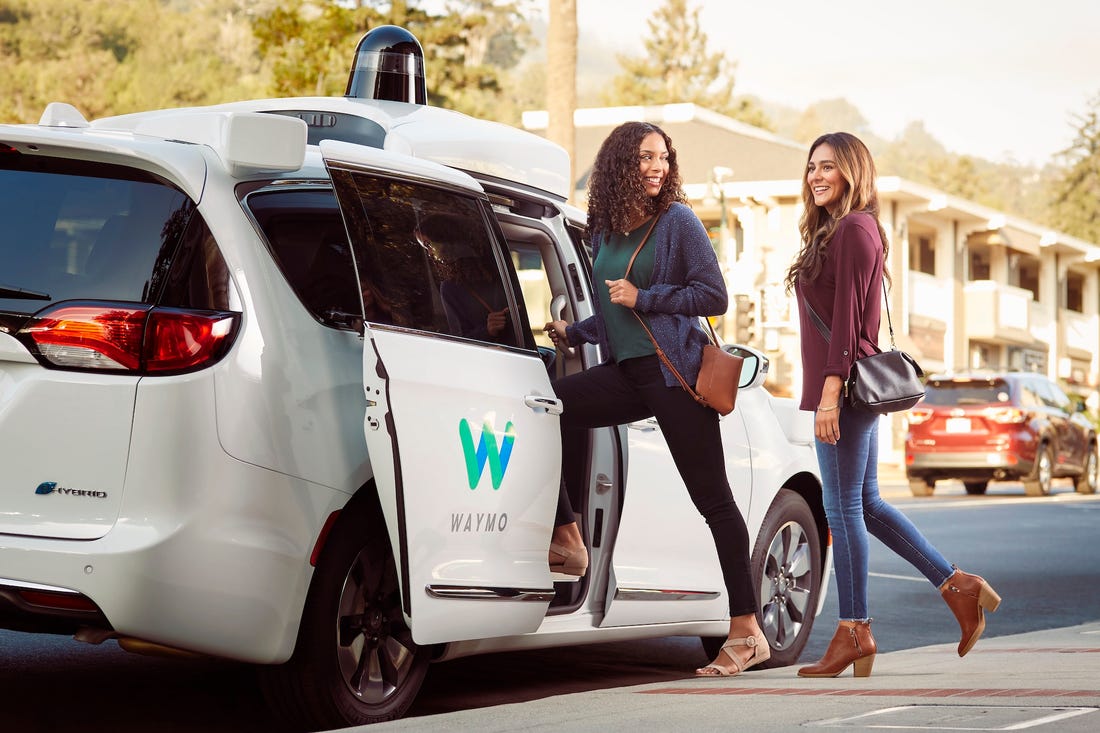
    Alphabet subsidiary Waymo will launch a fully autonomous ride-hailing service in Singapore by 2028, deploying an all-electric fleet in its first expansion into Southeast Asia.

    The commercial rollout gives the self-driving unit a regulated beachhead in Asia after building its initial commercial operations across select metropolitan markets in the United States.

    Fleet Deployment and Local Mapping

    Initial batches of all-electric Jaguar I-PACE vehicles will arrive in Singapore in the coming months. Waymo plans to run a structured readiness phase starting next year, using trained specialist drivers behind the wheel to operate the cars manually.

    Manual testing allows the Waymo Driver software stack to map Singapore’s complex road geometry, lane systems, and heavy monsoon downpours. Engineers need that baseline data before removing safety drivers from the vehicle cabin entirely.

    Regulatory Framework with Transport Authorities

    The company formed a direct partnership with Singapore’s Ministry of Transport and the Land Transport Authority to establish the operational framework. The arrangement mirrors Singapore’s broader regulatory approach to autonomous transport, which requires strict staged trials before granting commercial approvals.

    Waymo co-CEO Tekedra Mawakana met Singapore Transport Minister Jeffrey Siow in the San Francisco Bay Area earlier this year to outline the deployment roadmap. Public passengers will eventually book driverless rides directly through the standalone Waymo mobile application once full regulatory clearances clear.

    Implications for Southeast Asian Mobility

    Singapore represents the most structured proving ground for autonomous tech in the region, offering dense urban corridors, high taxi utilisation rates, and clear legal liability guidelines. The entry puts direct long-term pressure on regional ride-hailing incumbents like Grab, which operate traditional driver-dependent platforms across Southeast Asian capitals.

    Autonomous electric fleets shift operating economics from variable driver commissions to fixed capital expenditure and fleet charging overhead. For municipal transport networks, commercial self-driving cars offer supplementary capacity on fixed routes without adding labor bottlenecks.

    Testing Schedule and Next Milestones

    Singapore previously tested smaller autonomous shuttle pilots in restricted areas like Sentosa and one-north, but Waymo’s program marks the first large-scale commercial fleet deployment targeting general public streets.

    Vehicle arrivals in late 2026 will trigger the start of manual data-collection routes across designated public roads in 2027.
  • Uber to Cut 3,300 Jobs in Global Push Toward Robotaxis

    Uber to Cut 3,300 Jobs in Global Push Toward Robotaxis

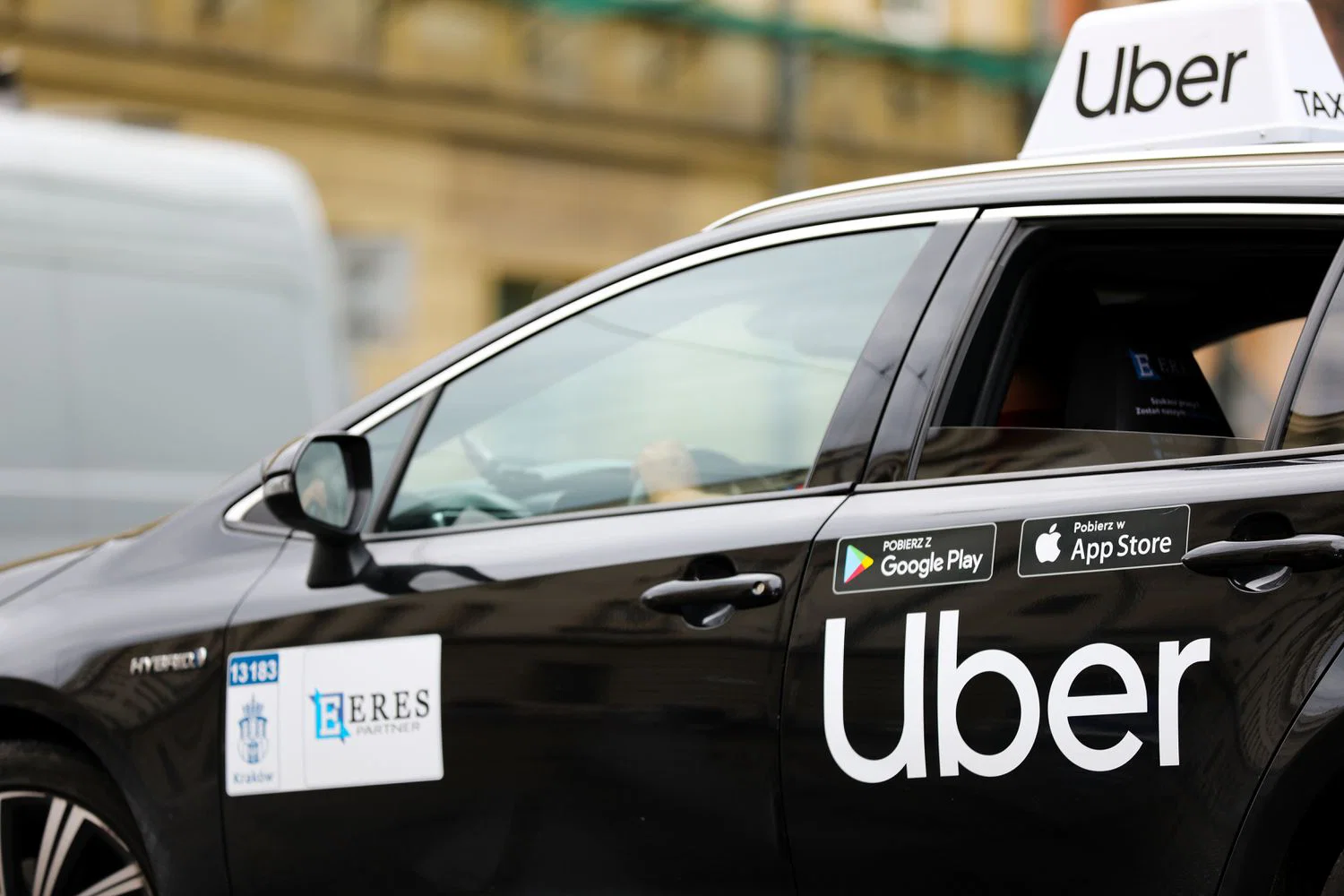
    Uber Technologies is cutting roughly 3,300 jobs, or 10 per cent of its global workforce, to streamline management and fund an autonomous driving push. The retrenchment is the company’s largest round of dismissals since May 2020, when it shed 6,700 workers during the pandemic.

    Chief executive Dara Khosrowshahi announced the restructuring in a staff memo on September 2. The reductions target middle management rather than operational staff, with the company seeking to eliminate bureaucratic bottlenecks that slowed product decisions.

    Stripping Management Layers

    The overhaul cuts the number of workers positioned seven or more reporting tiers below the chief executive by 20 per cent. Internal teams with only one or two direct reports will shrink by nearly half, while several operational divisions will merge across regional hubs.

    Remote work will also contract sharply. Uber will cap fully remote positions at about 1 per cent of its total headcount while enforcing its existing policy requiring three days a week in the office. The platform finished 2025 with approximately 34,000 global employees.

    Unlike other technology peers cutting headcount this year, Khosrowshahi did not attribute the dismissals to artificial intelligence tools. Industry tracker layoffs.fyi recorded more than 123,000 tech redundancies across roughly 390 businesses in 2026, many citing automated workflow gains.

    Redirecting Capital to Autonomous Fleets

    Savings from the payroll cuts will help finance more than US$10 billion in planned autonomous vehicle investments. Uber wants to secure its position as a central booking marketplace for driverless fleets operated by external partners, countering threats from standalone operators such as Waymo and Tesla.

    Tensions with autonomous developers have escalated as suppliers expand their own direct-to-consumer networks. Waymo currently operates driverless vehicles through the Uber app in Austin and Atlanta, but it is rolling out into additional metropolitan areas independently.

    For mobility operators across Asia and Western markets, the transition to robotaxis threatens the traditional middleman fee structure built on gig workers. While Southeast Asian operators continue to rely on human drivers, platform valuations increasingly hinge on controlling autonomous dispatch software rather than maintaining large administrative headcounts.

    Uber shares gained 2 per cent in pre-market trading following the announcement, after dropping nearly 8 per cent earlier in the year. The company must now deploy its autonomous capital budget while renegotiating fleet supply pacts across key urban markets.

  • Hyundai Targets 9 per Cent Margin and Adds 1.27 Million Units of Capacity

    Hyundai Targets 9 per Cent Margin and Adds 1.27 Million Units of Capacity

    Hyundai Motor will add 1.27 million units of global vehicle production capacity by 2030 as it lifts its operating profit margin target above 9 per cent.

    The South Korean group plans to refresh or introduce more than 100 models over the next four years, directing more than half of those releases to North America. The product roadmap includes the Santa Fe extended-range electric vehicle (EREV), which the company will manufacture at its assembly plant in Alabama, alongside a new luxury hybrid vehicle.

    Management raised the group’s 2030 consolidated operating margin guidance from an earlier band of 8 per cent to 9 per cent. It left its 2026 operating margin forecast unchanged at 6.3 per cent to 7.3 per cent, while reaffirming an annual target of 5.55 million vehicle sales by 2030, representing roughly 6 per cent global market share. Electrified vehicles are projected to make up 60 per cent of those deliveries by the end of the decade, up from 23 per cent in 2025.

    Hybrids and US Production Footprint

    Surging fuel prices tied to geopolitical conflicts have steered American consumers back toward hybrid powertrains. Cox Automotive survey data shows 56 per cent of prospective US car buyers are more inclined to choose a hybrid due to high pump prices, while research group Omdia tracked a 19 per cent rise in overall hybrid sales across the first half of 2026. Hyundai reported its own quarterly hybrid volume surged 71 per cent in the second quarter.

    Trade policy remains a major operational hurdle for the Seoul-based manufacturer. The pending review of the United States-Mexico-Canada Agreement has introduced friction into North American parts logistics, as US trade officials resist automatic treaty extensions in favor of tighter annual oversight across cross-border automotive supply chains.

    Factory Automation and AI Compute

    Beyond vehicle assembly lines, the carmaker is pushing capital into industrial robotics and autonomous driving platforms. Commercial deliveries of IONIQ 5 electric crossovers to Alphabet’s autonomous fleet unit Waymo begin in the fourth quarter of 2026, while driverless passenger operations run by Hyundai’s Motional joint venture start in Las Vegas later this year.

    Robotics manufacturing will begin in the US in 2028 with a planned annual run rate of 30,000 units. The company will deploy Boston Dynamics’ Atlas humanoid robots at its Georgia Metaplant facility in 2028 after completing factory floor simulation testing. Supporting its software-defined vehicle pipeline, Hyundai will also bring a 100-megawatt artificial intelligence data center online in 2029 equipped with more than 50,000 graphics processing units.

    For Asian automotive majors balancing choppy electric vehicle demand, shifting output toward high-margin hybrid platforms and domestic US manufacturing has become the primary playbook to protect operating cash flow.

    Investors reacted cautiously to the capital expenditure plans, sending Hyundai Motor shares down 3.3 per cent in Seoul against a 1.3 per cent gain on the benchmark KOSPI index. The company will cancel 789 billion won ($570 million) worth of treasury shares while maintaining a minimum 35 per cent shareholder payout ratio.

  • Waymo Offers Driverless Rides To San Francisco Employees, Expands In Phoenix

    Waymo Offers Driverless Rides To San Francisco Employees, Expands In Phoenix

    Alphabet Inc unit Waymo said on Wednesday it has started offering driverless rides to employees in San Francisco, accelerating a race with General Motors Co-backed rival Cruise to commercialize the technology in the dense city.

    Waymo also introduced autonomous rides to employees in downtown Phoenix with safety drivers behind the wheel, with a goal to open it to public testing.

    “Operating fully autonomously in multiple markets – in addition to Waymo’s growing trucking operations – is a critical validator of the scalability of Waymo’s operations and technology,” it said in a statement.

    A self-driving technology pioneer, Waymo started the first U.S. driverless taxi service in 2020, over a decade after it was born in 2009 as a project inside Google. While it gives paid rides to hundreds of people a week using Chrysler minivans, Waymo’s service has not expanded beyond suburban Phoenix areas that cover about 50 square miles (129.5 square kilometers).

    Waymo in August started giving autonomous rides free of charge to a limited number of people in San Francisco with safety drivers on board, using its Jaguar electric vehicles equipped with sensors such as spinning lidars on the top.

    Waymo needs to receive at least two more permits from the California Department of Motor Vehicles (DMV) and the California Public Utilities Commission (CPUC) to start charging passengers for driverless rides in San Francisco.

    Waymo declined to comment on whether it had applied for the permits.

    Cruise already is giving fully driverless rides to employees and members of the public free of charge in San Francisco. The company is seeking CPUC approval for commercial driverless service, with a goal to get permitted this year.

    Self-driving technology firms, which have attracted billions of dollars of investments, face challenges of scaling up their technology, after missing their earlier targets to launch commercial services.

  • Waymo, UPS Expand Autonomous Freight Truck Tie-Up Ahead Of Holidays

    Waymo, UPS Expand Autonomous Freight Truck Tie-Up Ahead Of Holidays

    Alphabet Inc’s Waymo said on Wednesday it is expanding its partnership with United Parcel Service Inc to move freight using autonomous trucks between two of the parcel delivery company’s Texas facilities during the holiday season.

    Waymo Via, the company’s delivery operation, began its partnership with UPS in early 2020 when it shuttled packages for the company between the Metro Phoenix area and its Tempe hub in Arizona using an autonomous minivan.

    The company said trial runs would start in the coming weeks, where big rigs equipped with its fifth-generation Waymo Driver technology will deliver for UPS’ North American Air Freight unit between facilities in Dallas-Fort Worth and Houston, Texas.

    Driver shortages have hit U.S. trucking and delivery companies, most notably FedEx Corp, as they race to hire workers for the crucial holiday season when package volumes can easily double. Waymo and UPS said the trials would help assess the impact of autonomous driving technology on safety and efficiency.

  • Samsung To Develop Autonomous Driving Chip For Google’s Waymo

    Samsung To Develop Autonomous Driving Chip For Google’s Waymo

    Samsung Electronics recently won a project for Google parent Alphabet’s autonomous driving unit Waymo to develop chips for next-generation self-driving cars, South Korean media reported on Monday.

    Samsung will develop a chip that computes data collected from various sensors installed in autonomous vehicles or centrally controls functions by exchanging information with Google data centers in real-time, South Korean newspaper Herald Business reported, citing an unnamed industry source.

    The project is expected to be carried out by Samsung’s logic chip development division System LSI’s Custom SOC Business Team, it added.

    Samsung Electronics declined to comment regarding client company matters. Alphabet did not have an immediate comment.

  • Google’s Waymo Self Driving Car Unit Starts Robo-Taxis In San Francisco

    Google’s Waymo Self Driving Car Unit Starts Robo-Taxis In San Francisco

    Waymo is the pioneer of self-driving cars, but it has been beaten to the punch by Chinese rivals AutoX and Baidu to deploying robo-taxis. Well, this wasn’t going to stand for long as it has started tests of its robo-taxis in San Francisco.

    Waymo had deployed its ride-sharing service in Phoenix, Arizona earlier in 2020 called Waymo One. For the first time, it had also started testing the service without safety drivers in the area, but now a more full-fledged expansion is happening.

    Experts have predicted that the pandemic is accelerating the adoption of autonomous vehicles for transportation and delivery. Overall, global trust for autonomous vehicles has also grown by leaps and bounds in the last three years as the technology has progressed.

    Waymo has Chrysler Pacifica and Jaguar I-Pace electric SUVs which have driven over 20 billion autonomous miles through computer simulations and 20 million autonomous miles on public roads in 25 cities.

    Now Waymo employees in San Francisco will use the Waymo One app to hail rides. They will be prompted for pick-up and drop-off points before being given an ETA. This is similar to a typical ride-hailing app.

    Till 2019, Waymo had a fleet of 153 cars and 268 safety drivers in San Francisco alone, though its latest fleet size is unknown, though presumably, it has increased. These vehicles were deployed in San Francisco to deliver packages for non-profits after the pandemic induced halt in testing.

    “We’re beginning with a limited number of cars and riders and will scale over time. These rides are being offered with a single-vehicle operator,” a Waymo spokesperson said.

    “The initial program starts this week and will last for several, but we plan to grow it over time. We don’t have any specific timelines to share about when (or where) we’ll be offering a public service. It’s worth bearing in mind this is for early product testing and continuous improvement, and there are many further steps we’d need to go through … before we could deploy a service to the public,” Waymo added in a statement.

    Waymo has a permit from the public utility commission in California that’s part of the procedures to run an autonomous vehicle passenger service pilot. This is separate from the California Department of Motor Vehicles (DMV) under which 66 companies have permits.

    Waymo One currently delivers rides with a network of 600 autonomous cars from Phoenix 24 hours a day, seven days a week. It also has a partnership with LYFT to deploy 10 cars on the Waymo One platform.

    Currently, it is on track to having more than 60,000 Pacifica minivans from Chrysler and 20,000 i-pace electric SUVs from Jaguar. It also has a deal with Daimler for developing self-driving semis.

  • Waymo And Daimler Are Partnering For Self Driving Trucks

    Waymo And Daimler Are Partnering For Self Driving Trucks

    Recently few reports emerged which said that Mercedes was scaling back from developing autonomous driving technology which was quickly buried by the company’s head of digital transformation. Now Alphabet-owned Waymo and Daimler have officially announced a partnership in which the German company will be teaming up with the pioneering self-driving company to sell autonomous trucks in the US. This partnership will see the Waymo One technology make its way to Daimler’s trucks – it is the same technology that Alphabet has deployed in Phoenix, Arizona which forms the world’s first self-driving ride-hailing service.

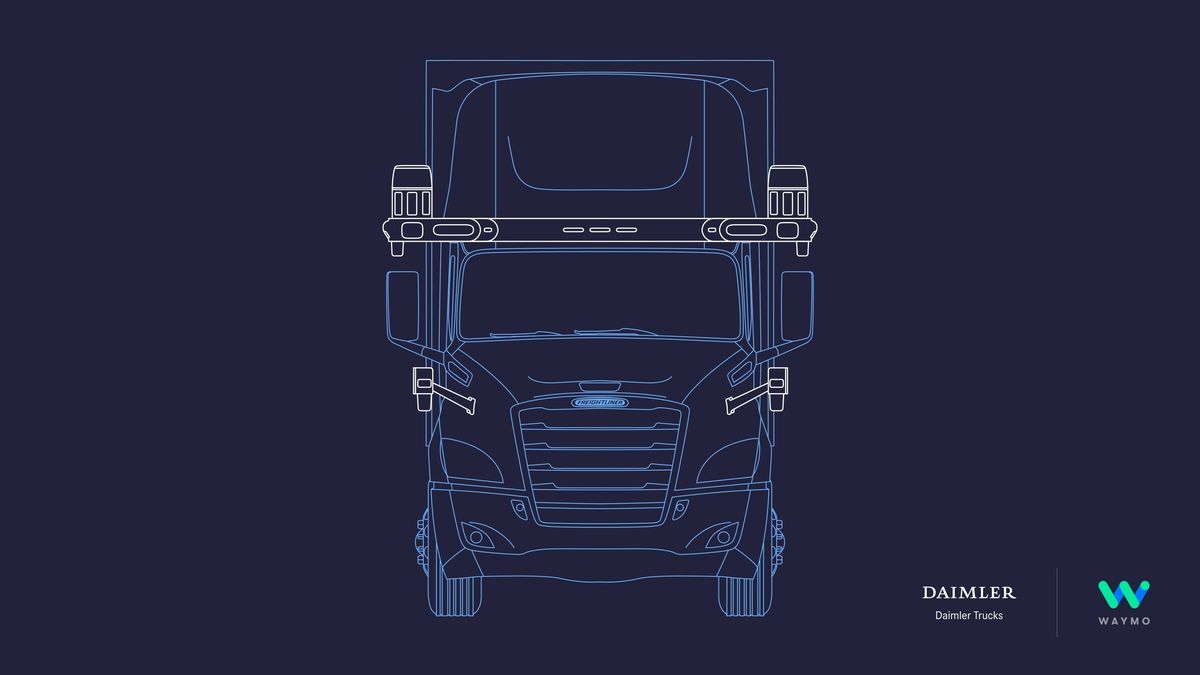
    “The autonomous Freightliner Cascadia truck, equipped with the Waymo Driver, will be available to customers in the U.S. in the coming years,” the two companies said in a statement. “Waymo and Daimler Trucks will investigate expansion to other markets and brands in the near future,” the statement added without outlining an actual timeline.

    The deal is particularly with Daimler North America ties in soundly with Waymo’s vision of graduating to larger vehicles like trucks. Daimler also has tested its own self-driving trucks in the past. Mercedes recently also introduced autonomous driving technology to the S-class and has also partnered with the airport in Stuttgart to provide a self droving car valet service in partnership with Bosch.

    “We have the highest regard for Daimler’s engineering skills and broad global truck product portfolio, and so we look forward to scaling the Waymo Driver, together with our new partner, to improve road safety and logistics efficiency on the worlds’ roadways,” said John Krafcik, Waymo’s CEO.

    Adding to this Martin Daum, chairman of the board of management of Daimler Truck AG and Member of the Board of Management of Daimler AG said, “As the leader of our industry, Daimler Trucks is the pioneer of automated trucking. In recent years, we have achieved significant progress on our global roadmap to bringing series-produced highly automated trucks to the road. With our strategic partnership with Waymo as the leader in autonomous driving, we are taking another important step towards that goal. This partnership complements Daimler Trucks’ dual strategy approach, of working with two strong partners to deliver autonomous L4 solutions that are seamlessly integrated with our best-in-class trucks, to our customers.”

    The Freightliner Cascadia truck will be the primary focus of this deal. It will be outfitted with the Waymo driver platform. It is a class 8 vehicle and comes with a hefty safety suite called the Detroit assurance 5.0 which includes active safety technology including active brake assistance, adaptive cruise control, lane departure warning and lane-keeping systems as options.

    The Waymo Driver platform will elevate the ADAS capability of this truck beyond level 4. They will be able to handle most driving conditions including heavy inclement weather. This comes with the credence of the Waymo driverless platform being able to handle alternative climates something Waymo has tested for more than half a decade as the pioneer of driverless technology ever since it graduated out of Google Skunkworks R&D unit called Google X and then was spun off into a separate company called Waymo.