Tag: WealthFront

  • UBS Acquires U.S. Digital Wealth Platform for Affluent Segment

    UBS Acquires U.S. Digital Wealth Platform for Affluent Segment

    UBS has agreed to acquire California-headquartered digital-only wealth platform Wealthfront, amidst broader plans to tap into the affluent segment worldwide.

    UBS has signed an agreement to acquire Wealthfront in an all-cash transaction valued at $1.4 billion, according to a statement.

    The deal will allow UBS to accelerate its growth plans in the U.S., increase reach into the affluent segment as well as expand distribution and other capabilities.

    Wealthfront complements our core business in the U.S. providing wealth management to high net worth and ultra-high net worth investors through trusted relationships with financial advisors, and will enhance our long-term ambition to deliver a scalable, digital-led wealth management solution to affluent investors, said UBS group chief executive Ralph Hamers.

    After the transaction, which is expected to complete in the second half of 2022, Wealthfront will become a wholly-owned subsidiary of UBS and operate as a business within UBS Global Wealth Management Americas.

    Based in Palo Alto, California, Wealthfront is a digital-only platform providing access to financial planning capabilities, banking services and investment management solutions with a focus on affluent millennial and ‘Gen Z’ investors.

    Currently, Wealthfront has over $27 billion of assets under management with more than 470,000 clients in the U.S. Following integration, Wealthfront clients will also benefit from access to UBS’ wealth management capabilities including content from its chief investment office, its global footprint alongside its shelf of products and services.

    The newly signed agreement follows recent comments by Hamers about UBS’ plans to target mass affluent customers worldwide via an offering that combines digital capabilities and access to human advice.

    It is clear that we should cater for the entrepreneurs, but we should also cater for that segment of the market that may not be completely digitally engaged, but also doesn’t want to have 100 percent client-advisor coverage, but something in the middle, he said during the bank’s third-quarter results last year, calling the segment a sweet spot.

    According to Hamers, the plan is to first make a push in the U.S. before rolling out an offering to target affluent clients globally.

  • Would you ever take investment advise from an app?

    Would you ever take investment advise from an app?

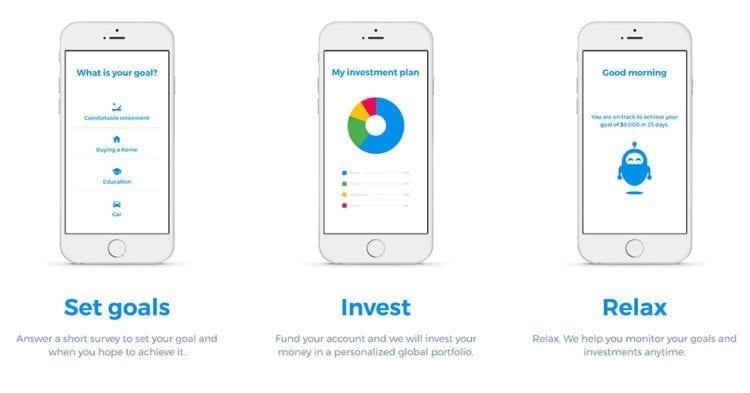
    Fintech firm 8 Securities said on Monday it plans to launch Hong Kong’s first so-called robo-investment advisor app in the next quarter, which it is calling “Chloe”, but experts remained divided on whether such an idea will every catch on in the city.

    Asia, and especially Hong Kong, is seen as lagging other international markets on the adoption of robo-advisors.

    Assets held by such robo-advisors in Hong Kong are expected to expand exponentially to US$20.6 billion by 2020 from the current US$400 million, according to a Boston-based research firm Aite Group’s latest robo-advisor forecast.

    The apps are powered by artificial intelligence and machine-learning technologies developed in-house, and effectively learn day by day as a system’s user base and database grows, matching products to customers with different financial needs.

    That’s very different, of course, to what is offered by around 450 local brokers in Hong Kong, who have traded for decades, by offering personalised services based on close relationships, to hold onto clients.

    Mathias Helleu, 8 Securities’ executive chairman and co-founder, expects the Chloe app’s popularity to grow fast thanks to higher mobile penetration and lower entrance levels for users.

    “Chloe users will have the freedom to deposit or withdraw money from their portfolio anytime and with no penalty,” said Helleu. “The minimum investment amount with Chloe will be under HK$1,000.”

    In the West, the fledging robo-advisor industry is growing fast.

    By the end of 2015, US robo-advisor services had US$53 billion in assets under management, up from US$2 billion in 2013, according to statistics from the Aite Group. Key players include both startups such as FutureAdvisor, Bettermont and WealthFront, and big industry names, such as Bank of America Merrill Lynch.

    I do not expect robo-advisor apps to prove attractive in mature markets like Hong Kong. Here, retail investors consider their brokers or wealth managers more reliable

    Benny Mau, chairman of Hong Kong Securities Association

    However, that number of managed assets is still small compared with the US$20 trillion total investable assets by US retail investors.

    Traditional Hong Kong brokers, however, questioned on Monday whether local retail investors, many of whom still like going to bank branches or brokers shops to buy and discuss their investments, will ever use such an app.

    Benny Mau, chairman of Hong Kong Securities Association, the industry body, said: “I do not expect robo-advisor apps to prove attractive in mature markets like Hong Kong. Here, retail investors consider their brokers or wealth managers more reliable [than robo-advisors].”

    chloe app

    Mau also added Hong Kong investors are more rational than in other developing markets and a lot more cautious and selective as to which investment services they use.

    However, he did concede some young investors could find the service appealing.

    But Brett McGonegal, chief executive of Capital Link International, said robo-advisors are sweeping the investment world as they represent the pioneering wave of the fintech revolution.

    “This is critical in addressing the needs of a new investing group around the world — that’s millennials. “Platforms that blend human contact with technology will prove to be very successful amongst the new generation that often feel more comfortable communicating over electronic means rather than face to face,” McGonegal said.

    Jenny Lau, a recent graduate whose basic monthly salary is HK$21,000, said she would try her hand at Chloe because it has no penalty and is convenient to operate on her mobile phone.

    “The minimum investment of under HK$1,000 is no big deal for me,” she added.

    “But it will just be to satisfy my curiosity and I do not expect any high investment returns. I’ll not use it for my life saving goals.”