Tag: wealthy

  • Wealthy Families Go Global: UBS Reveals Surge in Diversification and AI Investment Strategies

    Wealthy Families Go Global: UBS Reveals Surge in Diversification and AI Investment Strategies

    Geopolitical uncertainties, economic recession concerns, and increasing skepticism around the supremacy of the U.S. dollar are leading to a shift in the investment strategies of affluent families globally. The new Global Family Office Report from UBS reveals that more family offices are considering strategic alterations to their portfolios than ever before.

    Investment Diversification Amid Global Uncertainties

    The report sheds light on how investors are adjusting their portfolios in response to geopolitical instabilities and structural risks. UBS’ survey, which involved 307 global family offices across over 30 markets, each with an average net worth of $2.7 billion, shows that 60% of respondents are planning to amend their strategic asset allocation within the next year. The focal point of this repositioning is wider diversification across regions, currencies, and asset types, along with an increased emphasis on long-term thematic investments.

    Artificial Intelligence (AI) remains a particularly attractive investment opportunity. The report finds that 65% of family offices have made investments throughout the entire AI value chain, spanning from data centers and software platforms to semiconductor manufacturers. Although valuations are high, many investors intend to boost or maintain their exposure in this arena.

    Investment Themes and Succession Planning Challenges

    Family offices are also showing keen interest in investments related to infrastructure, energy, and commodities, while cryptocurrencies are seen as a more niche allocation. The survey found that only 44% of invested family offices currently consider digital assets as part of their strategic asset allocation, with actual portfolio exposures remaining relatively modest.

    In terms of governance and succession planning, many family offices are falling short. The report shows that only about a third have a clearly defined succession plan, and just 27% are preparing the next generation in an organized manner for future leadership roles.

    Family offices in North Asia are leaning towards a technology-driven and globally diversified investment strategy, with 74% of their investments related to AI. Southeast Asian family offices are even more invested in AI, with 88% already invested in the sector.

    Questions & Answers

    What is the main investment focus of family offices according to the UBS report?
    The main focus is on broader diversification across regions, currencies, and asset types, along with an increased emphasis on long-term thematic investments, especially in Artificial Intelligence.

    How are family offices approaching the issue of succession planning?
    The report reveals that only about a third of family offices have a clearly defined succession plan in place, and just 27% are preparing the next generation for future leadership roles in an organized manner.

    What is the stance of family offices on cryptocurrencies?
    Cryptocurrencies are considered more of a niche allocation. Only 44% of the family offices that have made investments currently consider digital assets as part of their strategic asset allocation.
  • Indonesia’s Wealthy on Tax Radar as Government Battles Soaring Budget Deficit

    Indonesia’s Wealthy on Tax Radar as Government Battles Soaring Budget Deficit

    The Indonesian government is increasing its tax scrutiny on its wealthy residents and large corporations in light of a significant national budget deficit. This action is part of a broader initiative to enhance tax collections amidst a challenging year for revenue in Southeast Asia’s most substantial economy. The current budget deficit is closing in on the 3% of GDP ceiling.

    Intensified Tax Scrutiny

    Large corporations, especially those under local magnate control, have been requested to provide additional tax payments in 2025. Some family-owned businesses have been asked to contribute over US$5 million.

    Circumstances grew more complicated when a subset of these firms resisted the new demands. Tax authorities then proposed a compromise, suggesting companies pay 30% of the requested amount. The calculation method for this figure, however, was not disclosed.

    Finance Ministry’s Director-General of Taxes, Bimo Wijayanto, verified the summoning of high-net-worth taxpayers. In a press briefing on December 18, he described the move as a standard procedure meant to make tax data more accurate. He also mentioned that this initiative offers taxpayers an opportunity to provide explanations, voluntarily rectify their tax returns, and ensure compliance.

    The exact number of individuals and businesses contacted for this matter remains unknown.

    The “Hunting in a Zoo” Phenomenon

    End-of-year drives to boost tax revenue are not uncommon in Indonesia. Critics and business leaders often refer to this as “hunting in a zoo.” This metaphor refers to the tendency to focus on a small group of large, formal taxpayers who are easier to track, rather than broadening compliance across the country’s expansive informal economy.

    According to data from the Finance Ministry, tax receipts are currently significantly below targets. Collections up to the end of November amounted to 79% of a decreased full-year aim, a drop from nearly 90% over the same period the previous year.

    Experts believe that weak collections, coupled with subdued economic conditions and softer commodity prices, have led to Indonesia’s budget deficit forecast hitting 2.78% of GDP. This estimate is the highest in two decades, excluding the years affected by the COVID-19 pandemic.

    Questions & Answers

    Why is the Indonesian government increasing tax scrutiny on wealthy individuals and corporations?
    The government is trying to address a significant national budget deficit by enhancing tax collections.

    What compromise has been proposed to companies resisting additional tax payments?
    The tax authorities have suggested that these companies pay 30% of the requested amount.

    How are end-of-year efforts to increase tax revenue perceived in Indonesia?
    These efforts are often referred to as “hunting in a zoo,” indicating a focus on a small pool of large, formal taxpayers rather than seeking to expand compliance across the country’s vast informal economy.

  • Hermes Records Impressive Growth With €8 Billion Revenue In First Half Of Year

    Hermes Records Impressive Growth With €8 Billion Revenue In First Half Of Year

    Hermes, the esteemed French luxury brand, has demonstrated impressive sales growth in the first half of the current year. This surge in revenue was experienced across all regions as affluent customers continued their patronage of the brand’s distinguished leather products.

    The brand recorded a revenue of €8 billion (US$8.78 billion) for the half-year period concluding on June 30th. This performance marks an 8% increase in profits, calculated at a constant exchange rate when compared to the same timeframe in the previous year.

    Sales saw a 9% rise in the second quarter itself, which was bolstered by an excellent performance in the markets of the United States, Japan, and the Middle East.

    According to Hermes, the growth was widespread across all geographical regions, with each one reporting gains. Japan led the way with a robust 16% increase, followed by the Americas with a 12% rise. Sales in France experienced a 9% increase while Europe, excluding France, witnessed a 13% acceleration.

    Axel Dumas, the Executive Chairman of Hermes, has expressed his satisfaction, attributing the firm’s first-half success across all regions to the strength of the Hermes model.

    On behalf of the company, he expressed gratitude to all their customers for their continued trust and to all the employees for their dedication, adding, “We will continue to invest and recruit to ensure the group’s sustained success.”

    The primary driver of growth for Hermes is its core leather goods and saddlery division, which includes the highly coveted Birkin and Kelly bag lines. The brand also reported significant increases in the sales of jewellery and homeware. However, the sales of watches and perfumes exhibited a decline.

    Hermes has laid out plans to persist with investments in craftsmanship, to broaden production, and to reinforce its global retail presence in order to meet the escalating demand for its exclusive merchandise.

    Questions & Answers

    What was the revenue of Hermes for the first half of this year?
    The French luxury brand Hermes recorded a revenue of €8 billion (US$8.78 billion) for the first half of the year.

    Which regions showed significant growth for Hermes?
    Every geographical region posted gains for Hermes. Japan led with a 16% increase, followed by the Americas with a 12% rise. Sales in France experienced a 9% increase, whilst Europe, excluding France, witnessed a 13% rise.

    Which product categories drove the growth for Hermes?
    The primary growth driver for Hermes was its core leather goods and saddlery division, including the popular Birkin and Kelly bags. The brand also reported double-digit increases in jewellery and homeware.

  • Singapore Emerges as Asia’s Premier Offshore Hub for Wealthy Investors

    Singapore Emerges as Asia’s Premier Offshore Hub for Wealthy Investors

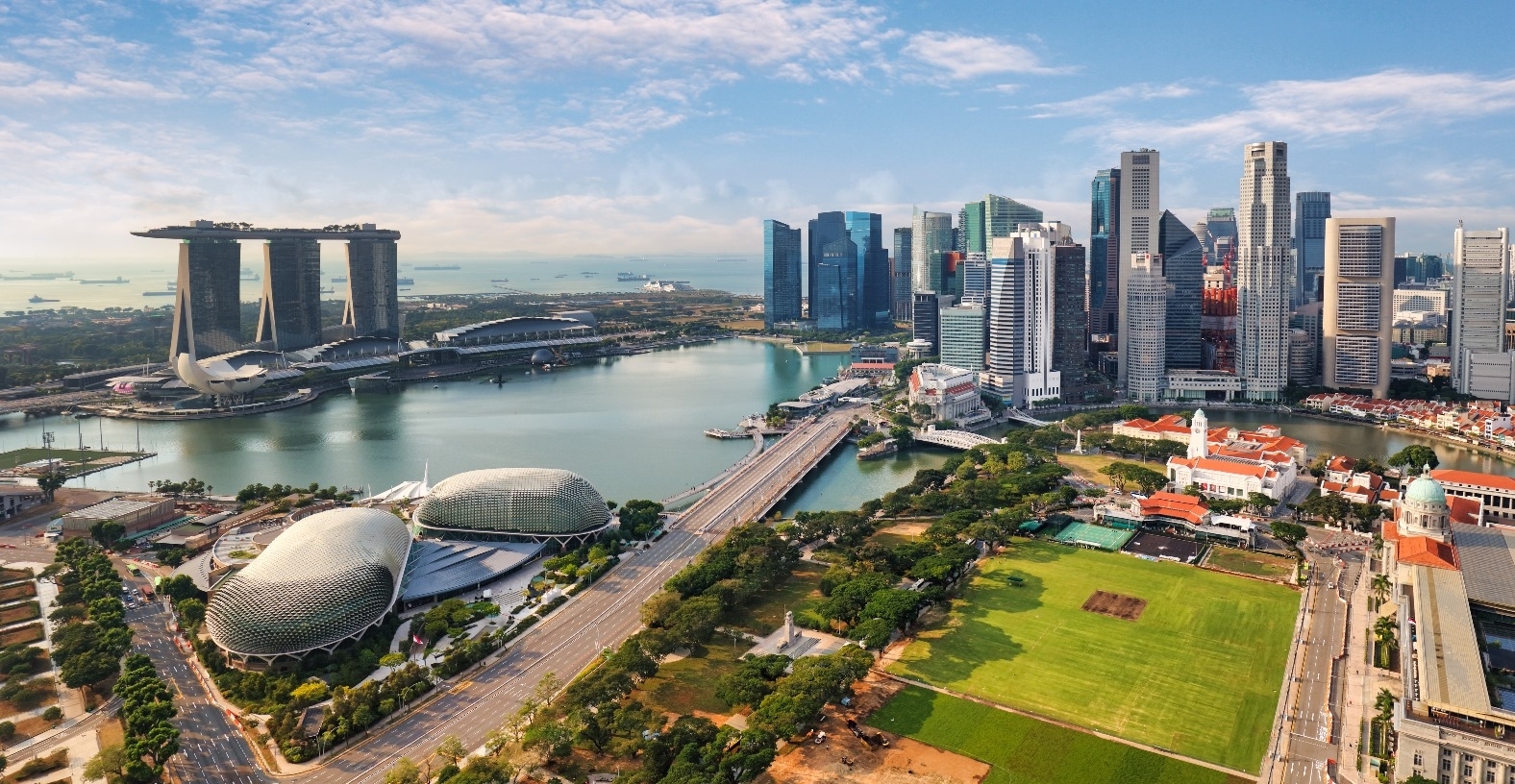
    Saving for that dream vacation has officially eclipsed financial security as the leading aspiration for wealth among investors. In a revealing study by HSBC, Singapore is crowned as Asia’s premier offshore wealth destination.

    Singapore’s Winning Streak in Wealth Management

    The study, featured in HSBC’s 2025 Affluent Investor Snapshot, surveyed 10,797 individual investors from 12 different markets, highlighting Singapore as the top location in Asia for opening overseas investment accounts. This further cements the city-state’s reputation as a trusted and stable hub for international wealth management.

    Affluence and Confidence Among Investors

    Notably, Singapore also ranks alongside the USA and Hong Kong as one of the three premier destinations for wealthy investors worldwide. Confidence among Singaporean respondents is striking; two-thirds believe they can achieve their long-term financial objectives. Gen Z and Millennials especially shine in this regard, with nearly 70% expressing assurance about reaching their goals. Older generations, including Gen X and Baby Boomers, remain optimistic as well, with 60% conveying similar sentiments.

    Shifting Financial Priorities

    Interestingly, the pursuit of leisure now takes center stage. A noteworthy 47% of Singaporean investors prioritize saving for vacations and leisure ahead of traditional concerns like financial security. Despite this shift, affluent investors continue to prioritize wealth building (46%) and retirement planning (47%).

    Preferred Avenues for Wealth Guidance

    When it comes to wealth management services, Singaporeans have clear preferences. A significant 65% of investors turn to relationship managers and wealth specialists for guidance. In a surprising twist, stockbrokers are the second most favored option, chosen by 28% of respondents, diverging from the global trend where friends and colleagues hold that position with 29%.

    Questions & Answers

    What financial goal is currently prioritized by Singaporean investors?
    Investors in Singapore are now prioritizing saving for vacations and leisure, which has surpassed financial security as their top objective. About 47% of respondents report this as their main focus.

    How does Singapore rank among global wealth destinations?
    Singapore stands alongside the USA and Hong Kong as one of the top three destinations worldwide for investors seeking offshore wealth management options.

    Who do Singaporean investors prefer for wealth management guidance?
    A clear majority of 65% of Singaporean investors prefer to consult with relationship managers and wealth specialists for their wealth management needs, contrasting with global investors who lean more towards friends and colleagues.

  • APAC Billionaires Hit the Hardest in 2018

    APAC Billionaires Hit the Hardest in 2018

    Global billionaire wealth and its population have fallen for only the second time since the global financial crisis in 2008, with those in APAC suffering the most.

    After reaching record levels the previous year, global billionaire wealth in 2018 declined by 7 percent to $8.6 trillion, while the billionaire population fell by 5.4 percent to 2,604, according to the 2019 edition of Billionaire Census, published by global ultra high net worth intelligence and data company Wealth X.

    This fall in wealth was largely caused by a slowdown in global growth, persistent trade tensions and a slump in equity markets, the report said. The findings of the report, which has been published annually since 2013, were based on Wealth-X’s global database of more than 1 million records on the world’s wealthiest individuals.

    The report noted that apart from the U.S., U.K., Russia, and France, nearly all of the top 15 countries by billionaire population saw a decline. Asia-Pacific’s billionaire population fell by 13.4 percent, driven by large declines in China, India, and Singapore.

    The region also saw the largest decline in billionaire wealth – billionaires here saw their net worth fall by an average of 9 percent, compared to 7 percent in EMEA and 6 percent in the Americas. The report attributed this to three factors: weak equity market performance on the back of slowing growth, tariff disputes, and emerging market volatility.

    Top Billionaire Countries

    1. United States (705 billionaires)
    2. China (285)
    3. Germany (146)
    4. Russia (102)
    5. United Kingdom (97)
    6. Switzerland (91)
    7. Hong Kong (87)
    8. India (82)
    9. Saudi Arabia (57)
    10. France (55)
    11. United Arab Emirates (55)
    12. Brazil (49)
    13. Italy (47)
    14. Canada (45)
    15. Singapore (39)
  • Julius Baer Starts to Serve Thai Wealthy Individuals

    Julius Baer Starts to Serve Thai Wealthy Individuals

    The Siam Commercial Bank (SCB), the first commercial bank in Thailand, and Julius Baer, the leading Swiss wealth management group and one of the four largest private banks in Asia, announced on Thursday that their joint venture company, SCB Julius Baer, has received the necessary approvals and licenses to operate in Thailand, beginning with over 50 dedicated professionals.

    SCB Julius Baer will focus on bringing best-in-class global wealth management capabilities to clients in the growing Thai wealth management market.

    Jiralawan Tangitvet joins as Chief Executive Officer to lead SCB Julius Baer. A seasoned investment specialist with over two decades of experience, both in the buy- and sell-side in the financial industry, Jiralawan has a track record of helping clients build investment strategies tailored to their financial goals as well as design business plans that accelerate growth and opportunities. Prior to joining SCB Julius Baer, she was most recently Managing Director at Kasikorn Securities.

    «We are delighted that Jiralawan has been appointed to lead this important joint venture in Thailand. Her extensive experience combined with Julius Baer and SCB’s capabilities provide our clients with a unique value proposition in Thailand,» said Jimmy Lee, Member of the Executive Board and Head Asia Pacific, Julius Baer.

    Over the last few months, concrete steps have been taken and key personnel has been hired with the leadership experience and expertise in Thailand to advise clients regarding their wealth management and wealth planning needs. Julius Baer’s international expertise and SCB’s on-the-ground experience form the foundation of these training and development programmes.

    «SCB’s strong brand name in Thailand provides the joint venture with a home-court advantage while Julius Baer contributes its comprehensive investment and advisory solutions built on global best-in-class expertise. Together, we have a winning formula for our clients in Thailand,» said Christian Cappelli, Market Head Emerging Asia, Julius Baer.