Retail News CRM

Tag: wearable technology

  • Hyundai brings wearable robotics to factories

    Hyundai brings wearable robotics to factories

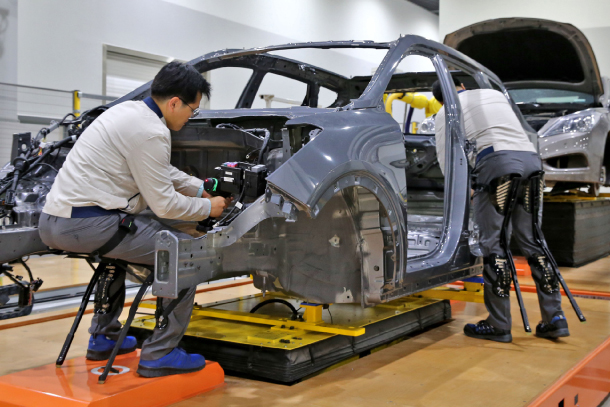
    The Hyundai Motor Group will expand the use of wearable robots at its facilities as it works to make robotics a major source of revenue, the company said Monday. Since September, Korea’s largest automaker has been testing the Hyundai Chairless Exoskeleton (H-CEX) at its North American factory. The H-CEX is an assistive robot for workers who have to stay in a seated position throughout the day. By the end of this year, the carmaker will introduce the Hyundai Vest Exoskeleton (H-VEX) at the same facility.

    The H-CEX, the first wearable developed by Hyundai for use at production sites, reduces the use of waist and lower body muscles by 80 percent, reducing the fatigue that results from being in the same seated position for a long period of time, Hyundai said in statement. The soon-to-be introduced H-VEX exoskeleton is for workers in jobs that require a lot of arm lifting. The machine vest will support the upper body and protect neck and shoulder muscles.

    “By expanding test applications, we hope to prove the technological effectiveness of our wearable robots,” Hyundai said in statement.

    The two exoskeletons were developed by Hyundai’s robotics team, established in May after the company named robotics as one of its five pillars for the future.

    The team is preparing to launch other robots focusing on three main areas: wearables, service robots and mobility robots.

    Hyundai is gearing up to test a hotel robot capable of providing room service and guiding guests. It will be introduced at the Haevichi Hotel & Resort on Jeju Island and at the Rolling Hills Hotel in Hwaseong, Gyeonggi, from the end of this year.

    A car-selling robot with natural language conversation capabilities and artificial intelligence will be prototyped by early next year. By 2020, the automaker plans to introduce a robot that can autonomously charge electric vehicles at charging stations.

    “We believe that robotics could be a solution not only for mobility but also for production in areas suffering from population decline,” a spokesperson for Hyundai said. “We plan to make notable achievements in robotics using technological data we have accumulated while developing autonomous cars.”

    Hyundai is not the only automobile maker bringing exoskeletons to assembly lines. U.S. automaker Ford has tested EksoVest, an upper-body assisting wearable jointly developed with Ekso Bionics. It was introduced at two U.S. factories in November last year. Ford announced in August a plan to bring the robot to 15 plants globally.

    German automakers BMW and Audi are also developing wearable aids for factory workers.

    According to market tracker BIS, the world’s wearable robot market is due to grow by 50 times from $96 million in 2016 to $4.65 billion by 2026.
  • Fossil Asia all set to enter wearable segment

    Fossil Asia all set to enter wearable segment

    As a part of its exercise to strengthen its foothold in the Indian market, watch and accessories brand Fossil is looking not just at penetrating with mono brand retail stores but also introducing its wearable lines which marries technology and fashion.

    The company said it is also going from strength to strength in increasing its presence in the third party e-commerce sites even as it considers setting up its own e-commerce platform following the government’s recent change in rule regarding FDI in e-commerce.

    “Retail and especially, e-commerce, is growing in India. It is only a matter of time when a large chunk of purchases will happen through it. We are piloting our platform but it will be non-transactional for the time being. We may look at transaction from it after regulatory approvals sometime later this year,” Jack Quinlan, Senior V-P, Asia Pacific, Fossil Asia Pacific.

    The company said it is also looking to scale up its mono brand retail stores.

    Aims for 25 stores

    “Our own stores here have struck growth for us. Indian market is growing in double digits. In India, we have 14 mono brand stores. We are looking to take that to 25 in the next few years,” he added.

    Fossil India is the 100 per cent subsidiary of the global brand. It had previously sold through multi-brand retailers. However, following approval of its single brand retail licence, the company had set up its mono brand stores. It has so far committed an investment of $4.5 million (₹30 crore) in the Indian market for retail, Quinlan said. To attract consumers into the affordable luxury brand, the company is will be introducing its wearable line by August-September and it will be priced around $275, he added.

    According to data, smart watches and smart brands is a growing market. Gartner predicts that by the end of 2016, smart watches will constitute about 40 per cent of wearable devices for the wrist. It is estimated that seven out of the top ten smart phone vendors have either entered or are planning to enter the wearable space. Several watch makers have also joined the fray.

    In India, Fossil sells its watches, leather goods and jewellery. “We are also looking at multi-brand retail to bring in more products,” he added.

    Asked if the company is looking at sourcing or manufacturing in India, Quinlan said the company has a sourcing for its leather goods, and factory in Himachal Pradesh for its watches.


  • Wearable technology goes beyond watches

    Wearable technology goes beyond watches

    There is more to wearable technology than wrist devices, with more than 25 exhibitors out to prove this at a consumer technology expo coming up in Shanghai.

    They will be showcasing the latest in wearable innovation at CES Asia, which returns to Shanghai from May 11 to 13.

    Owned and produced by the Consumer Technology Association (CTA) and co-produced by Intex Shanghai, the event is being hosted at the Shanghai New International Expo Centre (SNIEC).

    CTA research expects wearable sales in the emerging Asia-Pacific region to increase by 56 per cent this year.

    “Wearables are one of the fastest-growing areas of technology. They not only count our steps, they also track our mood, sleeping habits and even our pets,” says CES senior vice-president Karen Chupka.

    “The possibilities in this product category are endless.”

    Key companies exhibiting wearables at CES Asia include Garmin, Monster and Ximmerse, plus there is a wearables pavilion organised by the China Electronic Chamber of Commerce.

    New this year will be a CTA-hosted session entitled Innovative Wearables, at the Kerry Hotel on May 12. The panel will discuss innovations coming to market, as well as user interface and design.

    So far, 250 companies representing 20 countries across 15 product categories have signed up to exhibit at CES Asia, including 360, BMW, Hisense and Huawei.

    Formerly the Consumer Electronics Association, CTA is the trade association representing the $287 billion US consumer technology industry. It covers more than 2200 companies, 80 per cent of which are small businesses and startups.

  • Fossil and wearable tech business

    Fossil and wearable tech business

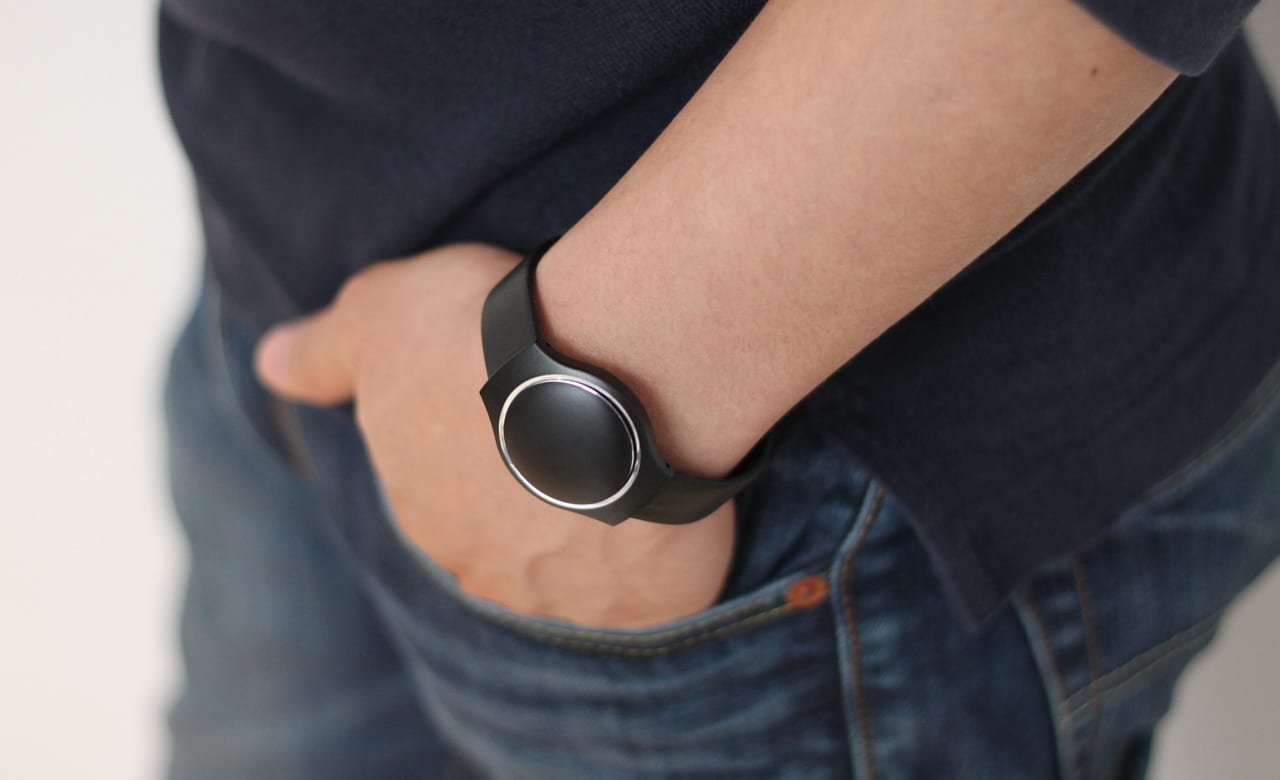
    Fossil Group is to buy Misfit, an innovator in wearable technology and connected devices.

    The $260 million acquisition will enable Fossil to expand its addressable market, offering consumers both traditional timepieces and fashionable connected accessories. Misfit brings to Fossil a scalable cloud and app platform, a world-class software and hardware engineering team, a native wearable technology brand and a pipeline of innovative products.

    “We have a significant opportunity to add technology and connectivity across our platform of watches and accessories,” said Kosta Kartsotis, Fossil CEO.

    “With the acquisition of Misfit, Fossil Group will be uniquely positioned to lead the convergence of style and technology and to become the fashion gateway to the high-growth wearable technology and connected device markets.”

    Fossil Group is a global design, marketing and distribution company that specialises in consumer lifestyle and fashion accessories, including men’s and women’s fashion watches and jewellery, handbags, small leather goods and accessories, sold under 16 brands including Skagen. It sells through department stores, specialty retail stores and specialty stores in 150 countries, and has 600 of its own stores.

    Fossil says Misfit has already solved many of the biggest challenges with wearable accessories, including battery life.

    The deal will enable Fossil to expand its wearable market with new distribution channels, new products, new brands and new enterprise partnerships, including music, fitness, healthcare and digital entities.

    Misfit founder, Sonny Vu, said the two companies will now be able to introduce products that “blend Misfit’s seamless, intuitive technology and user experience with the design, style and branding that is the hallmark of Fossil Group”.

    Vu will serve as president and chief technology officer of connected devices for Fossil Group and will become a member of the company’s executive leadership team.

    Misfit was cofounded in 2011 by Vu and John Sculley, former CEO of Apple and Pepsi, and Sridhar Iyengar, co-founder and former CTO of AgaMatrix.

  • Future fashion: Clothes which think

    Future fashion: Clothes which think

    Clothes which change shape; change temperature – and even colour. Welcome to future fashion.

    To celebrate the launch of its new smartwatch, Huawei Consumer Business Group has teamed up with ‘fashion futurologist’ and professor of fashion and technology, Dr Sabine Seymour, to reveal how the integration of technology will transform our wardrobe in the coming decades.

    According Seymour, the transformation in garments will start with our underwear, which will have in-built sensors to track personal data, such as heart rate and body temperature.

    The changes won’t end there, with personalisation in every aspect of our wardrobes. In years to come, we will be able to change the pattern, colour and even the shape and style of our garments.

    “The next development for wearables is going to see technology integrated seamlessly into clothing,” Seymour predicts.

    Her vision of the future of fashion with technology aligns perfectly with Huawei’s point of view on wearables: The Huawei watch embodies this vision, combining classic design with smart technology.

    In the future, we may find there is much more space in our wardrobes, as garments will be able to alter in form, extending and contracting in length, and changing shape and design as required. Therefore, there may only be a need for one dress or shirt and the wearer will be able to download the latest designs.

    Getting hot on public transport or carrying a spare sweater in case of colder weather could also become a thing of the past, as garments will be able to adjust to your body temperature.

    With the rise of 3D printing techniques and on-demand manufacturing, we will see the introduction of the digital cobbler, who can create shoes that fit your feet perfectly, and for the rest of your life.

    Garments will become gesture and touch-sensitive, just like phones, tablets or gaming systems are today, but with a sense of style and a true design aesthetic, explains Seymour.

    Fashion_embracing_technology__-_all_features

    “By connecting your garments to other elements of your life, we will see a move from networked devices to networked people and networked spaces. In future, it will be possible for smart garments to connect to your car, which will adjust your seat according to personal preferences.”

    A major barrier to the networked self is the current limitation of battery life. Using alternative energy sources, such as capturing the kinetic energy of a person as they walk, we will be able to create a new form of sustainable fashion.