Retail News CRM

Tag: wechat pay

  • AirPass helps Aussie retailers woo Chinese shoppers

    AirPass helps Aussie retailers woo Chinese shoppers

    Recently, Australia fintech company AirPay Financial Technologies announced its regional collaboration with China leading mobile payment technology company SwiftPass to form a new lifestyle brand “AirPass”. Connecting Australian merchants directly with Chinese consumers, AirPass lets local retailers accept WeChat Pay and Alipay both online and offline, as well as reach overseas markets to make the most of the global Chinese spending boom.

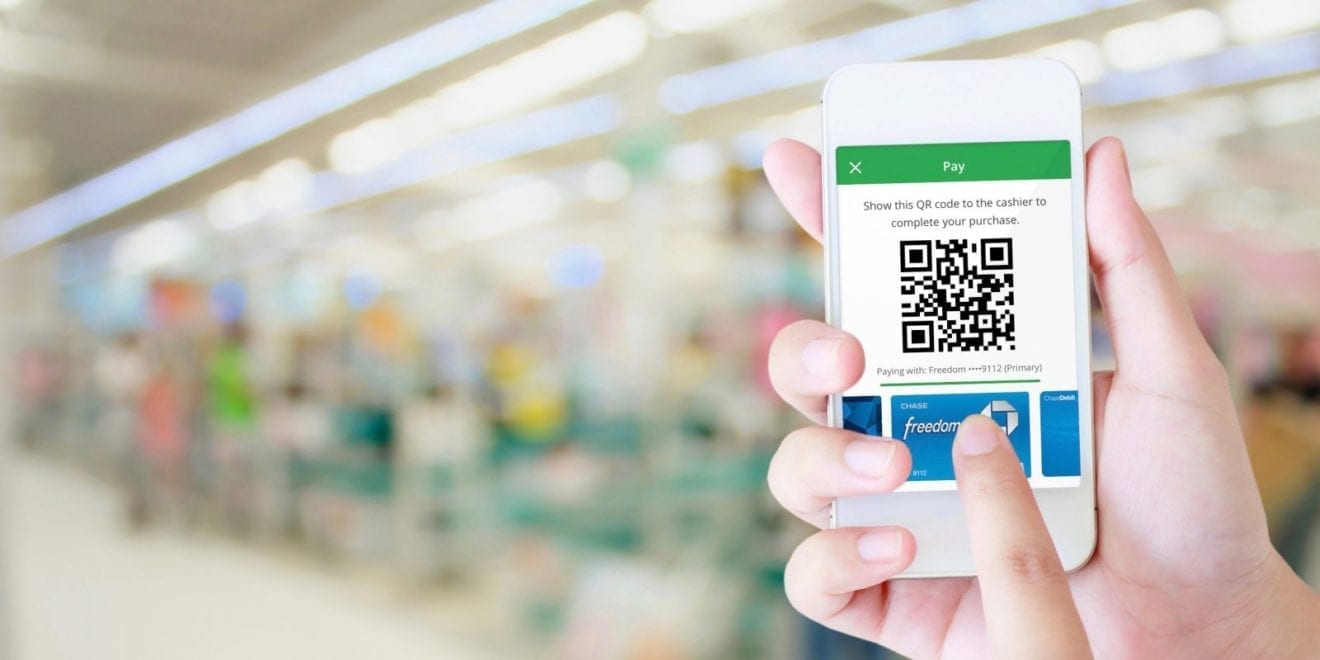
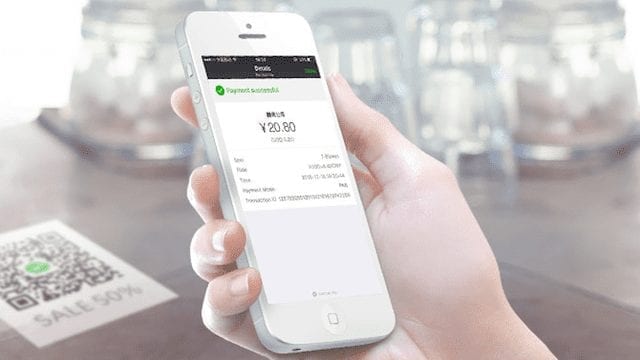
    AirPass is a lifestyle brand backed by Australian fintech startup AirPay Financial Technologies, in partnership with leading Chinese mobile payment provider SwiftPass. The new brand brings China’s most popular ePayment, eStore, eCard, eMarketing and eWallet services to Australia, allowing Chinese tourists, students and migrants to make over the counter purchases by simply scanning a QR code on their smartphone.

    The payment platform can also be integrated into Australian e-commerce websites and mobile apps, taking advantage of AsiaPay’s PayDollar payment gateway. Supporting multiple shopping cart plugins, PayDollar provides a one-stop online payment solution allowing local merchants to accept Alipay, WeChat Pay, Visa, MasterCard, Amex, PayPal and ZipPay

    “AirPass is providing a user-friendly platform for Australian retailers to build their own eStore to facilitate marketing and payment – which is the key to entering the Chinese consumer market,” says SwiftPass Technologies VP Tong Liu.

    Meanwhile, the AirPass app for iOS and Android lets Australian retailers connect directly with Chinese shoppers. AirPass assists Australian retailers and brands with setting up their own WeChat eStore to tap into Chinese social marketing channels. This allows local retailers to sell products via the WeChat ecosystem, reaching new customers in China along with Chinese communities around the globe.

    AirPass’ arrival in Australia comes as Boxing Day saw record high sales to Chinese shoppers across major retailers and shopping centre groups such as Westfield, Chadstone, QVB and Pacific Fair.

    “We are thrilled to announce our regional partnership with SwiftPass and recently launch WeChat Pay and Alipay to Australia’s largest and oldest pearling company Paspaley,” says AirPay Financial Technologies chief executive Jimmy Zhu. “There is huge demand from the market pushing us to deliver more advanced payment and marketing products.”

    Another Australian family-owned luxury retailer, Harrolds recently launched a WeChat Official Account and will soon accept WeChat Pay and Alipay in-store.

    Other luxury brands such as Gucci, Saint Laurent, Bottega Veneta, Balenciaga, Valentino, Mulberry, Givenchy, Off-White, Marais, Furla, Folli Follie and Sneakerboy are also adopting the AirPass platform in order to better reach Chinese shoppers.

  • Chow Tai Fook Jewellery Group, WeChat signed agreement deal

    Chow Tai Fook Jewellery Group, WeChat signed agreement deal

    Chow Tai Fook Jewellery Group has signed a memorandum of understanding with Chinese online platform Tencent to allow jewellery purchases using WeChat Pay. In a move to promote “seamless cross-border intelligent consumption”, the agreement allows Hong Kong WeChat users to use the platform’s digital payment solution to make purchases at specified Chow Tai Fook jewellery stores in Mainland China.

    The group is planning steps to activate WeChat Pay HK within more Chow Tai Fook Jewellery stores in the Greater Bay Area, as well as other cities throughout Mainland China. It is also seeking to extend the payment agreement to its other brands.

    “Striving for innovations and breakthroughs, we are committed to providing seamless and exceptional consumer experience through a wide range of innovative projects,” said Chow Tai Fook executive director Bobby Liu. “The introduction of advanced technology has made the convenience in offering cross-border consumption, online payments and an integrated online-to-offline shopping experience available to customers from Hong Kong.”

    Tencent Financial Technology VP Royal Chen said the collaboration with Chow Tai Fook Jewellery Group will fully make use of the available mobile payment technology.

    “Tencent Technology will vigorously promote cross-border financial cooperation. Leveraging financial and technological advancements, we aim to build a truly integrated service platform for those living in both Hong Kong and Mainland China.”

    Tencent Fin-Tech and Chow Tai Fook will also jointly explore and research proposals for ID verification in order to ease the flow of capital and manpower resources across the border.

  • Chinese QR payments booming

    Chinese QR payments booming

    Nuwemaru Street in Yeon-dong, Jeju City, was known as Baojian street until it was renamed in April. The street had been called Baojian from 2011 when the Chinese pharmaceutical company of the same name sent 12,000 employees to the southern tourist island as a reward.

    Despite the sharp drop of visitors since 2017 – when tensions between the two countries peaked with the deployment of a U.S. missile defense system – it still looks very much like Chinese territory today, with many store signs in Chinese.

    Upon closer examination of the shopfronts, Chinese QR codes are also evident.

    The QR codes for Chinese mobile payment services have gained popularity on the Korean tourist island over the last couple of years. Even a restaurant selling seollongtang – Korean beef-broth soup – in the middle of the street has a QR code for Chinese mobile payments.

    “Half the Chinese visitors use Alipay or WeChat pay,” said a store clerk of one of the cosmetic stores on the street.

    Currently 1,000 stores on Jeju accept Chinese QR mobile payments. The Jeju government said it was promoting the use of Chinese mobile payments in hopes of attracting more Chinese tourists.

    On Dec. 10, it signed a memorandum of understanding with the China’s Tencent, which operates WeChat, to attract more Chinese visitors to the island.

    One part of the agreement calls for tourism promotions on the WeChat platform, including discount events, while a blog will be run to introduce the island to potential visitors from China.

    The Jeju government and the tech company also agreed to share information on the consumption patterns of Chinese tourists who made payments through WeChat pay.

    Seven top officials from Tencent attended the signing ceremony, including company vice president Zhang Ying. During the ceremony, Zhang said that the only thing he carried with him when coming to Korea was his smartphone, demonstrating that he didn’t need cash or a credit card as long as he had WeChat Pay.

    “Once WeChat Pay is available at traditional markets in Jeju, it will be a great help in promoting traditional Korean culture and goods to Chinese tourists,” said Yoon Chang-ho, head of tourism and marketing at the Jeju government.

    According to convenience store CU, in the first half of 2018 87.2 percent of Chinese tourists used mobile payments when making electronic purchases at CU outlets in Korea. Only 12.8 percent used credit cards. In 2016, 65 percent used credit cards.

    Many institutions are accepting Chinese QR code mobile payments.

    Starting in September, Hanyang University will accept tuition fees via WeChat Pay. The program is being developed with Shinhan Bank. Roughly 900 or so convenience stores and restaurants at train stations in Korea have started accepting WeChat payments.

    One of the reasons Korean businesses are willing to accept mobile phone payment systems is because people tend to spend more when using them. When they buy something by simply waving their phone, they feel as though they are spending less.

    To make a payment, a customer places the store’s QR code – similar to a bar code – in front of their phone camera for 10 to 20 seconds.

    Chinese QR code mobile payment systems are not only used in Asian countries, such as Korea, Vietnam and Thailand. They are also being used in other places visited by Chinese tourists, such as the United States and Europe. These payment systems are even accepted at Amsterdam Airport Schiphol in the Netherlands.

    Roughly 78 percent of Chinese are said to use these payment systems, while only 21 percent use either credit cards or cash.

    While visiting a small restaurant in China late last year, President Moon Jae-in was surprised at the convenience of QR-code payments.

    One reason the QR-code payment system has rapidly grown in China is the country’s lack of a telecommunication infrastructure needed for credit-card processing. The QR code system doesn’t require a credit card terminal, which makes it cost effective and convenient.

    Although WeChat Pay joined the game late compared to Alibaba, it currently has 40 percent of the Chinese mobile-payment market, while Alipay has 54 percent. WeChat may overtake Alipay because of the popularity of its mobile messenger.

    Not all commercial districts in Korea accept the Chinese mobile payment systems. One such place is Myeong-dong, which attracts huge numbers of Chinese tourists. The street vendors in Myeong-dong only accept cash.

    Some critics question the growth of the Chinese payment systems. One concern is that since the networks are Chinese, it may be hard to track down the payment records, and that could lead to tax evasion.

    A person who has been installing Chinese mobile payment systems for years said this is not true as the payments made in Korean stores are deposited in local accounts, and the Korean stores have to report the payments to the Korean financial authorities.

    Loopholes do exist. If a Chinese company decides to open a branch and use a payment terminal from China, it would bypass the local institutions, making it difficult for Korean authorities to keep track of the payments.

    Because of such problems, the Vietnamese government in June banned the use of Alipay and WeChat Pay. It found that some money spent domestically by tourists did not go through local financial institutions.

    In 2016, the tax evasion question became an issue in Thailand as well. The Thai government at the time found that Chinese businesses were evading taxes through mobile payment systems. Several travel agencies were penalized.

    Some cases have been reported in Korea. In 2016, a plastic surgeon in Nonhyeon-dong, Gangnam, only accepted cash or credit cards from his Chinese patients, and the credit cards were processed using a Chinese terminal. More than 70 percent of the revenue was from Chinese patients. The hospital was found to have evaded more than 10 billion won ($8.9 million) in taxes.

    Overseas customers also present a problem. According to Korea Custom Service, more foreigners are buying goods directly from Korean online shopping malls. In 2013, 67,000 purchases were made in this way, but that figure has surged to more than 7 million.

    Chinese customers were the top purchasers and were especially big on Korean cosmetics. Last year about 2 trillion won worth of Korean cosmetics were purchased directly online by foreign buyers. That’s 10 times the 203.5 billion won worth of cosmetics purchased directly online in 2014.

    With the growing popularity of direct purchases, many online shopping malls have started accepting mobile payment systems. Since 2015, Alipay has been supporting Korean SME exporters in terms of payments and logistics.

    This could result in Korean exporters evading taxes.

    “There is major tax evasion going on with the significant increase of foreigners buying Korean goods directly online thanks to the Korean Wave,” said Lee Hye-hoon, then ruling Saenuri Party lawmaker, during the National Assembly’s audit on the Korean National Tax Service in October 2016. “We need to take action.”

  • Tencent finished Q3 with strong result despite regulation

    Tencent finished Q3 with strong result despite regulation

    Gaming and chat specialist Tencent has reported a strong third-quarter profit despite ongoing issues with Mainland China regulatory authorities over its gaming software. Tencent’s share price has fallen by about one third this year, shedding US$165 billion off its value, although last year its share price doubled. In September the company announced a restructuring program aimed at lessening its reliance on games and expanding its interests into areas such as cloud and industrial services in the transport, fintech and healthcare sectors.

    Tencent profit in the September quarter rose 30 per cent to RMB23.3 billion (US$3.36 billion) which exceeded analysts’ forecasts. This was partly due to fair-value gains from the IPO of food delivery service Meituan Dianping.

    Growth in its gaming division was ahead of expectation, but the company was unable to update shareholders on the status of its negotiations with mainland government officials over a regulatory block which has frozen new game approvals. The government has yet to decide on whether or not to allow Tencent to begin charging for features of its popular PUBG Mobile game. Chinese authorities are concerned that many Chinese are becoming addicted to mobile games.

    Those roadblocks were cited as the reason Tencent’s growth rate – a respectable 24 per cent, nonetheless, to US$11.6 billion – was its slowest quarter in more than three years.

    Sales of smartphone games grew 7 per cent year on year and 11 per cent quarter on quarter, while advertising sales, the company’s single largest revenue source, rose 47 per cent

    Revenue from cloud and payment services (WeChat Pay) helped fuel a 69 per cent increase in Tencent’s “other” revenue category.

  • WeChat Pay to be ready in 7-Eleven, Guardian Singapore

    WeChat Pay to be ready in 7-Eleven, Guardian Singapore

    Customers of 7-Eleven, Cold Storage and Guardian stores in Singapore will soon be able to pay for purchases using WeChat Pay. The owner of the two retail chains, Dairy Farm Group, has worked with NETS to enable visitors from China and Chinese nationals based in Singapore to use the service from November 1.

    WeChat Pay is currently being trialled at the 7-Eleven and Guardian stores at Changi International Airport and some stores in key tourist destinations in the Orchard and Chinatown districts.

    According to the Singapore Tourism Board, visitors from China increased by almost 13 per cent, from 2.8 million in 2016 to 3.2 million last year. The partnership between Dairy Farm Singapore and NETS together with WeChat will enable Singapore’s largest multi-format retailer to better cater to the growing number of China visitors, by offering visitors a convenient way to pay when they shop in Singapore.

    Head of merchant services at NETS, Alvin Seck, said working with payment partners like WeChat and retailers like Dairy Farm Group enables NETS to roll out new payment services for consumers quickly while minimising adoption costs for merchants.

    “With this partnership, 7-Eleven and Guardian in Singapore along with Cold Storage and Giant can just make use of its existing NETS uPOS terminals to accept WeChat Pay, in addition to NETS, QR, NETS FlashPay, credit and debit payments.”

    To use WeChat Pay for payments, users simply need to scan the NETS QR code on the NETS uPOS terminal.

    Dairy Farm Singapore’s regional finance director, Tom van der Lee said this latest payment mode service is part of the multi-format retailer’s digital-transformation journey in line with the government’s ‘Smart Nation’ drive.

    “More customers are adopting cashless payments, thanks to easier and faster payment transactions with the uPOS terminal plus the convenience of the wide array of payment options to choose from across our Cold Storage, Giant, 7-Eleven and Guardian stores. Cold Storage alone has seen cashless payment increase by 6 per cent and at Guardian by 3 per cent since Dairy Farm Singapore installed 1800 unified NETS POS terminals last year – the single largest deployment by retailer here.”

  • WeChat Pay embarks on first mall partnership in Singapore

    WeChat Pay embarks on first mall partnership in Singapore

    Mobile payment platform WeChat Pay has announced its first mall partner in Singapore.

    WeChat Pay is rolling out cashless payment services across retail and F&B outlets in the popular Bugis Junction and Bugis+ malls, centrally located in Singapore’s Civic and Cultural District.

    GM Ivy Ang said the malls are particularly popular with young Chinese tourists. “Together with WeChat Pay, we will offer exclusive campaigns tailored for young Chinese travellers in Singapore. As we head into the Golden Week holidays and end-of-year festivities, we will continue to offer customised promotions and targeted campaigns to WeChat users through its many communication platforms and marketing channels, so our shoppers enjoy a rewarding shopping experience,” she said.

    “In this digital age, where we see more and more shoppers going cashless. Partnering with WeChat Pay is thus a very relevant initiative,” she added.

    Grace Yin, WeChat Pay’s director of overseas operation added: “The Bugis arts, culture, and entertainment district is especially popular with young Chinese tourists, which makes Bugis Junction and Bugis+ ideal to mark WeChat Pay’s first mall partnership in Singapore.”

    With the launch, Bugis Junction and Bugis+ will be the first malls in Singapore to accept WeChat Pay as a mobile payment platform across its wide range of commercial offerings. To celebrate the introduction of the new payment platform, the mall is hosting exclusive offers for shoppers to get rewarded with virtual money packets and receive cashback coupons.

    WeChat Pay is one of the leading mobile payment solutions in China. It is currently available in over 40 countries and regions across the world in 13 currencies and has more than 800 million monthly active users.

  • Centara Makes Life Easier for Chinese Travelers by Accepting WeChat Pay for Online Bookings

    Centara Makes Life Easier for Chinese Travelers by Accepting WeChat Pay for Online Bookings

    Centara Hotels & Resorts, Thailand’s leading hotel operator, has announced that it is now accepting WeChat Pay transactions on its websites for online room reservations. This is in addition to the 15 hotels that already deploy nearly 100 EDC devices for QR code scanning on WeChat Pay, making it the largest hotel group in Thailand offering Chinese tourists omni-channel payment solutions. Bills for accommodation, restaurants and spa treatments can be paid directly from smartphones. The company expects to have WeChat Pay at all Centara Hotels & Resorts globally by the end of 2018, thus providing convenience to customers, especially Chinese guests.

    Thirayuth Chirathivat, Centara Chief Executive Officer, said: “A seamless payment experience for consumers using any channel is an element of our platform for expansion, which should see us double both revenue and the number of our properties over the next five years. As consumer behavior evolves, Centara has adopted an omni-channel strategy to stay relevant and to provide a great customer experience. We embrace these types of disruptive opportunities to better serve our guests and stay on top of the industry.”

    Chinese tourists account for almost one third of all foreign travellers to this country. Thailand is welcoming an ever-increasing number of Chinese visitors, for whom the kingdom remains the top travel destination. This year, the Ministry of Tourism and Sports expects more than 10 million Chinese tourists to travel to Thailand.

    WeChat Pay is the payment solution of WeChat, one of the largest social networks in China. WeChat Pay has become the main cashless payment method for daily small transactions in China and has more than 800 million active users in its database.

    “The number of Chinese tourists booking with Centara keeps growing. They are a significant customer base for all businesses in Thailand. Centara’s Chinese website receive hundreds of thousands of visits from Chinese users. Almost half the visits come from a mobile device. Earlier this year we signed an agreement with TreePayCo.,Ltd., a payment platform facilitator to develop a system that allows Chinese customers to use their mobile phones to make e-payments outside of China for accommodation and services at Centara properties. WeChat Pay users and Chinese travellers can stay and enjoy the whole trip with Centara with only a few quick taps on their smartphone. Today’s consumers are connecting their omni-channel experiences with the likeability of the brands. In order to maintain our brand leadership, we are committed to providing seamless guest satisfaction across touchpoints.”Thirayuth added.

    Other than the 2 main websites, Centara’s 15 hotels also welcome WeChat QR code payment. These are: Centara Grand and Bangkok Convention Center at Central World, Centara Grand at Central Plaza Ladprao, Centara Grand Mirage Beach Resort Pattaya, Centara Grand Beach Resort Samui, Centara Grand Beach Resort & Villas Hua Hin, Centara Grand Beach Resort & Villas Krabi, Centara Grand Beach Resort Phuket, Centara Villas Samui, Centara Villas Phuket, Centara Kata Resort Phuket, Centara Karon Resort Phuket, Centara Mae Sot Hill Resort, Centara Hotel Hat Yai, Centra by Centara Government Complex Hotel & Convention Centre Chaeng Watthana and COSI Samui Chaweng.

  • Mobile payment firms struggle to dethrone cash in Southeast Asia

    Mobile payment firms struggle to dethrone cash in Southeast Asia

    Bui Mai Phuong is an avid online shopper, ordering anything from clothing to personal-care products from her smartphone. But she prefers to pay with cash.

    She is among hundreds of millions of people whom firms such as Softbank Group-backed Grab and China’s Tencent want to win over as they try to tap into Southeast Asia’s burgeoning internet sector.

    More than 70 percent of the region’s 600 million-plus people do not use banks – higher than the global average of about 30 percent – and e-commerce is projected to hit $88 billion by 2025.

    But convincing consumers like Phuong, who lives in Hanoi, could be tricky.

    “I have never tried using mobile payments because I don’t know how to use it and it seems a bit complicated to use,” said Phuong, 36, a manager at a construction material supplier in Vietnam.

    Mobile payments are ubiquitous in China; a consumer can spend a day without using cash at all in Beijing or Shanghai, and even some beggars accept mobile payments. But cash remains king in Southeast Asia.

    Hard currency, paid on delivery, accounted for 44 percent of total e-commerce transactions last year and is likely to remain the most popular payment option for at least the next three years, according to data by research firm IDC.

    “The biggest challenge for users and merchants to adopt cashless is the fact that cash remains ubiquitous, easy to use and inexpensive,” said ride-hailing firm Grab, which has ventured into e-wallets.

    And the mobile payment marketplace in Southeast Asia remains wide open, with no dominant players.

    Indonesia’s ride-hailing firm Go-Jek’s Go-Pay, Singapore-based Grab’s GrabPay, Japan’s messaging app Line’s Line Pay, Momo e-wallet owner M_Service in Vietnam and Voyager Innovations, which operates Paymaya in the Philippines, have all entered the fray. The gaming company Razer Inc has also indicated it is eager to play a role.

    Cash on delivery costs e-commerce businesses more than other payment methods, said Alibaba Group Holding-backed e-retailer Lazada Group.

    For example, sometimes a customer does not have enough cash on hand, or is not home to pay for the delivery. In those cases, the product must be sent back to the seller, adding logistical costs, Lazada said.

    Mobile payments address some of those problems. They can also benefit buyers by keeping payment in escrow and releasing it only on delivery.

    But it can be difficult to persuade users to switch from cash when they earn about $200 on average a month in economies like Vietnam and Indonesia, according to economic data provider CEIC.

    “To break habits of using cash, Grab is creating more daily use cases for cashless payment – commuting, food delivery, paying at food and retail stalls – to drive more usage of the GrabPay e-wallet,” Grab said in an email.

    Mobile payment companies bet they can transform their platforms into financial supermarkets, offering everything from loans to insurance on top of payment options.

    Slow going

    At the moment, usage is spotty. E-wallets will account for 16 percent of total e-commerce transactions in Southeast Asia by 2021, up from last year’s 9 percent, according to IDC.

    In countries like Vietnam, where the informal economy has long been a key part of the social fabric, many consumers do not bother to get a bank account.

    Some want to stay under the taxman’s radar or, like Quang Thi Si, simply do not see the need for a bank.

    Si, a 48-year-old scrap collector near Ho Chi Minh City, said her business is all cash.

    “Sometimes I need to send money to my relatives at home, and I often send in cash through my friends,” she said. “I don’t think I will have a bank account in the future because I don’t think I need it.”

    But Si does have a smartphone. More than 90 percent of Southeast Asia’s internet access comes through mobile devices, according to a Google-Temasek study.

    Even so, in countries like the Philippines, which is known for having some of the slowest Internet speeds in Asia-Pacific, connectivity is a major hurdle for digital payments to clear.

    ‘Late to the party’ 

    Such challenges are likely to pose a setback to Ant Financial and Tencent, which are looking outside China for growth.

    Ant, which has 600 million customers and aims to reach 2 billion worldwide in the next decade, has stepped up investments in the region, including a stake in Thai financial technology firm Ascend Money.

    But its services are largely limited to Chinese tourists.

    “Most of our customers are from China and they are usually very happy to know that we accept AliPay and WeChat Pay. This makes them more willing to spend money too,” said Daphne Tan, a staff member at a shop selling durian-flavored coffee and snacks in Singapore’s Chinatown.

    Tencent plans to make its first foray outside China with an e-payment license in Malaysia for local transactions.

    The Chinese players are “kind of late to the party,” said Michael Yeo, research manager for IDC.

    “By the time they come in with a local version, if they do, the local players will have a significant advantage,” said Yeo.

    Razer, which said last month it would buy the remaining stake in payments processor MOL Global that it did not already own, also signed a deal with Singtel to link its e-payments network with that of the telco.

    Other recent deals in the sector include Go-Jek’s acquisition of three financial technology businesses, while Grab’s purchase of a handful of companies as well.

    “It’s a highly fragmented market. Later on, there will be acquisitions, there will be shutdowns, there will be mergers,” IDC’s Yeo said. “The market will consolidate.”

  • WeChat Pay available at European airport retailers

    WeChat Pay available at European airport retailers

    WeChat Pay, a popular mobile payment method among Chinese consumers, will be available in several European airport retail destinations, as part of the travel retail industry’s attempts to appeal to large visitor numbers from China.

    Lagardère Travel Retail, which operates retail, foodservice, and duty-free premises at airports around the globe, has first launched the payment service in Terminal 1 of Charles De Gaulle Airport in Paris.

    Timed to coincide with Chinese New Year, a popular period for travel among Chinese consumers, shops operated by Société de Distribution Aéroportuaire – a joint-venture by Lagardère Travel Retail and French airport operator Groupe ADP – will be the first to accept WeChat Pay. It will be launched in additional airports in due course.

    WeChat Pay is a smartphone-based payment service and has around 600 million active users. It is integrated into internet group Tencent’s WeChat app, which is the most popular social network in China with nearly one billion users.

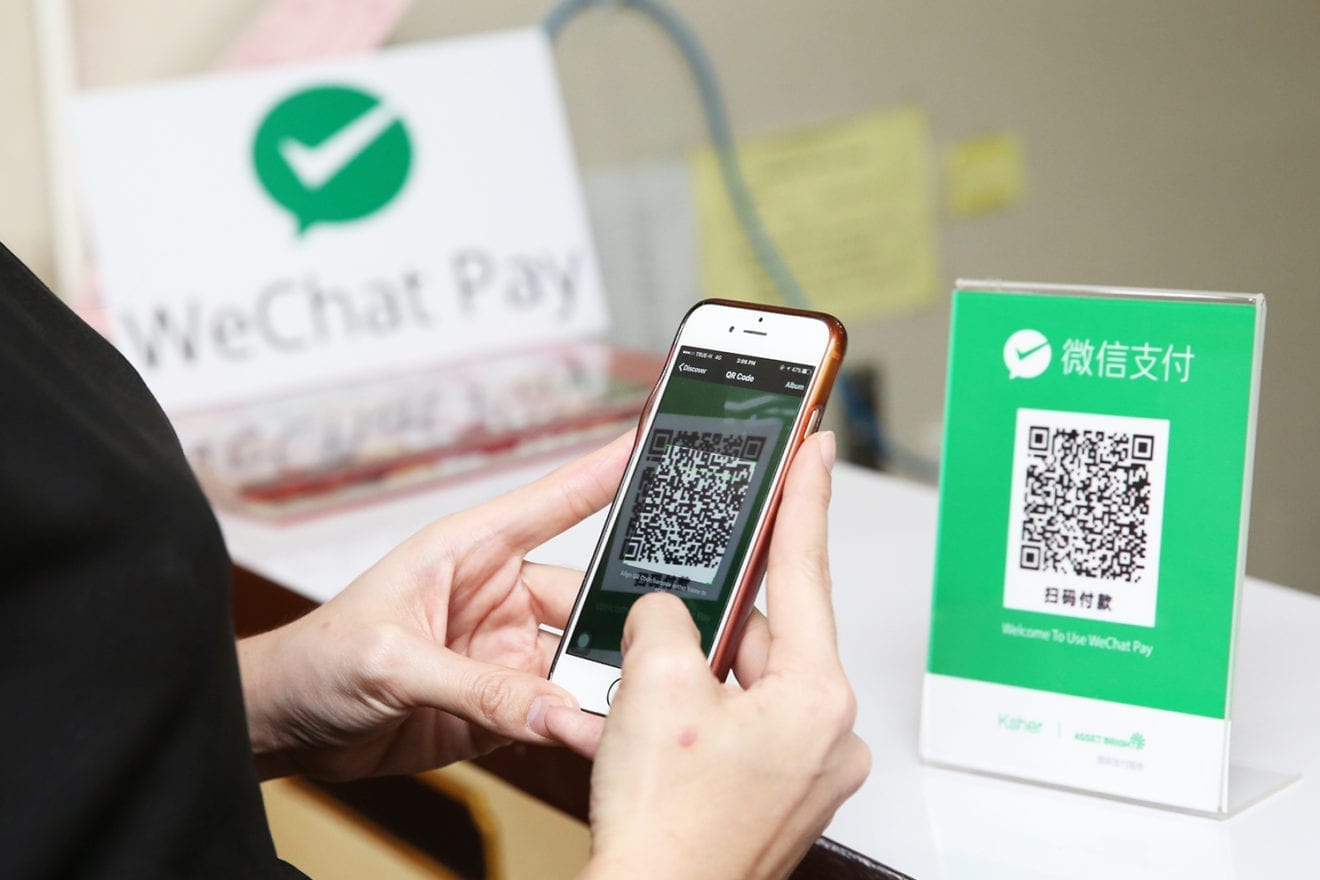
    To make a payment users scan QR codes generated within their WeChat mobile wallet stored on their smartphones.

    Travel retail is often perceived to be behind the times in terms of digital transformation when compared with the wider retail sector, but there are a number of new services being rolled out. Lagardère Travel Retail is one of several airport shopping companies to launch click & collect, enabling passengers to order products online and pick them up as they travel through the terminal.

    And as the travel industry looks to cater for international travellers in ways they are familiar with from their home countries, there is set to be further innovation in the space.

    Last week, for example, tax-free shopping company Global Blue announced it has teamed up with Tencent at Madrid Airport to allow WeChat Pay users to receive their tax refund digitally. For the first time, consumers can receive instant tax refunds into their WeChat Pay Wallet, once their tax-free forms have been validated by customs officials.

  • Chinese tourists drive WeChat Pay growth in Philippines

    Chinese tourists drive WeChat Pay growth in Philippines

    Chinese tourists are helping drive the growth of cashless payments using Tencent’s WeChat in the Philippines, according to its Filipino partner, Asia United Bank.

    Chinese tourist arrivals are projected to hit 1 million. Staying in the country for 8 days on average, WeChat Pay in the Philippines can generate up to P48 billion in revenue, said AUB vice president and credit card business head Mags Vazquez Surtida.

    “The transaction counts are increasing. The transaction values are increasing. We can see more merchants. We see the growth happening on a daily basis,” Surtida said.

    WeChat Pay is accepted in 1,000 retail outlets in the Philippines, including hotels and restaurants, Surtida said. The number of daily transactions recently reached up to 2,500 in the run-up to the Chinese New Year, twice the average per day, she said.

    The value of single transactions were as high as P90,000, recorded in Boracay. Diners spend P6,000 to P12,000 while shoppers pay P4,000 to P7,000 using WeChat Pay, she said, Surtida said.

    Surtida said AUB hoped to grow the number of WeChat Pay merchants in the Philippines to 5,000 by March.

  • WeChat Pay Now Links to Non-Chinese Cards

    WeChat Pay Now Links to Non-Chinese Cards

    Tencent’s WeChat Pay is now linking to non-Chinese credit cards for mobile payments.

    This means expats in China and foreign residents of Hong Kong, Macau and Taiwan can now bind and activate WeChat Pay accounts with credit-card services provided by JCB, MasterCard and Visa.

    Tencent says it is the first time WeChat Pay users do not need a Chinese bank account or credit card.

    With China going cashless, Alipay and WeChat Pay are now used for online shopping, ride-hailing, buying tickets, renting bikes, food delivery and hotel bookings.

    In its five years, WeChat Pay has expanded to 25 countries, serving Chinese tourists.

    According to a Tencent data report last year, more than 64 per cent of expats in China use WeChat Pay for their daily needs.

  • BingoBox to bring unmanned stores to Hong Kong

    BingoBox to bring unmanned stores to Hong Kong

    China’s unmanned convenience-store brand BingoBox plans to introduce its cashierless concept to Hong Kong next year, targeting neighbourhoods and suburbs.

    “With unmanned stores the labour cost is eliminated, making them far more cost-effective, even in expensive cities like Hong Kong,” says BingoBox chief executive Chen Zilin.

    South Korea already has an unmanned 7-Eleven outlet, termed Signature, in Seoul, while as part of its “new retail” concept Alibaba runs an unmanned coffee shop that uses facial recognition for customer payments. Also in China, JD.com has launched unmanned convenience stores that use technology to track products and customer movements.

    In Hong Kong, BingoBox is talking with potential partners to jointly run its outlets. It will target areas that do not have convenience stores, such as parks, villages and public-housing estates, says Chen.

    On the mainland, the company has nearly 200 stores with the aim of reaching 5000 before the end of next year.

    Users scan a QR code to enter a BingoBox, place their purchases on a checkout counter that automatically scans and tallies up the total. Payments are made via mobile wallets such as Alipay or WeChat Pay.

    “As BingoBox is an unmanned store that entails almost no labour cost, we can open in areas with lower foot traffic, whereas traditional convenience stores pay high rents for prime locations,” Chen says. He is not specific about store numbers for Hong Kong, just saying “double digits”.

    The company is also looking to expand into South Korea and Malaysia within the next six months.

    Mainland BingoBox stores generate about RMB850 (US$130) in sales each day, some raking in as much as RMB6000. Chen says the shortest break-even time for a BingoBox store was five months.

    Bingbox partnered with French retail firm Auchan to launch a trial in Zhongshan, Guangdong province, last year before opening its first store, in Shanghai, in June.

  • Digital wallet WeChat Pay launches in UK

    Digital wallet WeChat Pay launches in UK

    In the middle of London’s Camden Market, a trader from China hands red-bean cakes to a group of tourists from Sweden, as tattooed locals dressed in black leather weave their way between food stalls cooking up dishes including barbecued meat and fish and chips.

    The market, which has been at the heart of London’s punk scene since the 1970s, has evolved into one of the capital’s busiest tourist attractions. It draws hundreds of thousands of people every week to its maze of clothing shops, tattoo and piercing parlors, and food stands.

    And starting this month, Chinese visitors will be able to buy goods with the help of mobile payment platform WeChat Pay.

    Camden Market is a sharp contrast to luxury shopping hotspots such as Bicester Village and Oxford Street where Chinese tourists spend millions of pounds each year and might not seem the obvious choice for the United Kingdom launch of WeChat’s hugely popular digital wallet, which accounts for 40 percent of the Chinese mobile payment market.

    However, the number of Chinese visitors to Camden is climbing. In September 2016, 5 percent of visitors were Chinese. The proportion doubled to 10 percent in March.

    “In terms of demographics, the number of Chinese tourists in Camden is certainly growing, and in terms of a brand, Camden was an obvious choice. It’s iconic in London,” said Craig Jacoby, head of retail payments at SafeCharge.

    WeChat has worked with SafeCharge, a British payment technology company, to make WeChat Pay available at point-of-sale locations in the UK for the first time.

    During the next four months, SafeCharge will provide more than one thousand Camden Market vendors with a software update that enables in-store payment terminals to generate QR codes and perform transactions.

    Chinese tourists spent 513 million pounds ($681 million) in the UK last year, according to tourism authority VisitBritain. Camden Market’s management wants to better accommodate those bigspenders.

    Jacoby said WeChat Pay will soon be available at other shopping destinations in London, and it is also launching at six large retailers in Paris as WeChat moves forward with its international expansion.

    WeChat Pay rival Alipay has also made recent moves in Europe. In October, Alipay expanded its partnership with Dutch payment company Adyen to facilitate in-store mobile payments at retail partners in the UK.

    In Camden, merchants and customers were upbeat about the development. Yi-yin Wei, a shopkeeper from Taiwan who sells red-bean cakes at Wheel Cake Island, thought the update will be useful.

    “Chinese people are used to paying for things with their phones, so it will be like home for them,” Wei said.

    And Angel Chow, a tourist from Hong Kong, said Chinese shoppers will likely spend more now they have WeChat Pay as an option.

    “They will find it convenient if they can use their phones and will buy more. I think they will be excited to be able to use it in England,” Chow said.

    Other Camden merchants were not sure there would be enough demand. Vari McGeachy, manager of Books Iconica, said fewer than 5 percent of her customers are from Asia.

    “We don’t have many Chinese people coming through the doors, and when they do they don’t have a problem paying with cash or card,” McGeachy said. “It wouldn’t be worth having to train my staff about a new system.”

    SafeCharge Chief Executive David Avgi said in general there is great motivation to accommodate Chinese consumers in Europe, where 50 percent of luxury purchases are made by Asian tourists.

    And he said it is a matter of time before the mobile payment systems that are ubiquitous in China catch on in the West.

    “This innovative payment method is seen as the next big payment phenomenon in Europe,” Avgi said.

  • Stripe strikes global partnerships with China’s Alipay, WeChat Pay

    Stripe strikes global partnerships with China’s Alipay, WeChat Pay

    Silicon Valley startup Stripe has partnered with digital payment providers Alipay and WeChat Pay to enable merchants using its platform globally to accept payments from hundreds of millions of Chinese consumers.

    Starting Sunday, the partnerships will allow online merchants using Stripe to integrate the ability for Chinese users to pay with Alipay and WeChat Pay on their websites, the company said.

    Stripe hopes the integration will help boost its revenues by allowing clients to tap China’s vast consumer market, where credit cards account for only a fraction of online spending, the company said.

    Alipay is the flagship payment service of Ant Financial, the financial affiliate of major Chinese ecommerce company Alibaba Group and has over 520 million users. WeChat Pay has more than 600 million users and is the payment app of entertainment and social network firm Tencent Holdings.

    “If you are an internet business this unlocks a new vast customer base,” John Collison, Stripe’s president and co-founder, said in an interview. In turn, Chinese consumers will have expanded choice as to which international online merchants they can purchase products and services from, he added.

    Founded by brothers John and Patrick Collison in 2010, Stripe provides technology that enables merchants in 25 countries to accept payments online. It charges a fee on each payments transactions processed through its platform.

    “If we can help a business double their sales, then it doubles our revenue from that business,” Collison said.

    The partnership coincides with the company’s launch in Hong Kong.

    One of the most valuable venture-backed financial technology companies globally, Stripe has risen in popularity among software developers and online merchants because of its ease of use.

    It is among the cohort of young fintech companies seeking to reinvent the payments landscape by taking better advantage of digital technologies to offer more user-friendly financial services and products.

    It had previously partnered with Alipay to enable only the U.S. merchants on its platform to integrate the Chinese payment service. The new global partnership builds on that experience.

    “Demand for services from Chinese consumers is at all-time high,” Souheil Badran, president of Alipay for North America, said in an interview. The new partnerships will connect them to hundreds of thousands of Stripe-powered businesses around the world, he added.