Tag: weibo

  • Huawei announces P50 Pocket foldable flip phone will be unveiled

    Huawei announces P50 Pocket foldable flip phone will be unveiled

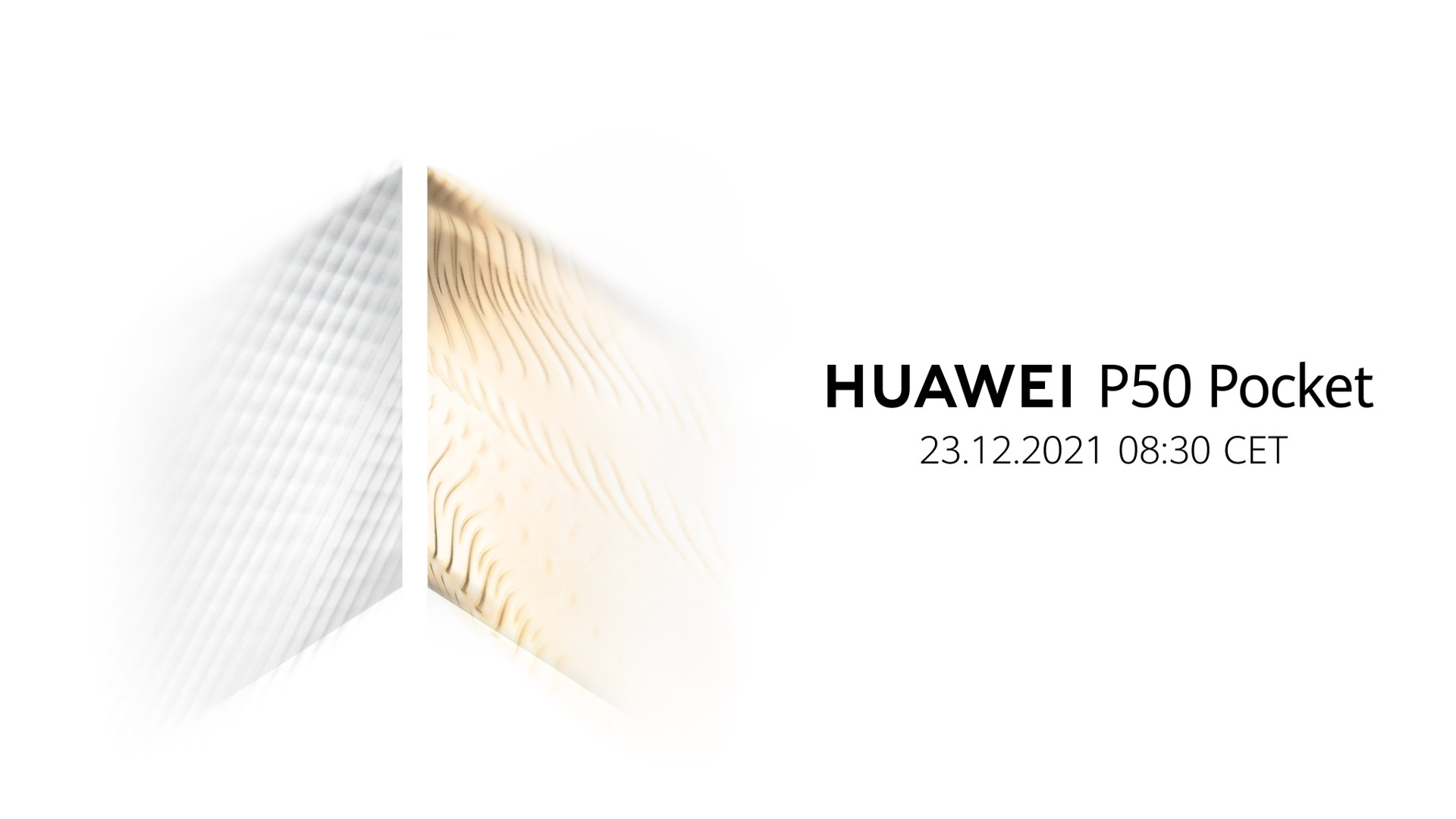
    Huawei announced today on Weibo that its new flagship product launch winter conference will take place on December 23rd. On that date, the company said that it will announce the Huawei P50 Pocket which is believed to be a foldable phone that shuts vertically like the Samsung Galaxy Z Flip 3 and the Motorola Razr.

    The new Huawei foldable flip phone will supposedly sport a next-generation hinge from Zhaoli Technology. It contains fewer parts making it not as expensive and more reliable compared to the hinges used on previous generations of flip phones. Some who have seen the device say that there are no creases on the display, which have become the bane of the modern foldable handset.

    According to images on Huawei’s verified Weibo post, the P50 Pocket will be available in White and Gold. A leaked image of a protective case for the device indicates that the back of the P50 Pocket will have two large camera lenses in the back, similar to the design of the Huawei P50. Volume rockers and the power button are on the right.

    Other products that we expect to see announced a week from Thursday include the Huawei Watch D. As we mentioned just the other day, a leaked image of the device’s box revealed that the timepiece will be able to provide blood pressure readings, and will be powered by HarmonyOS. Also, a possibility to be unveiled at the event could be Huawei’s Bluetooth glasses.

    Huawei has already released three variants of foldable phones. The Mate X and Mate XS both folded outward to reveal their larger tablet-sized display. Because the screen folded outward, the two panels that created the larger display were available for use as smaller “exterior” screens when the device was closed. Earlier this year, the Mate X2 was launched with a design similar to the Galaxy Fold 3.

    The Mate X2 closes like a book and features a 6.5-inch front cover display and an 8-inch tablet-sized screen. As for the P50 Pocket, we could see a 6.5-inch to 6.7-inch 21:9 display when opened. Will it support 5G? Huawei socked enough Kirin 9000 chips away for the foldable Mate X2 to offer 5G support for that model. But if it didn’t keep enough inventory of the chip for the P50 Pocket, it might have to resort once again to a 4G version of the Snapdragon 888 which it used on the P50 series earlier this year.

    As you probably know, the U.S. government’s export rules prevent any foundry using American technology to build chips from shipping any cutting-edge chips to Huawei without a license from the U.S. Commerce Department.

  • Chinese social media Weibo closes 7% lower in Hong Kong debut

    Chinese social media Weibo closes 7% lower in Hong Kong debut

    Weibo officially launched its secondary listing on the Main Board of the HKEx on Wednesday. The public offering price of the stock was HK$272.80. On the first day, Weibo closed 7% lower at HK$253.20.

    One of the leading social media platforms in China, Weibo secondary listing raised about HK$385 million. Its main listing is in the US.

    As a pioneer and leading social media in China, Weibo has been leading the industry’s development and innovation for years, with a rapidly growing user base. In September 2021, Weibo had 573 million MAUs and 248 million average DAUs.

    In addition to a large and diverse user base, there are also significant connections and interactions among users on Weibo. In June 2021, its users generated 15.7 billion monthly social interactions on the platform, including the activities of like, comment, repost, and follow. As of June 30, 2021, Weibo had 318 billion “follow” relationships existing on its platform. During the track record period, Weibo’s ratio of average DAUs to MAUs remains as high as 43% to 45%, demonstrating users’ high engagement and stickiness to the platform.

    Weibo offers the most comprehensive coverage of content categories. Its users can create, discover, consume and share various formats of content, including text, photo, video, live streaming, audio, and topic. In June 2021, Weibo had 46 content verticals, such as celebrities and entertainment, humor, media, variety shows, and TV programs, fashion, cosmetics, finance, and games. Among these content verticals, 28 of them each has over 10 billion monthly views.

    In addition, Weibo attracts a large number of content creators who remain highly engaged and active on the platform. In June 2021, Weibo had 41.9 million monthly active content creators, and top content creators reached 2.3 million.

  • Crypto Exchange Searches Blocked in China

    Crypto Exchange Searches Blocked in China

    Chinese users were reportedly unable to find results for popular cryptocurrency exchanges on major search engines in the country.

    Keyword searches for trading platforms such as Binance, OKEx and Huobi yielded no results, according to various media outlets.

    The searches were conducted on major search engines like Baidu, Sogou, Zhihu, and Weibo.

    This marks yet another sign of further tightening on cryptocurrencies, especially with regards to online content.

    Earlier this month, multiple popular Weibo accounts featuring related content were reportedly suspended or shut down over violation of the social media platform’s rules.

  • Weibo Closes Social Media Accounts for Investment Fraud

    Weibo Closes Social Media Accounts for Investment Fraud

    Chinese tech giants are stepping up their own content-filtering efforts with Weibo leading the pack by shutting down 37 accounts for investment-related fraud.

    According to a statement by Weibo owner Sina, the accounts were closed due to content issues regarding «misleading investment information» or «securities fraud».

    The accounts seduce customers into purchasing illegal wealth management products and commit fraud by posting fake investment information, the statement said. Weibo will continue to crackdown on the illegal accounts and also welcomes users to report if any misleading information is found.

    Chinese regulators have been pushing social media platforms to self-censor content with a focus on combating illegal or misleading information such as investment-related fraud.

    In September, WeChat issued a statement claiming it had suspended or closed 45,000 accounts year-to-date for similar issues. The firm claimed that more than 36 percent of closed accounts involved fraudulent content and 25 percent involved false claims of high investment returns.

  • More Chanel Flagship for Asian Shoppers

    More Chanel Flagship for Asian Shoppers

    Seoul will have one of six Chanel flagship stores being launched next year, with the brand also about to open in Beijing’s China World mall.

    “These will be either brand new stores or major re-openings, which will be very impactful,” says Chanel fashion and accessories divisions president Bruno Pavlovsky.

    On December 1, Chanel opened a second Tokyo flagship in Ginza following a three-year renovation by architect Peter Marino.

    Just before that, designer Karl Lagerfeld was in Chengdu, where Chanel reprised its Ancient Greek Goddess cruise collection, originally shown in Paris in May.

    “We scored 698 million hits from that show on WeChat and Weibo and so on,” says Pavlovsky. “That impact allows us to create an accessible dream: a chance to see and touch and understand what the brand is all about. That has nothing to do with customers – we don’t have 500 million customers in our boutiques.”

    He believes the key equation in luxury is balancing accessibility to the dream with exclusivity inside boutiques. This is why Chanel’s e-commerce is essentially limited to beauty and eyewear.

    “Chanel is not a click,” says Pavlovsky. “But when you think of a $5000 jacket or a $10,000 dress, the customer experience has to be more than just a click.”

    He says business in China has been boosted by the policy of global price harmonisation he started introducing in 2015. “We see more and more Chinese in China coming to our boutiques regularly.

    They don’t need to travel to Paris, New York or London to buy Chanel, and this is very important.”

    One vehicle to boost sales in China will be harnessing influencers, says Pavlovsky. “What is interesting about influencers in China is their point of view of the brand. Some are followed by 20 or 25 million people, which is quite impressive. And they are very clear that what their followers want from them is a point of view. We have to work with them not to dilute this kind of positioning.”

  • Elliatt launches first brand store in China

    Elliatt launches first brand store in China

    Six-year-old Melbourne design brand Elliatt has opened its first-ever own-brand store – not in Australia, not in an established market of the West, but in China.

    However, it did use its home city’s most famous sporting event, the Melbourne Spring Racing Carnival, to promote its arrival in Shanghai with the first of 16 stores for an initial roll-out.

    It invited Chinese actress Zhang Meng (“Lemon”) to socialise in the celebrity “birdcage” area at the race course for two days, showing off a range of Elliatt styles and, of course, sending out images and comments to her 7.6 million Weibo followers in China.

    “Iconic sporting events like this provide a great opportunity for local brands and designers to launch themselves on to the world stage and break into new markets, especially in China,” says executive director for trade Gonul Serbest of Trade Victoria, a government department that connects state brands with international partners. “The races have always been a place for Melbourne to flaunt its reputation as Australia’s fashion capital.”

    Elliatt’s target niche is consumers between 25 and 35 years old who want well-cut clothing with special details such as lace, embroidery and prints, and high-quality materials at a price point within the accessible luxury segment.

    Global boutiques

    Its fashions are stocked in more than 1200 boutiques globally, including Bloomingdale’s and Nordstrom, and the brand has distribution networks spanning Asia, Australia, New Zealand, Europe and the US. The brand has turnover of about US$5.3 million annually.

    “China is our biggest growth market,” says Elliatt founder/designer Katie Pratt. “My business partner is Chinese and knows the market quite well. We are seeing more rapid growth with our brand in China in a shorter period than anywhere else.”

    It was this that prompted Elliatt to finally launch an own-brand store, but not at home.

    Pratt believes consumers in China identify strongly with the brand. “We’re quite quirky, we’re colourful, we’re detailed and quite feminine, and that is resonating really well with Chinese consumers. Also, in the areas of the market we are pitching at, there is less competition in China.”

  • Tencent brand is still China’s most valuable

    Tencent brand is still China’s most valuable

    Chinese technology giant Tencent remains China’s most valuable brand, growing its worth 29 per cent to US$106 billion, according to the BrandZ top 100 most valuable Chinese brands report.

    It shows that technology brands continued to lead the way, with the Tencent brand strengthening its hold on the top spot thanks to the popularity of its social-media platform WeChat. Tencent was also one of three technology brands in the top 20 “risers” listing.

    With Tencent on the top 100 list are NetEase (31) and Sina (61). Making its debut in the 40th spot is e-commerce brand VIP.com.

    Web portal Sina’s initiatives in live video and self-broadcasting through its Weibo platform helped build its following among young people and attract advertising revenue, driving a 43 per cent rise in brand value to $900 million.

    NetEase, which makes online and mobile games and offers an e-mail service, grew 36 per cent to $2.6 billion.

    Sectors still dependent on the traditional economy, such as banks, insurance, and oil and gas, have declined 6 per cent in value. The exceptions are alcohol, and food and dairy.

    Several brands of baijiu, China’s traditional rice wine, have expanded distribution and adjusted pricing and marketing to reach a broader audience. This allowed them to make up for a decline in sales after government measures to limit extravagance at official events reduced demand for alcohol, especially premium brands. Moutai increased 41 per cent in value, entering the top 10 for the first time in ninth position.

    Some entrepreneurial Chinese brands are looking for overseas success before returning attention to their home market, such as digital brands Anker, DJI, Elex and Ninebot.

    Millennials are playing an increasing role in commercial and brand success in China, says the report. They tend to favour brands that are famous or trendy, and the research reveals the brand most successful at increasing millennial loyalty is mobile phone Oppo, up 157 per cent since 2014.

    “Chinese brands are taking the leap and going global on the back of three key factors: the country’s rising international stature, pressure to find alternative sources of growth as the domestic market slows, and increasing overseas consumer receptivity to Chinese brands,” says BrandZ global head Doreen Wang.

  • Hugo Boss China focus online

    Hugo Boss China focus online

    German fashion house Hugo Boss says that improving its online business will be a priority this year as it shores up its recovery in China after slashing prices there.

    Since taking over as Hugo Boss chief last May, former finance chief Mark Langer has been cutting costs by renegotiating rents, shutting stores, trimming brands and shifting marketing spending back to menswear. This reverses the course of previous CEO Claus-Dietrich Lahrs, who invested heavily in promoting its womenswear. He quit in February last year after sales slumped in China and the US.

    Hugo Boss says it saved more than €100 million (US$106.8 million) in costs and investment last year and will continue to keep a strict control on expenses this year.

    Langer has also slashed prices in China to bring them closer to European and US levels, helping sales there rise by almost 20 per cent on a like-for-like basis in the fourth quarter.

    Hugo Boss says it expects currency-adjusted sales to be stable this year after a 4 per cent fall to €2.69 billion last year, with online sales down 9 per cent to €76 million, less than 3 per cent of the total.

    “Online and retail stores must be more closely linked together,” says Hugo Boss sales chief Bernd Hake.

    The company plans to roll out services like “click and collect” to stores across Europe by the end of this year.

    E-commerce sales at Hugo Boss were disrupted by a move last year to fulfil orders in Europe itself, instead of via a partner, and the relaunch of its website.

    It also plans more digital marketing, forecasting it will spend 70 per cent of its budget online and only 30 per cent on print this year, compared to a 50-50 split two years ago.

    Hugo Boss says digital communication has been an important driver of its recovery in China, with a jump in followers on social-media sites WeChat and Weibo last year.

  • Esprit Holdings moves out of the red

    Esprit Holdings moves out of the red

    Fashion group Esprit Holdings says it has made a “significant recovery”, turning around its HK$238 million (US$30.6 million) loss to record a net profit of HK$61 million for its first half.

    While the improvement was driven by retail sales, the group says two other major developments were a vital element of the growth in overall profitability for the half-year, to December 31:

    • The ongoing downsizing of the scale of the business, including the closure of unprofitable stores and low-performing wholesale locations.
    • Management moves increased the group’s gross profit margin, including fewer promotional activities, price markdowns and discounts for wholesale partners.

    As a result, the first-half unaudited figures show a 9.9 per cent drop in revenue to $8.323 billion. However, the measures produced the intended improvement in profitability, with gross profit margin increasing by 2 per cent .

    During the period, the group closed 9412 sqm of retail space, with coupled with the closure of 25,806 sqm in the previous six months represented a 11.1 per cent year-on-year reduction.

    Asia Pacific retail, excluding online sales, at HK$951 million, fell by 21.5 per cent. Retail space was reduced by 18.5 per cent.

    “It is important to note that in APAC we had the most drastic reduction of promotional activities and price markdowns,” says the company.

    Esprit’s Eshop brought in 24 per cent of total group revenue, generating HK$1.993 billion, down by 2.4 per cent. However, there was a 58.7 per cent leap in revenue for Eshop APAC to HK$119 million.

    China represented more than 80 per cent of the Eshop sales in the region. It recorded revenue growth of 54.9 per cent, fuelled by the integration of the Esprit Friends loyalty program, the strengthening of activities with Tmall, the expansion of its online presence through platforms such as WeChat and Weibo, and collaborations with celebrities and opinion leaders to enhance brand equity through social media.

  • Moiselle International losses mount

    Moiselle International losses mount

    Fashion group Moiselle International has strengthened its margins but still posted a loss in the last half year.

    While its loss of about HK$35 million (US$4.5 million) was about 10 per cent more than its loss of about HK$32 million for the same period last year, Moiselle International had a healthier gross profit margin of 79 per cent, up from 76 per cent.

    Revenue declined 18 per cent to $132 million, its unaudited interim results to the end of September show.

    Moiselle says it was hit hard by the harsh operating environment as it derived about 55 per cent of its revenue from Hong Kong and 18 per cent from China. Its retail sales in Hong Kong were affected by the fall in the number of mainland tourists as well as exorbitant rents. In China, the economic slowdown dampened the consumer sentiment.

    The remaining 27 per cent of the revenue was made up by sales in Macau, Singapore and Taiwan.

    To cope with the difficult market, the group rationalised its retail network, introduced stringent cost-control measures, continued cost-effective sales and marketing initiatives such as adopting an online-to-offline business model, introduced exclusive services for high-end customers with a VIP club, and introduced products of a wider price range to broaden its customer base and cater for young Hong Kong customers.

    Meanwhile, the group stepped up its multi-brand strategy by launching fashionable loungewear under a new brand, promoted in the group’s two fashion shows in Hong Kong and Beijing.

    Hong Kong sales fell 18 per cent year-on-year to about $72.3 million. The group continued to negotiate for lower rents for shop spaces, opened shops at prime locations with reasonable rents and closed down underperforming outlets.

    Online initiatives

    Sales in China fell by 31 per cent to about $23.4 million. The group closed some shops and relocated others. It also stepped up its initiatives in eCommerce, such as opening an online store under the Moiselle brand at Tmall this month.

    To reinforce its online marketing efforts, the group worked with key opinion leaders on social media such as WeChat and Weibo.

    China’s measures to advocate frugality spilled over into Macau’s retail market. The group continued to run five shops at the Venetian Macao Resort Hotel and opened a store at the Parisian Macao Hotel. It had two concept stores and four other outlets in the city which generated a combined revenue of about $17.97 million, or about 14 per cent of the group’s revenue.

    Taiwan’s 20 retail stores generated about $13.7 million, about 10 per cent of the group’s total revenue. It opened three more outlets and counters during the half-year.

    Operations in Singapore

    In Singapore, sales fell 22 per cent to about $4.14 million. The group has retained seven stores there.

    At the end of September, the group had 84 stores and counters in China (first- and
    second-tier cities), Hong Kong, Macau, Singapore and Taiwan, down from 90 at the end of March.

  • After Death of Thai King, Luxury Market Wavers

    After Death of Thai King, Luxury Market Wavers

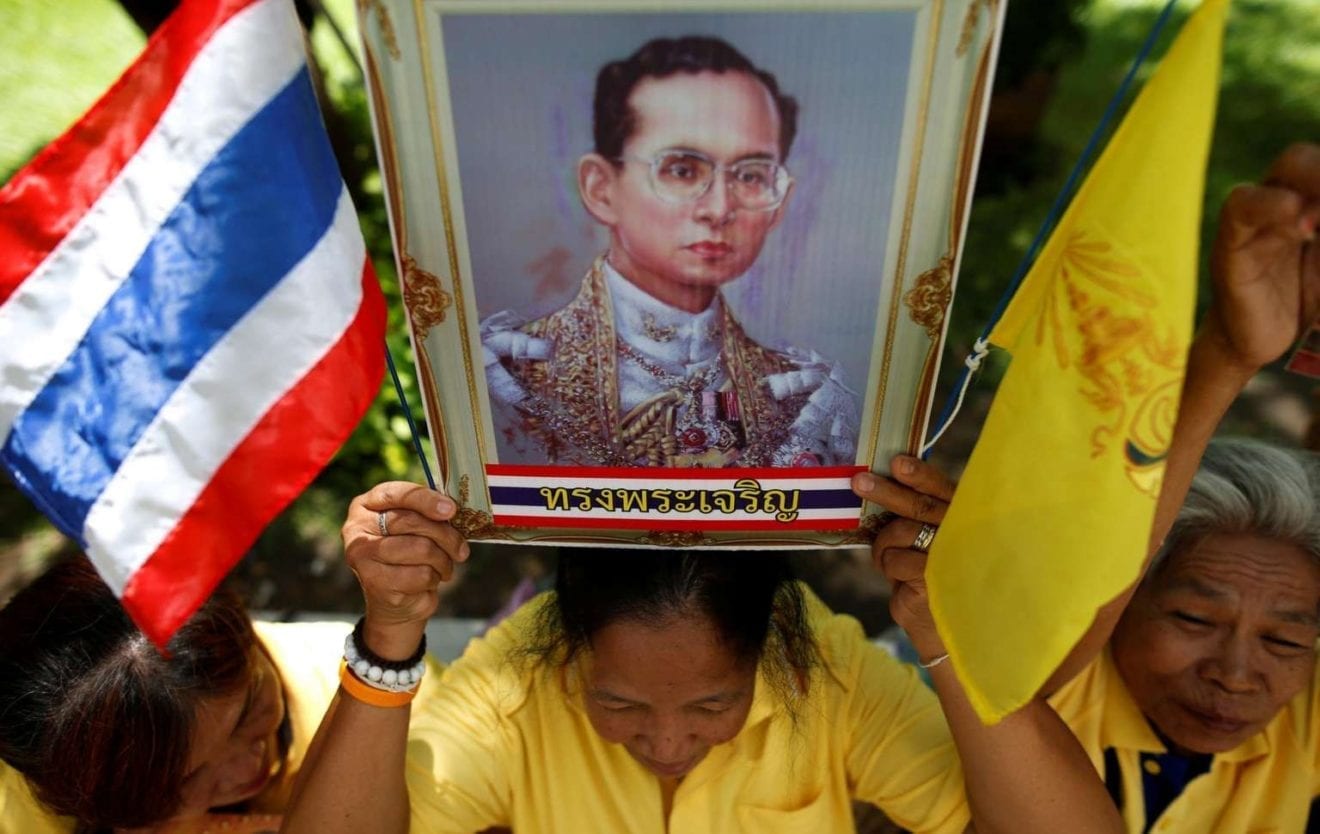
    Following a decade of declining health, 88-year-old King Bhumibol Adulyadej of Thailand, the world’s then-longest-reigning monarch, passed away in Bangkok on October 13. The king’s untimely death concluded a reign that lasted more than seven decades and initiated a year-long period of mourning, bearing substantial consequences for the nation’s luxury and fashion sectors.

    As declared by Prime Minister Prayuth Chan-ocha, leader of the junta that has ruled the country since 2014 after seizing power through a bloodless coup d’état, civil servants will be expected to wear “sombre-coloured” attire for the duration of the mourning period, while the rest of the population has been ordered to “tone down” or cancel entertainment and “joyful events” for at least the next month.

    Though the first full week of mourning has yet to pass, the consequences are already being felt. “I think [the fashion and luxury sectors] are definitely going to suffer — there will be a drastic decline in consumers of fashion brands,” predicts Kullawit ‘Ford’ Laosuksri, editor-in-chief of Vogue Thailand. “For example, I have spoken to a distributor of Kate Spade and Valentino, and they said that they had to re-estimate their Spring/Summer orders … The tourist and retail sectors are going to see a decline in sales — that is something the whole nation is afraid of.”

    Indeed, many of these fears are justified. “Retailers and hotels cancelled all promotions and activities related to sales and events during October to November,” says Anisa Ngandee, an analyst from Euromonitor. “Generally, the last quarter is usually the peak tourism period and the months where retailers [see] festive spending [during the] holiday seasons; thus, it will have a short-term impact on the retailers and hotels sales.”

    Regarding his publication, Laosuksri says, “There’s nothing we can do for the November issue, [but] for December issue, we are definitely going to decrease the print run, [while] a lot of traditional advertisements will be — if not in black and white — condolence messages.”

    From a Western perspective, the extent of mourning may seem extreme, but King Bhumibol’s reign was unique. For most Thais, life under Bhumibol is all they have ever known. “I and all the Thai people view this passing of the king as something that is quite personal as if somebody from our family has passed,” says Laosuksri. King Bhumibol’s heir, Crown Prince Maha Vajiralongkorn, has delayed his ascension to join the Thai people in grieving for his father; however, the country’s general election will go ahead as planned in late 2017.

    In recent years, the Thai luxury market has shown tremendous promise, growing 8 percent year-on-year from 2015 to 2016, reaching a total value of nearly $1.6 billion, according to Euromonitor. This can partly be attributed in part to the country’s young, wealthy upper-middle class. According to Digital Luxury Group,a business intelligence firm headquarted in Geneva, 20.5 percent of consumers who earned $150,000 or more in 2014 fell into the 30-34 age bracket, while another 18.6 percent fell into the 35-39 bracket, giving luxury brands and retailers ample space to penetrate the Thai market.

    The tourist and retail sectors are going to see a decline in sales — that is something the whole nation is afraid of.

    Nevertheless, despite this wealthy domestic consumer base, tourism still plays a significant role in sales of luxury goods. According to Bain & Company’s 2015 Global Luxury Goods Report, “Thailand [is a] top performer [in the Southeast Asia market] thanks to Chinese flows with strong potential going forward.” Just two days before the death of the king, Thailand’s biggest retailer, Central Group, announced expectations of a 21 percent rise in revenue to 320 billion baht ($9.17 billion) for fiscal 2016; sales at Central stores to foreigners rose 15 percent while transactions with domestic consumers merely increased by 5 percent.

    Given the immediate decline in the domestic demand for luxury goods, the Thai government must now tighten their dependence on the tourism sector to offset regressions, as retailers scramble to compensate losses in sales. “[The fashion industry] is very much going to depend on tourism; therefore, I think the government will be trying their best to promote it … after the one-month period,” predicts Laosuksri.

    If Laosuksri’s forecasts are correct, the Thai government will need to amplify its current efforts to engage Chinese tourists. “Thai authorities are leveraging Mandarin websites and KOL (key opinion leader) representation in China to promote the destination,” says Thibaud Andre of Daxue Consulting, a market research firm based in China. “[They] are strongly pushing their domestic practitioners to be more educated on Chinese culture and basic Mandarin, as well as [to increase activity] on Chinese platforms such as Wechat, Weibo or Taobao.”

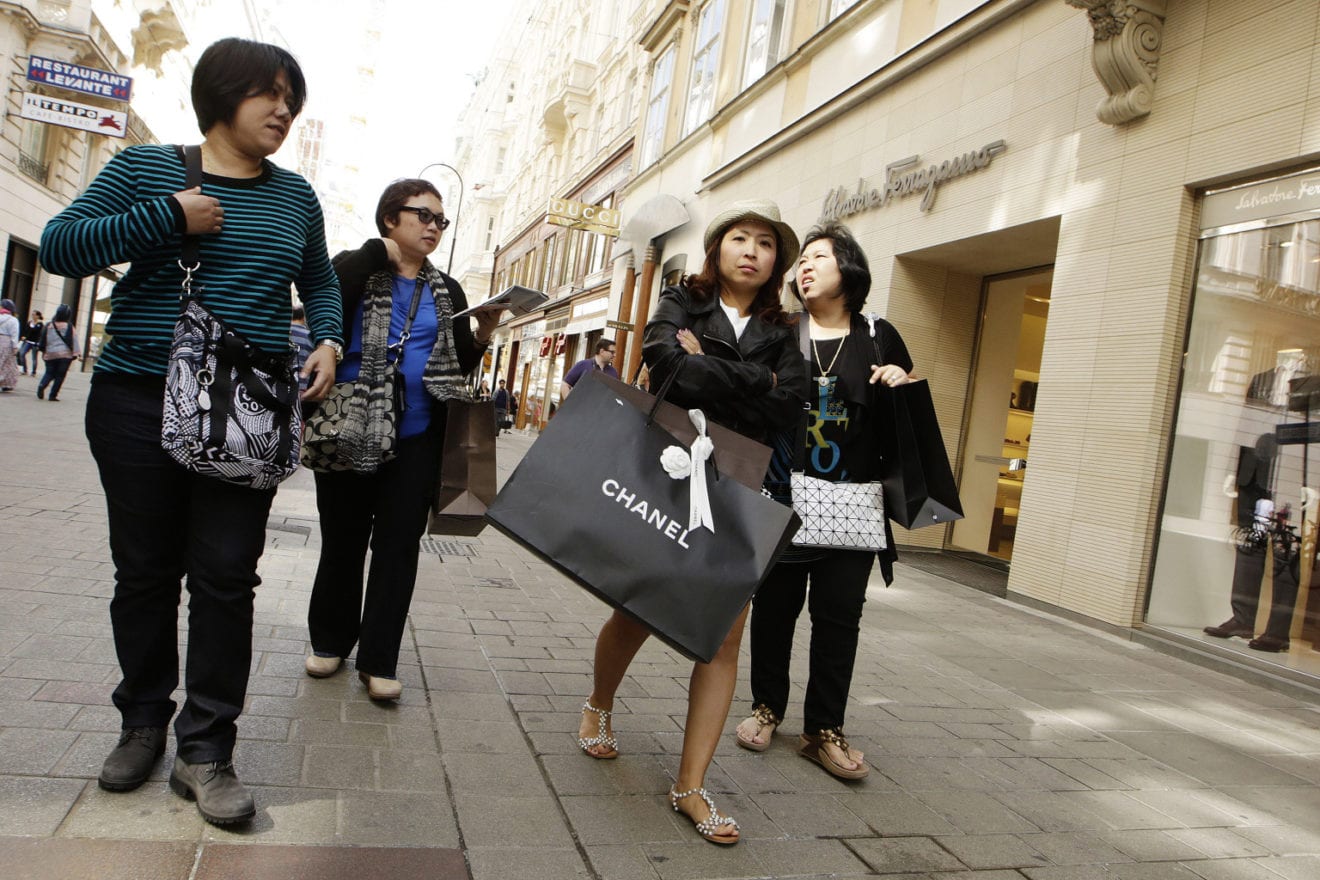
    Despite the negative image of Chinese tourists in Thailand and controversy surrounding the recent crackdowns on “zero-dollar” budget tours targeted at lower-income tourists from China earlier this month, according to the Siam Commercial Bank, the average daily expenditure per person amongst Chinese tourists has grown to 5,748 baht ($164.1) in 2015, from 4,425 baht ($126.4) five years prior. In terms of purchasing power, foreign shoppers, especially Chinese tourists, have become a cornerstone of the Thai luxury market.

    In data provided by Thailand’s Department of Tourism, from January to August of this year, approximately 6.6 million tourists from China visited Thailand — more than from Europe, the United States, Australia, Africa and the Middle East combined – with nearly two million arriving between January and February 2016 alone, an especially high-traffic period for the Lunar New Year.

    In the near future, Thailand’s luxury retail market may face several hurdles in sustaining recent growths in sales — particularly given the country’s strict lèse-majesté laws and the increasing risk of ultra-monarchist violence in the capital deterring inbound tourists from mainland China. “In the short term … we already lowered our expectations to 10.5 million visits for 2016 due to the mourning period,” says Andre. “Chinese agencies are already refunding their clients and tour operators are cancelling trips.”

    While the short-term forecast may seem turbulent, market analysts remain positive about the future. According to Ngandee, “In the long term, with the development of infrastructure, expected number of tourists are projected to be positive; [compounded with] the expansion of Thai middle-income population, industries are generally looking forward to more optimistic performances.” Nevertheless, Euromonitor suggests that stability still remains contingent upon next year’s government election.

    However, the country has shown resilience during previous political and social upheavals, and many Thai industry insiders like Laosuksri maintain a sense of hope in this period of uncertainty.

    “Euromonitor projects that more than 12 million incoming Chinese tourists at the end of 2020, [and] Thailand is expected to remain among the top destinations and might overtake the second hit destination [for outbound Chinese travellers] at the end forecast period,” assures Ngandee.


  • Connecting with the traveling Chinese shopper

    Connecting with the traveling Chinese shopper

    By the end of this year, China’s digital travel sales will amount to more than $95 billion, according to eMarketer. That’senough to rival the revenue of Fortune 500 giant Microsoft. By 2020 this figure will have doubled to around $200 billion.

    Retailers and tourism operations globally have been rolling out the red carpet for Chinese shoppers over the past few years. The Australian government introduced a “China 2020” plan in the hopes of bringing $7 billion revenue from Chinese tourist spending.

    In Southeast Asia, the top source of tourism receipts in Singapore and Thailand come from China, as the region remains a top destination due to the historically low prices and geographical proximity.

    With this expected growth, the days of broad-based marketing are over. Competition for the savvy Chinese shopper is more fierce than ever — without personalized and insightful advertising, the shopper would be overwhelmed with companies vying for their attention. Brands that can deliver the best mobile user experience at the heart of their  campaign strategy will be the most trusted among these consumers.

    Mobile-first means user-first Mobile is the most effective channel to reach Chinese shoppers abroad. The IAB reports that 47 percent of Chinese shoppers made purchases with a mobile wallet this year.

    That’s the highest in the world, second only to Norway (42 percent) and the UK (24 percent). The same report reveals APAC has the highest usage of mobile wallet for purchasing products and services of any region in the world.

    To better understand the Chinese consumer, advertisers can analyze their daily habits on their mobile devices. An audience cluster employing real-time and historical data can pinpoint the most receptive users and find the best time to engage them.

    There are many platforms that are more popular in China than other regions—such as WeChat and Weibo — and analyzing this historical data can help isolate the behavior on these devices. Combining real-time data such as device language, network carrier, and operating systems will give a more holistic view of the shopper.

    For example, to profile a Chinese luxury consumer traveling in Singapore, advertisers can identify and group together key indicators, such as the latest iPhone 7 model, connecting through a Chinese mobile carrier and using traditional Chinese language settings.

    Add the potential to pair that with historical location behavioral data identifying them as frequently visiting Singapore, and you can start to build out powerful audience segments. Audience segmentation is becoming increasingly sophisticated and can help advertisers push their branded messages even before the intended customer has departed from China.

    Personalized mobile marketing also allows brands to deliver tailored and timely messages to serve the consumer on their shopping journey. Let’s say, for example, an ideal time to send out an advertisement is in the morning before a shopper heads out of their hotel.

    A helpful campaign indicating the nearest store location and opening hours, combined with a daily coupon, has a higher chance of converting than a non-targeted advertisement.

    With the wealth of mobile data available, advertisers can go one step further and deliver creative campaigns based on device operating system. Most of the time, iPhone ads will lead to a landing page in Safari, and an Android system will take the user into Google Chrome. The ability to tailor each creative format for different user devices can help retailers win over the highly-desired Chinese tourist dollar.

    Brands that want to wow Chinese tourists need to have full visibility of their intended consumers and engage with precise timing to truly encourage purchasing decisions. Given the availability of today’s data, brands that fail to customize their creative message and user experience will only stand to lose out.

  • Under Armour in trademark fight with Uncle Martian

    Under Armour in trademark fight with Uncle Martian

    Uncle Martian, a new competitor for sportswear brand Under Armour in one of its main markets, China, is in hot water for co-opting the US company’s logo.

    Under Armour uses a U over an inverted U that intersect to form a stylised A. Uncle Martian has the same two-U configuration, but the letters do not touch.

    Apparel manufacturer Tingfei Long Sporting Goods in Fujian province, in southeastern China, is the company behind the new brand, which is offering shoes in its first foray into athletic wear.

    Executive Huang Canlong says the brand aims to be associated with “comfort, excellence and innovation”. He told Shoes.net.cn he wants to create a high-profile brand with “high standards”.
    Out of Baltimore in the US, Under Armour has seen its sales in China almost triple in the first quarter of this year compared with the same period last year.

    Meanwhile, Chinese consumers have been criticising Uncle Martian for its blatant hijack of the Under Armour logo.

    “How come you can’t even design a logo? All you do is plagiarise – don’t you feel it’s disgusting?” one critic wrote on Weibo.
    Another Weibo user, Zhang Gemeng, has pointed out that such blatant copying goes against the national policy of encouraging homegrown creativity.
    “Don’t blame people when they say they look down upon domestic brands,” wrote another user, indicating the move as a “loss of face” for China.

    Under Armour, of course, is also unamused and is pursuing “all business and legal courses of action” according to spokesperson Diane Pelkey.

    “Uncle Martian’s uses of Under Armour’s famous logo, name and other intellectual property are a serious concern and blatant infringement.”

  • Luxury shoppers in China spending 28 per cent more per online purchase than in 2014, study shows

    Luxury shoppers in China spending 28 per cent more per online purchase than in 2014, study shows

    Unfazed by the country’s economic slowdown, luxury shoppers on the Chinese mainland have increased their purchases online as a range of e-commerce options provide attractive deals – from cosmetics and clothes to cars and property.

    That trend was uncovered from a joint survey of 10,150 luxury consumers in China by global professional services giant KPMG, online luxury retailer Mei.com and Chinese media firm Sina’s Nasdaq-listed micro-blogging service Weibo. The survey was called China’s Connected Consumers 2015.

    “The pace of change in today’s marketplace in China is taking retailers and brands by surprise,” Egidio Zarrella, the clients and innovation partner for China at global professional services giant KPMG, said on Tuesday.

    The new KPMG-led study found that the average spending by mainland luxury shoppers has increased 28 per cent to 2,300 yuan (US$362) for each single e-commerce purchase, up from 1,800 yuan average in last year’s survey.

    It also found that 45 per cent of respondents in the latest survey said they have bought many luxury items online.

    While only 1 per cent said they have bought domestic and overseas properties and cars online, about 50 per cent of those surveyed said they have not ruled out making those purchases online in the future.

    “China’s luxury consumers are looking for something beyond the physical shopping experience,” Zarrella said.
    “They are moving from just owning a luxury product to experiencing luxury, including gourmet dining, fine wines, private flights, bespoke safaris, luxurious travel tours, spa treatments, art auctions and an ever increasing range of investment services.”
    In a report early this year, management consulting firm Bain & Company estimated that China’s luxury market reached 115 billion yuan last year, down 1 per cent from the previous year, as Beijing cracked down on lavish spending by government officials.

    The country’s luxury market was largely expected to remain under pressure because of the slowing economy. Mainland China’s gross domestic product growth was exactly 7 per cent in the first and second quarters of this year, compared with close to 8 per cent last year.

    Zarrella, however, pointed out that e-commerce spending in the world’s second-largest economy shows a completely different picture.

    The survey, which had respondents from 90 Chinese cities, found an increase in the average amount spent on luxury purchases in most product categories.

    It showed that a higher amount was being spent on average for popular categories such as bags at 109 per cent, women’s apparel at 58 per cent and cosmetics at 18 per cent. There was also a significant increase in spending on categories such as watches at 126 per cent and jewellery at 65 per cent.

    The top-selling product categories in China’s e-commerce market are cosmetics, women’s shoes, bags and leather goods, women’s apparel and accessories.

    “Price is becoming less of a driver [for online sales],” said Thibault Villet, the chief executive at Mei.com. “But value remains important as customers are well informed about global prices since most of them travel.”

    The study found that Chinese luxury online shoppers prefer to buy on so-called online-shopping platforms, such as e-commerce giant Alibaba Group’s Tmall.com.

    “Tmall controls over 50 per cent of the total business-to-consumer e-commerce market in China,” Villet said.

    That preference was attributed to the multiple online merchants in such platforms, the extensive information on products and pricing, peer ratings of sellers, regular promotional activities and payment gateways like Alipay and Tencent Holdings’ Tenpay.

    Villet said Mei.com plans to open its own e-commerce platform dedicated to luxury goods by next year to better compete on the mainland.

    He said the exponential growth of smartphone adoption on the mainland has also helped boost mobile e-commerce purchases. “We expect Mei.com to be fully mobile by the end of 2016,” he added.

    Mobile e-commerce sales will account for more than half of online retail shopping in mainland China by next year, according to New York-based research firm eMarketer.

    It forecast mobile e-commerce would make up 10.9 per cent of all retail sales in the country next year and 55.5 per cent of online retail shopping as the sector grew to a record US$505.74 billion, up from an estimated US$333.99 billion this year.

    The government-backed China Internet Network Information Centre has reported the number of users who accessed the internet through mobile devices reached 594 million in June, up from 557 million in December last year, while the overall number of internet users rose to 668 million from 649 million.

    Andrew Taylor, a co-founder of Juwai.com, which connects Chinese buyers to overseas property, said mobile browsing by consumers in China was a major driver of brand awareness for his company.

    “We see that many of the more affluent customers who look for luxury properties use [Tencent’s instant messaging service] QQ and call us,” Taylor said.

    “The younger consumers contact us through [Tencent social mobile messaging platform] WeChat and Sina Weibo.”

    So-called online-to-offline activities is a trend that will continue. Zarrella said that physical stores have a role to play in triggering e-commerce purchases of luxury goods.

    “We see a growing number of online platforms launching pop-up shops in malls, or have tie-ups with physical stores to give buyers an opportunity to inspect these products,” Zarrella said.

    Thomas Crampton, the global managing director at Social@Ogilvy, the worldwide practice of marketing group Ogilvy & Mather involved in social media, said an online-only approach in China is not sustainable for brands.

    “At some point, each brand will need a face-to-face touchpoint,” Crampton said.

    “We helped an automotive brand, analyse, interpret and optimise the shopper journey,” he said as an example. “From a traditional purchase cycle of over 200 days, the brand managed to sell over 300 cars in a matter of three minutes through WeChat.”