Tag: Wesfarmers

  • Australian Shoppers Shift to Private Labels as Discretionary Sales Drop

    Australian Shoppers Shift to Private Labels as Discretionary Sales Drop

    Australian supermarket chains lifted private-label grocery sales by up to 6.1 per cent in fiscal 2026 as stubborn inflation squeezed household budgets. Coles Group reported that own-brand revenue outpaced overall company growth, with one in three customer baskets now containing its private-label lines.

    Woolworths Group recorded a 5.5 per cent increase in own and exclusive brand sales over the same period. Budget department store Kmart, operated by Wesfarmers, delivered resilient sales, while rival Big W returned to profitability before early fiscal 2027 trading slowed.

    Private Labels Win Margin and Volume

    Household goods retailers experienced a sharp pullback in consumer demand. Furniture chain Nick Scali reported that customer traffic fell by up to 15 per cent in the quarter to August as residential property turnover slowed. Australian same-store sales at Harvey Norman dropped 3.4 per cent, and electronics chain JB Hi-Fi posted its largest single-day share price decline since 2020 after missing consensus sales estimates.

    Quick-service dining networks faced similar pressure. Retail Food Group, which operates Gloria Jean’s and Donut King, booked an annual decline of roughly 3 per cent in domestic network sales. Automotive parts maker ARB posted a 3.3 per cent drop in Australian aftermarket revenue, while used-car transactions across the country fell 16.2 per cent in June.

    Property Slump Stalls Discretionary Demand

    Consumer price inflation has held above 3 per cent since 2025, outpacing wage growth of 3.2 per cent in the June quarter. With Commerzbank calculating that 60 per cent of Australian household wealth is tied up in residential real estate, higher borrowing costs and property tax adjustments targeting investors have directly curbed big-ticket purchases.

    The divergence across retail categories mirrors trends across Asia-Pacific markets, where food retailers expand low-price private lines to capture defensive trade while durable goods sellers rely on promotional financing to prevent transaction volumes from falling further.

    Trading updates for the first eight weeks of fiscal 2027 show sales at Big W have already started to decline, making the upcoming quarterly retail trade data the next key benchmark for consumer demand.
  • Australian Retail Profit Lags Sales as Hidden Operating Costs Bite Margins

    Australian Retail Profit Lags Sales as Hidden Operating Costs Bite Margins

    Australian retail sales rose 2.8 per cent in the 2024-25 financial year, but operating profit before tax grew just 1.5 per cent to $38.8 billion as margin pressure intensified.

    Data from KPMG’s Retail Health Index shows that gap widening further into 2026, forcing boards to rethink conventional cost cutting.

    Retailers confronting squeezed margins often reduce store staff hours and trim marketing budgets. Advisory firm Olvera Advisors found these immediate cuts routinely fail to stop profitability leaks, which sit deeper in inventory management, returns handling and supplier contracts.

    Holding Costs and Inventory Drag

    Aged stock sitting in warehouses past 90 days creates an unmeasured drag on working capital. Benchmarking from APQC puts median inventory carrying costs at 10 per cent of value each year. A business holding $5 million in aged stock absorbs $500,000 annually in holding expenses before accounting for final clearance markdowns.

    Supplier renegotiations also remain narrowly focused on unit pricing rather than structural terms. Data from the Payment Times Reporting Regulator shows average retail payment terms at 31 days, though the 95th percentile extends to 77 days. Rebate structures frequently remain poorly tracked at the executive level, echoing findings from the Australian Competition and Consumer Commission’s supermarket inquiry.

    The Multi-Channel Fulfilment Trap

    E-commerce fulfilment and customer returns represent another growing source of unallocated operational losses. Total costs for a single product return average roughly $47 on an $80 basket, factoring in $20.78 for two-way freight, $10 in handling and an average $16 markdown. For a merchant processing one million orders annually, each single percentage point in return rate drains approximately $470,000.

    Similar accounting oversights previously hit Australia’s largest conglomerates. Woolworths paid $217.4 million for an 80 per cent stake in marketplace MyDeal in 2022 before shutting it in 2025 at a cash cost between $90 million and $100 million, alongside a $45 million impairment charge. Rival Wesfarmers similarly wound down its Catch marketplace after channel-level operating costs outpaced unit economics.

    Retail operators now face pressure from commercial lenders to present granular reporting on stock ageing past 90 days, net channel profitability and full-year return costs ahead of the next seasonal markdown cycle.

  • Coles spending $2.5bn on digital over the next two years

    Coles spending $2.5bn on digital over the next two years

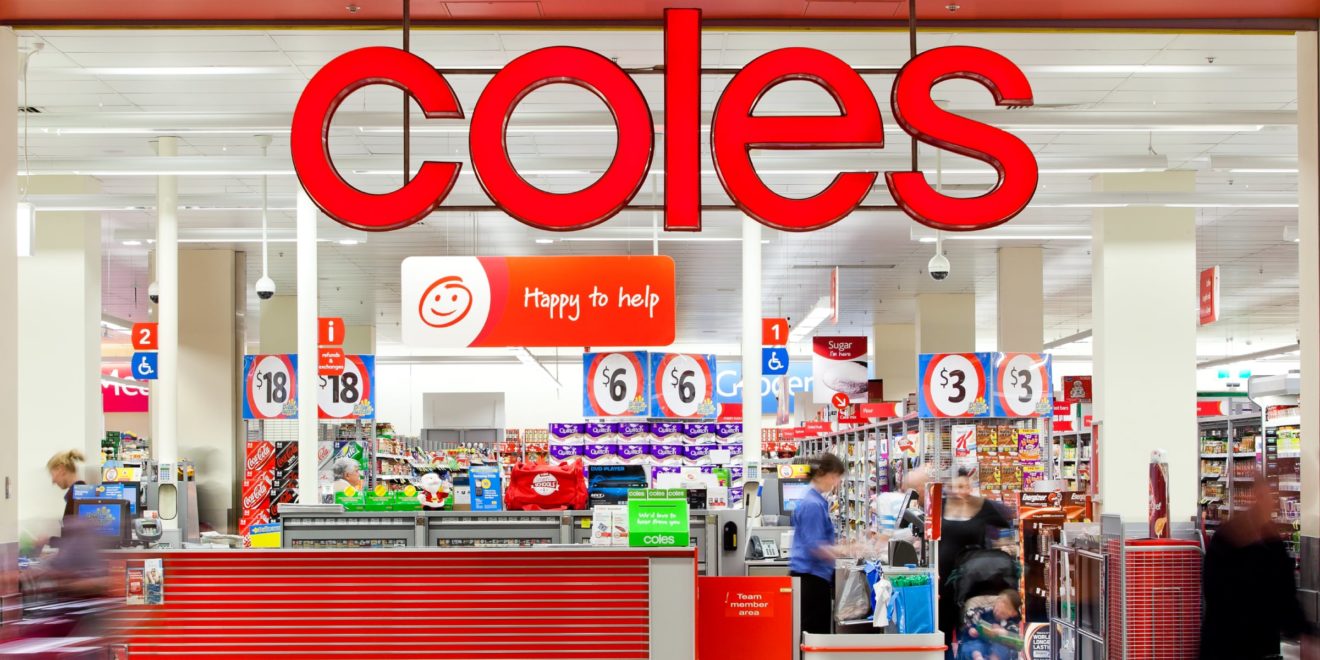
    Supermarket Coles will spend $2.5 billion over the next two years on improving its digital offer, the business announced today.

    The business will seek to improve its online shopping, as well as its self-service checkouts, data and automation across its warehouses, in an effort to streamline the experiences and make it even simpler for Australians to buy their groceries.

    Coles’ chief executive Steven Cain said following its demerger from Wesfarmers, and the subsequent Covid-19 pandemic, the business is increasing its pace of change.

    “There’s a myriad opportunity facing us. The market in Australia is very good for food and liquor. It’s growing, there’s plenty of opportunities, and we think we’ve got the assets to exploit some of them,” Cain said.

    “It’s making sure you’re confident that you’ve got the right returns before you press the accelerator. And I think what we’re saying today is we’re pressing the accelerator.”

    According to Cain, when Coles was demerged from former parent company Wesfarmers it wasn’t as advanced as it could have been – there hadn’t been enough investment in its online capabilities at the time, something he is hoping to rectify now.

    These changes have been coming for a while. Last year Coles appointed former Walmart SVP Ben Hassing to the position of Coles’ chief executive e-commerce, who said in February the supermarket’s online transformation will focus on creating a seamless and unified customer experience.

    “To activate this, we are connecting e-commerce and content. And then we’ll begin merging online and offline into a unified experience,” he said.

    This became more important as the changes to shopping behavior throughout Covid-19 opened up new pathways to the ‘omnichannel shopper’: customers who shop both online and offline.

    “These digitally-engaged customers are very, very important to Coles. We find them more loyal, they shop with Coles more frequently and they have a higher participation rate in Flybuys,” Hassing said.

    “This is a fast-growing customer segment for us. The year-over-year growth in total spend with Coles is much higher, as well.”

  • Wesfarmers to reposition Target

    Wesfarmers to reposition Target

    In a move to differentiate itself from sister brand Kmart, department store Target will see an accelerated transformation to offer higher quality apparel, soft homewares and toys.

    This shift will reposition the department store to compete against more specialty and middle-market offerings, and could keep Kmart and Target from potentially cannibalising one another’s sales.

    As a result, however, approximately 80 head office roles have been restructured. A Target spokesperson confirmed it is aiming to redeploy some of these staff into other parts of its business, or into the wider Wesfarmers group.

    Kmart Group managing director Ian Bailey said he believed it was the right time to recast Target against higher-quality competitors such as Cotton On, Myer, or Country Road, though at a more affordable price.

  • Wesfarmers, Woolworths lead list of top 1000 Australian companies

    Wesfarmers, Woolworths lead list of top 1000 Australian companies

    Research firm IBISWorld on Tuesday revealed Australia’s top 1000 companies in 2018, with Wesfarmers and Woolworths placing within the top five.

    The list provides an overview of Australia’s corporate landscape, and highlights the largest firms, growing and declining sectors and new businesses to watch in the coming years.

    According to the report, over 75 per cent of the companies on the list lifted their revenue over the course of the year, with total revenue across the list having increased 1.5 per cent year on year, while over 70 per cent of businesses remained profitable.

    However, after enjoying the top position in 2017, IBISWorld senior industry analyst James Thompson expects Wesfarmers to drop from second position in the list next year due to its demerger from supermarket Coles.

    Source: IBISWorld

    There were a number of new entrants, including online retailer Kogan, which joined the list at number 910 after generating significant revenue due to its expanded service offering and the growth of Kogan Mobile. The online retailer enjoyed annual revenue growth of 10.6 per cent, totalling $231.8 million, over the 2018-19 financial year.

    Noni B, which entered the list at number 997, did so off the back of the successful integration of the brands it acquired from Specialty Fashion Group, which delivered revenue growth of 17.8 per cent for the year.

    Other notable retailers on the list include:

    • Metcash: 26
    • Aldi: 49
    • JB Hi-Fi: 56
    • 7-Eleven: 84
    • Harvey Norman: 123
    • Cotton On: 157
    • Myer: 158
    • Super Retail Group: 160
    • David Jones: 175
    • Costco: 244
    • Ikea Australia: 323
    • Luxottica: 480
    • The Reject Shop: 527
    • Accent Group: 612
    • Michael Hill: 710
    • Nike: 772
    • Amazon: 968
    • Retail Food Group: 995