Tag: wheelock

  • Hong Kong Land Buys Singapore’s Wheelock Place for $900 Million, Boosting Its Commercial Footprint

    Hong Kong Land Buys Singapore’s Wheelock Place for $900 Million, Boosting Its Commercial Footprint

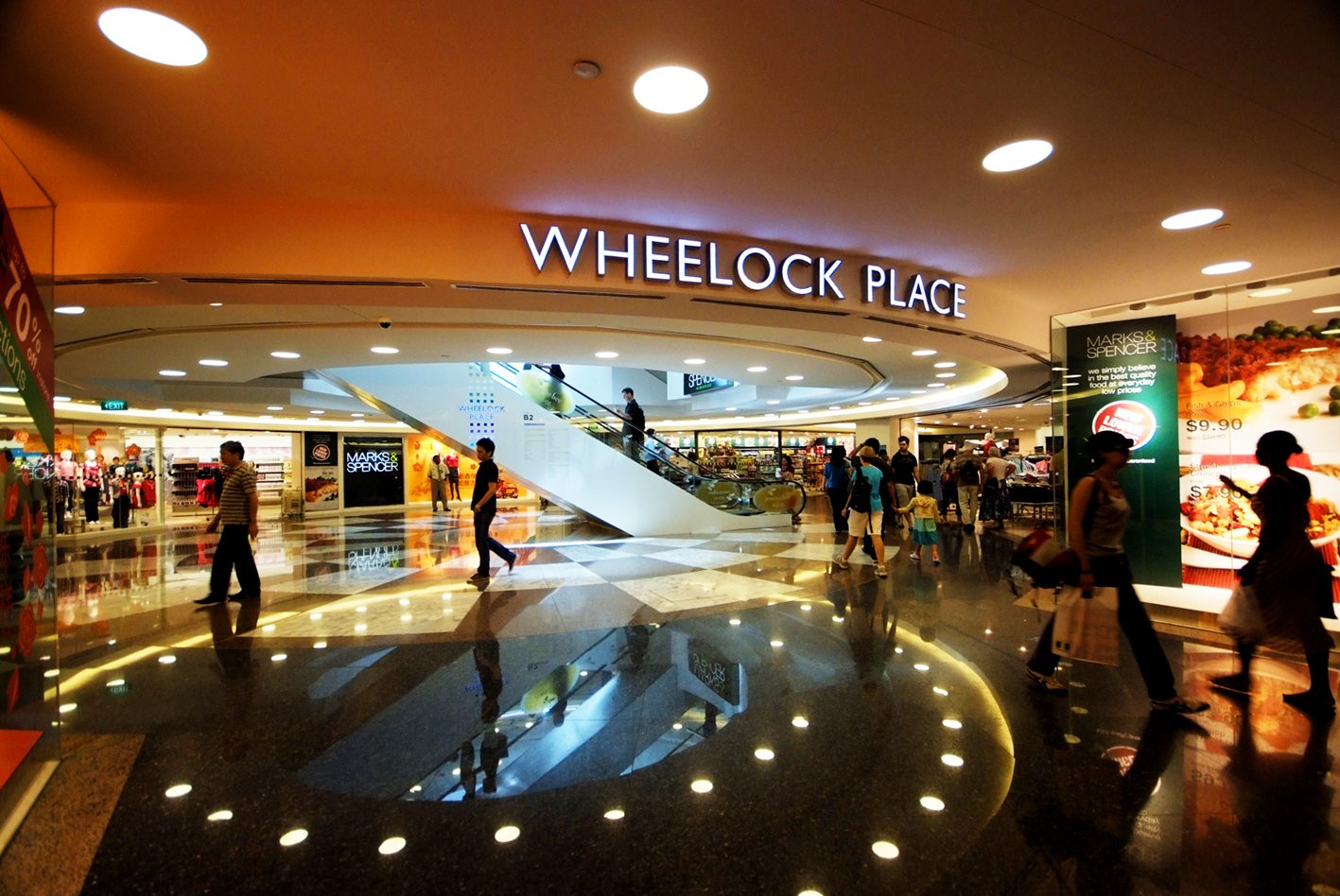
    Hongkong Land, a leading property investment, management, and development group, has successfully secured a deal to purchase Singapore’s premium shopping centre, Wheelock Place. The purchase, valued at approximately US$900 million, is being transacted through the company’s Singapore Central Private Real Estate Fund (SCPREF). This deal marks the first acquisition for the fund since its establishment in February.

    Wheelock Place, situated on the iconic Orchard Road, is a multi-faceted commercial property. It consists of a 21-story commercial building that houses office spaces, a retail podium, and two levels of basement that offer more shopping outlets and car parking facilities. The shopping centre boasts over 4000 square meters of retail space, within a total gross floor area of 43,280 square meters.

    In the past year, Wheelock Place demonstrated robust financial performance, generating nearly $100 million in profit after tax. This marks a significant 160 per cent growth from the previous year.

    The deal is anticipated to be finalized by the end of August. Following the completion of this acquisition, the assets under management for SCPREF will surge to $7.3 billion. This brings the fund closer to achieving its target of approximately $11.6 billion.

    Michael T Smith, the Group CEO of Hongkong Land, commented on the acquisition, highlighting the rarity and premium nature of the asset. He stated that securing Wheelock Place within months of the fund’s launch reflects positively on their fund management team and validates the trust their capital partners have in their strategic decision-making capabilities.

    This acquisition also symbolizes Hongkong Land’s strategic expansion into the Orchard Road precinct, a move that further enhances its commercial portfolio in Singapore.

    Questions & Answers

    What is the significance of this acquisition for Hongkong Land?
    This acquisition marks Hongkong Land’s strategic entry into the Orchard Road precinct, expanding its commercial footprint in Singapore. It also reflects a successful start for their Singapore Central Private Real Estate Fund.

    What is the financial impact of this deal on the Singapore Central Private Real Estate Fund?
    Once the deal is completed, the assets under management for the Singapore Central Private Real Estate Fund will increase to $7.3 billion, bringing it closer to its target of around $11.6 billion.

    What type of commercial property is Wheelock Place?
    Wheelock Place is a multi-faceted commercial property located on Orchard Road. It comprises a 21-story commercial building housing offices, a retail podium, and two basement levels containing additional shops and car parking facilities.
  • Hong Kong’s Wheelock to exit struggling media business

    Hong Kong’s Wheelock to exit struggling media business

    A subsidiary of Hong Kong-listed developer Wheelock has decided to end funding for its pay TV operator in a bid to focus on property development, leaving the fate of its loss-making business up in the air.

    Wharf Holdings, a 58%-owned subsidiary of Wheelock, announced on Thursday that it had stopped discussions with potential buyers on the sale of i-Cable Communications, as no deal had been reached to shed the struggling unit.

    Its current funding commitments to i-Cable, including a loan of 400 million Hong Kong dollars ($51.5 million), will also not be extended upon expiry. Wharf’s committed capital for i-Cable stood at HK$18 million at the end of December.

    “The chance of a turnaround for the business in the short- and medium term is low,” said Wharf Chairman and Managing Director Stephen Ng Tin-hoi at an earnings briefing on Thursday, justifying the group’s decision.

    I-Cable, which is 74% owned by Wharf, has been operating in the red in the past eight to nine years. Its net loss widened to HK$313 million last year on weak advertising revenue and growing competition in the TV industry. The station’s paid-TV license will expire by the end of May but it has received government approval for a new license until 2029. It is preparing to launch free-to-air TV operations in May.

    “Accepting the new license will be another 12-year commitment and we’ll have to see,” said Ng, without commenting directly on the possible closure of the two-decade-old TV operator. Meanwhile, the board of i-Cable announced on the same day it would hire a financial consultant to explore alternative funding sources or advise on business reorganization.

    Television Broadcasts and Asia Television, long Hong Kong’s only free-to-air broadcasters, both attracted a number of bidders over the past year, which might suggest more bidders could yet emerge for i-Cable. Unlike i-Cable, both offer a buyer a deep library of old programs, but ATV nevertheless shut down last year. This week, TLG Movie and Entertainment, which had signaled a bid for a 29.9% stake in TVB, withdrew its offer.

    Wharf’s exit from the media business began with the sale of its fixed-line telecommunications unit, Wharf T&T, for HK$9.5 billion last year.

    The group will also study the possibility of spinning off some of its office and retail assets in Hong Kong and mainland China. This could be achieved by means of a distribution in specie to Wharf’s shareholders. “A simple segregation may provide investors with more and better choice,” it said in the earnings statement.

    “It’s just the beginning of our study,” said Ng, stressing that Wharf has no specific timeline for the proposal. “Neither do we have an expected outcome. We might not do it eventually.” Asked whether the spinoff would be in the form of a real estate investment trust, Ng said: “This can be considered but we have to decide whether we will have a separate listing first.”

    After the transaction, Wharf would remain a conglomerate with businesses spanning property development and logistics.

    The proposal of a spinoff came on the back of Wharf’s resilient earnings from its investment properties amid a retail downturn. Its net profit surged 34% on the year to HK$21.4 billion last year.

    Revenue rose 14% to HK$46.6 billion, helped by stronger property sales and nearly 6% growth in rental income from its two flagship malls — Causeway Bay’s Times Square and Harbour City in Tsim Sha Tsui — in prime shopping districts in Hong Kong.

    On the mainland, Wharf reported modest 1% growth in rental revenue from its malls in the southwestern city of Chengdu to offices in Shanghai. It will roll out new malls and hotel projects in Chongqing as well as Changsha in central China in the second half of the year.

    Wharf’s shares closed 0.48% lower at HK$62.25 on Thursday, before the results were announced. Its stock has advanced 21% this year, against the Hang Seng Index’s 6.8% gain.

    However, some analysts are skeptical about a full recovery in Hong Kong’s retail market this year. China’s wider economic slowdown and Hong Kong’s peg to a stronger U.S. dollar has continued to discourage mainland tourist spending in the territory.

    Last year, retail sales in Hong Kong suffered the worst drop in two decades and were down nearly 12% from the 2013 peak. “It’s quite impossible for a sharp rebound in 2017,” wrote Alfred Lau, a property analyst at Bank of Communications International in a note on Monday, expressing caution about the rental growth of retail properties. “We prefer developers with office assets rather than retail properties.”

  • Fall of 5-10% in Hong Kong property prices ‘not abnormal’ — Wheelock

    Fall of 5-10% in Hong Kong property prices ‘not abnormal’ — Wheelock

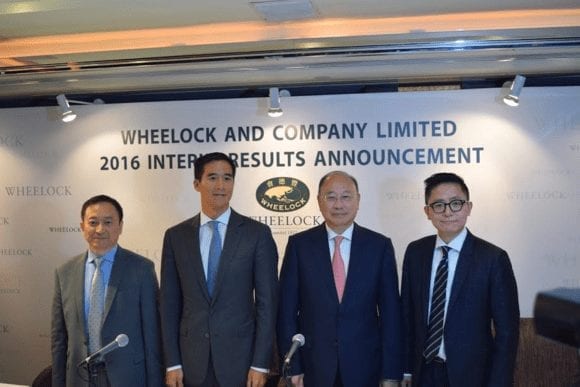
    Hong Kong’s property market has yet to stabilize and could fall by 5-10% in the second half of the year, according to leading developer Wheelock.

    “Given the global uncertainties arising from Brexit and volatility in the currency market and oil prices, a 5-10% fluctuation in [home] prices in Hong Kong is not something abnormal,” said Chairman and Managing Director Douglas Woo Chun-kuen in an earnings briefing on Monday.

    In his late thirties, Woo, an architecture graduate from Princeton University, has become a third-generation owner to take the helm of the Hong Kong-listed property conglomerate after a stint at UBS. He assumed the chairmanship from his father Peter Woo Kwong-ching in 2014.

    Woo’s cautious outlook came after his group reported a 29% plunge in net profit to 5.66 billion Hong Kong dollars ($730 million) in the six months ended June. Underlying profit, excluding the impact of property revaluation, fell 19% to HK$5.13 billion on the year, despite a surge in property sales amid a housing downturn in previous months.

    Contracted sales reached HK$11.8 billion as of mid-August this year, primarily driven by the sale of three residential projects and the en-bloc sale of OneHabourGate East office tower and shops for HK$4.5 billion. The four projects already accounted for nearly 91% of its full-year sales target last year but the group would not say if it had plans to raise its target.

    Wheelock attributed the weaker bottom line to the high base of last year’s earnings, which was boosted by a significant contribution from the sale of One HarbourGate West office tower and shops to the overseas unit of China Life Insurance for HK$5.9 billion.

    The developer’s earnings are affected by the performance of Wharf Holdings, which accounts for a fifth of its core profits. Wharf, a landlord 60%-owned by Wheelock, saw a 7% increase in rental income from its malls despite a retail slump in Hong Kong, caused primarily by a dwindling number of wealthy mainland Chinese tourists to the territory.

    Analysts at Macquarie Securities maintain an “outperform” rating for Wheelock, citing its healthy residential and office sales. Thanks to strong demand and low average vacancy for Grade A-offices in Hong Kong’s central business districts, “we think this is a solid support for Wheelock’s sales due to keen expansion interest from mainland [Chinese] financial institutions,” according to a Macquarie note.

    Asked about competition from mainland Chinese developers on land acquisitions, Woo said Wheelock would “do its own math” and be “selective” in making acquisitions particularly in commercial land sites launched by the government.

    The developer has a land bank of 8.3 million sq ft and of that, 95% is in urban areas. This is however dwarfed by its rivals’ — Sun Hung Kai Properties has 50.8 million sq ft and Henderson Land Development has 24.4 million sq ft.

    Wheelock’s stock closed 0.35% higher at HK$43.3, before its earnings were announced. Its shares have advanced 32.62% since the start of this year, against the Hang Seng Index’s 4.65% gain. It declared a first interim dividend of HK$0.45, up 6% from a year earlier.

  • Should We Worry About The Hong Kong Dollar?

    Should We Worry About The Hong Kong Dollar?

    Winter is coming to Hong Kong. The Hong Kong dollar breached its 2007 low today, down to as low as 7.8226, just haircuts away from the 7.85 level that would prompt the Hong Kong Monetary Authority to intervene.
    After China decoupled its loosely pegged yuan from the dollar last August, we Hong Kong residents are understandably worried Hong Kong may de-peg its currency as well.

    But really, rather than the Hong Kong dollar, we should worry about the Hong Kong economy instead.

    First of all, it is highly unlikely Hong Kong would want to rock the boat even though Hong Kong’s economy is more closely tied to China (and so should its monetary policy be). After all, this is the government that lets its citizens kidnapped across the border without consequences.

    Second, HKMA has enough gun power to defend its currency when it comes to it. Hong Kong’s foreign reserve is currently at $359 billion, which covers 1.75 times its monetary base. See my last week’s blog for Credit Suisse‘s commentary on the possibility of Hong Kong de-pegging.

    But what this means is that Hong Kong has to raise its interest rates to compensate for the Hong Kong dollar outflow, estimated to be around 300 billion Hong Kong dollars, or $38 billion. This certainly is not good news for the Hong Kong economy, especially when it is already in the downturn. In 2015, Hong Kong retail sales, a growth engine in recent years, is expected to slump over 5%, even worse than the SARs epidemic in 2003.

    Hong Kong investors are catching up to reality today, sending the Hang Seng Index down 3.1% a new 40-month low. No surprise, Hong Kong property developers tumbled today. Cheung Kong Property fell 5.6%, Wheelock dropped 4.8%, Wharf Holding was down 3.7%.

    Year-to-date, the iShares China Large-Cap ETF (FXI) fell 13.5%, the iShares MSCI China ETF (MCHI) fell 13.4%, the iShares MSCI Hong Kong ETF (EWH) was down 10%.