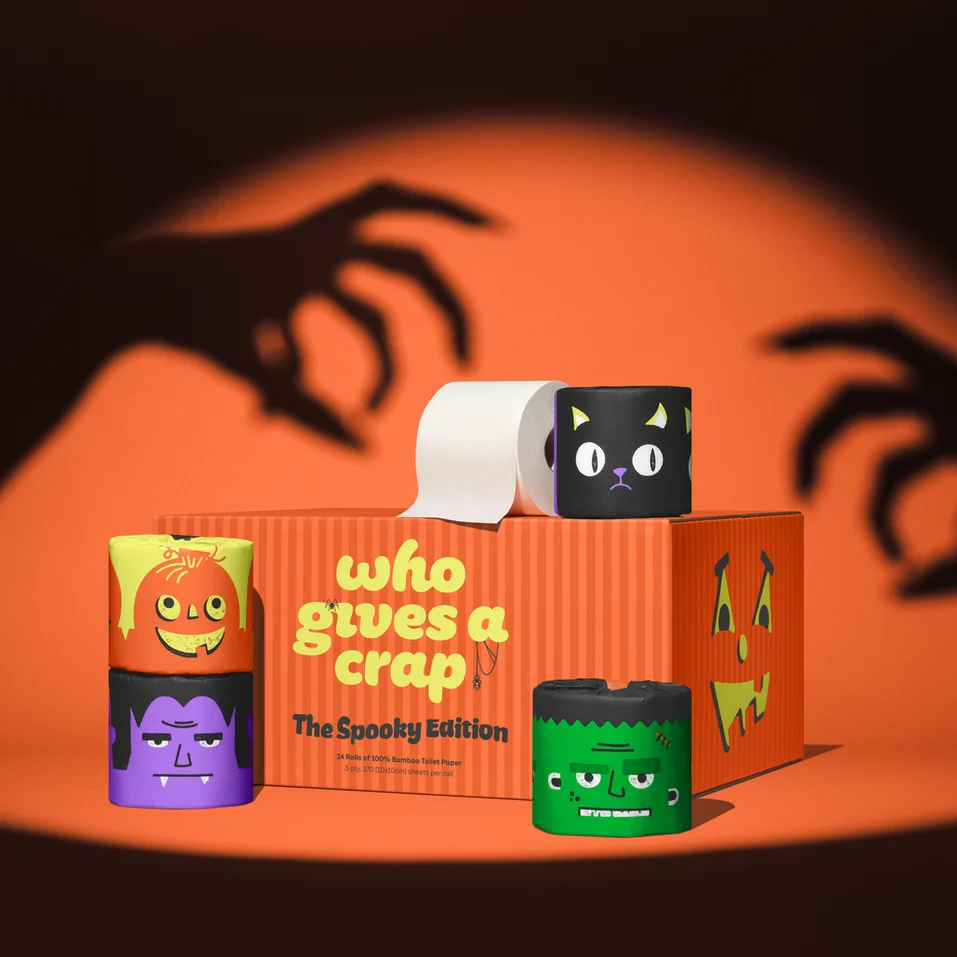
Who Gives A Crap launched a limited-edition Halloween toilet paper range priced at 42.50 Australian dollars for a 24-pack, expanding its seasonal direct-to-consumer line ahead of October 31.
A bulk two-pack containing 48 rolls sells for 69.50 Australian dollars on the brand’s online store. The Spooky Edition uses 100 per cent bamboo material across seven character wrappers, including Frankenstein’s monster, a vampire, a mummy, a skeleton, a black cat, spiders and a jack-o’-lantern. Each printed roll wrapper incorporates three separate faces that rotate as users spin the paper.
Retail Expansion Beyond Online Channels
The seasonal rollout follows the brand’s push into physical retail shelves across international markets. British supermarket chains Tesco and Waitrose, alongside online grocer Ocado, began stocking a six-pack version of the Halloween line on September 2 at a recommended retail price of 6.75 pounds, two weeks before the company opened web sales on September 17.
Diverting seasonal inventory into grocery aisles reduces customer acquisition costs that have climbed across digital marketing channels. For fast-moving consumer goods suppliers, holiday packaging creates temporary visual differentiation without requiring formula modifications or permanent shelf allocation. The physical retail presence gives direct-to-consumer hygiene brands access to standard weekly shopping baskets.
Direct-to-Consumer Seasonal Strategy
Seasonal runs carry distinct supply chain risks for tissue manufacturers relying on offshore bamboo production. Unsold decorative inventory loses retail value immediately after October 31, forcing brands to accurately balance stock allocations between direct web fulfilment hubs and retail partner distribution networks.
Who Gives A Crap relies on limited production volumes to prevent surplus decorative stock from lingering in warehouses past November. The strategy treats household paper products as disposable home decor, encouraging existing subscribers to bring forward reorders while testing impulse purchasing among retail shoppers.
Sanitation Funding and Market Presence
Founded in 2012, the Melbourne-born B Corp directs 50 per cent of its operating profits toward global sanitation and clean water initiatives. Filings and company data show the business has distributed more than 11 million pounds to hygiene projects worldwide since its establishment.
The company expanded from its initial recycled paper subscriptions into bamboo bathroom rolls, paper towels and facial tissues before entering major retail supermarket partnerships in Australia and the United Kingdom. Inventory for the Halloween collection remains on sale online through October 31 or until initial batch allocations run out.