Tag: Whole Foods

  • Behind Amazon’s 63 per cent income rise

    Behind Amazon’s 63 per cent income rise

    The latest Amazon results are positive – but there is now a clear divergence in performance between the top and bottom lines. On the profit front, Amazon’s results are impressive. Net income increased by 63.1 per cent and operating income by 78 per cent. Much of this is coming from the AWS segment, where income from operations rose by 61 per cent. However, some credit should also go to the North American operation where volume increases helped ease up operating profits by 33 per cent. These uplifts come in spite of the fact that Amazon is still investing huge amounts in the business. Therefore they go a long way to justify the myriad of projects that Amazon has undertaken and continues to undertake.

    While the profit lines look rosy, the sales line presents a mixed bag. The slowdown in product growth is now tangible and although an 8.2 per cent uplift is strong compared to many retailers, by Amazon’s standards it is a weak performance. On a divisional basis, North America held up better than international markets, largely thanks to the confidence of the American consumer. Even so, sales growth in North America has also dipped.

    There are several dynamics at play here. First, is the maturity of Amazon’s operation: Amazon is now a massive retailer and it is simply unrealistic to expect it to keep on growing at its historic pace. However, more concerningly, this maturity is also coinciding with a period of rising competition. Retailers like Target and Walmart have invested heavily in their online operations and pulled out all the stops this holiday season. Our data show that they made solid customer gains, and some of that dented Amazon’s growth. In our view, the gap between Amazon and the rest is now narrowing.

    Another area of concern is Whole Foods. Amazon’s results show that sales at physical stores dropped by 2.7 per cent over last year, largely thanks to the grocery division. The investment in lower prices partly explains this, but it does not account for the bulk of the decline. In our opinion, much of this is because Whole Foods’ proposition is simply not up to scratch. Basics and commodity products still cost way more than at rivals like Target, and this is one of the reasons perceptions that Whole Foods is needlessly expensive have persisted. Such expense is not justified by store experience nor by customer service, both of which remain lackluster.

    Arguably, a holiday period that coincided with strong consumer finances should have been fertile ground for Whole Foods to thrive. However, very little effort was made to entice or enthrall customers. Aside from fresh counters, the festive product line up was incredibly poor with a noticeable lack of treats and interesting items. As a result, many consumers simply went elsewhere.

    We are cognisant that many of the Whole Foods issues are not of Amazon’s making. However, the poor performance underlines how much work remains to be done in transforming the chain’s fortunes.

    Despite these niggles, we remain positive about Amazon. The Prime platform still has enormous potential, there is plenty of upside in devices, and there are many opportunities to improve own-brands (some of which have underperformed). Taken together, along with AWS, this means Amazon has scope for future growth.

    However, it is also clear that Amazon will now need to work doubly hard to achieve any future sales gains.
  • Amazon to expand Whole Foods, open more stores

    Amazon to expand Whole Foods, open more stores

    Nearly a year-and-a-half after Amazon acquired Whole Foods for approximately US US $13.5 billion, things are about to start changing. Amazon is planning to expand its Whole Foods Market portfolio by adding more stores to put more customers within its two-hour delivery service range, The Wall Street Journal reported this week. The report says Amazon has been scouting locations for bigger Whole Foods stores in states and regions where they don’t currently have any stores at all–places like Idaho, south­ern Utah and Wyoming, along with many other suburban areas.

    The report goes on to say that these stores will be approximately 45,000 sq. ft. in size and the extra space is intended to accommodate Amazon delivery and pickup from online orders.

    According to WSJ, the world’s largest online retailer also plans to expand its two-hour delivery service, Prime Now, to nearly all of its roughly 475 Whole Foods stores in the United States.

  • Amazon joins Apple in trillionaire’s club

    Amazon joins Apple in trillionaire’s club

    Amazon briefly became the second US company to join the trillionaires club overnight.

    Like Apple just one month ago, Amazon’s market capitalisation has exceeded US$1 trillion.

    Neil Saunders, MD of GlobalData Retail, described the achieved as “extraordinary” after just 24 years in business.

    “That Amazon has achieved this demonstrates its dramatic advancement in both the retail and technology sectors, as well as the influence it now wields over large parts of the consumer landscape. Amazon is a very customer-centric retailer that has earned and deserves its success.”

    The e-commerce behemoth posted losses for many years when it launched in the relative infancy of the online shopping industry. But in recent times its growth has been stellar, based on creating a subscription platform (Amazon Prime), developing smart devices like the Alexa and acquiring and opening retail businesses to expand its reach offline, including upmarket grocer Whole Foods and its cashierless Amazon Go format currently in trial phase.

    Saunders said the valuation reflects the forward potential of the company. “Despite its size and scale, there is still something young about Amazon. It might be mature in a sector like books and media, but in categories like grocery and home furnishings, Amazon is really only just getting started. The same applies to geographic expansion – there are many global pockets of demand that Amazon has yet to fully tap into.”

    Saunders has no doubt Amazon will make the most of all of those opportunities.

    “We also believe it will move more heavily into new areas like pharmacy and healthcare. Its future success will be predicated on the same basis as its past victories: finding innovative ways of delivering on customer’s needs and identifying unique ways of solving their problems.”

    Apple was not the world’s first trillionaires club member: Chinese government-controlled company PetroChina briefly reached a stock market value of about $1.1 trillion in 2007, however it is now worth only about $200 million.

  • Know more about Amazon’s 5-minute shopping trip

    Know more about Amazon’s 5-minute shopping trip

    Thanks to Amazon and Whole Foods, a new kind of locker talk could be sweeping the grocery sector, and it centers on how much can be bagged in a five-minute window.

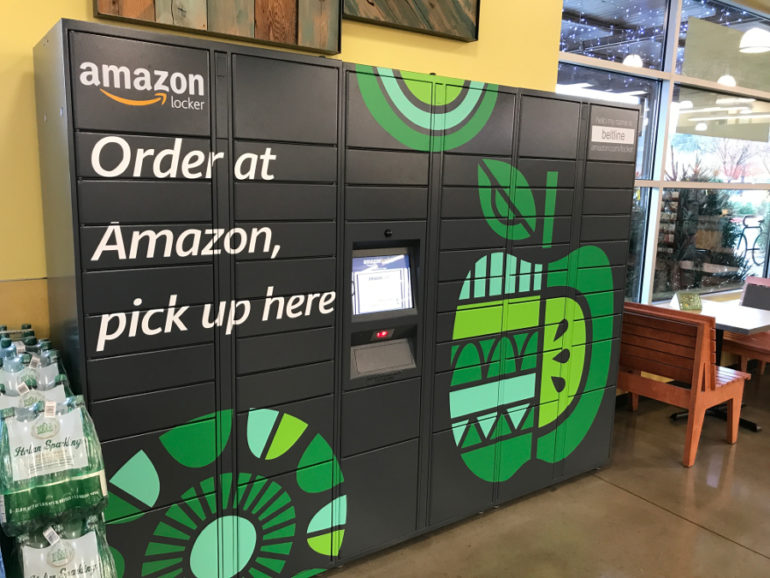
    Micro-shopping trips, defined as trips that take less than five minutes, are becoming increasingly common thanks to grocery services that let customers order online and pick up in-store. The development made national news when such trips were reported to have climbed 8.7% at Whole Foods stores after Amazon acquired the grocery chain in August 2017, according to research by data-analyzing firm InMarket. The increase is attributed to its Amazon Lockers, where shoppers can pick up preordered items.

    These super-short trips can result in higher-proportioned revenue because shoppers who place pickup orders, encouraged by the prospect of a quick in-and-out visit, remain prone to split-second purchase decisions.

    “As good as delivery is getting — one-day delivery, sometimes one-hour delivery — that still can’t compete with the one-second immediacy of being in store and picking up that avocado … because I thought about it in that moment,” explained Todd Dipaola, chief executive and founder of InMarket.

    This explains why retailers from Walmart to Kroger are adding pickup options to attract time-strapped shoppers.

    Evidence that shopper lockers and similar pickup options lead to shorter trips exists in the breakdown of micro-trips at Whole Foods. Micro-visits at stores with Amazon Lockers rose by 11%, according to InMarket. At stores in the same cities without lockers, such trips rose by 7%.

    It counters what retailers strive for, which should be longer trips, but when shoppers have at their fingertips the means to shop wherever and however they want, food sellers are forced to acquiesce. However, smart merchants can find advantages in the micro-trips, from more efficient store formats to improved targeted marketing.

    Consider: 34% of shoppers who use click-and-collect shopping features (order online, pick up in-store) buy more than intended, according to research by WSL Strategic Retail. More important: 89% of those who use it are satisfied with the experience, largely because of the convenience.

    How big a segment is this? Right now, about 40% of U.S. shoppers use click-and-collect for groceries, according to Nielsen research, and the figure is expected to increase as the service becomes more available. Nielsen and the Food Marketing Institute estimate that Americans’ total online grocery spending will reach $100 billion between 2021 and 2023.

    Walmart Towers Over Convenience, Target and Kroger Click On

    As click-and-collect options expand, shopper loyalty shifts from brand to service, which often means ease. Among the services aimed to attract shoppers:

    Walmart Towers. In the first quarter of 2018, the superstore chain generated nearly $3.2 billion in e-commerce sales, according to its earnings report, and it is prioritizing online sales growth over that from new stores. Walmart operates 1,100 online grocery pickup locations and plans to add 500 pickup kiosks, or towers, by the end of 2018. It installed nearly 200 of the towers, which shoppers access by scanning barcodes into the kiosk computers, in 2017.

    Kroger’s ClickList. Online sales rose 66% in the first quarter of 2018, Kroger reported, crediting its ClickList in-store pickup service. The chain is even retrofitting some stores to accommodate ClickList, which enables users to retrieve orders at designated drive-thru areas. Among its features is a “favorites” list that tracks a shopper’s most commonly purchased items for faster reordering.

    Target Drives Up. Target is aiming for micro-parking with its Drive Up service, which it recently extended to 270 locations in the South. Through the app-enabled option, customers can place orders and wait to have their items brought directly to their cars by a store team member. Orders arrive within two minutes of the consumer pulling into the store parking lot.

    The 5-Minute Window Is Open for Business

    But how can a parking lot encounter, or any of these designated pickup options, translate to added purchases? It all hinges on understanding what the shopper is trying to accomplish.

    Here are ways merchants use what they offer to better cater to shoppers in a five-minute window.

    Be complementary. In addition to tracking frequently ordered items, Kroger can change suggestions week by week based on the items its ClickList shoppers purchase. With this history, it can alert shoppers if they will soon need to replenish detergent or benefit from complementary products. Promotions sent while the shopper is online can translate to larger digital baskets, while special promotions timed for at-store pickup can encourage the shopper to run in for a discounted item (particularly when those items are near the pickup area and can be easily retrieved).

    Shorten other causes for a trip. Shoppers do not always enter a store to pick up an order or even fulfill a list. Sometimes they have to return or exchange a purchase, grab a cup of coffee or simply use the restroom. Beauty vending machines that sell lipstick, cologne, shaving items and hair accessories can be placed by the restroom (two birds; one stone). As for transforming the pesky return process into an easy, quick shopping trip, Walmart’s Mobile Express Returns app allows shoppers to make super-fast returns in dedicated express lanes — and it gets them into the store, perhaps to buy a few dinner ingredients.

    Cover the last foot. This is where retailers really are tasked with understanding the shopper’s pain when picking up an online order, because they often have a lot going on. If a consumer is saddled with kids who are hungry after a day at school and a lengthening mental to-do list, she simply does not want to traverse the store for another thing. So retailers can bring the things she needs to her. Nearby grab-and-go snacks, prepared meals and even wine could find their way into her bag — if an easy payment option is available.

    Necessary for any of these efforts to work is understanding the shopper’s pain points and remembering that while convenience is essential for micro-tripping, not all shoppers insist convenience be fleeting. Lockers may help retailers bag sales, but they won’t capture loyalty — that takes locking in on shopper lifestyles.

  • Amazon unveiled its plans for Whole Foods

    Amazon unveiled its plans for Whole Foods

    Ever since Amazon spent $13.7 billion on Whole Foods in June 2017, theories have been swirling as to why the world’s biggest e-commerce firm would get into the old-time business of selling groceries in stores.

    Now it is becoming clearer that what Amazon really wanted was a slice of real estate closer to consumers, to get goods faster to them than ever.

    The clearest signal so far: Amazon announced Thursday that people subscribing to its Prime service in four major U.S. cities (Austin, Cincinnati, Dallas and Virginia) can get groceries from Whole Foods delivered within just two hours of placing an order, for free. They’ll be able to order fresh meat, seafood, flowers and “most” of the items stocked in their local Whole Foods outlets, the company says.

    That means you could theoretically eat lunch, and then order your dinner ingredients on the same day.

    The move could have far-reaching consequences once Amazon begins introducing speedy delivery from other Whole Foods outlets across the world, raising consumer expectations and putting pressure on other grocers to offer the same kind of shipments too.

    In one movement, Amazon has also taken the so-called “last mile” delivery problem it’s been trying to solve with one-day deliveries on Prime, and flipped it on its head.

    Instead of driving goods to your house from a vast warehouse on the edge of the city, it’s bringing them direct from main street; with an order being processed just down the road, the last mile is now the “first mile.”

    For now, this applies to the groceries that are traditionally available in Whole Foods. But some in the e-commerce industry believe Amazon has been planning to seriously restructure Whole Foods stores, sectioning off areas that it can turn into miniature versions of its highly-automated warehouses.

    That could allow Prime customers to not only receive Whole Foods fresh fish and veg, but popular household items like toothpaste and baby diapers.

    Amazon wants to build a distributed supply chain, says Elram Goren, who runs CommonSense Robotics, an Israeli startup selling automated-warehouse technology to rival grocery chains, and to be “close to their customers.”

    While that might seem like a threat to other grocers, Goren contends that Amazon is setting an example those competitors can follow too. That is, if they’re willing to make radical changes to the way they use their stores, and also turn sections of them into “micro-fulfilment centers.”

    “For a very long time, e-commerce was growing extremely fast and companies like Walmart, Kroger or Albertsons, didn’t really have have any kind of strategic advantage over Amazon,” he adds.

    “But with online groceries they have that infrastructure. Think of a store. It already has a supply chain coming in, and it is by definition close to the customer.”

    Tom Adeyoola, who founded the British e-commerce startup Metail, agrees retailers need to embark on a “big change in mindset,” and take advantage of the fact that their stores are physically closer to customers than Amazon’s warehouses.

    “If you could have a big store footprint, how can you turn that into a fulfilment center?” he says. Companies with a trusted logistics model and reliable delivery service could have the most success, he adds.

    Amidst a so-called retail apocalypse that’s swallowing up storied retailers like JCPenney and Toys R’ Us, that could be a model worth thinking about.

  • Amazon posts largest profit in its history on sales

    Amazon posts largest profit in its history on sales

    Amazon’s quarterly profit reached a record US$1.86 billion in the three months to December 31, fuelled by millions of new customers to its Prime fast-shipping club.

    There was also a provisional $789 million boost to its bottom line from the US government’s tax bill which was passed in December.

    “This was another blow-out quarter for Amazon,” said GBH Insights analyst Daniel Ives. “The retail strength was eye-popping as the company had a banner holiday season and looked to capture roughly 50 per cent of all e-commerce holiday season sales.”

    “Our 2017 projections for Alexa were very optimistic, and we far exceeded them,” said founder and CEO Jeff Bezos.

    Neil Saunders, MD of GlobalData Retail, said that with 38.2 per cent sales growth in the final quarter, Amazon was one of the clear winners over the holiday season.

    “Admittedly this number is flattered by the inclusion of Whole Foods revenue, but even when this is stripped out, Amazon still increased sales by an impressive 27.9 per cent. Given this is above the trajectory of recent growth, it is safe to say that Amazon shows no signs of slowing down.”

    Saunders said the figures clearly show Amazon’s primary growth opportunities now lie in services.

    “Prime and subscription revenue, for example, increased by 46 per cent over the prior year. This is an impressive uplift and demonstrates Amazon is pulling more and more consumers into its ecosystem of content and services.”

    Allied with the increase in Prime membership is the rise in sales of Echo devices.

    “Our data show these were popular gifting and self-purchase items over the holiday period. Amazon now has a clear edge over other smart device manufacturers. This, and the fact Prime offers far more benefits and services than rivals, means Amazon should be able to withstand increasing competition from Apple, Google, and others as they launch and upgrade their smart speakers and connected home products

    Growth from services, as well as the addition of Whole Foods, is helping to strengthen Amazon’s bottom line. This quarter, net income increased by a stellar 147.8 per cent while operating profit rose by a very respectable 69.5 per cent.

    “This is in spite of increased investment and higher losses from the international operation. Notably, the better profit outcome also masks the pressure on margins from increased delivery and fulfillment costs: these rose by 56.9 per cent over the prior year and as a proportion of product sales rose to 21.7 per cent from 18.7 per cent in the same period last year.

    “Although Prime revenue offsets some of the fulfillment costs, this income is also used to fund content production, and various other benefits members enjoy. As such, we believe Prime makes only a small contribution to covering Amazon’s fulfillment costs. However, over the longer term, we believe this contribution may increase as Amazon starts to raise the price of membership.”

    Saunders said that while Amazon has grown sharply, it is still nowhere near its potential. “There are categories, like home and apparel, where it is underpenetrated and with tweaks to its proposition should be able to make further gains. There are markets around the world, like Australia, where Amazon is just getting started and has significant scope to boost sales. There are areas, like healthcare, that it is seeking to disrupt in the future. And there is Whole Foods, where some progress has been made – but which has yet to feel the full force of Amazon’s innovative approach.

    “In other words, Amazon has a lot more runway to grow.”

  • Alibaba and Kroger in talks

    Alibaba and Kroger in talks

    Looking to fight back against Amazon’s move into the grocery business, Cincinnati-based Kroger is reportedly eyeing an alliance with the Seattle juggernaut’s nemesis: China’s Alibaba.

    Industry speculation has Kroger exploring everything from a technology alliance to an outright acquisition by the Hangzhou-based tech company. Such an epic takeover – which could easily top $50 billion – would be four times larger than last year’s acquisition of Whole Foods by Amazon that sent traditional grocers scrambling to boost their digital capabilities.

    Senior Kroger executives met with senior Alibaba officials last month in China, the New York Post and Reuters reported, citing unnamed sources. While details of a potential partnership were not revealed, an arrangement of some type was disclosed by of all sources, China’s Ministry of Commerce.

    “Alibaba has teamed up with Kroger … to speed up the integration of online and off-line sales,” the Chinese agency said in a statement on Jan. 13.

    Kroger shares rose Thursday as investors pondered the merits of a pact or a takeover of Kroger by Alibaba. Kroger stock climbed as high as $30.46 on Thursday, up 3.3 percent. Shares closed at $30.26, up 2.7 percent.

    Alibaba at the least could provide a digital payment platform to create stores that would not need cashiers or checkout stations. That’s something it has done in China and which Amazon introduced earlier this week in Seattle with a new Amazon Go store.

    With 2,800 stores across the U.S., Kroger could provide Alibaba a massive American platform to compete against Amazon. The Cincinnati-based grocer is the U.S.’s largest supermarket chain. Further, Kroger could direct some business to Alibaba’s site for general merchandise, sources told the paper.

    But while Alibaba’s annual sales last year were only $25 billion versus Kroger’s more than $100 billion, it has pockets nearly as deep as Amazon. The company is worth 10 times Kroger. If Alibaba wants to enter Western markets via an acquisition, it could make a credible offer.

    Wall Street analysts were intrigued at the possibility of a takeover, but seemed to think a partnership was more likely to result from the talks.

    “If these articles are in fact true, we applaud Kroger for thinking outside the box – because a Kroger/Alibaba partnership would be a superior solution… and would meaningfully alter the competitive landscape in the US,” wrote Barclays analyst Karen Short in a Thursday note to investors. “Alibaba could certainly provide Kroger with the most – if not all – of the e-commerce solutions.”

    Wells Fargo analyst Edward Kelly also leaned toward a possible alliance.

    “A partnership with a player like Alibaba would seem to make a lot of sense, as it could provide an attractive opportunity to advance Kroger’s technology platform and digital knowledge without significant upfront cost,” Kelly wrote in a Thursday note to investors.

    Andy Stout, managing director of investments at Simply Money in Symmes Township, said a takeover might be hard to pull off as regulators might resist a foreign ownership for a Fortune 500 company. He noted regulators early this year helped kill the acquisition of Moneygram by Alibaba subsidiary Ant Financial.

    “Regulators would look very closely at a Chinese company buying the third-largest retailer in the US,” Stout said. “In this age of populism, I think regulators probably would not allow Alibaba to buy Kroger.”

    Kroger officials declined to comment Thursday, labeling the reports “rumor or speculation.”

    Speculation of possible Kroger acquisitions or partnerships are in overdrive this month with news outlets suggesting the grocer was eyeing potential takeovers of digital wholesaler Boxed as well as online retailer Overstock.com. The common thread to all these reports besides unnamed sources and Kroger silence was avenues for the retailer to beef up its digital abilities.c


  • Another Alibaba major step in China retail

    Another Alibaba major step in China retail

    This week’s Alibaba-Sun Art deal is a major step in the development of a new retail landscape in China, write Wai-chan Chan and Jacques Penhirin of Oliver Wyman.

    This is not a “real estate play” with Alibaba buying 446 grocery stores, but shows how serious Alibaba are in developing the “new retail” model combining the strengths of online and offline retail.

    The first winners from this alliance are likely to be consumers.  Alibaba will use its investment in Sun Art to improve its price, service levels and the range of products available. In addition, expect to see Alibaba add the ability to deliver a wide range of goods from these stores to consumers’ homes in super quick times. Today delivery time is the new battlefield but performance is still highly dependent on physical networks.

    In the context of retail this alliance is more important than Amazon’s acquisition of Whole Foods in the US.  Sun Art is the largest, and one of the most respected grocery players in China, while Alibaba already has a large grocery business, making it an alliance between two leading players in retail.

    Unlocking fresh

    Despite the huge advances in e-commerce in China, fresh food has been one of the areas that has been most difficult to convert to e-commerce.  Freshness is the key driver for consumers in grocery shopping. According to a survey of 1500 consumers Oliver Wyman conducted in August, consumers purchase fresh products 4.9 times per week on average, and ‘fresh’ is the number one criterion in grocery retailer selection regarding range, product quality, and value for money. However, 81 per cent of respondents do not think e-commerce provides good quality fresh products compared with offline hypermarkets.

    As one of the top two hypermarkets receiving the highest rating from consumers on their fresh offering, Sun Art has strong expertise in operating fresh categories, which will greatly unlock Alibaba’s capabilities.

    Ally or die

    It is becoming clearer that the endgame of two eco-systems being established by Alibaba and JD.com is inevitable in the retail landscape of China, which poses pressure on those ‘unallied’ retailers such as China Resources, Carrefour, WuMart, etc. For retailers, capturing traffic through their own e-commerce platform will become even more challenging. Traditional retailers must understand that they are competing with giants with unlimited abilities to invest and the ambition of integrating online and offline retail. O2O orders already contribute 30 per cent of sales of Alibaba’s Hema Fresh Supermarket – it is indeed transforming the economics of the offline shopping cart, which is challenged by the declining like-for-like growth over the past 12 successive quarters.

    Traditional retailers need to choose their battlefield very quickly, but expect compromise on bargaining power and decision-making in the long term.

    Bad news for second-tier brands

    The two ecosystems are not pure retailers anymore but integrated media and branding platforms. It does not leave Consumer Packaged Goods brands much of a choice but to closely coordinate with Alibaba and JD.com and learn their rules. Niche brands which understand both the ecosystem and consumers will take this opportunity to grow, and top-tier brands will continue to flourish if they learn how to effectively partner with Alibaba or JD, to have both parties learn from each other. By comparison, weak brands will suffer because the traditional retail stores they rely on are losing ground. Furthermore, as O2O develops, the terms and conditions will become more transparent within the two ecosystems. Promotional pressure will likely increase, requiring more diligence on the return on investment.

    Despite the prospects for this alliance, Alibaba and Sun Art need to start thinking how to effectively realise its potential. Operationally, there is huge complexity in integrating the two businesses and overcome barriers of management and culture. After all, it is more difficult to manage shoppers than to manage mobile devices.