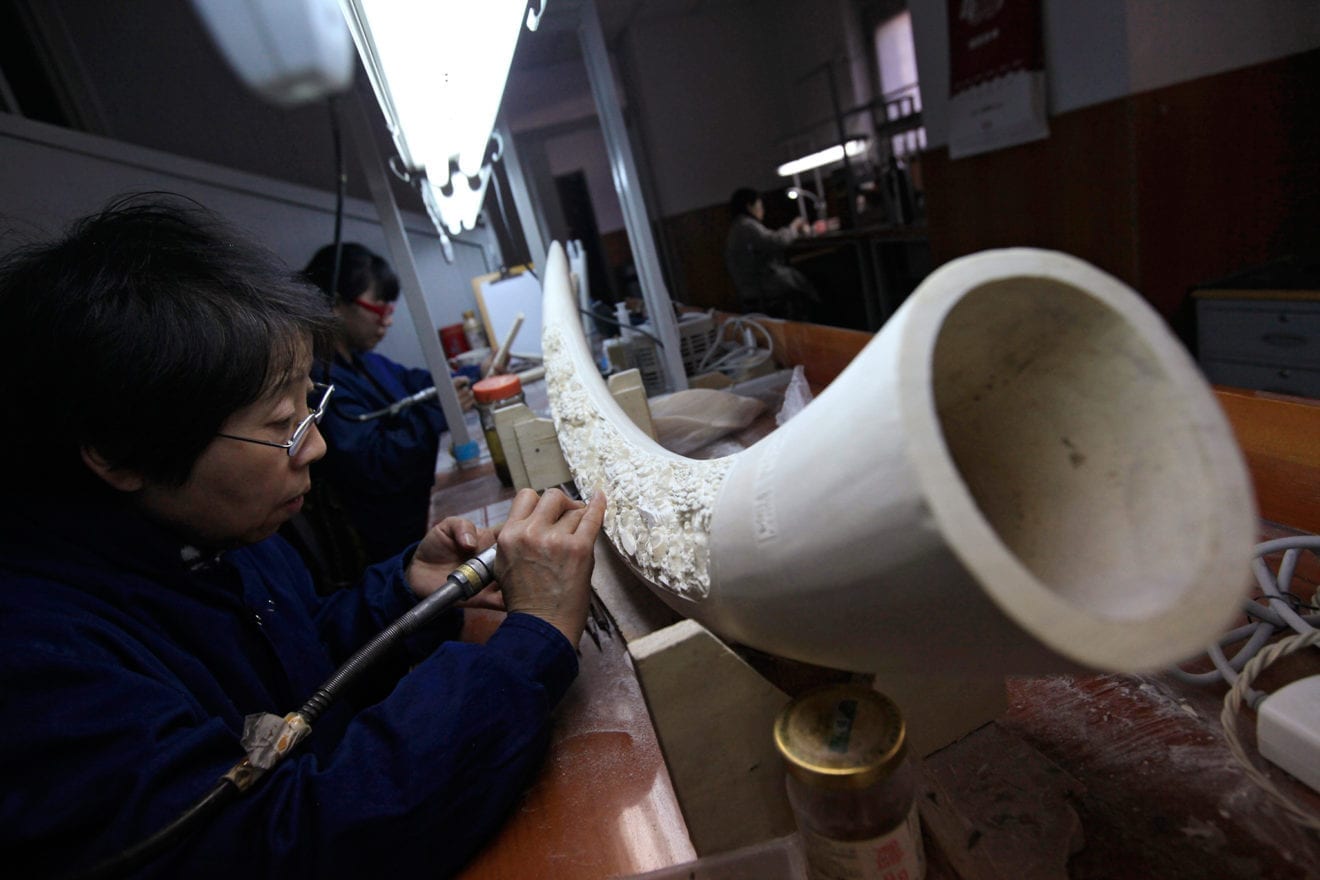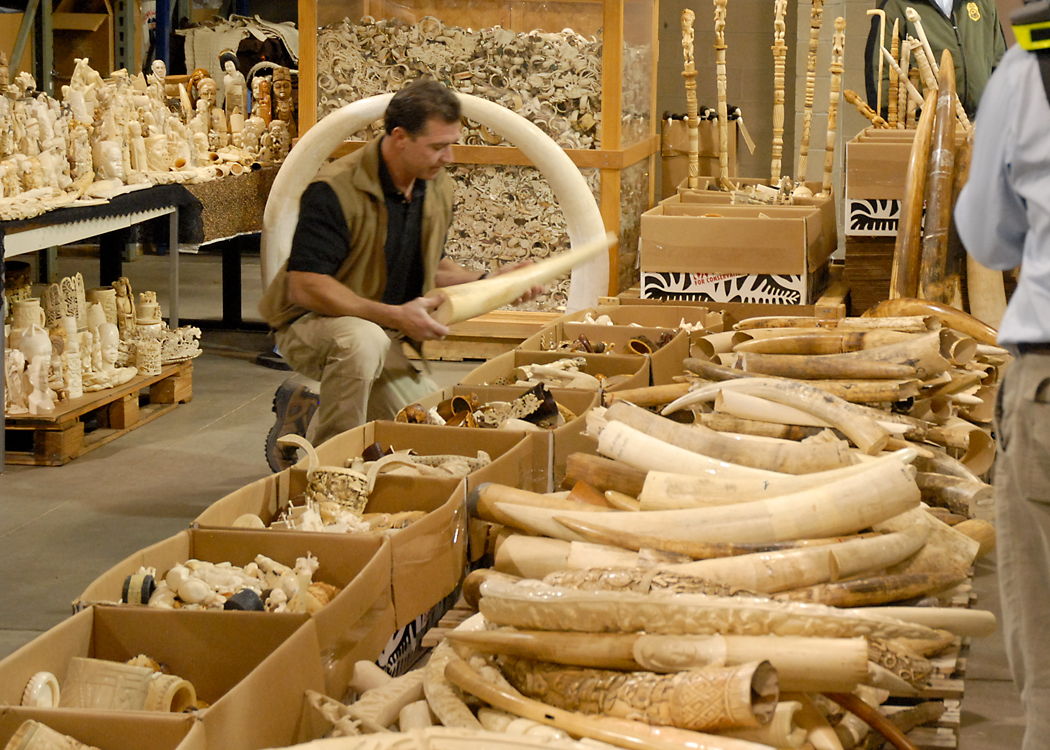
A ban on ivory sales in China, the world’s largest importer and end user of elephant tusks, takes effect on Sunday. Wildlife activists have described the move as a vital step towards reducing the slaughter of the endangered animals.
It is estimated 30,000 elephants are killed by poachers in Africa every year. China has made a big push to eradicate ivory sales and demand has fallen since early 2014 due to a crackdown on corruption and slower economic growth.
Public awareness campaigns featuring celebrities have helped boost awareness of the bloody cost of ivory. “It is the greatest single step toward reducing elephant poaching,” said Peter Knights, chief executive of the conservation group WildAid.
Legal ivory
China has allowed the sale of pre-convention ivory, which refers to products such as carvings and crafts acquired before the 1975 Convention on International Trade in Endangered Species of Wild Fauna and Flora (CITES), as long as it is accompanied by certificates.
The trade in pre-convention ivory has legally thrived in China and Hong Kong since 1975, but environmental activists have long asserted that it has spurred demand for all ivory.
The ban on all ivory sales has already led to an 80 per cent decline in seizures of illegal ivory entering China as well as a 65 per cent decline in raw ivory prices, according to WildAid.
Under the ban, China’s 172 ivory-carving factories and retail outlets will also close. Some factories and shops started closing in March.
This year, ivory prices in China were about 65 per cent lower than 2014 levels, said WildAid, with retailers in some places trying to sell off stocks and offering heavy discounts before the ban.
Hong Kong
The Chinese ban has been hailed by activists but they warn that Hong Kong, an administrative region of China, remains a big obstacle to the eradication of elephant poaching.
China’s ban on sales do not apply in the former British colony, which has the largest retail market for ivory and has traded it for more than 150 years.
Hong Kong is a prime transit and consumption hub for ivory with more than 90 per cent of consumers from mainland China.
Since 2003, Hong Kong has intercepted about 40 tonnes (40,000kg) of illegal ivory, only about 10 per cent of what is believed to have been smuggled in, WildAid said in a paper to the city’s legislature in May.
Hong Kong set a timetable for a ban on ivory trading last year, with a phase-out time of five years. A final vote on the ban is expected in the city’s legislature in early 2018.
Conservationist Zhou Fei said the Chinese ban could be a catalyst for the closure of ivory markets across Asia.
However, Kenya-based conservation group Save the Elephants said this year that neighbouring Laos has expanded its retail market more rapidly than any other country.