Retail News CRM

Tag: wire

  • Digital payment firm Vietnam’s second startup unicorn

    Digital payment firm Vietnam’s second startup unicorn

    VNPay has become the second unicorn startup in Vietnam and one of 12 companies in Southeast Asia with a valuation of $1 billion.

    The payment company was listed as a unicorn in the recent “e-Conomy SEA 2020” report by Google and its partners, alongside well known firms like Indonesia’s ride-hailing firm Gojek and Singapore’s e-commerce platform Lazada.

    VNPay, which manages a network of payment systems using QR codes in major cities, is currently partnering with over 40 banks and 20,000 companies. The company has over 15 million monthly users who access its app to transfer money, pay utility bills and buy bus tickets.

    The company was one of the startups that attracted the highest investments in the Southeast Asian fintech industry last year, with a total of $1.7 billion being poured into this industry, up 40 percent from 2018, the Google report said.

    VNPay reportedly received $300 million from Japan’s Softbank Vision Fund and Singapore’s sovereign wealth fund GIC last year.

    The first Vietnamese startup with a valuation of over $1 billion was tech firm VNG in 2014. Its valuation has now increased by over 50 percent to $1.5-1.7 billion.

    Vietnam targets having five unicorn tech firms by 2025 and 10 by 2030 as part of its Industry 4.0 advancement plans, the Ministry of Planning and Investment said in a report last year.
  • TransferWise Partners Alipay in China

    TransferWise Partners Alipay in China

    The London-headquartered online money transfer service is teaming up with Chinese payments and lifestyle services platform Alipay to expand remittance options for its users.

    TransferWise is making more inroads into Asia with a tie-up with mobile payments giant Alipay, which will enable instant transfers to China for 17 currencies, the firm announced in a statement on Tuesday.

    With Alipay serving more than 1.2 billion people worldwide together with its local e-wallet partners, TransferWise, which has 7 million customers worldwide, called the partnership a «major expansion.»

    Co-founder and CEO Kristo Käärmann said money transfers to China has been one of the most requested features among TransferWise users since its expansion in Asia.

    China is projected to be one of the top remittance recipient countries in the world, with £54 billion ($65.4 billion) expected to be sent back home by Chinese expats and migrants living abroad, TransferWise said in the announcement, citing a 2019 report.

    In 2019, TransferWise rolled out a debit Mastercard in Singapore, which also included a TransferWise Borderless multicurrency account. It also began processing international payments into digital wallets in Indonesia and the Philippines last year.

    Founded in 2011, TransferWise is valued at $3.5 billion, following its last funding round of $292 million in May 2019. It has raised a total of $772.7 million in funding in 10 rounds to date. According to the firm, it processes $6 billion in transfers monthly.


  • AirAsia’s BigPay Launches International Remittance Services

    AirAsia’s BigPay Launches International Remittance Services

    BigPay, the financial services venture by Malaysian low-cost carrier AirAsia, has announced the fixed-rate international remittance services across Southeast Asia.

    BigPay is rolling out cross-border transfers for its users to Singapore, Thailand, Indonesia and the Philippines. Such transfers can be done using its mobile application, and will be charged at a fixed rate for each corridor at competitive exchange rates, with no hidden fees or charges, the firm said in a press release.

    Technology can dramatically reduce the cost of remittance and we want to make it easy for people to move money abroad – whether it is sending money to family, friends or other overseas payments – without having to pay exorbitant exchange rates and transfer fees,» said CEO and co-founder Chris Davison.

    Davidson added that financial inclusion is a cornerstone of BigPay, and offering low-cost and accessible money transfers is part of its strategy to address this.

    BigPay was launched in 2018 by AirAsia as an e-wallet, hoping to leverage the low-cost carrier’s dominance in regional air travel in Southeast Asia. It promised to reduce the cost of air travel, including the cost of foreign transactions when traveling. A key differentiator is that it waives markups on foreign exchange, and other transactional fees charged by traditional debit and credit cards.

    Operating on a challenger bank model, BigPay has also tied up with MasterCard, which provides users access to 35 million merchants globally, and will soon venture into offering loans.

    BigPay has more than 750,000 users as of July 2019, and its transactional volume has been growing 20 percent month-on-month, which also said that BigPay plans to launch in Singapore by year-end.

  • Venmo borrows popular PayPal feature to expand on its Instant Transfer capabilities

    Venmo borrows popular PayPal feature to expand on its Instant Transfer capabilities

    PayPal has been doing pretty much everything in its power to keep the likes of Apple Pay at bay in the increasingly competitive online and mobile payment market, joining forces with Google on a number of mutually advantageous initiatives, vastly improving its main app, and making it easier and faster to transfer funds to a US bank account.

    Of course, the company’s arsenal includes a popular special weapon in Venmo, the 2009-released digital payments system that PayPal acquired in 2013 as part of Braintree. It shouldn’t come as a surprise that PayPal is attempting to unify the user experience across its multiple services in a way, adding the aforementioned Instant Transfer feature to Venmo’s already robust list of strengths.
    While Venmo picked up a similar functionality for both iOS and Android devices last year, that only allowed its users to send money to Visa and Mastercard debit cards “within minutes.” Now it’s possible to do the same for actual bank accounts, and once again, the only restriction you need to take into consideration is geographical. Otherwise, you’re looking at (almost) instant transfers in the US for a 1 percent fee that can’t exceed $10 or go under $0.25.
    If that feels too rich for your blood, fret not, as the free standard bank transfer option isn’t going anywhere. Just remember that might keep you waiting up to three whole business days. Depending on your bank, an “instant” transfer from Venmo could take up to 30 minutes as well, but unless your funds are frozen for some reason, you will never have to wait a second longer. The feature is being slowly rolled out to iPhones and Android handsets with the latest app version, which means it could take a few weeks before “wide” availability is achieved.
  • Apple ‘fixed’ thousands of fake iPhones

    Apple ‘fixed’ thousands of fake iPhones

    Counterfeit goods are a big problem for any established brand, but when Apple is involved, you know that there will be both demand and supply through the roof given the iPhone role as a status symbol, especially in Asia where most of the fake goods originate from.

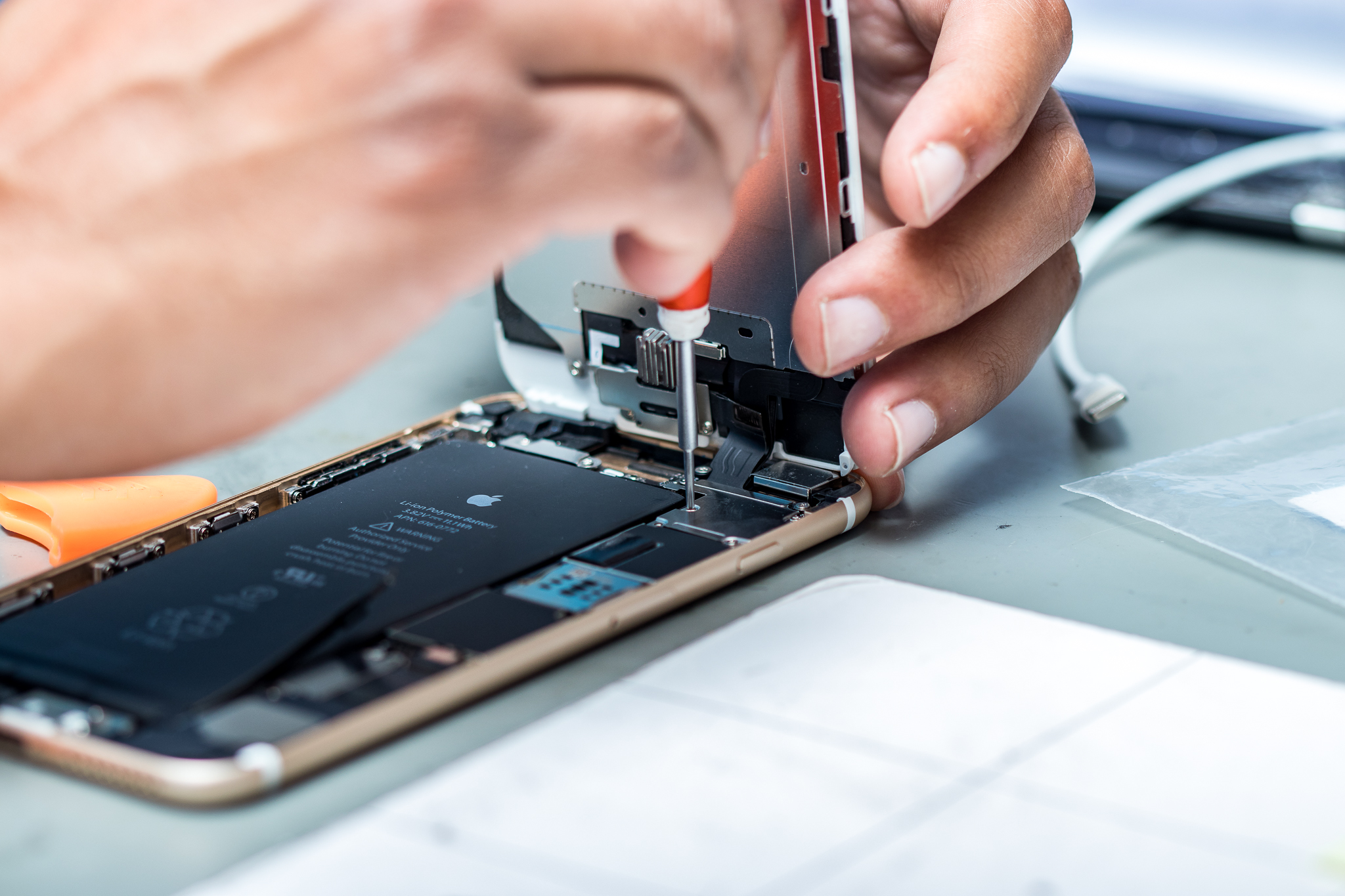
    Two Chinese students in Oregon,  Yangyang Zhou, and Quan Jiang, have been running a fake iPhone repair scheme since 2017, it turns out, defrauding Apple of $895,800 in total, according to the company’s estimates. They had bulk shipments of counterfeit handsets shipped to them from China, and submitted those to Apple as “iPhone won’t power on” cases, both online and in stores. The replacement phones were then shipped back to the source in China who deposited money into Jiang mother’s account he had access to in the States.

    Apple “repaired” (most likely just swapped them for refurbished ones) and returned 1,493 of the more than three thousand fake iPhones that were sent to its service before it got an alert that something was amiss on a grand scale. When the situation was raised with Apple’s fraud department in the summer of 2017, they sent Jiang two cease-and-desist orders to stop the scheme but got no response, presumably since the notices were sent to Zhou’s listed address.

    It’s not clear if the fraud alert came within Apple, or the port authorities that have been investigating suspicious bulk iPhone shipments from China since the spring of 2017 but in any case, the scheme started falling apart for the two Chinese on an engineering student visa. Zhou’s lawyer claims that his client will be “vindicated” as he did not know that the iPhones sent to him from China were counterfeit, and thought he was simply taking a cut for a service.

    Ditto for Jiang, who has been accused of wire fraud, as well as trafficking in counterfeit devices, so we’ll see if Apple manages to retrieve anything from the scheme, considering that the repaired real iPhones have already been sent to the vast Chinese prairies.

  • China Mobile reports $17.6b profit for 2018

    China Mobile reports $17.6b profit for 2018

    China Mobile has reported a 3.1% increase in net profit for 2018 to 117.78 billion yuan ($17.58 billion) as the company focused on reducing costs and increasing operational efficiency.

    Operating revenue declined 0.5% in reported terms to 736.82 billion yuan, but grew 1.7% after 2017’s results were recalculated using the new IFRS revenue standard..

    Telecommunications service revenue fell a reported 0.4% but grew 3.7% in comparable terms to 670.9 billion yuan.

    The operator’s net profit was also aided by the listing of the company’s tower division China Tower in August last year.

    China Mobile reported a 4.3% increase in its total customer base for the year to 925 million, of which 713 million are 4G customers – a 9.7% increase from 2017. But mobile ARPU fell 8% to 53.1 yuan as a result of strong competition.

    Meanwhile total wireline broadband subscribers increased by 39% to 157 million, of which 147 million were household broadband customers. Household broadband blended ARPU grew 3.2% to 34.4 yuan.

    “2018 was a challenging year for telecommunications operators. Competition amongst peers changed in characteristics as products and services have become homogenized while cross-sector challenges have intensified. The value of traditional telecommunications business rapidly diminished, coupled with multiple challenges from a complex and rapidly-changing policy environment,” China Mobile chairman Yang Jie said.

    “In order to counter market competition, overcome the major obstacles in the ongoing reforms and enhance management, we continued to encourage everyone across the Company to take the ‘Big Connectivity’ strategy even further and implement the integrated development of the “four growth engines”.”