Tag: WOMEN

  • Hong Kong Leads in Gender Equality: Women Occupy Nearly Half of Senior Financial Roles

    Hong Kong Leads in Gender Equality: Women Occupy Nearly Half of Senior Financial Roles

    Nearly half of the senior roles in Hong Kong’s banking sector are held by women, as highlighted in a recent study. This significant representation, amounting to 45 percent, is attributed to advancements in societal, organizational, and regulatory fronts.

    Women in Leadership

    The study, a collaborative effort of The Women’s Foundation, Women Chief Executives (WCE) Hong Kong and KPMG, suggests that this figure marks a considerable increase since 2018. The term ‘senior leadership’ encompasses roles such as CEO, managing directors, and all other positions up to three reporting levels below.

    The data also revealed that women hold 37 percent of board director positions. Comparatively, Hong Kong outperforms other international financial hubs in terms of the visible societal acceptance of women occupying high-ranking positions, attributing societal infrastructure as a significant facilitator for career advancement.

    A majority, or 70 percent, of female respondents expressed that they felt encouraged to take up leadership roles, with only 15 percent experiencing gender bias from their male colleagues. Furthermore, 76 percent cited the city’s safety as a critical factor contributing to their career progression.

    Regulatory and Organizational Developments

    The report also identifies regulatory and organizational progress as key contributors to the increased representation of women. The Hong Kong Exchanges and Clearing have introduced a reform to eliminate all single-gender boards by 2025 and necessitate annual gender reporting at both senior leadership and workforce levels.

    In terms of organizational developments, 76 percent of women view visible female leadership as the most influential workplace factor for career advancement. Moreover, 72 percent believe that female role models in leadership positions are becoming more prevalent.

    Support for Mid-Career Women

    While the data shows nearly equal representation at the top level, the report argues there is still work to be done for mid-career women. About 59 percent of this demographic feel encouraged to assume leadership roles, compared to 77 percent at the entry level and 68 percent at the senior level.

    Some proposed solutions include promoting flexibility for caregivers, frequently reassessing leave policies such as parental and carer’s leave, offering supplemental services like mental health support, and implementing structured re-entry programs for those returning from career breaks.

    In the words of Amy Lo, the Asia wealth chair at UBS, “One of Hong Kong’s strengths lies in the supportive environment it fosters – one that encourages entrepreneurship and pragmatism. Diversity here feels organic, not imposed, and women benefit from a broad culture of encouragement that empowers them to lead with confidence and authenticity.”

    Questions & Answers

    What percentage of senior leadership roles in Hong Kong’s financial sector are held by women?
    As per the recent report, 45 percent of senior leadership positions in Hong Kong’s financial sector are occupied by women.

    What measures have been proposed to further encourage mid-career women to assume leadership roles?
    Suggestions include promoting flexibility for caregivers, frequently reviewing leave policies such as parental and carer’s leave, providing supplemental services like mental health support, and implementing structured re-entry programs for those returning from career breaks.

    What role does societal infrastructure play in women’s career progression in Hong Kong’s financial sector?
    Societal infrastructure is recognized as a key facilitator for career advancement, with the majority of female respondents citing the city’s safety and the visible societal acceptance of women in leadership roles as significant contributors to their career progression.

  • Ombre Lane India wins seed funding

    Ombre Lane India wins seed funding

    Indian women’s workwear brand Ombre Lane has received seed funding from a group of angel investors. The investment group includes ex-LinkedIn India CEO Akshay Kothari, LinkedIn general counsel Aditi Jha, and director at Bristol-Myers Squibb US Neeraja Balachander. The fashion start-up plans to use the funds to establish Ombre Lane as a go-to destination for modern Indian women seeking to buy functional office-wear styles. Forecasting a five-fold annual growth rate, the brand plans to scale significantly over the next year while staying focused on building the brand.

    The brand, launched by sisters Shweta and Prachi Sharma, launched with the motto of making women feel confident as well as comfortable at work. It conducted extensive surveys to establish average body shapes and sizes of Indian women, finding that more than 70 per cent of Indian women have a pear-shaped body and an average height of 5 feet 2 inches, while more than 75 per cent of Western workwear available on the Indian market is made for a woman with a height of 5 feet 7 inches and the more rectangular body shape common in the west.

    The market for women’s workwear in India is expected to grow in double digits over the next five years. Ombre Lane offers shipping throughout India via its e-commerce platform ombrelane.com.

  • 2017 has been Donatella Versace’s year

    2017 has been Donatella Versace’s year

    In 1997, Gianni Versace was murdered on the steps of his Miami Beach home. His grief-stricken sister, Donatella, suddenly found herself in charge of the family company.

    Twenty years later, she has chosen to take this anniversary and make it extraordinary, hijacking the style agenda to the extent that fashion journalists have been calling 2017 the year of Versace.

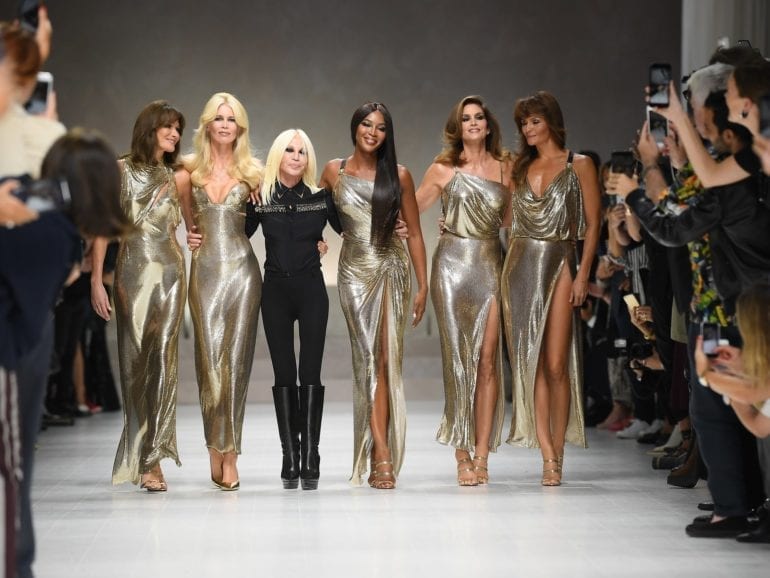
    She has designed a tribute collection inspired by Gianni’s archives, announced a scholarship in her brother’s name at Central Saint Martins and, in September 2017, in a fashion coup for the ages, reunited Gianni’s supermodel crew – Helena Christensen, Cindy Crawford, Naomi Campbell, Carla Bruni and Claudia Schiffer – for a catwalk finale that melted the internet.

    Here, it starts a series of achievements, she received a major accolade at the Fashion awards. She announces the opening of a new Versace store on Sloane Street in London.

    A lot of her year has been spent poring over old images and old creations, opening up the archive – a 10,000 sq ft storage facility in Novara, near Milan – and examining Gianni’s most famous creations for the first time since his death. “Not in a sad way,” she says, “but a very positive way. I saw what a genius my brother was. To me, he was my brother, but to the rest of the world – such a genius.”

    Even the names of the archive collections, produced between 1991 and 1995, speak of another, more glamorous age: Vogue, Warhol, My Friend Elton, Icons, Baroque.

    The pictures she shows me are from that time, too, and present the supermodel era exactly as you would want. Here is Bruni, a future first lady of France, dancing with abandon in thigh-high patent boots. Here is a babyfaced, never-off-duty Crawford, smouldering for the camera as she queues backstage. Here is Christy Turlington, running down a beach, wearing only shimmering sequins.

    Compared with the unsmiling models who have walked the catwalk since, and the airbrushed campaign images and omnipresent filtered Instagram photographs we have grown used to, these pictures feel authentic (however liberally doused in hairspray the models are).

    They bring back great memories, Donatella says. “This was the period that fashion became famous,” she says. “It was the beginning of fashion becoming pop culture, of being associated with music and rock’n’roll. Those two worlds were really in contact with one another. When something starts to happen, that is the most exciting moment. It was a huge change. The 90s was a huge change in fashion”.

    Donatella added : “My brother, of course, was the designer; I was working very closely with him all my life. But I started the relationship with the models that Gianni made ‘super’.” What “super” meant, she says, was showing personality. “Before that, I don’t think many designers let models have personality, nor after. The models should wear the clothes, be very serious, not smile, look in front of you, almost no soul. This was totally opposite: it was about the girls, what the girls were thinking, who they were dating. It wasn’t just about the clothes, but about who was wearing the clothes.”

    Fashion modelling is only just getting exciting again, she says, thanks to technology. “There are two generations of fashion for me: the one before the internet and the one after the internet.” Between the supermodels and now, she says, “was a moment of flatness. Now you could do this picture backstage again – there are people with enough personality there.” She likes the Instamodels, such as Gigi Hadid, who have become powerful thanks to their millions of followers on social media. “I think they are amazing. Very smart girls. Again, finally, we have girls who dare to stand out in the crowd.”

    The 62-year-old’s Fashion awards gong is icon of the year and the hype around her company is enormous, so it is easy to forget the starting point: the horror of her brother’s murder and her first few years running the company, during which she was so shellshocked that she broke down in tears on the catwalk. Does she feel like an icon? “Yes,” she says abruptly, then laughs. “OK, should I be shy? No. This is not because I’m full of myself, but I think, in fashion history, I did a lot. I mean an icon in fashion, not an icon in general, in the world.”

    To conclude with Donatella explained about contemporary trends by focusing on millennials. “Millennials are all many designers talk about backstage, particularly in Milan,” she says.

    In Italian fashion, the charge has long been that so many houses have been run for decades by the same designers or dynasties (Armani, Prada, Versace, Missoni; even relative newcomers Domenico Dolce and Stefano Gabbana are 59 and 55) that the scene has become stale.

    There have been rumours swirling around Versace for the past year or two that Riccardo Tisci, formerly of Givenchy – or Virgil Abloh of Off-White or Kim Jones of Louis Vuitton – might be in line for Donatella’s seat. That may be the case one day, but this year the conversation has shifted dramatically.

    In many ways, Donatella’s approach to millennials and social media feels remarkably modern – and not only because she has 2 million followers on Instagram (in typically understated style, when she joined the app in 2015, a press release was issued; ever savvy, in her first post, she posed with Gigi Hadid).

    This year, she says, has been “a rollercoaster of emotion. Not just that day [of the supermodel reunion show], but preparing for the show, going to the archive and seeing things that I last saw 20 years ago, before Gianni’s death. I never had the courage to go back there, because it was so painful, but I found the strength.”

    She did it, she says, “for the young generation who didn’t know, who weren’t born when Gianni was alive. I want them to know why Gianni was so important and what Gianni was about.” And to tell her side of the story? “To show them how relevant Gianni is today. No story, no filter.”

  • Diamonds are China millennials’ best friend

    Diamonds are China millennials’ best friend

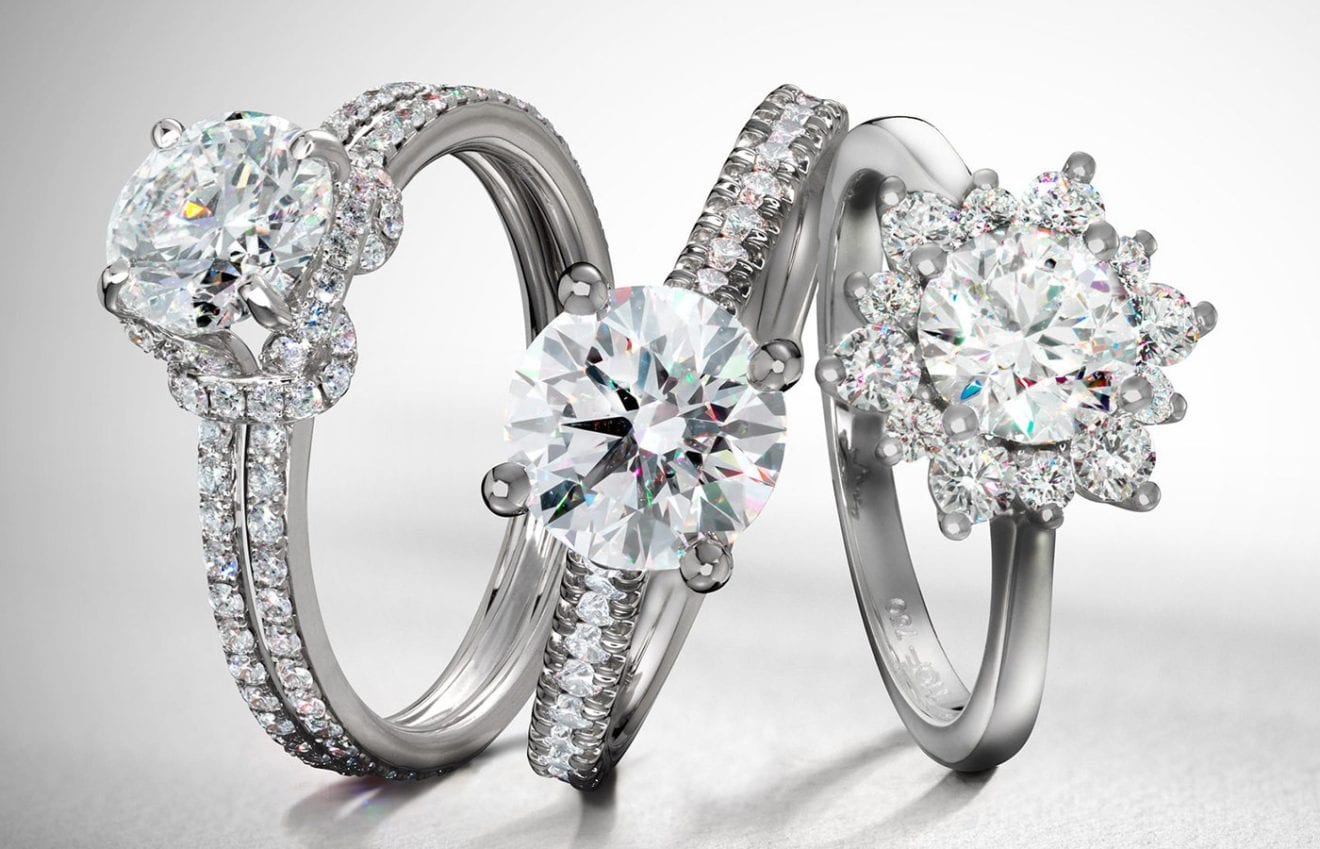
    Diamonds may be a girl’s best friend, and that’s especially true of female millennials in China.

    According to diamond-producing giant De Beers SA, 68 percent of diamond jewellery sales in China ($6.78 billion in 2015) are driven by millennial women, many of whom are college-educated, not married and quickly cultivating a collection of the gems.

    Bloomberg spoke with one 27-year-old Chinese woman who, like many of her peers, has a 15-plus-piece diamond collection including a 2.5-carat solitaire given to her by her parents.

    The fact that she’s not married is part of the trend to — as she said — not wait passively for a diamond gift from a man. For Chinese millennial women, independence is the top trait they aspire to: More than 40 percent of them say financial independence is more important than marriage, with 32 percent saying that independence is what personal success looks like to them.

    That’s according to research by J. Walter Thompson surveying 4,300 women across nine countries in 2015. Some jewellery companies have made a conscious decision to not even show any couples at all in their advertisements.

    A sparkling opportunity

    In the top four diamond markets in the world, there are more than 220 million millennial women who spent $26 billion on diamond jewellery last year. Behind China is India but after a significant drop, followed by the U.S and then Japan. Within this four-country demographic, more diamonds have been acquired than any other generation, and yet the demographic hasn’t even come into their most affluent years.

    Compared to their Chinese mothers who historically bought jade and gold, these millennial women are struck by the western lifestyle that includes the glamour of Harry Winston and Tiffany gems. Having those diamonds is a status signal of wealth and accomplishment, rather than love. As a result, more jewellery companies have popped up in China trying to get their share of the desire. Boston-based Hearts on Fire was usurped in 2014 by Hong Kong’s Chow Tai Fook, grabbing nearly 6 percent market share.

    But it’s not just about status, as the gems are seen as assets that will not depreciate in the way that other high-end items like bags and shoes can due to wear and seasonality.

    Gold x diamonds

    Chow Tai Fook has noticed this by rolling out lines of jewellery that mix gold with diamonds to make sure their female millennials — half the business — stay engaged, and it has also pulled in celebrities like hunky actor Li Min-ho and rapper G-Dragon — both millennials — to appeal to these women.

    But even with diamond jewellery being a sign of independence, the divorce rate in China is more than triple what it was back in 2002 — currently 2.8 per 1,000 people, back just 14 years ago it was 0.9 per that same thousand. More than 3.84 couples went their separate ways in 2015, which is 5.6 percent more than 2014.

    But those diamonds are still forever, even if marriage isn’t or has never even happened yet. And diamond companies know this. De Beers research cites the American trend of couples spending more on their second marriage than on their first. Experts say those Chinese millennials may follow suit as well.