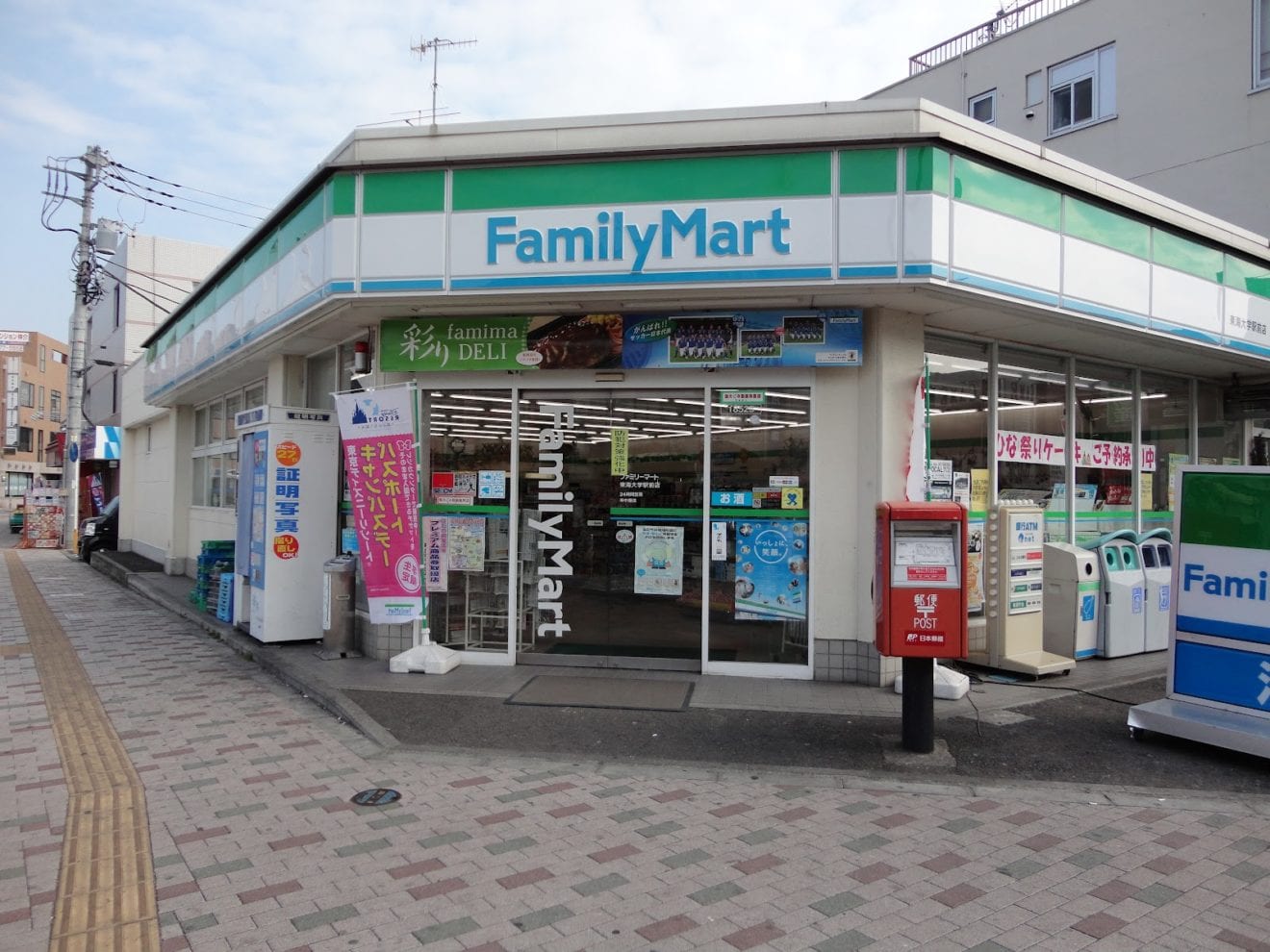
FamilyMart launched its new concept store, Famima Park Azabudai, in Tokyo last Friday, drawing two-hour queues and purchase limits on exclusive merchandise. The opening marks a fresh design departure for the convenience chain, which operates 16,400 shops across Japan.
Devised for FamilyMart’s 45th birthday on the fringes of the Azabudai Hills development, the project brings together creative director Nigo, Masamichi Katayama of interior studio Wonderwall, and fashion designer Hiromichi Ochiai.
Apparel and layout overhaul
The store layout alters standard convenience floorplans by integrating clothing fitting rooms, dedicated retail staff for garments, and a takeaway window branded Famima Stand. Outside seating borders the pick-up hatch, where staff serve hot food lines including Fami-Chiki boneless fried chicken directly to street pedestrian traffic.
Merchandise runs from basic consumables to limited-edition selvedge denim jackets and jeans, stocked alongside Ochiai’s Convenience Wear line of packaged socks and basic garments. Staff wear cotton-look striped uniforms instead of traditional synthetic workwear. Structural additions include a planted rooftop garden with an elevated view of a rooftop brand emblem visible to surrounding commercial towers.
Pressure on traditional margins
Japan’s convenience store sector comprises roughly 56,000 stores nationwide, leaving operators with limited room for physical network expansion. Saturation in major urban centers forces chains to lift basket sizes rather than rely on opening new front doors. Seven-Eleven, Lawson and FamilyMart face structural margin pressure from rising store-level wage costs and higher utility expenses, making commodity food and beverage sales alone insufficient to maintain franchise returns.
Pushing higher-margin lifestyle categories into small formats gives FamilyMart an edge in customer acquisition among younger urban shoppers. Apparel and branded lifestyle accessories carry significantly higher gross margins than packaged beverages and chilled bento meals. The risk sits in franchise economics: regular store operators operate inside tight footprints and cannot easily afford dedicated fitting rooms or inventory risk on slow-moving seasonal garments.
The Convenience Wear trajectory
The Azabudai launch builds on a multi-year effort to expand non-food lines that began with the nationwide rollout of Convenience Wear in 2021. That basics range has sold more than 30 million pairs of socks, establishing that convenience shoppers will purchase wardrobe staples from refrigerated grocery stores if the price and material quality align. FamilyMart recruited actor Tadanobu Asano as brand ambassador to widen the commercial appeal of its apparel range.
Executive leadership views format redesign as essential to differentiating the business in mature consumer sectors. Tatsuo Odani, representative director and president of FamilyMart, pointed to the need for long-term structural changes across the company’s operating model.
“To achieve sustainable growth in the future, transformation and evolution are essential,” he said.
Store elements head to franchise fleet
FamilyMart has not committed to rolling out full-scale standalone concept flagships in secondary metropolitan districts. Management confirmed instead that selected interior fixtures, retail displays and merchandise categories trialled at the Azabudai store will be integrated into the broader Japanese store network over coming financial quarters.
RetailNews Asia will track whether conversion rates and merchandise sales density at the Azabudai flagship prompt FamilyMart to formalise dedicated non-food retail sections across its standard franchise portfolio.