Retail News CRM

Tag: working

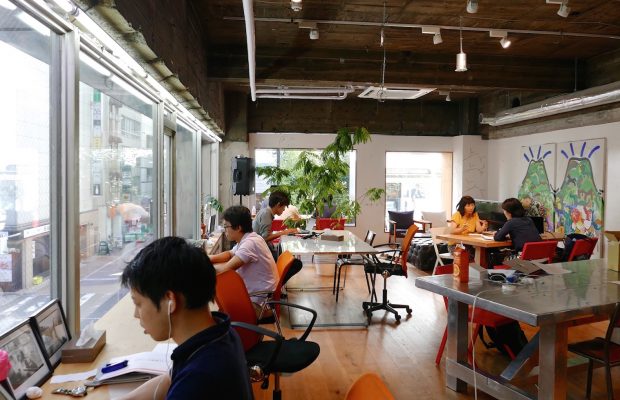
  • Bangkok named world’s best city for working remotely

    Bangkok named world’s best city for working remotely

    Bangkok, the capital city of Thailand, has been recognized as the best location globally for remote work. This ranking comes from a recent study conducted by QR Code Generator, an organization specializing in QR technology solutions. The study assessed various cities worldwide using criteria including internet speed, access to remote work visas, and overall cost of living. Each city was rated on a scale of 0 to 100.

    Bangkok led the pack with a score of 69.98. The city was lauded for its high-speed mobile internet, affordable living costs, and rich cultural offerings.

    The city’s unique blend of modern and traditional attractions, coupled with its lively street life, makes it an attractive destination for digital nomads. Not to mention, the city’s delicious food and beautiful temples add to its allure.

    Coming in second place was Bucharest, Romania, with a score of 65.62. Bucharest was praised for its easy access to remote work visas, abundant green spaces perfect for outdoor activities, and a rich arts and architecture scene.

    Rio de Janeiro, Brazil, earned the third spot with a score of 62.35. The city’s strong local purchasing power played a significant role in its high ranking.

    Buenos Aires, Argentina, secured the fourth position, being recognized as one of the most affordable cities globally when it comes to groceries and dining.

    Rounding out the top five was Beijing, China, which was appreciated for its high-speed broadband and mobile networks, ensuring reliable global connectivity for remote workers.

    Reacting to these rankings, a spokesperson from the Thai government, Sasikarn Watthanachan, shared that a new Destination Thailand Visa has been introduced. This visa aims to attract foreign nationals who wish to combine travel with remote work or participate in cultural and medical activities.

    In addition, the spokesperson highlighted that the Thai government is also making efforts to boost tourism by extending its visa-free scheme to 93 countries and territories, allowing stays of up to 60 days.

    Questions & Answers

    What criteria were used to rank the cities in the study?
    The criteria included internet speed, access to remote work visas, and overall cost of living.

    Which city topped the rankings?
    Bangkok, Thailand, topped the rankings.

    What measures is the Thai government taking to attract remote workers?
    The Thai government has introduced a new Destination Thailand Visa to attract foreigners looking to combine travel with remote work. They are also expanding a visa-free scheme to 93 countries and territories, allowing stays of up to 60 days.

  • Gen Z grapples with shrinking job market

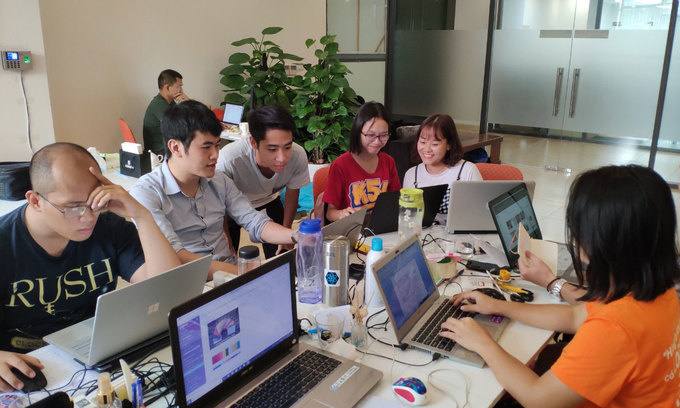
    Gen Z grapples with shrinking job market

    Many Gen Z people are struggling to find jobs as businesses scale down operations amid the economic downturn.

    Ho Chi Minh City has over 300,000 businesses, but none of them were willing to hire Thanh Nga, 25, last year.

    “I have experience in customer service but was not able to find a job after submitting CVs to over 50 businesses in HCMC, Da Lat and Binh Duong,” she says.

    She looked for a job on online platforms and social media groups.

    “In 2018 usually somebody would call me soon after I submitted my CV, but last year I received no call most of the time.”

    Nga is among an increasing number of Gen Z people, or those born between 1997 and 2012, who are struggling to find jobs in the post-Covid economy.

    Youths accounted for 41.3% of unemployed people last year, up from 37.6% from 2022. This meant 437,300 people aged between 15 and 24 had no jobs, according to the Ministry of Labor, Invalids and Social Affairs.

    Nguyen Hoang Ha, an officer in the International Labour Organization, says people who graduated since Covid-19 are among the “quarantined generation” who had to go through disruptions in the labor market and in education and training.

    Another HCMC local, Thu Thuy, 24, had struggled to find a job in 2022 when the economy reopened after two years of the pandemic.

    She submitted 30 CVs and went to more than a dozen interviews but failed to find a job since most companies asked for months of experience, which she could not get due to Covid travel restrictions.

    She says: “Employers often want at least six months of experience but I did not have that. I used to think that having a college degree would guarantee a job but turns out that is not the case.”

    Economist Nguyen Minh Phong said the unemployment among youths is a global trend as companies often lay off the most inexperienced staff when the situation becomes difficult.

    Many urban Vietnamese youths have high expectations about salaries and will rather wait for a good opportunity than work for low pay, he adds.

    Thuy says some companies offered her a job for VND6 million ($244), but she declined, saying she needed at least VND7 million to pay the bills in expensive HCMC.

    Embarrassed, she lied to her family in the countryside that she was still working.

    But the economy alone is not to blame.

    Ha of ILO advises people in the 15-24 age group to educate themselves in technology and soft skills such as group collaboration and problem solving to meet the increasing demands on the labor market.

  • Working from home increases stress

    Working from home increases stress

    Nearly 54 percent of workers say they feel “more stressed” during the most recent outbreak compared to last year as working from home raises its own challenges, a survey found. A third of respondents receive no mental health support from their companies although they consider this important, a survey by Ho Chi Minh City-based recruitment company Adecco revealed.

    Top concerns are safety from Covid-19, long-term financial viability and job security, and career prospects said the survey, which polled 650 respondents nationwide.

    Employees also worry about their mental and physical health and the consumption of too much information during the stay-at-home period.

    “Besides following directives from the government, leaders should listen to the needs and concerns of their employees to provide timely support,” said Andree Mangels, general director of Adecco Vietnam.

    The top requests from workers concerning mental health support are allowing greater work flexibility and promoting healthy a work-life balance.

    The survey also found 82 percent of respondents prefer working from home to coming to the office, and they want to spend at least 50 percent of their work hours at home even after the pandemic.

    Eight out of ten Gen X respondents (41-56 years old) agree that their managers trust them to get the job done while working remotely. The ratio for Gen Z (under 25 years old) is 67 percent.

    The top challenges when working from home are issues with teamwork and communication, distractions, and maintaining motivation.

    Respondents also expect support from their companies while working from home. The top requests are monthly allowances, home office setup reimbursements, and flexible working hours.

  • UBS Rolls Out Permanent Hybrid Working Option

    UBS Rolls Out Permanent Hybrid Working Option

    UBS will allow up to two-thirds of its staff to permanently split working hours between home and the office, in hopes that the approach could help outdo U.S. rivals in requirement.

    An internal analysis of the 72,000-strong global workforce identified that around two-thirds had roles that were fit for hybrid working, according to a report citing unnamed sources, equivalent to more than 48,000 employees.

    The arrangements will be based on an individual’s role, tasks, and location with some, such as traders and branch staff, offered little flexibility with requirements to work on site. For certain activities, even hybrid workers will be required to come into the office to attend.

    No date has been set for a return to the office, according to the plan which is being led by chief executive Ralph Hamers.

    UBS’commitment to more hybrid working contrasts with that of major U.S. rivals which are not only increasingly asking workers to return but also demonstrating relatively critical views about the state of affairs.

    If you can go to a restaurant in New York City, you can come into the office and we want you in the office, Morgan Stanley CEO James Gorman said at a recent conference.

    Last year, UBS even explored the potential to have traders operate outside of the office, experimenting with virtual reality headsets for its London-based staff.

  • Sun Group lures Vietnamese talents by investing in working environment

    Sun Group lures Vietnamese talents by investing in working environment

    With a dynamic and far-reaching recruitment strategy, Sun Group offers employees a work-life balance and opportunities through sustainable and community-oriented projects.

    Over 14 years, Sun Group has developed iconic landmarks in Vietnam, including unique resorts, world-class entertainment complexes, and real estate ecosystems.

    Sun Group has created its own organizational culture, continually attracting and retaining young, dynamic, and highly sought-after talent in Vietnam. It seeks to hire and train highly qualified and principled individuals.

    The group has sought out talents in Vietnam since the beginning. To attract and retain top talent, it offers not only competitive salaries but also a forward-thinking and positive working environment, where employees can develop their careers and benefit from international labor standards.

    “We invest in the well-being of employees, making sure they always feel valued and happy to be part of such a dynamic team. A positive, high-energy and friendly workplace would inspire personnel to do their best,” a Sun Group representative said.

    To handle work pressure, Sun Group creates a work-life balance at the office. It offers wellness programs, sports events, on-site gym facilities, even smoking cessation programs to promote healthy lifestyles.z

    Sun Group strives to take care of its employees in the same way a family would. For employees working far from home, the company provides accommodation, on-site childcare facilities, and transit services.

    Charity programs like Sunflower Fund and Warm Spring support the poor and disadvantaged. “We empower them to be the best version of themselves, boosting creativity as a work culture while retaining a sense of homeliness and togetherness,” the representative said.

    “Sun Group contributes to the sustainable recovery of Vietnam’s tourism industry amid Covid-19, and minimizes the impact of the crisis on its employees by implementing flexible policy solutions toward ‘the new normal’.”

    By launching campaigns like Go Green, No Plastic Waste, Stop Smoking, Live Happily – Live Healthily, Sun Talents and Change for Future, it aims to spread the message of sustainable and healthier living.

    Despite operations being severely affected by Covid-19, Sun Group still strives to contribute to the sustainable recovery of Vietnam’s tourism industry, and its actions continue to minimize the impact of the crisis on its employees.

    During a challenging time, the company swiftly acted, implementing plans and offering flexible policies to help employees adjust to the ‘new normal’. Sun Group also rolled out various cultural and social media activities to encourage a positive spirit across communities and maintain employee morale.

    Responding to the Covid-19 impact on global tourism, the group introduced exciting products and services to boost the industry while supporting the government to eliminate this disease.

    Developed by Sun Group, Van Don International Airport has welcomed thousands of flights over the past year, welcoming Vietnamese returning home from countries affected by the pandemic.

    In central Vietnam, Sun Group set up Tien Son field hospital in just three and a half days to treat Covid-19 patients. A team of Sun Group professionals was dispatched to Chi Linh Town, Hai Duong, hotspot of a recent outbreak, to support field hospital construction.

    “The outbreak came just two weeks before Tet (Lunar New Year), an occasion for family reunions, so I feel a little bittersweet about this outstanding effort. At Sun Group, we all wished to make a contribution in the hope of controlling infections in Hai Duong, so people could welcome the new year safely and happily. It was nothing compared to the ceaseless efforts being made by the doctors, nurses and soldiers on the frontline, who have been battling to contain and eliminate the virus,” said Pham Hoang Tuan, Project Manager in Capital Region of Sun Group.

    A Sun Group representative said: “Creating positive working environment, caring for employees as family and inspired them to make a difference… all of these are the reason to explain why Sun Group has consistently been identified as one of the best companies and one of the leading employers in Vietnam.”

    In 2020, the group received the “Top 5 Real Esate Companies”, “Top 100 Vietnam Best Places to Work 2020” and “Top 50 for Vietnam’s Most Attractive Employers 2020” awards.

    Sun Group was named on the “Top 10 Excellent Companies with Responsive Human Capital Initiative” list, a prestigious award in the field of human resources.

  • Work-from-home trend amplifying boom in home-furnishing sales

    Work-from-home trend amplifying boom in home-furnishing sales

    Sales of home-furnishing products in Singapore have more than doubled in the two months spanning February 1 to March 31.

    Data from fintech research firm Revolut suggests the 105 percent increase in sales has been brought on by Singaporeans setting up home offices in response to the coronavirus outbreak. Furniture retailers Courts saw growth of 92 percent during the period, whilst competitor Ikea experienced 128-per-cent growth.

    Work-at-home arrangements have also seen a rise in sales of stationery and school supplies by 15 percent, while spending on entertainment has increased 55 percent, largely due to purchases of digital goods on platforms such as Steam games (104 percent) and Nintendo (82 percent).

    “It is likely that the worldwide coronavirus pandemic has had a significant impact on the increase in online activity and transactions overall,” read a report from the firm, “as many more people find themselves at home”.

    Other significant sales data revealed by Revolut shows increases in do-it-yourself spending (44 percent); local e-commerce (35 percent) and in-store transactions (30 percent) in March; and online food delivery (150 percent).

    Meanwhile, data from South Korean e-commerce site SSG.com shows that sales of products relating to home entertainment doubled in the first half of February compared to previous months.

    Sales of home-interior related products rose more than 40 percent, while home training-related sales rose 35 percent.

    SSG.Com, the online shopping unit of retail conglomerate Shinsegae, said sales of products that allow children to make snacks using dough rose by 150 percent, while sales of baking mixes for pancakes, cookies and brownies rose by 152 percent.

    Coffee-related appliances such as espresso machines, coffee makers and coffee-bean grinders also gained popularity, with sales rising 74.5 percent and capsule-type coffee rising 25 percent, according to a report in Korea Bizwire.

    Meanwhile, sales of “home gardening” products or related products, which allow people to grow plants directly on their veranda also rose by 147.6 percent.

  • Co-working spaces taking off in Vietnam

    Co-working spaces taking off in Vietnam

    Co-working spaces remain in the initial stages of development in Vietnam and are concentrated primarily in major cities like Hanoi and Ho Chi Minh City.  Hanoi now has around 14 co-working projects providing more than 7,000 sq m while HCMC has around ten projects with nearly 7,500 sq m for lease, according to the latest report from Cushman & Wakefield (C&W), a leading global real estate services firm.

    The most common sizes are from 300 sq m to 800 sq m and they tend to be located in the CBD or CBD-fringe districts or in new urban areas like the west of Hanoi or in Ho Chi Minh City’s District 2.

    “Globally, we are seeing demand growing at 10-15 per cent each year,” said Mr. Alex Crane, General Manager of C&W Vietnam.

    “APAC, and Vietnam in particular, is still in the early stages of co-working spaces becoming familiar and adopted.”

    Development of co-working spaces in Vietnam has been evidenced by the opening of more and more locations and especially the expansion of investors such as UP and Toong in Hanoi and Dreamplex in Ho Chi Minh City.

    UP now has two locations with nearly 1,400 sq m, Toong has three locations in Hanoi and one in Ho Chi Minh City with a total area of roughly 3,800 sq m, and Dreamplex has two locations in Ho Chi Minh City with over 3,700 sq m.

    According to Mr. Crane, there will be a further integration of co-working spaces into corporate real estate as CEOs are constantly looking to reduce real estate costs and co-working spaces offer a flexible, cost effective solution.

    “The rise of co-working spaces coincides with the number of millennials in the workforce and the working habits of Generations Y and Z will continue to impact how developers and multinational occupiers plan and use their commercial space,” he said.

    Co-working spaces are attractive to individuals, freelancers, startups and small companies mainly in the fields of technology and communications, who need flexibility as well as networking opportunities.

  • Vietnam to lose 2.08% of daylight working hours by 2025

    Vietnam to lose 2.08% of daylight working hours by 2025

    In 1995, when temperatures rose 0.74C, Vietnam lost 0.8 per cent of daylight working hours. In 2085, if temperatures were to rise 1.5C, 2.58 per cent of daylight working hours would be lost. If temperatures were to rise 2.4, 2.7 or 4C, Vietnam would lose 5.09, 6.31, and 12.72 per cent of daylight working hours.

    “The lowest income-bracket work – heavy labor and low-skill agricultural and manufacturing jobs – are among the most susceptible to climate change,” the report noted. Factories are limited in providing cooling systems at the workplace, it added.

    In November 2015 the International Labor Organization (ILO) introduced guidelines for governments and other labor organizations to address the health and safety ramifi­cations of climate change, but no international organization has established a program to assist countries vulnerable to the challenges of climate change for the workplace, according to the report.

    “Actions are needed to protect workers and employers now and in the future, including low-cost measures such as assured access to drinking water in workplaces, frequent rest breaks, and management of output targets, carried out with protection of income and other conditions of Decent Work,” the report urged.

    “Modeling the Impacts of Climate Change on Future Vietnamese Households”, a research working paper from the World Bank released in July said that it is not hard to imagine that if most workers work outside or without air conditioning then the impact of temperature increases on labor productivity will be stronger than if there is a fast structural change away from agriculture and towards services and industry, together with the greater prevalence of air conditioning.

    As for the impact of high temperatures on labor productivity, people working outside or without air conditioning will lose between 1 and 3 per cent in labor productivity due to changes in climate compared with a baseline of no climate change, the World Bank paper said.

    “Our results show that the temperature impacts of climate change are severe in the poverty scenario: 270,000 people would be pushed into poverty in 2030 and 700,000 would be pushed below $4 per day,” the paper said.

    The researchers, led by Tord Kjellstrom from the Health and Environment International Trust in New Zealand, announced in July that Vietnam and 42 other countries will be affected by temperature increases.

    It estimated that 5.7 per cent of Vietnam’s GDP would be impacted by rising temperatures.

    From 15 to 20 per cent of annual working hours in Southeast Asia have already been lost in heat-exposed jobs and this may double by 2050 as global warming continues.

    Other Southeast Asian countries such as Indonesia, Thailand, the Philippines, Malaysia and Cambodia will also lose GDP due to rising temperatures.

    The researchers said that Indonesia and Thailand will both lose 6 per cent by 2030, the Philippines and Malaysia 5.9 per cent, and Cambodia 5.7 per cent.