Tag: workout

  • Spotify might soon know when your workout calls for a pump-up song

    Spotify might soon know when your workout calls for a pump-up song

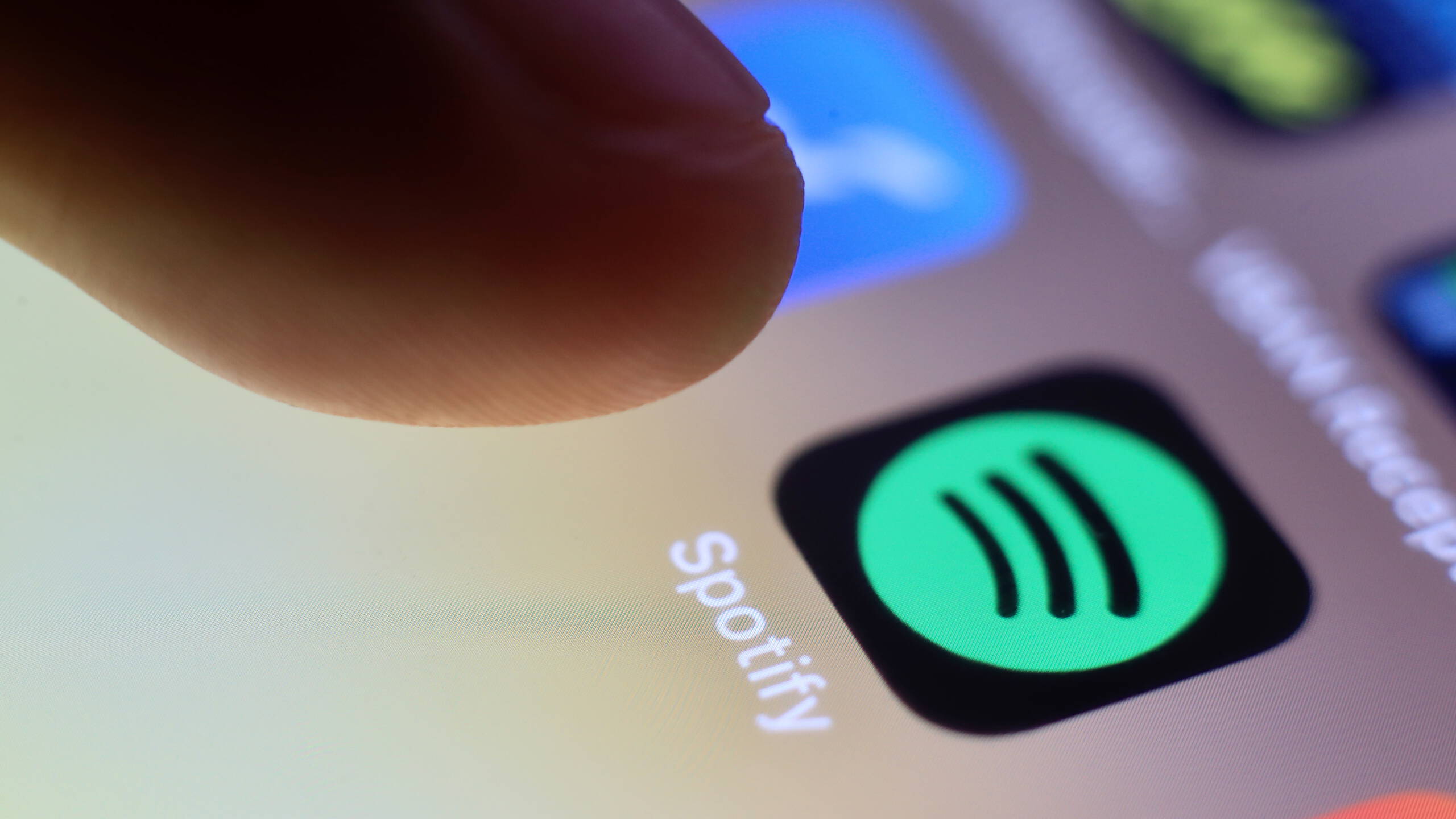
    It appears that Spotify is working on an interesting new feature. The music streaming service is currently developing a HealthKit integration for its app. Chris Messina found this in Spotify’s iOS app code.

    For those unfamiliar with HealthKit, it is an iOS API that allows third-party apps to access data from Apple’s Health app. But why is Spotify working on a HealthKit integration? Well, a message found by Messina — a product designer, who constantly keeps his eyes open for upcoming features in Spotify — states that Spotify is developing this feature to be able to “get the right music for your workout.”

    The message further explains that the app will collect data like distance, pace, or speed during your training. The collected information will let Spotify match your training sessions with what you listen to and understand what songs motivate you most.

    Now, we must note that for an app to access your health data, you must first grant it permission. So, Spotify won’t be able to obtain your health information if you don’t want it to.

    However, you will surely agree that a good pump-up song at the right moment can put you in the necessary state of mind and help you break your deadlift or bench press records in the gym. With such a feature, Spotify would know the perfect moment to play that one song that makes your blood pump every time you hear it, thus helping you achieve greater results during your workout.

    Unfortunately, there is no word from Spotify about this new feature, and we don’t know when the music streaming platform plans to release it.
  • Puma’s China sales slowly up

    Puma’s China sales slowly up

    After a pandemic-served beatdown last year, Puma has clawed its way to recovery. On February 24, the German sportswear giant reported that sales jumped 9 percent to 1.52 billion euros in the last three months of 2020 — a promising upswing from the 55-percent plummet in its second quarter. Overall, sales were down 1.4 percent to 5.23 billion euros for the financial year.

    This rebound was led by strong performance in the Asia Pacific, which surged 11.8 percent in the fourth quarter to 480.5 million euros, driven by mainland China. But the country alone was not enough to stop the region’s full-year sales from falling 3.2 percent compared to 2019 levels, down to 1.48 billion euros.

    Given the importance of these global markets, Puma doubled down on establishing local relevance, particularly through sports, influencers, and communication platforms. This was not only reflected in the brand’s return to basketball and collaboration with grammy-winning artist J. Cole, but also its increasing partnerships with popular Chinese talents, including actors Yang Yang, Li Xian, and Liu Haoran as well as supermodel Liu Wen.

    The brand further grew its China footprint by leveraging the country’s biggest shopping holiday, Singles’ Day, logging 2.8 million orders and 80 million euros in revenue over the week. And already, Puma is making good on its goal to design more products specific to the market, partnering with Hong Kong-based artist Michael Lau, “The Godfather of Toy Figures,” to ring in the new year.

    That said, all Puma products did well in the fourth quarter, with apparel growing 15.7 percent, accessories up 7.3 percent, and footwear increasing 3.8 percent.

    “We clearly see a running boom in the whole world,” CEO Bjorn Gulden told journalists, adding that orders for 2021 are up almost 30 percent compared to last year, especially for running products.

    This tracks with Puma’s Q3 results, which showed strong demand for performance-related products, especially for individual sports like running or hiking. With the healthy living trend expected to persist after the pandemic, the sporting goods sector is positioned to weather the crisis better than most.

    But Puma isn’t out of the storm just yet. With almost half of its retail stores in Europe still closed and other markets operating under significant restrictions, the apparel maker is bracing for impact in the first half of 2021. However, the brand is also confident that its quick Q4 recovery and strong order book — along with global efforts to combat the virus — will lead to a moderate sales bump later this year.

    “I am convinced that 2021 will be a better year for us than 2020,” Gulden said. Knock on wood.

  • Fitbit debuts fitness and health Premium subscription service

    Fitbit debuts fitness and health Premium subscription service

    Alongside the Versa 2 smartwatch, Fitbit announced a subscription-based fitness and health service that it calls Fitbit Premium. The service uses unique data from each subscriber to deliver a personalized experience “with actionable guidance and coaching.”

    The premium service is meant to help users achieve their health and fitness goals and costs $9.99 per month. At launch, Fitbit Premium includes nine guided health and fitness programs, which will help subscribers get more sleep, wake up energized, increase their activity, manage nutrition and create lasting healthy habits.

    Among the programs that subscribers will be able to use, Fitbit mentions actionable coaching, daily tips and tricks, structured workout plans, relaxation tools, recipe suggestions, and educational content.

    But that’s not all, as Fitbit promises to launch additional activity, sleep, and nutrition programs by the end of the year. Also, to help those with a condition such as diabetes or weight loss, Fitbit says it will launch a personal, one-to-one coaching service in 2020, with a limited pilot targeted to roll out later this year.

    Fitbit Premium will start rolling out in September at $9.99 per month or $79.99 per year. However, promotional pricing and product bundle offers might be available before and after the premium services releases.