Television sales have soared in the last two days as the football World Cup 2022 began unlike previous events when demand would skyrocket a month before kickoff.
Hoang Thinh, 32, who was leaving an electronics store on Nguyen Trai Street, Hanoi, on November 22, said he had just bought a 65-inch TV to watch the World Cup.
“I first considered buying a new one because of doing a lot of things at the end of the year and having limited financial capacity,” he said.
Early figures from some supermarkets and electronics stores show a boom in TV sales in the last few days.
Le Quang Vu, general director of electronics supermarket chain MediaMart, said TV sales have increased by nearly 60% from last week, especially on the opening day of the World Cup.
“With the 2018 World Cup, we saw sales surge a month before the opening ceremony, especially a week before the event began. However, this year is different.”
Nguyen Lac Huy of CellphoneS said TV sales last weekend were nearly 70% higher than at the beginning of November.
Besides, consumers’ demands have also changed, he said.
The most popular this year are 55-65-inch TVs while 40-50 was best-selling four years ago, he said.
The 65-inch segment with prices of VND13-15 million is the bestseller at most places. “TV sales for this World Cup are not equal to 2018, but the revenues are slightly better,” Vu said.
The owner of an electronics store in District 1, Ho Chi Minh City, said the reason why many people bought TVs late had to do with promotion programs. “Only last week some brands ran a program for the World Cup. They offered a 20% discount and many gifts.”
Many customers also opted for large TVs of up to 70 inches, which were considered oversized in the past.
Brands such as Samsung, LG, Coex, and Xiaomi reported strong growth in sales.
Projector sales have also soared. MediaMart reported growth of about 20% with Epson, Sony and Panasonic being the top sellers.
Cellphones reported that sales of projectors, mainly Samsung and Xiaomi, have tripled over normal days.
Prices in the most popular segment are VND8-15 million ($320-$600).
South Korean convenience stores saw their sales more than double in some categories as tens of thousands of South Koreans took to the streets to cheer on their national football team in the first game of its World Cup campaign.
BGF Retail Co, which operates the country’s largest convenience store chain, CU, said sales of major products at its stores from 6pm Monday to midnight soared as South Korea faced Sweden in their 2018 FIFA World Cup Group F opener.
Sales of beer surged 124.8 per cent, with revenue from ice cream and water jumping 121.9 per cent and 120.2 per cent, respectively, from the previous week.
GS Retail Co, which operates GS25, said sales of beer skyrocketed 274.6 per cent on Monday compared with the same day the previous week.
Police estimated some 17,000 fans joined the mass street cheering in Seoul’s Gwanghwamun Square. Another 6000 fans are estimated to have gathered at Seoul Plaza in front of City Hall.
South Korea fell to Sweden 1-0. Its next game, against Mexico, will take place in Rostov-on-Don on Saturday.
Reliance Communications’ Global Cloud Xchange (GCX) subsidiary and Broadcast Media Communications (BMC UK) have teamed up to deliver end-to-end connectivity for the live broadcast of the FIFA World Cup 2018 to audiences around the world.
The tournament kicked off in Russia on June 14. This event will be carried across GCX’s network, via BMC, from Frankfurt to the London Broadcasting House of British Broadcasting Corporation (BBC) and used exclusively by BBC Sport to broadcast the matches to British audiences.
GCX’s end-to-end network solution will provide fast, dedicated and reliable connectivity, enabling BMC to deliver live video contributions into BBC’s coverage of the FIFA World Cup, as well as active monitoring of the transmission over GCX’s global network, ensuring consistent broadcast quality for global audiences.
FIFA World Cup matches are among the most watched and followed sporting events in the world, especially important for soccer fans across Europe and the Asia-Pacific region. It is, therefore, critical for us to provide these fans with smooth, uninterrupted access to the game,” said Lee Russell, operations director at BMC UK.
“With GCX’s expansive Global Network and its proven media capabilities, we are confident that we will once again deliver an unrivaled viewing experience to our viewers.”
“We are delighted to partner with BMC UK again to provide high-quality connectivity, enabling live broadcasts of the FIFA World Cup to global viewers who can enjoy this highly anticipated event,” said Mark Russell, managing director, GCX International.
“The broadcast from Frankfurt to BBC London Broadcasting House is being facilitated through the integration of GCX’s privately-owned Global Network with BMC’s resilient Media Quality Network, tailored to meet the high-quality connectivity standards of sports, news and special broadcast events.”
GCX’s privately-owned global network offers geographic coverage and the ability to provide both subsea and terrestrial connectivity across the globe, optimized for the high-performance delivery and distribution of content, typically required by media and broadcasting companies.
The FIFA World Cup concludes with the Finals being held at Moscow’s Luzhniki Stadium on July 15, 2018.
Sports betting is legal, but a betting operator has not been selected for premier football event. Football fans and punters in Vietnam cannot bet on World Cup matches this year, even though sports betting has been legalized.
Only a few companies have shown interest in operating a betting business in Vietnam, and none of them have actually submitted bidding documents.
The lack of agreement between relevant ministries on how to organize the bidding process is among the reasons for the delay, an unnamed Finance Ministry source told Tuoi Tre.
Limited betting options are another reason. Vietnam only allows betting on international soccer games recognized by the governing body FIFA and approved by the sports ministry. These include the World Cup, the Confederations Cup, Copa America, Champions League and Europa League. These are all short tournaments with limited number of matches, leaving a lot of “idle time.”
Meanwhile, the most popular football leagues in Vietnam, the English Premier League (EPL), La Liga (Spanish League), German Bundesliga, Serie A (Italia) and Ligue 1 (France), are out of the betting pool.
If a bookmaker were to operate for just FIFA recognized tournaments, they would suffer heavy losses, said economist Nguyen Tri Hieu.
According to a government decree that took effect on March 31, 2017, Vietnamese citizens can bet on international football games and horse and greyhound races. Only those above 21 years old are allowed to gamble and bookmakers have to be at least 500 meters away from schools and other public venues for children. The minimum bet value is VND1,000 (4.42 cents) and the daily maximum limit is VND1 million ($44).
Bookmakers will have to meet strict charter capital requirements: VND1 trillion ($44.2 million) for horse racing and soccer and VND300 billion ($13.2 million) for greyhound racing. It is planned that one soccer betting provider will be selected for a five-year trial phase through a bidding process.
On Thursday, Vietnam’s National Assembly approved a new law that allows locals to bet on sports events. The law is based on the 2017 government decree. Under the new law, betting will be allowed for other sports when the government approves a decree proposed by the Ministry of Culture, Sports and Tourism. The new law will not come into effect until next year.
Vietnamese are known for their love of gambling. It is estimated that they spend at least $800 million a year on gambling overseas, mainly in Macau, Singapore and Hong Kong.
Official figures show that Vietnamese citizens spent $13 billion on the lottery between 2011 and 2015, driving an average 12 percent gain in annual revenues of lottery companies over that period, according to Nikkei.
The Tuoi Tre report quoted a source from the Ministry of Culture and Information as saying that for now, “It is unclear when soccer betting will start.”
In a sting to thwart criminal attempts to sell 2018 FIFA World Cup fakes, Hong Kong Customs’ Operation Goalkeeper has so far resulted in about $15.3 million worth of suspect merchandise being seized, plus five arrests.
Aimed at preventing such items crossing the border, Operation Goalkeeper launched at the end of April with a focus on finding infringing items being trafficked through passenger and cargo channels at airport, seaport, land boundary and railway control points on the eve of the matches.
Launched at the end of April 30, the sting has so far resulted in about 259,000 pieces of suspect items in 21 cases being seized.
Items include about 180,000 pieces of apparel and accessories, 50,000 pairs of shoes and 29,000 bags. There are also about 57,000 suspected counterfeit jerseys, including 50,000 pieces bearing suspected forged FIFA trademarks.
The items were seized from 12 seaborne containers, four goods vehicles and a batch of air parcels.
Under the Trade Descriptions Ordinance, any person who imports or exports any goods to which a forged trademark is applied commits an offence. The maximum penalty is a fine of $500,000 and imprisonment for five years.
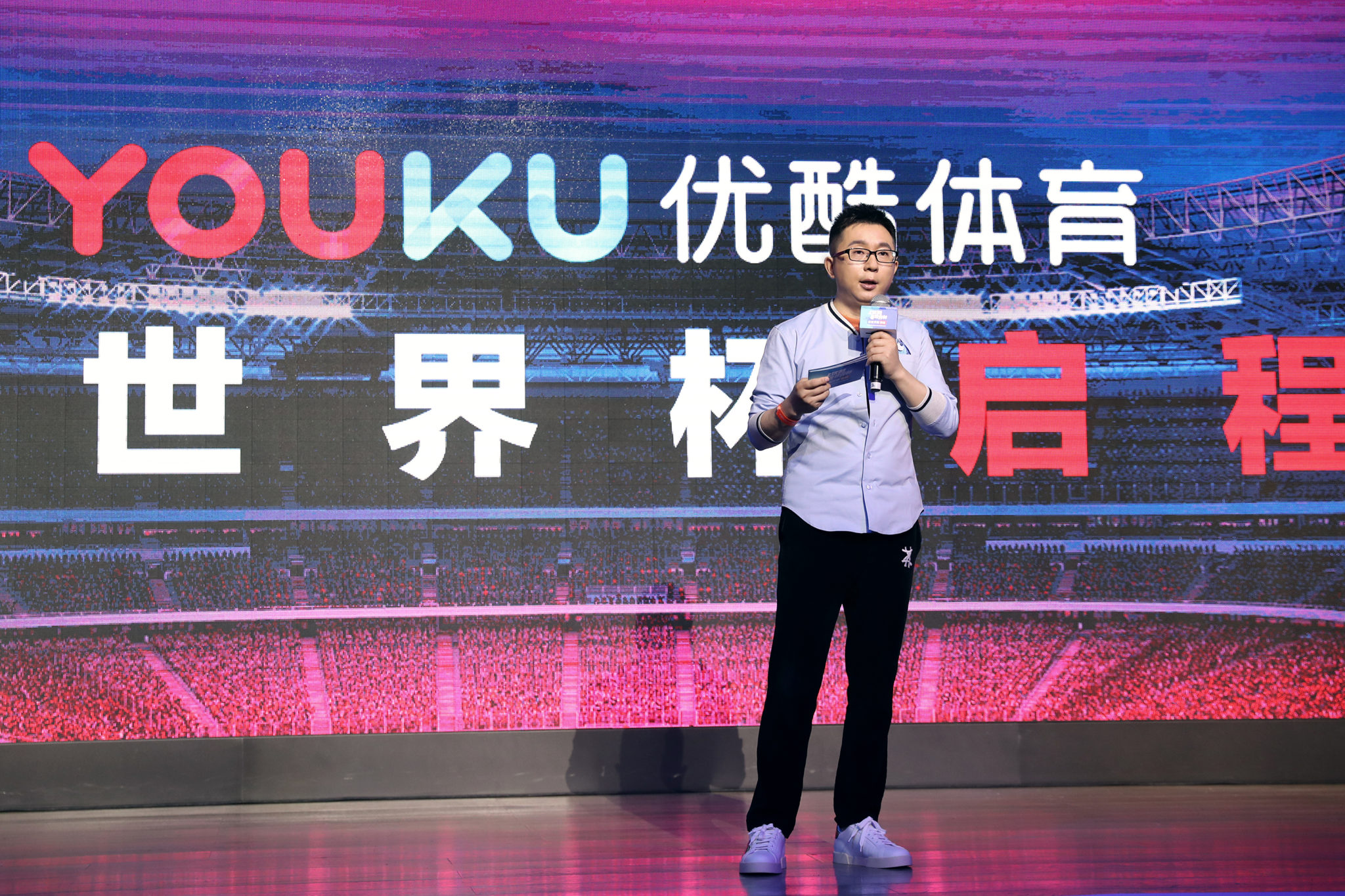
Youku, the Alibaba Group-owned online video hub, is set to provide China’s most-comprehensive coverage of the FIFA 2018 World Cup with live streaming of all 64 games together with a number of programs produced exclusively to celebrate one the world’s most-watched sporting events. In addition, Youku will join hands with leading brands and business units from the Alibaba ecosystem including Taobao, Alipay, Hema, UC Web, Tudou, Xiami Music and Damai, to provide viewers an “around-the-clock” integrated experience that will bring the enjoyment of the famous sports spectacle to the next level.
“Given its level of popularity, sports content in China is an effective tool in implementing Alibaba Group’s ‘Double H’ strategy, which aims to promote ‘Health’ and ‘Happiness’,” said Weidong Yang, CEO of AliMusic and President of Alibaba Digital Media & Entertainment Group and Youku. “Not only are we streaming soccer matches, but we’re also leveraging this leading sports event to showcase the power of the Alibaba ecosystem and how Youku can lead the industry and capture opportunities in the China sports market by building relevant content and excitement.”
Tailored Programs and Contents to Celebrate the Soccer Spectacle
Youku is partnering with China Central Television (CCTV) to stream all 64 games, along with on-demand videos and post-game highlights*, marking the first time that the Chinese audience will be able to enjoy live broadcasts of the entire World Cup tournament on their mobile phones. As the official new media partner of CCTV in this event, Youku and CCTV will co-produce a talk show called “Qi Tan Shi Yi Ren” 《奇谭十一人》, featuring celebrity guests and soccer fans. “This is World Ball” 《这就是世界波》, a sports program under Youku’s successful “This is” 《这就是》 franchise and hosted by well-known commentators in China, will go live from June 14. Tailoring to the needs of younger audiences, Youku will produce a specialized soccer education program “Play football with Peppa Pig” 《佩奇给你讲足球》. In addition, Youku has acquired distribution rights for more than 20 online World Cup programs to enrich its lineup this summer.
Apart from Youku, UC Web, Tudou, Xiami Music and Damai, the business units from Alibaba’s Digital Media and Entertainment Group, will work together to create an omni-media matrix covering various types of content, including short videos, music, as well as text and graphics.
Synergy with the Alibaba Ecosystem
Following the success of “Street Dance of China”《这就是街舞》and “This is Fighting Robots” 《这就是铁甲》, Youku and a number of leading brands and businesses from the Alibaba ecosystem are joining hands to provide a wide range of promotions and specials that cover ecommerce, restaurant and takeaway food orders, travel and entertainment content consumption.
On Youku, audiences in China can not only watch the exciting soccer matches, but also enjoy innovative interactions and games. Red envelopes of coupons worth over RMB200 million will be set aside as prizes for an online campaign, where customers collect the cards of soccer stars. Youku, Taobao, Alipay and UC Web are sponsoring the campaign. Red envelops will also appear during the live streaming of every match. They can be redeemed for purchases on Taobao.
Also, Tmall Genie, the AI-powered smart speaker will continue the prediction game that was traditionally started by Paul the Octopus, but this time, it will compete with a Boston lobster from Hema. All predictions and results will be announced in the “This is World Ball” 《这就是 世界波》program.
“The extensive offerings from Youku around the 2018 FIFA World Cup reaffirm our commitment to bring the world’s best sports events to Chinese audiences. The widespread support from the Alibaba ecosystem also empowers Youku to deliver a superb experience for users to enjoy the popular month-long tournament in many new and innovative ways,” added Yang.
After news of three local broadcasters bringing World Cup 2018 to Singapore, local organisations have also started revealing their plans to screen the matches with SAFRA and McDonald’s among those committing to do so.
SAFRA, for instance, told Channel NewsAsia on Thursday (Apr 26) that it will be screening the football matches at all its clubs. Its members can also receive a “fun pack and enjoy exclusive premier members seating” during the live screening of the matches, SAFRA said.
It will not screen all matches though, it later clarified.
SAFRA had screened matches at four of its clubs the last time the international football competition was held in 2014.
SAFRA also said food and beverage (F&B) vendors will offer “special treats and promotions” during these screenings. It will be organising football clinics at selected clubs during the same period for parents and children to pick up some skills, it added.
Meanwhile, the People’s Association (PA), when asked of its plans, said in an email: “We are exploring with the telcos and will keep you updated.”
It had screened the football matches live and for free at 30 Community Clubs in the previous edition.
As for F&B establishments that regularly broadcast sports, they are also firming up their plans for the upcoming World Cup, which is being held in Russia from Jun 14 to Jul 15.
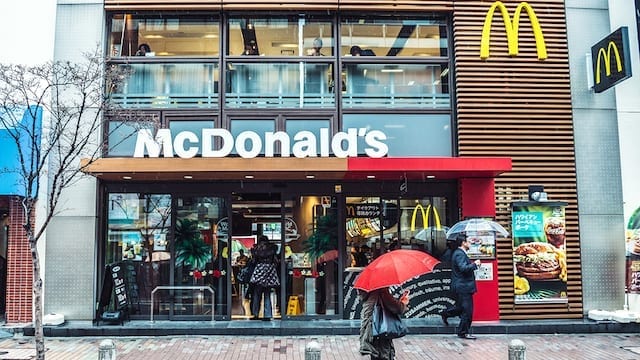
McDonald’s told Channel NewsAsia: “In the spirit of our global FIFA World Cup sponsorship, we will be screening selected World Cup matches in 22 of our restaurants across Singapore.”
Harry’s is another that intends to screen the football matches this year.
Ms Hannah Teo, senior manager for sales and marketing at Harry’s International, said it will screen all 64 matches, but some of its outlets may not show the 2am games.
“It also depends on the broadcasting commercial fees which have yet to be announced,” she added.
Brewerkz, too, shared that it intends to show the matches at selected outlets, but most likely not all the matches. “We have not made a final decision at the moment,” a spokesperson said in an email.
She added that they are still waiting for the pricing to be revealed.
Mediacorp, which is broadcasting the matches on its Toggle platform, said the package price for corporates start from S$2,876.16 but this depends on screen size and when they sign up. It is the standard pricing for all broadcasters.
For those signing up for the Toggle 2018 FIFA World Cup Russia Pass for Standard Screen (up to 50 inches), the early bird pricing is S$2,876.16 for the first screen and S$2,020.16 for each subsequent screen, the local broadcaster said. The early bird promotion will be until May 22, similar to the deadline for consumers.
Those looking to sign up for the pass for larger screens of 51 inches to 99 inches, the early bird price is S$5,016.16 for the first screen and S$3,090.16 for each subsequent one, it added.
Once the early sign-up period ends, prices for the Standard Screen is S$3,090.16 for the first screen and S$2,020.16 for each subsequent screen. Similarly, it is S$5,230.16 for the first screen and S$3,090.16 for each one after for those with 51 inches to 99 inches television sets.
As for the package for Indoor Public Screens, for screen size of 100 inches and above, the fee is S$5,230.16 per screen with no early-bird promotion pricing.
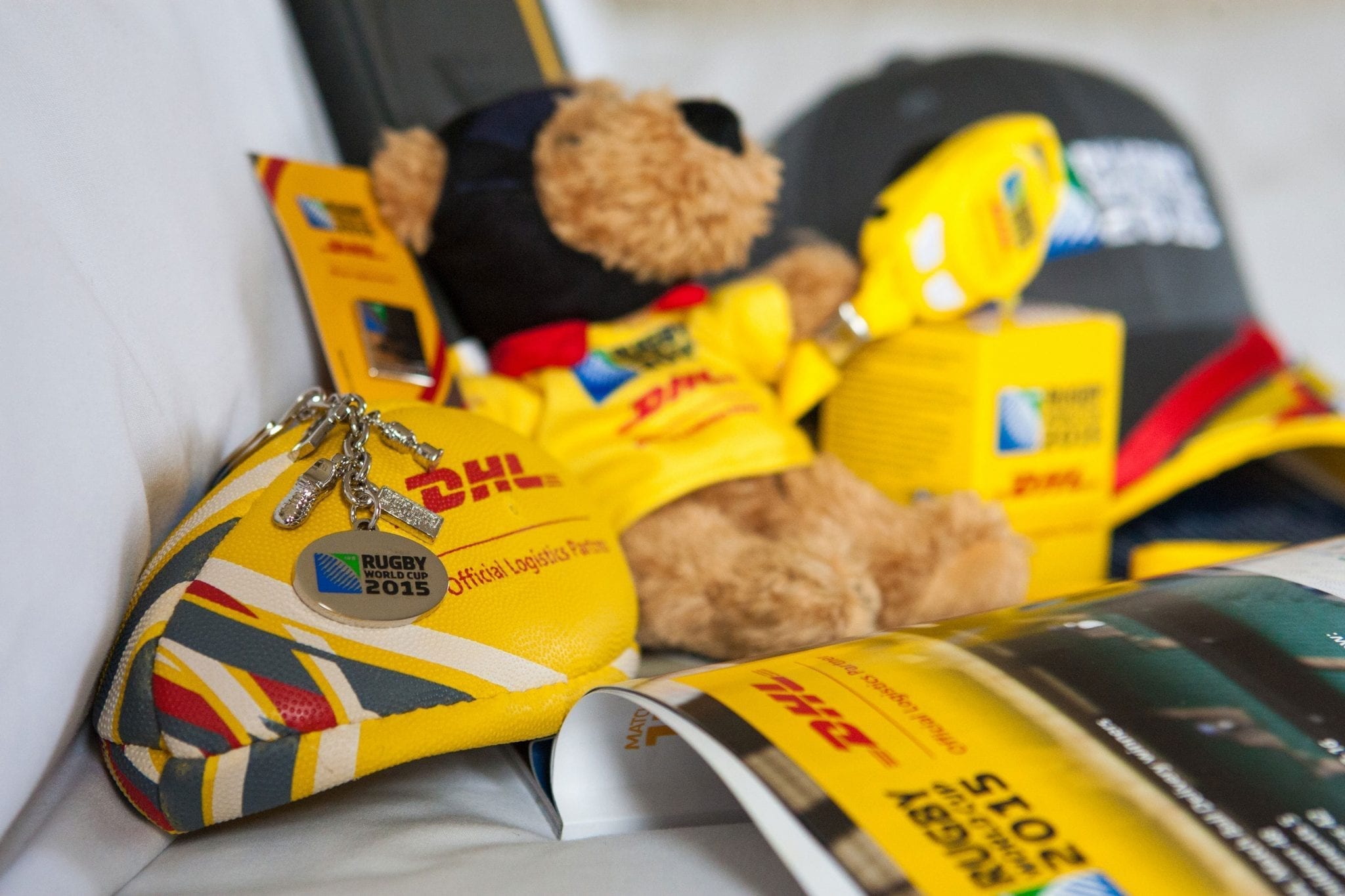
DHL announced that it is the official logistics partner and a worldwide partner of Rugby World Cup 2019. The partnership will see DHL again team up with one of the biggest international sporting events, which will take place in host country Japan from 20 September to 2 November 2019. DHL was official logistics partner of Rugby World Cup 2011 in New Zealand and Rugby World Cup 2015 in England.
“We are very excited to be continuing our longstanding, successful partnership with the game of Rugby including again being involved in the premier event of such a dynamically growing sport,” said Ken Allen, CEO, DHL Express. “We are also thrilled that it is breaking new ground in Japan, a country with the fourth largest population of rugby players in the world and with great potential to inspire a new generation of Rugby fans with its performances both on and off the pitch. The company has operated in Japan for 45 years and has built up an unrivalled network in the country. We can’t wait to share all the passion and enjoyment that Rugby embodies with our customers, employees and the broader Rugby family in Japan and around the world over the next two and a half years.”
World Rugby Chairman Bill Beaumont said: “We are delighted to be extending our long-standing and highly-successful partnership with DHL, the express and logistics global leader. More than a commercial partner, DHL is a world class logistics operator and in an event where success hinges on the details, we know that we have the best possible partner.”
The partnership continues a longstanding relationship between the logistics provider and the game of rugby. As the official logistics partner of Rugby World Cup 2015, DHL was responsible for the transportation of tournament and team equipment from around the world to England and across the country. DHL delivered over 48 tons of team freight, 1,400 official match balls, and 20 sets of uprights to the 13 match venues, and also delivered over 400,000 tickets to more than 160 countries.
Thousands of riot police were deployed for a soccer showdown Thursday night that was more than the average grudge match.
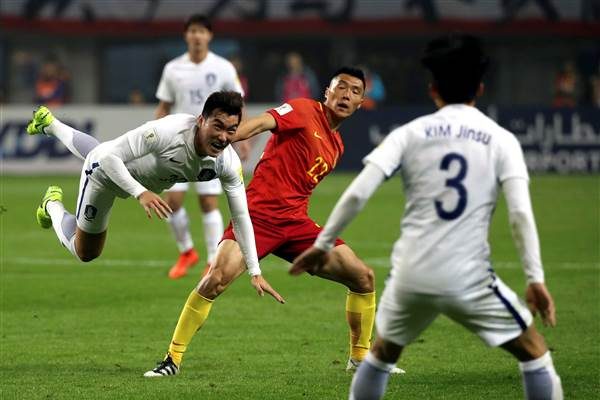
The World Cup qualifying game in Changsha pitted hosts China against South Korea. It also whipped up Chinese nationalist sentiment at a time of high political tension over the rollout of a U.S.-made missile defense system in Asia.
Officials were so worried about clashes that the Hunan provincial sports administration urged fans to show “rational patriotism” to avoid trouble.
To ensure that, a 10,000-strong security force was deployed to watch over the capacity crowd of 55,000.
Dozens of trucks carrying paramilitary and riot police were stationed around the stadium.
Chinese fans were given free red T-shirts with the slogan “Changsha War” in Chinese characters.
In the sea of red, only around 150 South Korean supporters were in the 250 seats designated and guarded for them.
Police (seen top) sit behind South Korean fans during the World Cup qualifer against China on Thursday.
The event illustrated the extent to which China’s relationship with South Korea has deteriorated since the first components of the Terminal High Altitude Area Defence, or THAAD, anti-missile system arrived to the region earlier this month.
THAAD is designed to protect U.S.-ally South Korea and American bases there from the growing threat of North Korea’s weapons programs.
Kim Jong Un’s regime has stepped up testing of its missiles as a protest of the U.S. joint military drills with South Korea, and there is concern preparations for a sixth nuclear test are underway.
China is fiercely opposed to THAAD, arguing a system to intercept short-and-intermediate range ballistic missiles installed so close to North Korea’s launch sites will only serve to undercut China’s strategic defenses.
The longer term concern for China’s military: If THAAD expands to Japan, it creates a common operating picture for U.S. allies in Asia.
“Even if North Korea collapses, missile defencs would not go away,” a former U.S. national security adviser said. “The worry [for China] is that THAAD is a basis for a collective security system… that does not include China.”
THAAD was among the issues on the agenda during Secretary of State Rex Tillerson’s recent visit to Asia.
Experts stress that THAAD is a major concern for China’s government.
The issue has stoked nationalist fervor in China, and triggered an anti-South Korean backlash with state media urging a boycott.
“Some critics in the West have said that China, as a country under the rule of law, has no reason to punish South Korean enterprises that are doing businesses in the Chinese market,” a Global Times op-ed published earlier this month read. “However, all states have the right to sanction those that have posed a threat to their national sovereignty and strategic security interests.”
Some Chinese travel companies have already stopped booking tours there, causing a drop in crucial tourism business.
China has also blocked streaming of popular South Korean television shows and soap operas, and K-pop stars have cancelled concerts on the mainland because of problems getting travel visas.
Across China, there have been protests at outlets of Lotte Group, the South Korean retail giant that gave up its golf course as a THAAD deployment site.
A few days after it agreed to the deal, a cyberattack took down its online shopping sites. Other Lotte stores have been mysteriously closed by Chinese authorities for various municipal infractions.
Officially, China hopes it can pressure Seoul to reconsider.
The snap election in May could bring the country’s opposition Democratic Party to power. Its leader Moon Jae-in has expressed reservations about hosting an anti-missile system that might reinforce South Korea as a North Korean target.
The regional rivalry came to a head on the soccer field, in the city where Mao Zedong, the late Communist leader and founder of modern China, started his political career.
The sheer size of the security force showed that authorities had no tolerance for violence, even if nationalist protests had been allowed in the past.
In the end, China won the game, 1-0. The only commotion: cheering by surprised Chinese fans who became more distracted by the World Cup qualifier than global affairs.