Tag: worth

  • Singapore’s Young Billionaires: $20B in Net Worth Among Six Under 50

    Singapore’s Young Billionaires: $20B in Net Worth Among Six Under 50

    Wealth Insights from Singapore’s Newest Elite

    Singapore’s financial landscape is continually evolving as new names emerge among the billionaire ranks. The city-state’s youngest billionaires showcase a diverse blend of industries, from real estate to tech, reflecting significant consumer trends and brand expansion strategies. With a total net worth ranging from technology to property development, these individuals are making their mark in retail news.

    Kishin RK: A Legacy Built on Innovation

    Kishin RK stands out as Singapore’s youngest billionaire, boasting a net worth of $1.6 billion as of March 7, 2023. The son of renowned real estate mogul Raj Kumar, Kishin joined the family business in 2003 before establishing his own property venture, RB Capital. Notably, he sold a gifted 5,000-square-meter apartment to initiate his real estate journey.

    The partnership between Kishin’s RB Capital and his father’s Royal Holdings results in a robust portfolio valued at approximately $10 billion. Their impressive roster includes key assets such as the Holiday Inn Express Clarke Quay and InterContinental Singapore Robertson Quay, highlighting the successful brand’s expansion in the hospitality sector.

    Sea Limited: Tech Titans Thrive Again

    The co-founders of Sea Limited, the parent company of the popular e-commerce platform Shopee, are also making headlines. Chairman Forrest Li, COO Gang Ye, and co-founder David Chen have all reached billionaire status under 50, with Li leading the pack at $8.6 billion.

    These entrepreneurs have seen their fortunes fluctuate dramatically in recent years, especially during the pandemic and subsequent market adjustments. However, after Sea Limited reported its first full-year profit in 2023, with a net gain of $163 million, their financial recovery has spurred renewed optimism. Revenue climbed to $16.8 billion in 2024, indicating a robust rebound in consumer demand and retail growth.

    Razer’s Min-Liang Tan: Gaming Innovator

    Min-Liang Tan, co-founder and CEO of Razer, transitioned from a law career to carve out a niche in the gaming industry. Since co-founding Razer in 2005, Tan has positioned the brand as a leader in gaming hardware and lifestyle products. After taking Razer private in 2022, valuing the company at $3.2 billion, Tan aims to enhance innovation and strengthen community ties within the gaming sector. His current net worth stands at $1.6 billion.

    Teo Swee Ann: Semiconductor Pioneer

    Teo Swee Ann, founder and CEO of Espressif Systems, is new to the list of billionaires this year with a net worth of $1.5 billion. Under his leadership, the Shanghai-listed company specializes in semiconductor technology, notably producing the popular ESP32 chips used in a variety of consumer products. His impressive journey from engineering to entrepreneurship marks a significant point in consumer technology trends.

    Impact on the Retail Sector

    The journeys of these billionaires reflect broader consumer trends and the evolving face of the retail landscape in Singapore. Their ventures not only symbolize personal success but also indicate a dynamic market where innovation and strategic brand expansion lead to substantial economic growth. The influence of technology and hospitality on consumer behavior continues to reshape retail, paving the way for exciting developments ahead.

    Questions & Answers

    1. Who is Singapore’s youngest billionaire and what industry does he operate in? Kishin RK is Singapore’s youngest billionaire, operating in the real estate industry through his company, RB Capital.
    2. How has Sea Limited’s financial status changed in recent years? Sea Limited’s co-founders saw fluctuations in their wealth but rebounded after the company reported its first full-year profit in 2023, indicating strong growth in consumer demand.
    3. What unique position do Teo Swee Ann and Espressif Systems hold in the tech market? Teo Swee Ann’s Espressif Systems specializes in semiconductor technology and is known for its ESP32 chips, which are integral to various electronic devices, signifying a trend toward smart consumer products.
  • Apple hits two trillion in valuation

    Apple hits two trillion in valuation

    August 2nd, 2018 was a red-letter day for Apple. The little company that was founded by Steve Wosniak and Steve Jobs in April 1976, was worth $1 trillion making it the first public company in the U.S. to hit that figure. And now here we are again, two iPhone cycles later, and the company has become the first publicly traded U.S. firm with a valuation of $2 trillion. However, by the end of the day, Apple’s valuation had fallen back under the two trillion dollar mark.

    Apple closed at $224.37 on March 23rd when the pandemic first started making its presence known in the U.S. At today’s close of $462.83, the stock has more than doubled in almost five months. Just last month, Apple’s valuation surpassed that of state-owned oil giant Saudi Aramco making the tech giant the most valuable publicly traded company in the world. Hitting the $2 trillion mark comes after Apple reported record revenue of $59.7 billion during its fiscal third-quarter earnings report released on July 30th.

    Analysts are calling the 60% gain in Apple’s stock price this year more proof of the outstanding leadership provided by Apple CEO Tim Cook. Part of the reason that the iPhone manufacturer has a rich stock price is that the company is trading less like a tech hardware outfit and more like a sexy software firm. You can see that in Apple’s price-to-earnings ratio (PE) which shows that the company is trading at 33 times earnings. Edward James analyst Logan Purk says, “Over the past four months, the market has really been valuing Apple as a software company. The services business is growing nicely — it seems to give them a multiple over 30, and gives them all the credit in the world for this subscription business. They’re starting to get compared to some really big software heavyweights.” For example, software leader Microsoft trades at 36 times earnings while Amazon’s stock has a PE over 123.

    Tim Cook should get much credit for this. Back in 2015, the year that iPhone shipments peaked, the company decided that instead of trying to focus on selling new iPhone models, it would be able to obtain higher profit margins by selling recurring subscriptions to a large number of iPhone users worldwide. Apple set a goal of doubling its Services revenue from the $25 billion earned in the fiscal year 2016 to $50 billion by this fiscal year. And three quarters into fiscal 2020, the company has generated $39.2 billion in Services revenue; barring a major global economic meltdown in the current quarter, Apple should hit at least $50 billion in Services revenue for this fiscal year.

    The Services unit includes ApplePay, the App Store, iCloud, iTunes, Apple Arcade, Apple TV+, Apple News+, AppleCare+, Apple Music, and more. There are about 1 billion active iPhone users that the company is mining for gold.

    The stock hike helps Apple executives’ restrictive stock units (RSU) gain in value and recently Tim Cook joined the billionaire’s club. It has been a heady rise for Cook who joined Apple in March 1988 as a Senior Vice President. In January 2009, Steve Jobs took a leave of absence leaving Cook in charge. After the ailing Jobs returned, his deteriorating condition forced him to step down for good and in August 2011, Cook once again took the CEO position. The executive has had that position over the last nine years running and during that time, Apple’s valuation has soared from $348 billion to $1.9 billion.

    Later this month, Apple will split its shares 4 for 1. That means that an investor with 100 shares of Apple that currently trades at $462.83, will own 400 shares trading at (approximately) $115.71.

  • Vietnam’s top five brands increase value by $2.3 billion

    Vietnam’s top five brands increase value by $2.3 billion

    Vietnam’s five most valuable brands were worth a combined $8.1 billion in 2018, up $2.3 billion or 39 percent against 2017, Brand Finance estimated. The most valuable brand was military-owned mobile network Viettel at $2.8 billion last year, up 9 percent from $2.57 billion 2017, said the UK brand valuation company. The 47th most valuable telecom brand in the world has operations in Laos, Cambodia, Haiti, Mozambique and Peru.

    In second place was Vinamilk, the country’s largest dairy company by far, which was worth $1.9 billion, up 39 percent. State-owned Vietnam Posts and Telecommunications Group (VNPT) was in third place after increasing its brand value by 84 percent to $1.34 billion.

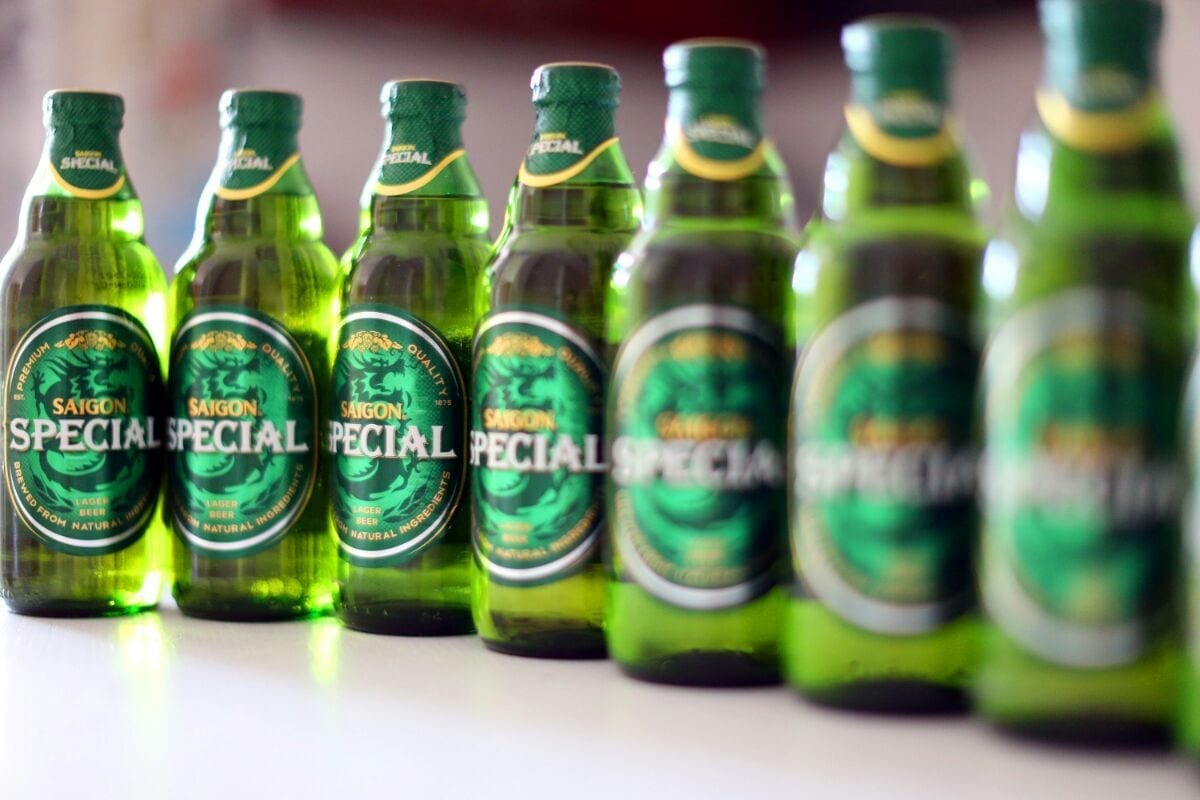
    In fourth and fifth places were Vinhomes, the real estate subsidiary of Vietnam’s largest private conglomerate Vingroup, and Sabeco, Vietnam’s biggest brewer, at $1.18 billion and $950 million respectively.

    Samir Dixit, CEO, Asia-Pacific of Brand Finance, said: “Branding is the most critical asset of every business. It is difficult to predict the performance and behavior of customers, but the only thing that remains a constant is the brand.”

    Brand Finance’s valuation criteria uses several metrics. The value accorded to each brand is a summary of its financial strength. Each brand also gets a brand rating, which indicates its strength, risk and future potential relative to its competitors.