Retail News CRM

Tag: writing

  • Getting ready to embrace AI, Grammarly lays off 230 employees

    Getting ready to embrace AI, Grammarly lays off 230 employees

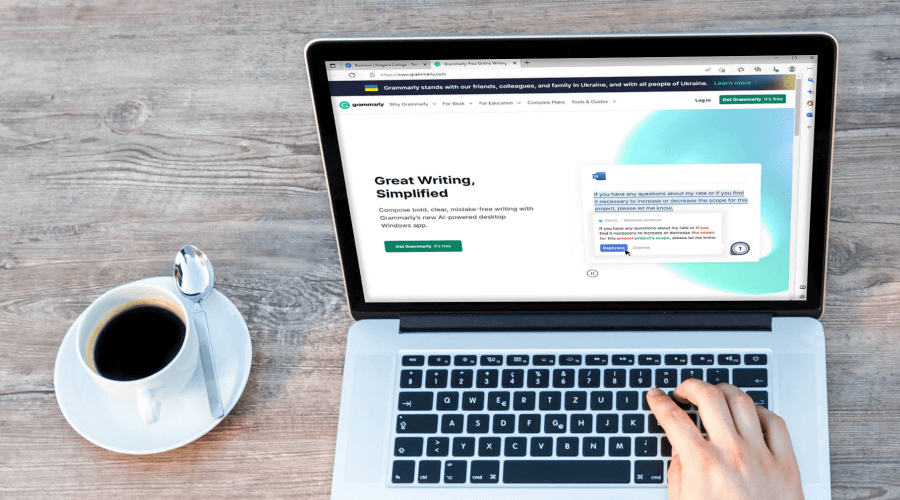
    If you write for a living, or you’re a student, Grammarly is probably one of your best friends online. Grammarly will help you find and correct grammatical and spelling mistakes and the paid version of the app and website will give you real-time writing suggestions to improve your report. For $12 a month, the paid version of Grammarly will even alert you to accidental plagiarism.

    With many analysts talking about a future where generative AI bots replace human writers, it makes sense for Grammarly to use AI to help subscribers improve their writing skills. This week, Grammarly announced that it is laying off 230 employees to focus on “the AI-enabled workplace of the future,” according to the company. Grammarly said, “This decision supports Grammarly’s vision of bringing responsible AI writing assistance to people and workplaces everywhere. Millions of people and thousands of businesses use Grammarly to achieve more through better writing.”

    In a memo to employees shared in a blog post, Grammarly CEO Rahul Roy-Chowdhury wrote, “As we strengthen our focus toward driving the AI-enabled workplace and deepen our technical investments in AI, we will need a different mix of capabilities and skillsets. We also need to redesign our organization to improve the quality and speed of collaboration — and that means, among other things, restructuring roles and co-locating certain teams.”

    The executive made it clear that the layoffs were not a cost-cutting measure and said that Grammarly’s financial position remains “strong.” Instead, reducing the headcount is being done to get Grammarly prepared for the coming AI future. Those leaving the company will receive a minimum of 3 months’ base pay. That increases for team members who have been with the company longer. U.S.-based team members leaving the company will have an option to continue receiving their health insurance benefits for up to six months.

    Grammarly is also helping those leaving the firm find a new position by offering “stipends or access to services for individualized career coaching, resume review, and other transition services.” The company will also create an “available talent” list that the public will be able to see. The list will include names, specialties, and “key results” that future employees can view. And those leaving Grammarly can keep their company-issued laptop for personal use.

    Looking ahead, it’s easy to see that Grammarly is hanging its hat on AI. CEO Roy-Chowdhury wrote, “We see massive opportunity as every individual and business begins to harness the power of AI. For nearly 15 years, we’ve been building a product that helps millions of people every day, makes teams measurably more productive, and is already used by employees in 96% of the Fortune 500. We’ll build on this foundation to bring even more value to our customers. AI will fundamentally change the workplace for the better—and Grammarly will play a leading role in driving that change.”

  • Moleskine’s new CEO discusses creativity and the brand’s plans for Asia

    Moleskine’s new CEO discusses creativity and the brand’s plans for Asia

    Premium brand Moleskine is setting its eyes on Asia as a major potential growth market, planning expansion both online and offline and integrating more smart technology into its product range.

    In an interview with Inside Retail Asia, recently appointed CEO Daniela Riccardi says one of the core priorities of a five-year plan she has drafted for Moleskine globally will be to create greater brand awareness among Asian consumers.

    “We want to share with them the Moleskine heritage and values in order to develop brand presence and overall business throughout this very important region.”

    Moleskine was founded 23 years ago in Milan, Italy. It began with a little black notebook with rounded corners and ivory-hued pages inspired by those used by great writers and artists of the past – prodigious note-takers who would inspire generations with their creative genius. Since then, it has evolved into a whole ecosystem of notebooks, diaries, bags and accessories, and smart tools and services.

    The conspicuous quality and style of Moleskine products notwithstanding, these kinds of items have become rather commoditized in many parts of Asia. Riccardi believes the brand is up for the challenge of building a premium brand in such a context.

    “I believe that what has made Moleskine so unique is that what Maria Sebregondi and the founders of the brand created was more than a bundle of pages within two covers: what was created was a tool for the creative community,” Riccardi explains.

    “Every detail of the notebook was carefully looked at when it was designed: the quality of the paper, the “in case of loss” label, the pocket on the back cover to hold bits and bobs, the rounded corners that allow it to slip effortlessly into a pocket, the elastic band closure. It was first distributed in bookstores and labeled “the book yet to be written”, because a Moleskine notebook becomes meaningful once our customers start filling its pages. It is quite simply more than a notebook and our ever-growing community embraces that.”

    Overcoming the Covid-19 era

    While the onset of the Covid-19 pandemic has disrupted business throughout the world, Ricccardi is confident Moleskine will ride out the storm and remains committed to its growth agenda.

    “Clearly Covid has been difficult for all businesses worldwide and Moleskine has also inevitably suffered, but I am working alongside all the people in the company to implement a long-term plan that will ensure that Moleskine will ride this extraordinarily difficult wave and overcome what I am certain is a moment.”

    The five-year plan she created soon after taking office on April 1 is based on the belief that a brand can never rest on its laurels.

    “Any evolving company needs to constantly look at itself in order to renew and continue to grow, which is why building this plan was my first order of business.”

    The plan includes equal focus both on- and off-line in order to optimize the customer experience for all of its customers.

    We have also partnered with some of the most significant institutions and brands worldwide and will continue to do so with a focus on bigger strategic partnerships with cultural institutions such as universities and museums. Partners with whom we share a like-minded ethos. Learn more about Moleskine’s co-branding project.

    The shift to digital 

    As the world moves increasingly to digital – with less reliance on paper and physical (rather than virtual) note taking – Moleskine is mindful of adjusting its business model to adapt.

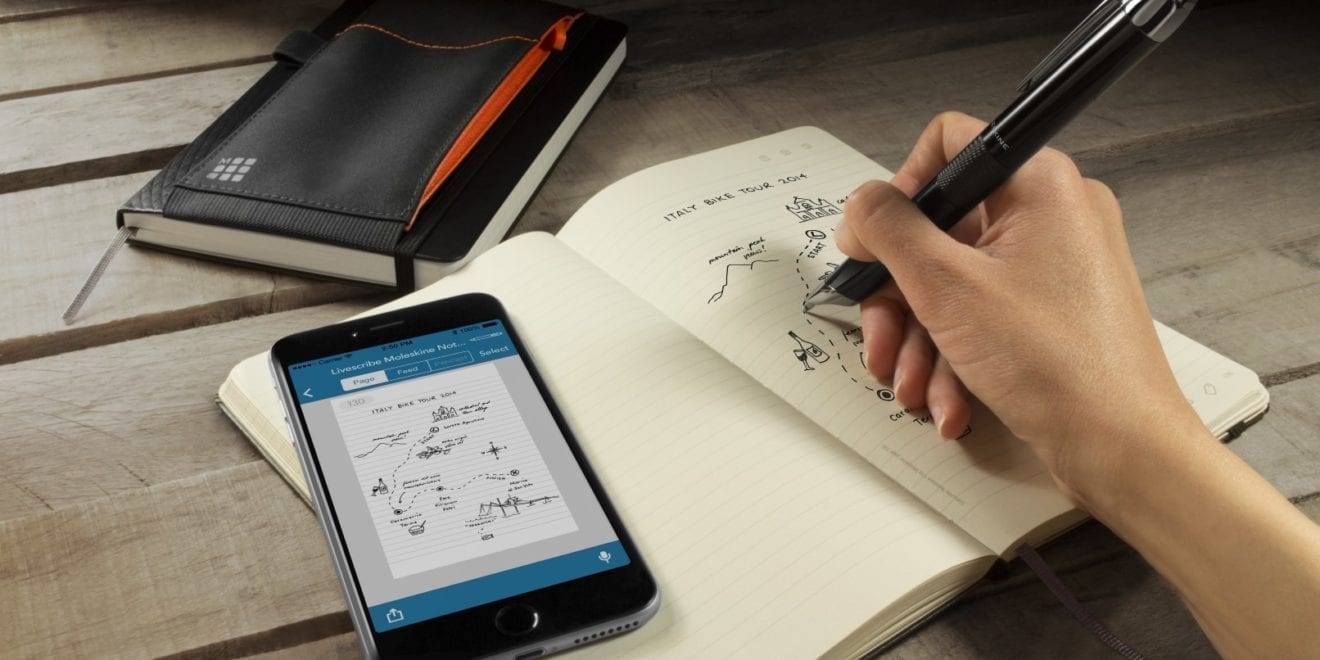
    “Moleskine has grown alongside the internet and when our founders created the brand, the importance and the relevance of the digital world was very clear in their minds. We create objects that live together with the digital world, that complement each other. The Smart Writing System is a perfect example of this: it is composed of a smartpen and centers around a specially created paper that when written or drawn on recognizes pen strokes. The system allows for all notes and thoughts to appear in real-time on digital devices as they are written on this almost “magical” paper,” says Riccardi.

    “We have always embraced technology as it is an essential part of everyone’s lives.”

    Alongside its digital foray, Moleskine continues to work on new products and designs to remain relevant to today’s consumers.

    “We have a small in-house team that has worked on creating new ideas and designs. This is one of the areas I intend to better develop going forward. The Moleskine aesthetic is very clear and staying true to those values is what makes the brand so authentic and appreciated by our customers.”

    Such a focus will help the brand build greater market share in existing markets as well as expanding into relatively new frontiers like Asia and Africa.

    “In terms of product categories, I believe that we have a great richness in our original and iconic notebook from where it all started. It is a small but great tool that we hope contributes to the development of creativity, culture, and knowledge and I would like to see a return to our origins as the first step to future growth.”

    Taking the reins

    Taking over the helm of Moleskine in a world where borders were closed was a surreal experience for Riccardi, an executive with previous management experience in companies including Procter & Gamble and fashion brand Diesel in 2010, where she was CEO, before taking over as CEO of 250-year-old French crystal maker Baccarat in 2013.

    “Taking over the helm of a company without meeting the team in person was an extraordinary experience to say the least. Not being able to travel to see the markets myself was initially a challenge. But as the saying goes, where there is a will there’s away, and I am confident that together with the team we will overcome this difficult time and move forward as a stronger company and brand.”

    Riccardi’s greatest achievement in business to date, she tells Inside Retail Asia, is building gender diversity within the companies she has led.

    “Gender diversity has always been important to me and throughout my career, I have sought to inspire and empower women, particularly in circumstances where age or social or religious factors can be a challenge.”

    At Moleskine she wants her legacy to have grown the brand to greater heights and recognition than when she took over this year.

    “I am very careful about the projects I decide to undertake and the brands I decide to work with. It is important to me that I have the utter conviction of the strength of a brand and its unique values. Moleskine has these qualities in spades, and I see in it untapped opportunities that are the cornerstone of my work for developing a framework for growth in the years to come.”

    Based in her native Italy, Riccardi has several directorships in addition to her Moleskine role. She is on the board of French luxury-goods powerhouse Kering, of Comité Colbert, an association of French Luxury Brands and cultural institutions, and the world’s largest communications and advertising company, London-based WPP.

    If there is a common element to the companies which Riccardi commits her time to it has to be style and creativity – not to mention heritage – a group into which Moleskine fits perfectly.

    “Moleskine at its core celebrates the power of creativity and has a unique connection to paper where human genius has always given its best. We provide tools for empowerment and spaces for ideas to grow, with the idea of unleashing the limitless human potential,” reflects Riccardi.

    “After all creativity is universal and timeless and will always be relevant to the world.”
  • Montblanc launches at Shanghai Plaza 66

    Montblanc launches at Shanghai Plaza 66

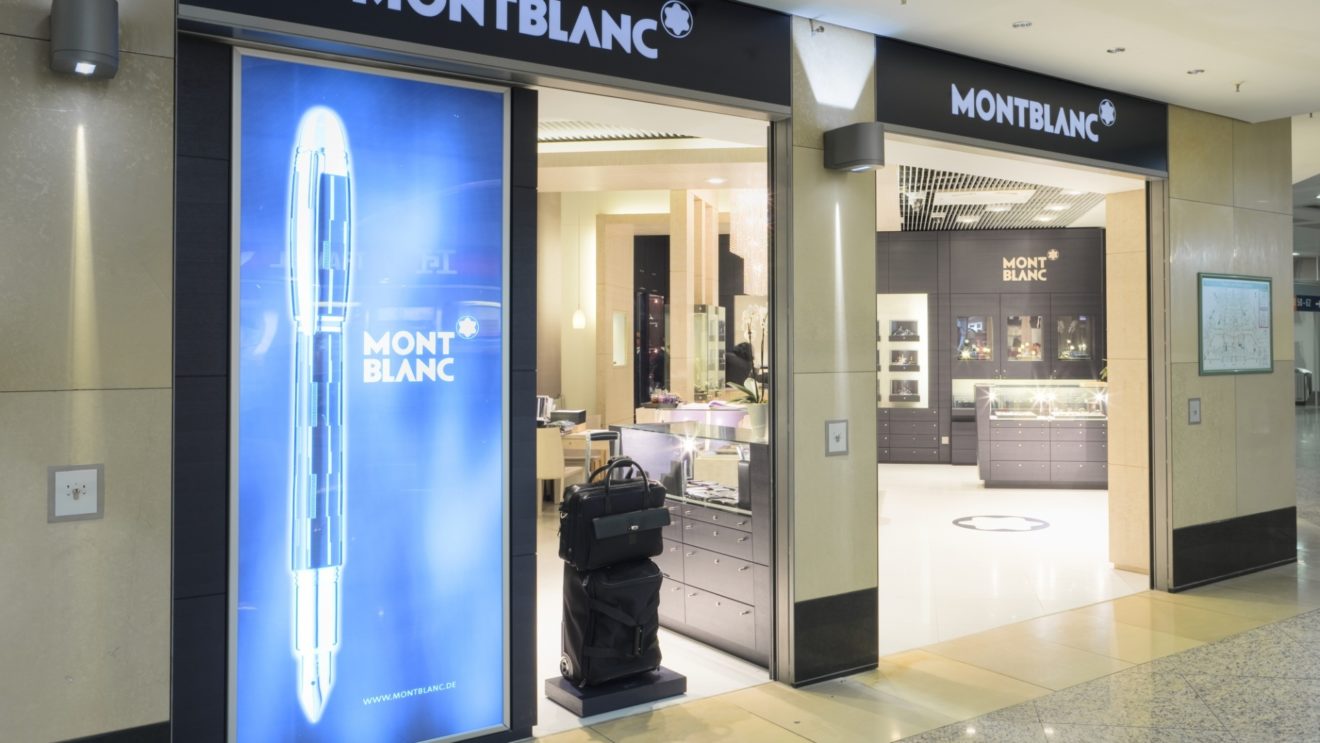
    Montblanc has launched a flagship boutique and a pop-up store in Shanghai, China. Located at Shanghai Plaza 66 on Nanjing Road, the store features a wide collection of Montblanc’s luxury goods, including travel bags, backpacks, watches, and accessories.

    The Shanghai Plaza 66 boutique features a modern design with black and gold elements.

    The Shanghai Plaza is also a location where Montblanc chose for its worldwide launch of M-Gram 4810 Collection. The CEO of Montblanc China, Daniel Chang, unveiled some photos of the pop-up store on his LinkedIn feed.

    Located in the main atrium, the pop-up store features a blue navy as the store’s theme color. A giant letter ‘M’ is displayed at the entrance of the store with the brand’s name in white on top. A large digital screen is installed on the side of the store, presenting videos of Montblanc’s products.

    The Montblanc’s pop up resembles a modern museum with a wide range of Montblanc items displayed on the wall.

    To promote the campaign, large banners are hung inside the mall, showing a photo of Montblanc’s global brand ambassador Chen Kun with the brand’s tagline ‘What moves you, makes you’

    The Shanghai Plaza 66 flagship’s facade was also re-designed, featuring the blue navy with ‘M’ pattern. Montblanc China also hosted the Montblanc 2020 Light Show in Hangzhou to promote the brand’s new collection.

  • How to write an essay introduction

    How to write an essay introduction

    Want to be a professional essay writer? Or want to write a good essay for graduation? Regardless of your style, format, subject and purpose, you need to start with a good introduction. This part of your work will serve as a map for your target audience, because it will give them an essential background and an overview of the topic you will be discussing, while providing your personal opinion on it, in addition to answering the basic questions like:

    – What is the main idea of ​​your essay?

    – What makes you think the way you think?

    – How will you prove your opinion?

    – Why is your article useful to read?

    At first glance, this part of the essay may seem very difficult to complete, taking into account its specificities. But in reality, it is just a matter of following a series of guidelines, which represent the methodology of writing an introduction. In this article, you will find all the necessary information that will be useful to you when dealing with this type of writing. Keep reading carefully and writing an essay introduction will no longer seem like such a difficult business for you.

    To create a concise and effective introduction, you can start by providing an example. It would be helpful because a good example can easily guide your reader to the specific information you will provide at the end of your presentation. The point is that a good introduction should start with an overview of the general information provided in the rest of your work. So, if you are going to write a literature review, for example, or a critical analysis essay, you can start by providing an example directly from the literature work you are discussing in your article.

    Another way to start an effective introduction is by using a hook. Depending on the style of your paper, its purpose, and format, you can use different hooks. A good hook should attract your potential reader, get their attention, and make you curious about your essay so that they would like to read it further. Like a hook, you can provide a good anecdote, a funny joke, an unexpected fact that would surprise your reader, a quote from a primary source, or a provocative statement. As a provocative statement, you can use your personal opinion regarding the topic discussed that the reader would not expect to hear and that would provoke you to certain actions or thoughts. A hook can consist of one or two sentences, not more since it should just present your point of view to the reader and make him want to read more, not tell his story to the end.

    Having said that, it would be appropriate to give a little context to your introduction to make the information more understandable and clear. You can provide information that is not discussed in the article, but it can be useful in understanding the topic. For example, you can include some historical background or some fascinating facts about the issue of your discussion. In addition, you need to inform your reader about the structure of your work. This is the reason why some authors prefer to write the introduction part after the rest of their work is already written. However, if you have prepared a detailed outline, it is not necessary to wait until everything is ready. In fact, there is no need to provide a detailed preview of each section of your work at once, but at the same time, you are expected to provide a general standard of what your essay will be.

  • Montblanc unveils new store design with brand new ink bar

    Montblanc unveils new store design with brand new ink bar

    Montblanc has unveiled its newly renovated store in Castlereagh Street, Sydney, which features the luxury brand’s first ever ink bar in Australia, and a digital corner to house its growing range of tech products.

    The new look, designed by French designer Noé Duchaufour-Lawrance, is built around three design themes. Cursive handwriting is the starting point for the overall design and evokes calligraphy and the culture of writing; the emblem, which is inspired by the snowcapped peak of Mont Blanc, is paired with ink shades to represent the life and soul of the brand; and passion for craftsmanship is narrated through the structured architecture and dark wood composition.

    Beyond the store’s aesthetic design, elements like the ink bar and digital corner contribute to an immersive retail environment, where customers can test all types of writing instruments, including the brand’s unique range of scented inks, Elixir Parfumeur, which come in orange-brown (leather scent), gray (wood and tobacco scent) and green (vetiver scent).

    “Venturing into the boutique, clients will enjoy the true expression of luxury in an inviting atmosphere,” Montblanc said in a statement about the new store.

    According to the retailer, trained associates will guide customers through the digital corner, where they can test the store’s latest smartwatches and augmented notebook, which converts handwritten notes into digital text and copy.

    Montblanc is also offering on-the-spot embossing and engraving in-store, where customers can choose from a curated selection of fonts and colors to personalize their purchases.

    “The excitement of setting foot into a physical store, receiving personalized VIP services and leaving immediately with your purchases is a large part of the luxury experience,” said Matthieu Dupont, president, Montblanc Southeast Asia.

    “We’re committed to giving our clients the best possible products and services.”

  • Enduring lure of pen and paper boosts Moleskine

    Enduring lure of pen and paper boosts Moleskine

    From spelling out New Year’s resolutions to jotting down designer brainwaves, sometimes only a pen and paper will do, even in the digital era.

    And those are the kind of niches that have enabled Italian notebook manufacturer Moleskine to leverage its historically evocative brand into the kind of rapid growth not usually associated with the staid world of stationery.

    The Italian group’s sales have more than tripled in the last seven years.

    Turnover in 2015 was 128 million euros (US$134mil); 200 million is the target for 2018 with Asia in the frontline of the company’s plans to expand its retail network from 80 outlets to 120 over the same period.

    According to business expert Alessandro Brun, the growth has been driven by Moleskine’s ability to successfully pitch an “extremely ordinary” item as being an object of desire imbued with history and an essential lifestyle tool for the contemporary creative.

    “It is fair to talk about a Moleskine phenomenon,” said Brun, professor of company management at Milan Polytechnic.

    From its launch as a brand in 1997, under then-owner Milanese publisher Modo & Modo, Moleskine has hammered away at the idea that it has revived the classic notebooks favoured by the likes of Picasso, Van Gogh and Hemingway.

    Those now sold under the Moleskine brand are indeed modelled on those once manufactured by a French provincial bookbinder for Paris stationers. But they are made in China, rather than the Loire valley.

    With their rounded edges and distinctive elastic binder, the original notebooks were known as “carnets moleskines” in French, because their smooth black covers were thought to resemble moleskin.They were a classic of simple design but production stopped in 1986 when their original manufacturer, based in the town of Tours, closed.

    Famously, travel writer Bruce Chatwin was so distraught he went round buying up as many as he could find, then wrote a lament to the notebooks in his book The Songlines that came out the following year.