Tag: WTO

  • Australia to take China to WTO over wine tariffs

    Australia to take China to WTO over wine tariffs

    Australia’s complaint to the World Trade Organisation over China’s anti-dumping duties on wine exports should enable bilateral negotiations, Foreign Minister Marise Payne said on Sunday.

    The government filed a complaint on Saturday over duties that were applied last year and nearly wiped out exports of Australian wine to the Chinese market.

    “What lodging the dispute enables us to do is begin dispute consultation settlements, which actually is a bilateral discussion with China about the issues,” Payne said in an interview on the Australian Broadcasting Corp’s (ABC) ‘Insiders’ program.

    “We’ve seen duties of over 200 percent applied to Australian wine. We don’t believe that that is consistent with China’s obligations under the WTO. So that part of the process enables us to have that direct conversation.”

    The Australian government has complained frequently that China has ignored calls to ease trade tensions.

    It is the second time in six months Australia has appealed to the WTO. In December, Canberra launched a formal appeal seeking a review of China’s decision to impose hefty tariffs on imports of Australian barley.

    Relations with China, already rocky after Australia banned Huawei from its nascent 5G broadband networking in 2018, have worsened since Canberra called for an international inquiry into the origins of the coronavirus, first reported in central China last year.

    China, Australia’s largest trading partner, responded by imposing tariffs on Australian commodities, including wine and barley and limited imports of Australian beef, coal and grapes, moves described by the United States as “economic coercion”.

    Asked about the fresh international push to find answers to the origin of the virus that causes Covid-19, Payne said it was important to maintain the momentum.

    “We are very determined to work with our partners to ensure that (…) investigation is able to access the material that it needs, including within China,” Payne said.

  • Lotte Group forced to drop $4.5bn IPO

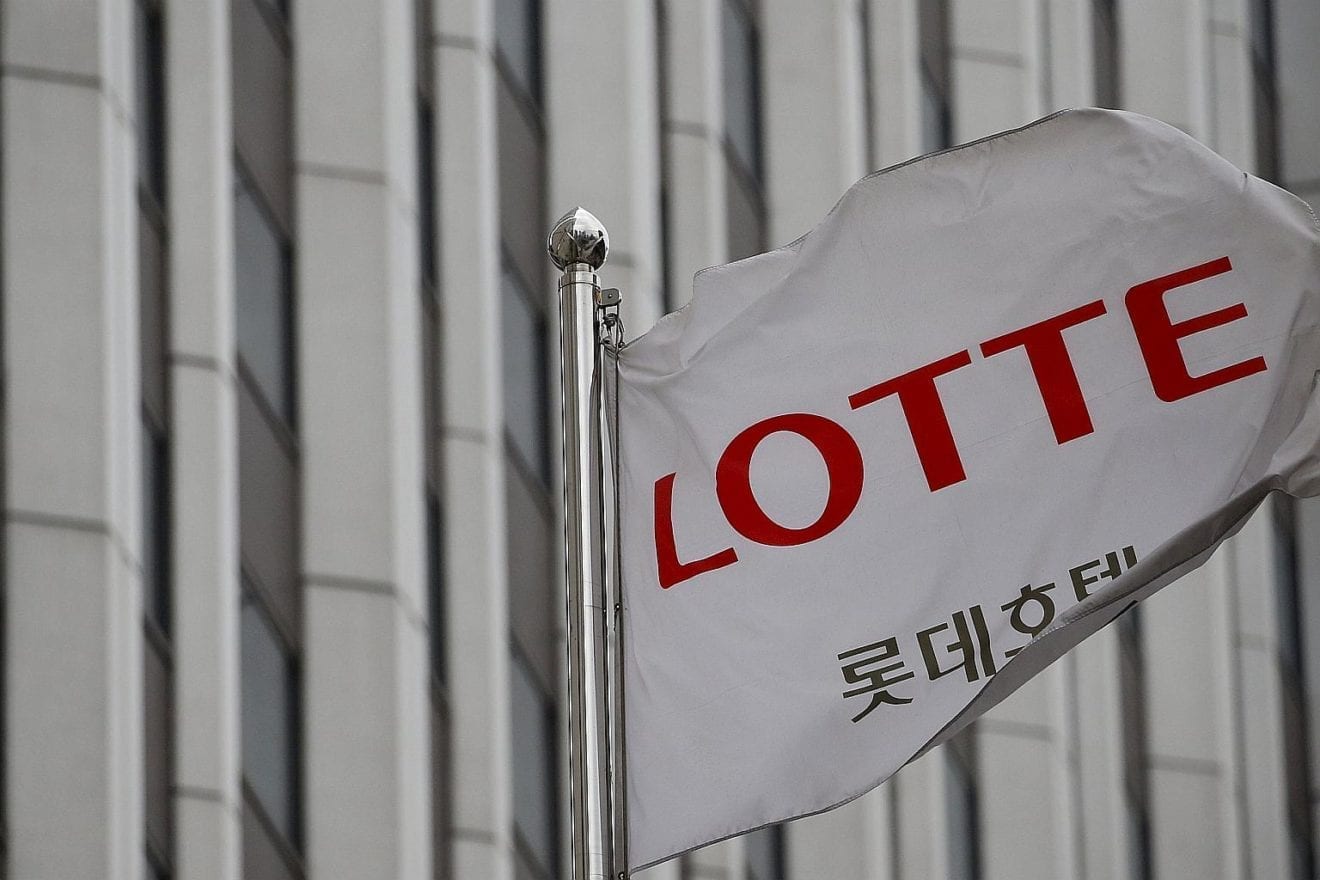
    Lotte Group forced to drop $4.5bn IPO

    Following a 30 per cent drop in duty-free sales last month and the virtual closure of more than 100 supermarkets and discount shops in China, the Lotte Group has cancelled its US$4.5 billion IPO.

    Its woes are fallout from the mainland’s objection to South Korea’s new THAAD missile defence system, designed to knock out missiles from North Korea in the event of a war. China’s military claims the system can snoop on its installations as well. China is also angered that the system is on land sold by the Lotte Group to the South Korean government.

    These political moves have put the brakes on Lotte Duty Free’s booming South Korean sales, which rose a record 36 per cent last year to US$5.7 billion.

    Meanwhile, South Korea has protested to the World Trade Organisation (WTO) in an effort to persuade China to relax its stance.

    This means the Lotte Group will now dip out on funding for its expansion programs while its key competitor, Shilla Duty Free, has continued to expand its duty-free business overseas, including Hong Kong International Airport (HKIA), as reported.

  • Indonesia antsy over WTO’s expected tobacco ruling in 2017

    Indonesia antsy over WTO’s expected tobacco ruling in 2017

    The Indonesian government and tobacco farmers are waiting anxiously for the result of a dispute settlement against Australia’s plain tobacco packaging policy that they expect will come out in 2017, more than three years after the government submitted a request for consultations with the World Trade Organization (WTO).

    The Trade Ministry’s director general for foreign trade negotiations, Iman Pambagyo, said he hoped that the settlement result would be in favor of tobacco-producing countries.

    “We expect WTO panelists to announce the result in the first quarter of 2017. We still think that the policy violates the trade rules,” he said.

    He added that while Indonesia fully supported the objectives of improving public health and protecting the environment, it was the country’s right to defend its economy against regulations that violated international trade rules, disciplines and obligations.

    According to the WTO, on Sept. 20, 2013, Indonesia requested consultations with Australia concerning certain Australian laws and regulations that impose restrictions on trademarks, geographical indications and other plain packaging requirements on tobacco products and packaging.

    The move came nearly a year after Australia became the first country that obliges all cigarettes sold in its jurisdiction to be wrapped in dark brown packaging in December 2012.

    The Australian government found that it was the least attractive color, particularly for young people.

    The policy went into force along with a tax increase to realize the country’s plan to bring down smoking rates from 16.6 percent in 2007 to less than 10 percent in 2018.

    The Australian Bureau of Statistics claims that smoking rates decreased to 12.8 percent a year after the policy took effect, compared to 15.1 percent in 2010.

    Australia’s move has been copied by the UK and France, which regulate that all cigarette packages manufactured for those countries must be in plain form.

    Singapore considered a similar provision last year as well, but dropped the idea after encountering some technical difficulties.

    After Indonesia submitted its consultation request to the WTO, several other countries and blocs requested to join the consultations, namely Brazil, Cuba, Guatemala, Nicaragua and the European Union.

    The Indonesian Tobacco Farmers Association (APTI) told The Jakarta Post that although Australia was not the main buyer of Indonesian tobacco, more countries would apply similar policies.

    “The policy’s provision will decrease our tobacco exports as antitobacco movements have emerged in other countries,” APTI head Wisnu Brata said.

    Djarum, Sampoerna and Gudang Garam are among the companies whose cigarette brands are available in Australia.

    Data from the Industry Ministry show that some 6 million people are involved in tobacco farms and businesses across the country. Many of them are export-oriented, such as in West Nusa Tenggara (NTB), East Java and Central Java.

    The value of tobacco exports reached US$981 billion in 2015 and $1.02 trillion in 2014.

  • Jack Ma’s grand eCommerce plan

    Jack Ma’s grand eCommerce plan

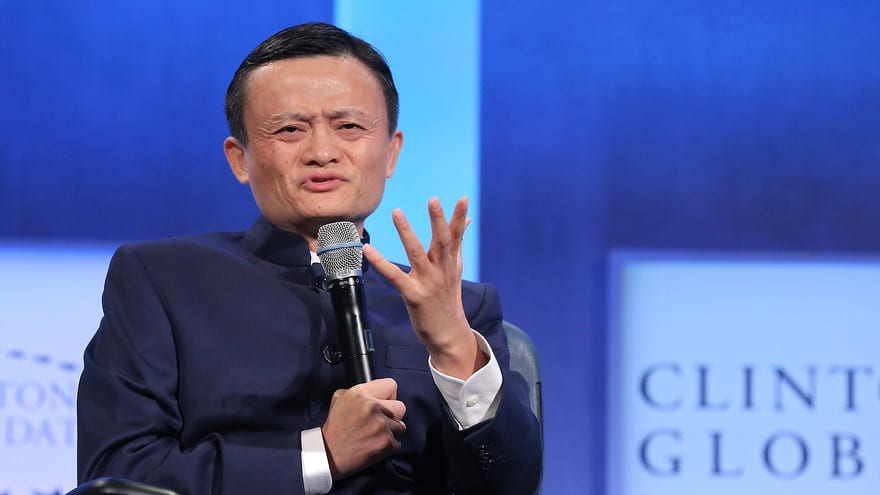
    Alibaba Group executive chairman Jack Ma wants to knock down barriers to global eCommerce by creating a business-driven, Internet-based platform that will function something like the World Trade Organization – but without all the controversy.

    Speaking at the Boao Forum for Asia, the founder of the world’s largest eCommerce company called for the establishment of “a new platform on which we are not debating, not having disputes, we are sharing trade,” Ma said.

    “On this platform we are promoting technologies as well as inclusive financing, so all [small businesses] and young people can enjoy the benefits of trade, so we are connecting the world with trade.”

    Ma’s ultimate goal is the creation of a virtual, borderless economy not constrained by politics. He calls the vehicle for achieving this the World e-Trade Platform, or eWTP. As envisioned, the eWTP would be set up primarily to formulate international rules to eliminate barriers to eCommerce and help small businesses and consumers everywhere participate in cross-border trade. The online platform would be open to a wide range of stakeholders including SMEs and would not be dominated by governments and multinational corporations.

    At the Boao forum – a business, government and academic leadership conference held annually on China’s Hainan Island – Ma said the WTO, which promotes free trade through lower tariffs and other trade barriers, “did a great job” in the last century in fostering a more global economy.

    China in particular after its accession to the WTO in 2001 experienced tremendous economic growth, he noted.

    But globalisation’s benefits have accrued unevenly and the WTO’s current rulemaking round, called the Doha Development Round, has been stalled for the last 15 years, largely over differences between developed and developing nations, Ma pointed out.

    The eWTP’s purpose is to help “the 80 percent of companies and developing countries that cannot participate in world trade,” he said, adding, “It is not the purpose of the eWTP to destroy the WTO, but to try to destroy trade protectionism.”

    Ma, who said last year he wants to help 10 million small businesses outside of China sell into global markets, stressed that he saw the proposed body as “complementary to the WTO … [so that] more nations that are poor like China was 15 years ago, let them enjoy the trade.”

    “Let’s make trade simpler, let’s take out some of the rules and laws that are not working, to move trade faster,” Ma said. “Let businesses drive it with governments and NGOs and other organisations participating.”

    During a Boao panel discussion focusing on Ma’s eWTO proposal, Indonesian trade minister Thomas Lembong and Luis Alberto Moreno, president of the Inter-American Development Bank, expressed support for the initiative.

    The explosive worldwide growth of eCommerce is spawning new business models and has the potential to spark fundamental changes in the way international trade is conducted by eliminating costly layers of intermediaries and shortening global supply chains. At the same time, the borderless, relatively frictionless nature of Internet trade offers small-and medium-sized businesses everywhere unprecedented access to global markets.

    “It’s hard to comprehend how fast things are changing, how fast things are moving,” Lembong said. “We really are talking about the dawn of a new era alongside the old one.”

    The eWTP could speed these changes, Lembong said, calling it “an intriguing concept.”

    “To me, eCommerce is an oasis of freedom in a world that threatens to be over-regulated and politicized” by protectionist trade barriers, he said, comparing the current trade regime to “a traffic jam.”

    Ecommerce “is an antidote to the poison of protectionism,” Lembong said. “Technology is a great equaliser, the best tools are available to the smallest companies. Now, thanks to technology and the mobile Internet, anybody with a mobile phone can become an entrepreneur.”

    Moreno noted that international eCommerce faces a number of challenges. Products can’t be consistently delivered quickly across borders because of inefficiencies in international logistics and customs procedures.

    “For a product to enter a country there might be 10 agencies you have to deal with,” Moreno said.

    Boao panelist Kasper Jakobsen, CEO of US-based infant formula maker Mead Johnson, agreed that global import regulations needed greater uniformity.

    “The biggest barrier to expanding [trade] platforms across boundaries is so many products have to comply with different regulations in all the markets they are sold in,” Jakobsen said.

    A clue to what reduced barriers with eWTP might look like can be seen in China’s efforts to boost cross-border eCommerce by setting up free-trade zones and bonded warehouses where certain goods ordered by Chinese consumers from overseas companies are subject to lower tariffs and receive expedited customs processing.

    “We have to ramp up and get ready for that platform Jack is inviting us to join,” Moreno said.

    Panelists also agreed backing should be sought for the eWTP proposal from world leaders at the upcoming G20 summit, scheduled to be held in September in Hangzhou, China, where Ma’s Alibaba Group is headquartered.