Tag: xda

  • Search bar placement and design changes are being tested for the Google app

    Search bar placement and design changes are being tested for the Google app

    Changes are taking place behind the scenes for the popular Google app. According to Mishaal Rahman, former Editor-in-Chief at XDA and currently the Senior Technical Editor at Esper, members of the Google News-Telegram group are seeing different placements and designs for the search bar in the Google app. There are both positives and negatives to these changes.

    For example, one design change puts your profile picture inside the Google app’s search bar where it can be tapped to access the settings (see image at the top of this article). Of course, the downside here is that the search bar is placed at the top of the display requiring you to have Jimi Hendrix’s legendary fingers to reach it. The integration of the settings with the search bar is no different than what you’ll find on Gmail and the Google Play Store.

    Another change being tested is one that moves the search bar to the bottom of the display. However, images show that in this test, the user’s profile picture, and thus access to the Google app’s settings, is no longer integrated inside the search bar.

    Google loves to run so-called A/B tests where in this case we’d assume that some Android users will get the new search bar with the integrated settings access at the top of the screen, and others get the version with the search bar on the bottom of the display without the settings integration.

    After the test is run over a period of time, Google grills Android users to find out which one they would like to see made permanent, “A” or “B.” Which change will Google select, or will it decide to keep the status quo? Right now, it is anyone’s guess.

  • WhatsApp will introduce Communities, evidence suggests

    WhatsApp will introduce Communities, evidence suggests

    WhatsApp has been adding new features by the numbers in the past few months, and now the guys at WABetaInfo have dug up yet another upcoming change to the popular messaging app.

    The new feature is called Communities and it was first spotted by XDA Developers as a simple reference in the code of the latest beta version of WhatsApp. Now there are some more details about the upcoming feature, along with screenshots, courtesy of WABetaInfo.

    Judging from the aforementioned screenshots, a Community is a place similar to a group but with a tad more options for the admins. At the moment a Community chat looks much like a group chat, and it’s still a private, encrypted place – not a social network-like feed.

    There are some visual differences too – community icons seem to be more square to distinguish the new feature from group chats. The layout leaked when WhatsApp briefly enabled it by mistake only to remove it soon after.

    The Community feature will offer the ability to host different groups under its hat, and admins will have extended tools to manage those groups. The new feature is still under development for Android and iOS, and there’s no clear rollout schedule yet. More details will become available when Communities hit the Beta version of WhatsApp.

  • Huawei’s founder reveals plan to beat U.S. sanctions

    Huawei’s founder reveals plan to beat U.S. sanctions

    Last week we told you that starting on March 31st, Android phones uncertified by Google, including those made by Huawei, will no longer have access to the Google Messages app. While not too many Android handsets are uncertified by Google, Huawei’s newer models are because of its inclusion on the U.S. Commerce Department’s Entity List which prevents the Chinese manufacturer from using parts made by American suppliers. That includes software and since Google is a U.S. firm, Huawei cannot have the version of Android that is certified by the company.

    One Google app that Huawei users have been able to use without certification from Google is video chat app Duo. But just as Messages will be unavailable on uncertified Huawei devices this coming Spring, the same fate will befall the Duo app. According to XDA, strings of code found on version 123 of Duo reveal sentences that say, “Duo is going away soon,” and “Because you’re using an unsupported device, Duo will unregister your account on this device soon. Download your Clips and call history to avoid losing them.

    Note that the strings of code for Duo refer to unsupported devices as opposed to uncertified devices as with Messages. While unsupported phones do not comply with the Google Mobile Service ecosystem and are treated mostly the same as uncertified models, the difference is that after Duo shuts down for these handsets on March 31st, there will be a grace period of 14 days during which users will be able to save and download their data from Duo before the service shuts down.

    Right now, Duo can be installed and used on the Huawei P40 Pro series without requiring the phone to be running Google Mobile Services (GMS). This will end on March 31st unless Huawei is removed from the Entity List and is allowed to install GMS on its models missing Google’s ecosystem. For this to happen, the new U.S. president will have to decide what to do about the Chinese manufacturer in general. So far, there hasn’t been any word from the new administration on how it plans to treat Huawei, TikTok, Xiaomi, SMIC and other Chinese tech firms.

    Meanwhile, Huawei founder Ren Zhenfei had given a speech last June explaining how Huawei could survive the sanctions placed on it by the U.S. The speech was just published last week and ended up in the South China Morning Post (SCMP). Zhenfei, who is also Huawei’s CEO, said that the company needs to decentralize its operations, focus on making profits, simplify product lines, and freeze pay for three to five years. The 76-year old executive said that U.S. actions against Huawei have made it hard for the company to put its original globalization plans into play and have forced Huawei to develop its own production lines. As Zhenfei said, “There’s a big mismatch between our ability and strategy. It’s our weak link, and we are forced to start from the beginning like elementary school students.”

    Zhenfei says that Huawei will not be defeated, nor will it become resentful of the U.S. Speaking to Huawei back during the summer, Ren stated, “Please don’t be upset because of the temporary US pressure, or give up on our globalization strategy. There’s no future without embracing globalization (in development and research).” Besides having to motivate employees while keeping pay frozen for the next three to five years, Ren said that Huawei needs to focus on the bottom line. “We must gradually shift focus from the top line to the bottom line. All product lines … must not blindly pursue becoming No 1 … we don’t have the conditions to always fight to be No 1,” Ren said. “We must create value and reasonable profits to ensure healthy growth.” So instead of worrying about the number of units Huawei is shipping, the company’s founder says that it needs to focus on profitability.

    According to Ren, the U.S. wants Huawei to die. He said, “At the beginning, we thought we might have done something wrong in compliance and we carried out self-examination; but then the second blow and third blow followed. Then we realized that they want our death … but the desire to survive has also motivated us”


  • Xiaomi preparing two in-screen fingerprint Android One phones

    Xiaomi preparing two in-screen fingerprint Android One phones

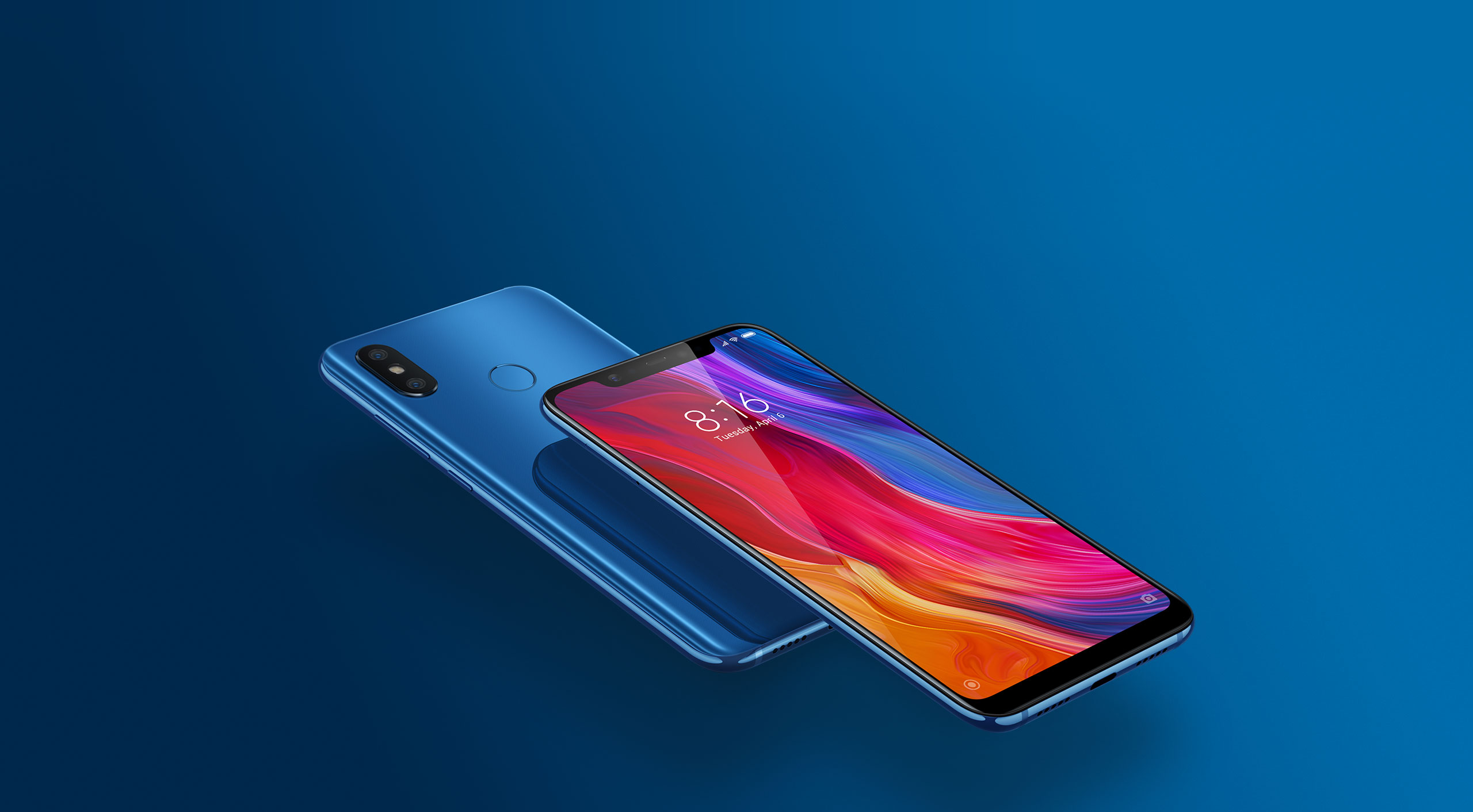
    The Xiaomi Mi A1 became almost an overnight success when it was released back in September of 2017. So much so, that Xiaomi followed it up with the Mi A2 and Mi A2 Lite last summer. And now, as revealed by XDA Developers, the Chinese brand is preparing a third-generation of the lineup.

    Codenamed ‘bamboo_sprout’ and ‘cosmos_sprout’ – all Android One smartphones include the ‘sprout’ suffix in their codenames – the new devices are expected to launch later this year commercially as the Xiaomi Mi A3 and Mi A3 Lite. From what can be gathered, both smartphones are currently being tested with ‘fod.’ In Xiaomi terms, this stands for an in-display fingerprint scanner, something that would probably be capture the attention of consumers.

    Nowadays, the general consensus is that traditional fingerprint scanners like the ones found on the Mi A2 series are much quicker and precise than in-screen implementations, especially optical in-display ones. But to regular consumers who don’t know too much about tech, the newer solutions are much more futuristic, hence why Xiaomi is probably looking to include them on the Mi A3 lineup.

    The specifications of these two devices remain a bit of a mystery at the moment. However, XDA Developers reports that both smartphones will come equipped with 32-megapixel selfie snappers.These will probably be contained inside small, waterdrop-like notches – almost every phone Xiaomi launches now includes this design feature.

    As for a release date, the Xiaomi Mi A3 and Mi A3 Lite will probably be announced in late May or early June prior to a launch soon after. Pricing hasn’t yet been revealed.