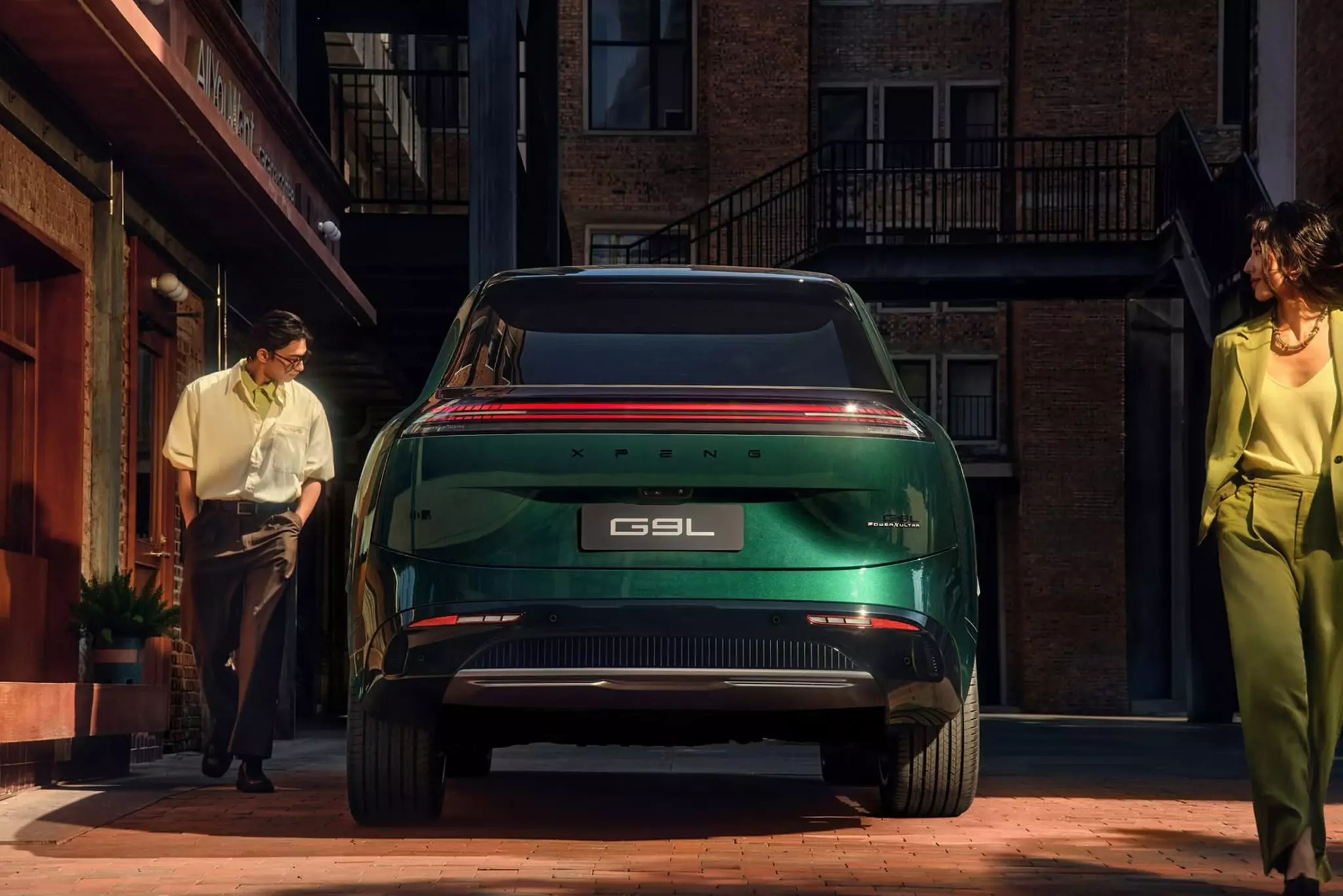
Tag: xpeng

  • Xpeng Beats OpenAI on Perception Benchmarks with 4-Billion-Parameter GroundingPI

    Xpeng Beats OpenAI on Perception Benchmarks with 4-Billion-Parameter GroundingPI

    Electric vehicle maker Xpeng has launched an embodied perception foundation model named GroundingPI, reporting an overall benchmark score that surpassed OpenAI’s frontier model GPT-6 Astra across 34 public perception tests.

    Built on a parameter scale of about 4 billion, the perception-first architecture ranked first in comprehensive evaluations and demonstrated higher data processing efficiency in robot simulation tasks. Xpeng developed the model in partnership with research teams from Peking University and the University of Hong Kong, aiming to significantly reduce the cost of manually collecting robot demonstration data.

    In a direct comparison across 11 capability categories, GroundingPI recorded a score of 73.68, edging out the 71.54 achieved by GPT-6 Astra, which OpenAI released in September this year. The code and model weights have been open-sourced.

    Benchmark Scores and Technical Design

    Existing general-purpose large models are primarily designed for digital scenarios and face an adaptation gap when applied directly to physical scenarios such as autonomous driving and robotics, Xpeng said. GroundingPI proposes that the primary prerequisite for embodied intelligence is accurately perceiving spatial positions.

    Therefore, the model does not use robot data with joint action labels during the training phase, relying entirely on pure perception data without action labels to cover 11 capability categories including general detection, text recognition, and robot spatial localization.

    Embodied intelligence is typically divided into a fast system (System 1) responsible for high-speed perception and action execution, and a slow system (System 2) responsible for task understanding and planning. GroundingPI aims to provide a perception-native foundation for the fast system, rather than replacing the general large model capabilities of the slow system, Xpeng said.

    Halving Data Collection in Warehouse Trials

    The research is currently at the scientific prototype stage, but its simulation results have provided validation for 2 core challenges in scaled deployment. The first is significantly reducing the cost of manually collecting robot demonstration data.

    A system using GroundingPI as its visual foundation can exceed the execution success rate of comparison models using 75% of the demonstration data while using only 50% of the data, because it directly takes on the task of locating objects in traditional Vision-Language-Action (VLA) models.

    The second is bringing stronger scenario generalization. In high-density simulation scenarios such as bulk material sorting and bin counting, the system maintains stable performance when dealing with changes in materials, object categories, and backgrounds, providing support for reuse across different workstations.

    Centralising Machine Intelligence

    GroundingPI represents an important advancement for the Chinese EV maker in building its physical AI system. Xpeng has continuously increased its bets on physical AI in recent years, hoping to drive its smart driving systems, humanoid robots, and robotaxi businesses.

    Earlier this year, Xpeng merged its autonomous driving center and smart cockpit center into a general intelligence center led by AI expert Liu Xianming , pooling resources to provide unified AI middle-platform foundation support for its automotive and robotics businesses.

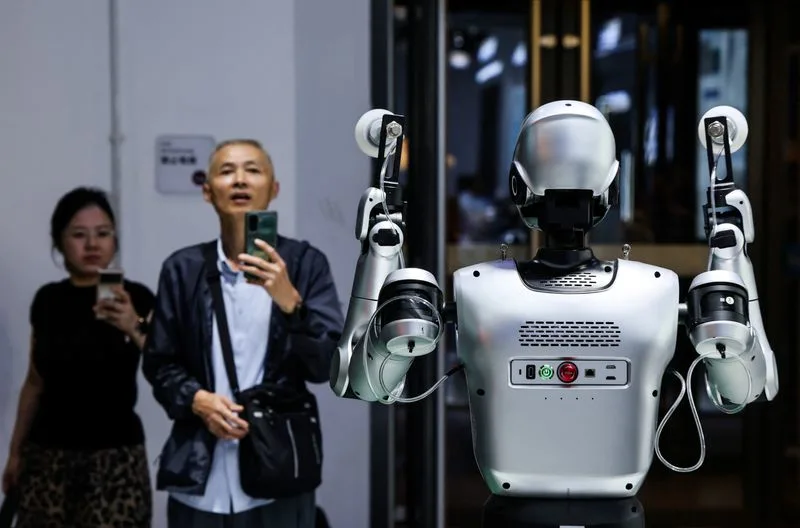
    An Xpeng Iron humanoid robot was previously put on display at the April 2026 Beijing Auto Show.
  • Xpeng Schedules Third-Quarter Results After Delivering Record 118,390 EVs

    Xpeng Schedules Third-Quarter Results After Delivering Record 118,390 EVs

    Xpeng will report its unaudited third-quarter financial results on November 16, following record quarterly deliveries of 118,390 electric vehicles across China.

    Volume rose 2.05 percent from the same period last year and climbed 14.61 percent sequentially from the second quarter, edging past the midpoint of the company’s August target.

    The carmaker plans to host its earnings call at 8:00 pm Beijing time on November 16, prior to regular trading hours in New York. Delivery volume for the quarter sat comfortably inside the projected band of 115,000 to 121,000 units. For the three months ended September 30, Xpeng had forecast revenue between 21.7 billion yuan ($3.23 billion) and 23.4 billion yuan, representing top-line expansion of 6.47 percent to 14.81 percent.

    Margin Pressure Behind Rising Volume

    Expanding assembly lines have yet to eliminate bottom-line losses. During the second quarter, Xpeng booked revenue of 19.74 billion yuan, up 8.0 percent year on year, while its net loss widened 179 percent to 1.34 billion yuan. Overall gross margin climbed to 20.7 percent during that period, but profitability specifically on car manufacturing retreated to 12.1 percent from 14.3 percent twelve months earlier.

    Management linked that automotive margin erosion to production line switchovers and model transitions. For automotive retailers and dealership networks across tier-two and tier-three Chinese cities, those shifting economics matter. Showroom floors face aggressive discounting pressure from domestic competitors, which forces brand operators to balance higher footfall against compressed dealership commissions.

    The Fourth-Quarter Delivery Pipeline

    Operational momentum picked up as the final quarter opened. The company delivered 50,237 vehicles in October, exceeding the 50,000 threshold in a single month for the first time. That tally marked a 19.57 percent increase compared to October 2025 and a 21.77 percent jump over September 2026.

    To sustain that momentum, the automaker began nationwide handovers of the Mona L05 on November 1, following its domestic debut on October 29. Fast handovers will test distribution logistics and regional charging hubs as order backlogs translate into active road registrations.

    Pricing Battles Across Chinese Showrooms

    The earlier part of the year had laid out a choppy trajectory for the business. First-quarter deliveries reached 62,682 units before rebounding to 103,295 in the second quarter. The second-quarter earnings release on August 24 demonstrated that while total vehicle receipts grew, product changeovers continued to drag on net earnings.

    Investors and regional dealership groups will focus on fourth-quarter delivery guidance when the numbers arrive on November 16. Chairman and Chief Executive Officer He Xiaopeng had previously set an operational target to surpass 60,000 monthly deliveries before the close of the year, relying on mass shipments of the Mona L05 alongside the G9L.

  • Xpeng Secures Approval for L4 Robotaxi Trials in Guangzhou

    Xpeng Secures Approval for L4 Robotaxi Trials in Guangzhou

    Xpeng secured municipal approval on Monday to launch Level 4 robotaxi trial operations across its home city of Guangzhou, marking a key step toward commercializing its autonomous transit services.

    Announced by robotaxi unit head Candice Yuan, the qualification for intelligent connected vehicle demonstration operations allows Xpeng Yoyo to begin phased public trials across the metropolis using invitation codes.

    The green light follows more than 2,000 internal test rides completed by August in Guangzhou, shifting the business from factory engineering toward live commercial validation.

    Invitation Codes and Phased Rollout

    Riders cannot book cars freely off the street yet. Candice Yuan, head of the robotaxi business, stated on Weibo that the unit will control early volume through invitation tokens while the operations team validates vehicle dispatch and road safety across urban districts.

    Trial runs shift the project out of closed engineering evaluation into real passenger transit. Yuan noted the daily service routines will test operating economics and fleet software before the company offers standardized mobility packages to third-party fleet managers.

    Hardware Stack Without Maps or Lidar

    The robotaxi runs on Xpeng’s flagship GX sport utility vehicle platform, adapted directly on the factory assembly line rather than retrofitted by third-party shops. The vehicle dispenses with lidar sensors and pre-mapped high-definition survey data, relying entirely on optical cameras coupled with machine learning vision networks.

    Compute hardware inside each vehicle runs on four proprietary Turing artificial intelligence processors delivering 3,000 TOPS of processing power. Path planning and dynamic driving actions operate through the company’s second-generation Vision-Language-Action artificial intelligence model, known as VLA 2.0.

    Fleet Platforms and Commercial Distribution

    Rather than building a proprietary retail ride-hailing network to take on incumbents directly, Xpeng intends to act as a hardware supplier and software partner. The business model targets third-party ride-hailing aggregators across domestic and international cities, charging for physical vehicle builds, recurring autonomy software fees, and fleet revenue-sharing cuts.

    That platform strategy shifts the capital burden of purchasing and housing thousands of battery-powered taxis onto existing fleet operators. Operating without expensive lidar rigs lowers unit manufacturing overhead, but putting camera-only Level 4 systems into dense southern Chinese street traffic transfers operational pressure directly onto onboard computing chips and remote management centers.

    Timeline Toward Driverless Services

    Guangzhou authorities awarded road testing rights for intelligent connected vehicles to the manufacturer in January, prompting the formal creation of a standalone robotaxi division two months later. Factory technicians completed the first production-line unit in May, followed by an initial internal run in July with chairman and chief executive He Xiaopeng booking and riding the car.

    Engineers have since built out a centralized cloud platform capable of taking remote control of stalled vehicles in traffic. Commercial deployment plans call for integration with major ride platforms in 2027, when the company aims to pull human safety supervisors out of the driver seat entirely.

  • Xpeng Launches L03 Electric Sedan in Europe Starting at €35,600

    Xpeng Launches L03 Electric Sedan in Europe Starting at €35,600

    Guangzhou-based electric vehicle maker Xpeng has priced its new L03 saloon from €35,600 in Europe, expanding its catalogue into a lower price tier ahead of customer deliveries scheduled for later this year.

    Measuring 4.65 metres long, the car anchors the lower end of the manufacturer’s European portfolio, sitting beneath the P7 saloon alongside the G6, G9, and X9 lines.

    Built on a 400-volt architecture, the base rear-wheel-drive L03 features a 58.2 kWh lithium iron phosphate battery accepting up to 193 kW of direct-current charging. A larger 71.1 kWh pack costs €3,000 extra, increasing peak charging power to 236 kW to take a 10 to 80 per cent charge in under 20 minutes. All-wheel drive adds another €3,000, while the range-topping Performance Ultra version costs €46,600.

    Hardware specs and vehicle packaging

    The car accelerates to 100 km/h in 4.5 seconds and reaches an electronically limited top speed of 193 km/h. Standard equipment includes an 11 kW alternating-current onboard charger and vehicle-to-load exterior power output rated at 6 kW.

    Cabin packaging balances passenger volume against a comparatively small 367-litre rear boot. To offset the shallow rear luggage floor, Xpeng fitted shopping hooks and a split-folding rear bench, alongside a front luggage compartment that offers 89 litres on rear-drive models and 44 litres on all-wheel-drive configurations.

    Standard cabin equipment includes front massaging seats with heating and ventilation, actively cooled wireless phone charging pads, and speakers in the driver’s seat that route navigation prompts and voice calls away from the main sound system. The audio package scales from nine speakers up to an 18-speaker setup on the Ultra trim.

    European sales channel pressure

    For dealer networks and independent automotive groups across Western Europe, the L03 changes showroom pricing dynamics against native battery-electric volume sellers. Delivering 236 kW fast charging and premium interior trimmings below €40,000 compresses trade margins for incumbent European distributors selling older compact platforms.

    The direct risk sits in regional brand perception and resale performance. While Guangzhou automotive groups have resolved early manufacturing fit-and-finish complaints, legacy European fleet operators still demand proven residual values before writing volume lease contracts on newer Chinese badges.

    Driver assistance and cabin software

    Xpeng built its domestic reputation in China around proprietary in-house software, and the European specification retains Level 2 driver assistance with capacitive hands-on steering wheel detection. The system executes automated lane changes via turn indicator inputs and operates up to 150 km/h on divided highways.

    Infotainment hardware runs native Google Maps alongside wireless Apple CarPlay and Android Auto integration. Head-up display projections incorporate navigation directions as well as a live rear-view camera feed during parking manoeuvres, supplementing automated parking functions.

    Portfolio expansion from Guangzhou

    Founded in Guangzhou, Xpeng initially pushed into overseas markets using larger, higher-margin exports including the P7 executive sedan, the G9 SUV, and the family-focused X9 multi-purpose vehicle. Opening order books on the L03 establishes the carmaker’s first dedicated mass-market nameplate in European showrooms.

    Factory deliveries across initial European delivery hubs begin before the end of the year, with regional market registrations testing customer uptake across Germany, France and Switzerland.

  • Xpeng Begins Mona L03 European Deliveries with First Handover in France

    Xpeng Begins Mona L03 European Deliveries with First Handover in France

    Xpeng handed over its first Mona L03 in Paris, opening European customer deliveries for an electric crossover priced at 35,600 euros. Chairman and chief executive He Xiaopeng presented the keys personally on October 13 before meeting with local dealer partners.

    The Paris handover tests whether European drivers will pay 35,600 euros, or roughly 40,030 dollars, for a Chinese electric vehicle whose base version sells in China for 123,800 yuan, or about 18,420 dollars. European specifications include battery-electric power and the integration of Google Maps Auto SDK for real-time traffic and route planning, whereas domestic buyers also have access to an extended-range electric powertrain option.

    Pricing and the dealer network

    Local dealership partners will manage customer distribution in France, though Xpeng did not reveal how many orders the Mona L03 has accumulated across the country. European dealer groups have embraced Chinese brands to offset slowing consumer demand for domestic European electric models, yet retailer margins remain tightly squeezed by distribution costs and regional tariffs.

    He discussed long-term supply schedules with French dealership executives following the handover. The unnamed first French customer selected the vehicle primarily for its proprietary driver-assistance software suite, according to company statements that omitted the specific trim level delivered.

    Export volumes and showroom strategy

    Chinese electric vehicle makers are accelerating overseas rollouts to escape brutal price discounting across their home market. BYD and Geely have flooded continental showrooms with compact sport-utility vehicles, while Xpeng is betting that driver-assist software and competitive sticker prices will win over mid-tier buyers. The Mona L03 represents Xpeng’s bid to transition from premium niche exporter to high-volume player across 64 planned overseas territories.

    Selling a mass-market badge in Western Europe carries real channel risks. Distributors face established Japanese and European competitors with dense servicing operations, while buyers remain cautious about the resale values of newer Chinese automotive imports. Establishing local fleet and retail networks across France requires steady component shipments and heavy showroom subsidies that will test the Guangzhou-based manufacturer’s operating balance sheet.

    Expanding the overseas footprint

    Munich served as the launchpad for the Mona L03 on July 16, when the crossover became Xpeng’s first product to debut simultaneously in Europe and China. On October 11, the company introduced the model to Australia and New Zealand, making it the third vehicle in those markets alongside the G6 crossover and X9 multi-purpose vehicle.

    Global demand helped push Xpeng’s monthly export deliveries past 10,000 units for the first time in September. That overseas surge reflects wider territory gains, including the Middle East where recent GX shipments passed 3,000 units, alongside the European introduction of the larger G9L sport-utility vehicle on October 12.

    The long-term sales targets

    Senior management has set a public target of selling 1 million vehicles annually by 2030, expecting European showrooms to supply half of that total volume. Delivering 500,000 cars a year in Europe requires vast scale across right-hand and left-hand drive territories, backed by dependable service logistics.

    Showroom momentum now shifts to the newer Mona L05, which opened customer pre-sales on October 15 to reinforce fourth-quarter deliveries. The carmaker’s next operational test will be the release of full European delivery figures for the final quarter, showing whether the Paris handover was an isolated photo opportunity or the start of sustained volume.

  • Xpeng to Unveil 5.12-Metre G9L Electric SUV at Paris Motor Show

    Xpeng to Unveil 5.12-Metre G9L Electric SUV at Paris Motor Show

    Xpeng will unveil its new G9L electric SUV at the Paris Motor Show this year ahead of a European rollout. The flagship model is already on sale in China and features peak DC charging power of 540 kW.

    The 5.12-metre vehicle is 23 centimetres longer and 10 centimetres taller than the standard G9. It carries a 110 kWh battery that charges from 10 to 80 per cent in under 12 minutes.

    Dimensions and executive cabin layout

    Engineers stretched the wheelbase by 12 centimetres and added 10 centimetres of height compared to the standard G9. That yields a total vehicle height of 1.78 metres and a width of roughly two metres. Passengers enter via electrically deployed sliding side steps and automated remote doors. Outside, a revised closed front fascia and updated lighting clusters alter styling while keeping aerodynamic drag low.

    Inside, the cabin prioritises rear passenger amenities over raw cargo space. Second-row seating features two individual captain chairs with ventilation, heating, and massage functions. A thermoelectric storage unit sits between the rear seats, capable of freezing, cooling, or heating food and drinks. Overhead, a retractable ceiling display handles entertainment alongside powered side window blinds.

    Storage and configuration choices

    Luggage capacity stands at 367 litres with all three rows occupied, including a lower underfloor well. Folding down the third row expands cargo volume to 1,330 litres in the six-seater and 935 litres in the seven-seat configuration. A front trunk adds 65 litres. At the back, an electrically deployed tow bar provides up to two tonnes of towing capacity.

    European dealerships will stock both six-seat and seven-seat configurations. A five-seat version is designated strictly for the UK market. The six-seater comes exclusively with an all-wheel-drive powertrain, while seven-seat buyers can choose between single-motor and dual-motor specifications.

    Charging capability and drivetrain output

    The entry rear-wheel-drive variant generates 270 kilowatts and hits 100 kilometres per hour in seven seconds flat. It achieves a certified WLTP driving range of 591 kilometres. The twin-motor all-wheel-drive performance trim increases output to 430 kilowatts. That cuts the sprint to 100 kilometres per hour to roughly four seconds, while delivering 553 kilometres of WLTP range.

    A 22-kilowatt onboard AC charger comes standard across all versions for overnight wallbox replenishment. On fast-charging DC networks supporting 800-volt architectures, the vehicle draws up to 540 kilowatts at peak input.

    Market positioning against German rivals

    Chinese electric vehicle makers are targeting the upper tier of the European market. Higher transaction prices there help absorb logistics costs and regional trade duties. The G9L aims at executive fleet operators and wealthy private buyers who typically buy the BMW iX, Audi Q8 e-tron, or Mercedes-Benz EQS SUV.

    Official European pricing is not yet confirmed. However, the standard G9 starts at €59,600, while the dual-motor Performance model sells for €72,600. Offering rear-seat cinema screens, 12-minute charging, and three-row seating below legacy German price bands tests whether European corporate buyers will switch badges.

    Xpeng launched the original G9 platform nearly four years ago before rolling out a mid-cycle refresh last year. Full regional pricing schedules and delivery windows will follow the Paris debut.

  • Xpeng Consolidates 4 Product Lines into 2 to Cut R&D Costs

    Xpeng Consolidates 4 Product Lines into 2 to Cut R&D Costs

    Xpeng has consolidated its four product lines into two to focus research and development resources and reduce costs, media outlet 36Kr reported on Monday.

    The Chinese electric vehicle maker merged its I and F product lines into the G line, leaving only the G and D lines in place.

    Following the restructuring, the Mona series remains under the D line, while large SUVs including the GX and G9L and P-series sedans fall under the G line. The former head of the F line now oversees product definition for the G line, while the former head of the I line shifted to overseeing overseas affairs.

    Reining in Development Overlap

    Engineering teams previously built vehicles across separate tracks that competed for the same laboratory testing slots, supplier contracts, and software integration cycles. Merging the lines eliminates duplicate vehicle architectures and limits internal pricing clashes between sedans and crossovers that share identical wheelbases.

    For automotive component suppliers across the Pearl River Delta, fewer product lines mean consolidated purchase orders and standardized component tooling. Investors have pushed for tighter capital controls as Chinese electric vehicle makers face aggressive domestic price cutting and slowing volume gains across the mid-market bracket.

    R&D Outpaces Delivery Growth

    Development costs rose 32.1 per cent year on year to 2.91 billion yuan ($431.8 million) in the second quarter, driven by autonomous driving software, foundation AI models, and platform engineering. Vehicle deliveries in the same quarter stood at 103,295 units, up 0.1 per cent from the previous year.

    Second-quarter net loss widened to 1.34 billion yuan from 480 million yuan a year earlier, though it improved from the 1.78 billion yuan loss recorded in the first quarter. Vehicle gross margin reached 12.1 per cent, down from 14.3 per cent a year earlier due to production changeovers, while overall company gross margin stood at 20.7 per cent with support from technical service revenue.

    Model Cadence Across Two Tracks

    The restructuring aligns vehicle programs ahead of several fourth-quarter rollouts designed to lift monthly volumes. Xpeng introduced its G9L five-seat SUV on September 17 to complement its six-seat GX, targeting family buyers who previously looked at rival offerings from Li Auto and Nio.

    Volume pressure now rests heavily on the Mona product unit. Deliveries of the Mona M03 sedan began in July, while the Mona L05 crossover enters the Chinese market before the end of the year.

    Factory Commitments and Fourth-Quarter Targets

    Management is targeting monthly deliveries above 60,000 units in the fourth quarter, a 53 per cent jump from the 39,107 vehicles handed over to customers in August. Reaching that pace requires the Guangzhou and Zhaoqing assembly plants to operate near full capacity through December.

    Parallel investments in non-automotive hardware remain active. Xpeng commissioned its Iron humanoid robot manufacturing line earlier in September, targeting commercial deployment across its retail showrooms by the end of 2026 before starting customer deliveries in 2027.

  • Sunwoda Unveils 15C Flash Battery to Challenge BYD in Fast Charging

    Sunwoda Unveils 15C Flash Battery to Challenge BYD in Fast Charging

    Sunwoda Electric Vehicle Battery unveiled a 15C flash charging system in Zaozhuang on September 17 that charges an electric vehicle from 10 to 97 per cent in nine minutes.

    The system matches the benchmark room-temperature charging speed established by market leader BYD. It also comes with a company commitment to deploy 10,000 megawatt charging stations by the end of 2027.

    Charging Performance and Cold Weather Specs

    At room temperature, the battery charges from 10 to 70 per cent in five minutes. That adds 100 kilometres of driving range in 60 seconds. Total driving range exceeds 700 kilometres on a full charge.

    Cold weather tests show the pack charges from 10 to 97 per cent in 15 minutes at minus 20 degrees Celsius. Sunwoda attached a warranty covering 10 years or 300,000 kilometres to non-commercial vehicles with unlimited ultrafast charging cycles, targeting buyer anxiety over high-current cell degradation.

    Hardware Architecture and Grid Storage

    Hardware diagnostics rely on proprietary cell sensors, an energy domain controller and a cloud monitoring engine. Sunwoda stated the platform identifies more than 20 separate failure modes between two and 10 days before a breakdown. Its detection rate reaches 99.77 per cent.

    On the grid side, the company introduced an integrated platform that bundles solar generation, stationary battery storage, liquid-cooled charging posts and megawatt-scale dispensers. The multi-brand terminal design allows third-party automakers to access the high-voltage stalls under commercial sharing agreements.

    The Race for Megawatt Infrastructure

    China’s EV power race has shifted from laboratory power ratings to physical network footprint. BYD crossed its 10,000th flash charging station milestone on August 28. It maintains a target of 20,000 operational stations by the end of 2026.

    Other domestic manufacturers are pushing similar power thresholds. Dongfeng introduced a prototype 1,500-kilowatt charger on July 29, matching BYD’s peak terminal rate. FAW Hongqi posted July laboratory results showing a 10-to-70 per cent charge in three minutes and 41 seconds with battery partner CNET. In Hong Kong, Xpeng energised its first one-megawatt X-Energy stall with 400 kilowatt-hours of local storage on September 15.

    Commercial Rollout and Factory Timelines

    Sunwoda EVB faces a crowded manufacturing landscape. CATL and BYD command more than 60 per cent of China’s domestic vehicle battery volume. Total battery installations across the country grew 26.3 per cent year-on-year in August, but second-tier cell makers must prove station economics to justify high capital spending on utility-scale grid connections.

    Initial announcements omitted capital expenditure figures, manufacturing site allocations, commercial vehicle partnerships and the first production passenger car chosen for the 15C pack. Filings with the Ministry of Industry and Information Technology will soon show which automaker integrates the hardware first ahead of the 2027 station rollout target.

  • Dongfeng Motor to Begin Trial Humanoid Robot Production at Year-End

    Dongfeng Motor to Begin Trial Humanoid Robot Production at Year-End

    Dongfeng Motor plans to begin small-batch trial production of its humanoid robot at the end of this year, aiming to bring its working capabilities on par with human workers by the end of next year.

    The humanoid robot will enter manufacturing factories in October to handle sorting and quality inspection tasks, according to Zhang Zhenlin, chief engineer of intelligent technology at Dongfeng.

    Factory Sorting and Showroom Patrols

    Development covers two distinct platforms: a bipedal humanoid named Xiaodong and a quadruped model called Yuanzai. Both debuted at the 2026 World Robot Conference in August this year.

    Xiaodong handles material sorting inside automotive manufacturing plants. Over time, the system will move from single repetitive tasks to autonomous factory floor operations.

    Commercial rollout begins earlier for Yuanzai. The quadruped will handle customer guidance in auto dealerships, campus patrols, and facility monitoring through onboard multimodal perception and autonomous navigation.

    Cross-Sector Technology Sharing

    Chinese automakers are applying EV software architectures and artificial intelligence models directly to robotics hardware. Dongfeng chief engineer of intelligent technology Zhang Zhenlin said developing embodied intelligence lets teams reuse automotive large-model technology and speed up commercialization.

    Automakers’ development of embodied intelligence products allows technology to be reused across multiple areas such as automotive large models, thereby speeding up commercialization and mass production.

    Overlapping supply chains give carmakers immediate access to batteries, vision sensors, and assembly infrastructure. Factory operators expect the humanoid units to reduce assembly costs while running round-the-clock inspections on vehicle lines.

    The Competitive Field in China

    Dongfeng is not alone in the push. Several domestic EV makers have built dedicated robotics divisions to automate shop floors and sell commercial hardware.

    Xpeng opened a humanoid robot production line on September 8, 2026. It plans mass production of its Iron robot by late 2026, with customer deliveries starting in 2027. Chery-backed Aimoga Robotics has shipped more than 3,000 units globally and is preparing an IPO. Li Auto, Seres, and Leapmotor have also put capital into embodied AI development this year.

    Capital Allocation and Global Goals

    Robot deployment fits into a wider overseas expansion budget. Dongfeng plans to invest 50 billion yuan ($7.41 billion) internationally to launch more than 50 vehicle models.

    Under a roadmap presented by deputy general manager Zhou Feng, the company will build 10 assembly plants and five research hubs outside China. Dongfeng targets 1.5 million overseas vehicle sales annually by 2030, using Xiaodong’s 15-month trial run as the baseline test for broader automation.

  • Li Auto to Sell EV Tech Externally After 1.7 Billion Yuan Loss

    Li Auto to Sell EV Tech Externally After 1.7 Billion Yuan Loss

    Li Auto is preparing to sell its proprietary Mach chips, silicon carbide modules and range-extender powertrains to third-party clients after posting a 1.7 billion yuan net loss in the second quarter.

    Quarterly research and development spending at the carmaker ran at around 3 billion yuan for six consecutive quarters, pushing management to monetize proprietary vehicle architecture beyond its own fleet.

    Spinoff of the Mach chip division

    Senior leadership approved a corporate spinoff of the semiconductor design unit to facilitate third-party deals. Executives have already started pitching the Mach M100 driver-assistance chip to external businesses, including embodied artificial intelligence companies. The chip operates on a 5-nanometer automotive-grade process and delivers 1,280 TOPS of computing power.

    Corporate records show Li Auto registered a wholly owned operating entity, Xinchuang Zhihe (Shanghai) Technology Co Ltd, on July 13 to house integrated circuit design and commercial sales. Customer adoption will largely depend on how easily external engineering teams can port proprietary software algorithms onto the hardware architecture.

    Silicon carbide unit prepares for listing

    Power electronics subsidiary Sike Semiconductor restructured its internal reporting ahead of the chip division. Formed as a joint venture with Hunan Sanan Semiconductor in 2022, Sike changed its management structure in February so executives report to an independent board rather than Li Auto’s internal manufacturing division.

    Li Auto retains a 70 percent equity stake in Sike, which now operates with independent profit-and-loss accountability. The unit is soliciting external capital and has started preparatory work for an initial public offering, an equity shift intended to assure rival carmakers that supply chains remain separate from Li Auto’s vehicle assembly business.

    Automotive rivals open tech playbooks

    Selling proprietary vehicle hardware to outside buyers represents a broader structural shift among Chinese automotive manufacturers seeking to offset margin compression. Nio carved out its semiconductor unit into GeniTech, pitching its M97 processor to competitors such as Geely. Xpeng expanded commercial offerings covering electronic architecture, intelligent cockpits and autonomous driving code to international clients beyond existing partner Volkswagen.

    For automotive component suppliers and tier-one vendors across Asia, direct component commercialization by vehicle makers increases competitive pressure in power electronics and high-performance computing. Li Auto holds a structural advantage by testing components at volume in production cars, but it faces client hesitation over sharing software telemetry with an active market rival.

    Financial pressure and internal battery shift

    The monetization drive follows a sharp earnings reversal. Li Auto swung to a 1.7 billion yuan loss in the second quarter from a 1.1 billion yuan profit a year earlier, even as cash reserves stood at 87.5 billion yuan at the end of June. Third-party component sales allow the company to spread manufacturing overhead across broader production volumes without raising retail vehicle incentives.

    While range extenders and computing chips are now open to third parties, the company is keeping its custom traction battery program entirely internal. Li Auto plans a lineup-wide transition to proprietary battery packs, starting with production shifts on the updated Li Mega and upcoming Li i9, alongside the fourth-quarter rollout of the refreshed i6 sport utility vehicle.

  • Xpeng Expands Foreign Tech Licensing Beyond Volkswagen Deal

    Xpeng Expands Foreign Tech Licensing Beyond Volkswagen Deal

    Xpeng is pitching its vehicle software, computing chips and electronic architecture to foreign automakers. It wants to expand high-margin technology licensing beyond its anchor partnership with Volkswagen.

    Services revenue at the Chinese electric vehicle maker jumped 93.9 per cent to 2.7 billion yuan ($400 million) in the second quarter of 2026. Gross margins reached 75.1 per cent.

    A strategic commercialisation team formed six months ago in Guangzhou to field inquiries from overseas manufacturers, foreign software vendors and tier-one automotive suppliers. The technology catalogue includes electrical and electronic architecture, digital cockpit operating systems, in-house Turing AI semiconductors and Vision-Language-Action (VLA) driver-assistance software. Licensing packages also cover operational systems for robotaxis and physical artificial intelligence deployments.

    The Software Stack Open to Rivals

    Engineers at the firm spent years building vertical integration to counter domestic price cuts. Selling that technology stack outward shifts the company from pure hardware manufacturing into enterprise software. Automakers that sign deals can purchase standalone sub-systems or integrate full platform architectures directly into their own global vehicle lines.

    That push extends past passenger cars. The company plans to license operational systems for robotaxi fleets alongside Iron, its general-purpose humanoid robot platform aimed at industrial and retail automation buyers.

    Margin Divergence Drives Strategic Pivot

    Wholesale vehicle assembly in mainland China faces fierce pricing competition that continues to compress factory returns. In the second quarter, Xpeng’s automotive gross margin fell to 12.1 per cent from 14.3 per cent a year earlier. Total vehicle revenue grew just 1.0 per cent. The company recorded a quarterly net loss of 1.34 billion yuan.

    Licensing intellectual property requires almost zero factory overhead once developed. That revenue cushions sustained research and development budgets. For legacy overseas automakers struggling to build software in-house, buying Chinese electronic architecture cuts years off their electric development cycles.

    Precedent Set by Volkswagen Collaboration

    This commercial model stems from Volkswagen’s July 2023 investment, when the German group paid roughly $700 million for a 4.99 per cent equity stake in Xpeng. That alliance yielded the ID.UNYX 08 electric crossover. The vehicle entered mass assembly in March 2026, exactly 24 months after technical teams began joint integration work.

    Management confirmed in August earnings disclosures that research fees billed to Volkswagen accounted for the bulk of the recent doubling in services income. Volkswagen also committed to becoming the launch customer for the upgraded VLA 2.0 smart driving system across future localized releases.

    Next Steps on Hardware and Overseas Deployments

    Xpeng launched its G9L family sport utility vehicle in China at 231,800 yuan ($34,300) with both pure electric and extended-range powertrains. The vehicle makes its international debut at the Paris Motor Show ahead of localized production in Europe.

    Factory tooling for the Iron humanoid robot completes trial runs ahead of volume production in late December. Customer deliveries begin in early 2027.

  • Trump Says Chinese Automakers Can Build in US Despite 100% Tariffs

    Trump Says Chinese Automakers Can Build in US Despite 100% Tariffs

    Donald Trump has stated that his administration would not block Chinese automakers from building electric vehicles in the United States, even as imports face 100 per cent tariffs.

    Speaking in September 2026, Trump indicated that Chinese manufacturers could establish assembly plants in states such as Tennessee or Alabama, despite warnings from the domestic automotive sector that local Chinese production could threaten traditional US carmakers.

    While fully built electric cars from China remain virtually barred under the existing 100 per cent tariff wall, industry analysts note that manufacturers cannot easily replicate China’s integrated parts ecosystem and low-cost supply chain in the American South.

    Supply Chain Realities in the US Market

    RetailNews Asia notes that Chinese electric vehicle brands are directing capital toward markets with clearer regulatory frameworks. Automakers such as BYD and XPENG are opening assembly hubs and distribution networks across Southeast Asia, Europe, Australia, Latin America and Africa. Those regions offer established trade corridors, predictable import policies and faster adoption rates than the North American retail market.

    For Asian parts suppliers and battery vendors, building factories in North America brings heightened political exposure. Shifts in US federal policy make long-term factory payback calculations unreliable. Expanding in ASEAN, South America and Central Europe allows Chinese automotive groups to utilize their domestic supply networks while building local retail presence near high-demand consumer clusters.

    Regional Diversification Beyond North America

    American automotive retail conditions remain difficult for foreign pure-play electric vehicle brands. Charging network rollouts in the US lag behind China and Western Europe, while consumer demand for battery-electric passenger cars has softened relative to hybrid options. Chinese original equipment manufacturers achieve better factory utilization rates by serving emerging markets across Asia and South America, where entry-level city cars face minimal competition from legacy American brands.

    Legacy US car companies have used the 100 per cent import tariff to protect sales of high-margin petrol sport utility vehicles and pickup trucks. If Chinese manufacturers establish US assembly operations, domestic producers will face direct price pressure on their home turf. That outcome would force domestic brands to accelerate their own electric platform cost reductions or surrender market share in entry-level passenger car segments.

    Tariff Walls and Industrial Strategy

    Washington escalated tariffs on Chinese electric cars to 100 per cent to shelter domestic producers from lower-cost imports. That defensive trade posture accelerated the construction of Chinese automotive plants in Thailand, Brazil and Hungary rather than drawing assembly capital into North America.

    Chinese automotive executives are tracking whether the US federal government establishes formal foreign investment security rules for automotive production sites before submitting any state-level factory applications.

  • China Recalls Seven Million Electric Vehicles over Door Handle Safety Flaws

    China Recalls Seven Million Electric Vehicles over Door Handle Safety Flaws

    Chinese market regulators ordered the recall of more than seven million vehicles on Friday across automakers including Tesla, Xiaomi, Xpeng and Geely over emergency door release hazards. The joint filing stands as the single largest automotive recall round in the country’s history.

    State Administration for Market Regulation officials identified interior emergency mechanical door releases designed in colors matching adjacent trim, leaving occupants unable to locate or operate the latches quickly during severe collisions that disable vehicle low-voltage electronics.

    Tesla Accounts for Majority of Notices

    Tesla represents the largest share of the campaign, filing two separate notices covering 5,716,552 vehicles. The company is recalling 2,975,910 cars for the door release defect starting September 25, 2026, comprising 973,156 locally built Model 3 sedans, 1,956,713 Shanghai-made Model Y crossovers, and 46,041 imported Model 3, Model S and Model X units. Tesla will apply warning labels at no cost and push over-the-air software updates to lower windows automatically after an impact.

    A parallel Tesla recall covers 2,740,642 domestic Model 3 and Model Y units to fix driver attention monitoring systems. The regulator determined existing steering torque sensors failed to catch drivers looking away from the road, prompting Tesla to activate in-cabin camera monitoring immediately through software.

    Domestic manufacturers submitted simultaneous plans for their electric lineups. Xiaomi is recalling 390,435 units of its SU7 sedan to add labels and update central console unlocking code, while Leapmotor called back 371,200 vehicles across its C11 and C01 ranges. Xpeng recalled 264,842 units, Geely’s Zeekr brand listed 92,658 models, Chery recalled 68,488 vehicles, Dongfeng took in 53,452, and BAIC BluePark Magna recalled 46,850 Arcfox Koala cars.

    New Door Hardware Standards Loom

    The regulatory action follows repeated consumer complaints and crash investigations where electronic flush handles failed to deploy after battery failure. China’s auto sector previously prioritized flush exterior handles and hidden interior buttons to improve aerodynamics and interior styling, but safety authorities have pushed back firmly against purely electronic latches.

    Automakers in China must now prepare for mandatory national standard GB 48001-2026, issued in February. The rule requires physical, mechanical releases on all passenger doors for newly certified models starting January 1, 2027, with previously approved models required to comply by January 2029.