Tag: Yakult

  • Japan Soy Milk Output Hits Record 445,000 Kilolitres in 2025

    Japan Soy Milk Output Hits Record 445,000 Kilolitres in 2025

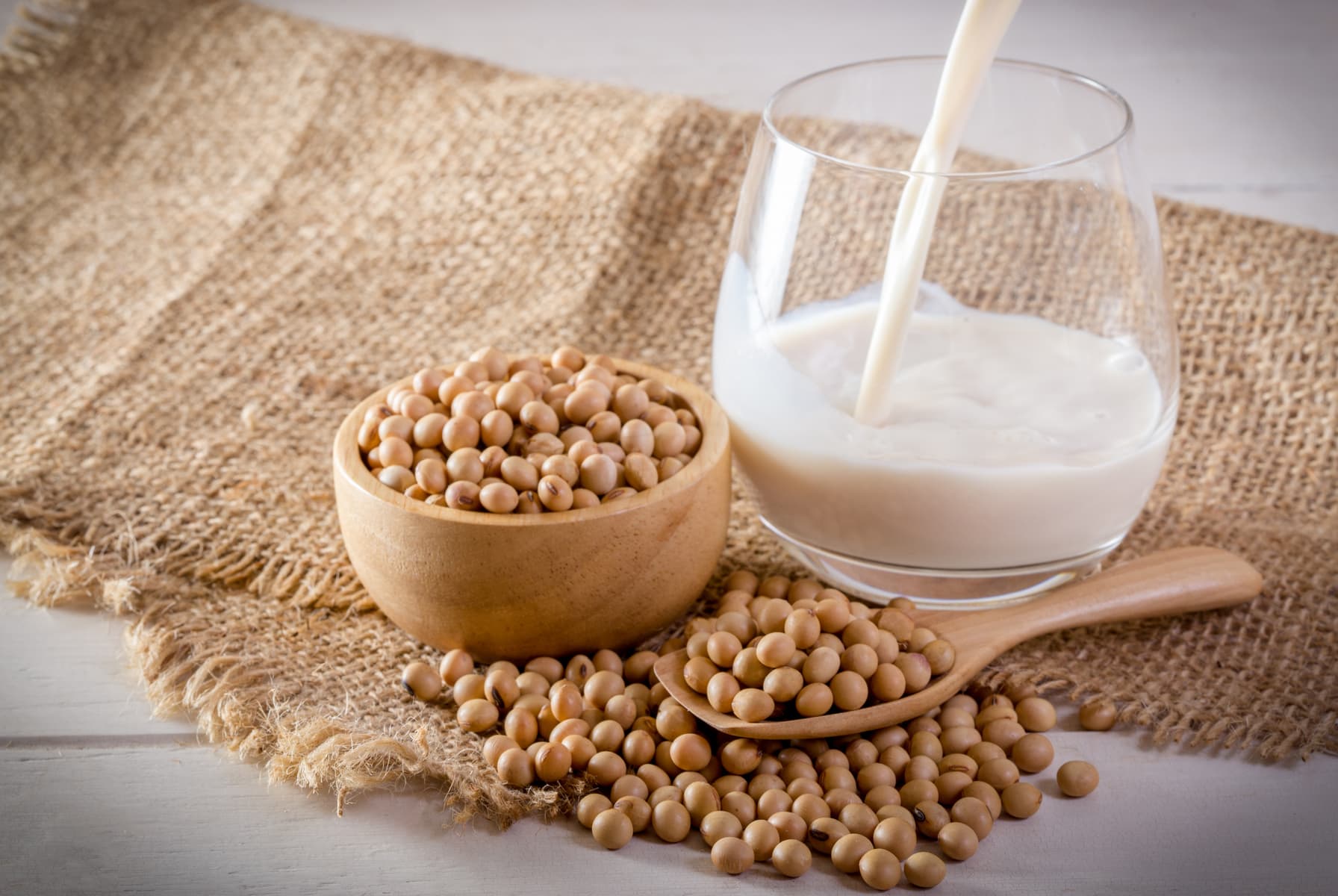
    Japanese soy milk production reached an all-time high of nearly 445,000 kilolitres in 2025, maintaining an estimated 80 per cent share of the country’s plant-based milk market, according to The Japan Soymilk Association.

    New entrants and legacy beverage manufacturers including Danone are now introducing oat, pea, and precision-fermented formulations to compete with soy on functional nutrition and retail shelves.

    Retail pricing remains the primary barrier for competing formats. A one-litre carton of soy milk retails between 260 yen and 290 yen in 2026, matching the shelf price of conventional cow milk. By comparison, one-litre almond milk cartons average 384 yen, while oat milk sells at 625 yen. Consumer purchasing patterns in Japan treat soy as an everyday dietary staple rather than a direct Western-style dairy replacement, keeping price sensitivity high across mass retail channels.

    Convenience Store Shelf Space

    Distribution patterns across Japan’s 56,000 convenience stores illustrate the commercial hurdle facing oat and nut milks. The convenience channel drives immediate-consumption beverage sales in urban centres where public transit dominates daily commuting. Out of nearly 18,000 food and beverage products introduced through Japanese convenience stores over the past 20 months, oat milk accounted for three stock keeping units.

    Supermarket retail data indicates that consumer demand is concentrating on plain formulations. Domestic retail sales of unsweetened soy milk expanded 14.5 per cent last year. Flavoured variants, including malt coffee, black tea, kiwi fruit, and seasonal sakura editions, recorded volume growth of 0.7 per cent. Shoppers are selecting plant milk for daily nutritional intake rather than occasional novelty flavours.

    Global Brands Shift Formulas

    Danone adapted its international plant-based playbook specifically for the Japanese grocery aisle. The French dairy multinational initially introduced oat and soy beverages under its Alpro brand in 2020 before narrowing its core domestic marketing focus toward oat-based lines. The group reported record production volumes and retail sales for its oat and almond products in Japan during the first half of 2026.

    To capture multi-ingredient demand, Danone added a blended line called 3 Luxury Mixes to Japanese store shelves, combining oat, almond, and soy bases in a single carton. The product offers dietary fibre while matching the taste profiles familiar to local shoppers.

    The oat milk category remains relatively less crowded than other plant-based alternatives, providing a clear opportunity for differentiation and allowing brands to establish a unique position in the market.

    Domestic dairy processors are building competing ingredient supply chains across Asia. Megmilk Snow Brand expanded its Plant Label line by rolling out a pea-based milk in March. The company selected yellow pea protein for its higher protein density and lower cultivation footprint compared to almonds and soybeans. Megmilk Snow Brand is now developing a dedicated pea-processing facility in Malaysia to anchor raw material supplies for plant milk and non-dairy yogurt production.

    Fermentation and Yeast Alternatives

    Beverage manufacturers are also bypassing agricultural crop extraction entirely. Asahi Group Holdings introduced Like Milk across the Greater Tokyo metropolitan area during the first half of 2026. The drink uses a precision-fermentation base derived from yeast, which is dried into powder, reconstituted, and blended to eliminate all 28 regulated food allergens recognized by Japanese food safety authorities.

    Asahi formulated the yeast beverage to match the calcium and protein metrics of whole cow milk while cutting fat content by 40 per cent with zero cholesterol. The product targets urban consumers seeking functional health drinks fortified with yeast-derived zinc and soluble dietary fibre.

    State industrial policy is accelerating private investment in non-crop dairy processing. The Japanese government approved its national Growth Strategy blueprint in July, committing 370 trillion yen across 17 industrial sectors. The programme allocates joint public and private capital to food technology programmes, focusing directly on precision fermentation, biomass synthesis, and alternative protein production.

    Export Channels Open in the West

    Domestic soy producers are simultaneously attempting to open higher-margin export channels overseas to offset domestic pricing pressure. Industry participants established the Japanese Soy Milk Exchange in June to market domestic formulations directly to retail buyers in the United States, positioning Japanese soy milk as a distinct premium category based on texture and flavour profiling.

    Probiotic beverage maker Yakult Honsha chose European grocery channels to commercialize its newest fermented soy line before launching domestically. The company introduced Yakult Vitals, a beverage combining bacteria-fermented soy milk with fruit juice, in the Netherlands in February. Yakult plans to roll out the fermented soy product across additional European markets before bringing the formulation back to Japanese retailers.

    Retail buyers in Tokyo will monitor the commercial performance of Asahi’s fermented milk line as regional distribution expands beyond Greater Tokyo, alongside Megmilk Snow Brand’s supply timeline for its Malaysian processing plant.
  • Yakult Singapore Swaps Unpopular Orange Flavor for Peach, Sparks Consumer Debate

    Yakult Singapore Swaps Unpopular Orange Flavor for Peach, Sparks Consumer Debate

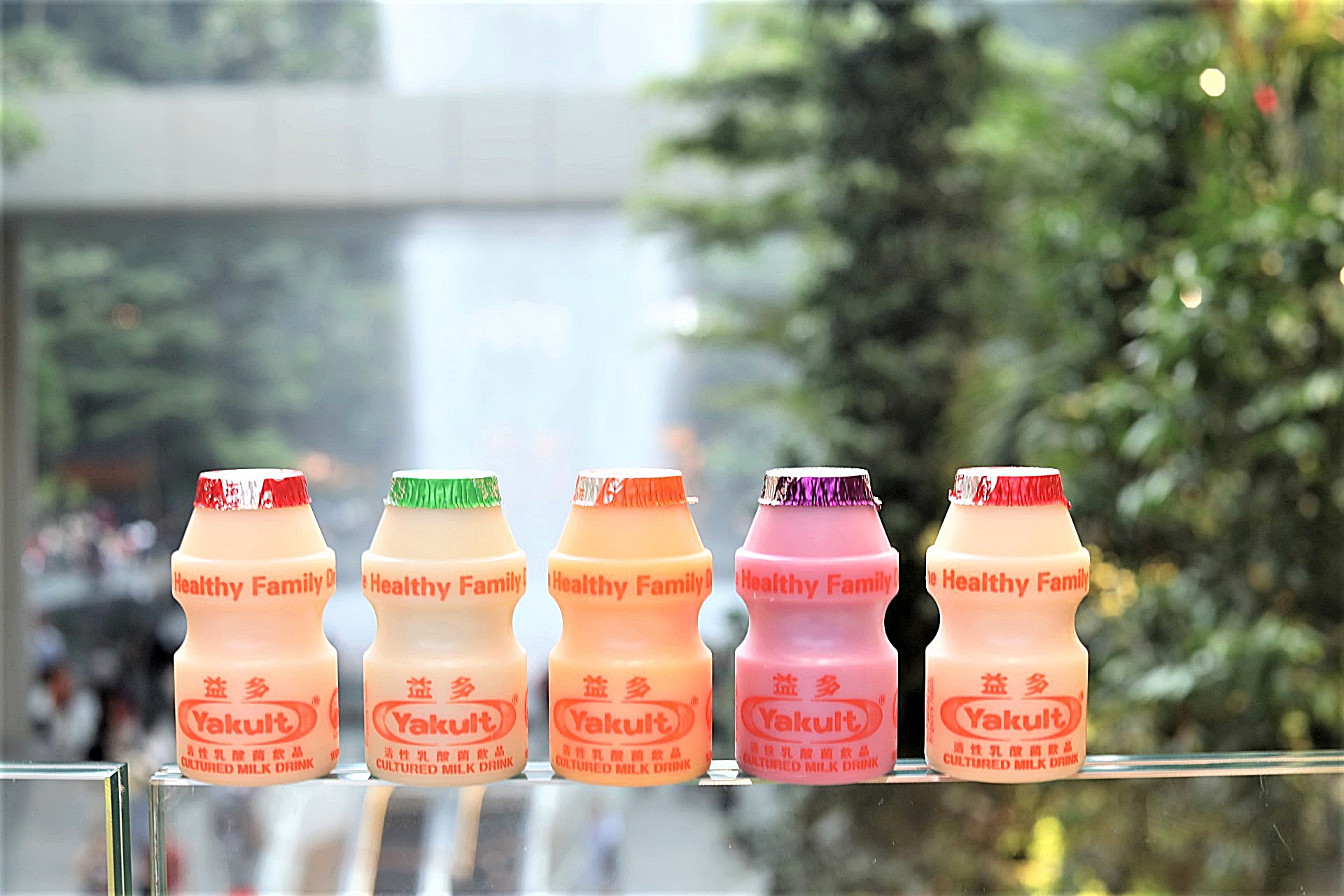
    The recent announcement regarding the discontinuation of Yakult Orange, a popular probiotic drink flavor, has elicited mixed reactions from consumers. For some, it comes as a surprise that this flavor was not as beloved as they had previously believed.

    Reactions to the Discontinuation

    Christine Heng, a 43-year-old music teacher, shared that she had always considered orange to be the preferred flavor until she discovered it was actually grape. She confessed that her regular monthly purchases of Yakult Orange for her family would drastically reduce due to the unavailability of her favorite variant.

    However, not everyone is mourning the loss of the orange flavor. A considerable number of comments were in favor of the change, with some people voicing their disapproval of the synthetic taste of the orange flavor. Comments such as, “I didn’t like how artificial the orange flavor was. I’m glad they replaced it,” and “Can replace any flavors, just don’t touch Apple and Grape,” reflect the varied consumer opinions on the matter.

    Farewell to Yakult Orange

    Despite the discontinuation, fans of Yakult Orange still have the opportunity to stock up on their favorite flavor until production officially comes to a halt at the end of this month. The drink will remain available as long as supplies last.

    Yakult, the probiotic cultured milk drink, was founded in Japan in 1935. It contains a strain of beneficial bacteria known as Lacticaseibacillus paracasei Shirota, discovered by its founder Minoru Shirota. Today, Yakult drinks are marketed worldwide, including regions such as Europe, Brazil, and Vietnam. In addition to the standard Yakult drink, there are other product ranges, like Yakult Plus. Furthermore, Yakult Peach was introduced in China in 2024.

    Questions & Answers

    What is the reaction of consumers to the discontinuation of Yakult Orange?
    Reactions are mixed: some consumers are disappointed, while others are glad about the change, criticizing the artificial taste of the orange flavor.

    Until when can consumers purchase Yakult Orange?
    Consumers can purchase Yakult Orange until the end of the month when production ends, or until supplies last.

    Where else are Yakult drinks available?
    Yakult drinks are available in several international markets, including Europe, Brazil, and Vietnam. They offer the standard Yakult drink and other product ranges like Yakult Plus.

  • Yakult opens first coffee store in Japan

    Yakult opens first coffee store in Japan

    Japanese probiotic beverage Yakult has opened its first coffee location in Japan’s Utsunomiya, which doubles as a service centre.

    The Yakult Gohonmaru Cafe & Gallery, which opened last month, has two levels and includes a beauty salon as well as a gallery.

    On the first floor, visitors can try Yakult ice cream, chiffon cakes, and tiramisu with Yakult cream. The upper floor features a beauty salon, which provides facials using cosmetics created from lactic acid bacteria.

    The location also contains spaces for Yakult products and a care centre for Yakult staff.

    The company also intends to open a second place.

  • Yakult opens a dessert store in Japan

    Yakult opens a dessert store in Japan

    Japanese sweetened probiotic milk brand Yakult is to open a pop-up dessert store in Tokyo next month.

    Located at the Shibuya 109 building, the Yakult store will offer a range of ice creams, soft serves, and shakes, which are mixed with probiotic milk. Seven kinds of treats, including Yakult Parfait and Ice de Yakult, are developed in partnership with Imada Kitchen.

    The store exterior will present an artwork drawn by the illustrator ‘The Peach of Girl’, which features a “chill and refreshing” vibe and “a feeling of nostalgia”. The Yakult dessert store will open from June 1 until August 1.

    First introduced in 1935, Yakult has been known as a healthy beverage that helps maintain good gut flora, as each bottle is said to contain more than 10 billion ‘Lactobacillus paracasei Shirota’ bacteria.

  • Yakult Indonesia still relies on imported milk for dairy drinks

    Yakult Indonesia still relies on imported milk for dairy drinks

    Yakult Indonesia Persada, one of the major producers of fermented milk products, still relies on imported raw materials for its production in Indonesia.

    Yakult Indonesia vice president and director Hiroyuki Kawada said the company had to import ingredients because local milk had yet to meet the standards for the company’s fermented milk |production.

    “We mostly import the skimmed milk from Australia, and the rest is from Belgium,” he said.

    Yakult Indonesia Persada, a subsidiary of Japan-based Yakult Honsha, was established in1990. The company operates a factory in Sukabumi, West Java, and another in Mojokerto, East Java.

    The factories can produce 6.6 million 65-millilitre bottles of cultured dairy drink a day. The company sells its fermented milk through supermarkets and through “Yakult Lady”, a sales force of women who sell the product door-to-door in many parts of the country.

    “There are 7,600 Yakult Ladies now, and they can reach 30 houses per day each,” said Antonius Nababan, the companies marketing communication and commercial (MCC) director. Zulkarnain, the MCC’s senior assistant manager, said sales averaged 5 million bottles a day.

    Indonesia was the second-biggest market for Yakult products after Japan, which has 10.18 million consumers.