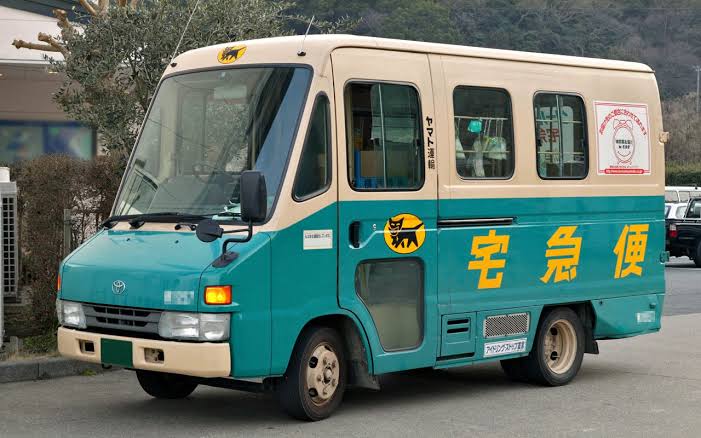
Tag: Yamato Holdings

  • Yamato Holdings to Raise Delivery Fees for Major Corporate Clients

    Yamato Holdings to Raise Delivery Fees for Major Corporate Clients

    Japanese parcel carrier Yamato Holdings will negotiate price increases with major corporate clients across Japan as it pivots from chasing delivery volume to shoring up operating profits.

    President Toshiyuki Sakurai told Nikkei that the strategy shift aims to lift slim margins in the group’s core express delivery division by rightsizing operations.

    The move lands as Yamato Holdings targets leaner operations, deploying artificial intelligence tools to optimize parcel routing while trimming network capacity across its domestic terminal base.

    Pruning Delivery Capacity

    Yamato plans to trim its domestic transportation network, deploying artificial intelligence tools to optimize parcel routing across sorting terminals. The carrier handles the bulk of consumer e-commerce drop-offs in Japan, where persistent driver shortages and rising vehicle fuel expenses have squeezed operating returns.

    Passing higher line-haul expenses onto large corporate accounts marks a deliberate break from volume-first carrier contracting. Corporate accounts that secured steep volume discounts during earlier e-commerce surges must now absorb steeper per-box handling fees or reconfigure their dispatch schedules.

    Squeeze on Online Merchants

    For online retailers and marketplace sellers operating across Tokyo and regional hubs, carrier fee increases hit order economics directly. Merchants who built free-shipping tiers around discounted express carrier contracts will either raise minimum checkout thresholds or swallow narrower gross margins.

    Rival carriers face identical wage pressures under tightened domestic overtime rules. When Yamato lifts commercial rates, competitors typically follow rather than absorb discounted volume, preventing merchants from shopping freight accounts across town.

    The Operational Pivot

    Yamato historically expanded depot capacity to absorb peaks from domestic e-commerce platforms. That footprint carried heavy capital outlays and overhead costs when box growth decelerated.

    The company now uses routing algorithms to consolidate regional sorting points, matching truck dispatches to daily manifest volumes rather than running fixed-capacity transport lanes.

    Contract Talks Ahead

    Annual freight negotiations with primary corporate shippers represent the immediate operational hurdle for Sakurai. The company will test its bargaining power when contract renewal rounds open across its largest enterprise accounts.

  • Eztia Expands 10-Degree Cooling Fabric Trials Across Japan

    Eztia Expands 10-Degree Cooling Fabric Trials Across Japan

    In October 2026, United States materials startup Eztia Materials expanded commercial testing of its HydraVolt wearable cooling technology across logistics, construction and public safety fleets in Japan and Singapore. The electricity-free fabric lowers skin temperatures by up to 10 degrees Celsius for as long as eight hours using water-activated evaporative cooling.

    Delivery drivers at Yamato Holdings Co. Tested the material as arm covers during regional trials in Hokkaido, while construction group Kajima Corporation integrated the tech into workwear across building sites in Tokyo. The material requires no batteries, recharges through direct exposure to water, and endures standard machine laundering.

    How HydraVolt Integrates With Workwear

    Founded by materials scientist and medical doctor Tiffany Yeh, Eztia manufactures the cooling polymer through a dedicated production base in Taiwan. The company began developing the compound from building and vaccine packaging insulation before adapting it for direct application to commercial textiles.

    Early product iterations relied on detachable cooling patches and shirts with dedicated internal pockets. Eztia has since shifted to direct garment printing, applying the polymer onto apparel without altering the weight or washing requirements of industrial uniforms.

    Corporate Testing and Fleet Deployments

    Cross-border venture capital firm Scrum Ventures backed Eztia to accelerate its field trials across commercial fleets in Japan. Beyond Yamato’s delivery network, regional programs in Hokkaido evaluated the cooling fabric in headwear for elementary school students and performance gear for the Hokkaido Nippon-Ham Fighters baseball club.

    Outside Japan, government agencies in Singapore have deployed HydraVolt garments to equip police and corrections officers operating in equatorial humidity. United States construction contractors have also started running site trials for heavy infrastructure crews.

    Operational Economics for Logistics Fleets

    For parcel delivery carriers and warehouse operators across Asia, chronic heat stress represents a direct drag on workforce retention, route completion times and workplace safety compliance. Battery-powered fan jackets and active thermoelectric vests add bulk, require dedicated charging infrastructure at depots, and increase unit repair costs across large driver networks.

    Passive water-rechargeable polymers remove the electrical failure points that disrupt daily operations during peak summer delivery cycles. The main commercial hurdle rests on whether printed polymers retain their thermal efficiency through hundreds of commercial laundry cycles without degrading, an operational cost metric fleet buyers will scrutinize before committing to systemwide uniform replacements.

    Supply Chain Alignment in Taiwan

    Yeh developed the core polymer designs while completing her medical degree at the University of Pennsylvania, following undergraduate materials science training at the Massachusetts Institute of Technology. The company established its manufacturing line in Taiwan to secure immediate access to regional technical textile suppliers and garment assembly hubs.

    Commercial momentum built following the SusHi Tech Tokyo innovation summit held at Tokyo Big Sight in late April 2026, where Eztia presented its deployment data as a finalist in the venue pitch challenge.

    Next Steps for Regional Rollouts

    Eztia is now working with its initial corporate partners in Japan and Singapore to scale deployment from isolated demonstration sites to broader workforce divisions. Engineering teams in Taiwan continue running multi-cycle wash durability tests to clear full procurement standards for regional parcel carriers ahead of the next peak summer delivery season.

  • SingPost GD Express sale to boost eCommerce

    SingPost GD Express sale to boost eCommerce

    Singapore Post (SingPost) has sold off part of its stake in GD Express (GDEX) for S$78.4 million (US$55.88 million) and will use the proceeds to drive global growth for its eCommerce logistics.

    This is a net gain of S$64 million – about five times return on the initial investment.

    Yamato Asia, a wholly owned subsidiary of Japanese transportation and forwarding group Yamato Holdings, has bought the 137,418,000 shares.

    Proceeds from the SingPost GD Express sale will be reinvested into its eCommerce services and networks in the US, Europe, China and the rest of Asia Pacific, in line with the group’s strategy to continue strengthening its integrated end-to-end eCommerce logistics, including front-end web management, warehousing and fulfilment, last-mile delivery and international freight-forwarding.
    SingPost deputy group CEO Mervyn Lim says the group is gearing up “on an accelerated path” to becoming a global leader in end-to-end eCommerce logistics.

    “This deal gave us a good return on our investment and also boosted our available resources to drive SingPost’s eCommerce logistics growth as it pivots into the US with the recent investments inTradeGlobal and Jagged Peak.”
    With interlinked systems with GDEX, the group will continue to reap business synergies with the added uplift Yamato brings to GDEX.

    “Collaborations and partnerships are vital to SingPost as we connect the dots in building a global eCommerce logistics ecosystem,” says Lim. “We continue to work with strategic partners in Malaysia and the rest of Southeast Asia while leveraging the Quantium Solutions commercial network, as well as those of our associated companies, to reinforce the ecosystem we are building.”

    SingPost now holds a 11.2 per cent strategic stake in GDEX and retains its board seat.