Retail News CRM

Tag: Yihaodian

  • Brexit to bring cheaper British goods into China, JD director

    Brexit to bring cheaper British goods into China, JD director

    Chinese e-commerce giant JD.com said on Friday British goods will come into Chinese market at cheaper prices after the country voted to leave the European Union (EU).

    “British products will be more competitive,” Tony Qiu, director of JD Worldwide, made the remarks in Paris at a news conference after discussing with French companies about coming out on top in the Chinese market.

    Since British people voted to leave the EU last Friday, the pound has dropped almost 8 percent against the dollar, accompanied with plunges in global stock markets.

    He said it’s not clear yet whether the Brexit will impact the company’s business.

    JD does have the ambition to sell goods to the European people in the long run, he added.

    JD.com, China’s second largest e-commerce platform, has already partnered with French brands, such as L’Oreal and Evian, to direct sell French cosmetics and drinks through its on-line channel.

    JD.com together with Alibaba Group, the biggest player in the field of e-commerce, account for about 80 percent of online retail sales in China.

    In late June, Wal-Mart sold its online retail site Yihaodian to JD.com. The deal will see Wal-Mart become a retailer inside Yihaodian rather than have a separate online store entirely. The partnership with JD.com is seen as a way for the US giant to gain a stronger foothold in the highly competitive Chinese e-commerce market.

  • Wal-Mart China partners with JD.com

    Wal-Mart China partners with JD.com

    Chinese eCommerce giant JD.com has formed a strategic partnership with Wal-Mart China.

    The agreement covers a range of business initiatives, both online and offline. For Wal-Mart, the alliance expands its eCommerce activities and gives its stores and Sam’s Clubs potential traffic from JD.com’s online customer base and same-day delivery network.

    JD.com will leverage Yihaodian‘s strong brand and business in eastern and southern China and in key product categories such as high-quality grocery and household goods. JD.com customers will also gain access to new and imported items from Wal-Mart and Sam’s Club.

    JD.com will now control the brand, website and app for eCommerce platform Yihaodian, while Wal-Mart will retain the subsidiary’s direct sales business. JD.com CEO Richard Liu says he looks forward to “further developing” the brand.

    Sam’s Club China will also have a flagship store on JD.com. It will offer same- and next-day delivery through JD.com’s nationwide warehousing and delivery network, which covers a population of 600 million consumers.

    “Sam’s Club’s unique, high-end product selection meets the demand from China’s increasingly affluent consumers for high-quality, imported products,” says Liu.

    Wal-Mart president/CEO Doug McMillon says the two companies share similar values. “We also look forward to offering customers a tremendous number of quality imported products not previously widely available in China.”

    Wal-Mart’s China stores will be listed as a preferred retailer on JD.com’s O2O JV Dada, China’s largest crowd-sourced delivery platform, allowing customers to order fresh food and other items from Walmart stores for two-hour home delivery.

    Walmart will continue to run its own physical stores.
    Walmart Stores has 11,527 stores under 63 banners in 28 countries, and eCommerce business in 11 countries.

  • Four trends to shape food retailing future

    Four trends to shape food retailing future

    “Genuine revolutions in food retailing are rare, but we’re living through one now.”

    That’s the view of Joanne Denney-Finch, CEO of the food and grocery researcher IGD, speaking who addressed last week’s Asia Pacific Retailers Convention and Exhibition (APRCE) conference in Manila.

    She believes the drivers of change are based on increasing population growth, especially in Asia and Africa, and urbanisation as well as rapid technological changes, and outlined four big trends that will shape the future of global food retailing:

    • The reinvention of stores.
    • The link between the online and offline world.
    • New ways of marketing.
    • Changing supply chains.

    “Change is sweeping through every part of international food retailing. The revolution is so big and powerful, that no-one knows exactly what the future will look like,” said Denney-Finch.

    “While this is creating the most challenging conditions for food retailers I’ve ever seen, there are many opportunities too. Retailers around the world are responding creatively and starting to build a new future.”

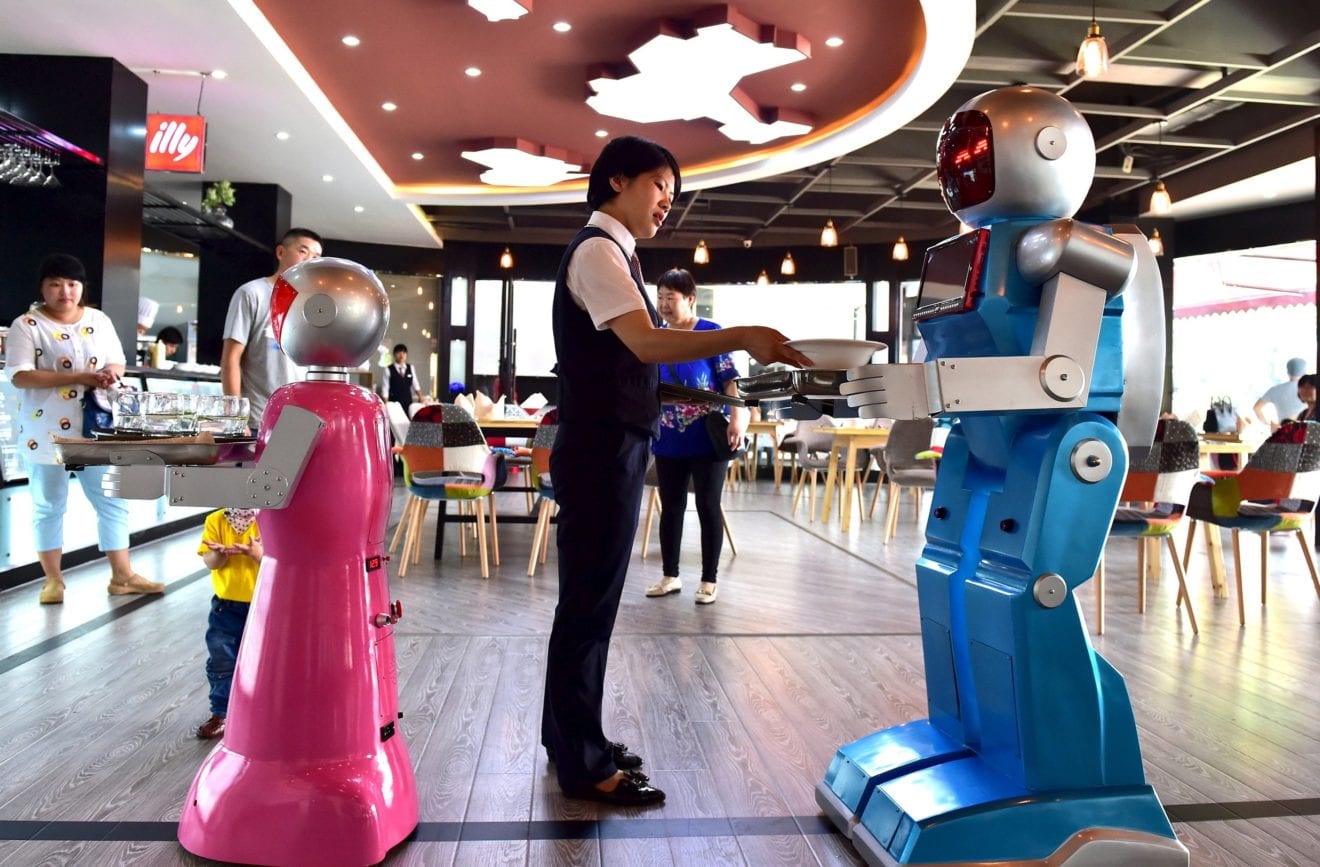
    On the reinvention of stores, Denney-Finch, said: “Technology is making a big difference to help improve the customer experience. Robots are starting to appear in stores around the world. In some Japanese shops, they meet and greet shoppers and give them advice on where to find products, while in Spain they are being used to give nutrition advice. They are a novelty at the moment, but robots will be a common sight in the future and we can expect them to patrol stores, looking for gaps on shelves and replenishing them.

    “Beyond technology, retailers are finding various ways to make shopping easier, more exciting and informative. Various British retailers have set up convenience sections within their largest stores where everyday items like bread and milk are grouped together to save time for top-up shoppers. Thailand’s Central Food Group has an expert Australian butcher to give shoppers advice on international product that they’re not familiar with.”

    On the merger of the online and offline worlds, Denney-Finch said: “Many retailers are viewing online and offline as two complementary ways to help shoppers buy whatever they want, anytime, anywhere and in the most convenient way to them. It’s what’s known as ‘omnichannel retailing’ and gives retailers the opportunity to regain loyalty. Phone apps are one way to link the online and offline worlds. People using the Walmart app, for example, shop there twice as often and buy 40 per cent more than other shoppers. Alliances are another way to utilise omnichannel shopping. The Chinese online platform Yihaodian, now owned by Walmart, has partnered with Family Mart stores to offer product collection.”

    On new ways of marketing, Denney-Finch, said: “In my view the most important role of marketing is to help build consumer trust and that requires a commitment to transparency and traceability. Stew Leonards stores have a live ‘web cam’ where you can watch their suppliers fishing. Some companies are also using computer game techniques to make promotions more exciting. In Singapore, McDonald’s provides an alarm clock phone app that wakes people up and delivers a new surprise each morning such as a discount or a game.”

    On changing supplying chains, Denney-Finch, said: “For many years, big food retailers were able to buy everything their customers wanted, at short notice and at a good price. However, with demand growing so quickly, as well as climate change and many other factors there’s more uncertainty about food supplies. So many retailers are thinking further ahead and building longer-term relationships with suppliers. For instance, Tesco has agreed to buy the whole banana crop every year from some regions of South America.”

    To conclude, Denney-Finch, said: shopper expectations will continue to rise in the future.

    “In response, retailing will become more flexible, personalised and exciting than ever before. New solutions are emerging every day from every part of the world. So the challenge for retailers is not just to reach the world class standards of today, but to set and deliver new standards for tomorrow.

    “Retailing in Asia is exceptionally dynamic, building on all the energy that comes naturally from such fast growing economies. So I confidentially predict that many Asian companies will be amongst the leaders of the retail revolution for the next 20 years and beyond.”

  • One of China’s top 10 e-retailers grows Q2 revenue 30%

    One of China’s top 10 e-retailers grows Q2 revenue 30%

    September 4, 2015, 10:56 AM

    The Beijing-based web-only retailer’s total net revenues in the second quarter of 2015 were 2,312.3 million yuan ($373.0 million), a 29.8% increase from 1781.65 ($280 million) in the corresponding period in 2014. Net loss for the quarter was 21.2 million yuan ($3.4 million), compared to net income of 28.8 million yuan in the second quarter of 2014, or 1.6% of total net revenue in that quarter.

    “During the second quarter of 2015, we expanded our leading position in China’s books and media market, gained additional share in the baby, children and maternity destination category and continued to enjoy some of the highest conversion rates in the industry,” executive chairwoman of Dangdang Peggy Yu Yu said in a statement accompanying the earnings report.

    Dangdang.com was founded by Chinese book publisher Li Guoqing and his wife Peggy Yu Yu, who says she was inspired by Amazon.com when she studied in the United States.  In terms of sales, Dangdang.com is one of the largest book and media e-retailers in China and the company has gradually expanded into other categories, such as electronics and apparel.

    Dangdang also has invested heavily in serving mobile shoppers. “Mobile orders remained close to record levels at 40% of total orders, and we improved monetization of our mobile platform with a sharp increase in mobile advertising revenue,” Yu said. “Our digital business is gaining momentum, driven by our growing catalog of e-books, including original content.”

    Dangdang’s size is still small compare to leading e-retailers, however its executives contend it can challenge the Chinese e-commerce leaders, Alibaba Group and JD.com.

    “I don’t think the position of those leaders is secure. As we all know, the size of the business is not equal to competitive advantage and competitive threshold.  The market will be settled only if the marketing leaders have some unique edges and generate difficult barriers to entry,” Dangdang cofounder and CEO Li Guoqing said last month in a speech at the One Thousand E-commerce Professionals Seminar in China.  “Alibaba’s sales only account for about 5% of retail sales of China and that is not enough barrier to entry. At same time, JD.com’s electronics sales only represent 2% to 5% sales of electronics products in China. If some companies get a new business model, there are still plenty of chances to beat those leaders.”

    Also, Li said few people knew Vipshop, No. 4 in the Internet Retailer China 500, and Yihaodian, No. 7, three years ago, but now they have become e-commerce leaders in their categories in China. Wal-Mart Stores took full control of Yihaodian in July. Vipshop is a discount fashion retailer.

    • Dangdang.com is No. 10 in the Internet Retailer 2015 China 500. JD.com is No. 1. Alibaba is not ranked in the China 500 because it does not own merchandise but rather provides a platform for more than 8 million merchants to sell. However, the gross merchandise value of goods sold on Alibaba’s online marketplaces totaled $109 billion in the first quarter, while JD.com reported $18.5 billion in GMV. By contrast, Dangdang’s GMV in the second quarter was 1,890.6 million yuan ($304.9 million), a 32.1% increase from the same period in 2014.

    For the second quarter ended June 30, Dangdang reported:

    • The combination of product revenue from its own sales and GMV from marketplace sellers reached 4,130.3 million yuan ($666.2 million) and grew 31.8% year-over-year.
    • Active customers were 9.7 million, an increase of 15% from 8.4 million 2014.
    • Total orders for the second quarter of 2015 were approximately 19.5 million, a 19% increase from 16.4 million in 2014.

    For the first six months of 2015, Dangdang reported:

    • Net revenues were 4093.99 million yuan ($644.30 million), up 18.5% from 3454.25 million yuan ($543.58 million) in the same period of 2014.
    • Net income of 7.62 million yuan ($1.2 million), compared with a $35.1 million yuan ($5.52 million) net loss in same period of 2014.
  • Wal-Mart says heavy e-commerce investments put a crimp on earnings

    Wal-Mart says heavy e-commerce investments put a crimp on earnings

    The retailer’s global online sales increased 16% in Q2, excluding the impact of the stronger U.S. dollar.

    Wal-Mart Stores Inc. says its heavy investment in e-commerce infrastructure is paying off, with online sales growing by double-digit percentages, but that it hit a rough patch in international online sales and that the spending is weighing on its earnings.

    The retail giant, No. 3 in the Internet Retailer 2015 Top 500 Guide, said Tuesday its global online sales, excluding the impact of the strengthening dollar, grew 16% in the second quarter. But investments in e-commerce are estimated to lower full-year earnings per share by between 6 cents and 9 cents, company officials said. With 3.23 billion shares outstanding, that suggests Wal-Mart will spend between $190 million and $295 million on e-commerce this year.

    “The highlight was solid growth in the Walmart.com and SamsClub.com U.S. businesses, while international was soft, due to economic challenges in several of our key markets,” chief financial officer Charles Holley said on the company’s earnings call. The international results led Wal-Mart to revise its e-commerce sales growth forecast for 2105 to the mid to high teens from the previous mid-20s range.

    Wal-Mart also said its e-commerce investments, meant to vie with Amazon.com and other online retailers, are vital given the competitive environment.

    “We’re pleased that the investments we’ve made are helping to improve our business,” CEO Doug McMillon told analysts during the company’s earnings conference call, according to a transcript from Seeking Alpha. “Even if it’s not as fast as we would like, the fundamentals of serving our customers are consistently improving. In this case, our desired changes require investments, which are pressuring earnings this year.”

    Also in the quarter, the retailer opened two automated online fulfillment centers in the U.S., each bigger than 20 football fields, and two more are coming this quarter, said Holley. The centers will serve customers this holiday season and serve as the cornerstones of Wal-Mart’s fulfillment network, he says.

    On the call, Wal-Mart executives discussed its deal, announced last month, to acquire the remaining 49% it did not already own in Yihaodian, a Chinese online grocery retailer that’s been expanding into other categories and is No. 7 in the Internet Retailer 2015 China 500 Guide. Wal-Mart spent $760 million in the quarter to acquire the remaining 49% of Yihaodian, the online retail site in China with 100 million registered users.

    “Our primary goal is to continue to accelerate Yihaodian’s core e-commerce business and maintain strong local Chinese expertise,” Neil Ashe, CEO of Wal-Mart Global e-Commerce, told analysts. “Now that we are the sole owners, we will be expanding our leadership team from within the Yihaodian business, from within Wal-Mart and from the e-commerce industry in China. We will also leverage Walmart’s global reach and scale to better benefit Yihaodian, including global sourcing. China is an exciting, dynamic, large and competitive market. We are excited about our long-term opportunity in China.”

    For the quarter ended July 31, Wal-Mart reported:

    • Net sales of $120.229 billion, relatively flat from $120.125 billion.
    • Wal-Mart did not report online sales but said e-commerce sales increased 16% globally when adjusting for the strengthening dollar, which is reducing the dollar value of sales outside the United States. The total value of purchases on Wal-Mart’s e-commerce sites in 11 countries increased 18% on a constant-currency basis. That includes sales by outside merchants selling on Walmart.com and other sites that offer goods from other retailers.
    • Net income of $3.475 billion, down 15.1% from $4.093 billion in the same period in 2014
    • A decline in operating income in the retailer’s three primary divisions. At Wal-Mart U.S. it was $4.819 billion, down 8.2%; at Wal-Mart International it was $1.277 billion, down 14.2%; and at Sam’s Club it was $428 million, down 13.4%.
  • Walmart China takes full control of online JV

    Walmart China takes full control of online JV

    Walmart China has taken full ownership of its Chinese eCommerce joint venture Yihaodian.com, buying out the 49 per cent stake held by local owners.

    In addition to seeking a higher profile in eCommerce, Walmart said it plans to create a “seamless experience” for customers across online, mobile and stores.

    Three years ago Walmart China took control of Yihaodian by bumping up its stake to 51 per cent. While the company pales in size compared to local eCommerce rivals Alibaba and JD.com, the world’s biggest retailer has been building up its online business in the wake of mediocre sales in the US, in a direct challenge to online competitor, Amazon.

    The investment will help Walmart target China’s fast-growing online market at a time when largely bricks and mortar retailers are feeling the pinch of competition from online rivals and a slowing of the world’s second-largest economy.

    Wal-Mart’s Asia head, Scott Price, said earlier this year that online retail was important to help tap China’s younger generations and that the firm would increasingly look to weave together its online and offline presence in the market.

    Walmart, France’s Carrefour and Britain’s Tesco have all seen sales or sales growth slip over the past five years in China, losing market share to local rivals.

    Yihaodian will be headed by Wang Lu, president and CEO of Walmart Global eCommerce in Asia.

    Walmart’s move also comes after China said last month it will allow full foreign ownership of some eCommerce businesses, with the goal of encouraging foreign investment and the development and competitiveness of the sector.

    “Yihaodian has excelled as one of China’s top eCommerce businesses. We’re excited about the team at Yihaodian and their strong local e-commerce experience,” said Neil Ashe, president and CEO of Walmart Global eCommerce.

    “This local experience, combined with Walmart’s global sourcing and our strong local retail presence and supply chain will allow us to deliver low prices on the products customers need in new and exciting ways,” he said.

    “Our investment in Yihaodian is part of our long-term commitment to grow in China and we look forward to continuing to play a positive role in the development of the eCommerce industry,” said Ashe.

    Walmart China acquired the remaining shares from Ping An of China, a financial services group, and the co-founders, former Chairman Gang Yu and former CEO Junling Liu.