Tag: Yogiyo

  • GS Retail recruits local residents to deliver products

    GS Retail recruits local residents to deliver products

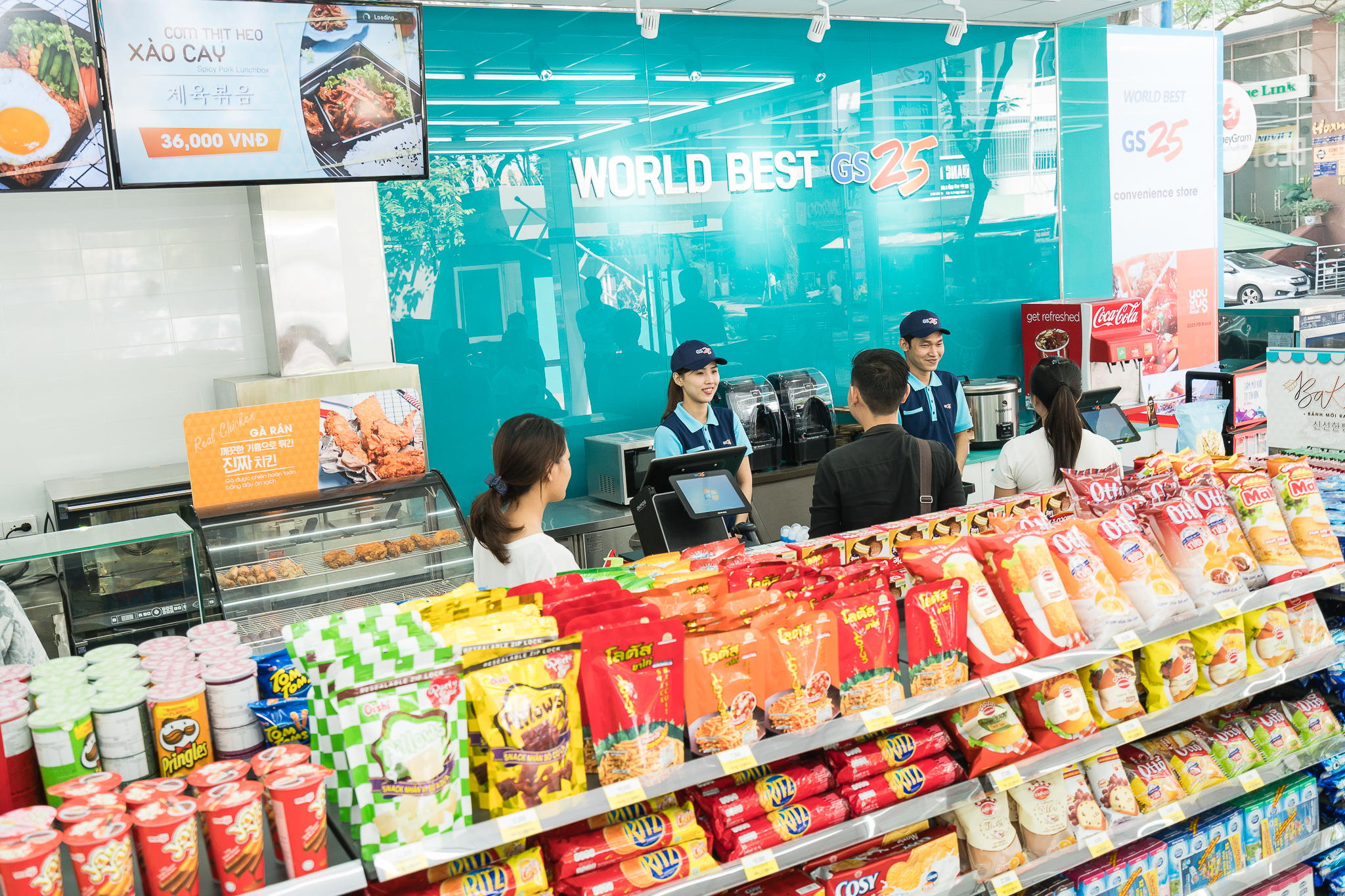
    South Korean convenience-store operator GS Retail plans to hire local residents with ample knowledge about their neighborhoods to speed delivery of products in areas where alleyways and addresses may prove confusing.

    GS Retail, which runs the convenience-store chain GS25, will begin testing its new ‘Neighborhood Delivery’ service, which is open to all applicants without limits to time and task.

    Each person will be delivering products within a 1.5km radius of their current location. The products, too, will weigh less than 5kg, allowing retirees, homemakers, and after-work office workers to work without difficulty.

    If a customer orders a product from a nearby GS25 convenience store through the Yogiyo app, the delivery person can respond to an incoming delivery call to bring the product to the customer.

    Each delivery will pay US$2.35-$2.68 in commissions.

    GS Retail plans to test the new delivery program at three convenience stores in Seoul’s Gangnam District starting Monday. On August 17, the program will be expanded to cover all GS25 stores throughout Seoul.

    The company aims to infiltrate the $17 billion delivery market with ‘Neighborhood Delivery’, a short-distance quick-commerce platform based on 15,000 brick-and-mortar stores.
  • Korean food delivery app Yogiyo fined for market dominance

    Korean food delivery app Yogiyo fined for market dominance

    South Korea’s antitrust regulator has fined food-delivery app Yogiyo US$382,000 for exploiting its dominant position in the local market.

    The Fair Trade Commission (FTC) also ordered Yogiyo to take corrective measures, saying the company unilaterally introduced a scheme to prevent its contracted restaurants from selling their foods at lower prices through other apps between 2013 and 2016.

    During the three-year period, Yogiyo returned as much as $4 to customers if an order from its app was more expensive than that from other apps.

    Yogiyo terminated the contracts for 43 restaurants which refused to follow the scheme, the FTC said, ruling that Yogiyo undermined fair competition by banning restaurant owners from voluntarily setting prices.

    The food-delivery app Yogiyo, owned by Germany’s Delivery Hero, is South Korea’s second-largest.

    Delivery Hero’s Korean unit expressed regrets over the FTC’s ruling, saying that the commission scheme was abolished after the regulator began a probe into the company.

    Late last year, the German firm struck a deal to acquire an 87 percent stake in Woowa Brothers, which operates the nation’s largest food-delivery app Baedal Minjok, or Baemin, from existing investors, including Goldman Sachs and Singaporean fund GIC.

    In April, Baemin came under fire for changing its commission scheme, with critics saying it would place a heavier burden on restaurants hit hard by the coronavirus pandemic.

    At that time, Baemin began to charge restaurant owners and franchisees a 5.8 percent commission for every online order. Previously, the fixed monthly commission was $72.

    The change sparked a strong backlash from restaurant owners and franchisees, prompting Baemin to retract the new scheme.

    The combined users of Yogiyo and Baemin account for some 98 percent of all users of food delivery-related apps in South Korea, triggering concerns that the megadeal could hamper competition in the fast-growing market.

    South Korea’s food-delivery app market reached $8.2 billion in 2018.

  • UberEats Korea launch imminent

    UberEats Korea launch imminent

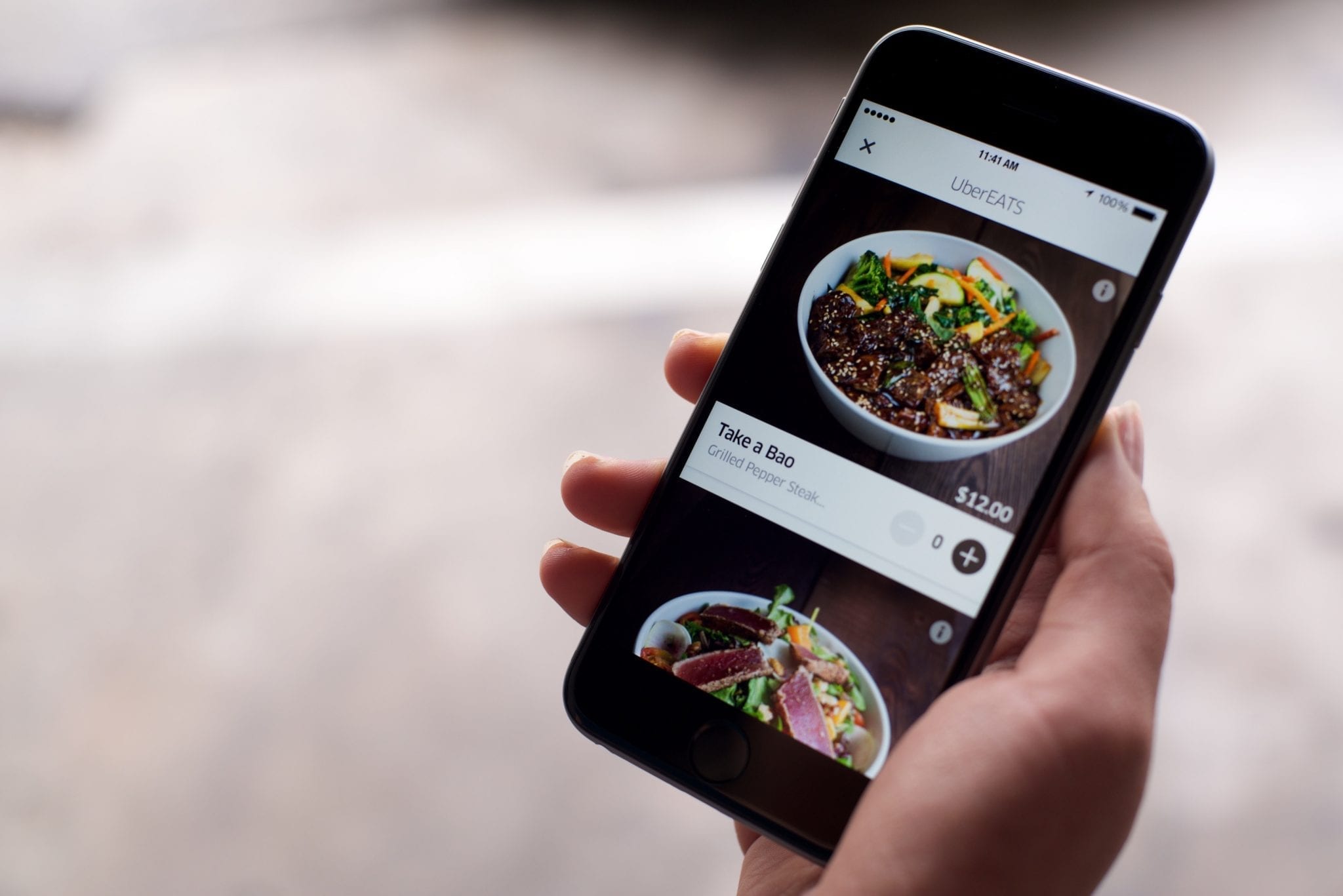
    App-based ride service provider Uber Technologies says it is planning to launch its on-demand restaurant delivery service UberEats in South Korea.

    UberEats Korea will partner with restaurants, with ordering conducted on the company’s web site or with a smartphone app.

    “The company is preparing the local launch of UberEats,” said a spokesman for Uber Korea, the local unit of Uber, on the condition of anonymity. “But at the moment, we have not decided on the exact launch date.”

    Industry sources expect the UberEats Korea delivery service to be introduced within the year.

    UberEats Korea is expected to join other local delivery apps such as Yogiyo, FoodFly and Baedal Minjok. Baedal Minjok is the market leader with more than 50 per cent market share, followed by Yogiyo and Baedaltong, which are both owned by Germany-based Delivery Hero.

    Ordering food by phone is commonplace in South Korea. However, delivery apps have become increasingly popular and now take up nearly 15 per cent of the total food delivery market which is estimated at around 12 trillion won (US$10.5 billion) annually.

    UberEats was launched as a delivery pilot in Los Angeles in 2014. Since then, it has expanded to 58 cities. The service also exists in other major Asian cities including Bangkok, Tokyo and Taipei.

  • Kakao food-delivery service planned

    Kakao food-delivery service planned

    Korean internet company Kakao, known for its chat app KakaoTalk, plans to jump into the food-delivery sector.

    The Kakao food-delivery service is planned for launch by January, and it is expected to be incorporated into the app, which has four menu buttons. One of them lists extra services such as sending gifts or making reservations.

    A Kakao spokesperson says the deliveries would mainly be from franchise restaurants.

    In July, Kakao acquired a 20 per cent stake of CNT Tech, a developer of an order-receiving platform for more than 80 franchise restaurant brands in Korea.

    CNT Tech has 90 per cent of market share in the ordering platform sector. Once an order is placed through a franchise’s key number or homepage, the start-up connects orders to stores nearest the customer.

    Already companies are battling for share in the food-delivery market, including Baedal Minjok, Baedaltong and Yogiyo. Baedal Minjok, which has more than 50 per cent market share, is the only start-up that has turned around its business from losses.

    Kakao head of communications Lee Su-jin says its new on-demand service will follow the company’s business perspective that an online-to-offline service should add value both to individual service providers and customers.
    “Through our Kakao Taxi service, the annual income of taxi drivers rose by more than 3 million won [US$2650],” he says.