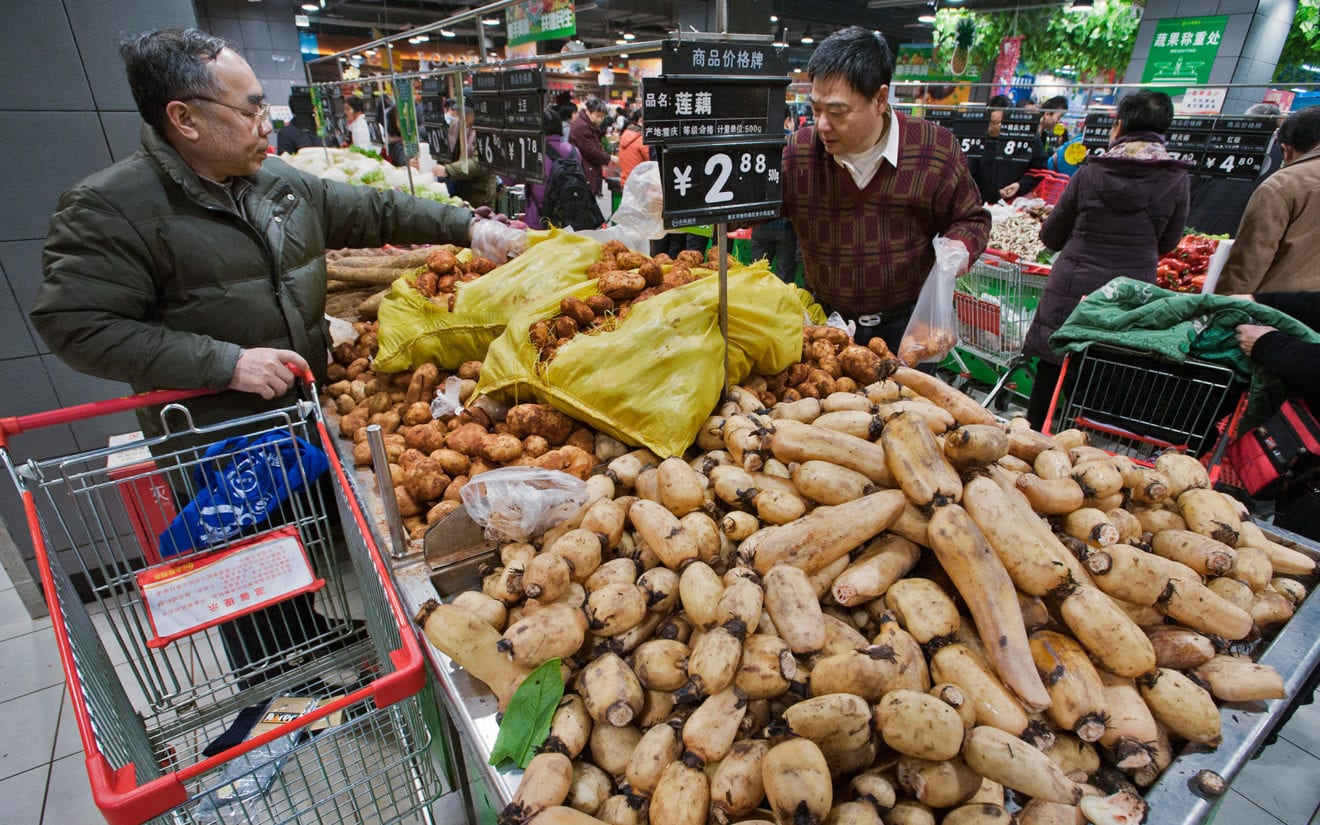
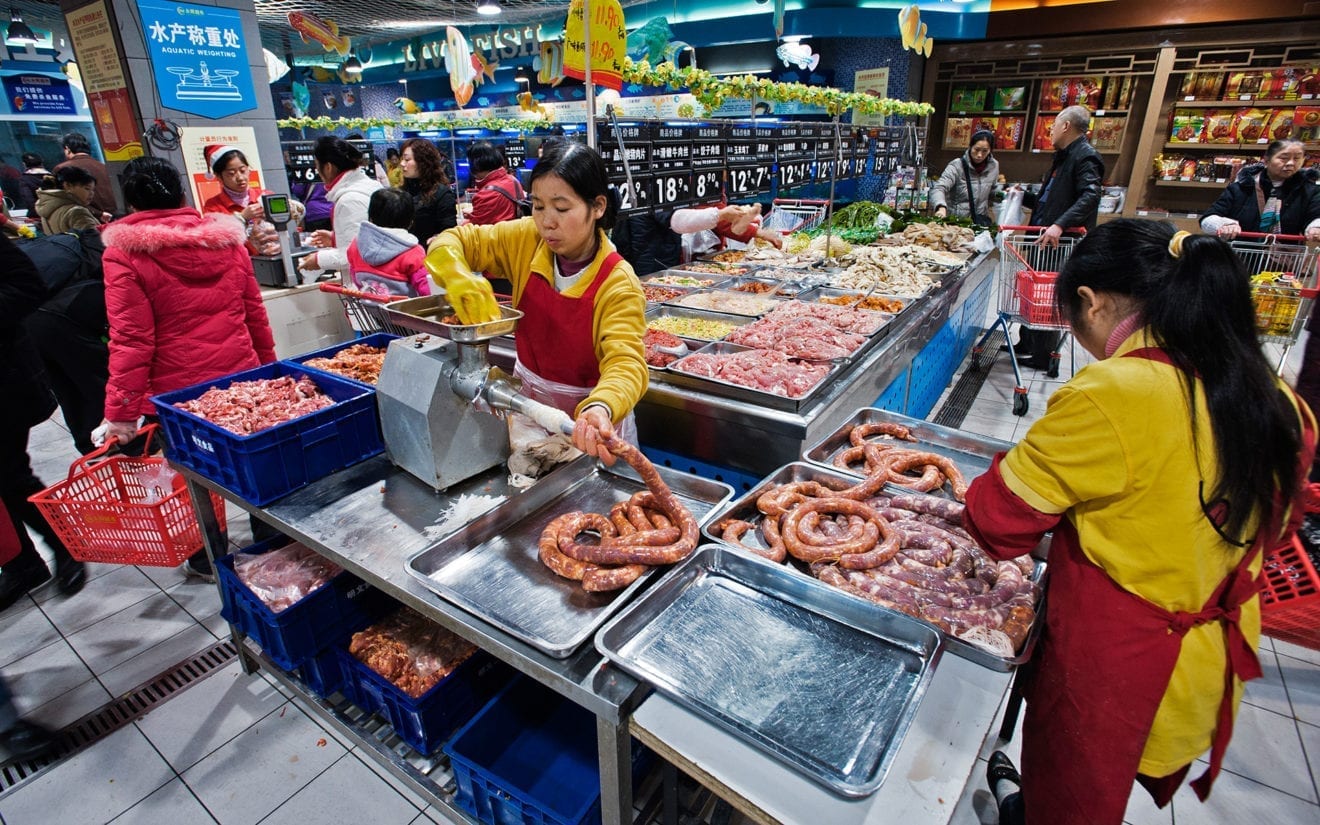
Tag: Yonghui

  • Miniso to acquire 29.4 percent of Yonghui Superstores

    Miniso to acquire 29.4 percent of Yonghui Superstores

    Miniso Group Holding will acquire 29.4 percent of Yonghui Superstores from various shareholders for RMB6.3 billion (US$893.3 million).

    Miniso, through its PRC subsidiary Guangdong Juncai International Trading, entered into share purchase agreements with DFI Retail Group subsidiary The Dairy Farm Company and JD.com subsidiaries Beijing Jingdong Century Trade and Suqian Hanbang Investment Management.

    The transaction will result in Miniso becoming the largest single shareholder of the supermarket chain.

    Under the agreements, Guangdong Juncai will pay each seller RMB2.35 per share, representing a 3.1 percent premium to the closing price of Yonghui’s shares on the Shanghai Stock Exchange on September 20.

    Shares of Miniso Group Holding plunged as much as 39.2 percent to HK$20 ($2.57) on Tuesday after the deal was announced.

    The lifestyle products retailer’s shares dived to the lowest since December 2022, on track for the biggest one-day percentage drop since its debut in July 2022, and was the top percentage loser on the Hong Kong bourse. Reuters reported that compared to a 2.1 per cent rise in the benchmark Hang Seng Index.

    Yonghui has logged three years of net losses, reflecting the mounting costs of closing unprofitable stores.

    Guofu Ye, the Miniso chairman and CEO, said that acquiring the shares would allow his company to expand its access to the essential goods sector.

    “With our support and leveraging our expertise in design-led products, Yonghui will be poised to develop higher-quality self-branded products to cater to evolving consumer needs,” said Ye.

    “Furthermore, I believe that our collaboration with Yonghui in retail channel upgrade and supply chain will enable us to share resources to further enhance economies of scale, optimise the cost structure and create value for consumers.”

    Miniso’s newest flagship store – which opened early this month in downtown Jakarta – is among the first to include a range of snackfoods, all sourced from local suppliers, as the novelty retailer looks to expand into other categories, with blind boxes being another.

    DFI Retail Group will receive US$637 million for its stake, funds CEO Scott Price said would support the company’s plans to expand its other businesses in Mainland China, which remains a significant market for the company.

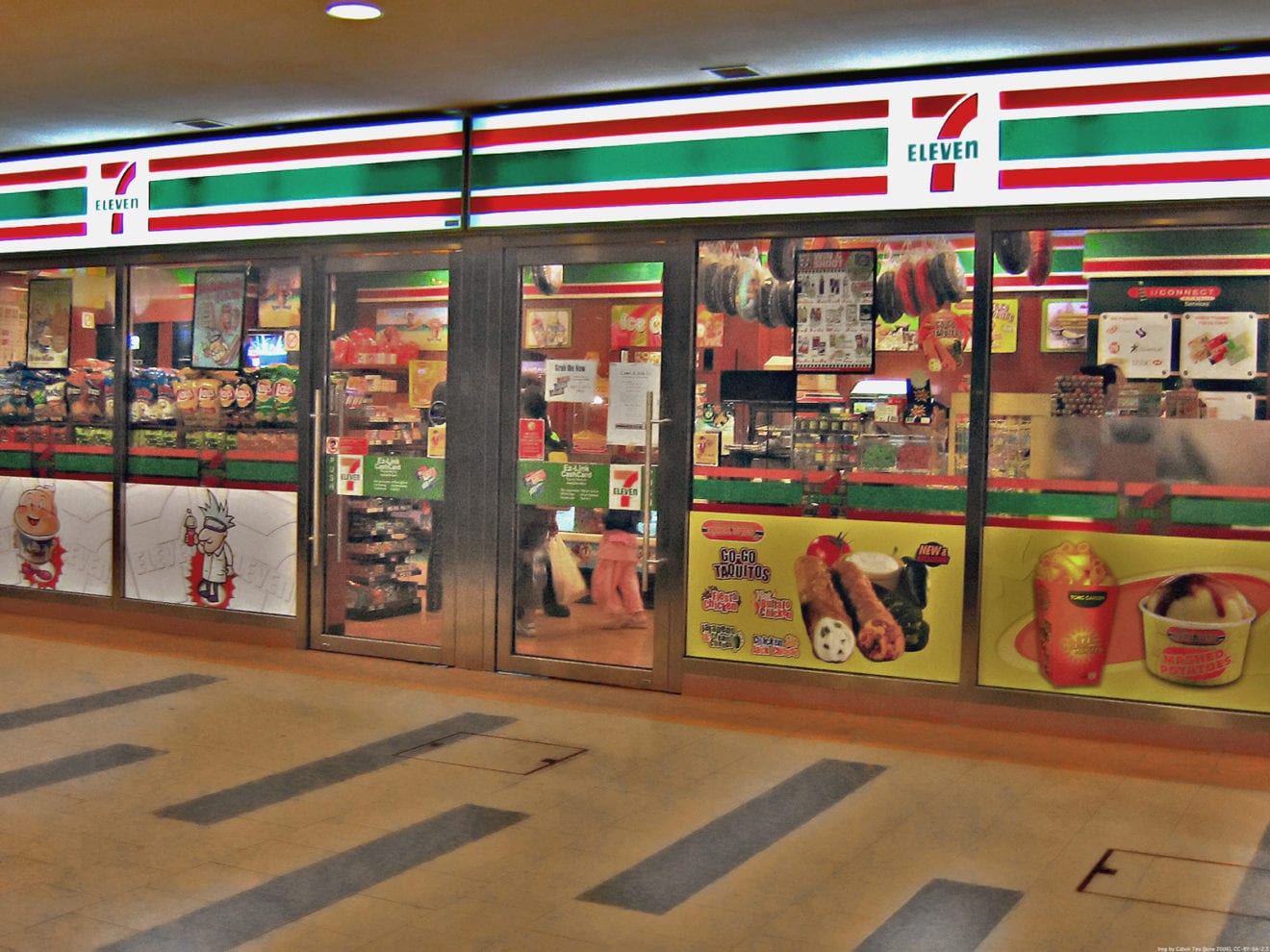
    “We are proud to serve millions of customers through Mannings China and 7-Eleven, and we have ambitious plans to increase the number of 7-Eleven stores in Guangdong Province in the coming years,” said Price.

    The deal is subject to Miniso shareholder approval and applicable regulatory conditions, including antitrust approval.

  • Yonghui boosts stake in Chinese grocery Zhongbai

    Yonghui boosts stake in Chinese grocery Zhongbai

    Dairy Farm Group-backed Yonghui Superstores is to boost its interest in Central Chinese regional supermarket chain, Zhongbai Holdings.

    According to a stock exchange filing in Shanghai, Yonghui is offering RMB8.10 per share to take its stake in the company from 30 per cent to 40 per cent. The deal is worth RMB559 million (US$83.3 million) and the shares will be bought from a state investment fund.

    Zhongbai, based in Wuhan, has 1255 stores, mostly in central China, including supermarkets, convenience stores, neighbourhood fresh-produce shops, foodmarkets and a premium grocery concept.

    Dairy Farm Group has a 20 per cent stake in Yonghui and has continued to invest in the business to maintain that shareholding as other investors, including Tencent and JD have invested in the retailer’s growth. Jardine Matheson executive chairman Ben Keswick is Yonghui’s chairman.

    Yonghui currently has just a single store in Hubei province, which means the investment will give it instant critical mass in the region. The company has more than 950 supermarkets in 22 Chinese provinces, its strongest representation in Guangdong.

  • SEA gives struggle to Dairy Farm International

    SEA gives struggle to Dairy Farm International

    “Significant challenges” across the Southeast Asian supermarket business are continuing to test Hong Kong-listed multi-format retailer Dairy Farm International. In a management statement discussing the company’s third-quarter performance – which did not include any figures – Dairy Farm said its businesses produced “mixed results” with a strong performance in health and beauty and good results from home furnishings and restaurants divisions. However, the performance of the Hong Kong supermarkets business has softened.

    The company said the Southeast Asian grocery store business – Cold Storage and Giant stores in Singapore and Malaysia – is expected to continue for the remainder of the year with the group’s full year results expected to be impacted by increasing costs from ongoing investment in technology, supply chain infrastructure, stores and people in order to improve the long-term performance of the business. Sales and profits fell in its supermarkets in both countries. Falling sales in Indonesia were mitigated by management action which resulted in reduced losses there.

    In North Asia, sales from the food businesses were slightly ahead of the same period last year, but profits were lower as a result of weakening margins and continued cost pressures, particularly from increased rents.

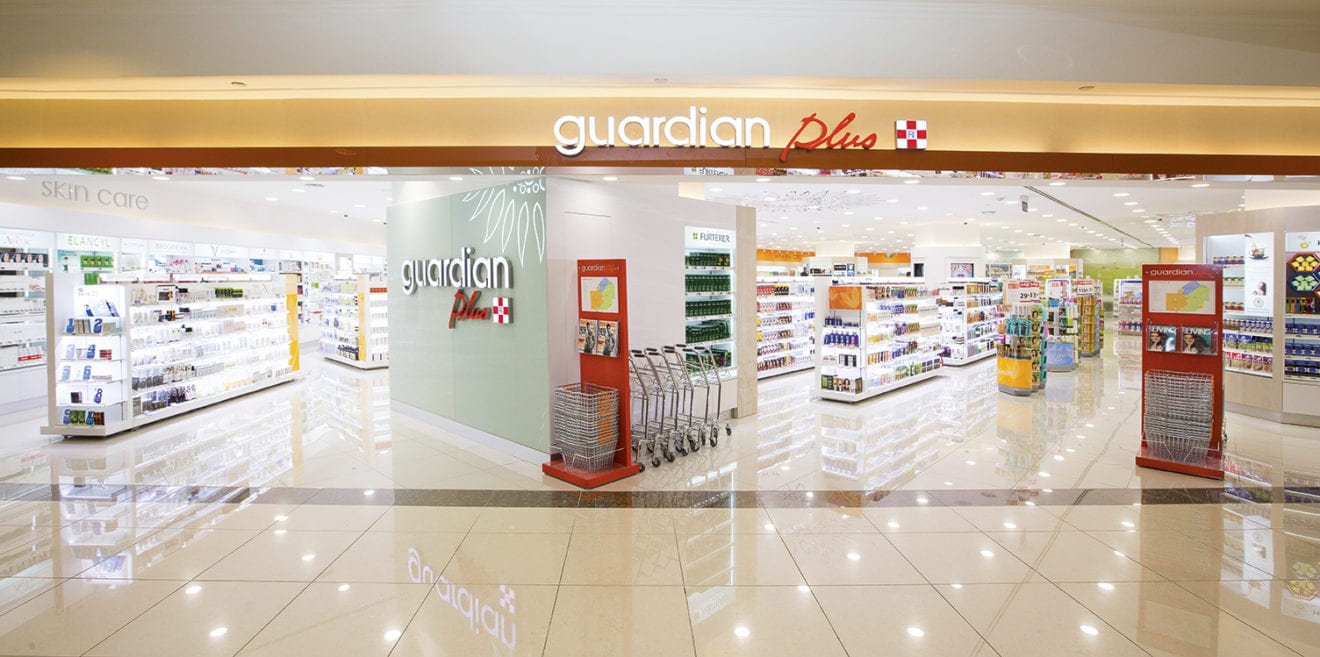
    However, the health and beauty businesses in Hong Kong and Macau (Guardian stores) delivered “strong sales and profit growth”.

    The Philippines food business showed good sales growth, benefitting from the opening of several new stores, but profit was slightly behind the prior year due to increased operating costs. There was continuing good sales and profit improvement in the group’s health and beauty businesses, notably in Malaysia and Indonesia.

    Ikea’s sales and profits were ahead of last year in Taiwan and Indonesia. In Hong Kong, sales were higher, supported by the new store which opened last year; however profits were lower as a result of higher operating costs.

    In Hong Kong, Maxim’s delivered another record-breaking mooncake sales performance during Mid-Autumn Festival, which was earlier than last year, and helped drive sales and profit higher during the period. Supermarket Yonghui reported strong sales growth in the quarter but profit was lower than the prior year due to investment in new formats and the additional costs of the new employee incentive scheme.

    Approval was received from the Philippines Competition Commission in August for the combination of Dairy Farm’s Food business in the Philippines with Robinsons Retail Holdings, with completion expected to take place within weeks.

    In early October Dairy Farm agreed to acquire the remaining 51 per cent interest in Rose Pharmacy in the Philippines, which is now subject to regulatory approvals.

    Dairy Farm, together with its associates and joint ventures, operate more than 7400 outlets, including supermarkets, hypermarkets, convenience stores, health and beauty stores, home furnishings stores and restaurants – employing more than 200,000 people. Total sales last year exceeded US$21 billion.

  • Yonghui, Parknshop and Tencent to jointly establish JV

    Yonghui, Parknshop and Tencent to jointly establish JV

    Tencent has teamed up with ParknShop and Yonghui Superstores to create a new combined grocery chain ParknShop Yonghui. The joint venture, valued at US$170 million, aims to help Shanghai-listed Yonghui expand its business outside of the southern province of Guangdong, as well as consolidating Yonghui and ParknShop’s businesses in the province.

    Yonghui gains half of the joint venture with $89.6 million while ParknShop will hold a 40 per cent stake with cash and equity contributions amounting to $72 million, and Tencent will pay $18 million yuan for a 10 per cent stake.

    Tencent spent $750 million to buy a 5 per cent stake in Yonghui last December, with ambitions to shake up the bricks-and-mortar shopping market and compete with rival Alibaba Group.

    Yonghui operates more than 830 supermarkets in 24 provinces, 21 of them in Guangdong.

    ParknShop, a member of the AS Watson Group, has more than 50 shops in the southern province.
    This is the first time companies within the group have formed a joint venture with mainland Chinese firms.

  • Dairy Farm International’s plan after hitting bottom line

    Dairy Farm International’s plan after hitting bottom line

    Poor trading by Dairy Farm International’s Southeast Asian grocery business hit the company’s bottom line last year, with underlying profit falling 13 per cent.

    But every other one of the company’s divisions traded strongly throughout the year, according to the results just released.

    Full-year profit was US$403 million, after allowing for $64 million of costs relating to business restructuring. Sales by Dairy Farm’s wholly-owned subsidiaries totalled $11.3 billion, largely unchanged from 2016’s $11.2 billion. But total sales, including 100 per cent of associates and joint ventures, at $21.8 billion were up 7 per cent year on year, reflecting strong growth at both supermarket operator Yonghui and cafe-restaurant operator Maxim’s, which owns the Starbucks business in Hong Kong, Vietnam, Cambodia and now Singapore.

    “After a disappointing year… for our food businesses in Southeast Asia, actions are being taken to improve their long-term performance,” explained chairman Simon Keswick. “All of the group’s other formats and markets are trading well and growth opportunities are being pursued, in Mainland China and elsewhere.”

    In Dairy Farm’s food division, sales were down and profits were “significantly lower” than in 2016, primarily due to poor performances in the supermarket and hypermarket businesses in Malaysia, Singapore and Indonesia.

    “A number of underperforming stores are being closed and prices lowered to clear or write off discontinued and slow moving stock.

    “In Hong Kong, sales were more resilient, although profits were marginally down due to increasing rents and labour costs. Positive sales growth seen in the Philippines reflected the ongoing investments being made to improve the business,” said Keswick.

    Elsewhere in the company there was brighter news.

    The convenience store format (including 7-Eleven in Hong Kong and Singapore) produced increased sales and profit. “In part, this reflected a consumer shift to more convenient retail formats, as well as a positive reception to the service and range enhancements introduced for customers,” said Keswick.

    The convenience stores division reported $2 billion in sales, an increase of 4 per cent over the previous year – but operating profit surged 16 per cent to $85 million.

    In the health and beauty division, (led by Guardian and Mannings), sales and profit were higher, principally due to strong performances in Hong Kong, Macau and Indonesia, together with improvements in Mainland China.

    Keswick said this was led by an increasing focus on the beauty category and the continued development of the division’s house brands.

    The home furnishings division (Ikea in Hong Kong, Taiwan and Indonesia) recorded higher sales and trading profit, but the reported profit declined, mainly due to costs associated with the opening of the fourth Ikea Hong Kong store in October. Sales and profits increased in Taiwan and Indonesia and there was solid growth in the e-commerce business.

    Maxim’s enjoyed good sales growth and profit expansion during the year, in large part due to strong performances from its branded products, particularly mooncakes, and its business in Mainland China. The company also acquired the Starbucks Singapore business last year.

    The group’s 19.99 per cent-owned associate in Mainland China, Yonghui Superstores, opened a net 292 new stores last year, which underpinned a 19 per cent growth in revenue. Ongoing supply chain optimisation and shrinkage improvement resulted in improved margins, which together with better capital use, led to a 45 per cent growth in profit.

    Convenience focus

    Keswick said Dairy Farm International will focus on increasing its convenience store operations in the year ahead through expansion and enhancement of the store network. New smaller-store formats are being piloted in some markets.

    The group will also continue to develop its e-commerce presence, focusing on a number of initiatives in its home furnishings, food, and health and beauty operations introduced last year.

    Dairy Farm International added a net 633 stores last year. At year end, it had 7181 stores in operation in 11 countries and territories, including its interest in 779 Yonghui stores in mainland China and 1210 Maxim’s stores.

    Besides the Starbucks Singapore deal, Maxim’s also acquired the existing businesses and franchises of Genki Sushi in Singapore and Malaysia. It opened its first The Cheesecake Factory in Hong Kong in May, which Keswick said is trading well, and this year will introduce American casual restaurant format Shake Shack in Hong Kong and Macau.

    In the Philippines, Rustan became a wholly-owned subsidiary following the acquisition of the remaining 34 per cent interest from the group’s joint venture partner.

  • China’s e-commerce giants to buy Dalian Wanda malls

    China’s e-commerce giants to buy Dalian Wanda malls

    Three Chinese e-commerce giants led by Tencent are buying into shopping centres as part of an alliance that will help fund property magnate Wang Jianlin’s HK$30 billion (US$3.8 billion) plan to take his Dalian Wanda Group private.

    Jianlin describes it as the world’s biggest single alliance between the new economy and bricks-and-mortar businesses as he vows to turn his flagship commercial property unit into an online-to-offline service provider.

    After shedding properties in Australia, China and the UK to help reduce debt, he is now selling off nearly 14 per cent of Dalian Wanda Commercial Properties to some of the mainland’s biggest internet and retail players.

    An investor group led by Tencent, along with e-commerce heavyweight JD.com, electronics retailer Suning and Wanda partner Sunac China Holdings, the stake is being sold for RMB34 billion (US$4.36 billion).

    On its website, Wanda presents the share sale as part of a transformation of the company from a real-estate developer with nearly 240 shopping centres across China into a commercial management company focused on integrating online and offline consumption.

    As part of the deal, Dalian Wanda Commercial Properties will be renamed Wanda Commercial Management Group.

    However, the new partners may lead the financing of new malls, with the website statement noting “Tencent, Suning and other investors will use their financial prowess to continuously support Wanda Commercial to speed up its growth, helping the company to achieve its goal of 1000 Wanda Plazas in China as early as possible”.in

    Wanda says the partners are keen to relist the commercial real-estate unit, still privately held after a 2016 buyout led by Wang, “at the earliest opportunity”.

    Also, the new group will use the online resources of Tencent, Suning and JD.com as well as its own offline commercial assets to “carry out various collaborations, jointly building a new consumption model in China that will integrate both online and offline services”.

    Wanda Commercial’s total debt at the end of June was RMB279 billion, according to ratings agency S&P.

    Tencent’s investment of RMB10 billion gives it a 4.12 per cent stake, while Suning and Sunac’s twin outlays of RMB9.5 billion will them a 3.91 per cent stake each, and JD.com’s RMB5 billion yields a 2 per cent stake.

    Meanwhile, WeChat owner Tencent last week said it might buy into French retailer Carrefour’s China business, along with local retailer Yonghui Superstores. This follows Amazon’s acquisition of Whole Foods for US$13.7 billion.

  • Tencent buys minority stake in Yonghui Stores

    Tencent buys minority stake in Yonghui Stores

    China’s Tencent plans to acquire a minority stake – some 5% — in offline Chinese retailer Yonghui Stores, as the tech giant looks to explore a physical retail presence in the domestic market.

    Yonghui said in a filing to the Shanghai stock exchange that the share transfer agreement would be made with Linzhi Tencent, a Tencent affiliate. Tencent will also take a 15 per cent stake in Yonghui supply chain and logistics subsidiary Yonghui Yunchuang Technology following further discussions.  The purchasing price was not revealed.

    Yonghui, a department store retailer, operates hundreds of stores in mainland China. The acquisition comes at a time when Chinese tech firms are ramping up investments in physical stores.

    Rival Alibaba last month took a $2.9 billion stake in leading Chinese grocery chain Sun Art Retail Group Ltd. The move also sees Tencent follow in the likes of JD.com, who is already a stakeholder in Yonghui Stores.

    In China, 85 percent of retail sales are still made offline, reported Reuters.

    Trading in Yonghui’s stock will remain suspended after being halted when the firm’s shares jumped the daily limit of 10 percent on media reports of Tencent’s investment.

    Founded in 2001, Yonghui plans to close some 00 supermarkets in around 20 provinces in China. The firm’s major investors include Dairy Farm Group, part of conglomerate Jardine Matheson Group.

    Last month, Tencent reported a 57 per cent year-on-year jump in third-quarter operating profit to Rmb22.75bn ($3.43bn), while revenues were up 61 per cent year on year at Rmb65.2bn.

  • JD.com surprises with first profitable quarter

    JD.com surprises with first profitable quarter

    JD.com profit soared 50 per cent after a 39 per cent increase in sales during the Chinese online retailer’s latest quarter.

    Its unaudited results for the three months to the end of September show revenue of RMB83.7 billion (US$12.6 billion), with a record 50.3 per cent surge in gross profit to RMB13 billion. Non-GAAP gross profit was RMB12.8 billion, up 51.9 per cent.

    Active customer accounts increased by 34 per cent to 266.3 million in the 12 months to September 30.

    Chairman/CEO Richard Lio says the company is building robust product content and enhancing user engagement with innovative tools that enable brands to launch highly targeted online marketing programs.

    “The scale economies of our model are becoming clearer with every quarter,” says CFO Sidney Huang. “Looking ahead, we will continue to prioritise investments in technology and leading R&D talent as we execute on our vision to revolutionise China’s retail industry.”

    While releasing its third-quarter figures, JD.com also listed its latest business developments…

    In October, JD and Tencent expanded their partnership with the launch of a marketing initiative that integrates insights on consumer behaviour from Tencent’s social-media platforms with online and offline shopping data from JD and its brand partners. As well as enabling more precise target marketing, the move benefits consumers by offering them wider access to sales promotions and preferred discounts.

    Strategic partnerships

    During the past three months, JD.com also formed strategic partnerships with Baidu, iQIYI, NetEase, Sogou and Qihoo 360 with their big-data resources, massive user bases and AI algorithm technologies.

    JD also continued to strengthen its position among top-tier international brands, expanding its partnership with high-fashion brand Armani with the opening of official online stores for Armani Exchange and Emporio Armani.

    JD Worldwide also launched flagship stores for such companies as Reckitt Benckiser, Spectrum Brands and Tiger, while its new Toplife platform attracted marquee brands like Dyson, La Perla, Rimowa (LVMH) and Trussardi.

    During the quarter, JD Logistics test-launched an unmanned sorting centre, the first of its kind in the logistics industry. JD also signed agreements to lay the groundwork for the rollout of China’s largest drone network.

    In September, JD Logistics expanded its environmentally friendly logistics and packaging campaign, working with brands including  Johnson & Johnson, Kimberly-Clark, Lego, L’Oreal, P&G, Nestle, Unilever, Watsons and Wrigley. The aim is to minimise environmental impact by cutting back on packaging materials.

    Customer demand

    JD also enhanced its fresh product offerings during the quarter to meet customer demand. In July, it launched the Canadian Fresh Food Pavilion, the first country pavilion for fresh products on the JD.com platform. Live lobsters from Canada can now be delivered to customers’ doorsteps in China in as little as 48 hours. During JD’s Super Canadian Day, 140,000 lobsters were sold within 24 hours.

    In September, JD.com, JD Finance, Central Group and Provident Capital announced agreements to establish two JVs in Thailand covering e-commerce and fintech services, with an aggregate investment of $500 million. JD.com is providing its expertise in technology, e-commerce and logistics while Central Group is drawing on its retail store network, brand and merchant relationships, and retail behaviour insights from its loyalty program.

    In October, JD and Sam’s Club launched a promotion offering customers discounted bundled memberships for Sam’s Club and the JD Plus paid-for membership service.

    By the end of October, JD.com JV New Dada had partnered with 146 Walmart stores and 301 Yonghui stores, as well as many other supermarkets and grocery stores, to provide online fresh grocery shopping with one-hour home delivery.

    At the end of September, JD.com had 405 warehouses and provided scheduled delivery services in 250 Chinese cities. It had about 160,000 merchants on its online marketplace, and 137,975 full-time employees.

  • Dairy Farm sales stagnate

    Dairy Farm sales stagnate

    Dairy Farm sales were described as “flat” in the third quarter to September 30.

    The Hong Kong-headquartered company said improved performances in health and beauty, Ikea, restaurants and Yonghui were offset by lower sales in the food and grocery division.

    “The lower food division sales, together with new store pre-opening costs in home furnishings, (Ikea) led to underlying profits being marginally below the same period in the prior year,” the company said in a statement issued in London, where it has a secondary listing. “Similar trading conditions are expected to continue for the remainder of the year.”

    Dairy Farm said the weakness seen in food and grocery sales was principally driven by difficult trading for the hypermarket and supermarket operations in Southeast Asia, where it operates Giant hypermarkets and Cold Storage supermarkets. It says reviews of “a number of the businesses” are being undertaken.

    The results from greater China (including its Hong Kong Wellcome supermarkets) showed improvement over the same period last year. Convenience store operations (including 7-Eleven stores in Hong Kong and Singapore) produced improved sales and profitability.

    Yonghui reported a strong 20 per cent  growth in revenue and 131 per cent increase in profit in the quarter.

    Improved sales in the health and beauty division (Manning’s, Guardian and Rose Pharmacy) were driven principally by a strong performance in Hong Kong and Macau. Home Furnishings (Dairy Farm has the Ikea franchises in Hong Kong and Taiwan) traded well, although profitability was reduced due to pre-opening expenses for the new store in Hong Kong.

    Maxim’s (which also includes Starbucks operations in Hong Kong, Vietnam and Cambodia) had a seasonally strong quarter in both sales and profit, benefiting from record mooncake sales during the Mid-Autumn Festival period. In September, Maxim’s acquired the existing business and exclusive rights to operate and develop Starbucks franchise stores in Singapore.

    In August, the group completed the acquisition of the remaining 34 per cent interest in Rustan’s in the Philippines from its joint venture partner.

  • Yonghui to build supply chain industrial park in Sichuan with CNY1 billion

    Yonghui to build supply chain industrial park in Sichuan with CNY1 billion

    Chinese supermarket chain retailer Yonghui Supermarket has decided to build a supply chain industrial park in Sichuan’s Pengzhou city, with a total investment of CNY1 billion.

    The company says the industrial park will better support its regional distribution and warehousing demands and food processing business development in Sichuan.

    Yonghui Supermarket will purchase an area of 300 mu for this project. The first phase of the project, which covers 93 mu, will be launched first; and the second phase, which covers 207 mu, is expected to be launched in 2019.

    With an investment of CNY100 million, Yonghui Supermarket will also set up a project company in the industrial park and this project company will be named “Sichuan Caishixian Supply Chain Development Company Limited”, which is subject to the approval of industry and commercial authorities.

    Meanwhile, Yonghui Supermarket will establish two “Caishixian” processing subsidiaries – one in Hefei, Anhui province and the other in Kunshan, Jiangsu province with CNY50 million investments in each.

  • Solid year for revitalised Dairy Farm International

    Solid year for revitalised Dairy Farm International

    Hong Kong-headquartered multi-format retailer Dairy Farm International has celebrated its 130th anniversary with a strong set of results, with food, home furnishings and restaurants delivering higher profits.

    Total sales, including those of associates and joint ventures, rose 14 per cent in US dollar terms and 17 per cent on a constant-currency basis to US$20.4 billion. Sales of wholly-owned subsidiaries rose 1 per cent to $11.2 billion.

    Underlying net profit rose by 7 per cent to $460 million, partly due to a 13 basis point net improvement in operating margins as well as increased contributions from Yonghui and Maxim’s. Operating profit rose 6 per cent.

    Supermarkets & hypermarkets solid

    Total food division sales, which include Wellcome and Giant, were flat in US dollar terms, although up 1 per cent on a constant currency basis.

    “In an environment of severe pressure on pricing, sales growth in Hong Kong supermarkets and in the convenience store businesses in Hong Kong, Mainland China and Singapore helped to offset declines in the group’s supermarkets and hypermarkets in Singapore and Indonesia and largely flat sales elsewhere,” explained CEO Graham Allan.

    “The closure of a number of unprofitable stores in Singapore and Indonesia also weighed on sales performance. However, specific actions, including strategic store closures, prudent management of costs and more targeted promotional activity, delivered improved operating margins.’

    Operating profit from the food division rose 13 per cent to $267 million, with the largest gains coming from Singapore and Indonesia.

    Sales of $6.2 billion from supermarkets and hypermarkets (excluding Yonghui) were in line with last year in constant currency while operating profit increased by 13 per cent to $194 million.

    Wellcome in Hong Kong drove higher sales through strengthening its fresh offer and an enhanced merchandise assortment. Operating profit was lower, principally due to a continued rise in rental costs and competitor promotional activities. In Macau, San Miu achieved sales and operating profit growth in its first full year in the group with range enhancement and increased fresh participation.

    In Taiwan, sales and operating profit were ahead of last year. A new ‘superstore’ concept was introduced for Wellcome with two net new stores opening during the year, while Jason’s continued its store expansion.

    “The retail landscape in Indonesia was challenging with limited recovery in consumer confidence and significant competition from the continued rollout of mini-market stores across the country, which impacted sales growth at supermarkets and hypermarkets,” said Allan.

    “Nevertheless, improved margins, from pricing and promotional activities, the closure of a number of underperforming stores and tighter cost control boosted profitability. Improving the fresh assortment and revitalising the upscale Hero brand remain key focus areas for the business.”

    In Malaysia, sales and operating profit were behind 2015 due to persistent low consumer confidence together with ongoing price controls following the introduction of GST, which continued to weigh on performance.

    The Philippines recorded a strong year with all banners reporting like-for-like sales growth and improved profitability. “A more appealing fresh assortment coupled with tactical pricing and successful marketing activities underpinned an encouraging increase in footfall,” said Allan.

    “Rustan’s benefited from increased sales of its imported and exclusive brands, while measures to improve cost efficiency were also implemented.”

    In Singapore, sales were down year-on-year due to poor consumer sentiment and the impact of store rationalisation. “Cold Storage achieved an encouraging operating profit increase, despite reduced sales following the closure of underperforming stores. Giant saw steady sales and positive profit growth, driven by increased margins and lower operating costs.

    “In the coming year, we aim to invest in the renewal of customer facing and back office technologies to improve our customer experience and internal efficiency whilst optimising ranges and supply chain productivity.”

    In Vietnam, Giant posted sound sales growth, from its single store, with increased customer traffic being the main driver and in Cambodia, the group saw “encouraging increases” in like-for-like sales and operating profit.

    Convenience sales reach $2 billion

    Convenience stores reported $2 billion in sales, an increase of 5 per cent year-on-year in constant-currency terms. Operating profit increased by 15 per cent to $73 million.

    In Hong Kong, 7-Eleven outpaced the competition and grew sales and operating profit despite soft consumer sentiment and difficult market conditions. Like-for-like sales strengthened during the year supported by promotions, range improvements and new products. A slight gross margin improvement led to a higher operating profit despite cost increases from labour and rent. In Macau, sales were flat and operating profit was lower due to slowing tourist numbers and a substantial cigarette tax increase in 2015.

    In Mainland China, 7-Eleven continued its solid growth and passed its 800th store milestone. During the year, sales and operating profit increased, with store network expansion and like- for-like sales growth. This was driven in part by an expanded ready-to-eat (RTE) product range.

    In Singapore, 7-Eleven achieved positive like-for-like sales growth arising from a store re-ranging project with a strong focus on RTE, including the successful introduction of new private label products sourced from 7-Eleven Japan.

    “Operating profit was significantly ahead of 2015 due to these initiatives and the rationalisation of loss-making stores,” said CEO Graham Allan. “The RTE range will be further expanded in 2017 and there will be increased focus on acquiring new profitable sites.”

    Health & beauty sales rise

    Dairy Farm’s health & beauty division achieved $2.6 billion in sales, up 4 per cent on a constant currency basis, however profit declined 5 per cent to $175 million due to margin pressure and higher rents in Hong Kong.

    “Gains in Hong Kong, Mainland China, Singapore, Indonesia and the Philippines, offset disappointing sales in Malaysia,” said Allan.

    In Hong Kong, Mannings’ sales increased in 2016 despite a smaller store network. “As mainland Chinese tourist arrivals continued to decline, promotional campaigns and loyalty programmes were launched throughout the year targeting local consumers,” said Allan. “Sales were flat in Macau as mainland Chinese tourist arrivals remained soft.

    On the mainland, Mannings “showed gradual improvement” with solid sales growth, particularly in baby care, beauty care and personal care, while the contribution from corporate brands increased.

    In Singapore, Guardian reported growth in sales, while operating profit also increased with higher gross margins and greater focus on cost and shrinkage management, partially offset by higher rental costs, but in Malaysia, Guardian experienced “a challenging year” with lower sales and operating profit due to subdued consumer sentiment, increased competition and weakness of the ringgit.

    In Indonesia, Guardian posted double-digit sales growth for the fifth year in a row, despite the net closure of 73 stores. Operating profit was higher than in 2015 with higher gross margins.

    In Vietnam, Guardian recorded another strong year of double-digit sales growth and improvement in gross margin. Corporate brand penetration increased significantly as brands such as Botaneco Garden proved popular with local consumers and in the new market of Cambodia, progress was made through range expansion and increased corporate brand penetration supporting strong like-for-like sales.

    In its second year in the group, Rose Pharmacy in the Philippines delivered performance improvement through sales growth, gross margin enhancement, better cost efficiency and the closure of a number of underperforming stores. Guardian brand products were launched with encouraging early signs of customer acceptance.

    Home furnishings solid

    Home Furnishings, essentially the Ikea business in Hong Kong, Taiwan and Indonesia, recorded a 12 per cent rise in operating profit to $71 million driven by increased sales of $597 million, 6 per cent ahead of 2015.

    “Sales and operating profit were higher than last year in all three markets. Like-for-like sales growth was particularly strong in Taiwan and Indonesia.”

    Hong Kong led the group in introducing new concepts to increase consumer access, launching online shopping in April 2016 and opening two pick-up points in Macau and on Hong Kong Island. Indonesia introduced online shopping in July. Taiwan opened a pick-up point in Hsinchu and launched online shopping in February 2017.

    “We continued to strengthen our low price image through ongoing price investment, and increased our focus on market specific products to enhance our local consumer appeal.

    “In the coming year, Home Furnishings plans both to continue its push in consumer accessibility and to drive forward its expansion plans, having identified a second Indonesia store location and opening a fourth store in Hong Kong in the second half of 2017,” said Allan.

    Solid growth for Starbucks, Maxim’s

    Sales in Dairy Farm International’s restaurants division rose 7 per cent year-on-year to $2 billion and profit rose 4 per cent.

    “The business delivered another year of record earnings in a difficult market environment while continuing to expand outside Hong Kong,” said Allan.

    The division expanded its reach by acquiring Cova, a premium chain of cake shops and restaurants, and by opening its first Treats food hall.

    In China, Maxim’s added 16 new stores across its brands, including the first Cheesecake Factory franchise at Shanghai Disney Town.

    The company now operates 20 Starbucks cafes in Vietnam and Cambodia and describes their performance as “encouraging”. The group launched its first Thai franchise in September – MX Cakes and Bakery, a joint venture with ThaiBev, which has opened three outlets in Bangkok.

    “Looking ahead, the group continues to see various exciting opportunities, including entry into the Beijing market with the opening of Jade Garden, Cafe Landmark and The Cheesecake Factory planned in 2017. Maxim’s will also continue to explore franchise and acquisition opportunities across the region.”

    Dairy Farm will “compete aggressively”

    Chairman Ben Keswick said Dairy Farm International is “transforming itself to compete aggressively in a changing retail landscape”.

    “Central to this are a strong focus on understanding changing consumer behaviour, growing market share, building digital engagement with customers and sharing know-how across the group. Investment is being sustained in supply chain, IT infrastructure and systems, and the skills and expertise of our people to support this transformation. Each business is committed to optimising the shopping experience of its customers and to serving their evolving needs as efficiently as possible.”

    Keswick said increasing convenience through expansion and enhancement of the store network remains a high priority, although when necessary, underperforming stores will be closed. Last year the entire group added a net 114 stores, despite a number of closures across its divisions.

    At December 31, Dairy Farm International had 6548 stores in operation in 11 countries and territories, including its interest in 487 Yonghui stores in Mainland China.

    “Despite the uncertain economic outlook for 2017, the group continues to strengthen its businesses,” said Keswick. “Investments are being made to enhance its competitive position, increase customer convenience and adapt to emerging consumer trends. These investments, coupled with the exposure of its market-leading retail brands to Asia’s growth markets, will support Dairy Farm’s long-term success.”
  • ‘Modest’ growth for Dairy Farm International

    ‘Modest’ growth for Dairy Farm International

    Pan-Asia retailer Dairy Farm International Holdings reports “modest” sales growth for the six months ended June 30.

    Underlying profit was slightly ahead as higher contributions from food, home furnishings, restaurants and China hypermarket Yonghui offset a lower contribution from the group’s health and beauty division. The group is seeing the benefits from investments made last year.

    Sales for the period, excluding associates and joint ventures, were down 1 per cent but up 2 per cent at constant exchange rates. Sales were impacted by the closure of underperforming stores in Indonesia and Singapore.

    The operating profit was stable at US$197 million, compared with $201 million in the first half of last year.

    Under pressure

    In the food division, sales within supermarkets and hypermarkets were up 2 per cent despite deflationary pressures.

    In Hong Kong, sales increased modestly but profits were impacted by higher rental and labour costs. In Indonesia and Singapore, profitability improved despite reduced sales following store closures. Sales were flat but profits lower in Malaysia, while the Philippines had good sales growth and improved profitability.

    Convenience stores in Hong Kong and Macau performed satisfactorily in a difficult trading environment, while overall sales in Singapore were flat because of the cutback in stores yet sales were positive and profits higher.

    Store expansion continued in mainland China, and there was good sales and profits growth.

    In the health and beauty division, sales improved in Hong Kong but Macau and Malaysia were behind with lower profitability.

    Like-for-like sales were positive in China, and in Indonesia “encouraging” improvements were made in sales and profits following a store rationalisation program.

    In the Philippines, good progress continues to be made on the integration of Rose Pharmacy.

    In home furnishings, Ikea performed well, producing growth in both sales and profits in its three markets. Store expansion opportunities are being pursued.

    Still expanding

    In the restaurant division, Maxim’s maintained its impressive track record with higher sales and profits in China and Hong Kong. The group is growing its presence on the mainland and continues to expand its Starbucks network in Cambodia and Vietnam.

    Yonghui reported 18 per cent revenue growth in the first half.

    In February, PT Hero agreed to sell its remaining Starmart stores in Indonesia. The transfer of the stores is expected to be completed in the fourth quarter.

    In March, the group refinanced short-term borrowings of $900 million, to be used in part to invest a further $191 million in Yonghui. This will maintain the group’s 19.99 per cent interest following the placement by Yonghui of a 10 per cent shareholding to JD.com.

    In April, Maxim’s acquired the Cova patisserie and restaurant franchise in Hong Kong, which has 10 outlets. Maxim’s also opened its first The Cheesecake Factory in Shanghai Disney Town.

    At the end of June, Dairy Farm, including Yonghui, had about 6500 outlets across all formats and employed 180,000-plus people.

    “While sales and profit performance in the first half have been encouraging in a challenging
    trading environment, the outlook remains uncertain with consumer confidence fragile in most
    Markets,” says chairman Ben Keswick.

    Incorporated in Bermuda, Dairy Farm International Holdings has its primary listing on the London Stock Exchange with secondary listings in Bermuda and Singapore. The group’s businesses are managed from Hong Kong by Dairy Farm Management Services through its regional offices. Dairy Farm is a member of the Jardine Matheson Group.

  • Singapore, Indonesia drag Dairy Farm Group food division

    Singapore, Indonesia drag Dairy Farm Group food division

    Weak performances in Singapore and Indonesia eroded underlying profits in multinational retailer Dairy Farm Group’s food division last year.

    Last week, Dairy Farm reported a 5 per cent overall increase in sales on a constant currency basis, but a 14 per cent decline in underlying profit due to the “challenging” operating environment across Asia. Sales totalled US$11.137 billion, profit fell from $509 million to $424 million.

    Dairy Farm’s interests span convenience stores, hypermarkets, supermarkets, fast food restaurants, cafes, pharmacies, beauty stores and Ikea franchises. While all divisions reported mixed results by markets, it was the core food division where the gaps seemed widest.

    CEO Graham Allan said Wellcome supermarkets and 7-Eleven convenience stores in Hong Kong traded well, and Wellcome Taiwan also delivered encouraging results with its targeted focus on upscale customers.

    In Hong Kong, despite a competitive trading environment and declining Mainland visitor traffic, Wellcome achieved gains in both sales and market share, he said.

    “In the face of steep increases in rental costs, profitability remained strong due to sales growth and prudent management of other costs. In 2015, the group acquired and successfully integrated the San Miu supermarket business in Macau, which delivered a higher than expected profit contribution.”

    Food (excluding the Yonghui China business in which Dairy Farm acquired a 19.99 per cent stake during the year) reported US$8.2 billion in sales, a decrease of 2 per cent, while operating profit declined by 21 per cent to US$236 million principally driven by disappointing results for supermarkets and hypermarkets in Singapore and Indonesia.

    In Mainland China, 7-Eleven showed further improvement despite the market slowdown. But in Singapore, “further margin erosion resulted from higher labour costs and rents, soft consumer sentiment, a weaker Singapore dollar” and intense competition in the supermarket sector.

    “Operating profit was significantly lower than in 2014, mainly due to lower margins from Cold Storage’s price campaigns, a store rationalisation program and operational challenges. In a difficult segment, Giant ended the year with improvement in both sales and profits.”

    Allan says in 2016, the group will optimise its product offer with improved fresh items and ready-to-eat meals, with the aim of growing market share, boosting stock management capability and fine tuning brand positioning.”

    In Malaysia, the introduction of GST in April and weak consumer confidence dampened retail spending and profitability.

    “Post-GST consumer apprehension, currency weakness, lower subsidies and political uncertainty brought consumer sentiment to its lowest point in 10 years and negatively impacted sales in the remainder of the year.

    “Nevertheless, improved retail execution, assortment enhancements and tactical investments in margin to improve price perception have helped to maintain sales in a soft market,” said Allan.

    “In the Philippines, the upscale and community supermarkets reported sales growth, while hypermarket sales were slightly positive. The group opened three new Rustan’s and three new Wellcome stores, and ended the year with 56 outlets. Enhancing the quality and breadth of the fresh offer, embracing more impactful merchandising and display practices and building corporate brands are central to the group’s plans for 2016.”

    In Indonesia, profitability declined significantly as a result of higher labour costs, price investments to drive customer traffic and changes associated with more rigorous stock management, Allan said. While its Giant supermarkets there enjoyed a better year and produced double digit sales growth, and its larger Giant hypermarkets also grew, Hero supermarkets sales were steady.

    “While overall margins improved, partly due to excellent growth in fresh food, earnings suffered from increases in labour costs, stock clearance activities and store rationalisation.”

    Results from PT Hero were also depressed by 12 per cent with the weakening rupiah affecting the outcome on translation. Hero, majority owned by Dairy Farm Group, has sold the majority of its Starmart convenience stores and will close the remaining ones.

    And in Vietnam, Giant achieved strong like-for-like sales with increases in both customer traffic and basket size.

    “Facing strong competition from new entrants and existing players, the group repositioned its fresh strategy with lower prices and a wider product offer to grow market share.”

    Convenience stores

    Operating profit in the convenience store division of the broader food business dropped by 12 per cent to US$64 million.

    Allan said in Mainland China, 7-Eleven saw a pleasing increase in sales and profits over the previous year, with like-for-like sales growth and store network expansion. Despite signs of an economic slowdown in China, profitability improved. Ready-to-eat was the leading category in terms of sales and contribution and this category will continue to be a major area of focus in 2016.

    “In Hong Kong, the group achieved excellent like-for-like growth and gained market share across most categories. Rapidly escalating operating costs, especially store labour and rental expenses, crimped profit growth. Sales momentum in Macau slowed during the second half of the year due to an increase in cigarette taxes in July and reductions in tourist numbers from Mainland China,” he reported.

    In Singapore, 7-Eleven’s results were impacted by lower sales from the tourist segment, by lower liquor sales partly due to new regulations curtailing late night alcohol sales, and by increased store labour costs and operating costs in the Distribution Centre.

    “Major initiatives for the coming year will focus on strengthening the ready-to-eat supply chain.”

  • Dairy Farm struggles in SE Asia

    Dairy Farm struggles in SE Asia

    Dairy Farm International Holdings says softer sales growth and steep cost increases led to weakened margins in the third quarter.

    In an interim management statement, which does not include financial data, the Hong Kong-based pan-Asian retailer says the group faced more difficult economic conditions, and focused on building market share and investing for the long-term health of its businesses.

    Tighter margins and unfavourable exchange rate movements continued to affect the group’s US dollar reported results and led to lower underlying earnings for the period.

    “The group expects similar trading conditions to prevail for the remainder of the year.”

    Dairy Farm says profitability of its Singapore food business – where it owns the 7-Eleven franchise and Cold Storage supermarket chain – fell, principally due to weak performances from newly opened supermarkets and the impact on 7-Eleven of government restrictions on alcohol sales.

    In Malaysia, the introduction of GST and softer consumer confidence dampened spending at itsGiantstores.

    “In Indonesia, despite good sales momentum in July and August, higher labour costs and price investments to attract customers have reduced margins,” the company said.

    The Health and Beauty Division – led by the Guardian and Mannings brands – continued to perform well in Hong Kong, despite the slowdown in Mainland Chinese tourist arrivals, and has seen improvements in profitability in Singapore. The overall results were, however, held back by poorer performances in Malaysia and Indonesia.

    Both the Home Furnishings and Restaurants Divisions have increased sales and profits. Ikea performed well in both Hong Kong and Taiwan, and the new Ikea store in Indonesia continues to trade ahead of expectations.

    Restaurant group Maxim’s, which operates Starbucks amongst other brands,  maintained its consistent performance.

    The group is to invest a further US$210 million in Yonghui Superstores in early 2016 so as to maintain its 19.99 per cent stake following a placement by Yonghui of a 10 per cent shareholding to internet retailer, JD.com. The investment by JD.com will provide Yonghui with additional opportunities for expansion into eCommerce.

    “With respect to recent investments, there have been positive contributions from [supermarket chain] San Miu in Macau and from Yonghui in China, despite the challenging trading environment. Meanwhile, progress continues on the integration and repositioning of the Rose Pharmacy business in the Philippines,” the company said.

    “Notwithstanding the challenging conditions, Dairy Farm was able to maintain its cashflow from operating activities through better working capital management.

    Dairy Farm operates over 6400 outlets – including supermarkets, hypermarkets, convenience stores, health and beauty stores, home furnishings stores, cafes and restaurants – employing over 170,000 people, and had total annual sales in 2014 exceeding US$13 billion.

  • Dairy Farm buys more Yonghui shares

    Dairy Farm buys more Yonghui shares

    Dairy Farm International has agreed to acquire a further 143 million shares in a placement by Yonghui Superstores for about US$210 million.

    The investment by DFCL is being made in conjunction with JD.com acquiring a 10 per cent interest for consideration of about US$700 million and protects Dairy Farm’s existing 19.99 per cent stake.

    Zhang Xuansong, Yonghui’s chairman, is acquiring a two per cent interest in the enlarged share capital in the placement for US$140 million, and his brother, Zhang Xuanning, the deputy chairman of Yonghui, will between them hold a reduced 29.15 per cent interest.

    Dairy Farm Group CEO Graham Allan, said his company was pleased to support Yonghui and its leadership team with the transaction.

    “The co-operation with JD.com will accelerate Yonghui’s participation in the rapidly expanding

    eCommerce space in China and offer significant opportunities for Yonghui. The related capital raising will strengthen Yonghui further as it implements its store development plans, builds a leading food supply chain in China and invests in an integrated online-to-offline business model.”

    The placement to JD.com requires the approval of Yonghui’s shareholders and certain regulatory approvals in the PRC which will take up to six months to complete.

    Shanghai-listed Yonghui operates hypermarkets and supermarkets from its Fuzhou, Fujian province, headquarters and operates 351 retail outlets across 17 provinces in China.