Retail News CRM

Tag: Yoox Net-a-Porter

  • Richemont Group sales soars after YNAP acquisitions

    Richemont Group sales soars after YNAP acquisitions

    Richemont Group sales soared 24 per cent in December quarter, to €3.915 billion. It was largely down to the inclusion of online acquisitions Yoox-Net-A-Porter (YNAP) and Watchfinder, which were consolidated into the group’s accounts on May 1 and June 1, respectively. But even excluding that, the sales growth was still strong at 5 per cent by constant exchange rates.

    By region, European sales accelerated at twice the rate of Asia, up 35 per cent at constant exchange rates, with Asia Pacific – still the company’s largest single geographic market – up by 17 per cent.

    Sales in Europe reached €1.147 billion in the quarter, and in Asia €1.389 billion. Sales in the Americas surged 41 per cent to €801 million and in Japan by 14 per cent to €344 million.

    The only market where Richemont failed to perform was the Middle East and Africa, where sales slipped 3 per cent to €234 million.

    The company’s largest category, jewellery maisons, recorded 8 per cent growth to €1.985 billion, while Richemont said YNAP posted double-digit growth across all regions and solid performances across all its categories. Watchfinder’s sales expanded “more moderately”.

    Excluding the new online business unit, Richemont Group sales grew in all regions, with the exception of the Middle East and Europe. During the latter part of the quarter, sales in Europe were affected by social unrest in France which impacted tourism and led to store closures for six consecutive Saturdays. The disposal of Lancel in June also impacted the year-on-year comparison.

    A 10 per cent increase in sales in Asia Pacific reflected double-digit sales growth in Mainland China and good increases in other main markets. Sales growth in Hong Kong slowed, primarily due to the strength of the Hong Kong dollar versus the renminbi that resulted in lower tourist spending.

    In Japan, a 7 per cent expansion in sales was fuelled by continued domestic and tourist spending as well as the impact of newly opened directly operated boutiques.

    Sales in the Americas rose by 9 per cent, primarily driven by the jewellery maisons.

    Of Richemont’s many brands, Cartier and Van Cleef & Arpels led the way, increasing sales by 8 per cent, driven by jewellery and watches.

    Richemont operates in four business areas: jewellery maisons, being Cartier and Van Cleef & Arpels; specialist watchmakers, being A. Lange & Sohne, Baume & Mercier, IWC Schaffhausen, Jaeger-LeCoultre, Officine Panerai, Piaget, Roger Dubuis and Vacheron Constantin; online distributors, being YNAP and Watchfinder; and other businesses, including Alfred Dunhill, Azzedine Alaïa, Chloe, Montblanc and Peter Millar.

  • Yoox Net-A-Porter acquisition boosts Richemont sales

    Yoox Net-A-Porter acquisition boosts Richemont sales

    Richemont sales in Asia Pacific surged 20 per cent in the first half of this year with the region the group’s single-largest market, accounting for 37 per cent of total sales.

    The increase was fuelled by the inclusion of the Yoox Net-A-Porter (YNAP) business into the Swiss-headquartered multibrand luxury retailers figures for the first time. Excluding YNAP and Uk online retailer Watchfinder, sales rose 14 per cent, driven by a net 20 new store openings and “high single-digit growth” in Mainland China and double-digit growth in Hong Kong, Macau and Korea.

    “Both the retail and wholesale channels saw double-digit growth, with strong performances in jewellery and watch sales,” the company said in a statement.

    In Japan, a 14 per cent growth in sales was driven by higher domestic and tourist spending, which benefited from a comparatively weaker yen. Excluding online distributors, sales in the region increased by 8 per cent, led by a double-digit growth in watch sales and the net opening of five directly operated boutiques. Japan represents 8 per cent of overall sales.

    Group-wide global sales rose by 21 per cent at actual exchange rates to €6.808 billion and by 24 per cent at constant exchange rates. Online retail sales, now reported separately following the e-commerce acquisitions, amounted to 14 per cent of group sales.

    Excluding YNAP and Watchfinder, sales rose by 6 per cent at actual exchange rates and by 8 per cent at constant exchange rates.

    Operating profit of €1.130 billion was down €36 million due to acquisition and disposal-related charges of €159 million, the company said. Excluding the impact of first-time consolidation of YNAP and Watchfinder, operating margin improved to 21.1 per cent. Profit for the period rose to €2.253 million primarily due to a post-tax non-cash gain of €1.378 billion on the revaluation of YNAP shares held prior to buy-out.

    Chairman Johann Rupert said offline Richemont sales growth was primarily driven by strong performance of the jewellery maisons and double-digit increases in the maisons’ directly operated boutiques and online stores.

    “Robust retail sales in jewellery and watches more than offset a 2 per cent decline in wholesale sales, which was mainly due to the specialist watchmakers’ ongoing prudent inventory management and upgrade of the wholesale distribution network,” said Rupert.

    “In our jewellery maisons, watch sales grew strongly in Cartier’s stores, benefiting from the successful Panthere and relaunched Santos collections. Jewellery pieces continued to outperform, notably with the iconic Cartier Love and Van Cleef & Arpels Alhambra collections.”

    He said while growth was muted for specialist watchmakers, retail was strong and there was good momentum at Vacheron Constantin, Roger Dubuis and JaegerLeCoultre.

  • Alibaba, Richemont ink deal to bring YNAP to China

    Alibaba, Richemont ink deal to bring YNAP to China

    The partnership will use YNAP’s strong relationship with leading luxury brands, some 950 of them being currently distributed through YNAP in China, and launch the brands on Alibaba’s Tmall Luxury Pavilion.

    “Chinese customers at home and abroad are an increasingly important customer base for Richemont and for the broader luxury industry,” said Richemont chairman Johann Rupert.

    “Our digital offering in China is in its infancy and we believe that partnering with Alibaba will enable us to become a significant and sustainable online player in this market. Alibaba has become the preferred online destination in China, with world-class teams in technology, logistics and marketing.”

    Rupert said the company would work with Alibaba to ensure Net-A-Porter and Mr Porter continued to expand “as neutral, open and sophisticated platforms”.

    YNAP group CEO Federico Marchetti said Alibaba provided “a neutral and powerful platform to maximise China’s immense potential” for the group.

    Daniel Zhang, CEO of Alibaba Group, added: “We believe this announcement is just the beginning of a long-term partnership, and together we are committed to exploring many more opportunities to collaborate in the future.”

  • YNAP shareholder criticises Richemont’s acquisition bid

    YNAP shareholder criticises Richemont’s acquisition bid

    Richemont’s takeover bid for Yoox Net-a-Porter (YNAP) has been handed some uncertainty amid reports that a long term shareholder will vote against it.

    US-based value investor Robotti & Co – which has a stake of less than one per cent in the YNAP Group – did not see the deal as being “synergistic” or that the price offered was at “sufficient valuation”.

    “Given that Yoox Net-a-Porter has leading a position in the industry and the best management team, we think the company should remain independent for the time being,” Robotti & Co portfolio manager Isaac Schwartz told the newspaper.

    Swiss-based Richemont – which owns high-end brands such as Cartier, Montblanc and Dunhill London – already has a stake in the YNAP Group but last month it made a public tender offer to buy the shares it does not own for €38 (£33.5) per share.

    Various publications have revealed different total estimates for the takeover bid, ranging from €2.8 billion (£2.4 billion) to €5.1 billion (£4.5 billion).

    The deal would only go ahead once it is approved by YNAP Group shareholders.

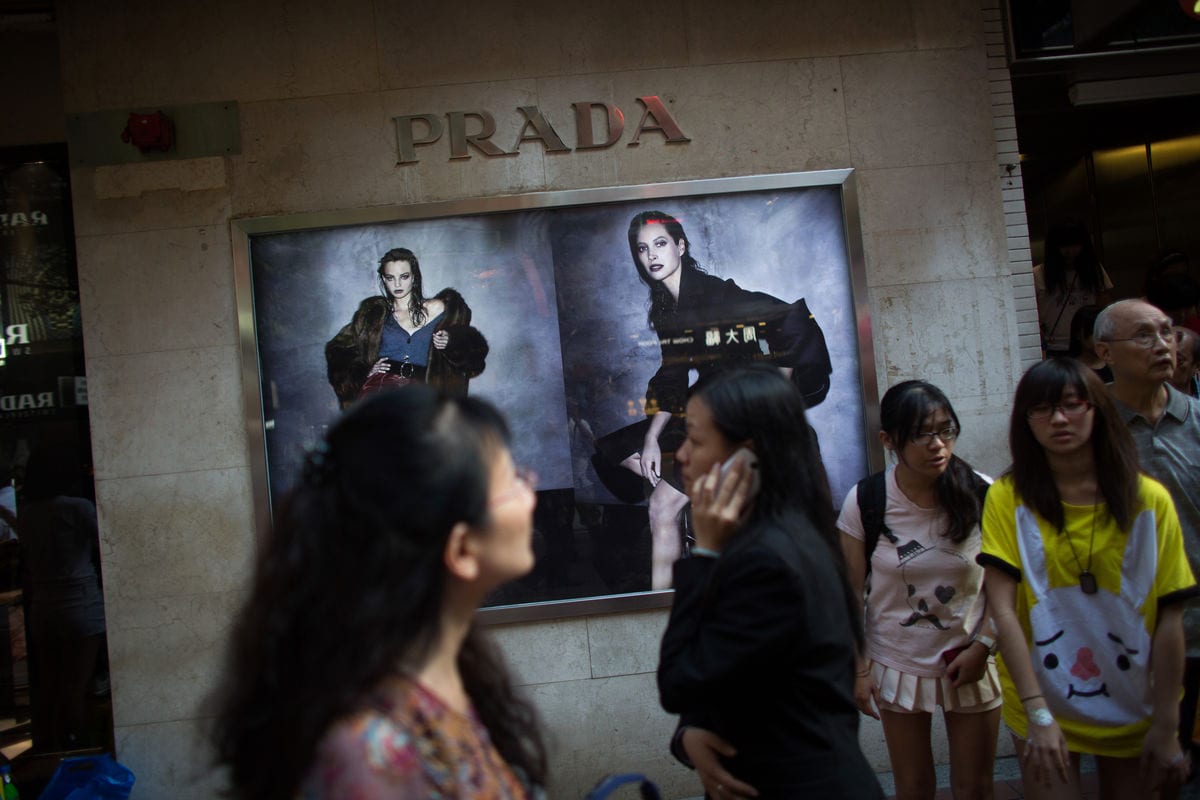
  • Hong Kong and Macau drag down Prada profits

    Hong Kong and Macau drag down Prada profits

    Difficult times on Asian markets, especially in Hong Kong and Macau with lower local demand and fewer tourists, have impacted Prada profits.

    “At the same time, social and political tensions worldwide further contributed to a general decrease in willingness to consume and in tourist flows,” the Milan-based group says in its annual results.

    The company plans to offset new shop openings with selective closures this year and next in an effort to shield profit margins from weaker demand, according to Business Insider.
    Prada profits fell by a larger-than-expected 28 per cent in the 12 months to January 31 – to 14 per cent of revenue, down from 20 per cent the previous year.

    After listing on the Hong Kong bourse in 2011, the group expanded its retail outlets in the territory. Now it has been hit by China’s economic slowdown as well as a crackdown on extravagant gift-giving. Similarly affected, luxury goods industry leader LVMH has just posted first-quarter sales below forecasts.

    CFO Alessandra Cozzani, who took over the role in February after the sudden resignation of Donatello Galli, says Prada will balance new openings with closures and work to keep operating expenses flat.

    “The retail network will remain the same for sure in 2016 and probably also 2017. We’re working on increasing the productivity of stores.”

    Prada’s directly operated stores (DOS) increased from 594 to 618 in the 12 months to January 31.

    Head of strategic marketing Stefano Cantino says the group will bet on eCommerce with the aim of doubling revenues over the next two years. It will start working with partners such as Yoox Net-A-Porter to sell its products on multi-brand e-shops.

    Digital and marketing initiatives will also be used to strengthen relationships with clients.
    Meanwhile, the Asia Pacific is still the group’s leading market, generating new sales of €1080 million (US$1.23 billion) during the year. However, net sales fell by 4.4 per cent at current exchange rates and by 16.1 per cent at constant exchange rates.

    In Japan, where there was a strong flow of tourists, the brand ended the year with net sales of €403.7 million, a 10.7 per cent increase.